Tag: devops

  • System Initiative Open Sources Digital Twin Tool for DevOps

    System Initiative Open Sources Digital Twin Tool for DevOps

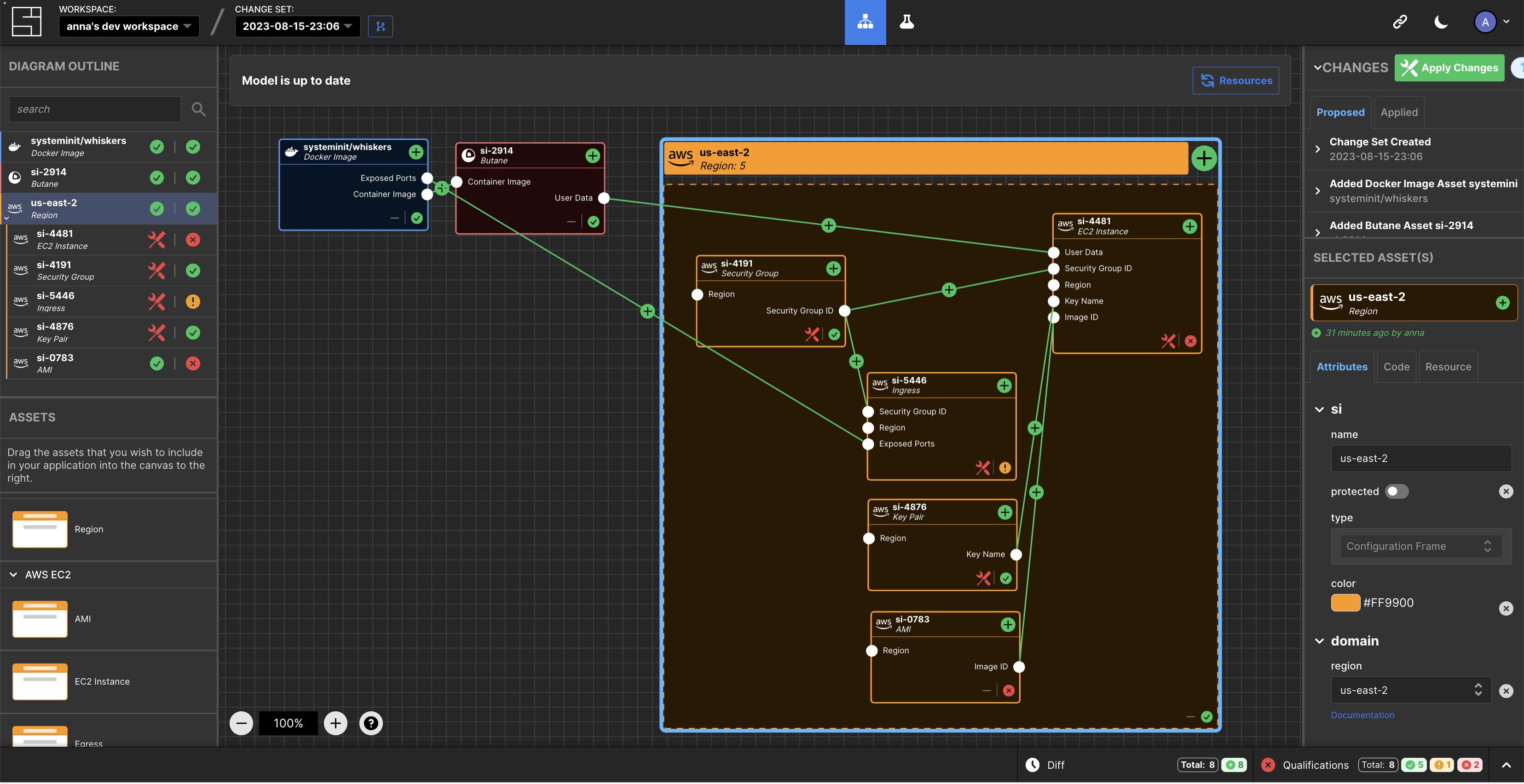
    System Initiative (SI) today announced it is making the digital twin tool it developed to manage DevOps workflows available under an open source Apache 2.0 license.

    Company CEO Adam Jacob said the approach will enable third parties to contribute to a project that is still early in its development cycle while SI provides commercial support via a subscription service.

    SI has developed a tool that creates a digital twin of a DevOps environment that provides a level of abstraction that makes it simpler to manage complex workflows at scale.

    At the core of that effort are models of IT environments created by the SI platform accessed via a visual interface. The automation framework built into the platform uses the relationships between models to infer configuration dynamically and generates typescript code that a DevOps team can then apply to automate a task.

    Feedback loops are provided in real-time to give insight into the viability of a configuration, in addition to eliminating the need for state files to track and ‘plan’ versus ‘apply’ stages.

    This approach streamlines a lot of the complexity that creates bottlenecks in DevOps workflows in what heralds the arrival of a new DevOps 2.0 era, said Jacob.

    In general, SI is making a case for an alternative approach to managing DevOps as the existing platforms and framework are fundamentally broken, added Jacob. Models that create digital twins of DevOps environments represent the arrival of a new era of software development and deployment, he noted.

    As more organizations realize their dependency on software to drive digital processes many are then looking to improve the productivity of developers and the DevOps teams that support them. Unfortunately, many DevOps teams are supporting DevOps workflows using custom code that varies widely in quality. Rather than rely on a DevOps engineer to write code, the SI digital twin tool will create code that can be applied more consistently to create DevOps workflows programmatically.

    One of the reasons few organizations today have fully automated DevOps across the application development and deployment process is that it’s simply too difficult to achieve using legacy tools and DevOps platforms. It’s not clear to what degree a digital twin approach to managing DevOps will resolve that issue, but when coupled with the arrival of artificial intelligence (AI) capabilities the way DevOps is managed is clearly about to transform.

    It may take a while for that transition to occur, but DevOps teams that have historically embraced automation are at the very least going to aggressively experiment with technologies that promise to eliminate much of the drudgery that makes DevOps more tedious than need be. The issue, as always, will be determining which technologies live up to the current level of hype being generated in a way that can be easily adopted.

  • How Observability and Explainability Benefit the SDLC

    How Observability and Explainability Benefit the SDLC

    Software systems require continual modification to meet changing requirements, address errors, improve performance and enhance reliability. Yet, maintaining and modifying complex and distributed software systems as they change and grow can present challenges. When systems are designed with observability and explainability in mind, adapting, expanding and troubleshooting software becomes easier and more effective. Observability refers to the ability to discern and monitor software systems’ real-time behavior and performance. This allows developers to identify and fix issues before they become critical. Explainability articulates how and why the software system operates.

    Both observability and explainability can contribute to the health of the software development life cycle by improving visibility and transparency, helping developers better understand the system’s overall behavior, and allowing the easy identification of errors, all of which contribute to the software system’s overall stability.

    Overview and Benefits of Observability

    Observability combines data from various sources, including application performance management (APM) monitoring, infrastructure monitoring, distributed tracing, third-party integrations and machine-language data. The data is then structured and presented in an accessible way. The first step to building an observable workflow is to identify which metrics best measure the behavior and performance of a software system. This will vary based on the specifics of the system. As a software system operates, logs and traces keep track of activities, requests and responses. They can be used to find the causes of errors and performance bottlenecks. Application performance monitoring (APM), infrastructure logs, machine logs and application traces are just a few examples of logs and traces. These records provide the necessary data to create dashboards and visualizations, which can then be presented to organizational stakeholders.

    While observability is often compared to software monitoring, which generates data focusing on various metrics related to application performance, it differs from monitoring in several respects. Monitoring tracks raw data related to a few performance metrics. It provides information that is best used by the operations team. Observability uses a large amount of structured data to provide a more robust, accessible picture of the whole system, from front end to back end, that can be understood by employees throughout the organization—even those who do not work in development or lack a technical background entirely.

    Advantages of Explainability

    Explainability refers to transforming machine data into a clear articulation of how a software system works such that others outside the organization can understand it. This capability empowers developers and users alike by enabling them to understand what a software system does and how and why it does it, providing a deeper understanding of why errors occur and how to fix them. Presenting data in a visual format is often a vital part of explainability.

    Explainability is especially important in artificial intelligence (AI) and machine learning (ML) systems, where it constitutes a cornerstone of ethical AI development. Model tracing, which refers to monitoring an ML model as it executes to understand its decision-making process better, is a key component of explainability in ML.

    Best Practices and Common Issues With Observability and Explainability

    Before adding observability or explainability to the software development life cycle, it is important to revisit software life cycle best practices and examine what kind of data is being generated. Not all data is meaningful or useful in observability and explainability. Structuring and ordering data from logs and traces is time-consuming but vital to correctly analyze and draw conclusions from the data. For optimal results, it is important for traces to be appropriately tagged and named consistently according to conventions.

    Additionally, the tools used to implement observability and explainability can be complex. For organizations to achieve maximum benefits from these strategies, it’s important for employees to familiarize themselves with the tools and develop specialized knowledge and skills, which can take time. Finally, there are costs associated with implementing observability and explainability. On one hand, commercial software tools come with licensing costs, which can pose a barrier for small businesses. On the other hand, open source alternatives often do not perform well because they lack the funding and resources required to continuously update and enhance the software.

    Harnessing the Power of Observability and Explainability

    Observability and explainability have numerous benefits for organizations that use flexible, ever-changing and complex software systems. Any company interested in building smoother-functioning software applications stands to benefit. Though both observability and explainability require upfront investments of time and money, these investments pay off in the form of quicker and easier error correction, with resolution occurring in minutes rather than hours or days, and greater application stability. In customer-facing applications, this results in fewer crashes and a better experience for the user. Increased stability also makes it easier to scale applications without losing performance. As these benefits become more apparent, a significant number of companies will likely develop software solutions that are reliable, cost-effective and accessible. This will increase the adoption of observability and explainability, which will continue to influence the evolution of software systems.

  • Using Observability to Create a Smart Data-Driven Culture

    Using Observability to Create a Smart Data-Driven Culture

    The first words that come to mind when talking about smart technologies are often artificial intelligence, machine learning and automation. While these smart technologies play a crucial role in smart-driven cultures, they are not the sole factor in making workplaces “smart.” Organizations that have a smart-driven culture, or data-driven culture, also promote innovation. An innovative organization actively encourages creativity, exploration and the pursuit of new ideas, continuously developing and implementing groundbreaking solutions, products and processes. Innovative companies with a culture of learning and growth are often seen as desirable employers and have high employee retention rates, attracting top talent.

    Let’s go over the benefits of a smart-driven culture and how an observability platform can help your company become data-driven in five steps.

    Why is Smart-Driven Culture Important

    You can increase efficiency and productivity among your employees by fostering a smart-driven culture. Smart technologies are able to automate repetitive tasks and streamline processes, which helps free up workers’ time and focus on other issues instead.

    A data-driven culture can also drastically improve decision-making on a company level. Your organization will begin to strategize and act on objective insights rather than guesswork or assumptions. Through collecting, analyzing and interpreting data, you will not only be able to make informed decisions but also know how to optimize processes and mitigate risks.

    Use data to better understand your customers’ preferences and improve your products to meet their demands more effectively. For example, leverage smart technologies and create high-tech touchpoints to tailor each of your customer’s experiences. A culture that encourages continuous learning, experimentation and adaptation is ready to navigate market shifts, changing customer needs and emerging technologies.

    How to Create a Data-Driven Culture in Five Steps

    According to the 2023 Data Analytics Survey conducted by New Vantage Partners, 79.8% of data leaders identified people, business processes and organizational alignment as the principal challenge to becoming data-driven. These folks cited cultural issues, including organizational receptivity to change, communication and organizational alignment, as the greatest obstacles to realizing business value.

    One way to overcome these challenges is by harnessing the power of observability, building data literacy and organizational transformation. Observability refers to the practice of gaining real-time insights into systems, applications, and processes through the collection and analysis of relevant data. Real-time insights will enable your organization to make data-driven decisions, understand your customers better and quickly identify areas of optimization to improve your products.

    These characteristics are fundamental to smart-driven companies, enabling them to stay competitive and drive innovation in the market. Take the following five steps to ensure you’re maximizing the potential of observability and paving the way toward becoming a smart-driven organization:

    1. Define Clear Goals

    Start by defining what a smart-driven culture means for your company. Write down clear outcomes that you want to achieve with a new culture, and identify the specific areas where observability can make a significant impact on your team.

    Focus on areas where real-time insights derived from observability can generate substantial business value. Set SMART (specific, measurable, achievable, relevant and time-bound) goals that can be tracked over time. For example, you could aim to reduce website loading time by 20% in the next two months in order to increase customer conversion.

    2. Implement Robust Observability Tools

    Evaluate and choose observability tools that align with your organization’s specific needs and goals. Look for tools that offer features such as real-time monitoring, log management, distributed tracing, advanced analytics and visualization capabilities.

    Consider factors like scalability, ease of use, integration with existing systems, and the ability to handle diverse data sources. Remember that the availability of accurate and timely insights promotes a culture that values data and encourages performance for achieving business objectives.

    Ask your IT department to help set up your observability tools to gather the relevant data. For our previous example goal of improving website loading times, this will mean gathering real-time data on website performance, such as server response times, page load speeds, and user interactions.

    3. Promote Data Literacy

    Your observability tools are of little help if no one understands how to use and derive helpful insights from the data you gather. Educate all of your employees on good data practices and the role of analytics in decision-making.

    Provide training and support on the data tools you have chosen and encourage your employees to understand, interpret and utilize data effectively in their day-to-day work. For instance, in meetings, you can ask for data points to back up business decisions.

    4. Encourage Collaboration and Knowledge Sharing

    Creating cross-functional teams and encouraging collaboration among different departments, such as IT, operations and analytics, is crucial for the successful implementation of observability practices.

    Taking an interdisciplinary approach allows for a better understanding of the systems and data within the organization. This can lead to the identification of optimization opportunities, help break data silos and practice collective problem-solving as a result.

    5. Iterate and Improve

    Embrace a culture of experimentation and continuous improvement by using observability data to identify areas for optimization and innovation. Encourage teams to test hypotheses, implement changes and measure the impact, fostering a cycle of learning and refinement. Track progress against the goals you set at the beginning and adjust your trajectory if needed.

    Coming back to our goal to improve website loading time. Now that your interdisciplinary team implemented some changes and reduced the loading times, you can assess the impact on user experience and business metrics, such as bounce rates, conversion rates and customer satisfaction.

    Becoming a smart-driven organization will grant you a great competitive advantage. You will make better and faster decisions, employ the best talent, maximize their productivity, and provide an enhanced experience for your customers.

  • Five Great DevOps Job Opportunities

    Five Great DevOps Job Opportunities

    DevOps.com is now providing a weekly DevOps jobs report through which opportunities for DevOps professionals will be highlighted to better serve our audience.

    Our goal in these challenging economic times is to make it easier for DevOps professionals to advance their careers.

    Of course, the pool of available DevOps talent is still relatively constrained, so when one DevOps professional takes on a new role it tends to create an opportunity for others.

    The five job postings shared this week are selected based on the company looking to hire, the vertical industry segment and, naturally, the pay scale being offered.

    We’re also committed to providing additional insights into the state of the DevOps job market. In the meantime, for your consideration:

    LinkedIn

    Well
    Raleigh-Durham-Chapel Hill, North Carolina
    Principal DevOps Engineer – Team Lead
    $180,000 to $200,000

    CareerBuilder.com

    Apple
    Cupertino, California
    Cloud DevOps Engineer – Enterprise Systems
    $138,900

    Indeed.com

    General Dynamics Information Technology
    Indianapolis, Indiana
    Capado Salesforce DevOps Engineer
    $116,000 to $174,000

    SimplyHired

    John Hancock
    Boston, Massachusetts
    Senior DevOps Engineer
    $109,000 to $138,000

    Dice.com

    IT Trailblazers
    Houston, Texas
    DevOps Lead
    $100,000 to $120,000

  • DevOps Download: What to Know About Life in the Cloud(s)

    DevOps Download: What to Know About Life in the Cloud(s)

    According to the 2022 Flexera State of the Cloud Report, 89% of cloud customers now use multiple cloud hosting providers. Nearly nine out of 10 might sound high, but it tracks with the anecdotal evidence we’ve seen. For varied and good reasons, companies are spreading their usage across multiple hyperscalers rather than putting all their eggs in one basket.

    In this article, I’ll take a look at what life in the cloud(s) looks like today. Along the way, I’ll examine the value that companies and their DevOps teams can derive from this approach, the challenges to be aware of, use cases for making the multi-cloud move and more.

    What is Multi-Cloud?

    Multi-cloud is a type of cloud strategy approach where an organization uses computing services from at least two cloud providers to run their applications. Instead of a single-cloud stack, these environments include two or more public or private clouds, or a combination of both. With multi-cloud, you can have an application running on Google Cloud Platform (GCP), another in Amazon Web Services (AWS), and maybe one on premise for hard-to-move applications.

    There are three kinds of cloud setups. Single cloud is when workloads run solely on one environment. Hybrid cloud entails overlapping workloads across multiple clouds, such as operating the same programs on different providers for business continuity purposes. The final setup is planned multi-cloud, which disperses applications and usage across providers along specific lines, like having compute intensive applications with one provider and data analysis applications with another.

    Got a Preference?

    Make no mistake, using multiple cloud providers is more complex than a single host, but as its popularity shows, the benefits can carry more weight. Foremost, that’s because an organization gains the flexibility to create a best of all worlds situation, based on factors like the following:

    • Operational preference: Users may like different features from different providers, and splitting types of use can yield the ideal setup. For instance, a customer may run compute on AWS but want their business intelligence and machine learning on GCP. In this deployment, the front-end app could gather the needed information, then send the data to the other provider for analysis and ML.
    • Regulatory requirements: Certain workloads may require data storage in specific regions, but not all cloud vendors have multiple “regions” in each country. Companies that want to use the cloud can set up a “multi-region” environment by having one region on AWS and a second region on GCP within the same country.
    • Cost savings: Cloud providers offer different savings plans. For a savvy user, structuring a flexible program can take advantage of each to significantly reduce costs. It’s also a great way to avoid the pitfalls of lock-in and can make it easier to go elsewhere should a provider lose your trust.
    • Failsafe Options: Outages happen, so companies needing 24/7 access to apps will sometimes run portions redundantly on two hosts to ensure smooth operations. For example, a retail app may run on GCP and AWS with live failover between them. That way, if one goes down the other can kick in without noticeable downtime.

    Not Without its Challenges

    The benefits to running a multi-cloud setup are clear, but there are some challenges as well. A carefully planned multi-cloud setup can save money, but a careless approach will duplicate operations and cost. It also leaves companies vulnerable to mistakes that can lead to significant overrun, especially for hybrid cloud operations, which can be extremely complex. Specialists must be well versed in FinOps principles and experienced at writing modern applications that can scale and work across regions and clouds, to ensure success in a multicloud approach.

    Coming to Terms

    You’ll undoubtedly come across a lot of new ideas and terminology when researching cloud setups. Here’s a few of the more crucial ones to become familiar with as you plan strategy.

    • Lift and shift: This refers to cloud-to-cloud migration, in other words, taking what you have in one cloud and putting it in another, whether it is private to public or public to public.
    • Move and improve: This usually refers to migrating while making a small change to take advantage of a public cloud feature. For instance, you could be using open source Kubernetes on premise but want to move to a managed version. Eliminating management of Kubernetes would require a minor change but it improves operations greatly.
    • Cloudbursting: On premise offers hard limits to capacity. For companies able to anticipate business peaks, cloudbursting can scale workloads to an on-demand public cloud for a short period. For example, a retailer who operates on premise may cloudburst on Black Friday in order to handle a volume increase.
    • High Availability: The goal of this is to eliminate single points of failure by enabling users to continue working even if one of the IT components that an applications depends upon fails.
    • Disaster Recovery: Clouds offer solutions to help an organization restore critical systems and data after a disaster strikes. Recovery comes in three “heat levels”: Cold is for data backup only, warm restores operations in several hours, hot is for near-instant resumption of cloud operations.

    People and Processes

    The most important considerations for operationalizing multi-cloud are people and processes. Providers pump out new services fast, and not only can it be difficult for staff to keep up, it can be demoralizing when they’re unable to. Allowing time to succeed, fail and learn is key, and larger companies might consider designated specialists for each platform.

    When it comes to processes, management and security are highly customizable, but it requires deep knowledge to get them right. Operating via infrastructure as code rather than ClickOps is a must. The latter is a time consuming approach that requires selecting options in a provider menu and introduces both operational and security risks in the form of configuration drift.

    Life in the Clouds

    Multi-cloud brings strong benefits to DevOps. Organizations can get the right infrastructure balance based on their needs. Distributing workloads can reduce the impact of outages and bolster resiliency. There’s greater opportunity for cost savings, and scaling is simple. Ultimately, multi-cloud operational enhancements can result in more reliable and innovative solutions, which delivers on the mantra of DevOps itself.

  • DevOps World: Time to Bring the Community Together Again

    DevOps World: Time to Bring the Community Together Again

    As a framework for building and deploying applications as fast as possible, DevOps has always been in a constant state of evolution. Over the past 10 years, there have been many seminal moments where major leaps forward have been made. As we near the end of 2023, it’s apparent we are collectively experiencing one of those times right now.

    During multiple in-person DevOps World events taking place over the next several months in New York, Chicago, Santa Clara, Singapore and London, we’ll be exploring these advances as we celebrate all things DevOps. It’s always been our great privilege to host the DevOps community, and bringing that community back together to share insights and see first-hand how the latest and greatest technologies are transforming DevOps is an experience that no virtual meeting can ever replace.

    DevOps is, above all else, a commitment to learning. The DevOps community is driving changes in the way applications are built and delivered that transform society. DevOps World creates an opportunity for the DevOps professionals at the forefront of those efforts to see for themselves how a raft of emerging innovations will take DevOps to the next level.

    DevOps World attendees, for example, will be discussing topics ranging from how generative AI will be applied to how changing compliance requirements will impact software delivery. In addition, there will be deep dives into the impact advanced analytics are having on breaking logjams. There will even be demos showing how digital twin technologies will be used to modernize DevOps workflows.

    Just as important, DevOps World provides an opportunity for attendees of all skill levels to network with their peers and advance their education. We all know that virtual training can be challenging. In many instances, there simply is no substitute for being in a classroom with an instructor and fellow students all focused on the same topic at the same time. Careers are made at our DevOps World events. In fact, several sessions will show how investments in the venerable Jenkins continuous integration/continuous delivery (CI/CD) platform will be carried forward into the next era of application development and deployment. 

    Naturally, many of us wonder what our future career paths will look like in the age of AI. It’s already been shown that natural language interfaces will make AI a lot more accessible to everyone in IT. More and more, the bottlenecks and associated manual effort that often conspire to adversely impact DevOps productivity are about to be eliminated. For example: 

    • The days when an engineer was required to create a simple script are coming to an end.
    • The average IT administrator should be able to automate a process using a few simple prompts.
    • Tools will become increasingly intelligent in their ability to detect the root cause of issues without causing alert storms.

    The challenge now is training the large language models (LLMs) needed to apply generative AI to the DevOps domain. CloudBees is proud to be at the forefront of an effort to enable organizations to safely apply AI to DevOps workflows at scale in a way that can be trusted.

    In the meantime, DevOps teams should be evaluating which tasks AI will be able to automate both today and tomorrow. Roles and job functions will evolve accordingly, but DevOps engineer roles are not going to be made obsolete any time soon. Instead, AI will free DevOps engineers to spend more time solving complex issues rather than performing rote tasks that are better handled by machines. A commitment to automation remains a foundational DevOps principle. Anything that can be automated should be.

    As always, luminaries from the global DevOps ecosystem will present at DevOps World. The best and brightest practitioners from across the DevOps spectrum, along with our premier technology vendor partners, will be readily accessible to attendees. The opportunity to learn from others is the whole reason DevOps World events exist in the first place. More than 40 speakers, including DevOps experts from Argonne National Labs, Autodesk, Fidelity Investments, GitHub, Gradle, M&T Bank, MFS, Postman, Software Engineering Institute/Carnegie Mellon, Sonatype and Veeam Technologies have already committed to sharing their insights, and we expect many more as the event approaches. 

    DevOps has never been more crucial for any organization that is dependent on software to modernize than it is right now. The pace at which applications will be built and deployed in the AI era is about to exponentially increase. There will always be a need for DevOps engineers to manage application development and deployment. The opportunity for attendees at DevOps World is to collectively define the next generation of DevOps best practices with AI in mind. Reserve your metro New York, Chicago, Santa Clara, Singapore or London spot at DevOps World today!

  • How New Tech Elevates Release Management’s Quality Standards

    How New Tech Elevates Release Management’s Quality Standards

    Release management is a critical discipline within software development and IT operations that focuses on the planning, scheduling, coordination and deployment of software releases. It includes the procedures, plans and methods employed to guarantee that software updates or items are sent to customers in a secure and effective way. Release management’s main objective is to make it possible for software releases to be delivered reliably and smoothly while causing as little disturbance as possible for the company and its users. This entails overseeing a release’s whole lifespan, from preliminary planning through testing, deployment and post-release support.

    Challenges in Traditional Release Management

    Traditional release management approaches often face several challenges that can hinder the efficient and effective delivery of software releases. These include manual and time-consuming processes, lack of visibility and traceability, complex and fragmented environments, limited collaboration and communication and a lack of effective communication channels and collaboration tools. Manual processes can be time-consuming, error-prone and lead to delays in release cycles. Lack of visibility and traceability can make it difficult to track the status of releases, identify bottlenecks and troubleshoot issues effectively. Fragmented environments can be complex and differ widely from one another, making managing and synchronizing these environments manually challenging and prone to errors.

    Limited collaboration and communication can lead to miscommunication, delays and misunderstandings. Traditional release management can lead to silos between development, operations and other stakeholders, hindering efficient coordination. Inconsistent release practices can lead to variations in processes, documentation and quality standards, making it difficult to establish a standardized and repeatable release process. Lack of automation and continuous integration can slow down the release process, increase the chances of human errors and inhibit the ability to deliver frequent, small and reliable releases. Limited scale and adaptability can be addressed by adopting new technology and modernizing release management practices. Automation, continuous integration, deployment pipelines, collaboration tools and standardized processes can help overcome these hurdles and enable more efficient, reliable and quality-driven release management.

    Benefits of New Technology in Release Management

    Advanced Testing Techniques for Improved Quality Assurance

    1. Enhanced speed and efficiency
    2. Improved interaction and collaboration
    3. Improved stability and quality of software
    4. Reduced risk and downtime

    Using New Technology: Implementation Techniques

    1. Organizational readiness assessment
    2. Choosing the correct technologies and tools
    3. Developing an all-inclusive release management strategy
    4. Embracing the DevOps and Agile principles

    The Impact of New Technology on Release Management Quality

    Automation: Accelerating Release Cycles and Ensuring Consistency

    Automation plays a pivotal role in release management by significantly accelerating release cycles. It reduces manual effort and expedites the delivery of software releases, leading to a faster time-to-market. Automated workflows enforce standardized practices, configurations and environments, resulting in more reliable and predictable releases. Automated testing frameworks and tools enable faster and more comprehensive testing, while continuous integration and automated build processes facilitate seamless integration of code changes. Automation also enables better visibility and traceability, allowing release management teams to track the progress of releases, identify bottlenecks and analyze performance metrics.

    Continuous Integration: Early Detection of Issues and Improved Collaboration

    Continuous integration has revolutionized software development practices by emphasizing early issue detection and enhanced collaboration. By regularly integrating their code, businesses can spot problems early and fix them, decreasing the possibility of significant issues later in the development cycle. Additionally, increased developer collaboration encourages better coordination, communication, and information sharing, which results in a more effective and unified development process.

    Organizations can profit from continuous integration by utilizing automated build processes, extensive test suites and a collaborative development environment. Early problem identification and enhanced teamwork not only lead to better software quality but also enable development teams to build applications more quickly and consistently. Organizations can achieve improved efficiency, productivity and success in the dynamic world of software development by adopting continuous integration as a core practice.

    The Role of Innovation in Breaking Barriers: Future Outlook and Trends

    Machine Learning and Artificial Intelligence in Release Management

    Release management is not an exception to the way that machine learning (ML) and artificial intelligence (AI) are transforming numerous sectors. Technologies based on machine learning and artificial intelligence (ML and AI) provide useful capabilities that can significantly improve release management procedures, increase effectiveness, and promote improved software quality. The function of ML and AI in release management is described in more detail below:

    Automated Testing and Quality Assurance:
    In release management, ML and AI may automate and enhance testing and quality assurance procedures. Intelligent algorithms can examine enormous amounts of data to find trends, anomalies and potential issues in brand-new software releases. To cut down on testing time and effort while maintaining high standards, ML models can be trained to anticipate and prioritize test cases. AI-driven testing solutions can also suggest the right test coverage and offer insights into the effects of code modifications.

    Predictive Analytics for Release Planning
    ML and AI approaches can be used to create prediction models for release planning using past release data, such as metrics, logs and performance statistics. These models are able to predict potential dangers, predict release dates, and allocate resources more efficiently. Release managers may prioritize important tasks, make data-driven decisions and improve the planning process for software releases by employing AI-driven insights.

    Anomaly Detection and Continuous Monitoring
    ML and AI algorithms can continuously monitor the production environment, analyzing real-time data to spot anomalies and potential problems. Release management teams can proactively identify and respond to performance bottlenecks, security breaches, and other key occurrences by putting in place sophisticated monitoring solutions. A faster and more reliable reaction to production issues can be achieved with the use of ML-powered anomaly detection, which can decrease the mean time to detect (MTTD) and mean time to resolve (MTTR).

    Impact Analysis and Risk Assessment for Releases
    ML and AI approaches can be used to evaluate the hazards that may be involved in a release. ML models can estimate the effect of a release on several areas like performance, stability and user experience by assessing historical data, code modifications, dependencies, and environmental factors. Release managers can prepare mitigation methods, make educated decisions, and reduce the likelihood of unforeseen problems throughout the release process thanks to these risk assessment skills.

    Intelligent Release Deployment and Rollback
    ML and AI technology can help with intelligently choosing when to deploy and roll back a release. In order to recommend deployment tactics, machine learning (ML) models can learn from previous deployment experiences, including success rates, user input and mistake patterns. In order to ensure a more dependable and error-resistant deployment process, AI algorithms can track the deployment process, evaluate the system’s health and initiate automated rollbacks if anomalies or severe concerns are discovered.

    In general, ML and AI provide valuable capabilities to release management, boosting testing and quality assurance, streamlining release planning, enabling continuous monitoring, analyzing release risks and simplifying wise deployment decisions. Utilizing these technologies enables businesses to improve software quality, streamline release management procedures, and deliver high-performing applications more effectively and reliably.

    Microservices Architecture and Cloud-Native Technologies
    With the advent of cloud-native technologies and the adoption of microservices architecture, release management has been transformed, enabling organizations to leverage the benefits of scalability, agility, and flexibility. Let’s explore how cloud-native technologies and microservices architecture enhance release management:

    Containerization and Orchestration
    Release management has a solid foundation thanks to cloud-native technologies like containerization (like Docker) and orchestration frameworks (like Kubernetes). Application components are encapsulated in containers, which makes them very portable and independent of the underlying infrastructure. Release management can use containerization to streamline application packaging and distribution while ensuring consistent application deployment across a variety of environments. Frameworks for orchestration allow for automated container deployment, scaling and administration, speeding up release management procedures.

    Scalability and Elasticity
    Applications can use cloud-native technologies’ inherent scalability and elasticity to dynamically modify resources in response to demand. The modular and independent services of the microservices architecture make granular scalability possible. Release management can use these features to scale individual services or components on their own, ensuring optimal resource usage and effective handling of increasing user loads. This adaptability reduces downtime and enhances the application’s general performance during releases.

    Fault Isolation and Resilience
    Failures in one service do not affect the entire system, thanks to the fault isolation and resilience that the microservices architecture fosters. Release management can use this resilience to lessen the impact of any potential issues during releases. It is possible to roll back or replace a specific service if it develops issues without affecting other services. Release management may efficiently manage errors, improve fault tolerance and maintain service availability during the release process by implementing cloud-native technologies and microservices.

    Observability and Monitoring
    The enhanced observability and monitoring capabilities made possible by cloud-native technology allow for release management. Platforms for container orchestration include integrated monitoring and logging capabilities that give information on the efficiency of an application’s use of resources and the state of the system overall. With the use of this information, release management teams can proactively monitor releases, spot abnormalities and quickly resolve problems. Observability and real-time monitoring support the release process by ensuring the dependability and stability of programs.

    Release management greatly benefits from cloud-native technologies and microservice architecture. Organizations can improve their dependability, achieve faster and more frequent releases, achieve scalability, fault isolation, and observability, and produce high-quality software applications by leveraging containerization, orchestration, CI/CD methods and many other technologies. Organizations are better equipped to manage complex release cycles and adjust to the changing needs of the software industry when they adopt these cutting-edge methods.

    Conclusion

    In this article, we have explored new technology’s role in raising the bar for release management quality standards. Organizations may increase communication, optimize processes, and more quickly produce high-quality software by adopting automation, continuous integration and DevOps approaches. The advantages and revolutionary potential of new technology in release management are apparent, notwithstanding the risks and difficulties that may arise. Organizations may promote continuous improvement, adjust to market demands and succeed in today’s changing business environment by tearing down barriers and embracing innovation.

  • Low-Code/No-Code Testing: Prioritizing AI-Enhanced Test Automation

    Low-Code/No-Code Testing: Prioritizing AI-Enhanced Test Automation

    As organizations strive for faster application delivery and uncompromising software quality, traditional approaches to test automation fall short. With the emergence of low-code/no-code powered by Agile methodology and AI-enhanced tools, a new era of efficient and effective QA automation services has dawned. The expectations of the modern digital landscape require test automation services to undergo a profound transformation.

    Low-code/no-code QA automation services represent a paradigm shift in the software world. Its simplicity, agility and AI-driven capabilities enable organizations to embrace a more efficient and effective approach to testing.

    What Low-Code/No-Code Brings to the Test Automation Landscape

    ● Hassle-free test automation: Low-code/no-code platforms empower testers to automate regression and functional testing with remarkable ease, reducing the reliance on complex scripting and coding. This simplicity accelerates the testing process, enabling quicker iterations and faster time-to-market.
    ● Agile alignment and unparalleled speed: Low-code/no-code test automation seamlessly integrates with Agile methodology and ensures that testing keeps pace with rapid development cycles. This alignment enables organizations to deliver high-quality software within shorter timeframes, gaining a significant competitive edge.
    ● AI-enhanced QA automation tools: By harnessing the power of artificial intelligence, low-code/no-code test automation tools can intelligently analyze vast amounts of test data, identify patterns and make informed decisions. This enhances test coverage, improves efficiency and minimizes false positives, resulting in more reliable and accurate test results.
    ● Cost savings and optimal resource utilization: By significantly reducing the need for extensive scripting and coding expertise, low-code/no-code quality assurance testing reduces maintenance costs and frees up valuable resources. Organizations can allocate their testing budgets more effectively, achieving higher ROI on their quality assurance investments.
    ● Uncompromising Software Quality: Through comprehensive and automated testing, low-code/no-code test automation ensures robust software quality. By minimizing the risk of human errors and identifying defects early in the development life cycle, organizations can deliver superior products that consistently meet or exceed customer expectations. This focus on quality helps build trust, enhance brand reputation and drive customer loyalty.

    Why You Should Prioritize Low-Code/No-Code Test Automation Services

    DevOps teams that recognize the potential of low-code/no-code QA automation services and their ability to drive innovation will be well-positioned to lead their organizations to success.

    Here’s what AI-enhanced low-code/no-code test automation specifically brings to the table for DevOps:

    ● Agility for competitive advantage: Agile methodology combined with low-code/no-code QA automation allows organizations to respond quickly to market changes, customer feedback and emerging opportunities. DevOps teams can ensure that they embrace agility, enabling them to outperform competitors and capture new markets swiftly.
    ● Unleashing the power of AI: AI-enhanced quality assurance testing platforms leverage the capabilities of artificial intelligence to drive intelligent testing. DevOps teams can harness the power of AI to enhance test coverage, identify complex patterns and make data-driven decisions that optimize testing processes and ensure high-quality software.
    ● Resource optimization and cost efficiency: By adopting low-code/no-code test automation practices, teams can optimize resource allocation and testing budgets. The reduced reliance on specialized coding skills allows organizations to leverage the full potential of their testing teams, saving costs and achieving more efficient testing outcomes.
    ● Meeting the demands of software quality: In today’s competitive market, software quality is non-negotiable. DevOps teams must prioritize Agile methodology and AI-enhanced test automation to ensure that their organizations consistently deliver high-quality software that meets or exceeds customer expectations. This commitment to quality helps build trust, enhance brand reputation and drive customer loyalty.

  • Agile Planning With Generative AI

    Agile Planning With Generative AI

    Generative AI will eventually impact the entire DevOps life cycle from plan to operate. I started as a developer but have been a product manager for most of my career; for me, the ‘Holy Grail of DevOps’ would be one where product managers (PMs) and business analysts (BAs) were able to define a future state of a business process and press a button to deliver it without any developers, designers or testers involved.

    This dream is not practical in the near term and is not really desirable in the long term, either. PMs and BAs are good at understanding the needs of users and translating them into features but aren’t interaction designers. AI may be able to generate code and tests, but the software architecture for both will still require a deep understanding of the system to structure the solution properly, especially in enterprise SaaS development. So my dream is to build a team where the BAs can define the changes and a small team of very talented architects and interaction designers can realize those changes in 10% of the time it takes today without requiring a large team to implement the details. This is similar to what has happened in manufacturing where robots and numerically controlled machines are able to do the heavy lifting with the help of operators.

    Planning is Key

    When generative AI is actually building the solution, proper planning will be the entire key to success. A well-documented, well-thought-out plan will enable the AI to finish most of the heavy lifting. So the majority of the focus for the dream team should be to get the plan right and to document it at just the right level of detail. Just like I was taught by my first Agile coach 20 years ago, when it comes to documentation, you need just enough just in time.

    In enterprise SaaS platforms like Salesforce.com and ServiceNow, the business starts with a newly implemented system in some initial implementation and then incrementally customizes this software to better meet their needs over time. So, instead of thinking about building a system from scratch, we must think of digital transformation as the continuous improvement of an existing system over time. That means the AI must start with a good model of the

    ● Existing business processes,
    ● Metadata configuration of the system and
    ● Dependencies between the settings.

    Development in the New World

    What does this mean in practice? Let’s look at a day in the life of the dream team.

    The BA will start by telling the AI what changes are desired at a high level. The AI will help refine the requirements by filling in missing details. This will happen through an iterative process of expanding, refining and summarizing until the requirements are clearly defined. Just as lint tools check source code today, the AI will examine the requirements to ensure the user stories are complete, with acceptance criteria well defined. During this process, the AI will do a detailed dependency and impact analysis to provide a heads-up to the BA when there are any unwanted side effects.

    This refinement session will be more of a conversation between the BA and the AI than a one-sided writing session. After several iterations, a complete set of user stories will be created with all of the necessary details spelled out.

    Once the requirements are complete, the BA will be joined by a user interaction designer and software architect.

    The interaction designer will define the interaction spec through a combination of natural language description of the new processes and a functional prototype. Both of these elements will be created and refined through interactions with the generative AI. Prototypes will no longer be simple graphic artifacts to be coded by front-end engineers. The AI will generate a working prototype in the framework of your choice on demand through a combination of verbal requests and traditional point-and-click.

    They will review the plan and begin designing the solution’s architecture which will result in a natural language software spec that documents the data model changes and high-level specifications for the classes that make up the solution. It is likely that the data model changes will be created in a dev environment on demand, with the ERD updated to reflect the new model.

    Depending on the type of changes, the architect and interaction designer may collaborate and iterate on the specs until the “how” is well defined. When the design is ready, the dream team will meet to review the design and sign off on the approach.

    Generate and Iterate

    Once the plan is approved, it’s time for the AI to generate a first-pass solution. We hope and expect that generating the solution will be something that happens in minutes. In this scenario, the dream team will take a coffee break and then come back to the meeting room to review the working solution.

    There is nothing like playing with the actual solution to remind you of the edge cases you forgot or to realize how tedious it is to actually use a new feature. But that’s okay because the team can quickly update the requirements to account for these changes and push the generate button again.

    In fact, they can tinker to their heart’s content. But like all great artists, they must decide when it is good enough to ship.

    In the near term, we will not be able to blindly rely on generative AI, so the architects will have to do code reviews, just as they do today with junior developers. Likewise, the AI may not understand all of the possible dependencies in a system. So there will be a transition period where the process is semi-automatic.

    Eventually, the notion of a two-week sprint will seem anachronistic and a daily cycle of define and release to production will be commonplace. Members of the dream team will spend more time worrying about the high-level usability and effectiveness of their designs and less time struggling with actual implementation, which should make their jobs much more rewarding and the work product much better. I am looking forward to it.

  • The DevOps Pendulum: Agility Vs. Control

    The DevOps Pendulum: Agility Vs. Control

    Managing changes to cloud assets is a universal pain felt by many engineering leaders today, despite all of the advancements in tooling and practices like GitOps. This is because, in reality, it is simply impossible to always have everything completely locked down—we don’t live in a utopia with zero incidents. If your engineering organization prevents any changes from being made through the cloud console or to your infrastructure-as-code (IaC) without complying with strict GitOps practices or change management processes via CI/CD, then it’s likely you have very frustrated developers—developers who can’t troubleshoot or debug in real-time and who have little control in a real-world incident.

    Engineering, like everything else in life, is all about balance.

    The Pendulum Swings

    The pandemic created a whole new mindset and practice for managing distributed and high velocity engineering and operations. Overnight, companies that were not built for remote ways of working had to continue their operations in a global, distributed and asynchronous way that they weren’t completely familiar with. This required a new way to think about software delivery—and it accelerated the DevOps practices that support that delivery. Self-service infrastructure removed barriers for developers to ensure continued performance and velocity.

    At the same time, your cloud cannot be the wild west with everyone creating bespoke infrastructure. It becomes impossible to manage, and misconfigurations can be risky. Guardrails and policy automation have become a hot topic. Today, with tech markets depressed and cloud costs escalating, there seems to be a growing trend toward locking things down again, even at the risk of frustrating developers.

    This begs the question: How can you achieve unencumbered infrastructure for your developers while simultaneously following policies and best practices for compliance, risk and cost? There is a way to find balance.

    Like many aspects of security, we’ve learned that when constraints and barriers are too high, users ultimately find ways to bypass them. This is true for operations, as well. While sometimes it might seem easier to lock everything down than design a better and more balanced way to enable developers to move fast, eventually this approach backfires. This is the exact same evolution the application and cloud-native security industry are undergoing right now.  All the guardrails and controls applied have created too much friction in development processes and developers ultimately bypass them.

    Real-Time Insight is Key

    CloudOps can learn a lot from the disruption the security industry is going through today. In the same way that point-in-time security has been rendered completely useless, non-real-time alerting or eventual alerting to infrastructure drift just won’t cut it when managing an ephemeral cloud. What is really needed is the same kind of real-time and continuous scanning of cloud assets and IaC, similar to what we apply to our systems through monitoring and observability. These solutions became an essential backbone of our business to ensure continuous operations and availability of cloud services.

    As we embrace IaC and the benefits it brings, everything-as-code unlocks greater agility and visibility, enabling you to automatically remediate without locking everything down. As DevOps says, “fail forward and fail fast.” Rather than focusing on never making a mistake, focus on how to fix it immediately. 

    The Solution

    By providing a continuous comparison of actual cloud assets with their desired state through IaC and GitOps, it’s possible to surface configuration drift and policy violations immediately, much like any other kind of breach or major system failure. Failures and incidents are inevitable. It’s unrealistic, and even dangerous, to build systems with an inherent underlying design that prevents you from changing something at the cloud console at 2:00 A.M. during an outage.

    With a locked-down approach, a developer would need to wait for the change management approval during a high-pressure production incident, oftentimes at 3:00 A.M. (because the incident gods of always make them happen in the middle of the night) or on a weekend. We don’t need to look much further than the catastrophic 40-minute and $440 million Knight Capital incident to understand that sometimes time is not on our side and that a delay can have severe consequences.

    Cloud drift has become equally troubling as uptime or any other mission-critical aspect of continuous business operations, and that’s why we need to apply the same principles for monitoring drift in real-time as we do to our CPU and load. This will make it possible to be alerted when your cloud and your IaC are no longer aligned and even flag issues that can be prevented in real-time. You can automate ticket creation and escalation and also triage whether this is something that needs to be fixed in real-time with remediation suggestions provided or open a ticket to fix it later. The choice should be yours, not made by an administrator who has a lot less context about the systems and the ultimate business impact.

    It is Not ‘One and Done’

    Some vendors preach codifying your cloud into IaC and then locking it down so that you’ll never have to do it again. This feels like deja vu; we’ve definitely heard this before. It sounds a lot like the ‘write once, deploy anywhere’ JVM promise that never quite panned out. 

    By going down this path, you’re resigning yourself to never adding new cloud assets or changing your cloud configurations. If there’s one thing we’ve learned about the cloud, it’s that it’s a constantly moving target.  (Read what cloud asset management can learn from the world of finance—another industry in constant flux). If this didn’t work decades ago with the JVM, it certainly won’t work in a dynamic and constantly changing environment like the cloud. That’s a fool’s journey.

    Continuous Cloud Up to Code

    There are major downsides of locking down agility and velocity. This is hard-earned advice, witnessed firsthand from tools like legacy CMDB and startups who have forgotten that cloud is ephemeral—and possibly the reason why we all use it in the first place! So if our cloud is constantly changing and is a continuously moving target, then shouldn’t our tools be built in just the same way to keep up? Solutions built for the rapidly evolving cloud-native era must continuously look for new, unmanaged and changed assets and ensure their cloud infrastructure always follows policies and regulatory standards.  

    Once we are able to find the balance between agility and control, we’ll be able to tap into the benefits of speed and safety (as DORA research shows time and again) that are the benchmark of high-performing teams. Automating cloud asset management can provide governance, policies and control while still enabling the velocity and agility engineering organizations today require. 

    Agility Versus Control

    There’s a minority of people who claim they don’t worry about cloud asset configuration drift because they have everything completely locked down. Zero changes can be done at the cloud console or to IaC without going through GitOps for strict change management processes via CI/CD. I bet they have happy developers—not!

    Life is All About Balance

    Throughout the pandemic, organizations had to make developers happy for fear they would leave. So DevOps went full tilt aiming for self-serve infrastructure for developers to remove barriers to speed and velocity. Now, with tech markets depressed, maybe it’s easier to lock things down even if that risks losing engineers.

    As we embrace IaC and its benefits, you need not live in the stone age of locking everything down. How can you achieve unencumbered infrastructure for your developers while following policies and best practices for compliance, risk and cost? There is a way. 

    The solution? Real-time continuous scanning of your cloud assets and your IaC with continuous comparison can surface configuration drift and policy violations immediately. Emergencies are inevitable. It’s bold/stupid/foolish to think you’ll never need to change something at the cloud console during an emergency or that a developer will wait for change management when production is down at 3:00 A.M. on a weekend. It happens, and you must deal with it.