Tag: DevOps orchestration

  • How to Move Fast Without Breaking Security

    How to Move Fast Without Breaking Security

    “Move fast and break things,” is a familiar motto. The phrase, attributed to Facebook CEO Mark Zuckerberg, helps to explain the company’s stellar growth over the past decade, driven by its product innovations. However, while it’s a useful philosophy for software development, moving faster than you’d planned is a risky approach in other areas, as organizations globally realized during the COVID-19 pandemic. While 2020 saw digital transformation program timelines advance by up to seven years, enterprises’ quick moves to the cloud also meant that some things got damaged along the way – including security.

    Our recent survey conducted with the Cloud Security Alliance showed that more than half of organizations are now running over 41% of their workloads in public clouds, compared to just one quarter in 2019, and this will increase further by the end of 2021. Enterprises are moving fast to the cloud, but they are also finding that things are getting broken during this process.

    The research showed 11% of organizations reported a cloud security incident in the past year, with the three most common causes being cloud provider issues (26%), security misconfigurations (22%) and attacks such as denial of service exploits (20%). In terms of the business impact of these disruptive cloud outages, 24% said it took up to three hours to restore operations, and for 26% it took over half a day.

    As a result, it’s no surprise that organizations have significant concerns about enforcing and managing security in the cloud. Their leading concerns were maintaining overall network security, a lack of cloud expertise, problems when migrating workloads to the cloud and insufficient staff to manage their expanded cloud environments. So, what are the root causes of these cloud security concerns and challenges, and how should enterprises address them?

    Confusion Over Cloud Control

    When asked about which aspects of security worried them most when running applications in public clouds, respondents overwhelmingly cited getting clear visibility of topologies and policies for the entire hybrid network estate, followed by the ability to detect risks and misconfigurations.

    A key reason for these concerns is that organizations are using a range of different controls to manage cloud security as part of their application orchestration; 52% use cloud-native tools and 50% reported using orchestration and configuration management tools such as Ansible, Chef and Puppet. However, nearly a third (29%) said they use manual processes to manage cloud security.

    In addition, there’s competition for overall control over cloud security: 35% of respondents said their security operations team managed cloud security, followed by the cloud team (18%) and IT operations (16%). Other teams, such as network operations, DevOps and application owners, all figured in, too. Having different teams using multiple different controls for security limits overall visibility across the hybrid cloud environment, and also adds significant complexity and management overhead to security processes. Any time you need to make a change, you need to duplicate the work across each of these different controls and teams. This results in security holes and the types of misconfiguration-based incidents and outages we mentioned earlier.

    How to Move Fast and Not Break Things

    So how can organizations address these security and management issues, and get consistent control over their cloud and on-premises environments, so they can take full advantage of cloud agility and scalability without compromising on security? Here are the four key steps:

    Get holistic visibility across your networks: a lack of visibility across cloud estates was the main security challenge for survey respondents. Organizations need to get holistic visibility across all of their different cloud accounts, including the security controls that are being used both in the cloud and to manage traffic to and from the cloud environments. This enables IT and security teams to quickly identify any potential security issues or risks that could lead to outages.

    One management console to rule them all: When using a mix of the cloud providers’ security controls as well as other controls, both in the cloud and on-premises, it’s a huge challenge for organizations to manage policies consistently. If all these diverse security controls are managed from a single console using a single set of commands and syntax, security policies can be applied consistently. This avoids duplication of effort and the error-prone manual processes that lead to misconfigurations and outages. It also provides a full audit trail of every change.

    Automate security and compliance processes for speed: Automation is essential to managing cloud environments efficiently while orchestrating changes across a complex array of security controls. It brings speed and accuracy to managing security changes across cloud environments. It also accelerates audit preparation and helps ensure continuous compliance. Automation also helps organizations overcome skills gaps and staffing limitations, which were cited as a challenge by over three-quarters of our survey respondents.

    Accelerate incident response, anywhere: Our survey also showed organizations are concerned about overall network security in the cloud. Security management solutions that integrate with SIEM or SOAR tools can help to address these concerns by accelerating incident response. As soon as a threat is detected by the SIEM or SOAR product, the management solution can identify all the applications and servers that the threat could impact. The solution can then mitigate the threat’s risk by automatically isolating any affected servers or devices from the network – whether in the cloud or on-premises – preventing lateral movement.

    With a network security automation solution handling these steps, organizations can get holistic, single-console security management across all of their public cloud accounts, as well as their private cloud and on-premises deployments. This helps them to solve the cloud complexity challenge and ensures faster, safer and more compliant cloud management – making it possible for organizations to move fast in response to changing business needs without breaking things.

  • Orchestration Emerges as Crucial DevSecOps Enabler in 2021

    Orchestration Emerges as Crucial DevSecOps Enabler in 2021

    As DevSecOps best practices continue to evolve and mature in 2021, security orchestration is emerging as a cornerstone of a solid defense-in-depth approach to application security.

    DevSecOps assumes organizations will shift responsibility for application security further left toward developers. If this assumption is correct, then developers clearly need access to a range of code analysis tools to achieve that goal. The challenge they face is incorporating tools from multiple vendors within a DevSecOps workflow. At different points in the development process, it may make sense to employ a static application security tool (SAST) versus a dynamic application security tool (DAST) that stress-tests the application just before it is deployed.

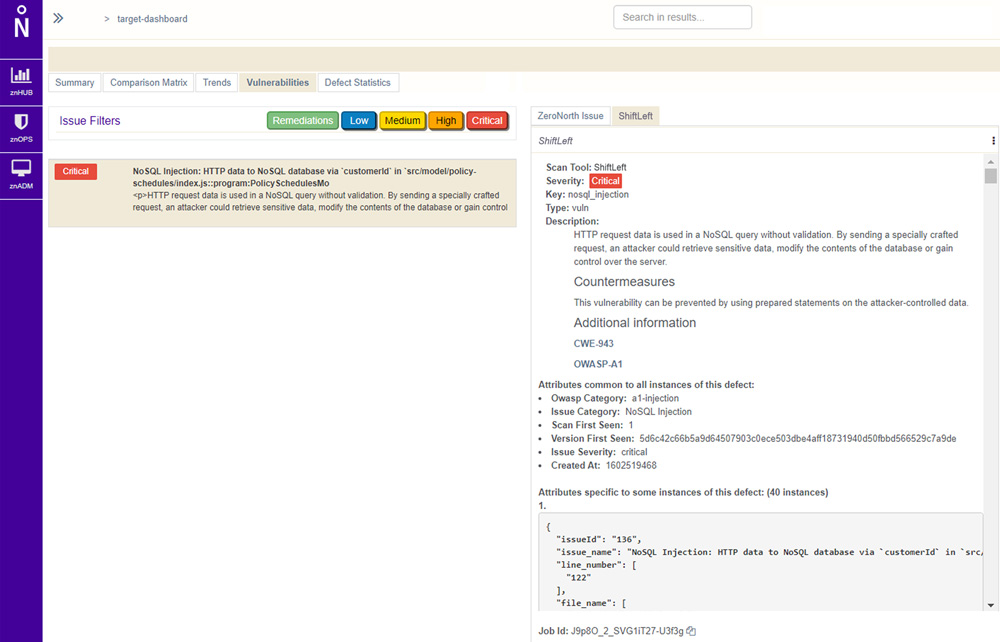
    Not surprisingly, providers of these tools are starting to align with security orchestration engine providers. ZeroNorth, for example, recently added ShiftLeft, a provider of a SAST tool, to the list of security tools that can be orchestrated via its software-as-a-service (SaaS) platform.

    Joanne Godfrey, director of product marketing for ZeroNorth, said organizations that have embraced DevSecOps are standardizing on two to three security tools. This mitigates the risk of becoming overly dependent on a single tool to discover vulnerabilities, Godfrey said. No single security tool can uncover every possible vulnerability in a timely manner, so DevOps teams must work to integrate multiple security tools into their workflows.

    Developers need tools capable of identifying vulnerabilities as they write code. They should also construct tests to proactively flag vulnerabilities before those are incorporated into a larger build. New vulnerabilities, however, are discovered all the time and it’s not uncommon for a container build deemed safe yesterday to suddenly need an update as quickly as possible. DevOps teams also need to secure the runtimes and hosts on which application builds are deployed, which typically requires more collaboration with the security teams usually responsible for managing platform security and DevSecOps.

    Despite this need to collaborate closely, the cultural divide between DevOps and cybersecurity teams is often wide. While there’s a lot of interest in DevSecOps best practices, developers don’t always prioritize application security when there are delivery deadlines to be met. This often results in security issues being addressed late in the application development process or, worse, addressed after the fact as part of an update delivered after an application has been deployed in a production environment.

    As application development accelerates, it’s imperative that the current divide between DevOps and security teams is bridged. Short-handed cybersecurity teams simply can’t keep pace with the rate at which applications are being built, deployed and updated. The need to shift more application security responsibility left toward developers increases daily.

    The challenge now is, rather than simply delivering an empty DevSecOps sermon, IT leaders need to practice what they preach and provide developers with the tools and processes required to secure their applications.

  • How DevOps Orchestration and Feedback Loops Can Enhance Your DevOps Pipeline

    How DevOps Orchestration and Feedback Loops Can Enhance Your DevOps Pipeline

    DevOps orchestration and feedback loops can significantly impact and improve your organization’s delivery pipeline. In this post, we’ll define and illuminate the importance of DevOps orchestration and feedback loops, and how together they can make a difference in your pipeline.

    DevOps Orchestration

    Although people widely use the terms “automation” and “orchestration” interchangeably, their scopes vary with significant process differences between them. DevOps automation automates a single function or a task in a DevOps pipeline that is routine and monotonous. Orchestration describes a string of such automated tasks consolidated into a streamlined workflow. In environments where automation would not work because of barriers among the groups, orchestration can be used to help organizations solve issues despite such barriers. Hence, DevOps orchestration simply brings together already existing automation networks into a cohesive, consolidated platform.

    The Need for DevOps Orchestration

    DevOps teams deal with constant navigation between development and operations. It would be highly beneficial if a single platform could pull together the tools teams typically use as various automation pieces from multiple DevOps toolsets. This is where DevOps orchestration services come into the picture, as orchestration enables teams to achieve that.

    The primary goal of DevOps orchestration is to ensure seamless and quick delivery of new builds into production. It also aims to achieve streamlined and error-free software releases. Different organizations use various coding standards, guidelines and policies. DevOps orchestration plays a major role in efficiently managing and ensuring adherence to such policies. DevOps orchestration also is pivotal in properly defining and maintaining third-party software and their multiple versions across different environments.

    DevOps Monitoring

    Effective DevOps monitoring is vital. It is the key to understanding and evaluating various performance metrics in the production environment. When done right, DevOps monitoring can provide visibility into different critical aspects such as deviations in performance, application functionality issues and service availability problems. In any DevOps environment, the ability to identify and pinpoint such issues proactively can be highly beneficial, and DevOps monitoring enables executives to do so.

    Feedback Loop

    Feedback loops are the essence of any process improvement and DevOps is no exception. Typically, such loops initially function with an organization’s policies and progress all the way through implementation, policy adjustments (if any) and usually ending with reimplementation. They are not limited to specific process cycles in a DevOps environment—for example, it’s applicable to CI/CD practices, infrastructure monitoring and application development

    Types of Feedback Loops

    Broadly, there are two categories in feedback loops: reinforcing feedback loop and balancing feedback loop. People refer to the former as “a loop of accelerating change.” In a reinforcing feedback loop, increased value in the first entity results in an increase in the second entity, which in turn further increases the value of the first entity. Conversely, in a balancing feedback loop, value increase in one entity results in a decreased value in the second entity, which consequently decreases the value of the first entity.

    Significance of Feedback Loops

    One of the major capabilities that differentiates and carves a unique niche for DevOps from the rest of its predecessor methodologies is its feasibility to incorporate feedback from customers as well as other systems in the pipeline, including the monitoring system. The feedback obtained helps to bridge the gap between the software’s function and customer expectations. It also provides valuable insights about what you can do to improve the build of the software and ultimately enhance its functionality and reliability.

    Feedback loops are particularly crucial when it comes to continuous testing. To carry out continuous testing effectively, building automated tests is only a job half done; the rest depends on the visibility of the test results and how you can utilize them to enhance the existing process. To do that, you need comprehensive feedback of your software’s performance across various stages of the software development life cycle (SDLC), starting right from development and continuing all the way to post-production. Implementing the right feedback loops will help you gather such detailed feedback.

    Thus, feedback loops serve as the difference between merely speculating how an end-user might consume a product and methodically improving the existing workflow to better suit the end-user requirements through feedback.

    — Kavin Elango