Tag: devops best practices

  • Survey Surfaces Challenges Ahead on National DevOps Day

    Survey Surfaces Challenges Ahead on National DevOps Day

    A survey published today for National DevOps Day found nearly two-thirds (63%) have seen an increase in the frequency of service incidents that have affected their customers over the course of the last 14 months.

    The survey polled 1,046 engineering, IT operations, DevOps and site reliability engineering (SRE) professionals at organizations with more than 300 employees. The research was conducted by Transposit, a provider of a platform for connecting DevOps workflows, and found well over half (58%) of respondents reported the cost of downtime for their organization could be, on average, up to $499,999 per hour, with 40% of respondents noting that the cost of downtime has increased in the last year.

    Respondents said the top contributing factors to the increase in service incidents were digital transformation (61%), new product rollouts or product updates (55%) and methods and tools for collaboration that do not adequately support their team working remotely (49%). A full 90% of respondents reported there has been an increased focus on digital transformation during the last year with 73% having expanded the technology stack they support. More than half (55%) have increased the size of their DevOps teams.

    Overall, 46% of organizations reported they have experienced between six and 19 major incidents over the course of the last 12 months. More than half (53%) also reported an increase in the amount of time it takes to resolve incidents over the course of the last year, even though three-quarters of respondents (75%) said their organization increased their adoption of SRE practices in the last 12 months. Additionally, 65.1% of those organizations planned to hire site reliability engineers in the next 12 months. However, only just over a third of those respondents said their organization planned to expand their SRE efforts in 2022.

    A full 83% said up to 50% of their engineering operations processes are automated, but over half of the respondents that use SRE practices noted they still manually enter data into an IT service management (ITSM) application or other system-of-record to keep track of actions that were taken by humans during the resolution of an incident. Nearly two-thirds said their approach to automation was incremental, in which they begin by codifying processes and worked up to more advanced, fully automated scenarios.

    The top three tasks respondents would like to automate were service requests (53%), change requests (43%) and user provisioning (40%).The top barriers to implementing automation were cited as inadequate documentation of institutional knowledge and existing processes (56%), lack of clarity about what to automate (55%) and an inability to share knowledge (52%).

    Investments to improve their incident management processes over the next 12 months are focused on automation tools or applications (48%), communications/collaboration tools or applications (42%) and integration tools or applications (41%). Only a quarter (25%) said their tools are integrated through one tool or platform.

    Lack of unified communication with teammates (45%), processes that have changed or are harder to follow while working remotely (42%) and lack of visibility into dependencies and what teams or people are responsible for the code or infrastructure (38%) are all cited as reasons why serviced requests are now more complex.

    Transposit CEO Divanny Lamas said despite all the challenges facing DevOps teams, it’s fortunate that advances in low-code automation are making it simpler to more widely implement DevOps best practices. The challenge is finding a way to implement those best practices faster at a time when IT environments are becoming more complex.

  • 5 Steps to More Sustainable DevOps

    5 Steps to More Sustainable DevOps

    The rise of remote workforces, cryptocurrencies and super-sized data centers brings to the forefront a concern in tech development that doesn’t get enough attention: The impact of computing and advanced technologies on the environment.

    About six months into the pandemic, people began to notice cleaner air, clearer water and an overall calming effect on the environment in the reduced presence of industry. Memes were created and widely circulated that suggested maybe we were the problem after all.

    That lasted for about six weeks before cabin fever set in, and we became impatient and ready to get back to business as usual.

    In the time between the last quarter of 2020 and the sudden waxing and waning of NFTs, a few timid voices again raised concerns about the impact of super-computing and other technologies on the environment. Those concerns eventually became muffled amidst socioeconomic and political turmoil, fears about inflation, staff shortages and logistical issues surrounding supply chain disruption.

    App development tried to fill some of those gaps and new data centers appeared as we struggled to find our footing again in a post-pandemic world.

    While environmental issues have been a matter of growing concern for decades, the past few years have put a particularly intense focus on the issue, with entire industries growing up around everything from climate-friendly investing to carbon offsets, and more. The environmental impact of technology has become an issue yet unresolved in spite of a growing focus on sustainability.

    Addressing the Elephant in Your Staging Area

    The typical DevOps journey focuses mainly on how app development will impact an organization. Rarely does it address how development impacts the environment.

    In addition to factors like improving time-to-market, reducing human error, debugging and making financial resource management more efficient, part of your DevOps strategy should include ways to reduce your carbon footprint and impact on the planet.

    First, it helps to understand exactly how technology affects the climate and depletes natural resources so you can incorporate sustainable development into your plan in a meaningful way.

    • Carbon emissions: It’s estimated that in 2022, there are already more than 16.5 billion mobile devices in use worldwide. Just one iPhone emits up to 86kg of CO2 over its life cycle, and 80% of that occurs before it even gets into the hands of consumers. This is just the tip of the carbon emissions iceberg, and it will only get worse.
    • Power consumption: All of that carbon comes from somewhere, and taking a look at energy consumption from just one slice of technology provides a glimpse into just how heavily computing contributes to the problem. As of 2020, data centers used about 416 terawatts of energy annually. The Bitcoin network alone consumes more power than all global data centers combined. A single NFT transaction consumes 82 kWh of power and emits 48 kg of CO2.

    Even relatively passive use of technology, like video streaming and remote collaboration, for example, has the potential to consume more power than entire countries. Add up all of the hours of Netflix, Zoom meetings and other remote activities and ponder the implications.

    • Waste: Despite the number of devices in use, very little hardware is recycled. Electronic waste comprises 70% of toxic waste worldwide, and it’s estimated to total 40 million tons annually.
    • Water consumption: You don’t often consider mixing water and electricity, but all of those data centers need to be cooled somehow. Internet usage alone uses 3,000 liters of water per person each year and emits 2,000 kg of CO2.

    Cleaning up Your DevOps Process for the Good of the Climate

    To become part of the solution, it’s important to do more than just invest in green businesses. Here are some steps you can take to clean up your DevOps process and become part of the solution rather than contributing to the problem.

    Identify Areas of Vulnerability

    Software engineering and DevOps are increasingly embracing new territory and emphasizing sustainable engineering. The first step in the right direction is to become aware of how power and resources are consumed during your development cycle.

    Consider:

    • How your power is generated. For example, are you dependent on fossil fuels or more eco-friendly methods?
    • How often are you replacing or recycling hardware and other physical components? This is a goal in waste reduction.
    • How are you cooling data centers and computing equipment? Are your efforts at maintaining optimal temperatures wasting resources?

    Balance the Three Areas of Sustainable DevOps

    In the realm of sustainable engineering, the process can be broken down into three categories: Technical, operational and environmental. The goal is to balance these aspects to monitor and optimize the development process and do the least amount of damage possible.

    Enforce Sustainable Development Practices

    Once you’ve identified areas of risk and set goals for sustainable software engineering, use the results to create and enforce a set of development best practices that better support environmentally responsible design and production. If you need some help or ideas, you can model your own initiatives after these emerging standardization principles.

    Become Part of the Green Tech Community

    In 2021, more than 200 countries signed the Glasgow Climate Pact, solidifying their commitment to reducing their carbon footprint and resultant environmental damage from tech development and use. The conference brought together stakeholders from businesses, government agencies and others to share information and create standards and best practices for sustainable computing and tech development.

    Incorporate Tools That Support Sustainable Development

    Tech giants like Google, Amazon, and Microsoft are creating tools to help DevOps and IT monitor and measure the environmental impact of everything from cloud computing to app development. Seek out and incorporate these tools into your own set of best practices or work on creating your own solutions.

    Final Thoughts

    Tech development is intended to improve our quality of life and reshape how we conduct business. There’s no reason that intention shouldn’t extend to the world in which we live and engage in commerce.

    The first step toward combating climate change without negatively impacting development is understanding how technology affects our environment. Then, we can make informed decisions that support responsible, sustainable DevOps.

  • Shift Left: Right or Wrong?

    Shift Left: Right or Wrong?

    The term DevOps emerged into mainstream software development communities roughly 10 years ago. It represented a combination of tools and techniques which helped solve many pertinent issues of the time, namely responsibility for code in production and lack of a positive feedback loop. As of today, DevOps is a massive movement. It is considered the default way in which software development should be practiced. It has allowed even small teams to function with the same efficiency as much larger ones. Several engineering teams have adopted derivative approaches of the DevOps methods in order to suit their niche workflows.

    The Dark Side Of DevOps

    DevOps in practice presents a lot of tangible benefits to software engineering teams. Automation, transparency, and velocity are the chief advantages. From a business perspective, engineers are now more invested and accountable for the experience of users. The era of “Your Success Is Our Success” has finally arrived for engineers—and business teams couldn’t be happier. 

    For the individual developer, the number of things they were responsible for was piling up. More objects to monitor in production. As more features were getting built and deployed, alarms from internal systems kept going off more frequently. Individually, an engineer became responsible for the behavior, performance, security, compliance and so many other aspects of the application and underlying systems. Often, this became a distraction and began to defeat the very purpose of the DevOps methodology which meant to remove hurdles that were in the way of developers. 

    This is DevOps done wrong. Lack of maturity within software engineering teams has caused a lot of people to go down a DevOps path that is toxic and consequently forced engineers to burn out quickly. The core tenet of DevOps is to enable engineers to do more, but not to the point where they’re having to undertake enormous toil. DevOps still recognizes two distinct forms of specialized effort – software development and platform operations. The nature of services, scaling, and security may vary the degree to which dev and ops responsibilities converge. 

    Dev-Oops: It Goes Wrong Over Time

    Interestingly, engineering teams view DevOps as development, and “everything else”. From the time a developer checks code into version control, there is a large assortment of workflows that kick in. Ideally, there is testing, integration, more testing, deployment and feedback. This is a large body of work, often underestimated and underrepresented. To pile this responsibility onto members responsible for development alone is where things begin to go wrong. Often, as a product ages, incident management, maintenance, and other engineering efforts pile up–resulting in fewer cycles being available for product development over time. 

    There is also the complementary case, where engineering teams are focused on product development and assign most free cycles to it. Platform operations are forced to become a watered-down effort and consist of the bare minimum it takes to keep the lights on, so to speak. This is a common observation in small teams and startups that typically have a new product release. 

    When implemented correctly, DevOps must allow engineers to take responsibility for all aspects of developing a feature and managing it in production. This means that programming the business logic, creating the declarative and non-declarative software, binding with services, building the artifact, and finally deploying to production all come under the gamut of a developer. In addition, a feedback loop—created by baking observability into the mix will provide insight into the health of the service (or feature)—will require the engineer to stay on top of the operational aspects of performance and reliability. 

    The current definition and practice of DevOps originated from Agile methodologies. They take off from the limitations of typically Agile teams which were released in “sprints”, still kept dev and ops efforts separate, and were agnostic of underlying tech. DevOps, on the other hand, is more tightly-coupled with the technology employed, for example: Microservices and automation. It facilitates continuous deployment and a high frequency of releases. Most importantly, it converges the notions of development and platform operations. We find that the interpretation of this “convergence” is what differentiates good implementations of DevOps from bad ones. 

    The Right Kind of Shift Left

    At the heart of healthy DevOps adoption lies a technology shift complemented by a cultural shift. The fundamental principle that belies successful teams is a great developer experience. Irrespective of the infrastructure that powers the technical stack of a web application, software engineers who work on it need to be able to develop and deploy with ease. Let’s explore how. 

    Examples of tools that aid engineers during the development phase include IDEs, Source Control, TDD suites, documentation generators, and many more. Tremendous amounts of research and product development are currently underway in enabling developers to program better and facilitate more efficient development. 

    Different skill sets and focus areas are required to optimize different portions of the operations spectrum. In the case of large enterprise organizations, the dichotomy is clear. There are Platform Operations teams that are responsible for keeping all the systems running by providing automated means to set up and sustain reliable systems on the server side. Application Development teams are tasked with creating the applications, API endpoints, integrations and various other artifacts that will enable users to execute their tasks. 

    Because of the common underlying nature of both these functions–writing software–they tend to cross-pollinate. This coalescing is welcome, provided it is managed well. This is where abstractions come in handy. In particular, PaaS abstractions that provide in equal parts agility and intransigence. Pliant enough to accommodate custom workflows and bespoke needs of software products and teams, and yet preventing needless osmosis between Dev and Ops responsibilities, ultimately resulting in a superior developer experience as the nucleus of this atomic transformation.

    PaaS With Flying Colors


    The PaaS-low’s Hierarchy! 

    The perfect balance can only come from PaaS systems that comprise an architecture that is modular and offers the functionality of application build and deployment. The ability to work across multiple languages and frameworks combined with packaging and deployment best practices is a basic tenet. Abstracting the underlying infrastructure to favor support for container-based artifacts and orchestrating them at scale is the next most desirable component of a PaaS framework. A batteries-included approach to automating continuous delivery, security best practices, and other workflows goes a long way in ensuring that the PaaS substrate works for all kinds of developer needs. When using abstractions, the biggest opacity comes in the form of a lack of production parity. If the PaaS can be functional on all staging instances viz. dev, test, pre-production, prod, or any other remote instances, it would save tremendous toil arising from a lack of parity. 

    Bonus points for being open source and accommodating compliance, policy mandates, and customization to suit the dynamic needs of different organizations. An active community supporting the ecosystem and driving innovation and change management would make a more compelling case for PaaS tools. 

  • Low-Code: Bridging the Gap Between DevOps and Business

    Low-Code: Bridging the Gap Between DevOps and Business

    The need to innovate faster, manage multiple environments, optimize an application’s life cycle and achieve continuous delivery are aspirational goals that a successful DevOps team strives for. But there are loads of challenges, as meeting these goals increases the pressure on DevOps teams to adopt improved application architecture, new tools and developer workflows.

    The overarching principle of DevOps is continuous effort, including continuous business planning, collaborative development, continuous testing, continuous release and deployment, continuous monitoring and collaborative customer feedback. This is where low-code development platforms are emerging as an integral way to empower DevOps teams.
    If you look closely, ​​low-code and DevOps share common benefits: The ability to offer faster, scalable and complex applications consistently to meet business needs.

    However, many DevOps teams still rely on conventional manual coding and automation. Low-code can also supplement the talent shortage by enabling folks without extensive programming experience to develop and deploy applications faster.

    How Low-Code Platforms Impact DevOps

    Automated Application Deployment: Low-code platforms increase the speed of DevOps while also reducing the overall complexity by providing a unified platform to enable the cultural shift. From managing version control to validating builds, low-code platforms do all the heavy lifting for your developers. With low-code, you can deploy almost anything in a single click—user interface, workflows, database and/or integration components.

    Clutter-Free DevOps: Low-code platforms allow you to integrate with different programming tools using APIs, SOAP and REST web services.

    Hassle-Free Migration: Organizations can keep their legacy systems alive longer by making their functionality available to many other systems. Consider developing an Android and iOS mobile application on top of your existing CRM system. While your core system maintains, a low-code platform allows you to develop add-ons or new apps on top of it. Furthermore, because low-code platforms provide easy-to-use tools, citizen developers may participate in the migration process.

    Maintenance at Scale: With low-code, you don’t have to worry about updating apps over time because the platform designer always updates and refines the stored interfaces—and, as a result, your application—without even bothering you.

    Enterprise-Grade Security: Security is a top consideration when building scalable apps. Low-code platforms enable your IT and DevOps teams to manage data and user access. Each user can be provided with access to only the information and functionality that they require based on their roles and responsibilities.

    Compliance and Security: Legitimate low-code platforms adhere to the Global Compliance Assurance Standards, as well as ISAE and ISO certifications. Security should be a top priority for your platform, which will serve clients from a variety of businesses, including government entities. Besides integrating robust security and governance features, make sure that your platform has also implemented an ISO/IEC 27001-compliant information security management system (ISMS).

    Democratizing IT: Bringing Business and DevOps Together

    A major challenge for DevOps is to constantly meet the changing needs of the business. The invariably dynamic nature of processes demands continuous optimization, which turns out to be a bottleneck for business, especially if IT can’t deliver applications on time. To make this whole approach scalable, low-code platforms provide multiple environments for your business and DevOps team to test, build, deploy and modify applications collaboratively.

    A comprehensive low-code platform offers the means of both visual programming and coding capability. For usability reasons, these tools are clearly separated and presented to the development team in a way that allows citizen developers and business users—who are most commonly the domain experts—to use the visual components while developers can work on adding custom code to extend the capabilities of the application.

    While a complex app can only be developed by an experienced professional developer, modifying the look and feel of an app or building/modifying basic functionality can be carried out by business users/citizen developers.

    Moving IT Up the Value Chain From Executor to Enabler

    IT teams are now viewed as critical to enabling their businesses to achieve greater productivity and profitability. By providing a self-serve model using a low-code platform, you can enable citizen developers to build custom apps, employees to use portals at their convenience and create dashboards to improve everyone’s visibility, among other value-adds.

    The key is to provide your teams with the right set of tools with the right level of access while still enabling IT to manage and monitor these low-code applications’ reach. For DevOps and IT ­leaders, it provides an opportunity to empower businesses with strategic insights and recommend solutions that best suit business goals, mitigating risks and offering budgeting strategies, rather than just being a facilitator of technology.

  • Cycloid Brings Open DevOps Framework to the US and UK

    Cycloid Brings Open DevOps Framework to the US and UK

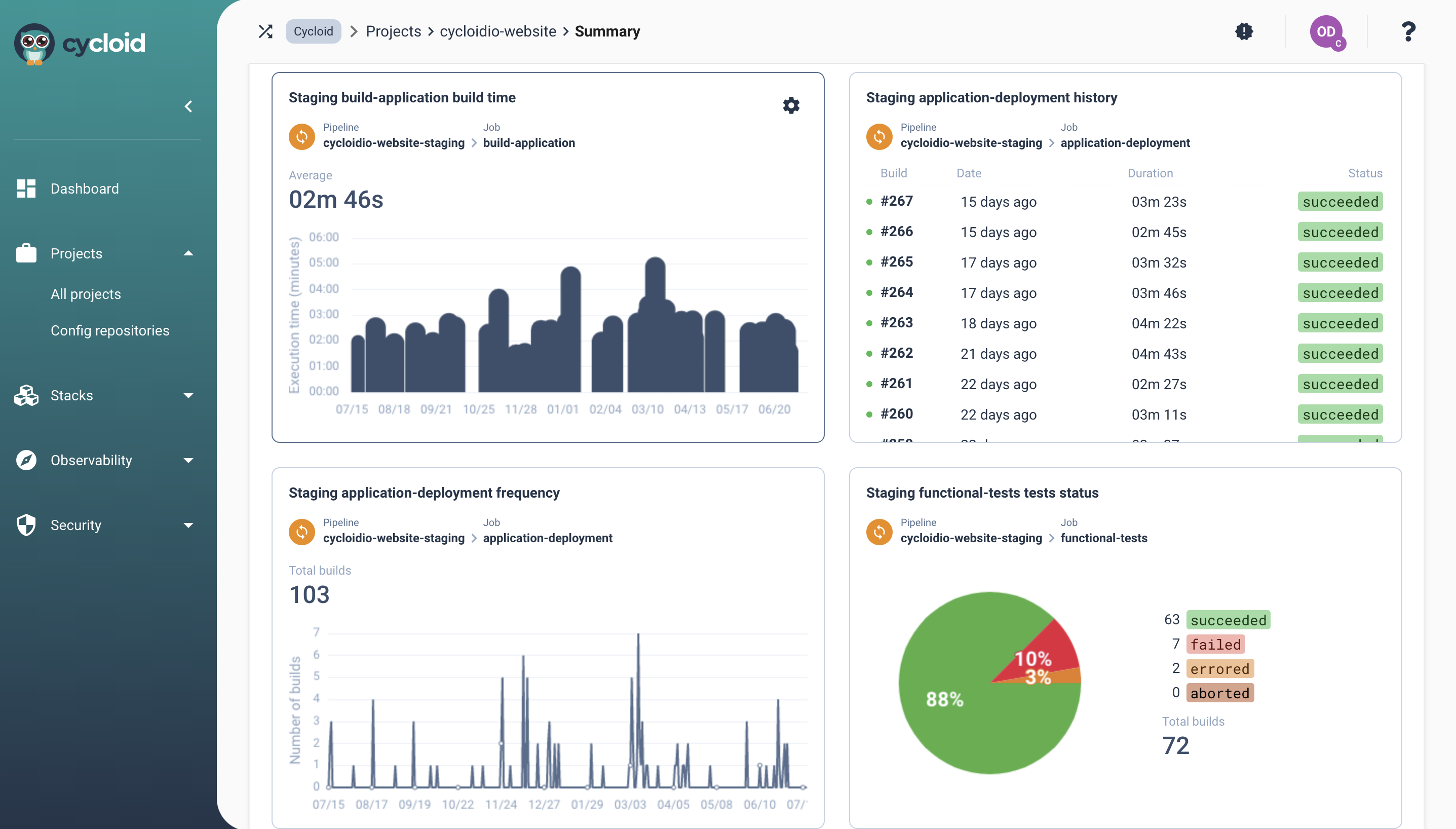
    Cycloid, a Paris, France-based provider of an open framework for implementing DevOps best practices, today announced it is expanding its operations into the U.S. and United Kingdom.

    Benjamin Brial, founder of Cycloid, said the Cycloid framework provides a lightweight approach to striking a balance between enabling developers to employ the tools they prefer and the need for centralized governance. The framework allows roles and policies to be pre-defined to ensure governance while service catalogs are used to deploy software using a set of drag-and-drop visual interfaces. There are also a set of management tools and features that provide additional visibility, automation, monitoring and financial controls to DevOps workflows.

    In effect, the portal that Cycloid provides to manage those workflows also serves to make DevOps more accessible to a wider range of IT professionals, added Brial.

    Cycloid

    Many organizations that embrace DevOps wind up building their own custom portal to achieve that same functionality. Rather than devoting resources to building and maintaining such a portal, Brial said Cycloid maintains and updates a portal platform that can be employed across any combination of tools that developers prefer. Other DevOps frameworks are often rejected because they require developers to adopt a specific set of tools, noted Brial. Without support from developers, it becomes nearly impossible to adopt DevOps best practices at scale, he added.

    After more than a decade of advocacy, adoption of DevOps within most organizations remains spotty. A significant factor in the lack of adoption is cultural issues involving skillsets. Many IT administrators lack the programming skills required to programmatically manage DevOps workflows. Cycloid is trying to establish a middle ground that enables IT operations teams to manage and govern DevOps workflows without having to acquire programming skills. The goal is to make it simpler for developers and IT operations teams to collaborate, said Brial.

    It’s not clear to what degree such an approach might increase adoption of DevOps best practices within enterprise IT organizations. However, it’s already apparent that the cost of hiring and retaining, for example, a small army of site reliability engineers (SREs) to manage IT environments at scale is often cost-prohibitive for many organizations.

    There’s no shortage of DevOps frameworks, but most organizations generally wind up crafting their own as part of an effort to tailor a DevOps workflow to meet their specific requirements. However, if there is a readily available framework that is highly customizable, Cycloid is betting more organizations would rather buy than build and maintain the entire framework themselves. Otherwise, DevOps teams would spend half their time performing the same repetitive manual tasks over and over, said Brial.

    One way or another, DevOps as a methodology for building and deploying applications needs to become more accessible. Proponents of DevOps have made a case for the methodology for the better part of a decade, with mixed success. The challenge continues to be finding a way to scale DevOps processes across the entire enterprise versus allowing each individual development team to define application development and deployment processes that, today, vary widely in terms of efficiency.

  • Engineering Applications for DevOps (Part 2)

    Engineering Applications for DevOps (Part 2)

    This blog series explains how to engineer applications for DevOps.

    Topics covered in this blog series:
    • Factors to consider when deciding whether an application is a good candidate for DevOps.
    • Best practices for engineering designs for DevOps.
    • DevOps applied to enterprise apps and software services.
    • DevOps applied to COTS systems.
    • DevOps applied to manufactured (embedded) systems software.
    • Five levels of application maturity.

    This blog is part two, and covers best practices for engineering designs for DevOps. You can read part one here.

    Poor design practices severely limit the potential for improvements provided by DevOps. As stated in my blog post Design for DevOps—Recommended Engineering Practices, “Without good design practices, a DevOps implementation has no hope of delivering on its promise of accelerating innovation with high quality and scale.”

    Following DevOps-recommended engineering practices for application design is important for legacy, greenfield or brownfield products, platform projects, feature enhancements or repairs. It is important for enterprise three-tier applications or multilayer products. And it is true whether the developers are using Agile, waterfall or ITIL development processes. In every application design case, designers face tough challenges and are expected to balance conflicting goals.

    Designers are expected to rapidly drive down the work backlog yet produce quality products that avoid costly rejections and rollbacks. In addition, there is pressure to increase the percentage of effort spent on creative content rather than corrective content and do so with limited time and resources. Balancing these conflicting goals is a tall order. If not supported by recommended engineering practices, the overall design experience is a cauldron of stress and a fast route to burnout.

    Recommended Engineering Practices

    The following recommended engineering practices improve the design experience and the products of that design in a way that is streamlined for the DevOps pipeline:

    • Designers must thoroughly understand customer use cases.
    • Usability, reliability, scaling, availability, testability and supportability are more important than individual features! Quality over quantity is recommended. Designs that anticipate actual customer use are the most successful.
    • The culture needs to support designers.
    • Leaders must support the designers with motivation, mentoring and training.
    • No designer can be expected to know everything. It is OK for designers to make some mistakes if lessons are learned and improvement quickly follows. Continuous monitoring and quick remediation are examples of good DevOps practices that help minimize the impact of any mistakes.

    Design Coding Practices

    Design coding practices are critical in the following ways:

    • Products are architected to support modular independent packaging, testing and releases. In other words, the product itself is partitioned into modules with minimal dependencies between modules. In this way, the modules can be built, tested and released without requiring the entire product to be built, tested and released all at once.
    • Where possible, applications are architected as modular, immutable microservices ready for deployment in cloud infrastructure, in accordance with the tenets of twelve-factor immutable non-monolithic apps, rather than monolithic mutable architectures.
    • Software code changes are pre-checked using peer code reviews prior to commit to the integration/trunk branch.
    • Software changes are integrated in a private environment together with the most recent integration branch version and tested using functional testing prior to committing the software changes to the integration/trunk branch.
    • Developers commit their code changes regularly—at least once per day.

    Good Design Practices Support QA and Ops

    Good DevOps design practices support QA in the following ways:

    • Design practices consider and understand the QA process.
    • Software code changes are pre-checked with unit tests prior to commit to the integration/trunk branch.
    • Software source code changes are pre-checked with static analysis tools prior to commit to the integration branch. Static analysis tools are used to ensure the modified source code does not introduce critical software faults such as memory leaks, uninitialized variables, and array-boundary problems.
    • Software code changes are pre-checked with dynamic analysis and regression tests prior to commit to the integration/trunk branch to ensure software performance has not degraded.

    Good DevOps design practices support Ops in the following ways:

    • Design practices consider and understand delivery and deployment pipeline processes.
    • Software features are tagged with software switches (i.e., feature tags or toggles) during check-in to enable selective feature-level testing, promotion and reverts.
    • Automated test cases are checked in to the integration branch when code changes are checked in. Evidence that the tests passed are included with the check-in.
    • Tests are conducted in a pre-fight test environment that is a close facsimile of the production environment.

    Supporting Tools

    The following supporting tools are needed to realize design for DevOps best practices:

    • Elastic infrastructure that can be easily orchestrated, created and released, as needed, to support designers’ tasks on-demand with minimal delay.
    • Design, code management, monitoring and test tools are readily available and scalable with minimal delay.
    • Monitoring tools that track application process performance and report the results to designers in easily consumable formats without delay.

    Applications for Which DevOps Does Not Apply

    “If you build it, they will come,” made for a great movie idea in Field of Dreams, but the reality is that many DevOps journeys led to nowhere despite the excellence of the people, processes and technology involved. As indicated above, applications that will not benefit from faster lead times, incur insufficient costs to justify investment in DevOps or that are too rigid to accept change are not good candidates for DevOps.

    What This Means

    This blog is part two of a series explaining how to engineer applications to be most suitable for DevOps. This blog series explains how to engineer applications for DevOps, and covers topics including:

    • Factors used to decide whether an application is a good candidate for DevOps.
    • Practices to engineer designs for DevOps.
    • DevOps applied to enterprise apps and software services.
    • DevOps applied to COTS systems.
    • DevOps applied to manufactured (embedded) systems software.
    • Five levels of application maturity.

    This blog covered practices used to engineer designs for DevOps. You can read part one here.

    For more information on how to engineer applications for DevOps, refer to my book Engineering DevOps.

  • Engineering Applications for DevOps (Part 1)

    Engineering Applications for DevOps (Part 1)

    This blog series explains how to engineer applications for DevOps.

    Topics covered in this blog series:
    • Factors to consider when deciding whether an application is a good candidate for DevOps.
    • Best practices for engineering designs for DevOps
    • DevOps applied to enterprise apps and software services
    • DevOps applied to COTS systems.
    • DevOps applied to manufactured (embedded) systems software.
    • Five levels of application maturity

    This blog covers factors to consider when deciding whether an application is a good candidate for DevOps.

    Factors to Consider for Engineering Applications

    The extreme worldwide hype around DevOps products and services seems to suggest that DevOps is good for everybody and applies equally well to every software-based product or service in every organization. Here is my experience with that assumption: It is not true!

    On the other hand, I have heard people say that DevOps does not apply to applications for which it absolutely does! Before you go a step further in your DevOps journey—or decide that your application does not qualify for DevOps—you should consider carefully how well your application is engineered to become a model for DevOps implementations.

    Best Practices for DevOps Determination

    The following are important factors you can use to decide whether an application is a good candidate for DevOps:
    • The application will benefit from faster lead times.
    • Leaders with responsibility for this application are open to collaboration and will be sponsors of change.
    • Team players that are associated with the application team (product owners, Dev, QA, Ops, infrastructure, security, PM) are open to collaboration and change.
    • The application is currently using or planning to use service-oriented, modular architectures or microservices.
    • There are at least ten people associated with the application including product owners, Dev, QA, Ops, infrastructure, security, PM. Smaller projects with smaller teams may not show sufficient impact or justify substantive DevOps investment.
    • The application is expected to undergo changes for more than a year. Less time would not likely yield return on the investment required for DevOps.
    • The application represents a good level of business impact and visibility but does not involve an extreme amount of risk for the business.
    • The application experiences frequent demands for changes from the business.
    • Not all tools used with the application need to be replaced to implement a DevOps toolchain. The costs of changing out all tools can negatively affect the ROI and business case for DevOps transformations.
    • Efforts to build, test or deploy releases of the application are substantial and could be reduced significantly by automation.

    It is not necessary for an application to perfectly fit all the factors, but the more closely it fits the more likely your application will benefit from using DevOps and will, therefore, be worth the cost to implement a well-engineered DevOps practice.

    DevOps can be used with all types of software applications and services. However, not all applications and services should be engineered to use DevOps. The factors that determine whether to engineer DevOps for an application have more to do with business factors than technology differences between different types of applications. Applications must be engineered in specific ways for DevOps to operate effectively.

    What This Means

    This blog is part one of a series explaining how to engineer applications to be most suitable for DevOps. This blog series explains how to engineer applications for DevOps including:

    • Factors to consider when deciding whether an application is a good candidate for DevOps.
    • Best practices to engineer designs for DevOps.
    • DevOps applied to enterprise apps and software services
    • DevOps applied to COTS systems.
    • DevOps applied to manufactured (embedded) systems software.
    • Five levels of application maturity

    This blog covers the first two topics: factors to decide whether an application is a good candidate for DevOps and best practices to use when engineering designs for DevOps.

    For more information on engineering applications for DevOps, refer to my book Engineering DevOps.

  • Bringing Continuous Testing Into the Software Delivery Pipeline

    Bringing Continuous Testing Into the Software Delivery Pipeline

    For any highly competitive industry that relies on a smooth and stable user experience, it is vital that their development teams accelerate release cycles, lower operating costs and ultimately reduce risks. Continuous testing is one way companies can achieve these objectives.

    As a subset of software testing, continuous testing (CT) is valuable because it uncovers and addresses different problems at various stages of the development journey that other methods don’t. Most other testing methodologies require a large staff; CT doesn’t. CT leverages in-sprint automation, including end-to-end tests across the front and back end of the technology to cut costs and facilitate rapid delivery without adding more pressure on internal teams. Moreover, as part of a larger software delivery pipeline, CT is positioned closer to the beginning to execute tests early, often and comprehensively to realize cohesive release goals.

    CT introduces quality assurance with constant iterations of testing and actionable feedback at each stage of development to evaluate business risk coverage and ensure the best user experience and customer satisfaction. As the name implies, CT helps developers and product managers detect and fix critical bugs not only in the early stages of development, but continuously throughout the software development life cycle (SDLC), ensuring that errors in the code do not get unintentionally released into the wild.

    As software companies accelerate their release frequency, continuous testing sets a precedent for digital tools development and the quality assurance process.

    Benefits of Continuous Testing

    Continuous testing plays an integral role in the CI/CD pipeline, is part of the overall set of DevOps best practices and the information it provides is invaluable to development teams. The benefits of CT are also far-reaching, with positive impacts on the entire organization, including:

    Better Company-Wide Feedback

    Continuous testing facilitates feedback to all involved teams and stakeholders. For example, when a bug gets detected in code, ideally, the only team notified should be the team responsible for the part of the code with the bug. Without CT to automatically detect bugs and notify those responsible for fixing errors, triaging bugs could be a full team effort or, worse, a dedicated team’s main function. This approach is very inefficient and wastes the time of the engineers whose code is bug-free. The feedback provided from CT cuts down on these unproductive scenarios and allows stakeholders to make immediate and informed decisions.

    Higher Quality Code and User Experience

    A company that effectively uses CT should expect higher quality code and a more stable user experience. Stability measures application health and user experience; it is negatively affected by session-ending events like crashes. With CT, businesses will give their development teams better awareness of product quality and performance while also significantly improving overall business metrics by fixing broken apps faster.

    CT Breaks Down Siloed Teams

    Not only will CT enhance quality assurance, it similarly works to improve the development of digital tools through the breakdown of siloed teams. When teams become siloed, they inadvertently keep processes and knowledge to themselves, resist cross-functional collaboration and work in isolation toward their own goals. Predictably, separate groups fail to share insights or ideas, leading to stagnation and decreasing innovation. However, by leveraging CT, siloed teams can become more collaborative in development, testing and operations, increasing overall business efficiency.

    CT Enables Objective Evaluation

    Finally, CT enables an organization to pause and objectively assess if it is aligning efforts with its specific business goals. As mentioned before, CT uses automation to provide timely feedback on business risks, reducing the chances of a digital application or tool failing at launch. Likewise, dev teams and managers can more easily meet their business goals and optimize the value of a release. Additionally, objective assessments are helpful for critical decisions – as CT gives actionable data for decision-makers to support their choices.

    Today, consumers have come to expect error-free experiences within their software applications, with the most stable of these applications driving conversion, engagement and retention. Applying a continuous testing model to a software development pipeline will ultimately result in applications being delivered faster and at higher levels of quality than ever before, with an enhanced end-user experience. As companies combine agile development with continuous testing, they will optimize each aspect of the development life cycle and their larger business goals.

  • Survey Finds Biggest DevOps Obstacles are Organizational

    Survey Finds Biggest DevOps Obstacles are Organizational

    A survey of 600 IT professionals published this week by mabl, a provider of a test automation platform, finds the biggest barriers to adopting DevOps practices are more closely related to organizational issues rather than any technology.

    The survey identified non-technological issues as the main inhibitor to DevOps by a wide margin (82%). Only 11% of respondents said their organizations has fully implemented DevOps practices, while another 24% said they were most of the way toward achieving that goal.

    The top two barriers to adoption are slow processes and speed of adaptation (29%), followed by budget and funding (21%). Only 18% identified technology limitations as an issue.

    Nearly half of respondents (46%) said they have been able to implement continuous integration, while more than one-third (36%) said they have also been able to achieve continuous delivery. Just over a quarter (27%) said they have also achieved continuous deployment. However, only a third of respondents said they deploy new code at least once per week. Almost half still deploy less than once per month. The number of teams that deploy new code daily or multiple times a day (15%) is roughly equivalent to those that deploy code on a quarterly basis (16%).

    The most widely used DevOps tools are GitHub (34%) and Jenkins (33%), followed by GitLab (21%), Azure Pipelines (20%) and Bitbucket (19%).

    In terms of testing, the most widely automated tests are user interface (UI)/functional and unit tests at 42% each, followed by regression at 41% and integration at 35%, respectively. The most widely used functional testing tool is Selenium (41%), followed by Cypress at a distant second place (14%). The most widely employed tool for testing application programming interfaces (APIs) is Postman, followed by SoapUI (21%) and homegrown tools (17%).

    Dan Belcher, co-founder of mabl, said that while it’s clear most organizations still have a long way to go before they fully embrace DevOps best practices, it’s now more a question of degree rather than if. As organizations realize the extent to which they are dependent on software today, the focus on both quality and ensuring timely delivery will increase. The stakes involved in software delivery these days have never been higher, noted Belcher.

    Nevertheless, the survey makes it clear how resistant to change organizations are. Some organizations have been building software the same way for decades. The only thing more difficult than convincing IT and business leaders there is a fundamental need for change is driving that change all the way down to individual developers and IT operations teams.

    Competitive pressure, however, will inevitably force the issue. If rivals are delivering better application experiences that create a business advantage within the context of a digital business process, an organization will have to adapt. Otherwise, their fate will be, over time, to fade away or be acquired. Equating DevOps with that existential threat may be a challenge, but unless that connection is made it’s only a matter of time before organizations that aren’t embracing DevOps best practices will slide toward irrelevance.

  • LogDNA Adds Usage Quota Tools to Help Control Costs

    LogDNA Adds Usage Quota Tools to Help Control Costs

    LogDNA announced today it will enable IT teams to apply usage quotas to help rein in log management costs.

    Tucker Callaway, CEO, LogDNA, said as applications become more complex – thanks, in part, to the rise of microservices – the amount of log data that a DevOps team can collect has significantly increased. IT teams can now assign DevOps teams both hard and soft quotas to limit the amount of log data collected during a specific time period, Callaway said.

    IT teams can set a daily or monthly hard limit on the volume of logs stored or, alternatively, they can also set soft daily or monthly quotas that can apply throttling logic to ensure mission-critical log data will continue flowing through LogDNA as usage volume approaches the limit threshold. It will then be up to each IT team to determine, based on the tasks at hand, whether to enable a DevOps team to exceed those thresholds, Callaway said.

    IT teams can also make use of soft limits to reallocate storage resources from one DevOps teams to another based on how much log data might be generated in a specific time period, Callaway noted.

    LogDNA will notify team members any time a quota is hit, or when an exclusion rule is triggered because a quota has been reached. Those alerts can also be integrated with email systems or the Slack messaging platform. Logs that are not retained are not counted toward the monthly bill, but are displayed and will trigger other relevant alerts.

    In the wake of the economic downturn brought on by the COVID-19 pandemic, IT organizations are, generally, more sensitive to costs. At the same time, many of them are encouraging developers to assume more responsibility for application life cycle management as they embrace DevOps best practices. The usage quotas are intended to enable IT teams to strike a better balance between what can be two competing agendas, Callaway said. IT leaders are not necessarily trying to discourage DevOps teams from collecting log data as much as they are trying to make sure costs are predictable, Callaway added.

    Log data, of course, is one of the core elements of any observability strategy. While observability has always been a core DevOps principle, the number of organizations that have been able to meaningfully achieve it has been limited. However, as organizations start to deploy microservices with multiple dependencies, the need to provide context when troubleshooting those applications has become more acute.

    It’s not clear to what degree more granular control over log data might sway an IT organization toward one platform versus another. However, when it comes time to justify a choice to senior IT and business leaders, it’s always a good idea to address, at some point, how one decision versus another might have a more positive impact on the bottom line.