Tag: DevOps and mainframe

  • BMC Survey Surfaces DevOps Mainframe Progress

    BMC Survey Surfaces DevOps Mainframe Progress

    A global survey of 1,000 executives and IT professionals that rely on mainframes found 70% are now employing DevOps processes to build and deploy applications on the venerable platform, with 60% of those respondents now deploying applications faster. A full 80% of respondents also wanted to deploy mainframe applications faster, according to the survey.

    The survey also found that integration of IT processes across mainframes and distributed computing environments has increased, with well over half (57%) now sharing platform operations roles. A total of 44% reported site reliability engineering (SRE) as a shared role that spans both platforms.

    Applications developed in-house are being delivered faster than a year ago, reinforcing the mainframe’s business value, with 76% realizing value in under 12 months.

    More than half of respondents (53%) said their organizations is also implementing DevSecOps practices in a way that spans all those platforms. The top priority for organizations that have mainframes is security and compliance (67%), the survey also found.

    Nearly a third have also adopted artificial intelligence for IT operations (AIOps) across mainframes and distributed computing platforms. Survey respondents that have adopted both mainframe AIOps and DevOps reported they are gaining visibility into service issues 70% faster, with 41% improving uptime and availability, according to the survey.

    Finally, the survey found 95% of respondents still had a positive perception of the mainframe as a platform for running applications, with 62% reporting transaction volumes on the mainframe are increasing. More than half (55%) also noted workload volatility and unpredictability is increasing. A similar percentage (55%) also reported more than half of their data is on a mainframe.

    John McKenny, senior vice president and general manager for Intelligent Z mainframe optimization and transformation at BMC, said IT teams in a downturn are, as usual, trying get the most out of their existing investments. The thing that is changing most is the mainframe is now becoming more integrated with distributed computing environments as IT teams strive to achieve that goal, he added.

    In general, there’s still much work to be done in terms of furthering adoption of DevOps best practices in mainframe environments, noted McKenny. Each organization will most likely determine at what level to apply those practices based on the frequency at which applications running on mainframes need to be updated. There are still plenty of applications running on mainframes that might not need to be updated for many years, but as organizations embrace digital business transformation initiatives, the need to update mainframe applications more frequently has increased, noted McKenny.

    Regardless of the type of application deployed, it’s apparent that the days when mainframes were managed in isolation from the rest of a distributed computing environment are slowly coming to an end. A mainframe is, arguably, just another node for deploying applications. The one major difference is that, as platforms are considered, the mainframe is a lot more secure, said McKenny.

    The challenge and the opportunity now, of course, is as much about changing attitudes toward the mainframe as it is making the right DevOps tools available to the IT teams tasked with managing heterogeneous IT environments.

  • Git for Mainframe: Back to the Future 

    Git for Mainframe: Back to the Future 

    Software delivery modernization should be done with care, especially with mission-critical mainframe apps. But for some, modernization will feel like a trip back to the future.

    Mainframe applications are typically systems of record with high-value transactions, significant compliance risk and an essential need for stability and security. They’ve been running reliably, often for decades, with code changes made by teams of dedicated developers using time-tested interfaces like ISPF (green screens) and Eclipse integrated with mainframe-based source management tools—Endevor is the most widely used example.

    So Why Modernize?

    Three primary drivers of change are present:

    • Business Agility: Digital disruption is generating an increased volume and velocity of business demands often resulting in cross-platform application architectures. It’s increasingly common to have cloud/mobile customer-facing apps calling back-end mainframe services for seamless experiences.
    • Staffing: A talent crunch resulting from career mainframers retiring while traditional mainframe practices and tools lack appeal for the next generation. Backfilling is a challenge as next-gens would rather be using popular, cloud-native tools that offer broader career potential.
    • Performance: DevOps adoption has raised the bar in terms of productivity, delivery velocity, quality, lead times, etc. The opportunity to achieve comparable performance levels with mainframe development is entirely possible but requires modernization.

    The confluence of these drivers leads to an obvious conclusion—the time for modernizing mainframe application development is now. Version control is the foundation of software development, acting as the focal point with IDEs/code editors, Agile tools, DevOps automation tools (like code scanners and CI/CD orchestrators) and service management tools. This article focuses specifically on the adoption of Git as a critical enabler of modernization.

    The Role of Git

    The next generation of talent, typically millenials and Gen Zs, know and love Git. With 94% of professional developers viewing Git as a fundamental development tool per Stack Overflow, it has become the de facto standard for enterprise IT, eclipsing all alternatives. Built initially for open source development of Linux, it offers a decentralized model where devs can work independently in branches yet collaborate closely through pull requests, issue management, etc.

    It has become so dominant that popular editors like VS Code have built-in Git capabilities. With the introduction of the free Code4z extension pack by Broadcom, VS Code and compatible tools (e.g., cloud-hosted GitHub Codespaces) are now viable options for mainframe developers, making Git adoption a natural, ‘parallel’ modernization opportunity. The Developer Cockpit Simulator illustrates the Git-ready experience using VS Code for mainframe application development.

    Back to the Future

    Beyond version control, leading Git platforms like GitHub and GitLab have expanded to become comprehensive DevOps platforms (e.g., GitHub Issues, Actions, Codespaces, Projects, etc.).  Yet the precedent for this evolution was set decades ago when Endevor was envisioned as an environment for development and operations with SCM at its core. Yes, DevOps before ‘DevOps’ ever existed. For many mainframers, seeing the Git version control tools evolve into comprehensive platforms comes with a distinct feeling of déja vu.

    With automation that has stood the test of time, Endevor delivers code changes reliably and, with workflows optimized for the platform, does so very efficiently and securely. And while Endevor is continuously updated with new DevOps capabilities—including the recently introduced Dynamic Environments to facilitate developer self-service—there is no denying that Git is valuable from an enterprise perspective. In addition to attracting next-gens and facilitating onboarding, a Git experience empowers any developer, if authorized, to easily update mainframe apps. All they need is a few mainframe basics and experience with the relevant languages (e.g., COBOL, PL/I).

    Back when the mainframe was the sole enterprise platform, a single, common experience was the norm, but IT evolved along many dimensions resulting in a sometimes disparate and siloed environment. Today, however, most developers are comfortable using multiple languages in a hybrid environment, so normalizing around a modern developer experience makes sense and brings things full circle.

    Git-Native Approach

    One option to take advantage of Git is to move source code to a Git enterprise server, but the inherent costs and risks associated with this approach should be carefully considered. Career mainframers are some of the most productive developers around and moving to a new paradigm will naturally be disruptive. In addition to changing workflows, this approach reestablishes build and deployment automation that has been working reliably for decades, which is both time-consuming and risky. Mainframe applications are often monolithic and complex with career mainframers’ expertise often filling gaps in documentation, so preserving this institutional knowledge should be a priority.

    Career mainframers can, of course, learn Git, but training takes time. And as many are nearing the end of their careers, will they be motivated to embrace the change? Repo migration may have the unintended consequence of accelerating the retirement of a critical knowledge base. As Deloitte forewarns in their Modernization and the Aging Workforce paper, “Don’t underestimate the value of legacy coders.”

    There are also costs associated with the migration—testing, documentation, training, project management—so the opportunity cost of porting code rather than investing in other high-priority business initiatives further qualifies this option.

    With these factors taken into consideration, migration should start with applications that are both stable (e.g., infrequent change requests) and pose a low risk to the business (e.g., lower dependence on career mainframers).

    A Git-native approach would require a specific tool such as Team Build, for example; a lightweight processor-based build engine that enables teams to collaborate natively using enterprise Git repositories while building on the z/OS platform. It is independent of Endevor and can be used for any build-and-ship needs for z/OS. It converts build logic in JCL and makes it maintainable off-platform with JavaScript.

    Hybrid Git Experience

    This ‘risk-managed’ option offers the benefits of Git—easier recruiting and onboarding, increased collaboration, etc.—while eliminating many of the costs and risks outlined above. With it, career mainframers continue working as they always have with existing tools and practices, without disruption, while next-gens use the tool they prefer, Git.

    Endevor Bridge for Git enables the Git experience with Endevor continuing to serve as the main repository. It accomplishes this by synchronizing a ‘source control mirror’ on the Git enterprise server. With this option, those who prefer to use Git can do so while colleagues using native Endevor can work on the same codebase at the same time. They can use Eclipse, VS Code or VS Code-compatible cloud-based IDEs, which offer the added benefit of working in Git without a local copy of the code.

    And with enablers like the Zowe CLI, modernizing-in-place offers the best of both worlds: Mainframe and off-platform tooling. For example, run Jenkins CI/CD pipelines for code scanning, testing and other functions off-host following a code change while allowing developers to continue to use the ISPF interface. To summarize, this option offers the advantages of the Git-native model without repo migration.

    Recommendations

    Due to the nature of mainframe applications, risk management is usually paramount so a thoughtful, pragmatic approach to the adoption of Git is recommended. Provide those career mainframers that are open to adoption with the time they need to embrace the technology by introducing Bridge for Git, for example. As organizations become more comfortable with the hybrid model and are satisfied they have enough Git-based developers with institutional knowledge of their codebase, they can identify apps to port to their Git enterprise servers.

    At the other end of the spectrum, for companies with a Git-only imperative, one option is migrating an initial set of applications quickly using, for example, Team Build. However, a cold cut-over at the portfolio level could be excessively disruptive and it’s not recommended. Accelerated retirements and/or increased retention costs are a real risk, so a phased approach over time is the best approach. The key to success with Git adoption is recognizing it is a journey for the organization that requires a well-thought-out plan.

    For a third-party perspective on the adoption of Git for mainframe apps, IDC has published an Infobrief, Git for Mainframe: Considerations for Enterprises, highlighting the opportunities and the challenges.

    There are many paths to modernization, so take advantage of others who have blazed the trail.  But whatever the approach to Git adoption, younger team members should be prepared for a “We were doing that way back when” story or two.

  • IBM z16 Delivers AI and Quantum-Safe Levels of Security

    IBM z16 Delivers AI and Quantum-Safe Levels of Security

    Business transformation and disruption is all about data. But it’s not just about collecting huge amounts of data, it’s what you do with that data and how it can enable you to create powerful insights.

    While many people focus on the cloud unicorns, the reality is that industry incumbents have a huge advantage. These businesses have decades of experience which translates into massive amounts of data and business logic. Where do many of these businesses host their most important workloads and data? IBM zSystems—the system that is best known as “the mainframe.” 

    Today, IBM is announcing its latest IBM zSystem—IBM z16. Two weeks ago, IBM spent time briefing the industry analyst community on the business strategy and technical underpinnings of the IBM z16. We met with a variety of IBM business leaders including executives from the IBM Systems division, Distinguished Engineers and IBM cloud leaders. The most significant updates to the platform are the inclusion of a dedicated on-chip AI accelerator and the addition of quantum-safe cryptography.

    It’s important to understand the size of the IBM zSystems ecosystem. The platform is used by 45 of the 50 largest banks in the world, four of the top five airlines and eight of the top 10 insurers, among others. Likewise, the partner ecosystem is huge, ranging from the largest system integrators to small DevOps- and AI-focused technology vendors. Suffice it to say, some of the world’s largest businesses and governments run on IBM zSystems.

    In this article, I will briefly cover the five biggest takeaways from the pre-announcement industry analyst briefings.

    IBM is Bringing AI to the Mainframe

    Many cloud data warehouse and analytics vendors say “Bring me the data.” IBM is flipping the script, because IBM zSystems already houses clients’ most critical customer and operational data. IBM z16 will be shipped with an on-chip integrated accelerator for AI.

    Everyone knows that AI creates a competitive advantage, so why should you care about the on-chip AI accelerator? The last mile of deploying machine learning/artificial intelligence (ML/AI) models is still a huge challenge. Businesses are investing large amounts of money and skills in developing models; however, latency often kills. The difficulty is that ML/AI models need to be built into applications so that the model can be executed at the point of transaction with virtually no delay. This also must be done at a massive scale! Think about the latency and security concerns if near-real-time banking transactions needed to go from a back-end system to a cloud AI platform to check for fraudulent transactions.

    For those of you who have been following the IBM zSystems platform, IBM’s z14 unveiled a pervasive encryption capability. This encrypt-by-default approach without traditional encryption overhead was enabled through an encryption-dedicated chip. Similarly, AI workloads will be performed by the integrated AI accelerator.

    Your AI Infrastructure is Only as Powerful as Your Software Ecosystem

    Developers and data scientists want to use data, ML and AI tools that they know and trust. AI success requires an open stack of software options, not a walled garden. While IBM has a wide range of AI technologies, including Watson Machine Learning for z/os, IBM Cloud Pak for Data and IBM Cloud Pak for Watson AIOps, just to name a few, an IBM-only approach would be a non-starter for many data scientists.

    The IBM z16 AI accelerator supports a wide selection of ML libraries and compilers. Clients can build and train models in a variety of popular frameworks including TensorFlow, SAS, Microsoft CognitiveToolkit (Microsoft CNTK), PyTorch and Keras, along with others.

    The system uses ONNX, an open source tool to enable interoperability of ML/AI models to prepare and deploy the model on the dedicated AI accelerator.

    What does this mean? You can bring your existing data models to IBM z16. In addition, your teams can use their existing preferred vendors while also working with IBM zSystem’s integrated accelerator chip.

    Cybersecurity Arms Race: Quantum-Safe Cryptography is a Growing Need

    Cybercrime is a multibillion-dollar business. Although fairly routine exploits like phishing remain the number-one money generator for cybercriminals, these gangs and nation-state-sponsored organizations are getting more sophisticated. For example, cybercriminals are investing in AI and ML just like traditional businesses. In some cases, cybercrime syndicate engineering employees believe they’re working for a legitimate company.

    What is quantum-safe cryptography? The research is focused on identifying algorithms that are resistant to attacks by both classical and quantum computers. 

    Why is this a growing area of concern? IBM, along with Amazon Web Services (AWS), Microsoft Azure and Google Cloud Platform (GCP) all offer quantum computing-as-a-service. While quantum computing has massive potential for applications across a wide range of industries including drug discovery, chemical engineering and combating climate change, keep in mind that cybercriminals are looking at this technology to unlock complex cryptography algorithms. 

    IBM claims that IBM z16 is a “quantum-safe system.” The company uses a variety of different hardware, software and business process approaches to assure data security. For example, the system includes a new crypto express card with quantum-safe APIs to upgrade existing application security. At a firmware level, IBM z16 has a built-in dual signature scheme.

    In addition, for a number of years, the IBM zSystems platform has taken a zero-trust approach to security which includes a bring-your-own-key (BYOK) framework. IBM can never access the keys to your encrypted data–and neither can cybercriminals and/or governmental organizations—instead, those encryption keys remain inside your firewall.

    IBM zSystems Tech Goes to the Cloud; Mainframe Remains On-Premises

    What a difference a nine can make! Five nines mean 99.999% availability while four nines (99.99% availability) result in more than 47 minutes of downtime per year.

    When I work with C-level executives that have a mainframe within their environment, the role of IBM zSystems is always discussed. In many cases, businesses have explored the possibility of transitioning off of the mainframe, but resilience, predictability and security are the reasons why businesses remain on the platform.

    IBM mainframe services are increasingly being offered in the cloud. Most recently, IBM announced IBM Z testing in the cloud. Likewise, IBM’s Cloud Hyper Protect Crypto Services, a key management approach using a specific security chip module, is enabled by IBM zSystems technology.

    However, you shouldn’t expect mainframe-as-a-service. Between latency, security, resilience, governance and compliance, it’s going to be a long time until you migrate and/or send your mainframe workloads to the cloud.

    As the author of Hybrid Cloud for Dummies and Cloud for Dummies 2nd Ed. (among other books and articles) I can confidently say that the cloud is not a panacea. The business case for moving many mainframe workloads to the cloud doesn’t exist. 

    Digital Transformation Means More Than Slick Apps–Plumbing Matters!

    Don’t get me wrong, mobile check deposits, airline ticketing and contactless hotel check-ins are great, but in many cases, they rely on older systems that have not been updated. 

    A few weeks ago while traveling for work, my flights were delayed for hours. I saw that another flight was leaving within the hour. I was already at the airport and figured I could rebook it via the airline’s app. Of course, it wasn’t that easy—I finally went to the ticketing desk and told the agent that I’d like to book a different flight. The agent then went to work; they spent a long time entering information into their system, talking to a colleague, asking for help and asking me several questions. After about ten minutes my flight was finally rebooked.

    This airline has a great app experience when things are running smoothly (so great, in fact, that I prefer to book my travel on the app rather than the computer). However, even a slight disruption caused everything to go off the rails. It’s clear to me that the company still relies on old, broken processes and outdated technology.

    My Perspective

    Moving AI closer to the data just makes sense. The last mile of AI—moving models into transactions—continues to be a huge challenge. I work with many businesses that have tons of data and do an excellent job retrospectively analyzing that data. However, real-time data-driven decision-making remains a challenge because of latency and the fact that moving data between on-premises and cloud systems raises security and governance risks (in addition to costs).

    Quantum-safe security is a growing concern for highly regulated organizations in the banking, insurance and governmental segments. Over the last several years, financial industry CIOs and CISOs/CSOs at large financial services organizations were focused on establishing a zero-trust approach to security. However, as attacks become more sophisticated, security teams are starting to perform risk assessments on their approach to cryptography. The inclusion of quantum-safe cryptography is important for IBM zSystems customers.

  • Survey Finds Widespread Adoption of DevOps in Mainframe Sites

    Survey Finds Widespread Adoption of DevOps in Mainframe Sites

    A survey of IT leaders by the market research firm Global Surveyz found a full 100% of respondents are modernizing their mainframe applications, but the reasons behind and approaches to achieving that goal vary widely.

    The research was conducted on behalf of Model9, a provider of tools for migrating mainframe data, and polled 100 companies that have more than 1,500 employees or more and use mainframes. Nearly three-quarters of respondents (73%) are embracing DevOps best practices to manage mainframe infrastructure, with 61% modernizing their mainframe applications. Just under half (46%) also noted they were outsourcing the management of those operations.

    However, the survey also found that unlocking the business value of stored data and accelerating innovation are among the top 2022 objectives for 42% and 36% of respondents, respectively. Data protection (89%), cybersecurity and resilience (76%) and cost optimization (52%) are the top priorities.

    Tamar Milstein, chief marketing officer for Model9, said that the continued focus on block-and-tackle mainframe management issues suggests there may be a disconnect between IT teams managing these platforms and senior business executives that are looking to drive digital business transformation initiatives.

    Nevertheless, a full 91% of respondents said the mainframe still holds the most critical applications for their business, with 62% reporting more than half of their core business applications on these platforms. The use of cloud computing platforms alongside mainframes is also widespread. A total of 61% have a hybrid multi-cloud computing environment already in place. Only slightly over one-third (35%) are using a single cloud to augment their mainframe. Nearly half (48%) are replicating data to the cloud. However, just over half (51%) are storing more than 50% of their data off the cloud.

    Model9 is making a case for modernizing these environments by making it easier for mainframe applications to access data stored on less expensive platforms to house data. That approach provides all the benefits of the cloud without having to incur the risks and costs of attempting to migrate an entire mainframe application to the cloud, said Milstein.

    Regardless of the approach organizations take toward application modernization, the survey made it apparent just how widespread the adoption of DevOps best practices in mainframe environments is. Many of those organizations are using DevOps practices to add application programming interfaces (APIs) to legacy mainframe applications to make the data residing in those applications more accessible. That approach reduces the technical debt that organizations might otherwise incur as they build and deploy applications on other platforms that might provide similar capabilities to an existing mainframe application.

    While there are plenty of organizations that have migrated away from mainframes, there remains a large base of IT teams still running applications on these platforms. Achieving the same level of transaction processing capabilities enabled by a mainframe in a cloud computing environment isn’t yet feasible. There are, of course, organizations that decided they would no longer like to operate a data center at all, but there’s still a substantial number of organizations that will continue to operate mainframes well into the rest of this century.

  • BMC Extends DevOps Reach from the Mainframe

    BMC Extends DevOps Reach from the Mainframe

    BMC today announced it has extended its DevOps platform for mainframe environments to provide integrations with GitHub Actions, a framework for managing workflows, and HCL Launch, a continuous delivery platform from HCL Software. BMC gained the DevOps platform with the acquisition of Compuware in June 2020.

    John McKenny, senior vice president and general manager for intelligent Z optimization and transformation at BMC, said those integrations—along with existing support for DevOps platforms such as Jenkins, GitLab and VS Code—make it possible to accelerate the development of applications that include mainframes as part of a larger distributed computing environment. DevOps teams, for example, can now employ an HCL Launch plug-in for the BMC AMI DevOps for Db2 tool to automatically capture and propagate database changes across IBM Db2 databases.

    At the same time, BMC also enhanced a BMC AMI Ops Monitor for Java Environments that automatically discovers all Java virtual machines (JVMs) running on z/OS environments on a mainframe. The BMC AMI Ops Monitor for Java Environments now includes the ability to discover the application programming interfaces (APIs) and services invoked by those JVMs.

    BMC also revealed today that its Workflow WiZard tool has been accepted as part of the open source Zowe initiative launched by the Open Mainframe Project. The Workflow WiZard makes it easier to install, configure and maintain software installed on mainframes running z/OS.

    Finally, BMC revealed it has extended its privileged access management (PAM) tools by enhancing the supervisor call screener and Unix System Service (USS) data enrichment capabilities of BMC AMI Security software. Based on technology BMC gained with the acquisition of RSM Partners, this enhancement increases the level of protection BMC AMI Security software provides to thwart attacks by surfacing suspicious activity, such as from malicious insiders that may have compromised administrator credentials, said McKenny.

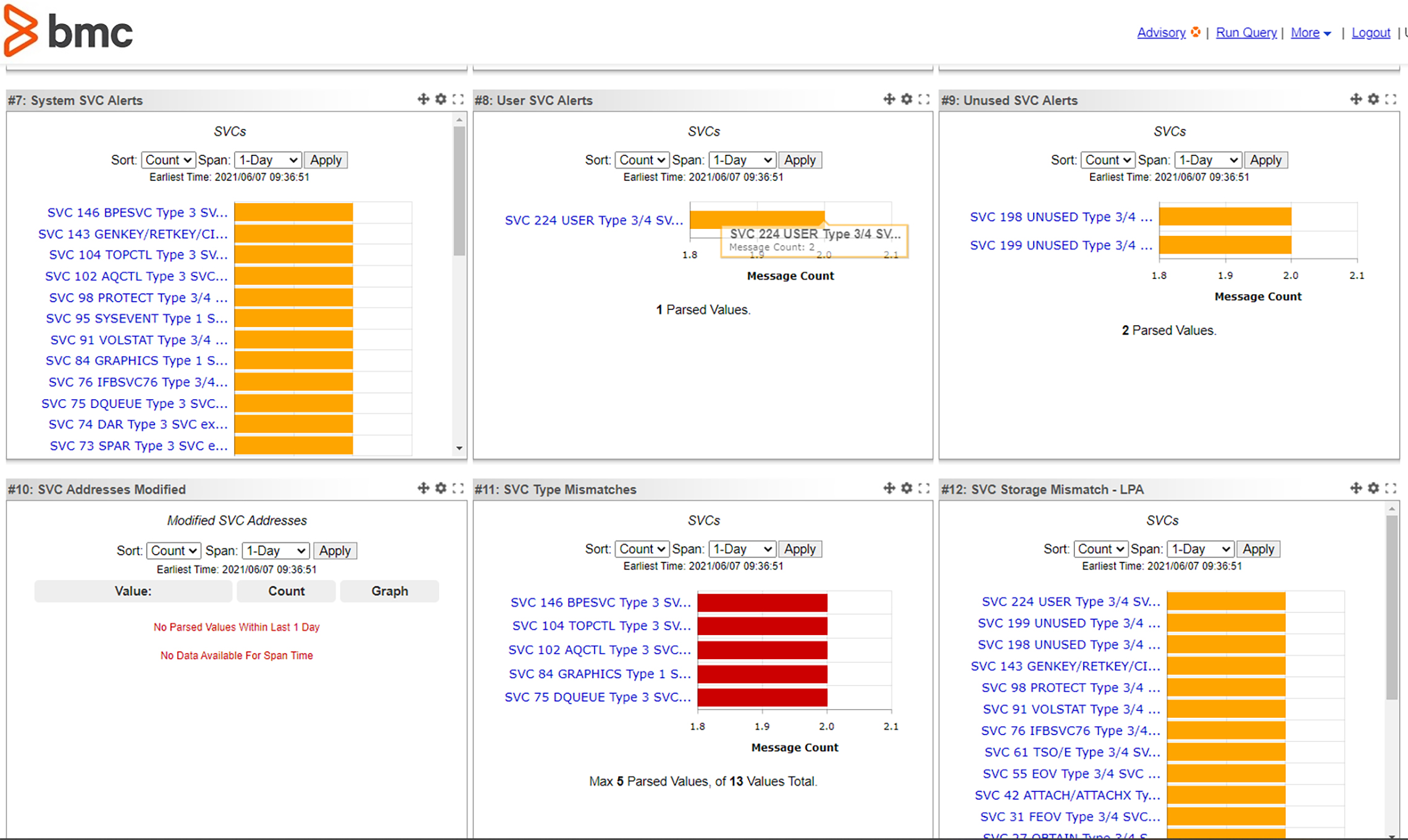
    BMC mainframe

    These days, McKenny noted, everything is under attack because the minute cybercriminals discover a way to compromise one platform, they almost immediately try to apply that same technique against other platforms. Mainframe environments, which tend to process an organization’s most valuable data, naturally are a high-value target, added McKenny.

    In general, McKenny said IT organizations that rely on mainframes continue to make steady progress toward embracing DevOps best practices. A recent survey conducted by Forrester on behalf of BMC found 80% of respondents said their mainframe development tools needed significant improvement to provide more value.

    The need to accelerate digital transformation initiatives, which typically require access to data that resides on mainframes, are, in many cases, forcing the DevOps issue within many organizations. Software development teams that build mainframe applications are almost always required to create APIs that make it easier for other applications to consume that data.

    Not every organization, of course, has a mainframe. However, as digital business transformation continues to evolve, the number of applications that need to consume mainframe data will steadily increase. The challenge facing mainframe application management teams is finding a way to provide that access without using traditional waterfall processes to build the required APIs.

  • Leveraging the Cloud for Mainframe Access

    Leveraging the Cloud for Mainframe Access

    Now more than ever, organizations around the world are looking to extend their existing mainframe investments as part of larger digital transformation initiatives. As core systems of record and reliability, mainframes continue to run many organizations’ most important applications and the idea of replacing these systems comes with greater risk than reward. While organizations are considering modernization of their mainframe investments, it’s important to remember that maintaining mainframe access and offering new ways for their users to work with the data and systems is a vital part of the larger project.

    Leveraging the Cloud for Mainframe Access

    With the recent increase in remote work, it’s no surprise that more companies are looking to leverage the cloud for mainframe access. This has many benefits from increasing scalability, availability and performance, to reducing application costs and improving security. Implementing modern mainframe access as part of a larger cloud project ensures that an organization’s modernization journey is not only transformational but also secure.

    If making the decision to leverage the private or public cloud for mainframe access, the integration of a secure host access solution ensures teams have access to the systems and applications needed to do their jobs, wherever they may be located. Deploying this secure access in a cloud environment is made easier by host access administration being integrated and centralized with the corporate user directory. Along with simplifying provisioning and management, centrally managed host access is, most importantly, more secure than other forms of access.

    The extension of enterprise security to the mainframe is sometimes overlooked in a transformation, but it is an integral part of the larger process of strengthening data and system security. In a perfect world, this can best be done through the integration of a host access solution with the existing identity and access management (IAM) system. If this is possible, the authentication credentials that are already in use for authorizing or denying access to the mainframe can be leveraged successfully.

    There are numerous benefits to an IAM integration with regard to access, data, stronger passwords, application security settings and system configurations. With IAM, the benefit of least privilege access means that users can access only the mainframe systems and data that are needed to do their jobs. Additionally, application security settings and session configurations can be changed from a central point by using the user directory. Finally, the stronger credential requirements of the IAM integration get rid of weaker eight-character passwords, strengthening security as a whole.

    Host Access Improves User Experience

    When it comes to host access, having a secure and centralized solution not only improves the mainframe access experience for the user, but also for the administrator. With zero-footprint secure access, users can be moved to a more secure web with higher security standards if needed. Security is also stronger with enterprise credentials that leverage mainframe session authorization to automatically sign them in. The integration of a host access solution gives administrators the ability to quickly deploy secure browser-based sessions, as well as providing web interfaces with no Java required, eliminating workstation dependencies as a result. This is also paired with the use of containers to enable deployment to countless users and support for mobile devices. For these reasons, a host access solution should be a common component in any cloud journey.

    The mainframe and its data, applications and user access remain vital for organizations and it is important that they remain protected and connected. With security being an ever-evolving issue, keeping these core systems secure while ensuring employees are able to access the systems and data they need should always be a priority. In conclusion, organizations looking to leverage the public or private cloud for their mainframe will have more success if they also strengthen their data and system security as part of the process.

  • DevOps Chat: Mainframe DevOps Update With Compuware’s Chris O’Malley

    DevOps Chat: Mainframe DevOps Update With Compuware’s Chris O’Malley

    Christopher O’Malley is one of the leading voices in the DevOps for mainframe community. He is relentless in advocating how the mainframe platform can not only exist but also thrive in today’s Agile/DevOps environments. His evangelism keeps his company, Compuware, front and center in the mainframe DevOps discussion and it really lifts the entire market.

    In this DevOps Chat, we catch up with Chris to talk about the latest release of Topaz, trends in the mainframe market and what we can expect in the near term.

    Chris is always a great interview with lots to say and this interview is right on point. As usual, the streaming audio is immediately below, followed by the transcript of our conversation.

    Transcript

    Alan Shimel: Hey, everyone, it’s Alan Shimel, devopsy.kinsta.cloud, and you’re listening to another DevOps Chat. This DevOps Chat features a return of our friend, Chris O’Malley, CEO of Compuware. Chris, happy 2019 and welcome back to DevOps Chat.

    Chris O’Malley: Thank you and glad to be here, Alan.

    Shimel: Absolutely. You know, Chris, it is. It’s 2019; DevOps continues to mature. And I think one of the trends that we’ve seen, certainly over the last year and I expect it to even accelerate this year, is changes are coming to the DevOps and mainframe market. Right? Mainframes aren’t going anywhere; in fact, shops that are using mainframes, I think their footprints are increasing, rather than decreasing.

    And, from what we see in our readers and in talking to them, is that they are eagerly anticipating new developments, new functionality, that their mainframe software will offer, that will allow them to leverage DevOps types of foundations, DevOps types of functionality. And, I mean, DevOps and Agile and, really, code word: continuous delivery, all of these new ways that we’re defining the modern software factory, if you will. You’re in the driver’s seat for it, right, Chris? I mean, Compuware is kinda leading this charge. What do you see – you know, put on your analyst glasses here. What do you see in the market?

    O’Malley: Well, first, just confirming what you said about the mainframe, is that the z14 has been awakening, I think, for customers and analysts, in terms of its success, so the z14 is the most successful mainframe model in over a decade. It’s had five consecutive quarters of year-over-year growth, which probably hasn’t happened in maybe forever. And, as you said, the reason that’s happening is the mainframe is still unmatched in terms of its reliability, its performance, its security, its transactional efficiency. And all of those things, all those virtues, are incredibly important in a digital age, where you try to basically create a customer experience through software. So the mainframe, as you say, it’s not just doing well; it’s actually doing better than historically because of the digital age.

    Shimel: Mm-hmm.

    O’Malley: So, just giving my disposition on the mainframe and the mainframe’s role within DevOps, I think, if you kinda zoom out a little bit to make sense of what’s happening to the mainframe, you gotta start first with the fact that all of these companies that use mainframe are of a mindset that “We’ve gotta be customer-centric. We’ve gotta serve our customers, whether they’re individuals, if they’re federal agencies, whether they’re citizens or it’s business-to-business.” But, for 100 years and for 100 years from today, companies that are the most customer-centric, obsessed with customers, do the best.

    And, when you look at kinda this modern age, to do well from a customer-centric perspective, you’ve gotta create awesome digital experiences. And that’s done by writing software. So companies – you know, and Amazon has taken the lead in a lot of these kinda more newer-age companies. They’re incredibly good at taking ideas that matter to customers – and, again, it’s usually through digital means, increasingly – rapidly turning those into deliverables that make a difference. And, whether it’s centered on creating these awesome experiences and when they kinda look at the measures of what they’ve gotta do better to turn those ideas into deliverables, they’ve gotta be really good at velocity, how fast they do those things. They can’t do it in ways that compromise quality, so quality has gotta be something that’s constantly getting better and they’ve gotta become more efficient.

    I mean, in the manufacturing space, they talk a lot about getting rid of non-value-added efforts and thinking about retooling things that are a cause for technical debt, that encumber your ability to increase velocity and improve quality, so you’ve gotta fixate on the efficiency side of it. So these three metrics are emerging as foundational to improving things like customer sat and improving financial performance.

    So, when you start now getting closer to large enterprise IT, you’ve got a mainframe, these ideas that matter to customers don’t neatly fall either on the mainframe, in terms of the coding work that’s gotta be done or the cloud or some other platform, almost always, these ideas span these platforms. So there’s a necessity to improve velocity, quality, and efficiency across the entire enterprise.

    So, you know, the mainframe, historically, has been this kind of silo-ed organization that had its own culture, its own set of processes, its own set of tooling. And, as you said, the mainframe’s not going away for all the right reasons. In terms of creating these awesome experiences, reliability matters. Performance matters. Security matters. How efficiently you do that, from a cost standpoint, matters. But you gotta draw the mainframe to be a like system and make it different only in syntax from these other platforms.

    So there’s a strong move within these large enterprise ITs to break down this silo, get rid of a house divided against itself, bring the mainframe into a culture that’s centered on innovation, not on maintenance, bring it from waterfall to Agile, to bring it to a tooling set that’s familiar to non-mainframe platforms, the products like Jenkins and SonarSource and SonarLint or Paris. All these type tools that are used aggressively to improve velocity, quality, efficiencies on these other platforms, bring these to bear on the mainframe.

    So that’s what’s causing, I think, the mainframe to be in this kind of disrupted state of trying to get the culture to move, getting people to think and behave differently, to embrace this kind of new order of how work is done, Agile techniques specifically, and to get away from – you know, the mainframe has always been selectively automated in incredible ways. I mean, the transaction volumes it can support are unmatched within the marketplace, but it’s selective automation, not intrinsic automation, which is a big part of what DevOps tries to push. And getting rid of non-value-added work on the mainframe and getting to the point that the value-added work can be done, again, faster, greater-quality, greater-efficiency.

    So that dynamic is now gone from kind of innovators and early adopters within the mainframe market, you’re now getting into more of the early majority, so you’re seeing it more prod-based, in terms of people looking at the mainframe as that “We’ve gotta make this like any other platform.” And I think the success of the z14 makes sense, why it’s doing so well. Not just better than the z13, but better than previous releases over in the last 10, 20 years, so it’s exciting times in the mainframe. And I think its success is gonna be something you see emerging over the next ten years.

    You’ll see fits and starts and, obviously, problems, but one of the things that’s making me so excited – you’re seeing successes in the market that are outrageous. We’ve got customers at Compuware that are increasing their development productivity by a factor of 4, I mean, a 400-percent increase in productivity, so they’re getting 4 times the number of story points completed within a release cycle. They’re taking testing time from weeks to minutes and with better quality. And, when that is understood by customers, you know, if you can go from weeks to minutes, that’s a lot of non-value-added work that you’re doing, right? That’s like burning money in the parking lot because a customer’s not gonna give you more money to do the same or less quality in what you can do in minutes, as opposed to somebody that’s a laggard doing it in two weeks.

    Shimel: Absolutely.

    O’Malley: So you’re seeing these amazing success stories. Again, it’s not just our tools; it’s _____ –

    Shimel: No, no, it’s important – Chris, it’s that 10X, right? Everyone’s looking for that 10X. And we’re starting – you know, 4X is great; 5X is better. We’re getting those – we’re hearing success stories, the 10X success stories, with mainframe. And it goes back to something else you said, that, instead of people saying, “Oh, I’m winding down my mainframe or I’m migrating mainframe,” no, I’m looking at a ten-year roadmap on mainframes. It’s not – a couple years ago, there was this – I don’t know – fake media, fake news, about “Yeah, well, it’s here now, but we gotta kinda wind down.” What you’re saying about the z14 is exactly right; it’s bigger than anything that’s come before it, in essence, right?

    Here’s another thing, though, Chris, and I’m interested in your take: kudos to the mainframe software market and vendors, who are recognizing – not all of ’em, not all of ’em, but the ones who are, the enlightened ones, who are recognizing this and are capitalizing on it by bringing the tools the market wants to bear. It’s more than just the hardware, right? The hardware’s phenomenal – I’m not gonna deny that; IBM has done amazing with the z14 – but the software vendors, including Compuware, right – take a bow – have really delivered. You guys have a new release coming out or just came out, is that right?

    O’Malley: Right. It’s the 17th consecutive quarter that we’ve come out with new capabilities, upgrades to our classic offerings and integration with awesome and preferred DevOps tools, so, yeah, we’re very excited about this newest release.

    Shimel: So talk to me. Give me the three biggest things that get you excited on this release, Chris.

    O’Malley: So, each quarter, we’re turning the crank in terms of trying to nail the jobs that are changing, right? As I explained earlier, when you’re going from waterfall to Agile and from selectively automated to intrinsically automated, you’re trying to go from maintenance to innovation, the jobs that people have to do change radically. And they change radically in ways that are difficult to achieve. I mean, when you’re working on the mainframe, you’re working with large code bases, large in terms of the quantity of those code bases and also the size of any one of them.

    So these techniques, at a high level, just seem obvious, but the practical things that need to be done from an innovation standpoint to help people to nail these things, it takes a lot of innovation. I mean, we’ve had to do a lot of work to get to the point where you’re seeing orders-of-magnitude improvement in the way people develop, the way people test, so this latest release is just another chapter in that story.

    So we came out with Topaz team profiles, so that’s a good example of a capability that allows those that are working on systems to basically be able to store their configurations, the inputs and outputs of these applications, the test artifacts that are used, and build those artifacts and configurations in ways that can be shared broadly within teams or across the organization. That’s important for a couple things – one is the work to do that, you wanna do it once and then do it once for every one ’cause, in the DevOps mindset of continuous improvement, you wanna get rid of things that aren’t value-added, things that customers won’t pay for.

    So, in creating this capability, we allow now, as teams get spun up, right, you get a team that’s gonna work on a two-week sprint, you want them, out of the gate, to be productive. So being able to share profiles day one, with people that may have never worked on these systems before, is crucial so that you’re productive in the first minute of the first day.

    You also have situations where you’ve got, instead of technical debt issues, maybe a team, a large team, that you wanna go after certain work. It’s gonna help to improve the future throughput of the incremental efforts you have, from a development perspective, in the future. And you’re gonna bring large groups of people to work on something and that may be an outsourcer that you’re engaging; it may be new college recruits that you’re engaging. But you, again, want those people to be as productive as possible, as quickly, so, if you’ve got an experienced person on your staff that can create all those configurations and then share that broadly, again, you’re gonna lessen the ramp-up time for them to do their effective work.

    So, again this is another example of us thinking about the mainframe going from waterfall to Agile, at scale, and having a scenario where it’s not just people that have been on your staff for 30 years, working on the same subsystems of your applications, every day for their entire career. Now, ’cause ideas are paramount and where people work has more to do not with what they know but what the company wants to do in better servicing their customers, so there’s more of a randomness to the work and a changing nature to the work, and what you work on is fluid. So we’re really thinking deeply about the implications of that and, for profiles within Topaz, that’s a major step in the direction of getting a different way of working within IT.

    The second thing that we’ve released is another Jenkins plug-in. Jenkins is a central part of CI/CD pipelines, in terms of the automation side of it, and we’re constantly thinking about “What are the things or plug-ins that need to be created to make the mainframe equal to any other platform in all ways, other than syntax?” So JCL, Job Control Language, is a very important part of how programs are run within the mainframe. Creating a plug-in to help bring it into the CI/CD pipeline efforts and the automations efforts was a crucial thing that needed to be done, so it’s a contribution, from an artifacts standpoint, that, again, takes another step for our customers.

    And then, lastly, is in the area of testing. Compuware is the leader, if not exclusive, provider of unit and functional testing as a combined offering. It’s a necessary part of the job that people have to do within Agile, with this concept of shifting left. The developers aren’t just coding; they’re coding and testing, both in terms of bugs and performance, and becoming much more extended in terms of their role. And so their accountability and responsibility is bigger.

    So they need tools, like unit and functional testing tools, to participate within a two-week sprint process so that their deliverable, at the end of that cycle, is one that’s close to bug-free as possible and not putting future work into the system where it comes back as some quality issue 6 months later, 12 months later, when it runs into production, or, you know, as usability concern. So these three things are another turn of the crank, if you will, and Compuware’s offered to help customers nail these jobs, these new jobs that are created within kind of Agile work environments and DevOps work environments.

    Shimel: Excellent. Anything else on the new release before I go off on another direction?

    O’Malley: No, it’s just we’re very excited ’cause we released a technology called “zAdviser,” six months or so ago, which is a method of collecting what business KPIs for customers and then looking at, actually, stats relative to our products, so we can see kind of the behavior of developers. And we’re working with companies collaboratively to treat their people as they should, like high-performance athletes rather than slaves in a Roman ship galley. You can say, “Work harder. Work faster.” Well, you’ve gotta be constructive in helping to share best practices and methods that have a positive effect in things like velocity, quality, and efficiency.

    So, with every release, we’re seeing a significant increase in this KPI performance, so, as we’re talking about earlier, the mainframe is certainly on a march to become a first-class citizen within the digital age, within these enterprise customers, but the more _____ –

    [crosstalk]

    Shimel: I’m sorry; go ahead, Chris. Go ahead.

    O’Malley: Go ahead.

    Shimel: Well, no, I was gonna say, you know what I find interesting is, yeah, we’re talking about the mainframe machines, but so much of your focus is on the people, on the developers, on the team, because, at the end of the day, that’s the gold. Right? That’s the almost irreplaceable asset, are the people and the developers and the IT teams that are working on these mainframes. And it’s about empowering them. Right? So I think that it’s the right place to put the focus.

    O’Malley: Yeah, people –

    Shimel: Yeah, I –

    O’Malley: Just to restate the obvious here, but people matter most. When you think about the mainframe in the context of Agile and DevOps, asking people to change their role, though they’ve been around for 30 years, 40 years, dramatically – I mean, the day in the life in Agile and DevOps is vastly different than the day in the life of status quo. And it’s important that, as leaders, you’re promoting the appropriate culture and getting people to understand why they need to change, important that you’re giving ’em the necessary education, teaching them how to be effective in Agile sprints. I mean, that’s a different way of working. I mean, it’s not that you’re working 24 hours a day, but you’re definitely working in a more intense way. And then products matter then. The tools have gotta be enablers, not things that fight against your efforts to adopt this new culture and Agile nature.

    And, you know, I really try to express to IT leaders, “You gotta think about these things ’cause – ” you know, we use this example, the Gallup survey. Gallup survey have been doing this thing for 20, 30 years of employee engagement in large enterprises, and what’s most interesting about it is, over 20, 30 years, the employee engagement statistics haven’t really changed. And it’s disturbing when you actually hear about them. Two-thirds of employees in most large enterprises are not engaged, half of them are kinda, “It’s a job; I don’t care that much,” and 16, 17 percent are actively disengaged – they try to sabotage the efforts of the companies.

    So one of the biggest problems is engagement and employee engagement, and so I try to get people to understand – people matter hugely. And you’ve gotta give ’em the culture necessary to thrive in this more competitive age, you’ve gotta give ’em direction in terms of the process, the way that work is done, but you gotta give ’em the tools. You know, asking ’em to use mainframe tools out of a NASA movie from 1965 and thinking that something’s gonna happen is incredibly naive, so –

    Shimel: Absolutely. You’re not landing people on the dark side of the moon with that. Chris, we’ve got a few minutes left. I wanted to touch on another subject – we didn’t really kind of pre-talk about it, but I’m sure you’ve got some great views on it – I was out in Seattle last month for KubeCon, you know, Kubernetes, cloud-native. It’s a funny question to ask the mainframe guy the cloud-native question, but, certainly, containers are no strangers to mainframes.

    O’Malley: I mean, they’ve been on the mainframe for –

    Shimel: 20 years, maybe more, right? 25. So anything specific to Kubernetes in the Topaz or Compuware kinda roadmap that you can discuss right now? Or what effect do you see on your world?

    O’Malley: Yeah, so, when you think about kind of the flow of work in large-enterprise IT and what developers are fixated on, I mean, part of it is innovation and functionality that they’re trying to build, which is most important. I mean, that’s the value-added efforts of developers that make a difference in the eyes of the customer. And you wanna do that as quickly as you can, with the greatest degree of quality.

    But the other things you gotta think about are things like  quality itself. I mean, if you get anything that you release that’s got bugs in the system, how rapidly you can respond to it. That’s always part of the work that’s being done and I don’t know of any organization that doesn’t have some degree of bugs. And bugs may be software written improperly – and, again, our tools are helping to fix that – or usability issues, integration into other systems.

    There’s also the work of compliance and security that you gotta do, but this last thing is this thing, technical debt, right? That any code base that’s had any life to it, has meandered through the efforts to serve customers, it’s something that grows over time. And it has nothing to do with mainframe; it happens everywhere. You know, the cloud – you know, Amazon’s got debt. And you gotta deal with that technical debt, so, as you’re dealing with technical debt, the smart approach is to start using more of these modern techniques. SOA was kind of a philosophical approach to breaking down these larger systems into smaller subsystems. When I think about API enabling, REST Y enabling  these kind of smaller chunks, but you also wanna think about containerizing, using these as a form of containers, Docker being the method of creating the container, Kubernetes of being the way of managing these.

    So we do see this playing an increasing role _____, as people start really looking at affecting technical debt ’cause that gives you the biggest bang for the buck. I mean, you certainly wanna do it with any new functionality you’re doing, but you’ve got some huge numbers of lines of code that you’ve developed over four years that works awesome. I mean, it’s really good working code, but making it more manageable and getting rid of that technical debt. Part of that equation is RESTful APIs; it’s containerizing it and managing it more in a cloud-like fashion. So, yeah, you’ll see us enabling those tools.

    Our approach has always been to go to the edge of the mainframe and then we stop. We take care of what we know best and getting rid of these esoteric differences, but then, when we go off the edge of the mainframe, we work with all these other vendors. We allow SonarLint and SonarQube to do its work on COBOL, as akin to what it does with Java or C. Parasoft is a testing framework, allowing our products to work within that orchestration.

    So there’s all these tools that work in kind of the DevOps world that are preferred and we’re enabling them, so you should think of us doing things in support of Docker and Kubernetes over the long term. But, yeah, it’s an important part of making mainframe IP one that the throughput can constantly be improved and those techniques obviously help enormously.

    Shimel: Absolutely. Chris, I’m sorry to get you going ’cause it doesn’t take much when we start talking mainframes and DevOps, but we’re way over time and I need to wrap up. Hey, we’ll have you on, certainly, next quarter for the – what will it be? – the 45th time?

    O’Malley: [Laughs] We’ll be doing this and it’ll be our 1,000th. You and I will be in wheelchairs, talking about it.

    Shimel: By then, you should be down in Florida with me, but, anyway, Chris, it’s a pleasure having you on. Continued success with Topaz and Compuware. And we’ll catch up with you soon?

    O’Malley: Always a pleasure and anytime I can help.

    Shimel: All right.

    O’Malley: And thank you for the hard work that you do.

    Shimel: Thank you.

    O’Malley: _____ important _____ –

    Shimel: All righty. Chris O’Malley, CEO, visionary, leader at Compuware, on DevOps Chat with me today. This is Alan Shimel and you’ve just listened to another chat.

    — Alan Shimel