Tag: dependency mapping

  • CodeSee Extends Reach of Code Visualization Platform

    CodeSee Extends Reach of Code Visualization Platform

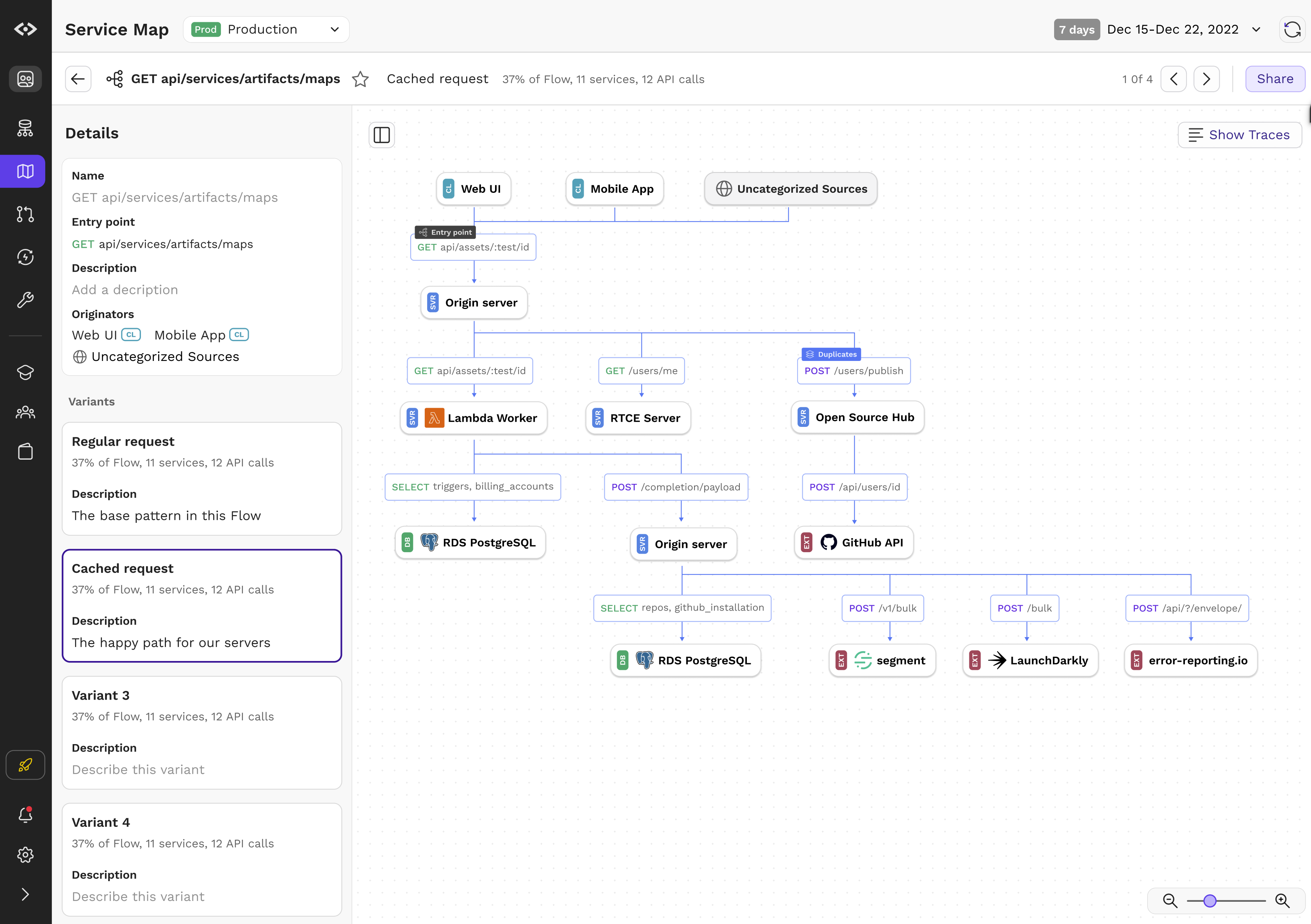
    CodeSee updated its code visibility platform to enable instant mapping of application services, directories, file dependencies and code changes.

    CodeSee CEO Shanea Leven said CodeSee Enterprise 2.0 should extend the appeal of the platform beyond developers to include software engineers managing DevOps workflows.

    CodeSee Enterprise 2.0 provides real-time visibility across multiple repositories regardless of whether the application is a monolith or based on a microservices architecture, she noted.

    In addition, a Code Automations module enables developers to set granular conditions and actions down to the function level, requiring checklists to be complete before allowing developers to move on.

    CodeSee Maps now includes the ability to click to view code directly, while a streamlined Review Maps module has decreased code review time by 30%. Developers can easily share maps to discuss proposed changes or keep necessary code changes as automatic permanent artifacts.

    Additional languages including C#, VB.NET, ASP.NET, Blazor, Java, JavaScript, Go, Python and TypeScript are now supported.

    Finally, CodeSee is making available a dedicated solutions engineering team that provides guidance to connect an organization’s Datadog or OpenTelemetry trace data to CodeSee in less than an hour without storing code or having to first dive deep into traces, noted Leven.

    The core open source CodeSee tool was created because it takes too long today for most developers to pore over a codebase to understand where they might contribute. The larger a codebase becomes, the longer it takes for a developer or software engineer to be onboarded to a new project.

    The overall goal is to improve developer productivity, noted Leven. That’s become a critical issue because many organizations are hesitant to hire additional developers during uncertain economic times; they first want to ensure they maximize the utilization of the teams they already have.

    Application development, of course, is now a team sport. The days when a lone developer cared for an entire application are long over. The issue is finding a way for teams of developers to collaborate more easily in an era where many of them may never have met in person.

    In the longer term, Leven said she also expects that generative artificial intelligence (AI) platforms such as ChatGPT will supplement code visualization tools. Many developers are already starting to use these tools to help generate code faster. That code should, in theory, have fewer errors because it has essentially been copied from other previously validated sources. CodeSee provides a means to visualize that code before deploying it to ensure it will function as promised in increasingly complex application environments.

    One way or another, the tools being provided to developers to boost productivity are advancing. It’s not clear what metrics should be employed to track developer productivity, but the amount of code simultaneously moving through DevOps workflows is going to increase. The challenge DevOps teams face now is keeping track of all the dependencies that exist in that code as application environments are continuously updated.

  • Yes, You Do Need SCA

    Yes, You Do Need SCA

    We often go to restaurants and treat ourselves to unfamiliar and exotic foods made with ingredients we’re only vaguely aware of. A chef and their team (or a manager and their crew) are our vouchsafe that what’s in there isn’t deadly. Most of the time, that works out just fine; but, very rarely, we end up paying the price. The same is true for food brought home from the supermarket, though for lesser illnesses it is harder to track because they’re not clustered like restaurant customers. While it is indeed exceedingly rare for the results to be fatal, the CDC estimates that around 3,000 people die of food-borne illnesses in the U.S. each year, and millions more are made ill. The U.S. has incredibly safe foods, and yet, we still have these illnesses. Simple things like leaving ingredients out too long, or consuming food sourced from a contaminated production facility can cause problems, even in an otherwise safe environment.

    Our code is similar—how it is created and consumed—and increasingly falls in this category. We rely upon a ton of sources for the systems that run our networks, and, quite often, there is no one to tell us how safe our sourcing is, or if changes are happening beneath that escape our notice.

    This is why we absolutely must have software composition analysis (SCA). If no one else is going to stand up and verify the safety of all that code we are pulling in, then we need to at least be aware of what is there. We need to understand the inter-relationships of pieces of underlying software, both the known and the unknown. Some libraries are so ubiquitous that you are using them and likely don’t even know it. But that’s not good management; knowing what you have and taking care of it are increasingly becoming a core part of IT. Knowing what alternatives are available in case something goes wrong with your preferred (or automatic) inclusion is imperative for continuity, making SCA a critical part of continuity planning along with the fact that it’s just good business practice.

    The good news is, if you are using any of the major code scanning tools from the DevSecOps space, you either already have SCA available to you, or you can buy it as an add-on from the same vendor. Hit their website and find out.

    Your systems are out there, every day, serving the needs of your users. Protect those users from unforeseen circumstances like vendor issues, open source changes, security vulnerabilities and nested dependencies. While the vast majority of open source is safe and secure, we use so much of it—and the tools we use link in so much of it—that it’s almost certain there is a bomb hidden somewhere in your code. Think of it like the food-borne illness example above: Would you eat at a restaurant that said “Yeah, 90% of our food is safe, but we’re not sure about the other 10% …”?

    You’re building astounding things, and keeping the world moving. Don’t stop, but don’t let your guard down, either. Know what is running in those apps, what its vulnerabilities (both security and downtime) are and what you can do to mitigate those weaknesses–so you can keep making astounding things rather than spend your time fixing what is already there.

  • Best Practices for Software Change Assessment

    Best Practices for Software Change Assessment

    Business spending on enterprise software has been on a constant rise over the past decade with 64% of businesses spending more on IT operations in 2018. It is estimated that in 2019, the number will reach $462 billion worldwide. This not only includes the procurement or development of new software and digital innovations, but also investments in modifications and upgrades.

    However, implementing software changes is no easy feat. It involves serious financial investments and staffing resources, which is why it is critical to get it right. A well-implemented change assessment is a key component of every software change project. This gives decision-makers an accurate and complete understanding of the impact of the software changes and identifies potential disruptions to specific departments, functions and processes.

    There are many ways to approach and implement software change assessment. These best practices can ensure a glitch-free software change rollout.

    Use a Comprehensive Discovery and Dependency Mapping Technology

     One of the disadvantages of the modern workplace across all industries is the emergence of information silos. They can hamper growth and efficiency and cause other problems, including redundancy of effort, stalled collaboration and other missed opportunities.

    In order to break these silos, efficient application discovery and dependency mapping is a crucial step in every software change project. Unfortunately, most businesses are failing miserably in this department. A Forrester survey revealed 56% of IT managers “do not have a complete view of dependencies between applications or between applications and infrastructure.”

    The same survey revealed 30% of the IT managers think that having a complete inventory of all enterprise hardware and software in use at their organizations is critical for IT efficiency. Ironically, 42% do not collect the necessary software data, while 39% are maintaining their inventory manually.

    The disadvantages of inadequate discovery and inefficient dependency mapping include low productivity, project delays, increased overhead costs and poor team morale, among others. A key step in solving this predicament is investing in the right discovery and dependency mapping technology, which can support a solid foundation for a software change initiative or any IT project for that matter.

    A reliable, agile software solution should provide both macro and micro views. The more granular, the better. Additionally, it should be able to give IT decision-makers a consolidated view of their application stack across multiple message queues, APIs, databases, unifying codes and languages.

    Use the Seven R’s of Change Management

    One thing IT managers should realize when assessing software change is, they’re not pioneering the process. Many organizations have done it and made mistakes along the way. Experts have used these mistakes and learnings to create roadmaps for others.

    One of the most well-established resources for IT change management is the Seven R’s of Change Management conceptualized by Information Technology Infrastructure Library–a set of detailed practices for IT service management. The seven Rs represent the following questions designed to help businesses make educated decisions on how to proceed with change requests.

    1. Who raised the change?
    2. What is the reason for the change?
    3. What return will the change deliver?
    4. What risks are there if we do or do not carry out the change?
    5. What resources will be required to perform this change?
    6. Who is responsible for this change being performed?
    7. What relationships are there between this and other changes?

    While these concepts are not exclusive to software change assessment, they provide a solid framework for businesses to identify noteworthy software change projects. This is especially helpful for organizations creating their software change assessment protocols from scratch.

    Never Skip Impact Analysis

    This is especially important for software vendors who are operating on tight budgets and strict deadlines. Software change impact analysis encompasses five major areas:

    • Identifying the impact of the change request on the software development project or on a business’ IT infrastructure.
    • Determining all software resources that need to be modified to implement the requested change.
    • Calculating the cost and manpower capital needed to perform the change request.
    • Ensuring the requested change complies with internal and external regulations.
    • Eliminating or minimizing any security risks associated with the change.

    To make sure businesses covers all the bases for any software change initiative, it’s best to use a checklist or template sourced either from the technology vendor or one their IT team put together, tailored to their needs.

    Not All Changes Are Created Equal

    Today’s ever-changing business landscape dictates business technology must evolve to keep up with an organization’s shifting needs. Software changes, when implemented strategically, can help businesses achieve new heights in productivity, efficiency and profitability.

    To ensure software changes serve this purpose, IT project managers need to implement an airtight software change assessment system. With the help of technology, checklists and well-established industry best practices, organizations can quickly outline a process that yields beneficial results in the end.

    — Aditya Sharma