Tag: Data Theorem

  • Data Theorem Adds Runtime Protection Enabled by Observability

    Data Theorem Adds Runtime Protection Enabled by Observability

    Data Theorem, Inc. this week added an Active Protection offering to its portfolio of application security services that makes it possible for DevOps teams to embed observability and runtime defenses in their applications via a software development kit (SDK).

    The Data Theorem cloud services are based on Trustkit, an open source framework the company created to make it easier to employ secure socket layer (SSL) to encrypt connections and Analyzer Engine, its runtime analytics engine.

    The company is now extending its services to make it possible to embed observability capabilities by collecting logs and traces. Those logs and traces are then used to enforce runtime security policies that protect applications from known attacks from malicious sources and other common attack vectors as defined by the Open Web Application Security Project (OWASP) Foundation. It also prevents violations of encryption levels, authentication types and authorization rules along with a variety of custom rule checks, including preventing broken object-level authorization (BOLA) attacks.
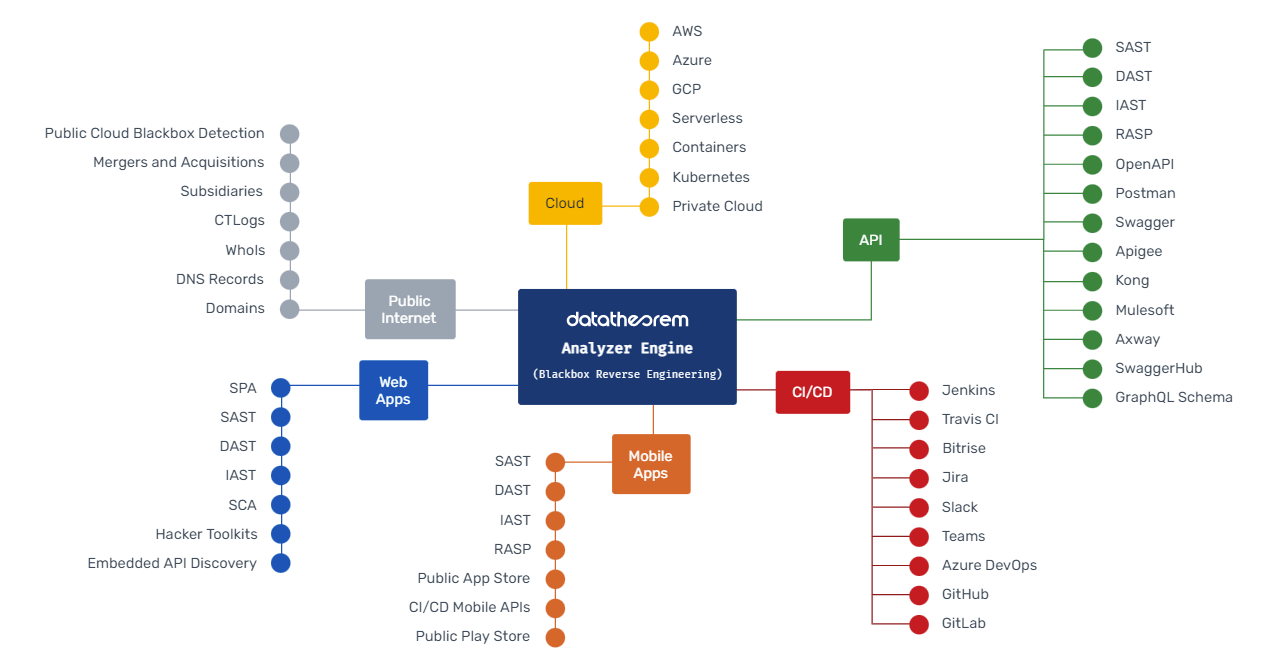
    Doug Dooley, Data Theorem COO, said Active Protection can be applied across any application stack, including microservices applications based on cloud-native frameworks. In contrast, existing approaches to securing application runtimes based on web application firewalls (WAFs), runtime application self-protection (RASPs) or endpoint detection and response (EDR) agents cannot be applied to cloud-native applications based on containers and serverless computing frameworks.

    Active Protection solves that issue because it is designed to be applied via the Data Theorem software development kit (SDK) or using application extensions made available via a serverless computing framework or as a container sidecar.

    Dooley noted that the Active Protection service is also designed to be fully integrated with DevSecOps workflows that are increasingly being driven via continuous integration/continuous delivery (CI/CD) platforms to enable continuous, automated security inspection and remediation. The company claims to have detected more than one billion application incidents and is currently used by more than 8,000 applications.

    Developers don’t generally set out to build and deploy insecure applications. The issue is most developers don’t have a lot of security expertise, so it’s easy for mistakes to be made. Organizations looking to embrace DevSecOps best practices need to find a way to achieve that goal in a way that developers can easily embrace. The more automated the checks for security issues become during the application development process, the more likely it is developers will make additional efforts to remediate vulnerabilities long before an application is ever deployed in a production environment. In effect, DevSecOps is easier to achieve when addressed from the bottom up rather than via an edict from above without any real implementation plan in place.

    It’s still early days as far as DevSecOps is concerned, but as best practices for DevOps continue to evolve, there may come a day when security is just another gate that needs to be passed within the context of a larger DevOps workflow. In the meantime, DevOps teams and cybersecurity teams should put aside their differences and work together as the number of attacks launched against applications increases.

  • Data Theorem Extends Scope of App Analyzer Portfolio

    Data Theorem Extends Scope of App Analyzer Portfolio

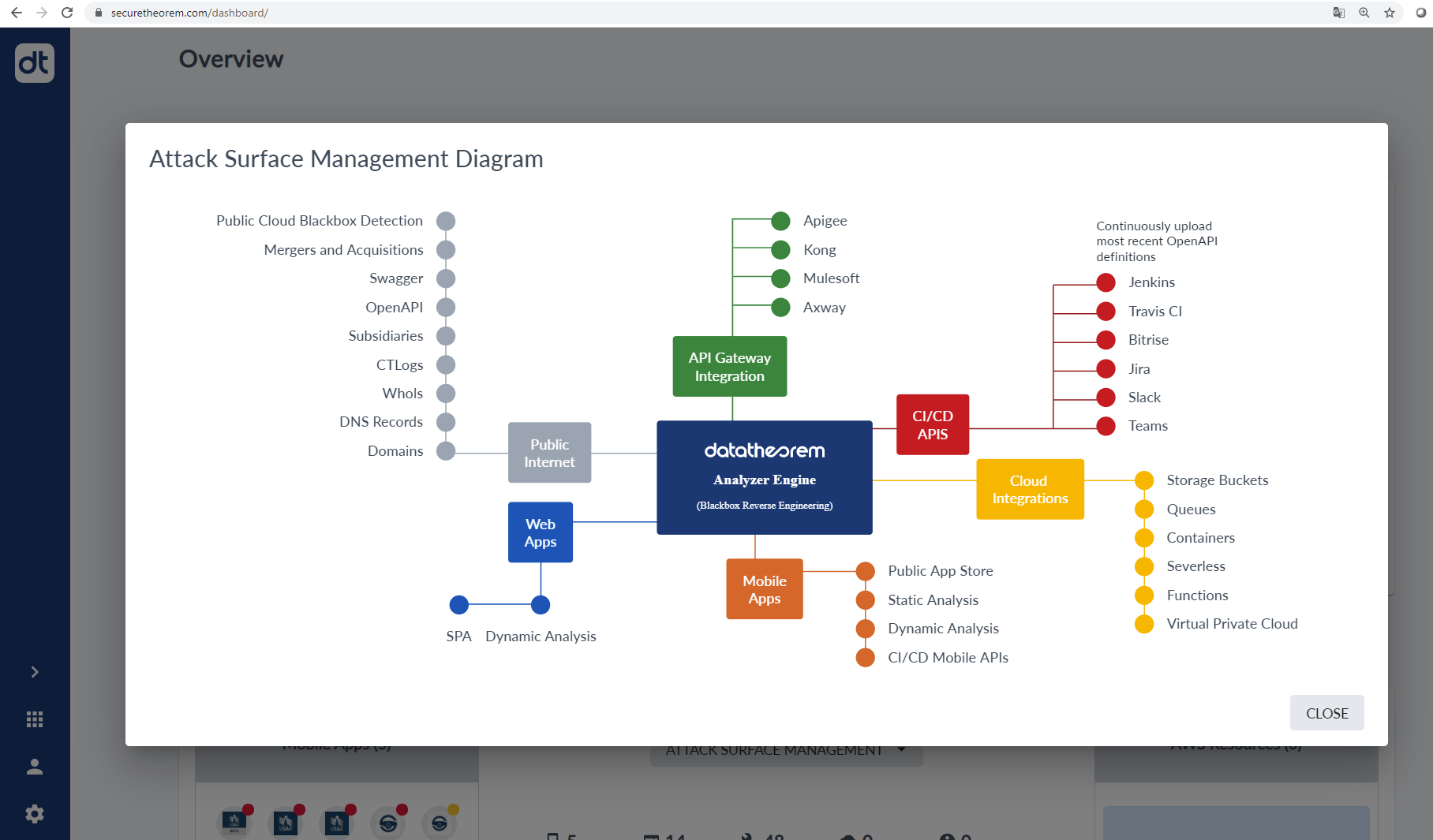
    Data Theorem, Inc. today added to its portfolio a Cloud Secure analyzer that promises to provide full stack visibility into applications through the client, network and cloud layers of a distributed computing environment.

    Doug Dooley, Data Theorem COO, said Cloud Secure extends an existing Analyzer Engine offering that is currently widely employed to identify vulnerabilities found in applications running on public cloud services. That enables DevOps teams to analyze application runtimes using a tool that can be integrated within a continuous integration/continuous delivery (CI/CD) platform as part of a DevSecOps workflow, Dooley noted.

    Cloud Secure now extends that capability to include the client layer for both mobile and web applications, as well as REST and GraphQL application programming interfaces (APIs) at the network layer, to provide a more comprehensive approach to attack surface management, Dooley said. That’s a crucial capability, because in modern IT environments, the single biggest attack surface is now all the APIs that need to be secured, Dooley added.

    DevOps teams can also employ multiple Cloud Hacker Toolkits, created by Data Theorem, to simulate hacks against various types of applications, including those now running on serverless computing platforms. That approach eliminates the need to rely on manual penetration tests that can’t keep up with the rate at which DevOps teams are now building and deploying applications, Dooley noted. For organizations to achieve DevSecOps, the whole security process needs to be just as automated as the rest of the DevOps workflow, he added.

    In general, Dooley said most of the results of penetration testing shared with DevOps and cybersecurity teams lack much-needed context. They may inform members of an IT team that there is a leak, for example, in an S3 bucket hosted on a cloud storage service from Amazon Web Services (AWS). However, they don’t identify what type of data is at risk. That’s critical information at a time when IT organizations need to make high-stakes decisions about where to prioritize their DevSecOps efforts.

    As developers assume more responsibility for application security, the biggest challenge organizations will face is finding security tools that can be easily integrated into application development processes that have become more extended as applications, made up of microservices, are deployed across highly distributed computing environments.

    It’s still early days as far as adoption of DevSecOps best practices are concerned, but as more tools become available, it’s becoming more feasible for organizations to make that transition from the bottom up. No developer sets out to deliberately write and deploy an insecure application. However, DevSecOps edicts issued from on high will fall on deaf ears if the developer lacks the tools required to achieve the goal. Tools that a developer embraces are going to be more widely employed than any tool that is specifically mandated by IT leaders that don’t really understand how applications inside their organization are constructed.

    Regardless of how DevSecOps is achieved, the one thing that is certain is as more applications get deployed, the probability there will be a major security incident becomes all but certain.

  • Data Theorem Delivers Advanced API Security through Google Cloud Marketplace

    Data Theorem’s API Security Solutions Give Customers Ability to Uniquely Automate Continuous API Security Analysis and Vulnerability Inspection on Google Cloud Platform

    PALO ALTO, Calif., March 24, 2020 – Data Theorem, Inc., a leading provider of modern application security, today announced its availability on Google Cloud Marketplace (GCP Marketplace), providing customers with differentiated API security solutions that enable them to uniquely automate continuous API security analysis and vulnerability inspection on Google Cloud.

    Google Cloud Marketplace lets users quickly deploy functional software packages that run on Google Cloud Platform. Google Cloud Marketplace allows customers to easily start up a familiar software package with services such as Compute Engine or Cloud Storage, with no manual configuration required.

    Data Theorem delivers API Discover and API Inspect, which address security concerns such as shadow APIs, serverless applications, and API gateway cross-check validation by conducting continuous security assessments on API authentication, authorization, encryption, availability, cloud storage, databases, serverless functions, and policy compliance. The API security solutions discover modern APIs; enumerate the specification using standards such as Swagger and Open API 3.0; and support Amazon Web Services, Google Cloud, and Microsoft Azure platforms.

    “We are pleased to have Data Theorem’s solution available on the Google Cloud Marketplace,” said Manvinder Singh, Director, Partnerships at Google Cloud. “With just a few clicks, customers can leverage its capabilities to automate continuous API security analysis and vulnerability inspection.”

    “With built-in integration on Google Cloud, customers can quickly onboard, trial and enable continuous API discovery and security analysis of their applications and microservices built on Google Cloud,” said Doug Dooley, COO at Data Theorem. “Additionally, Google Cloud customers now have access to Data Theorem’s API security products to uncover leaky APIs, cloud security posture management (CSPM), compliance violations, policy enforcement, and auto remediation to fix vulnerabilities.”

    Availability and Pricing

    Data Theorem’s API security solutions are available today on the GCP Marketplace at https://console.cloud.google.com/marketplace/details/datatheorem-public/api-discover-and-inspect for a free 30-day trial with a GCP account.

    About Data Theorem

    Data Theorem is a leading provider of modern application security. Its core mission is to analyze and secure any modern application anytime, anywhere. The Data Theorem Analyzer Engine continuously scans APIs and mobile applications in search of security flaws and data privacy gaps. Data Theorem products help organizations build safer applications that maximize data security and brand protection. The company has detected more than 300 million application eavesdropping incidents and currently secures more than 4,000 modern applications for its enterprise customers around the world. Data Theorem is headquartered in Palo Alto, Calif., with offices in New York and Paris. For more information visit www.datatheorem.com.

    ###

    Data Theorem and TrustKit are trademarks of Data Theorem, Inc.  All other trademarks are the property of their respective owners.