Tag: Cycode

  • Cycode Acquires Bearer to Extend ASPM Platform

    Cycode Acquires Bearer to Extend ASPM Platform

    Cycode today announced it had acquired Bearer, a provider of a set of tools for static application security testing (SAST), discovering application programming interfaces (APIs) and identifying sensitive data.

    The provider of an application security posture management platform (ASPM) plans to integrate the Bearer tools into its core platform to enable DevSecOps teams to further consolidate tooling.

    Cycode CEO Lior Levy said the acquisition of Bearer gives Cycode access to a set of tools that take advantage of generative artificial intelligence (AI) to surface suggestions that enable DevSecOps teams to more easily secure modern applications based on, for example, a microservices-based architecture.

    Bearer achieves that goal by continuously scanning for application security issues as developers are writing code, he added. Overall, Bearer claims its approach to scanning is 31% faster than rival tools while simultaneously leveraging tools such as Bearer Assist, currently in beta, to provide more context concerning the level of risk to the business any issue discovered actually represents.

    Those capabilities will be infused into the Risk Intelligence Graph (RIG) that Cycode developed for its ASPM platform.

    Cycode earlier this year added generative AI capabilities to its platform to make it simpler for DevSecOps teams to identify the root cause of vulnerabilities in complex distributed computing environments. The company uses the generative AI platform created by OpenAI to provide a natural language interface for RIG. As part of that effort, Cycode is making available an executive dashboard that, based on all the dependencies uncovered, provides summaries of risks that make it easier to discern what is occurring across an application environment.

    The company is at the forefront of developing ASPM platforms that continuously ingest data to identify and assess application security risks. Those platforms also provide a foundation for consolidating many of the tools that DevSecOps teams currently rely on to secure applications before they are deployed in production environments.

    It’s not clear how quickly organizations are embracing DevSecOps best practices, but given the number of vulnerabilities that continue to be discovered, there is still much work to be done. The challenge is that legacy tools that lack AI capabilities were not designed to enable organizations to practically shift more responsibility left toward application development teams that typically don’t have a lot of cybersecurity expertise, noted Levy. AI makes it possible to now provide those teams with the context required to address application security issues as they write code versus just before applications are deployed, he added.

    In theory at least, the applications deployed today should be significantly more secure than previous generations of applications. In effect, IT environments are steadily becoming more secure. Less apparent, however, is the rate at which modern applications are being deployed to replace legacy applications that are, all too often, rife with known vulnerabilities that cybercriminals can easily exploit. Given the rate at which vulnerabilities can be discovered and patched in those legacy applications, it may take the better part of the rest of this decade to address those issues once and for all.

  • Cycode Brings Generative AI to App Security Posture Management

    Cycode Brings Generative AI to App Security Posture Management

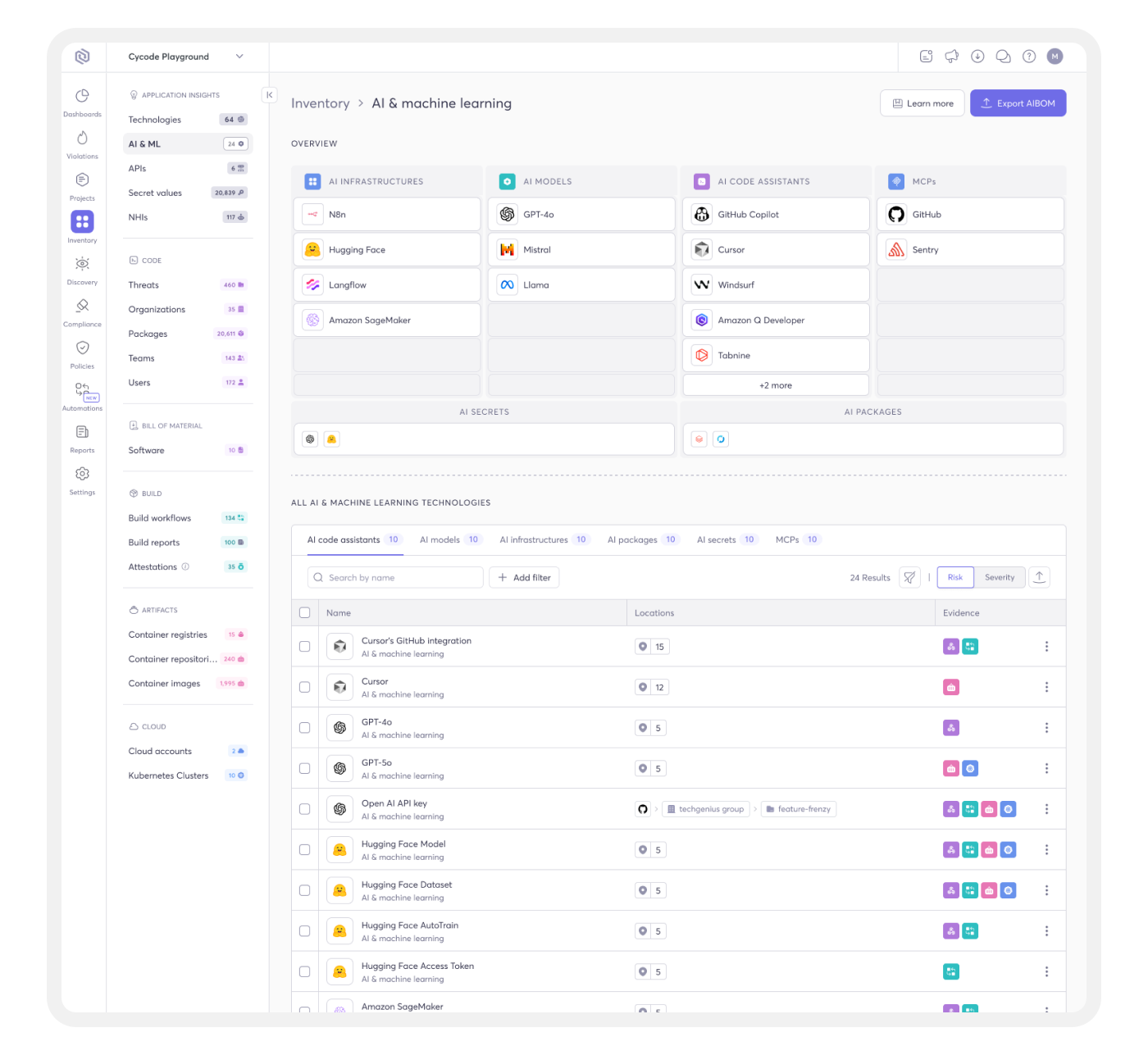
    Cycode today added generative artificial intelligence (AI) capabilities to its application security posture management (ASPM) platform to make it simpler for DevSecOps teams to identify the root cause of vulnerabilities in complex distributed computing environments.

    At the same time, Cycode is adding plugins for VS Code and JetBrains integrated development environments, a command line interface and pull request scanners to make it easier to identify security issues as early as possible during the software development life cycle (SDLC). Cycode also revealed today it now has more than 75 connectors to various security tools commonly used within DevSecOps workflows.

    Amir Kazemi, director of product marketing for Cycode, said the company is using OpenAI’s generative AI platform to provide a natural language interface for invoking the Risk Intelligence Graph that is at the core of the Cycode ASPM platform. As part of that effort, Cycode is now also making available an Executive Dashboard that, based on all the dependencies uncovered, provides summaries of risks that make it easier to discern what is occurring across an application environment.

    The platform, as a result, can now provide automated risk scoring for vulnerabilities based on actual severity and potential impact to the business, said Kazemi. The overall goal is to make it simpler to secure software supply chains by facilitating the proactive collaboration between application developers, DevOps engineers and cybersecurity professionals, he added.

    It’s not clear what impact generative AI is going to have on how DevSecOps workflows are constructed, but making it easier to identify the root cause of security issues in application environments made up of monolithic applications, microservices and event-driven frameworks is now essential. Application security has simply become too chaotic to effectively manage without help from AI, noted Kazemi. In its current state, application security is simply unmanageable, he added.

    The challenge is that just because a zero-day vulnerability has been discovered, it doesn’t always follow that application development teams know where every instance of it exists within their application environment. It’s not uncommon for DevSecOps teams to discover outdated versions of components that have known vulnerabilities to be running months after a patch in an updated version of that component has been made available.

    DevSecOps teams are, of course, always trying to strike a balance between the level of threat a vulnerability represents and the possibility that the patch that should be applied might break an application. However, given the risk to application environments, it’s becoming less risky to patch an application than it is to hope that cybercriminals don’t exploit a known vulnerability.

    While much DevSecOps progress has been made in recent years, it’s clear there is still much work to be done. Hopefully, generative AI will make it simpler for application development teams to address issues more rapidly than ever. In the meantime, however, DevSecOps teams should assume cybercriminals are looking to exploit the same AI capabilities to discover vulnerabilities they can exploit faster than ever.

  • Cycode Discloses GitHub Actions Vulnerability in Google Bazel Project

    Cycode Discloses GitHub Actions Vulnerability in Google Bazel Project

    Cycode today revealed it discovered a command injection vulnerability in the way the GitHub Actions continuous integration/continuous delivery (CI/CD) platform was used to update the open source Bazel project that many organizations employ to build and test software.

    The vulnerability, now remediated, could have been used to create a backdoor through which malicious code could have been inserted into a codebase that is managed by Google.

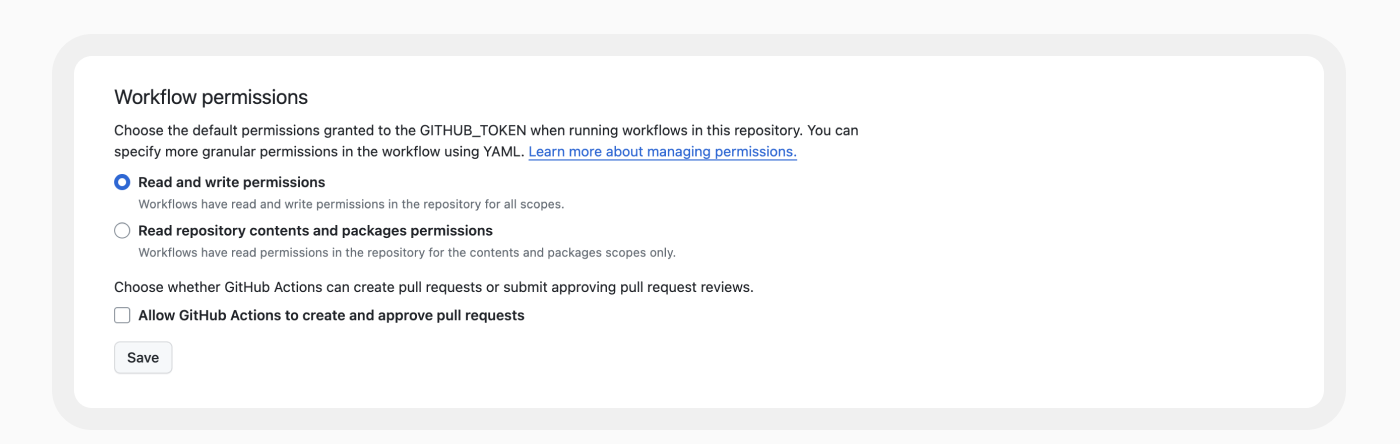
    Cycode researchers shared their discovery with Google, which has since updated the way it employs GitHub Actions to manage the Bazel codebase. Specifically, Google updated the base permissions to embrace least privilege principles to resolve the vulnerability discovered by Cycode.

    The vulnerability was discovered using RAVEN, an open source tool for scanning CI/CD platforms for vulnerabilities that Cycode makes available.

    Elad Pticha, senior security researcher for Cycode, said the vulnerability is the latest example of an instance of an open repository for building software that has been shown to be potentially vulnerable to an attack on a software supply chain that could theoretically impact any number of downstream applications and projects, including Kubernetes, Angular and platforms and services provided by Uber and LinkedIn.

    A Custom Actions capability that enables application development teams to create their own workflows presents any cybercriminal attempting to compromise of software supply chain with a tempting target, noted Pticha. A few changes to lines of code in a workflow can translate into thousands or even millions of lines of code, many of which an organization may never detect. Out of 3.4 million workflows examined by Cycode, nearly all (99%) make use of one or more Custom Action.

    Cycode has previously identified dozens of vulnerabilities in open source projects by mainly focusing on vulnerabilities within workflows. This latest research shows those vulnerabilities extend to indirect dependencies, such as Custom Actions, noted Pticha.

    Each DevOps team should review its own workflows for similar vulnerabilities at a time when more cybercriminals than ever are intent on compromising software supply chains. While many organizations have embraced DevSecOps workflows to improve application security, there is a natural tendency to overlook vulnerabilities that might exist in the workflows used to build and deploy software. The challenge is that DevSecOps workflows are still immature. A recent survey of 500 U.S. CISOs, AppSec directors and DevSecOps team members conducted by Cycode found 78% admitted application security attack surfaces are unmanageable, with 90% acknowledging relationships between their security and development teams need to improve.

    It’s not apparent if the vulnerability discovered by Cycode was actually ever exploited, but as most cybersecurity professionals know, if it can be imagined, someone has tried it. As such, any organization that uses Bazel might be well-advised to conduct a code review.

    In the meantime, it’s already apparent that regulations pertaining to securing software supply chains are only going to become more stringent in the months ahead. In the wake of the executive order from the Biden administration requiring federal agencies to lock down their software supply chains, it’s now only a matter of time before similar requirements are baked into legislation and various other regulations are implemented. The challenge and the opportunity now is to get ahead of this issue before a mandate with a hard deadline that can’t be ignored winds up disrupting the entire software development life cycle.

  • Cycode Leverages eBPF to Secure CI/CD Pipelines

    Cycode Leverages eBPF to Secure CI/CD Pipelines

    Cycode today added a Cimon extension to its application security platform that uses extended Berkeley Packet Filtering (eBPF) to thwart cyberattacks against continuous integration/continuous delivery (CI/CD) pipelines.

    Alex Ilgayev, head of security research for Cycode, said Cimon uses eBPF to inspect network connections, running processes and file modifications within a pipeline to learn standard behaviors. Armed with those insights, Cimon will then surface any anomaly in real-time, he added.

    DevOps teams can then craft and embed security and compliance rules within their pipelines based on the severity of the anomalies discovered, said Ilgayev.

    eBPF makes it possible to run sandbox programs at the kernel level without adversely impacting performance. In effect, eBPF bridges the boundary between kernel and user space by enabling developers to combine and apply logic across multiple subsystems that, historically, were completely independent of one another. That approach enables, for example, a security tool to scale to the point where it can identify threats at much higher levels of throughput to improve overall scale at a time when the volume of cybersecurity attacks continues to increase.

    Cycode is taking advantage of eBPF to enable DevOps teams to not only defend against known attacks involving malicious package installation, typosquatting, repojacking, dependency confusion, dependency hijacking and other types of dependency attacks but also zero-day threats, noted Ilgayev.

    Cycode provides a platform for mapping metadata and events using graph technology that makes it simpler for application development and cybersecurity to consolidate alerts generated by their DevSevOps tools. Most recently, Cycode added a Cycode Application Security Orchestration and Correlation (ASOC) module that will automatically discover all the tools that make up a DevSecOps workflow without requiring any integration effort.

    The approach enables the Cycode platform to discover, for example, dependency issues that would otherwise be missed by software composition analysis (SCA) or static application security testing tools (SAST).

    While a lot of progress has been made in terms of adopting DevSecOps best practices, many organizations are still struggling with securing their software supply chains. Most of the members of a DevOps team have limited cybersecurity expertise, so they need the help of a cybersecurity professional to determine what specific actions are required to remediate a vulnerability. Cybersecurity professionals, conversely, don’t have a lot of application development expertise.

    As the number of regulations specifically focused on application security steadily increase, every organization that builds software will soon need to embrace DevSecOps to better secure software supply chains. Unfortunately, developers have too often viewed cybersecurity as an obstacle to deployment while cybersecurity teams have historically considered developers to be a primary cause of the breaches they are expected to clean up. The first step toward bridging that divide is, of course, to realize that application developers and cybersecurity teams need to be invested in each other’s success.

  • Cycode Adds ASOC Module to Streamline DevSecOps Workflows

    Cycode Adds ASOC Module to Streamline DevSecOps Workflows

    Cycode has added a module to its platform for mapping metadata and events using graph technology that makes it simpler for application development and cybersecurity to consolidate alerts generated by their DevSevOps tools.

    Lotem Guy, vice president of product for Cycode, said the Cycode Application Security Orchestration and Correlation (ASOC) module will automatically discover all the tools that make up a DevSecOps workflow without requiring any integration effort.

    That capability makes it simpler to aggregate results in a way that enables development teams and cybersecurity professionals to identify the most critical issues that need to be addressed before applications are deployed in production environments, he added.

    In effect, Cycode is now providing a method for bridging the historic divide between cybersecurity professionals and application development teams. More cybersecurity professionals are embedded within DevOps teams, but in the absence of a platform for aggregating alerts, they often encounter communications issues. ASOC provides an agentless approach to aggregating the data that DevSecOps teams need to prioritize remediation efforts, said Guy.

    While a lot of progress has been made in terms of adopting DevSecOps best practices, many organizations still struggle with securing their software supply chains. Most of the members of a DevOps team have limited cybersecurity expertise, so they need the help of a cybersecurity professional to determine what specific actions are required to remediate a vulnerability. Cybersecurity professionals, conversely, don’t have a lot of application development expertise and generally would prefer not to be overwhelmed by multiple DevOps tools generating alerts about the same potential application security issue.

    As the number of regulations specifically focused on application security steadily increase, it’s now just a question of time before every organization that builds software will need to embrace DevSecOps. The challenge is that while everyone involved generally agrees software should be more secure before it’s deployed, the security tools made available to DevOps teams vary widely. In fact, it’s not uncommon for DevOps teams to find themselves spending significant amounts of time sorting through multiple conflicting alerts.

    Nor is every alert that gets generated relevant—in some cases, a specific module that generated an alert might not find its way into the final application. In addition, many of the alerts generated also tend to lack context about severity. Application developers can’t devote all their time to fixing bugs, so choices will need to be made based on the actual risk to the application.

    Cycode is betting that, as DevSecOps continues to evolve, organizations will look for tools and platforms that make it simpler to make sense of the current level of application security chaos that tends to pervade IT organizations. In the meantime, cybersecurity professionals and application developers will need to learn to trust one another. Developers have too often viewed cybersecurity as an obstacle to deployment while cybersecurity teams have historically considered developers to be one of the primary causes of the breaches they are expected to clean up. The first step toward achieving that goal is, of course, to realize that neither is really the enemy of the other.

  • Cycode Expands Scope of AppDev Security Platform

    Cycode Expands Scope of AppDev Security Platform

    At the Black Hat USA 2022 conference, Cycode this week announced it has added static application security testing (SAST) and container scanning capabilities to its software composition analysis (SCA) platform that is based on a graph database.

    Amnon Even-Zohar, director of product management for Cycode, said the addition of these tools brings to eight the total number of modules that are now integrated with its Knowledge Graph database. Those modules address application security requirements spanning everything from infrastructure-as-code misconfigurations and DevOps pipelines to binary and source code analytics in a way that reduces both the number of false positives being surfaced, he added.

    That approach makes it possible to provide more context to software remediation efforts by pulling data from across the entire software development life cycle rather than focusing solely on vulnerabilities found in source code, he noted. Cycode, for example, can pinpoint where vulnerable dependencies are found in test and production environments, said Even-Zohar.

    A Cycode Pipeline Composition Analysis tool also provides insights into which components enable a vulnerability or security issue, how pipeline components relate to each other and if they are present in runtime environments, he added.

    While there’s a lot of interest in implementing DevSecOps best practices in the wake of a series of high-profile AppSec breaches, many organizations still lack the tools required to secure an application development environment on an end-to-end basis. The Cycode platform leverages the data that already exists in DevOps workflows to enable organizations to better prioritize their remediation efforts and lower the total cost of doing so, said Even-Zohar.

    The goal is to not only enable organizations to shift cybersecurity further left toward developers but also further right by more closely integrating cybersecurity and DevOps teams, he noted.

    The DevSecOps challenge that most organizations are trying to navigate is that, historically, a list of vulnerabilities discovered by cybersecurity researchers is shared with DevOps teams without much context. Developers don’t know which vulnerabilities are most critical or, for that matter, whether the vulnerability identified is actually present within their application environment. SCA tools, in theory, could make it easier to identify, for example, where a Log4j or a shell vulnerability might be found. Graph-based tools take that capability to the next level by making it easier to visualize where any instance of a vulnerability might be found. In the absence of such tools, IT organizations would spend weeks looking for each instance of a vulnerability.

    It may be a while before DevSecOps workflows become commonplace but at the very least there is now more awareness of software supply chain security issues. The Biden administration has also issued an executive order that requires federal agencies to review the security of software supply chains. Many enterprise IT organizations are now following suit. One way or another, application security is going to improve. The only thing that remains to be determined is what impact those improvements will have on the rate at which software can be built and deployed.