Tag: code signing

  • DigiCert Allies With ReversingLabs to Secure Software Supply Chains

    DigiCert Allies With ReversingLabs to Secure Software Supply Chains

    DigiCert today announced it has allied with ReversingLabs to integrate binary analysis and threat detection capabilities with a code signing service it provides.

    Deepika Chauhan, chief product officer for DigiCert, said the addition of these capabilities to the DigiCert Software Trust Manager service would make it simpler for organizations to operationalize a methodology for securing their software supply chains. The capabilities are designed to be embedded within continuous integration/continuous delivery (CI/CD) pipelines.

    In addition to being a certificate authority, DigiCert’s Software Trust Manager service automates code signing workflows. ReversingLabs, meanwhile, just added the ability to detect secrets exposed in application binaries to its Software Supply Chain Security (SSCS) platform. Those capabilities can identify secrets inadvertently left in applications as plain text, can identify secrets that can be discovered because of weak cryptography and also includes scripts that scan for malware and can generate software bills of materials (SBOMs).

    Chauhan said when combined with DigiCert Software Trust Manager, it becomes possible for the two companies to provide a comprehensive approach to detecting malware, software tampering, inclusion of secrets and certificate misconfigurations in any type of software.

    A recent ReversingLabs survey found 87% of respondents detected significant risks in their software supply chain in the last year, with software containing vulnerabilities (82%) followed by secrets leaked through source code (55%), malicious code (52%) and suspicious code (46%) posing the most serious risk to the business.

    A full 88% said software supply chain security is an enterprise-wide risk, but only 60% said their software supply chain defenses were up to the task. Nearly two-thirds (65%) of respondents, however, acknowledged their organization’s software supply chain security program wasn’t as mature as it should be. As a result, 80% are currently focused on improving security for the software supply chain, with 96% noting a more comprehensive approach to software supply chain security that detects more than vulnerabilities is needed.

    It’s not entirely clear just yet whether development teams or cybersecurity teams will be taking the lead in terms of driving the adoption of DevSecOps best practices to secure software supply chains. It is clear that securing software supply chains in the wake of a series of high-profile breaches is a much higher priority.

    Erik Thoen, director of product management for ReversingLabs, said as a result, it’s only a matter of time before development teams and cybersecurity professionals are forced to work more closely together than they have in the past.

    In the longer term, a wave of legislation in the U.S. and Europe will soon require organizations to embrace DevOps best practices to address increased potential liability that might stem from an application breach. A proposed Cyber Resilience Act currently being negotiated by the member states of the European Union seeks to require organizations that sell internet-connected hardware platforms to ensure both their devices and their software comply with cybersecurity best practices. In the U.S., meanwhile, a National Cybersecurity Strategy proposal put forward by the Biden administration seeks to hold organizations that collect data or build software more accountable for breaches.

    While both proposals are a long way from becoming law, it’s clear governments around the world are concluding the only way to ensure better cybersecurity is to require it.

  • Chainguard Adds Private Edition of Code Signing Platform

    Chainguard Adds Private Edition of Code Signing Platform

    Chainguard today added a private preview of a Chainguard Enforce Signing service, enabled by the open source Sigstore project, that allows developers to generate digital signatures for software artifacts using identities and one-time-use keys they create themselves.

    Kim Lewandowski, head of product for Chainguard, said Chainguard Enforce Signing provides an alternative to relying on a public service to generate those digital signatures. It also allows organizations to bring their own key and certificate so that key usage can be monitored and audited per compliance and privacy requirements.

    In addition, Chainguard added a library of policies that administrators can deploy directly from the Chainguard Enforce web console to their environments.

    The Chainguard Enforce Signing feature is based on Sigstore, an open source project that provides a protocol to simplify cryptographic certificate generation by removing the need to manage keys. At its core, Sigstore creates a set of short-lived ephemeral keys with a trust root based on an auditable public log. Because it creates an immutable log, everyone participating in the software development process, including auditors, can now transparently track the chain of custody for any software artifact.

    Key management, key compromise/revocation and the distribution of public keys and artifact digests are challenging to manage. Developers are also required to determine which keys to trust in addition to learning how to sign them when different platforms are employed.

    Chainguard’s alternative is enabling organizations to host their own immutable log rather than relying on a public service to eliminate the need to manage keys, noted Lewandowski.

    Historically, code signing platforms have been problematic because they were susceptible to tampering. Cybercriminals can, for example, swap out digests to gain access to compromised credentials. Digests and public keys are also often distributed across vulnerable websites susceptible to hacks or inadvertently stored on a public Git repository.

    Code signing—along with software bills of materials (SBOMs)—is one of two technological advances that will improve the security of software supply chains. SBOMs, of course, are going to be considered more reliable when the software components they describe are signed by the developers that created them.

    Less clear is whether the signing of code will improve its overall quality. Most developers take pride in their code, but the overall quality of the software deployed in production environments could always be improved. Developers may decide to review the code they contribute to a build more intently if they know they will be required to sign it.

    In the meantime, it’s only a matter of time before organizations require that developers sign code before it is deployed in a production environment. In addition to increasing confidence in the quality of the code employed, those signatures make it simpler to track down the development team that created code whenever there is an issue that needs to be resolved. After all, the most challenging issue organizations encounter when trying to update software is not so much the creation of a patch as much as it is identifying who should create that patch based on their knowledge of the software components used.

  • Cisco Adds Open Source Tool to Validate Serverless Functions

    Cisco Adds Open Source Tool to Validate Serverless Functions

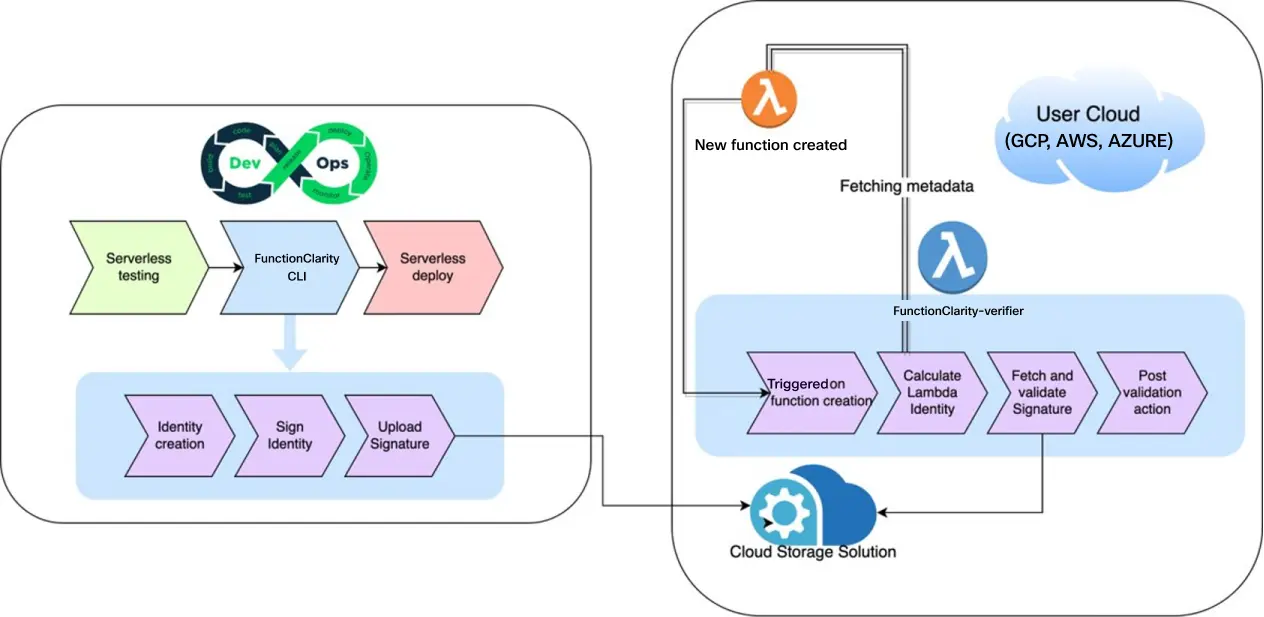
    Cisco has launched an open source project, dubbed FunctionClarity, that makes it possible to verify signatures before code is deployed in a serverless computing environment.

    Vijoy Pandey, vice president of emerging technologies and incubation at Cisco, said that one of the application security issues that has emerged in serverless computing environments is the lack of validation capability to verify code signatures prior to deployment. As more organizations employ serverless computing frameworks, the overall software supply chain becomes less secure, he noted.

    FunctionClarity includes a command line interface (CLI) tool to invoke a verification function that can be deployed on the Amazon Lambda serverless platform to address that issue; support for Microsoft Azure and Google Cloud serverless platforms is planned, he added.

    The FunctionClarity project aims to close that gap by employing either a keyless approach using open source sigstore tools or a traditional encryption key, noted Pandey.

    The FunctionClarity project is the latest extension of a Cisco OpenClarity initiative that includes an existing project for securing application programming interfaces (APIs) using a service mesh, dubbed APIClarity, and a tool for detecting and managing software bills of materials (SBOMs) and vulnerabilities in container images and filesystems dubbed KubeClarity. All three projects are part of an ongoing Cisco effort to contribute code to the open source community that, while essential, does not provide a lot of differentiated value for any one vendor, said Pandey.

    The FunctionClarity project arrives at a time when concerns over the security of software supply chains is on the rise. Many of the software security issues that organizations are encountering stem from the simple fact that developers can provision cloud infrastructure without any kind of meaningful cybersecurity review. Code signing, within the context of a larger set of DevSecOps workflows, is now starting to gain traction to better ensure secure software supply chains. The challenge is that as more code winds up running on serverless computing platforms, a need to extend the reach of whatever approach to code signing an organization adopts becomes more evident.

    In general, the open source community is collectively trying to respond to an executive order issued by the Biden administration that required federal agencies to implement a series of steps to better secure their software supply chains. One of those measures includes wider adoption of code signatures to ensure the authenticity of code being incorporated into applications. The challenge is that incorporating code signatures into DevOps workflows has historically not been a trivial process to implement. Most recently, a free sigstore cloud service launched that promised to make it easier to achieve that goal.

    It’s not clear how widely or even how rapidly code signing will be adopted, but enterprise IT organizations are paying close attention to how federal agencies are responding to the executive order. Many of the tools and processes defined by those agencies will inevitably be copied by enterprise IT organizations that have thus far made limited use of code signing to verify the authenticity of software components. The challenge now is finding a way to achieve that goal without slowing down the rate at which modern software is developed.

  • Sigstore Code Signing Service Becomes Generally Available

    Sigstore Code Signing Service Becomes Generally Available

    A free digital signing service for software created by the Sigstore open source community has become generally available this week via the cloud.

    Announced at the SigstoreCon event that occurred during the KubeCon + CloudNativeCon North America conference, the cloud service makes it possible for developers to both cryptographically sign artifacts and verify that the components used to build applications are secure.

    The Sigstore community operates under the auspices of the Open Source Security Foundation (OpenSSF), an arm of the Linux Foundation. Sigstore project sponsors, including Google, Red Hat, GitHub and Chainguard, have committed to operating a service with a 99.5% uptime and round-the-clock pager support. More than 70 organizations, including Shopify, Autodesk, Trail of Bits and Rancher Government Solutions are actively involved in maintaining and scaling Sigstore.

    More the four million Sigstore signatures have been logged using Sigstore thanks mainly to Sigstore support that is already included by maintainers of open source Kubernetes and Python projects. The npm community also announced it is working to integrate Sigstore in all packages used to build JavaScript applications.

    Bob Callaway, co-founder of Sigstore and technical lead and manager for the Open Source Security Team at Google, said this service will make it much simpler for developers to add digital signatures to code in a way that can be more easily verified within a software bill of materials (SBOM).

    The goal now is to expand the number of open source projects that will commit to employing Sigstore to better secure software supply chains, he added.

    The security of open source software became a major concern in the wake of the open source Log4j zero-day vulnerability. Sigstore was under development prior to that disclosure, but the Biden administration’s executive order requiring Federal agencies to verify the security of open source software has enabled the availability of more resources for the project.

    In response to the executive order, the OpenSSF outlined a 10-point plan to secure open source software that would require more than $150 million in funding. One of those goals is to have 50 of the top 200 projects and 1,000 of the top 10,000 projects adopt an interoperable approach to software signing. That project was estimated to cost $13 million for the first year and $4 million per year beyond, with a one-time additional $10 million required after the first year.

    It’s not clear how broadly developers will employ digital signatures, but given the current level of concern, it’s probable most organizations will soon require any code they use to be digitally signed so it can be verified as immutable. The next big challenge, of course, is finding a way to operationalize the collection of all the SBOMs that will include those signatures. After all, SBOMs are only the first step in a larger DevSecOps workflow that will enable organizations to accept or reject software components based on all the data being collected.

  • Securely Streamline Code Signing for DevOps and DevSecOps

    Securely Streamline Code Signing for DevOps and DevSecOps

    Introducing code-signing provides security within the application, but teams should take care to understand and implement the process effectively

    Digital certificate management, with hundreds or thousands of certificates required to support IT infrastructure, can easily lead to degradation of application integrity and unnecessary risk to the business. The cumbersome nature of siloed teams manually managing digital certificates often results in the bypassing of PKI standards mandated by their organization.

    Based on the complexity of their pipeline, DevOps and DevSecOps teams may issue certificates signed by an untrusted source and stored insecurely to speed up the build and deployment stages of CI/CD workflows to avoid a lengthy certificate request process, which could take weeks or even months. Using this manual, insecure cryptographic practice to sign and deploy code exposes organizations to a high level of avoidable risk.

    Code signing, and the certificates used in that process, should be centralized and automated using cryptographic hardware. Here we will walk through the process of hardened code signing and how to streamline its management in DevOps and DevSecOps pipelines.

    Hardened Code Signing in 4 Steps

    1. Unsigned code ready for distribution. Time to generate public-private key pair

    We start with an unsigned executable that is ready for distribution. To securely sign the code, the code publisher needs to generate a public-private key pair. This is required by most runtime architectures, including Windows, Java and others. The most secure way to generate code-signing keys is by using a FIPS 140-2 Level 3 validated hardware security module (HSM).

    1. Submit public key and Certificate Signing Request (CSR) to an issuing certificate authority (CA)

    With the key pair generated in step No. 1, the CSR is generated and submitted to an issuing CA. The CSR contains information that identifies the publisher and signature algorithm, as well as the digital signature. This information is used by the issuing CA to issue the code signing certificate.

    In some situations, such as with internet of things (IoT) device manufacturing, the organization may decide to act as its own Issuing CA.

    1. Identification of publisher and authentication of CSR

    The Issuing CA verifies the code publisher’s identity then authenticates the CSR, ensuring the publisher has digitally signed it. If both identification and authentication are successful, the Issuing CA packages the publisher’s identity with the public key then signs the package, creating the code-signing certificate.

    1. Ready to sign. Determine the level of security

    Now that the code-signing certificate is ready for use, any executable can be signed and deployed unless further code testing or QA needs to occur. Enterprises, particularly fast-moving ones, often find themselves storing their code-signing keys on the code publisher’s local machine or server, an insecure method that can result in significant problems. Storing the keys on a local machine or server presents major security risks. The local machine could become compromised/stolen along with the code-signing keys, or a disgruntled employee could maliciously sign and deploy unauthorized code, which could go unnoticed for a while.

    It is best to import and store the code-signing certificate in a key management server (KMS), which stores the certificate behind a FIPS 140-2 Level tamper-resistant physical boundary. In addition to hardened storage, a KMS with proper cryptographic features and functionality can be utilized to help automate the entire code-signing and certificate management life cycle. A KMS allows DevOps and DevSecOps teams to seamlessly meet best practices while removing the manual workflow bottlenecks and natively integrating with CI/CD systems. Less time generating and managing digital certificates results in faster code deployments and an increase in team output.

    Streamline Continuous Integration

    There is tremendous value in using an HSM for secure key generation and certificate storage. Additionally, DevOps and DevSecOps teams can drastically reduce the manual labor required with continuous integration code builds. For builds requiring a defined and trackable workflow for signing, code signing with CI/CD integration can offer significant benefits.

    This workflow typically consists of a CI/CD system that is managing the build and signing request process, a centralized and secure key management server to manage all code-signing keys and perform the signing process, and an approval entity to govern the process by which code is signed in an authorized manner.

    When deploying a system like this, backed by a FIPS 140-2 Level 3-validated HSM, organizations can also introduce automation into the process. This means that instead of code signing being a manually driven step that introduces room for human error, it is natively incorporated in the code development and release workflow.

    Integration With Code-Signing Technologies

    KMS and HSM cryptographic devices that provide hardened key storage commonly integrate with popular code-signing technologies that conduct various tasks such as validating publisher identity and ensuring code integrity. For instance, organizations using SignTool.exe with Microsoft Authenticode can directly integrate with a KMS with full certificate management functionality. Other integrations and use cases include Java Jar Signer, RPM (Red Hat), Docker, and various IoT implementations. Beyond that, innovative organizations are looking at systems that can deploy more advanced code-signing workflows outside of the standard OS and runtime SDKs, to integrate more tightly with CI/CD systems.

    Integrating HSMs into DevOps and DevSecOps pipelines simultaneously improves workflow efficiency and supports other cryptographic operations across the organization.