Tag: cloud management

  • IT Modernization Yields Business Benefits Even in Early Stages

    IT Modernization Yields Business Benefits Even in Early Stages

    In recent years, with the emergence of newer technologies ranging from the cloud to machine learning, IT modernization has evolved from a replacement of end-of-life infrastructure to an enabler of innovation and business value. It is a complex process that can take months or even years, but a recent survey shows that the effort begins to deliver measurable results almost as soon as an organization executes the first steps on its roadmap.

    In The State of IT Modernization 2020, an IDG Research Services survey of 200 IT executives commissioned last December by Insight Enterprises’ Cloud + Data Center Transformation team, respondents that had completed 25% or less of their initial modernization objectives reported achieving business improvements in each of the eight categories measured. Sixty-five percent had already achieved better quality of service. Significant progress had also been made in improving customer experience/satisfaction (52%), cost savings (50%), uptime (44%) and the ability to create new revenue-generating products and services (42%). 

    Organizations that had completed their initial modernization objectives reported even better outcomes on all eight measures, notably including the ability to extract business value from data (56%) and faster time to market for new products and services (50%). 

    The findings clearly demonstrate that a modernized IT ecosystem is a core building block of business transformation. Whether it’s spinning up a new service or application quickly, doing a deep data dive to identify new market opportunities or using artificial intelligence to improve sales forecasts or warehouse operations, it’s essential to have the horsepower, agility and advanced data analysis capabilities to do the job.

    The survey of CIOs, CTOs, CSOs and IT directors working at organizations with an average of 29,294 employees also revealed a wide range of details about the status of IT modernization efforts. Let’s look at some examples.

    Progress Made

    Fifty-six percent of the enterprises surveyed have either achieved initial IT modernization objectives or have made significant progress toward doing so, while 19% have made moderate progress and 26% are in the beginning stages. Interestingly, even those in the earliest stages are pursuing emerging technologies such as AI, machine and/or deep learning (43%), automation to support scale-out and other cloud strategies (37%), cloud native application development (35%) and public cloud container services (35%). 

    Projects Derailed 

    Despite this progress, the road to IT modernization can be bumpy. Forty-one percent of survey respondents reported having delayed or abandoned some of their 2019 IT modernization initiatives. The top reasons cited were competing priorities (46%) and lack of a clear roadmap or strategy (45%). Other causes included data security concerns (39%), inadequate in-house expertise (38%), poor preparation (29%) and outdated processes or tools (27%). 

    Shifting Cloud Strategy

    Whether they have just embarked on their IT modernization journey or have made significant progress on their roadmap, organizations continue to grapple with optimizing their cloud strategy. The survey showed that:

    • Ninety-two percent of survey respondents increased workloads deployed in the public cloud and 91% in the private cloud in 2019, reflecting the ongoing increase in cloud adoption as well as migration from one platform to another.  
    • Eighty-nine percent switched or planned to switch from an all-private or all-public cloud strategy to a hybrid cloud approach – and 87% adopted a multicloud approach using more than one public cloud provider – as they attempted to find the right path for their cloud needs.
    • Eighty-four percent moved select workloads from a public cloud to an alternative cloud or non-cloud location, suggesting a failure to perform appropriate cost modeling, workload/platform alignment and other due diligence before the initial move.

    Poor Public Cloud Cost Controls

    More than two-thirds of survey respondents reported that public cloud costs exceeded their expectations, with cost overruns for roughly half that group ranging from 51% to 100%. Most of the causes can be traced to inadequate due diligence, governance or cloud optimization efforts, often due to a lack of in-house expertise in these areas. Examples include: unexpected data egress charges, subscribing to more cloud resources than required, failure to take advantage of vendor volume discounts, lack of knowledge to analyze monthly cloud costs and failure to optimize cloud workloads to extract maximum value from cloud platforms.

    Managed Services

    Adoption of managed services is widespread at every stage of the IT modernization journey, with an average of 95% of respondents outsourcing one or more IT operating environment functions to a managed services provider and 84% outsourcing cloud management. 

    Top Challenges Faced

    Governance is the number one modernization challenge in 2020, according to survey respondents, with new strategies and processes required to ensure control over areas ranging from cloud deployments to continuous integration and continuous delivery (CI/CD), automation and orchestration, and infrastructure as code. Optimizing and managing the centers of data that are replacing the traditional data center ranks as number two, with workloads located on-premises and in multiple clouds as well as on the edge.

    At the same time, most IT organizations have long-standing cultural and technological norms that need to change in order to move modernization initiatives forward. Hurdles cited elsewhere in the survey range from IT silos to outdated processes and tools, understaffed or underskilled DevOps teams and lack of enabling technology for containerization and automation.

    These challenges also need to be overcome in order to take full advantage of today’s technology to drive innovation, business transformation and the competitive edge that can help businesses both survive and thrive in today’s economy.

  • Should I Stay or Should I Go? A Cloudy Decision

    Should I Stay or Should I Go? A Cloudy Decision

    If you’ve been operating in the cloud for some time now, chances are your business has changed since you first made that move and particularly during the current climate. Has your cloud usage grown considerably — and your OpEx costs? Is that just the cost of doing business in the cloud?

    It doesn’t have to be. Here’s how you can rationalize your infrastructure and determine if there are cloud expenses you can reclaim and even if it makes sense to move some of your cloud deployments into colocation.

    The rush to the public cloud has now slowed as organizations realized that it is not a one-size-fits-all solution. The main issue is the lack of deep visibility into the performance of applications provided by the host. Our own research has recently revealed that 32% of public cloud resources are currently under-utilized, and without proper direction and guidance, this will remain the case. What is needed is real-time data and intelligent recommendations to lower costs and assure performance.

    In order to optimize cloud resources, a third-party AIOps based resource is needed. This will provide an independent and granular view of how applications are using capacity and if it is right-sized. In addition, it will monitor the performance of the applications in real-time and provide metrics and analytics to eliminate bottlenecks. The allocated capacity can also be monitored to ensure an accurate match to workload requirements via real-time performance data.

    Although the major hosts provide cost optimization tools, these are not very accurate. Analysis of billing and how it matches capacity over time — as well as in real-time — is what is needed for the cloud to remain a vital part in IT infrastructure. Armed with this information you can plan capacity purchases and discover wasted spend. By using a single platform for cloud management, you can monitor your infrastructure, plan capacity and eliminate performance risks. Performance bottlenecks can be predicted before they affect clients and SLAs with multi-conditional alerting powered by advanced anomaly detection.

    Cloud solutions are not only publicly provided by the likes of AWS and Azure. Colocation is also a strong option where your applications are managed on your behalf by a system integrator. This is increasingly becoming a stronger option for more business-critical applications. But to determine which is best for you, you need to start with the facts. 

    The cloud promises IT organizations unprecedented value in the form of business agility, faster innovation, superior scalability and, most importantly, cost savings. For many organizations, it is at the core of their IT digital transformation strategy. It is a disruptive force that requires application workload behavior knowledge, careful planning and collaboration from well-informed, trusted advisors.

    As a first step, enterprises frequently target a subset of their less critical on-premises applications for migration to the public cloud. Typically, organizations will take one of two paths to the cloud:

    1. Going Cloud Native. Rewrite your application to use resources offered by a cloud provider.
    2. Lift and Shift. Very minimal or zero code changes to the application. Largely, just replicate the application in the cloud.

    The faster time-to-production choice is to lift and shift the targeted applications to a cloud service provider’s Infrastructure as a Service (IaaS). In the lift and shift option, the advantage is a reduction in the cost incurred in the physical infrastructure such as hardware, floor space, cooling, security, etc., and the management of that infrastructure. Savings will differ depending on your unique computing resource needs, workload refactoring and business models.

    Even in its simplest form, IaaS migrations must be carefully planned requiring answers to some fundamental questions:

    1. Will my application perform as expected in a public cloud? (Application Fitness)
    2. How much will it cost to run my applications in a public cloud? (OpEx)
    3. Which cloud service provider is the best choice for my applications? (Cost and Fit)

    IT managers need answers to these questions before the actual migration is performed. As most internal IT organizations don’t have deep cloud expertise, the question is: Who can you trust to provide you with the answers and help you make better business decisions?

    As technology and the cloud stands to play an ever-increasing role throughout organizations, ensuring that you’re adopting the right type of infrastructure specifically for your business has never been more vital for continued success. Choosing a service that provides the answers to your key questions, before the actual migration takes place and prepares you with vital insights into your applications and workloads targeted for cloud migration, has to be an important part of the decision-making process.

    As organizations continue to battle the COVID-19 storm, understanding the product that will overhaul your IT infrastructure, before you fully buy into it, is going to provide the confidence and assurance you need to make that decision a little less cloudy.

  • Morpheus Data Automates Hybrid Cloud Management

    Morpheus Data Automates Hybrid Cloud Management

    Morpheus Data has updated to its cloud management platform by making it easier to dynamically integrate different implementations of automation tasks created using different tools and frameworks any Git or GitHub repository.

    In addition, the company has expanded the operating systems it supports to include Amazon Linux 2, Red Hat Linux 8.x and SUSE Linux, in addition to extending existing support for Microsoft Azure, Amazon Web Services, Oracle Cloud and Google Cloud Platform.

    Morpheus Data has also added support for VMware NSX-T and Unisys Stealth networking software as part of an effort to advance DevSecOps by making it easier to apply microsegmenation to networks to create a zero-trust IT environment. Interest in zero-trust IT environments is on the rise as a way to combat the lateral movement of malware once an IT asset is breached.

    Finally, Morpheus Data has updated the graphical user interface (GUI) it provides as a single pane of glass for managing multiple cloud platforms.

    Brad Parks, vice president of business development for Morpheus Data, said DevOps teams can now employ the Morpheus cloud management platform to orchestrate tasks developed in Ansible, Python, Groovy, Shell, Powershell, jRuby and even e-mail. Those tasks can then be chained together to create a workflow process, said Parks.

    The update to the GUI also makes it possible to create custom views of application instances across clouds as well as export custom datasets into CSV or JSON data formats for analysis, including chargeback, showback and project reporting. Navigation has also been streamlined with updates to global search, navigation and granular sorting of tabular data.

    Parks said in the wake of the economic downturn brought on by the COVID-19 pandemic more IT organizations will need to reduce the total cost of IT. The challenge they face is the IT environment has become more distributed than ever. The Morpheus platform makes it possible to centralize the management of multiple platforms, which should enable IT teams to substantially lower the total cost of IT by applying IT automation more aggressively across a hybrid cloud computing environment. Today most organizations have adopted multiple clouds, each of which is usually managed in isolation. That approach not only requires tools to manage each platform but also dedicated IT support specialists for each platform.

    It’s not clear to what degree IT organizations will move to centralize the management of IT in the wake of the pandemic. Many of the cloud platforms that organizations are employing have been funded by line-of-business executives rather than the central IT organization. However, now that many of those business executives are under pressure to reduce costs, the amount of discretionary spending made available to business executives might be curtailed. At the same time, however, many organizations are increasing investments in digital business transformation initiatives that most commonly involve applications being deployed on the cloud.

    Regardless of the path forward, the one thing that is clear is the current status IT quo within most organizations is not going to hold.

  • Comparing Three Approaches to Multi-Cloud Security Management

    Comparing Three Approaches to Multi-Cloud Security Management

    Moving to a multi-cloud environment can bring many advantages, but it also brings huge challenges in managing both the everyday operations and security of multi-cloud infrastructures.

    To meet these challenges, several approaches to multi-cloud management have arisen. The most common can be roughly grouped into three categories: Cloud Management Platforms (CMPs), Infrastructure as Code (IaC) and cloud-native abstraction. The differences between these approaches reflect the differences between top-down and bottom-up cloud management, as each management process suits a different set of companies.

    In this article, we’ll take a look at all three approaches, explain what the advantages and disadvantages of each are and then explore whether new approaches to multi-cloud management are required.

    CMPs

    CMPs are the highest level approach to cloud management—the approach that is furthest away from the native code that your clouds run on. The rise of CMPs has come as the result of a simple observation: public cloud services are redundant and overlapping, and can therefore be managed through an abstraction layer that hides the complexities of what is happening at a cloud-native level.

    By using a CMP, admins do not need to understand the differences between AWS and Microsoft public clouds (for instance), but instead use a consistent interface to manage both.

    This has some huge advantages, primarily when it comes to improving cloud security. CMPs allow IT operations teams to implement a common security layer within multi-cloud environments, and apply the same identity and access management (IAM) processes across all the clouds they are working with. 

    This is particularly useful with cross-cutting applications that interfaces with multiple, critical portions of your cloud storage to help simplify, and which requires highly complex user access policies. This is ultimately one of many reasons why security breaches of cloud-based data are so rare, as 99% of businesses in the UK that rely on cloud-based software have never experienced a security breach. 

    IaC

    IaC is a second approach to multi-cloud management. This approach arose in response to utility computing and second-generation web frameworks, which gave rise to widespread scaling problems for small businesses.

    Administrators took a pragmatic approach: they modeled their multi-cloud infrastructures with code, and were therefore able to write management tools that operated in a similar way to standard software.

    IaC sits in between the other approaches on this list, and represents a compromise solution. It gives more fine-grained control over cloud management and security processes than a CMP, especially when used in conjunction with SaaS security vendors whose software can apply a consistent security layer to a software model of your cloud infrastructure. This is important because SaaS is growing rapidly in popularity, with 86% of organizations expected to have SaaS meeting the vast majority of their software needs within two years. 

    On the other hand, IaC requires a greater level of knowledge and vigilance than either CMP—or cloud-native approaches. If admins are knowledgeable enough to write code that can accurately (and reliably) model multi-cloud infrastructures, IaC can be a powerful way to improve DevOps security. These software models, however, will require constant monitoring to ensure that changes in the cloud-native layer do not introduce vulnerabilities into management tools.

    Finally, IaC can be significantly more efficient, when it comes to computing and network resources, than a CMP. Because IaC software runs closer to the cloud-native layer than (most) CMPs, it can execute common tasks much more quickly.

    Cloud-Native Abstraction

    The final approach to multi-cloud management is to manage your environment using only cloud-native tools. This approach has grown in popularity recently, as developers grew increasingly comfortable with working with containers and Kubernetes directly. Cloud storage providers have responded by offering increasingly complex tools designed to work directly on the cloud-native layer, and the storage provider you use should come with these tools.

    Cloud native application management has several advantages, and several disadvantages. The most obvious advantage is that cloud-native tools give admins a much greater level of control over their multi-cloud environments than the other approaches on this list. Because these tools run natively, they are also typically faster and more efficient than the other approaches we’ve mentioned above.

    On the other hand, saving computing time comes at the cost of increasing the workload for administrators. If you are working across a large number of clouds, managing each separately using each cloud’s native applications can quickly turn into a full-time job. In addition, managing multiple and complex access and usage policies at a cloud-native level can make it difficult for admins to keep on top of how their IAM processes are running, and increases the risk of mistakes. 

    Is It Time For a New Approach?

    All of the approaches above are a different solution to solve the same problem, namely the challenges caused by rapid adoption of multi-cloud technologies. Each, as we’ve seen, has a primary advantage when compared to the others. But in truth, none of the approaches above represents a completely adequate solution to managing security in multi-cloud environments.

    The choice of which approach to take must therefore be a pragmatic one. For companies who are blessed with the knowledge, talent and time to manage multi-cloud infrastructures at a cloud-native level, this is likely to be the best solution, especially at a time when cloud waste is booming. If you take this approach, however, you should also be aware that implementing it will require putting in place thorough and rigorous code auditing processes in order to ensure that any small IaC elements that run on top of cloud-native tools do not introduce common security vulnerabilities into your network.

    For small to medium size businesses, or those running hugely complex multi-cloud systems, CMPs will be a safer bet. The reduced efficiency of these services–both in terms of computing resources and capital investment–is likely to be more than made up for by the reduced load on the admins who spend their days working with them, and the reduction in the number of mistakes that are made.

    Ultimately, it’s apparent that a new approach to multi-cloud management is required. One that combines the flexibility and speed of cloud-native with the ease of CMPs. But at the moment, it’s difficult to ascertain what that will look like.

    — Gary Stevens

  • Survey Finds More Data Disruption Occurring

    Survey Finds More Data Disruption Occurring

    A global survey of 1,000 IT decision-makers with more than 250 employees conducted by Dell Technologies finds on average organizations managed 13.53 petabytes (PB) of data in 2019, a nearly 40% increase since 2018.

    The same survey also finds that as the amount of data has increased, so, too, has the cost of downtime. Those costs increased by 54% in the same period, resulting in an estimated total cost of $810,018 in 2019.

    The survey also notes 82% of respondents suffered a disruptive event in the last 12 months, with the total cost of a data loss now on average exceeding $1 million.

    Not surprisingly, the survey finds that a lot of the data that organizations are trying to protect resides in the cloud, thanks mainly to the rise of a variety of application use cases. The top five areas of investment cited by survey respondents include cloud-native applications (58%), artificial intelligence (AI) and machine learning (ML) (53%), software-as-a-service (SaaS) applications (51%), 5G and cloud edge infrastructure (49%), and Internet of Things/endpoints (36%).

    Nearly, three-quarters of respondents (71%) noted these emerging technologies create more data protection complexity and 61% said they increase risks. The survey also finds 81% of respondents said their existing data protection solutions will not be able to meet all future business challenges.

    Specific areas where existing data protection platforms are expected to fall short include being able to recover data after a cyberattack (69%), recover data from a data loss incident (64%), comply with regional data governance regulations (62%), and meeting backup and recovery service level objectives (62%).

    Among organizations that have adopted these emerging technologies the percentage of organizations struggling with adequately protecting data is as follows:

    • 5G and cloud edge infrastructure (67%)
    • AI and ML platforms (64%)
    • Cloud-native applications (60%)
    • IoT and endpoint (59%)
    • Robotic process automation (56%)

    The survey also finds organizations prefer public cloud/SaaS (43%), hybrid cloud (42%) and private cloud (39%) as deployment environments for new applications. In the case of edge computing deployments, 62% cited private clouds as being the platform that will be relied on most to protect data.

    Bob Ganley, senior marketing consultant for cloud at Dell EMC, said the biggest challenge for organizations will be finding a way to centrally manage backup and recovery across multiple cloud computing platforms. Those platforms inevitably will span multiple types of public and private clouds accessed as a service and deployed in local data centers. Most organizations are relying on a “mash-up” approach to cloud computing where there is no unified control plane, so as they add each new cloud platform their total cost increases, he said Ganley, noting it’s now only a matter of time before IT organizations start to centralize the management of those multiple clouds to rein in those costs.

    It’s not clear to what degree that centralization effort will revolve around IT automation enabled by application programming interfaces (APIs) and best DevOps processes versus traditional data protection tools based on graphical user interfaces (GUIs). However, given the amount of data involved, it is more than likely that existing approaches to data protection are not going to scale, so a fundamental change in how backup and recovery is managed is now all but inevitable.

    — Mike Vizard

  • Mission Makes AWS Expertise Available for Free

    Mission Makes AWS Expertise Available for Free

    Mission, a provider of managed services for the Amazon Web Services (AWS) cloud, this week announced it will make its cloud optimization expertise available free of charge for any IT organization that acquires AWS licenses through it.

    Alex Beal, director of product for Mission, said as cloud sprawl continues to be an issue, many internal IT teams simply don’t have the expertise required to rein in those costs. However, rather than charge extra for the expertise Mission will now make its tools and consultants available for free under the auspices of the Mission Cloud Foundation service to any organization that employs Mission to acquire AWS licenses, he said, noting every Cloud Foundation customer will get access to a designated Mission Cloud Analyst who will provide regular account reviews and guidance on implementing best practices.

    Mission can provide the free service because it acquires licenses from AWS at a lower cost. Effectively, AWS is paying for the services being provided by Mission, said Beal.

    As more workloads move into the public cloud, IT teams are struggling to navigate a complex mix of service levels from AWS that range from spot pricing options to reserved instances that can be licensed for specific periods of time at a deep discount. However, determining which workloads lend themselves best to various AWS pricing options can be challenging to determine, especially for developers who spin up virtual machines without consulting with internal IT teams. Collectively, organizations are wasting millions of dollars each year because of suboptimal usage of public cloud resources. Beal estimated that the average IT organization is wasting about $5,000 a year on cloud infrastructure resources that could be better allocated to other IT initiatives.

    Beal said Mission will work with those internal IT teams to identify unused resources and rightsizing candidates, set up budget alerts and recommend better options for specific types of workloads using a combination of monitoring tools from third parties such as CloudHealth and one developed by Mission. Those monitoring tools are also employed to enforce budget constraints and run security checks.

    Mission Cloud Foundation also includes tools to reallocate charges, reference purchase order numbers and set up automated custom reports.

    Most IT organizations could develop much of this expertise on their own. However, Beal said most IT teams also have better things to do with their time that add more value to their organization. Instead of acquiring licenses direct from AWS, Mission is making a case for an alternative approach that provides a level of service and support that AWS generally only provides to Global 2000 customers.

    Other managed services providers (MSPs) may or may not also provide tools and expertise free of charge. Savvy IT teams, however, may soon force the issue. After all, while public cloud represents the most widely employed form of IT infrastructure as code, from a cost perspective it’s also clear public clouds can also quite easily become too much of a good thing.

    — Mike Vizard

  • SIOS Technology Automates Rebooting of AWS EC2 VM Instances

    SIOS Technology Automates Rebooting of AWS EC2 VM Instances

    SIOS Technology Corp. this week launched SIOS AppKeeper, a tool that automatically reboots instances of EC2 virtual machines anytime they fail.

    Michael Bilancieri, senior vice president of products and marketing for SIOS, said SIOS AppKeeper is an extension of the work SIOS has historically done to enable servers and clusters to failover. However, many organizations don’t require that level of availability, so SIOS developed AppKeeper to provide a way to automate the process of restarting virtual machines in the cloud, said Bilancieri.

    SIOS AppKeeper also provides a dashboard through which DevOps teams can centrally manage the stream of alerts that are generated when there is an EC2 issue, he said. SIOS AppKeeper is a software-as-a-service (SaaS) application so there is no software to be installed. Instead, organizations log into their AWS account and select which instances and services to monitor and the level of protection they want SIOS AppKeeper to provide.

    Pricing for SIOS AppKeeper starts at $40 per EC2 instance. Monitoring and alert capabilities are provided by default. Restart services, reboot instances and reboot instances only if a restart of services fails are all options. Organizations can opt to access SIOS AppKeeper either via the graphical user interface provided or via an application programming interface (API), Bilanieri said.

    Previously, SIOS AppKeeper was only available in Japan. Based on data from those customers, the average customer with only three AWS EC2 instances experienced downtime at least once a month. With SIOS AppKeeper, customers were able to reduce downtime by 90%, Bilancieri noted.

    SIOS will consider adding support for other public clouds based on customer demand, he said.

    Cloud service providers, in keeping with the “pets versus cattle” ethos, tend to view virtual machines as being disposable. However, whenever there is an issue someone on the IT team still needs to take the time to restart a virtual machine, Bilancieri said.

    Despite the drive to ruthlessly automate in the management of IT in the age of DevOps, there are still many tasks being performed manually. As the number of workloads in cloud computing environments continue to increase, those tasks conspire to slow IT operations. There are, of course, many ways to automate IT processes in the cloud. SIOS is making a case for a simpler approach to managing EC2 instances that doesn’t require IT teams to set up an entire IT automation framework.

    Many IT teams will opt to create their own scripts to manage EC2 instances. However, it’s all too often the case that those scripts are poorly documented and don’t scale especially well over time. In addition, each time the IT professional who wrote a script that the organization depends on leaves the organization, there is no one left to update and maintain the script and new members of the IT team wind up writing yet another script to perform the same function.

    There will always be some type of script floating around the IT environment. However, in the age of DevOps, the time to start reducing the number of those scripts that need to be supported might be at hand.

    — Mike Vizard

  • Perfect Sense Open Sources Gyro to Automate Cloud Provisioning

    Perfect Sense Open Sources Gyro to Automate Cloud Provisioning

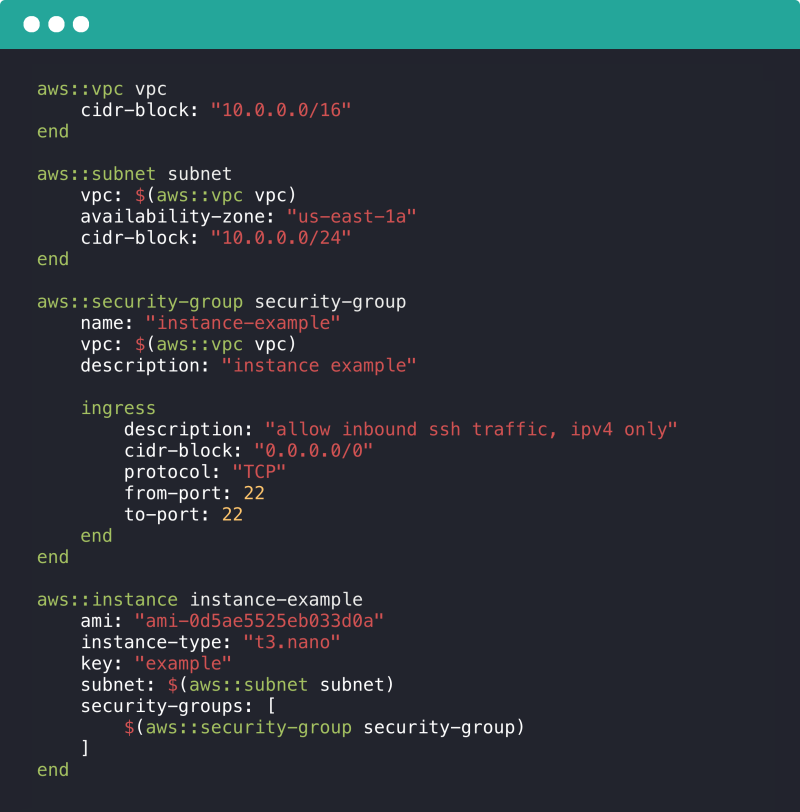
    Perfect Sense has launched an open source project dubbed Gyro that provides an alternative approach to automating cloud infrastructure provisioning and management.

    Gyro was developed as an alternative to other open source projects such as Terraform and Pulumi, said CTO Jeremy Collins. It is designed from the ground up around a programming language that allows DevOps teams to define infrastructure as code, and features logic built into configurations to make it easier to create more precise workflows, he said.

    Adding logic to create equivalent workflows in rival platforms is more complex, Collins noted, adding the ability to add logic makes it easier to not only provision cloud infrastructure but also to roll it back when necessary.

    Perfect Sense developed Gyro to make it easier to manage the infrastructure for its Brightspot content management system (CMS). As such, Gyro can support multiple cloud computing platforms.

    In addition to making it possible to add cloud platforms to an existing configuration, Collins said it can be used to create custom commands and define multiple extension points directly within the Gyro language.

    Perfect Sense Gyro

    Perfect Sense developed Gyro to automate the provisioning of virtual machines. Since then, the company has extended its capabilities to add support for emerging cloud-native platforms such as Kubernetes.

    Collins said Gyro provides a single extensible tool spanning a broad range of DevOps processes, from provisioning infrastructure to discovering what services already exist.

    Despite the popularity of rival tools such as Terraform, it’s still early days in the adoption of infrastructure as code. Most IT organizations are a long way from standardizing on any one platform for automating the provisioning of infrastructure. In fact, it may not be uncommon for different DevOps teams within the same organization to employ different platforms for provisioning infrastructure.

    Gyro’s ultimate success will depend much on Perfect Sense’s ability to foster an open source community. The Brightspot CMS is used by the Los Angeles Times, Walmart, Mattress Firm, Univision, Sotheby’s and US News and World Report, so Collins said there is a base of support for Gyro on which to build a community. Perfect Sense is looking to build a community that will continue to extend the reach and scope of the platform by adding additional plugins.

    Regardless of the approach taken, as the number and rate at which workloads are being deployed on cloud platforms increases, it becomes critical for IT organizations to find a way to automate processes. It’s not clear to what degree those workloads will be provisioned by developers themselves versus traditional IT operations teams that have learned how to program. However, one way or another the provisioning of cloud infrastructure is going to be automated.

    — Mike Vizard

  • The Disservice of Cloud Consolidation

    The Disservice of Cloud Consolidation

    There’s no secret that over the past five years especially, the major (“tier 1”) cloud infrastructure players—Amazon, Microsoft and Google—have been snatching up smaller specialty providers, particularly cloud migration and security services.

    While this acquisition strategy immediately aims to strengthen and expand the provider’s direct and tangential cloud infrastructure offerings, the long-term goal is customer attraction and retention.

    In consolidating cloud infrastructure and related services, cloud vendors are targeting a basic human desire that often bleeds over into business decisions: convenience.

    • “Finding a cloud provider seems hard.”
    • “Switching to the cloud seems hard.”
    • “Managing more than one cloud seems hard.”
    • “Keeping up with more than one vendor seems hard.”

    The play is transparent; the marketing is already in your psyche. People don’t like doing more than they have to, whenever possible. So, why not apply that tick to the cloud infrastructure experience? Why not use a provider where everything is already in one place?

    Truthfully, the move toward cloud consolidation is a step in the opposite direction from where we should be going. The future lies in a multi-cloud approach, not a consolidated one.

    Multi-cloud approaches offer both businesses and their customers several advantages over consolidated infrastructure.

    • When a business’ cloud infrastructure exists solely with one provider, every cloud-related business activity—and every customer interaction with those activities—is beholden to the provider. A provider outage is a business-wide outage, and a business-wide outage is unacceptable.
    • Multi-cloud approaches allow businesses to take advantage of best-of-breed cloud infrastructure. A business can implement databases, containers and other virtual infrastructure in a more highly optimized way.
    • Data held in disparate systems can be better partitioned and more secure than data stored with a single provider. Also, these disparate systems can bolster adherence to existing (and likely coming) data privacy laws and compliance regulations both nationally and internationally.
    • Utilizing cloud infrastructure housed physically closer to a business or its key users can drastically influence business activities in industries where parts of seconds count (e.g., finance).

    Aside from the standard reasoning, I’d argue that there’s additional economic health in taking a multi-cloud approach. Competition naturally drives innovation, stabilizes costs and encourages improvement. Where one provider may falter, three others might specialize. If the majority of businesses consolidate their cloud resources with a single provider, though, the likelihood increases of services gradually worsening with no alternatives toward which to turn.

    Multi-cloud takes planning and coordination to properly implement, and careful monitoring to maintain. An additional tool or two, such as a cloud management platform or cloud integration solution (which, truthfully, many businesses are likely already utilizing), may be needed.

    But, the benefits far exceed the challenges. After all—to call upon Ken Jenkins’ iconic chief of medicine, Bob Kelso—nothing worth having comes easy.

    — Zack Busch

  • Pulumi Deepens Cloud Ties to DevOps

    Pulumi Deepens Cloud Ties to DevOps

    Pulumi has made available a framework for automating the management of multiple cloud computing platforms using familiar programming languages such as JavaScript, TypeScript, Python and Go.

    Company CEO Joe Duffy said Pulumi 1.0 provides a framework that enables developers to automate the deployment of applications on public clouds in a way that eliminates having to learn another programming tool or manually employ YAML files that are often at the root of misconfiguration issues. Pulumi also provides access to a software development kit (SDK) through which scripts or code developed for Terraform, CloudFormation, Azure Resource Manager, Kubernetes or Helm can be imported into the Pulumi framework.

    Pulumi also has extended the reach of its automation framework to provide integration with a variety of continuous integration/continuous deployment (CI/CD) platforms including Azure DevOps, AWS Code Services, CircleCI, Codefresh, GitHub, GitLab, Google Cloud Build, Jenkins and Travis. Pulumi also can be embedded with integrated development environments (IDEs) to provide statement completion, interactive documentation and rich error-checking.

    Duffy noted Pulumi also now can be extended to further adoption of best DevSecOps practices. A Pulumi Key Management Service is integrated with the key management tools from Amazon Web Services, Microsoft Azure, Google and HashiCorp. Pulumi also provides role-based access controls and integration with identity management tools spanning GitHub, GitLab, Atlassian, Active Directory, Okta and Google G Suite, among others.

    Pulumi comes in three flavors: A free Community Edition enables individuals to manage their cloud environments, a commercial Team Edition adds support for organizations and an Enterprise Edition provides additional identity options, policies and controls, as well as self-hosting capabilities.

    Duffy said frameworks for automating application deployments on multiple clouds are necessary because enterprise IT organizations now routinely embrace multiple clouds. Rather than requiring IT operations teams to master programming environments, Pulumi makes it possible to shift deployment responsibilities on to the developer, he said, noting that approach should significantly increase the rate of speed at which applications can be deployed using cloud platforms such as AWS, Azure, Google Cloud Platform, Digital Ocean or others.

    While a lot of progress has been made in terms of continuous integration, organizations are finding continuous delivery to be a challenge. Pulumi is betting that by directly involving more developers in the deployment process, organizations will find it easier to extend their DevOps processes in a way that doesn’t require anyone to learn new programming tools.

    In the meantime, the rate at which new applications are being built is only going to accelerate. As development teams embrace a wide range of cloud-native technologies, it’s only a matter of time before the application deployment backlog increases significantly. IT leaders are going to be under a lot of pressure to solve that issue in a way that results in more applications not only being deployed on a timely basis but also deployed reliably. Having more applications running in a production environment that winds up having issues later isn’t necessarily progress. In fact, it’s likely most IT leaders would find themselves in even hotter water for exacerbating cloud security issues that already plague most organizations.

    — Mike Vizard