Tag: cloud infrastructure

  • Enabling Cloud Adoption in the Government

    Enabling Cloud Adoption in the Government

    In 2022, federal agencies are estimated to spend $7.8 billion on cloud computing. While this spending on cloud computing is necessary, it’s imperative that the government uses its allotted funding appropriately to leverage the cloud’s full potential and avoid common pitfalls.

    Avoiding Common Cloud Adoption Pitfalls

    I’ve frequently witnessed government agencies get locked into a cloud reseller that doesn’t give them the full capabilities offered by AWS, Google Cloud or Microsoft Azure. Most people outside of the federal market don’t realize that the government does not buy cloud directly from the cloud providers—apart from some very large contracts like the upcoming JEDI replacement contract vehicle, JWCC. They buy through a network of reseller partners that offer volume discounts and try to bundle managed services to help with cloud management.

    This approach gives the reseller, not the customer, the power to hold the keys to their kingdom—and can make it difficult for the customer to easily switch between cloud providers in the event of poor performance, lack of access or billing transparency. The federal government would benefit from keeping a small, but purposeful, cloud project management office (PMO) in-house. Thus ensuring that root access is available to all the accounts, subscriptions and projects to provide freedom to the agency to more easily change partners as their cloud maturity evolves.

    I’ve also seen government customers unfocused on the holistic end-user experience of actually using the cloud. The result is fragmented collections of different systems, processes and steps that cause engineers to be frustrated and inefficient. Customers must transform the end-to-end cloud provisioning process so that self–service is paramount and existing technology investments are seamlessly and transparently integrated to the end-user. When done correctly, innovation will be the byproduct, because focus can go towards developing the next generation of mission systems and tools—rather than trying to determine how to get a cloud account to begin a project.

    Three Steps Government Agencies Can Take to Get Value from Cloud Infrastructure

    Challenges exist, but there are proven steps the government can take to get the most value from their cloud infrastructure.

    • Define purpose: First and foremost, understand the purpose the cloud infrastructure intends to serve. Are you looking to reengineer cloud architecture, become more cost-efficient, or transform the innovation potential within your organization by introducing new services that can take you farther, faster? Understanding this purpose and your goals will go a long way towards success.
    • Quantify ROI: To get the best return on your investment, understand what resources are already available and which are necessary for your operations. To fully take advantage of the cloud, it is important to make sure basic costs are under control, such as ensuring AWS EC2 or Azure VM instances are not overprovisioned or underutilized. It’s equally important to make sure you take advantage of reserved capacity reservations for your predictable workloads; these can save you 30% or more. Last but not least, keep a focus on fully leveraging technology solutions to help bring all the pieces together in an integrated user-friendly experience across cloud providers.
    • Consider the outsourcing approach: Bringing in cloud resellers and contractors can provide guidance to your organization and help you make better choices. Just like building or renovating a house, agencies need general contractor-type companies that can help to manage and orchestrate the process of migrating to the cloud and all of its moving pieces. These contractors can also help to locate the various specialists required to get the job done for each unique situation. Long term, having a small, efficient cloud PMO is something every agency should strive to have in-house; however, given the demand for cloud engineering talent, the near-term focus should be to ensure flexibility into engagements with partners, so that they don’t hold back the potential of the organization.

    As digital transformation and cloud migration continue, it’s important for the government to stay on pace with its adoption. As of now, most agencies are still relying on manual steps to validate controls and get Authorizations to Operate (ATOs) approved. Making the simple swaps to more automated processes, learning how to leverage cloud resources to their full ability, and outsourcing operations to contractors can make acceleration easy.  There has never been a greater need for cloud enablement. The time to scale up is now.

  • Mastering API Gateways for the Modern Cloud-Native Enterprise

    Mastering API Gateways for the Modern Cloud-Native Enterprise

    As modern enterprises continue migrating to the cloud and the need for connected applications and devices dramatically increases, API-driven architectures are being widely adopted. In addition to the convenience of being able to efficiently connect and share resources, organizations benefit from the innovation and accelerated development speed that APIs bring in multi-cloud environments. APIs are not new, but as more enterprises adopt modern application architectures, they are increasingly occupying a large amount of a software development team’s delivery efforts. 

    When enterprises modernize and migrate to the cloud, it’s natural that challenges arise which need to be tackled before they become pain points—especially when it involves a complex microservices environment. API gateways are an essential ingredient that helps businesses overcome many of the challenges associated with APIs. API gateways are deployed at the edge of an infrastructure, responsible for routing client API requests to backend microservices. Modern API gateways also come with additional perks organizations can benefit from as teams and infrastructure grow simultaneously. 

    Let’s take an in-depth look at some of the major challenges organizations face around APIs, and how to maximize their benefits.

    Rapid Adoption Meets Growing Pains

    API-oriented architectures greatly accelerate the agility of an IT department, as they’ve become a well-known pattern for modern application architectures. However, this approach can be deceptive, as many critical issues and concerns around APIs aren’t always apparent from the onset. If they are not properly identified, they become growing pains teams have to face on a daily basis.

    The first challenge is the need to authenticate users when they make requests. API gateways allow organizations to integrate and consolidate authentication providers using their protocol(s) of choice. With billing and analytics, organizations need to understand the number of resources consumed when processing a transaction and how their customers consume their APIs. API gateways become the natural point at which to collect this data. 

    In terms of DevOps initiatives, some API gateways use service discovery to configure themselves dynamically which greatly accelerates a development and ops team’s velocity when shipping new features or fixes. To help teams deliver a highly available and resilient platform, API gateways are enablers that provide them with the puzzle pieces for advanced load balancing, rate-limiting, circuit-breakers, mirroring and more. These components make the DevOps mindset a reality. Teams can scale them as needed to realize production-grade environments, continuously updating deployments with software changes and avoiding any unintentional single points of failure (SPOFs). 

    In recent years, the evolution of API gateways has solved growing pains in the cloud, helping organizations leverage cloud-native technologies and workflows. Combining cloud-native technologies with an API-led integration platform creates an effective architecture for a digital enterprise to increase productivity. Automating production, operation and services is no longer a goal but a must-have.

    Modern API gateways features within this environment go well beyond what one would expect at first glance. API gateways can be the cornerstone of a deployment strategy transformation. With hundreds—if not thousands—of services to continuously deploy, the risk of introducing a regression to the platform soars, and being able to address this problem immediately is not enough. API gateways can help you transition to modern deployment strategies and blue/green or canary deployment becomes commonplace—helping deployments become an easily managed daily task.  

    API Gateways to the Rescue for Cloud-Native Architectures

    As part of the shift to modern application architectures, enterprises should invest resources in implementing API strategies as part of their software development initiatives. In turn, they should leverage API gateways to alleviate growing pains and simplify delivery efforts. APIs should be secured, managed, observed and even monetized. 

    API gateways can also help with critical issues related to authentication, security and SSL, billing and analytics, life cycle management, high availability and resilience, and they can even help you initiate a culture shift toward a DevOps mindset. By combining API-driven architectures and cloud-native technologies, organizations emerge with an effective architecture for the digital era. API gateways help overcome the challenges and unfold the networking intricacies of today’s cloud-centered world.

  • Avoiding Budget Overruns During Cloud Migration

    Avoiding Budget Overruns During Cloud Migration

    Many organizations have already started their migrations to the cloud, or soon plan to. It makes sense: The cloud is an attractive option for multiple reasons, including its potential for cost savings, scalability and support of continuous application development.

    However, benefits aside, it can be very easy for enterprises to lose financial control of a cloud migration. The potential for costly mistakes when shifting to the cloud is significant, and organizations often end up getting hit with surprising bills that ultimately stop them in their tracks. In fact, in a 2020 survey, 94% of participants claim that it is a challenge for them to take full advantage of public cloud resources, with 40% citing the need to control cloud costs as their biggest obstacle.

    These financial mistakes are typically made due to the pay-per-use model of cloud services and the growing cloud skills gap. Too often, IT team members are forced to work in cloud environments they are not proficient in, and as new features are released every week, it’s almost impossible for these individuals to keep up. One recent study claimed that 90% of enterprises found that their cloud skills gap doubled over a three-year period.

    The Two Different Types of Cloud Migrations

    There are two types of cloud migrations that typically occur, a lift and shift, or a replatform/rearchitecture migration. The lift and shift method is fast and relatively easy, but it doesn’t enable organizations to truly optimize their cloud usage. The rearchitecture method is the most popular as it gives an organization the opportunity to fix any outstanding issues by harnessing the benefits of cloud-native technologies and services.

    However, once a rearchitecting migration begins, organizations often find it takes significantly more time, effort and resources to complete than they originally thought. This can become a real challenge, especially when facing critical deadlines or experiencing major events like the COVID-19 pandemic or the wild weather events experienced around the globe.

    Understanding and Assessing Performance

    For both types of cloud migrations, understanding and assessing performance and underlying architecture is an ongoing task, as cloud providers are always releasing new or improved services or lowering prices. To make sure they’re achieving the best performance and building a resilient architecture, application developers and IT teams must always be looking for ways to improve their applications. Within the cloud, this is typically focused on four key areas: Networking, computing, storage and application architecture.

    From a network perspective, understanding where data is being used and where data is being accessed is critical and can help organizations cut costs exponentially. For example, cloud providers often have costly data ingress and egress charges, so assessing how best to access and use data when necessary can help a company navigate those charges.

    Regarding computing, there are multiple resources that can help manage system load, make tweaks to computing infrastructure and find performance and cost benefits. For instance, leveraging the data and metrics from native cloud reporting tools can help organizations understand and predict demand, and taking advantage of services like auto-scaling enables them to scale up or down appropriately depending on the changes in application use and demand.

    On the storage front, cloud providers offer a number of ways to save money and boost performance. From the release of GP3 volumes to tiered long-term storage options based on the frequency of access, storage is an easy way to find cloud savings opportunities. Additionally, cloud providers will usually make recommendations and set up tiering policies to help move data automatically into colder and deeper storage.

    As cloud providers continue adding new services, looking at your application architecture is essential to innovation and cost savings—especially when including labor and effort—and truly achieving the promise of the cloud.

    Solving Common Costly Mistakes

    While there are numerous examples of common financial mistakes companies make when managing cloud instances, lack of visibility and understanding are the leading pain points for the developers who stand up and maintain their organization’s architecture. With the demand for cloud so high and with their attention directed elsewhere, developers and engineers often take the mentality of “If it isn’t broke, don’t fix it.” This hampers the company’s ability to assess and optimize their cloud operations. They don’t have time to consistently review their applications for ways to save money or even know how much their decisions cost.

    This ubiquitous issue can be solved by bringing greater visibility into the cloud migration and management process and aligning real-time finances directly with established corporate budgets. In addition, organizations struggling with the cloud services’ pay-per-use model should take the necessary steps—whether internally or with a third-party vendor—to ensure cloud resource and service use is being effectively monitored. This makes it easier for developers to understand where and how their actions affect the financial posture of the organization before their boss comes knocking on the door.

    If enterprises provide the resources necessary for IT teams to become more knowledgeable about how their applications are being used within the cloud and address the cloud skills gap in their workforce, they will be able to prevent cost overruns, experience cost savings and take back control of their budgets. This can take a variety of forms, but enterprises need to establish continual training programs to ensure team members are up-to-date on the latest cloud features and services, as well as leverage tools and automation to reduce manual intervention. Providing this critical visibility throughout a cloud migration can often mean the difference between a successful, on-budget migration and one that is stalled and costly.

  • How to Improve Cloud Management

    How to Improve Cloud Management

    Cloud technology underpins emerging technologies like artificial intelligence (AI), IoT, edge computing and containerization. Organizations must prioritize implementing effective cloud management practices to avoid spiraling costs and potential security and compliance violations.

    The COVID-19 pandemic has vastly accelerated cloud adoption. To support remote work, many businesses have moved workloads from on-premises servers to the public cloud. At the same time, thanks to the proliferation of technologies like AI and machine learning, organizations are generating more data than ever, much of which is also being stored in the cloud. It’s no surprise then, that the explosion in demand for cloud services is showing no sign of slowing down. Gartner predicts that worldwide end-user spending on public cloud services is forecast to grow by 23.1% in 2021 to total $332.3 billion.

    But, it’s not all smooth sailing. As the average organization’s cloud infrastructure grows in complexity and size, it becomes increasingly difficult for teams to manage it effectively. This has significant security, compliance and cost implications. According to Accenture, an astronomical 30% of organizations’ cloud spend is currently wasted.

    So, what can you do to ensure you avoid the most common cloud management pitfalls?

    See the Big Picture

    It’s surprising just how little visibility many businesses—even those with large teams of cloud architects—have into their cloud infrastructure. For instance, one recent survey found that over 25% of IT departments have no idea what their monthly cloud spend actually is.

    Before taking steps to optimize your cloud management practices, it’s crucial that you gain full visibility into your current situation. You need to understand your cost history, audit trail and CPU utilization patterns to identify where you’re overspending.

    Plus, make sure you’re using tagging consistently. A well-defined organization-wide tagging policy is essential, enabling you to accurately visualize expenditure by category. It’s also good practice to set up alerts which are triggered when a user launches instances without tags. This prevents any potential oversights.

    Develop a Change Management Process

    Gone are the days of rigid change management processes handled solely by IT teams. Nowadays, business units can acquire cloud services without even involving IT.

    In the cloud, change management is a series of continuous integrations, deliveries and deployments. Given this fast-moving environment, it’s crucial to implement a robust change management process or risk spiraling costs and potential compliance violations.

    It’s important that your change management process gives you visibility into and control of each infrastructure change without compromising on delivery speed. To achieve this while establishing strong policies and rules, it’s worth considering automation for at least part of the application delivery process. By auto-approving all routine and low-risk changes, you can free up time for your developers to focus on more complex projects.

    In addition, it’s worth integrating your change management process with your DevOps tool stack. You can use collaboration tools like Slack, Teams and/or Jira to ensure everyone has visibility into changes and resolve any issues quickly.

    Continuously Optimize your Cloud Infrastructure

    Unfortunately, when it comes to effective cloud management, your work is never truly done. Conducting a one-off review of your existing cloud infrastructure will only get you so far.

    Many businesses make this mistake and find themselves falling back into their old bad habits a few months down the line. To keep your cloud infrastructure in check, it’s best to continuously track a whole host of factors, including costs, changes, users, permissions and compliance breaches. After all, it’s much easier to solve an issue when you are able to spot it before it gets out of control.

    Now you have an idea of where to start when it comes to improving your cloud management practices. However, manually juggling all of the above considerations is a significant undertaking. It’s prohibitively time-consuming for many organizations whose DevOps teams are already overstretched. This is why a whole host of SaaS-based cloud management tools have sprung up in recent years. These offer unparalleled visibility into changes, resource utilization, costs, security, compliance, performance and more. Yes, they come at a cost. But, most businesses find that the savings such tools enable them to identify significantly exceed any outlays.

  • What It Will Take To Bring Cloud Gaming to Fruition?

    What It Will Take To Bring Cloud Gaming to Fruition?

    The gaming industry is booming. There are 211 million people gaming in the U.S., and it’s one of the fastest-growing forms of entertainment on the planet. In the age of Twitch streaming, gaming has even upstaged traditional sports viewership. On average, young gamers between the ages of 18 and 25 spend a full hour more watching online gaming than watching traditional sports.

    Gaming has also become a way of connecting with others—65% of players say they play with others online or in person. Some software development teams even encourage gaming in the workplace to increase productivity. For this reason, there has been a massive shift toward online cooperative games, RPGs and sandboxes like Minecraft. Also, games are becoming more cloud-based, with purchases, downloads and game saves occurring in the cloud. Still, many people lack the hardware necessary to run complex games locally. All these factors are harbingers of a coming shift away from PC and console-based processing.

    I recently met with Noam Salinger, product manager, Granulate, to learn about the future of gaming and how software teams in the gaming industry can prepare. To Salinger, “cloud gaming is the next step.” The move away from consoles and toward cloud-based, remote processing will have huge ripple effects. Lowering the barrier to gaming could introduce millions of more players into the ecosystem and further balloon the industry. However, cloud gaming presents significant hurdles. The transition will require a substantial reduction in latency, 5G networking and highly efficient computing optimizations.

    Roadblocks to Cloud Gaming

    “Cloud is an integral part of any gaming company,” says Salinger. More and more functionality associated with gaming is being pushed online. There are already online game marketplaces, cloud-based account management and remote game saves. This is especially prevalent with mobile gaming. But, what about the actual processing for computationally-intensive games—could these workloads also move to the cloud soon?

    This kind of cloud-based gaming could soon come to fruition. Yet, Salinger foresees some major roadblocks to cloud gaming:

    1. The Software Components

    A complete jump to cloud gaming will require having the proper software infrastructure in place and getting vendors on board to support it. This is perhaps the biggest obstacle to cloud gaming in the software industry, said Salinger, “It’s still not mature enough.”

    2. The Business Components

    Furthermore, gaming platform companies might refrain from cloud gaming due to fears of it cannibalizing their existing hardware sales channels. On the other hand, cloud gaming presents a big opportunity to take on more of a subscription-based model, such as allowing a user to play any game they want from an extensive suite of games. Akin to streaming services like Netflix, Hulu or Peacock, we could see similar platform styles emerging in gaming. “They will have no choice but to participate at some point,” said Salinger.

    3. The Network Components

    As most gamers can attest, online games can easily suffer from network issues that negatively affect gameplay. Salinger predicts that the ubiquity of 5G networks will be necessary to propel the cloud gaming market forward. 5G could be a universal method to enable real-time connections for a broader base of end-user gamers.

    Even if software developers optimize game processing speeds, a poor network could add enough latency to data throughput to cancel out those gains. 5G could expedite this process, but it’s taking a lot longer than expected. Some estimates place 5G finally arriving at full throttle sometime in 2023, after more antennas are constructed and pre-existing physical infrastructure is upgraded.

    4. The Latency Components

    Another significant roadblock to cloud gaming is figuring out real-time remote computing on the game vendor side. “This is where the latency aspect of things really comes into play,” said Salinger. Since game clients will be making many remote calls, optimizing cloud CPU utilization will be vital to reducing the response time to requests.

    Cloud gaming will require parallel running processes that anticipate user action. Similar to the way modern web applications simultaneously trigger multiple backend requests for authentication, geolocation, user databases and so on, real-time cloud games will require many different processes running in parallel. Servers could allocate resources before requests come in, using predictive analysis of usage patterns to trigger components in advance of user behaviors.

    To enable intelligent resource allocation, Salinger describes how an OS-agnostic kernel module could be in charge of resource allocation, continuously adapting to changes in the application workload. Low-level resource allocation at the CPU level, the allocation memory, I/O, and the sequence of execution must be optimal for each specific application, he described.

    This sort of process is already being applied in production by some ad tech companies to enable real-time ad bidding. For example, by optimizing cloud CPU utilization, Perion is able to perform faster, process more responses and use fewer machines to perform the same task—thereby reducing the roundtrip time for each request. Similar principles could be used to advance cloud gaming.

    Rendering sophisticated virtual environments is highly resource-intensive, and high-performance graphics cards are expensive. Video games are set to only increase in complexity with new AR/VR modes. Cloud gaming could help respond to rising computational needs and replace the need for local computing hardware. In the process, this move could bring in more gamers, disrupt the console wars, and nullify age-old PC-versus-Mac compatibility issues.

    Moving to a cloud-based approach is also arguably more aligned with today’s fast-paced software release cadences. Pushing more frequent patches can help resolve bugs faster. But it also could aid in retaining engagement by introducing new levels and objectives continually.

    The rise of the gaming ecosystem can’t be ignored. But as it stands now, there are still significant challenges to wider penetration of cloud gaming. Cloud computing optimizations to reduce latency, mainstream adoption of 5G and significant re-platforming of software infrastructure are just some of the many issues that will need to be tackled before truly cloud-based gaming experiences advance to the next level.

  • Cycloid Tool Can Reverse Engineer Provisioned IaC

    Cycloid Tool Can Reverse Engineer Provisioned IaC

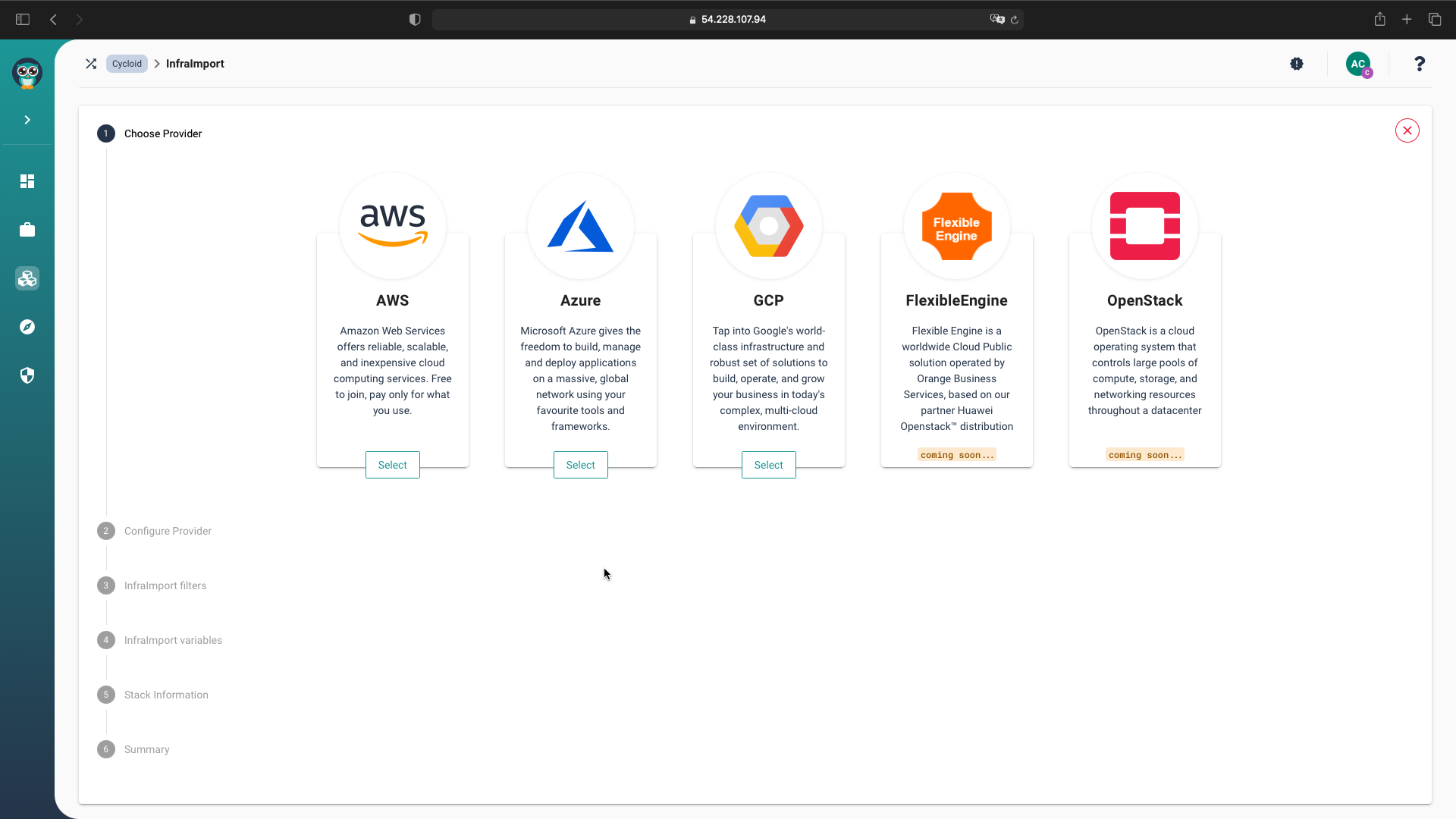
    Cycloid this week unveiled a tool that makes it possible to reverse engineer code used to manually provision cloud infrastructure. The Infra Import tool is part of an effort to create a more consistent and reliable version of that code using open source Terraform software.

    Benjamin Brial, Cycloid CEO, said Infra Import is based on Cycloid’s open source TerraCognita software, which enables IT teams to reverse engineer infrastructure-as-code (IaC) created using open source Terraform tools.

    Infra Import extends that capability to cloud platforms such as Amazon Web Services (AWS), Microsoft Azure, Google Cloud Platform or an IT environment employing the open source OpenStack cloud platform that may have been manually provisioned. IT teams can then create a configuration based on that Terraform code that could be employed across multiple clouds.

    Infra Import is designed to connect to a cloud provider and then automatically reverse engineer Terraform files and IaC stacks based on the existing deployment. It also ensures that the latest edition of Terraform is being used to create that configuration code, noted Brial. That capability eliminates the need for DevOps teams to keep track of what version of Terraform might need to be updated as new versions of the IaC tool become available.

    Just as significantly, Infra Import also makes it a lot easier to onboard new members to a DevOps teams because the tools uses valid secure configurations they know can be relied on. Misconfiguration of cloud services is one of the biggest security issues that IT teams today are wrestling with, simply because most developers lack the security expertise required to configure cloud services properly.

    Cycloid is in the process of rolling out a comprehensive suite of management tools that complement a lightweight framework it created to make DevOps best practices more accessible. The challenge is many IT organizations have already manually provisioned cloud infrastructure in a way that is, at the very least, often suboptimal if not downright insecure.

    Misconfigurations are rife across cloud computing environments, but most organizations are not prepared to manually address the issue. Automating the reverse engineering of those configurations is the first step toward enabling IT teams to address the problem at scale.

    It’s not clear to what degree configuration concerns have impacted the number of applications that would otherwise have been deployed in the cloud. Security is always listed as the top concern IT leaders have when employing cloud platforms. The issue, however, is not the security of the platforms themselves but rather the processes employed to deploy applications on the platforms. Cloud service providers have promoted a shared responsibility model for security under which developers are accountable for both securely configuring services and ensuring the overall security of the software environment. The trouble is, not every developer understands the implications of that shared responsibility model much less how to actually secure an application workload.

    It’s not likely security concerns will slow down the rate at which applications are deployed in the cloud. However, as more cloud security issues are encountered, more scrutiny will be applied.

  • Pulumi Moves to Automate Cloud Infrastructure Provisioning

    Pulumi Moves to Automate Cloud Infrastructure Provisioning

    Pulumi announced today it is expanding the scope of its automation ambitions to make it easier to securely provision cloud infrastructure-as-code.

    Joe Duffy, Pulumi CEO, said the Cloud Engineering Platform enables DevOps teams to use Pulumi Packages to create reusable components for automating IT infrastructure provisioning in a way that can be embedded within workflows and applications using an application programming interface (API) that Pulumi has exposed. IT teams can define a Pulumi Package in the programing language of their choice, Duffy noted.

    The Cloud Engineering Platform is now generally available on the Microsoft Azure cloud, while a preview edition of the offering is available on Google Cloud Platform. Support for Amazon Web Services (AWS) is planned for later this year.

    The platform itself is based on version 3.0 of Pulumi, an open source tool that developers have previously employed to manage infrastructure-as-code. Pulumi is also making generally available a tool for integrating its tools with more than a dozen continuous integration/continuously delivery (CI/ CD) platforms.

    That capability, coupled with existing support for integrated testing capabilities and the tools for managing compliance-as-code based on identities, provides IT teams with a more comprehensive approach to managing infrastructure-as-code, said Duffy.

    Most cloud resources today are directly provisioned by developers using open source tools such as Terraform. The issue that organizations have encountered is that developers are prone to making configuration mistakes that cybercriminals then exploit. Pulumi is making a case for an alternative approach to provisioning infrastructure-as-code that makes it easier to validate configurations using testing tools, while at the same time limiting who can access infrastructure resources by including support for the secure access markup language (SAML) and single sign-on (SSO) capabilities.

    It’s not clear at what rate enterprise IT organizations will be shifting toward platforms that enable infrastructure to be managed as code in a more robust fashion. Developers that don’t always have the greatest appreciation for cloud security issues routinely employ tools such as Terraform to provision infrastructure-as-code with little to no supervision. Cloud resource misconfigurations often result in ports left wide open, and cybercriminals now make use of tools to scan for those types of misconfigurations.

    Pulumi Packages provides a means for IT teams to exercise more control over the provisioning process, using vetted reusable components in a way that doesn’t compromise the rate at which developers can spin up cloud resources, noted Duffy.

    As organizations focus more on software supply chains in the wake of some recent high-profile breaches, it’s only a matter of time before more questions arise about how cloud infrastructure is being provisioned. Much of the concerns organizations already have about cloud security doesn’t stem from the platforms themselves. Rather, it’s the processes employed to provision infrastructure under a shared cloud security responsibility model that results in so many vulnerabilities. Many developers assume the cloud service provider is securing configurations, only to discover later that it was their responsibility to validate those configurations. Security teams, meanwhile, can’t keep pace with the rate at which cloud infrastructure resources are being provisioned.

    Hopefully, there will come a day when DevSecOps best practices leverage automation to resolve this issue once and for all. The challenge is finding the best way to achieve that goal in a way the average developer will accept and embrace.

  • Reducing Cloud Infrastructure Complexity

    Reducing Cloud Infrastructure Complexity

    The impact of the cloud and its role in mainstream IT is undeniable. According to IDC, global cloud IT infrastructure spending is projected to reach US$92 billion (SG$126 billion) in 2023. Notably, cloud spending is exceeding the spending on non-cloud IT infrastructure, underscoring the influence of the cloud in modern IT deployments.

    Fast Forward to Cloud

    Why are enterprises and startups alike turning to the cloud? At the forefront is its sheer scalability and how it enables rapid time-to-market. Instead of waiting weeks or months for hardware systems to arrive, cloud infrastructure can be launched and put to work within minutes. Moreover, cloud-based resources such as managed cloud databases reduce the complexity of deploying new services, thereby enabling smaller teams of developers to do more.

    New cloud-centric methodologies have also emerged with the maturity of the cloud. For instance, infrastructure as code (IaC) makes it possible to automate the management and provisioning of an entire technology stack with configuration, replacing error-prone manual deployments. Among others, IaC also supports CI/CD deployments and disaster recovery plans with the ability to easily deploy test environments or even the entire infrastructure stack.

    Cloud proficiency varies across organizations, however. For most, the journey to the cloud began with low-hanging, lift-and-shift migrations or relatively straightforward cloud implementations, such as a website or an online shop. Other enterprises might have started with cloud-native applications within their organization as part of an effort toward rapid experimentation.

    Like most IT projects, cloud deployments are probably implemented with the technologies of the day and by developers and architects who prefer quick results over efficiency. Although this laissez-faire approach yields quick results, it can be inefficient and culminate in systems that are hard to maintain. The situation is worsened over time as additional services or new features are built on top of the initial design.

    Cloud-amplified complexity

    It’s no surprise that deploying well-designed cloud systems is getting more difficult. As organizations look to leverage the cloud in more advanced ways, some are forced to re-architect existing systems, preventing them from realizing the benefits of reduced time-to-market.

    Other factors that increase the complexity of the cloud include the following:

    • Rapid evolution of the cloud: The breakneck growth of the public cloud has birthed new cloud technologies and strategies that did not exist before. For instance, serverless architecture and containers entered the mainstream only in recent years.
    • Deep expertise matters more than ever: While there are more qualified cloud engineers today, there remains a dearth of experts given the sheer demand for them. A team of “been there, done that” experts can enable an organization to move ahead much faster.
    • Larger attack surface: As more systems and workloads are moved to the cloud, IT teams are under increasing pressure to keep up with the dramatically increased attack surface. From catching configuration drift to patching software libraries that are used within the technology stack, having team members with the right mix of experience is invaluable.

    Modern public cloud platforms offer nuanced, broad capabilities that continue to evolve at a rapid pace. Leveraging the right features can bring forth immense rewards not just in terms of cost, but also offer greater reliability and maintainability. Conversely, ignoring good design can lead to cloud sprawl and ballooning cloud costs, tangling the organizations in a web of spiraling complexity that hinders new cloud implementations.

    A Better Cloud Infrastructure Design

    Ultimately, the cloud journey does not end with the successful implementation or migration of individual systems to the cloud. The breakneck pace of development in the cloud means that best practices and optimal strategies are constantly evolving, making it highly challenging for in-house IT to pin down. Moreover, as new cloud capabilities become available, the onus is on enterprises to leverage the right features for the best cloud solution possible, which necessitates constant optimization.

    Getting this right requires the involvement of experts who are well-versed with the latest cloud practices and automation strategies that can be gleaned only from experience, a deep understanding of the latest cloud methodologies, and the evolving capabilities of each public cloud platform. As these cloud experts focus on core designs, in-house IT can keep doing what they do best: keeping users happy and improving productivity and user experience.

    For instance, Indonesia’s streaming service provider Genflix wanted to migrate its video-on-demand (VOD) workflow to Amazon Web Services (AWS). With a library of 10,000 hours of VOD content, efficiency and seamless processing were vital. CloudCover helped Genflix architect an end-to-end media workflow with a serverless computing design in a span of just three months.

    Whether you are rolling out a new cloud-native system from scratch or looking to improve an existing cloud deployment, a review of your cloud deployment might be in order. This isn’t as daunting as it seems and can be initiated through a simple discovery and analysis phase.

    This article is part of a series of articles from sponsors of KubeCon + CloudNativeCon 2020 North America

  • Are We There Yet? The Long, Hot Road Trip to the Cloud

    Are We There Yet? The Long, Hot Road Trip to the Cloud

     “If I have to pull this car over, there will be trouble!” Does this sentence evoke childhood memories of summer adventures in the family car? It’s the same sort of dread we get when the IT budget-holder turns around and threatens to pull over on our journey to the cloud or hybrid cloud. The family summer road trip may be filled with great expectations, but the last thing we want is an unforeseen disruption along the way. And migration to the cloud is no different. To continue this analogy, the bumps on the road to avoid are the ones around cost, performance and risk. So, here are some thoughts on how to identify the challenges and navigate to your destination smoothly.

    The Line of Business Needs To Pee (They Think) …

    Or even worse—“we just stopped, why didn’t you go then?!?!” Planning business needs is always a challenge—especially at the speed of change in today’s disruptive markets. The unforeseen impact of the COVID-19 pandemic is one example. We hear it a lot in our industry: “We don’t know which applications are using the most bandwidth and how much they are costing us.” And with 59% of infrastructure managers citing infrastructure cost overruns as their biggest concern, there’s definitely room for immediate improvement. Having clarity into your application topology with a clear map to performance is mission-critical for a successful hybrid cloud journey.

    Because this is such a dynamic process, it needs to be mapped and measured daily, in real-time. But simply automating VMs to workload balance does not give you the clarity needed to understand what and when to move in your hybrid journey. You need the ability to understand why and when things changed so you can effectively plan or resolve the issues. According to Gartner Research, on average, AWS deployments are 40% over-provisioned to meet unexpected capacity and performance issues, which defeats the purpose of moving to the public cloud. “Know before you go” should be a mantra for every hybrid journey manager—and parent managing backseat bladder needs.

    IT Just Hit a Major Pothole and Now Has a Flat Tire

    A flat tire only ruins a trip if you don’t have a spare, the tools and the knowledge required to fix it. For most, the actual solution is to call AAA or in this case, get a third-party systems integrator (SI). Calling an SI to help solve an unforeseen problem is not a bad idea, but it does come with a hefty price tag and a level of dependency that doesn’t mirror the model of moving to a public cloud.

    With the right solutions in place, even a pandemic like COVID-19 should not disrupt your business. Every IT leader should have confidence in their infrastructure systems. That said, it takes time and effort to get there, and no journey worth taking is easy. Having integrated solutions and partners are critical to the hybrid cloud journey. And so is knowing when to fix it yourself and when to call in support to save you millions.

    Too Much Luggage From the DBAs

    Packing the back of the family Ford “Wagon Queen Family Truckster” is a special skill set. It’s like playing Tetris with your family’s luggage. Right-sizing infrastructure capacity while supporting applications is like making sure all the luggage fits in the car and that you still have room to move your feet. Sure, you could buy a bigger car to manage the payload, but the expense doesn’t justify the performance. You need the clarity to act across your private and public cloud infrastructure in a single solution without disruption is required. That level of optimization is a constant to remaining competitive, enabling you to transform your infrastructure from being seen as a cost of business to being recognized as a revenue generator.

    Compliance Just Gave You a Speeding Ticket

    No matter how well-intentioned and on the right side of the law your compliance team is, it can feel like you are being chased by Sheriff Rosco P. Coltrane. And while you don’t mean any harm, the law is the law. In the rush to the cloud, you’re not often asked how you will manage the migration, you’re simply asked how fast you can move—reminiscent of another epic journey: “We’ve got a long way to go and a short time to get there.” Regardless of whether you identify with Smokey or the Bandit, you cannot deny that Sheriff Buford T. Justice (aka, Compliance/Security Officer) will slow you down. So, work early and often with your compliance team to ensure that where you store your data and who has access to your data always remains in compliance.

    Leadership Just Ran Out of Gas on the Migration Budget …

    … and now they want to know when the cost of running applications is best on-premises versus across the public clouds? Don’t break out your abacus just yet. Cost is all about transparency to the needs of the application infrastructure. Too many enterprises are finding that the rush to the cloud was expensive and not well-planned and are shifting critical apps back to the private infrastructure. But you need to go beyond just resourcing noisy neighbors with VM automation. A long-term solution is to optimize the application performance with an integrated APM and infrastructure solution. A more immediate and tactical solution is to leverage a hybrid infrastructure platform that works across multiple on-premises vendors and public cloud vendors to give you the cost analysis you need.

    Application Managers Are Fighting Over the Music  

    On-premises versus public cloud, VMs versus containers, AWS versus Google versus Azure. Where should those applications be running and how can they migrate them? These may seem like the most trivial of issues to be concerned about, but DevOps, architects and managers have deep loyalties way beyond rational factors such as cost, performance and control. Having the ability to manage and plan cost across a multi-vendor hybrid infrastructure to maintain your performance SLAs is critical. Don’t let blind loyalty or the loudest voice control your path. Your hybrid optimization platform should afford you real-time planning and cloud brokerage to ensure you are optimized for cost and performance.

    Your Early Talent Team Has Been Doing the Same TikTok Dance in the Backseat for the Past 8 Hours

    Hearing the same story about why the journey is behind schedule or the same ask for more budget to meet performance SLAs, or even a repeated request to deviate from the existing road map, can wear you down or dilute your focus. It’s important to have a multi-department/cross-functional plan and mapped roles and to measure performance. Keeping the entire team (multiple owners of the “cloud” in a large enterprise) engaged and on the same plan to avoid going into a loop of burned resources and nerves.

    Are We There Yet?

    As with most family trips to magical destinations, the road to a successful cloud migration is fraught with unexpected disruptions—but a good plan can avoid most common challenges. So, no matter what stage you might be at in your hybrid cloud journey, we hope you will reach out to us before you feel the need to pull over when the going gets tough.

    Hope you are all happy and healthy. Please, during this increased time of need, remember to give back to your community as you can.

  • Custom Coding: An Obstacle Along the Hybrid Cloud Journey

    Custom Coding: An Obstacle Along the Hybrid Cloud Journey

    If you’re like 80% of enterprises, you’re somewhere along a hybrid cloud journey. The imperatives of digital transformation, the emergence of DevOps as the de facto enterprise development methodology and the rapidly growing demand for continuous innovation have made hybrid cloud the go-to infrastructure for competitive enterprises.

    Hybrid Cloud Governance Requires Automation

    Despite hybrid cloud becoming the new normal, there are inherent challenges to managing these infrastructures. Not only do IT departments (and those they serve) need to adapt to different processes for provisioning public and private clouds, but they also need to ensure security and compliance across an increasingly heterogeneous cloud landscape. On top of these challenges, IT departments also need to monitor and control cloud costs and manage day-2 operations while seamlessly orchestrating private, public and on-prem systems.

    To tackle these new complex challenges, you need management and automation tools, which help alleviate the security, governance, and cost-control challenges that hybrid clouds inevitably bring. But integrating them with your existing IT infrastructure (e.g., networking, security, backup, etc.) burdens your IT team with significant custom coding requirements.

    The Dreaded ‘Custom Code Tax’

    So, you have your hybrid cloud, and you have your automation tools to optimize it. But now, each one of these tools—whether it’s for simple use cases such as resource naming or complex tasks such as multi-tier workload provisioning—requires integrations with dozens of underlying networking, security and backup endpoints, typically from dozens of vendors.

    These integrations often require custom coding, which is arduous and time-consuming. Your IT people will be stuck writing and maintaining thousands of lines of custom code to integrate your automation tools with all of these endpoints. It’s also expensive. Research by the Standish Group shows that over half of custom-coded projects cost almost double their original estimate, while about one-fifth of custom-coded projects will be canceled before they are completed.

    And the tax doesn’t end there. Governance and security become increasingly complicated and expensive because the proliferation of new tools and processes prevents IT from having a unified view of integration policies, automation playbooks and role-based access. Without the end-to-end visibility necessary to manage and monitor this proliferation of tools and processes or standardized provisioning across all IT platforms and tools, costs are only going to compound over time. Since 60% of all infrastructure outages are caused by human error, end-to-end automation and visibility are now mission-critical for enterprise organizations

    But what is to be done? Organizations need hybrid cloud to meet the demands of digital transformation, and they need automation tools to effectively manage and secure hybrid clouds. Your monetary costs and governance burdens will scale along with your IT, and as your organization invests in new automation platforms, the “custom code tax” will only keep increasing. But if you want your hybrid cloud to work right, there really is no choice but to pay it.

    Hybrid Cloud Management with Codeless Integrations

    Enterprise IT departments need to implement cloud management solutions that offer an alternative to custom coding. Cloud management that takes a policy-based, codeless approach to these integrations eliminates the need to custom-code, thus repealing the custom code tax.

    Take the example of cloud management platforms (CMPs). In the past, CMPs mainly focused on management. However, the complexity of hybrid clouds now requires an equal focus on both management and integration. Software-based, low-code/no-code methods for integrating automation solutions with relevant systems not only eliminate the high costs associated with custom coding but also ensure a governed, standardized approach to integrating automation tools with networking, security and backup endpoints.

    Not only will you save valuable time and budget dollars, but when your integrations are software-based and no longer rely on custom code, you will be able to apply advanced intelligence tools more easily as your organization grows and evolves. If your company wants to integrate certain tools that utilize artificial intelligence (AI) and machine learning, for example, you will run into obstacles trying to abstract data from custom-coded workflows. You can’t apply AI to a language that is unique in business logic because it has been custom-written. There could be a hundred thousand lines of custom code, so you would have to manually go through it all and try to figure out what’s there, who built it, why they built it and what the business logic behind it is.

    Codeless Will Rule the Day

    In a world where multi-tool reigns supreme, the more tools you want to use, the more custom coding you have to do. Enterprises today must be able to use their tools of choice in a best-of-breed approach while maintaining standardization through a robust integration layer. Going forward, this means that cloud management platforms will need to be built around extensibility and make integration a core capability, not an expensive afterthought.

    Forward-looking CIOs are choosing software-based solutions to enable multi-tool to work seamlessly in hybrid cloud environments. This results in lowers costs, better governance, and more robust security, especially as organizations advance their hybrid cloud journey.