Tag: chefconf

  • Chef Extends IT Automation Reach

    Chef Extends IT Automation Reach

    Chef, at its online ChefConf 2020 event today, launched Chef Compliance and Chef Desktop as well as additional enhancements to the tools it provides for application deployment automation.

    John Wyss, vice president of product for Chef, said Chef Desktop enables IT teams to write their own configuration and compliance requirements as human-readable code using YAML files to manage and secure entire fleets of endpoints via a centralized console. It includes pre-written configuration code and curated content that can be employed to both audit and harden desktop operating systems.

    IT teams will now avail themselves of a zero-touch process for enrolling and provisioning endpoints while at the same time automating software deployment and management, Wyss said. That includes being able to enforce security policies using configuration profiles, data encryption and system updates.

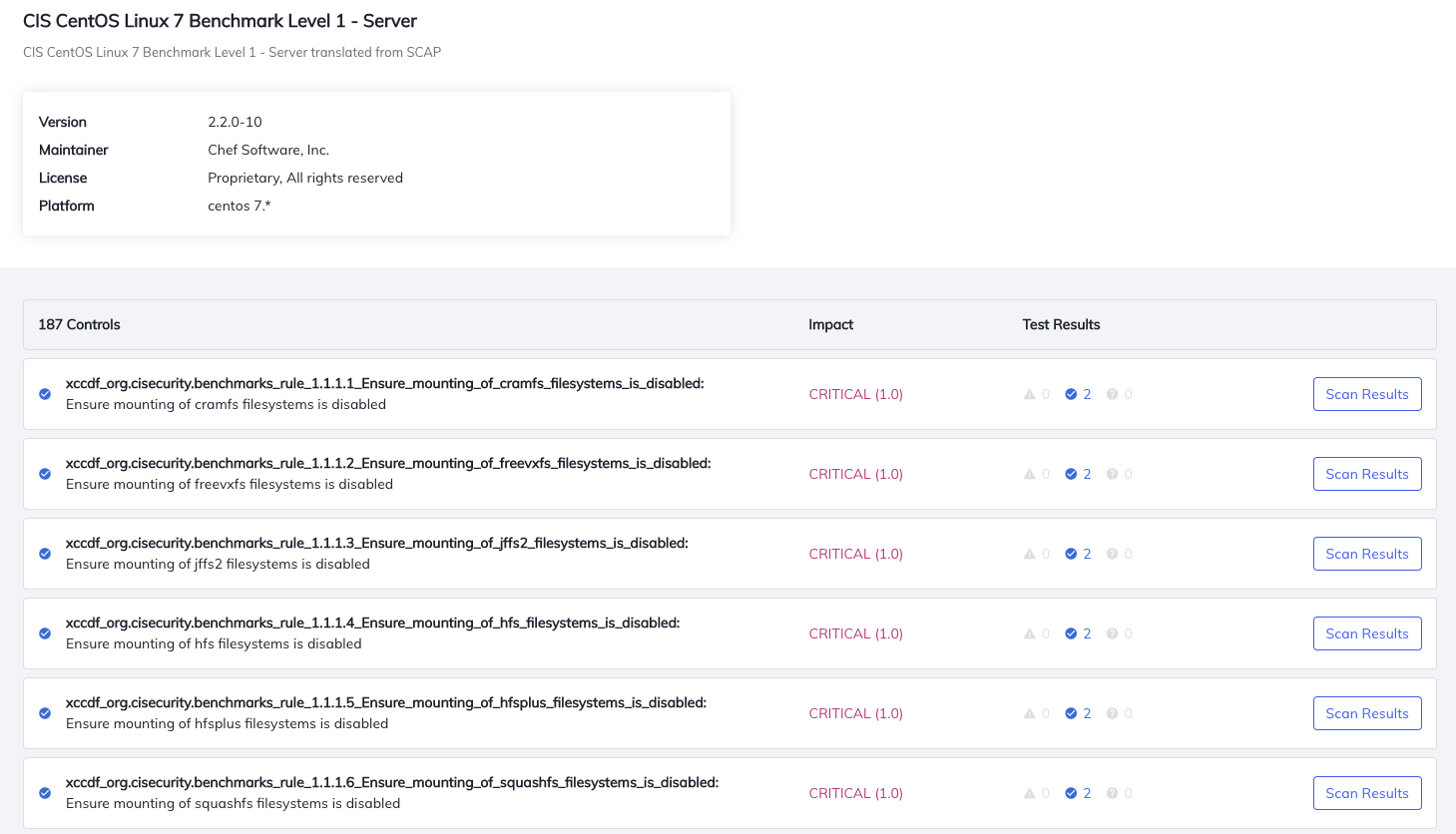
    Chef Compliance, meanwhile, is built on top of Chef InSpec, an open source framework for testing and auditing applications and infrastructure. Chef Compliance takes Chef InSpec further by including tools to automatically audit IT environments based on the specifications defined by the Center for Internet Security (CIS) and Security Technology Implementation Guide (STIG).

    Those audits can then be applied to automate the remediation process without having to write code if IT teams so choose, said Wyss. The goal is to provide DevSecOps teams with a unified language for managing security and compliance, he added.

    Finally, Chef has updated Chef Enterprise Automation Stack to include analytics to filter and update views for disconnected services and receive real-time health-check messages and status alerts. Chef has also added rapid rollback, package cleanup and layered container support, and has made it easier to manage package settings and deploy packages across multiple platforms.

    Collectively, these capabilities should make it easier for DevOps teams to reduce process friction across the entire DevOps life cycle.

    In the wake of the economic downturn brought on by the COVID-19 pandemic, interest in IT automation is on the rise. Many organizations are either freezing IT headcount or, worse, yet, reducing the size of their IT staff. At the same time, IT environment is becoming more complex, especially if most employees continue to work from home. IT teams now need a common set of tools for managing not only application deployments on servers or in the cloud but also endpoints. Ultimately, that approach should also go a long way toward reducing the total cost of IT.

    In fact, in the wake of the downturn more organizations than ever are receptive to automating IT processes. What was once viewed as potentially an existential threat to the existence of the IT staff has become the only way to manage IT at scale, at a time when cutbacks are broad-based. Organizations that don’t find a way to automate the management of IT are likely to incur significantly higher costs than those that do. Arguably, the issue is no longer what to automate and when, but rather how much and how soon, as both applications and the end users accessing them become ever more distributed.

  • Using Automation Tools to Drive Collaboration, Innovation

    Using Automation Tools to Drive Collaboration, Innovation

    How automation can help business move past the walls of confusion between dev and ops

    In the current state of things, businesses are leaning more than ever on the collective intelligence of their tech teams to drive innovation within their respective organizations. These teams are always comprised of developers and operations professionals. With the foray into automation and the desire for companies to do more with less, it has never been more critical that all individuals, regardless of team, come together to do amazing things. Of all of the services available, Chef is a great example of a suite of tools that want to empower teams to do just that: come together and innovate. It is all about bridging gaps, which can range from simply redefining how teams think about each other to more complex things such as knowledge gaps.

    The first gap that almost always seems to come up when bringing teams together and driving business value is the duties gap. For too long we have sat on opposite sides of the coin. In operations in particular, too often we see ourselves as the ones that have to deal with the aftermath of unfortunate problems within code. But the fact is, we should all care about our systems, we should all care about our code and we should all be ensuring the longevity of both.

    Once you’ve moved past the first hurdle, then comes the gap in knowledge.  Scripting has become pretty common as companies press for automation, but in some instances, it becomes necessary to build up existing team members. Using enterprise automation tools such as Chef, entire teams and entire companies can begin caring about a shared thing: the configuration, health and state of their infrastructure and applications. In doing so, those same teams can begin speaking a shared language. Once this knowledge and shared language are in place, developers no longer view the ops team as an “other,” but rather as collaborators. They can each use their various areas of expertise and speak the same language without having actually having to speak the same language.

    The third common gap is the process gap. Process can represent all of those past processes that a company is reluctant to let go of, which can hinder the ability of the developers and operations humans when they’re attempting to collaborate. The process gap can become particularly difficult to move past without leadership buy-in; as such, it is critical to involve business decision-makers in this transformation. While nearly the entire industry is beginning to move toward more collaborative environments, the entire leadership team must be onboard with the requirements to make changes happen. With the use of automation tools in particular, though, processes can begin to shift more toward collaboration-friendly policies and you can then make the case for further expansion with proof that it can aid in your transformation.

    Empathy is the final gap that must be overcome. The great part about the other gaps is that they work hand in hand to solve each other’s problems. By promoting collaboration, resolving these gaps are also facilitating collaboration. The empathy gap is largely caused by silos of the past that have led to the commonly talked-about “wall of confusion.” Closing the knowledge and duties gap, developers and operations humans can now communicate and understand the same language and processes each is following. This allows the wall to be broken down and operations humans and developers alike can care about both code and stability.

    It’s easy to start getting dev and ops teams working together and on a more even playing field once these gaps have been eradicated. This becomes a big driver for innovation and is, in many cases, a true recipe for success within the company. During my career, I’ve both watched and been involved in these transformations. Working with solutions such as Chef has allowed me to cross the bridge myself, and likewise, be able to share with others how that can be scaled out to entire organizations.

    — Brittany Woods

  • DevOps Chat: ChefConf Update with Chef’s Nell Shamrell-Harrington

    DevOps Chat: ChefConf Update with Chef’s Nell Shamrell-Harrington

    2019 is shaping up as a “coming home” year for Chef. After recently reaffirming its commitment to an open source strategy, the company is gearing up for the best ChefConf yet. ChefConf, scheduled for May 20-23, is coming home to Seattle and many of the Chef favorites including Adam Jacobs, John Willis and more will be speaking.

    I had a chance to catch up with Nell Shamrell-Harrington, principal software development engineer and community engineering lead at Chef, who gave us a great preview of the whole event as well as her own presentation, and shared what her most anticipated sessions and activities are.

    You can still register for ChefConf, as well as get more information at: chefconf.chef.io/

    As usual, the streaming audio is immediately below, followed by the transcript of our conversation. Enjoy!

    Transcript

    Alan Shimel: Hello, everyone, this Alan Shimel, devopsy.kinsta.cloud, and you’re listening to another DevOps Chat.

    Today’s DevOps Chat is all about the upcoming Chef Conference, and I’m happy to be joined by Nell Shamrell-Harrington, Principal Engineer at Chef. Nell, welcome to DevOps Chat.

    Nell Shamrell-Harrington: Hello, Alan! Greetings from Seattle. It’s fantastic to be here.

    Shimel: Yes, it is. How’s the weather in Seattle?

    Shamrell-Harrington: Surprisingly sunny today, and it wasn’t raining when I came in, so pretty darn good for Seattle in April.

    Shimel: Absolutely. Well, look—in April, April showers. But, you know, the whole weather in Seattle thing is a bit of a fallacy. You know, they get—

    Shamrell-Harrington: What I tell people, when they ask me does it rain a lot, I said, “Yes, but it’s not, like, soaking rain. There’s a constant mist in the air that gets in to your bones and makes you cold.” So, you learn to deal with that, but yep, greetings from beautiful for today, at least, Seattle.

    Shimel: Good for—[Laughter] good for you. Alright, so now, the big news is, we are, what, about a month, maybe a month and a week, a month and 10 days out of ChefConf, right?

    Shamrell-Harrington: We are indeed. I need to write my keynote. [Laughter]

    Shimel: I would say, let’s get started, yeah—might be a good idea. And this year, after ChefConf having kinda wandered around for a few years to Chicago and Austin and I think Santa Clara I was at one and a bunch of other places, you guys are coming home to Seattle, right?

    Shamrell-Harrington: We are indeed, and we are very excited about this. We look forward to welcoming the entire Chef community to our home of Seattle.

    Shimel: Absolutely. And when we say coming home now, you know, I think it’s figuratively and literally and kinda philosophically.

    Shamrell-Harrington: Absolutely.

    Shimel: As ChefConf really represents a sort of coming home for Chef in a lot of ways, do you agree?

    Shamrell-Harrington: I agree. We made the recent announcement—which I know you covered on a previous episode—about 100 percent of our product code now being open source. And one of the reasons we did that was, Chef was created through the open source community. Chef—I mean, the open source community built every piece of the foundation that Chef stands on, so we are returning to those roots with open sourcing 100 percent of our product code and a lot of the discussion about that will be at ChefConf in our geographical home as well.

    Shimel: Yep. And, you know, I mean, the open source, reaffirmation of the open source commitment, I think, is one part of it. I think another part of it, though, Nell is—you know, look, I’ve run devopsy.kinsta.cloud now for five, six years, right? And when I first got into DevOps, you know, Chef was one of the blocks of granite, if you will, upon which the DevOps foundation or the DevOps world was kinda built.

    And over the years, you know, there’s been a lot of shiny toys that have come, as such happens in the tech space, right?

    Shamrell-Harrington: Of course.

    Shimel: And you sort of say, “Yeah, you know, that was—you know, Chef almost was old and what is it doing to stay current? Is it still relevant? And there’s Kubernetes” and all of these things. But to me, this ChefConf represents a bold, provocative, confident Chef coming, in their home court, kinda like the Hawks, right, coming out of the—

    Shamrell-Harrington: Very much so, or their home stadium, but yes.

    Shimel: – with the 12th man, and saying, “Hey, man, we’re still here, we’re still kicking, but we’re still innovating, we’re still true to our roots, and we’re still helping people with DevOps.” Fair?

    Shamrell-Harrington: Absolutely. I believe that is completely fair. We are walking this DevOps journey together, both the Chef community and Chef the company as well. And this is bringing us back into sync.

    Shimel: Cool. So, let’s dive in a little bit. You mentioned the open source commitment, and we have covered that before. Give us some—you know, and you’re gonna keynote, right?

    Shamrell-Harrington: I am, indeed. I’ll be keynoting, I’ll be first up on day two. So, make sure to be there on time.

    Shimel: Can we get a little preview without getting in trouble?

    Shamrell-Harrington: Absolutely, we can. So, I will be discussing developing software through a community. When I was starting to brainstorm this talk, I was worried that—you know, I’m a Principal Engineer. I’m very used to giving technical talks. I was worried people would respond with, “Why are you giving a cultural talk?” And I realized, open source community, it’s not cultural or technical, it’s both. And that’s really where the magic of working in open source Chef has come.

    We work on fantastic technologies, we work with fantastic technologies including Kubernetes, Terraform, and so many more, but we do it with amazing humans.

    Shimel: Yeah, absolutely. Now, Nell, you’re not allowed to mentioned your keynote, but give me what you’re looking forward to, the top three things at ChefConf this year that you might be looking forward to. And if you wanna do five, feel free.

    Shamrell-Harrington: Absolutely! Well, for ChefConf itself, I’m really looking forward to the Community Summit on Monday, May 20th. That’s when we get together, we hold a bunch of open spaces, we talk about what Chef is doing and where we as both a company and a community wanna go.

    So, there’ll be a lot of talking at the summit on Monday, and then on Thursday, we have our hack day. It’s not a competitive hackathon, it’s more people getting together in groups and building something together. So, after we talk on Monday, we’ll start building what we’ve discussed on Thursday, and I hope to see everyone there.

    Shimel: Great. So, that’s one.

    Shamrell-Harrington: Right.

    Shimel: What are some of the others?

    Shamrell-Harrington: As far as the sessions go, we have sessions from people from retail, government, banks, major cloud providers, and so much more. A few that I am particularly looking forward to are “A Habitat for Democracy.” That’s going to be by Chris Alfano of Code of America. They use Habitat to help them—they use Habitat for civic hacking, essentially. So, looking forward to hearing more from him.

    Another one is, “FIPS Doesn’t Have to Be a Four Letter Word” from Keith Walters of TapHere! FIPS is Federal Information Processing Standards. It is as boring as it sounds, but it is extraordinarily important for our government customers, especially those who work in particularly sensitive areas of the government.

    And then the third one, I mentioned how Chef, it doesn’t compete with things like Hashicorp, Terraform, or Kubernetes, it works with them. And one talk I’m particularly looking forward to is, “Terraform and Chef.” That’ll be by Seth Lippman and Andy Herm of Oracle.

    Shimel: Very cool! You know, I will say, FIPS may not be boring, but it is expensive. [Laughter]

    Shamrell-Harrington: Very.

    Shimel: In my previous life, we had to have our information assurance, as the U.S. Army calls cyber security, our information assurance solutions FIPS certified for the encryptions and stuff. And that was an ordeal, to say the least, so, I’m interested to—I’d love to listen in on that one.

    You know, you mentioned Terraform. There’s a lot of stuff coming out of the Linux Foundation recently now—

    Shamrell-Harrington: Absolutely.

    Shimel: – between Cloud Native and now this new CD Foundation that’s spun up out of Linux Foundation. It really is, you know, this whole move to Cloud Native is, in many ways, in my mind, anyway, Chef and some of the foundational work you guys did kinda laid the groundwork for the move to a Cloud Native world.

    Shamrell-Harrington: Very much. You know, the groundwork, the reason Chef was founded, the reason Cloud Native was founded is, we had this still radical idea that working with technology did not have to be as painful as it normally is.

    I remember I reached out to Gene Kim on Twitter after I read The Phoenix Project and I told him, “You know, it actually made me physically cry,” the first half at least, because it was so familiar. All that pain of dealing with both technical debt and cultural debt.

    And what we’ve said at Chef, what Linux Foundation is saying, what other Cloud Native foundations are saying is—there is a better way. It does not have to be this painful. And we’re working to make a world where it’s not as painful as it has been to run technology.

    Shimel: Amen. You know, I remember sitting with Gene Kim reading a manuscript of Phoenix Project, and you know, those characters in there are composites of real people.

    Shamrell-Harrington: Oh, yes.

    Shimel: And when you—you know, when you think back to who the real people are, I mean, it is dead on. I mean, truth is truth is truth.

    So, I’m assuming there are gonna be people in our audience who are absolutely attending ChefConf, but there are also people who have attended them in the past, but then there’s also gonna be a lot of people who have never attended a ChefConf listening in. And, you know, for those who haven’t—shame on you.

    Shamrell-Harrington: [Laughter]

    Shimel: [Laughter] But beyond that, you know, you’re missing a great time, because it’s not all sessions, ChefConf.

    Shamrell-Harrington: Very much.

    Shimel: ChefConf is very much a community, a bit of a love fest, if you will, around Chef, right? And there’s always some great social activities. Can you give us a preview, maybe?

    Shamrell-Harrington: Sure. Two of the ones I’m looking forward to, I believe it’s on Tuesday, we’ll be holding game night. We started doing those at ChefConf a few years ago, and I’ve always appreciated it. I have hearing loss, so, when I’m in a big, crowded, very loud party, I can’t have conversations with people, because I’m only getting every third or fourth word, depending on what frequency their voice is.

    But with game night, it’s quieter. People are more focused, there’s something to do. I’ve met coworkers—or people who became my coworkers a year later through game night. It’s a wonderful way to connect on a deeply personal level with other attendees and other employees of Chef.

    Shimel: And it’s fun.

    Shamrell-Harrington: It’s absolutely fun. I think we’re gonna have, something we’ve traditionally had a Chef game night has been a gamed called Artemis, which is—I’m gonna get in trouble for saying this, but it’s kind of like a Star Trek LARP without actually being Star Trek. [Laughter] But there’ll be board games as well, card games, Adam Jacob always runs a Dungeons & Dragons campaign. It’s gonna be a wonderful world of geeky fun.

    And then, on Wednesday, if kinda the traditional party is more what you enjoy, we’ll be holding the community celebration. And because we want to highlight the wonderful things Seattle has to offer, it will be catered by Tom Douglas. For all you foodies out there, you know that’s a very, very big name, both in Seattle cuisine and nationally and internationally.

    And we have two classic Seattle bands playing. The first is Mudhoney, and the second is Deep Sea Diver. They will be playing the celebration, and we are very much looking forward to hearing them and sharing that with our community.

    Shimel: So, providing a little translation in the background, right? If Tom Douglas is there, there’s a good chance there might be some killer salmon.

    Shamrell-Harrington: Absolutely.

    Shimel: He makes—I was actually privileged, he did—I forgot what event or gathering I was at. But they brought Tom in, and he showed us how to fillet a salmon.

    Shamrell-Harrington: Oh! What a wonderful experience!

    Shimel: Yeah, that was pretty cool. And then, of course, we went to one of his restaurants for dinner, and it wasn’t terrible. But beyond that, the Chef party—and that’s usually like the last night or the night before the last day kind of thing.

    Shamrell-Harrington: Yeah, it’s the night before the hack day.

    Shimel: Yep, and that’s always a great party, because by then, you know, the sessions are in, people have networked around a bit, have talked about a lot of the technology, and it’s a good time to have a good time, right?

    Shamrell-Harrington: It is, absolutely. Whenever I’m speaking at a conference, I always enjoy the conference after my talk much more than the conference before my talk.

    Shimel: Right. Well, because before, you’re all tensed, keyed up on doing that. You know, Nell, you mentioned Adam Jacob, and I’m sure some of the folks sitting out there are saying, “Well, I heard Adam’s not the CTO any more. What’s he doing there?”

    Again, I think it talks to the power of Chef. I think it talks about Chef reaffirming its roots and all of that. It’s that—yes, Adam is not the CTO any more. He’s out doing his Foundation thing. But he is going to be there, he is presenting, if I’m—

    Shamrell-Harrington: He is. He’s presenting on day two as well.

    Shimel: What other kinda—John Willis is speaking as well. John, I think, was, I wanna say, employee eight or nine at Chef back in the day.

    Shamrell-Harrington: Mm-hmm.

    Shimel: And he’s also speaking, as well as he will be there on behalf of Digital Anarchist, which is a video platform John and I partner on—

    Shamrell-Harrington: Oh, great!

    Shimel: – and we’ll be doing interviews. Yes, we’ll be doing interviews all through ChefConf, so look for the little video set, if you wanna say hello to John or check out some of the videos we’re shooting.

    What about training, though? Isn’t there training or something going on earlier?

    Shamrell-Harrington: It is, indeed. Monday, which is the day of the Community Summit, along with the Community Summit, we’re running several training sessions. So, if you wanna learn more about Chef, you wanna learn more about Chef and Kubernetes—all sorts of topics. If you wanna get hands on before the sessions begin so you get familiar with the technologies that people are going to be presenting, that’s a great way to do it.

    Shimel: Absolutely, absolutely. So, you know, Nell, interesting—look, you’re a perfect person to speak to the ChefConf crowd, right? Because it is a fairly engineering focused crowd, right?

    Shamrell-Harrington: It is. It’s historically been primarily practitioners, though that is starting to change. We’re getting what we call decision makers as well, but it is primarily an engineering crowd.

    Shimel: You know, someone could be a practitioner and a decision maker.

    Shamrell-Harrington: Absolutely! [Laughter] Absolutely. And they make the best decision makers.

    Shimel: I guess they call that diversity, but anyway [Laughter]—in a funny kind of way. Anyway, but there’s really something for everything at Chef there. What I’m trying to get at is, I don’t want people listening to this who are saying, “Well, I’m not geeky enough for that” or, “I’m not an engineer” or, “I’m not a developer,” right? If you’re at all interested in how software is getting done, how today’s winning teams are doing it—I mean, there’s something there for you at Chef.

    If I can ask you—and we didn’t talk about this beforehand, so I don’t mean to put you on the spot—give me what you think is one session that, frankly, you don’t have to be an engineer for, and you’ll still get a lot out of it.

    Shamrell-Harrington: The one I would recommend is, “Bridging the Great Divide: Using Chef as a Spark for DevOps.” That is going to be given by Brittany Woods of CARFAX, and I believe will illustrate not just their technical transformation but their cultural transformation, because the two of them go hand in hand.

    Shimel: Absolutely. I gotta tell you, to this day still, one of my favorite ChefConf presentations was the guy from, was it Alaska Air, or Air Alaska? I always mix those—

    Shamrell-Harrington: It’s Alaska Airlines, yeah. The keynote a few years ago?

    Shimel: Yes.

    Shamrell-Harrington: I remember that, the CTO of Alaska Airlines. That was one of the best ones I’ve ever seen.

    Shimel: It was. That was a really good one. Anything else we wanna highlight?

    Shamrell-Harrington: I would say, if you deal with technology at all, whether that’s as a developer or as an engineer or something else entirely, ChefConf is the place for you. We are obviously going to be highlighting Chef solutions for how to do technology better, but that’s not the only thing we’ll be doing. If you wanna meet a lot of other people who are having the same struggles as you, solving those struggles in new and different ways, please come to ChefConf.

    Shimel: Excellent, excellent. You know what we haven’t done, though, Nell? We never told anyone where to go to get the information.

    Shamrell-Harrington: Ah! Head on over to—let me check it real quick—ChefConf.chef.io. Or, if you Google ChefConf, you should get the correct ChefConf. If you see that it’s a conference for food chefs, that’s probably not the right one, [Laughter] but check out ChefConf. It’s in Seattle at the end of May, and we would love to see you there.

    Shimel: Absolutely. And there’s still—there’s still tickets, I mean, you—

    Shamrell-Harrington: There are absolutely still tickets.

    Shimel: Cool. Hey, Nell Shamrell-Harrington, thanks for being our guest on this episode of DevOps Chat. Continued success with Chef, and looking forward to a rock and rolling ChefConf.

    Shamrell-Harrington: Thank you so much, Alan. Great to be here, and looking forward to seeing everyone at ChefConf.

    Shimel: Fantastic. We’ll talk to you soon. This is Alan Shimel for devopsy.kinsta.cloud with this update on the upcoming ChefConf conference. You can get more information at, I guess it’s ChefConf.chef.io, or just Google ChefConf.

    Until then, or until next time, you’ve just listened to another DevOps Chat.

    — Alan Shimel

  • DevOps Chat: Chef Goes All-In on Open Source

    DevOps Chat: Chef Goes All-In on Open Source

    In front of next month’s ChefConf in Seattle, Chef has announced a major refinement to its business model. Affirming and clarifying its commitment to open source business models, Chef will now and in the future release all of its software as open source.

    In this DevOps Chat, we speak with Corey Scobie, SVP of Products and Engineering at Chef. He explains that Chef will be adding services, training and support to the open source software, as well as packaging all of this together.

    For the full story, be sure to listen to the podcast and check out the video version of this interview below, along with coverage on devopsy.kinsta.cloud.

    [videopress nUXwRMxU]

    Transcript

    Alan Shimel: Hey everyone, It’s Alan Shimel, devopsy.kinsta.cloud, and you’re listening to a DevOps Video Chat. Today’s DevOps Video Chat features Corey Scobie, SVP of Engineering, is it?

    Corey Scobie: Product and engineering, yep.

    Shimel: Product and engineering now at Chef. Hey, Corey, welcome.

    Scobie: Thanks, Alan, happy to be here.

    Shimel: I’m happy to have you here. Today is a red letter, big day in the history of Chef. You guys are announcing some pretty significant changes to the model is I guess what I would call them. Though, I don’t think the changes are as big as some may initially feel, but let’s go over them. I’m going to let you take the wheel here. Tell our audience.

    Scobie: It is a big day today for us at Chef. We are announcing some changes to the way we both produce and ultimately distribute our software, which I think are really exciting. There’s a lot going on in the industry right now. As you probably know, Chef has been one of the marquee players in the open source software development community for some time. Part of the announcement that we’re making today that I think is most exciting, is we’re announcing that what we’re going to do is going forward, produce 100 percent of our product-oriented software in that open source model.

    For us, that’s a change because we, over time, and through the addition of additional projects and additional software at Chef, had started following a little bit of an open source, open core path, which means that we had some proprietary software and some open source software, but when we got down to it and we thought about the history of Chef and the roots of what has made Chef such great software in the past, it really came down to collaboration. We realized the best way to make software is to make it in collaboration with the people that actually use the software, at the end of the day.

    For us, that’s the big first talking point about the announcement is that we are committed to 100 percent open source software development going forward. We’re committing all of our software to open source repos and GitHub, and then ultimately attaching it and giving it to the commons with the Apache 2.0 license.

    Shimel: Sure, so Corey, you know – so you’re talking to someone who has a bit of a history in open source, 20 years. I remember when the whole open core movement first came out. Look, Richard Stallman and that crew, they were really against open core, because they felt it was – it was almost heresy to the whole cathedral and bizarre open source kind of crowd, where if it’s open, it’s open. You can’t be a little bit pregnant. But, nevertheless, we’ve seen companies succeed with this open core or premium, where the core is free and there are premium modules on top of it, but it’s a slippery slope. In all honesty, I think Chef got caught in a little bit with that slippery slope with what’s truly open, what’s free, what is our proprietary that we make money from? I don’t know if the market really got it.

    Scobie: Yeah, one of the things that is really tough when you’re following an open core strategy is drawing a very clean line between what is free and what is not free in the world of your technology offerings. For us, that got complicated and then even conflated further as we added more projects to the list. When we opened the InSpec project for security and compliance, when we opened Habitat for application automation, what ended up happening is we had multiple projects that were governed different ways that had different lines between the free and the core part of it. I think ultimately at the end of the day, had I been at Chef during that part of the journey, I probably would have made the same decisions, I’m guessing, but at some point you get back to this reconciliation point where it’s like, “Look. The best thing that you can do for customers if number one, you can collaborate with them, and number two, you can have a really, really clean line between what is free and what is not free in your world.”

    For us, it becomes super simple with this announcement. What is free is all of the intellectual property that we’ve contributed to the commons in the world, and will contribute to the commons going forward. What isn’t free is all of the work we do to make a turnkey, enterprise-class, package that enterprise-class customers can pick up and distribute at hyperscale in their organizations, from that point.

    Shimel: That brings us to the next thing, and of course this is always the issue. So if you’re going to make all the software and the IP open, well how the heck do you make money?

    Scobie: Sure. As it turns out, we’ve got venture capital funding, investors that want to see us turn that into dollars as well. For what it’s worth, we’re feeling pretty good about the shape of the business right now. We just came off the best quarter of revenue we’ve ever had at Chef, prior to this business model, this model change around how we distribute software whatsoever. So we’re feeling really good about the shape of the business, but just the inability to have that simple conversation about what’s free and what isn’t. What we decided was as we’ve matured as a company, and as the space has matured in enterprise automation, what we found is the majority of our customers actually do want to have a very material commercial relationship with us.

    Not only do they want the software, but they want the support. They want the content. They want the expertise. They want the warranties and indemnities that go with all of that. So for us, it was very simple. We realized at the end of the day, that the most — that there was a huge constituency of our customers who what they wanted from us was a very curated commercial offering out the other end. So we’ve decided that’s where we’re going to put our effort and our energy, and we’re going to trust in the open source world to fill in the gaps where that isn’t the offering that they want as well.

    Shimel: We look at this model, Corey. Obviously, Red Hat’s the poster child for much of the open source world in that most of their software, if not all of it, was in fact open source. It was all in the packaging and the support, and that kind of thing. It sounds very much like that’s going to be the model, or am I wrong?

    Scobie: It is – no – there’s a strong analog to what Red Hat has done in the industry as well. What’s interesting is I think that that is the antithesis of what we are seeing from a lot of the more recent moves in the open source industry where there’s a desire to become more proprietary in some cases, or in other cases to try and somehow bend, I think, the definition of what is open source software. For us, the core of it, we get back to the four freedoms, and freedom zero is about the freedom to use the software, but it’s free as in freedom. It’s not free as in dollars.

    Shimel: Free as in freedom, or free as in beer, as we used to say, but Corey, to be fair to these companies that are – that we do see going another way, it’s because they didn’t cut it. They tried the Red Hat model, and for whatever reason, they didn’t cut it and they had too much pressure from their boards and the VCs and investors, and so forth. So they tried to take a path that was quicker to money. I’m not here to judge anybody’s – as someone in the Godfather once said, “Far be it from me to disparage what someone does for a living” –

    Scobie: I hold the same opinion, Alan, by the way. I sit in judgment of nobody on the decisions that they make about what’s right for their business. I just know that for us, what’s right is to try and both honor the open source roots that we came from, and to also serve the commercial customers that were really knocking at the door and saying, “Look, this is what we want from you. We want even more engagement. We want even more value out of your commercial subscription.”

    Shimel: Agreed. Before we jump into the next part of it, which is how it manifests itself within the Chef universe, I wanted to just tie a knot on this one, and mention that when we talk about this model, and you said, “Oh, we’re going to count on the open source community to fill in the gaps,” and one might say, “Well, what are those gaps? I think people have to realize what made Red Hat great was not just distributing Linux. It was that RHEL, and Fedora even before that. It was that package, that distro, that had everything you needed and wanted in there in a really easy to use – you didn’t want for anything else. It was all right there, nicely done for you, instead of running out and having to download different packages and distros from all over the internet, which is what held back Linux on the desktop for so many years. There wasn’t that one package that you could do that.

    I think that’s what you’re referring to is Chef’s strategy going forward is to have that killer distro, with all the right packages in it. If you don’t want to pay Chef for that, and I don’t think at this point, though people like software that is free as in beer, and they get free as in freedom with it, no one denies that a company should be able to make a living, that a company should be able to make a profit, pay its employers, pay its developers, and go forward. So for people who either don’t have the money, or don’t have the inclination to buy the packaged product, they can get the open source components, and the community can work on giving you the glue, in essence, that puts these all together. Correct?

    Scobie: Absolutely, for sure. Santos came out of that exact scenarios. The scientific community needed something that wasn’t going to be necessarily nearly as curated as Red Hat and Linux was, but they needed a platform for scientific computing, so CentOS was born and has a place in that world. I think our vision for that is exactly the same. If there’s a downstream project that is born of Chef InSpec or Habitat, we welcome it into the community, and we look forward to whatever innovations they bring, and we want to collaborate with anybody that wants to come and take that work out of the commons and create the derivative work out of it, that allows them to meet whatever their goals are. That is the freedom in free and open source software.

    Shimel: Absolutely. I think one of the other things though, Corey, is when we look at Chef over the last couple years, we’ve seen the whole InSpec line of security functionality, and we’ve seen Habitat. Look, Habitat was an ambitious piece of – well, it was more than a piece of software. Habitat was an ambitious play, but because there was so many balls in the air and going off in different directions and open/closed, proprietary/not, people never – it wasn’t explained well enough to people. I spent the time at ChefConf so I understood Habitat well, but there’s maybe a thousand people at a Chef conference as opposed to millions of people in the world. I think it was really hard getting InSpec and Habitat, carving out their niche in the world, amidst this whole confusion around the closed/open, supported/paid for, free/not free.

    Scobie: Yeah, that’s fair, and I think this really helps us simplify the messaging around that too. I will openly admit I think InSpec is an easier basic value proposition to parse, which is “Look, I need security and compliance in my organization and the right way to do that is express it as code”, so that should be fairly straightforward, and relatively noncontroversial. I think, with respect, to Habitat, what is interesting about Habitat is I agree with you, super ambitious project right from the get-go to redefine the abstraction of packaging and orchestrating the delivery of software in the world.

    That’s – it’s huge that there’s a huge surface area associated with that. I think what’s interesting is that we’ve learned much – we’ve learned a lot over the last couple of years about how to help people in the mental journey of how to think about Habitat in the world, and how it relates to Chef, and having that foundation of understanding and knowing Chef, which tens of thousands, if not hundreds of thousands of people already have, the ability for them to jump to where Habitat plays becomes much easier in the world where we can talk about them collaterally and not independently of one another.

    Shimel: Fair enough. I think that’s a great segue, Corey, to the next part of our conversation I wanted to have with you, and that is okay, how does this manifest itself down the line of Chef product and services? So we’re going to put all our IP out as open. I guess we should mention also, I think everything is being released under an Apache 2.0 license.

    Scobie: That’s correct. Apache 2.0.

    Shimel: Industry standard, GPL, Apache are probably the two biggest. How does this manifest itself? What changes does this mean for Chef’s products?

    Scobie: On flag day when we release new products with new packaging and new terms and conditions, it’s an evolution that we’ve been going through for some time now, which is really to understand what the interface parts are between the three core engines that we have. So we’ve created an engine for infrastructure automation, which is the Chef project, and going forward, just from a purely – from a branding simplicity perspective, it’s going to be known as Chef Infra, which is I think is fairly straightforward.

    Shimel: I’m sorry. Can you repeat that though? Chef…?

    Scobie: Infra, as in infrastructure.

    Shimel: I-N-F-R-A. Okay.

    Scobie: Yeah, and then we’re going to have Chef InSpec, for security and compliance, and the state relationship between infrastructure and security and compliance are pretty – it’s pretty intuitive, which is that if I deploy an operating system, and I want it to be locked down in a certain way and secure and meet a certain set of compliance standards, then testing that on a continuous basis, managing the drift, and being able to automatically remediate any drift that’s happening there seems like a really obvious relationship. What’s interesting though is the relationship between infrastructure and application automation. This is where things get really murky, even for longtime Chef customers who have been wildly successful in using Chef as an infrastructure automation tool. If you go and talk to those customers, what you’ll find is that they’re doing about – 30 percent of what they’re doing is about infrastructure deployment provisioning and shaping, locking down configuration management.

    70 percent of what they’re doing is deploying software on top of the operating systems in service of some application that’s going to come along at some point in time and need that – those software dependencies to be there. What we discovered, and this is really the genesis of Habitat, which I’m not even sure – we knew that what was happening in the space of Chef was not working at scale for us. That’s the reason that some folks at Chef went off and decided to create Habitat, but what we didn’t realize is why it wasn’t working as it was at the time. The reason is that there is a natural boundary for building systems from the bottom up in a layer cake approach. It doesn’t matter whether it’s Chef or Antival or Puppet or Kubernetes clusters or whatever, that there is a natural boundary layer, if what you’re doing is building systems from the bottom up.

    So you have an operating system, and then you have system libraries, and then you have packages, and then you have middleware, and eventually you have an application. At some point that dependencies graph, the modularity of everything that you lay down, and the dependencies graph gets so complicated that there’s no possibly way you can manage understanding what the implication of changing component X is on all the other components that rely on X. So the beauty of Habitat and where Infrastructure, and where Chef and Habitat come together is that Habitat takes the exact approach. It says, “Look, what you should do is you should define an application, all of the application’s dependencies and all of the orchestration steps for that application to run successfully in any environment regardless of where it is.”

    So by doing that, and by removing that layers – that bottoms up layers dependency, what we’ve really done is created an application stack, an enterprise automation stack is what we’re calling it where infrastructure and application automation marry together at a very, very clean abstraction level. The abstraction level is essentially, if you’re running software on the operating system that runs above the kernel, it should be defined by application packages and orchestration, and not by infrastructure packages and orchestration. Now, it’s architecturally it all makes sense, and it actually works really well in practice. Where it’s complicated is that organizationally, INO – traditional INO operators and other infrastructure groups have been tasked with more and more software deployment on top of their stacks. So this is a very paradigm-shifting idea. I think what is helpful for us is the enterprise automation stack allows us to create a framework and a template for how to do that in a way that helps customers adopt that methodology much, much quicker.

    Shimel: Fair, fair. So we got Chef Infra. We have Chef InSpec.

    Scobie: Yes, and Chef Habitat, Chef Habitat.

    Shimel: Chef Habitat sits – I wouldn’t say it sits on top of them.

    Scobie: Look, the stack is – we have trouble with this with our marketecture diagrams. If, what happens in the podcast now is you’ll throw up the marketecture diagram you’ll have, what you’ll see is a linear stack, but the state relationship between those three things is much more complex than can be defined in a diagram like that.

    Shimel: _____ diagram, sure.

    Scobie: Then on top of that, then there’s two other pieces to the portfolio. So we have Chef Automate, which is the observability layer on the top. Of course, if you have automation on all of these things, you want to be able to see across all of your pipelines, across all of your applications, across all of your systems. What is the state of everything that’s running? How has it been deployed? Is it in compliance or not in compliance, etcetera? So we’ve got this whole enterprise dashboard with automation up top. Then on the bottom end of the stack is we need to make it easier for developers to get started. So all of these engines are representative of either infrastructure compliance or application automation as code. What do you do as a developer? You download a bunch of tools. You get started writing code that are the artifacts that actually drive that automation. So Chef Workstation is the compilation of all of those tools and an easy way to set up your development environment to get going. That’s the entirety of the enterprise automation stack. It’s Chef Workstation, Chef Infrastructure – Chef Infra, Chef InSpec, Chef Habitat, and Chef Automate on top.

    Shimel: And repeat for me, what all of these packaged together is the –

    Scobie: Yeah, the Chef Enterprise Automation Stack.

    Shimel: That’s the whole enchilada, so to speak. This is all packaged up into one coherent type of product, if we can call it that. Fair?

    Scobie: Exactly. Yeah, one coherent distribution, absolutely.

    Shimel: Corey, you know the news broke today around this. Some are saying, “Well, Chef is pivoting. Chef is this.” How do you view this? How do you and the other folks at Chef view this? Is this really a pivot? To me, it’s – I don’t see it as a pivot.

    Scobie: Yeah, it’s not a pivot. I mean, first of all, I don’t think it’s – we’ve – you can question the effectiveness or the efficacy of our open source strategy in the past as we’ve meandered through different phases of that, but this is us staying true to the fact that we are an open source company, and so I think we’re leaning into the business model by which Chef was founded, and by which we’ve been operating for quite a while.

    Shimel: I agree with you.

    Scobie: I think from a technology perspective, we just have more clarity now in how to deliver the components and technology that have become critical to customers who are trying to solve large-scale enterprise automation problems. I don’t know that I would really describe it as a pivot. I think what we’re trying to do is use this as an opportunity to reintroduce people to Chef who maybe haven’t heard of the latest of our innovation in InSpec and Habitat, as an example, who maybe are not familiar with the work that we’ve been doing in the last three or four years. For us, it’s a little bit of a rebirth, but I wouldn’t call it a pivot.

    Shimel: I don’t know if I’d call it a rebirth. So here, look, you’re in the forest.

    Scobie: I am in the forest. There’s no question.

    Shimel: [laughter] I’m outside the forest. To me, obviously a pretty – I’m more than a casual observer. To me, Chef was always an open source company.

    Scobie: Always.

    Shimel: I think in some ways, what we’ve seen with Chef over the last five years, I would characterize as growing pains for an open source company trying to come to grips with remaining true to its open source roots, while at the same time recognizing you took other people’s money, and that’s how – I lived that life for 20 years. You take other people’s money, they want – it’s a funny thing. They want to get a return on their investment. It’s like trying to serve two masters. It’s a hard – it’s a hard –

    Scobie: Not only that, but look, the successful commercialization of any open source project or software company is how you actually create sustainable good in that community for the long-term. Obviously, you need participation from the community, but you also have to inject capital into that community if you want sustained innovation.

    Shimel: You have to extract revenue as well though. That’s where I think it gets dicey. So when I look at InSpec and Habitat, I almost feel at some level, they were somewhat hobbled by having to live in this schizophrenic, open/not open, making money/not making money. Well, if it’s totally open, we’re not making money. How much do we put into this? There was just too much of this all over the place, where to me, this is just a clarification. Look, Chef is and will remain an open source company, and our value to our investors is that No. 1, we have this tremendous community around us who are users of our software as well as contributors to the community, but No. 2, we are now offering a proprietary, a for-profit solution that takes the best of this and packages it up nicely.

    Scobie: Absolutely. Look, Alan, you make a great point. I would love to give a shout out to the community, because the Chef community is absolutely amazing. I know you’ve been to ChefConf. It’s an experience in and of itself. It’s hard to think of another tech conference that is as authentic and as welcoming and as diverse as ChefConf is, and it’s a bunch of people that come together every year, because they are passionate about solving the challenges of infrastructure management at scale, and application deployment at scale, and all of those things that Chef is interested in as well. So the community is a really key factor of it, but to your point is that there’s just this growing demand in the enterprise. We are the experts in figuring out how to do that in a really, really tight curated way. Of course, we’re going to take advantage of that market opportunity as well.

    Shimel: Sure, we got the news out. Is there any part of the news we’re missing, Corey?

    Scobie: No, I don’t think so. That really covers the announcements for today. I think the only other thing is we’ve got ChefConf 2019 coming up in Seattle May 20th – 23rd in Seattle. It’s going to be a great event. We also have a ChefConf for the first time ever, ChefConf coming to London at the end of June. It’s June 19th and 20th, I believe are the dates in London.

    Shimel: Really?

    Scobie: Yeah.

    Shimel: You know I’ll be in London those dates. I’ll have to talk to you about it.

    Scobie: Yeah, absolutely. We’d love to see you there, and we’d love to see others there as well. Yeah, so we’ve got a couple big events coming up where we’re going to showcase the latest of the innovation that we’ve had on all of the fronts, innovation, compliance, application automation, our enterprise consoles, all of that kind of stuff. so those are going to be fantastic events coming up. So other than that, we’re looking – we’re really looking forward to getting back to those community roots and really everybody being there together in the trenches together building the next generation of what this is all going to be.

    Shimel: Cool. So now let me ask you a question. Put on your wizard’s hat. If we’re talking about ChefConf 2020 now, a year from now, this strategy, this road has been – this strategy has been implemented now. We’re going down this road. How does it manifest itself over the next 12 – 24 months you think?

    Scobie: Look, we’ve been talking about that from a product strategy perspective, and I think we’ve got – there’s a lot of opportunity for us to do great work in pulling the pieces of the puzzle together, even more explicitly. We’re doing a lot of work with partners, so I anticipate that the ecosystem partners will be a big player in ChefConf 2020 as well. So we’ve been working with the likes of everybody from Microsoft, Azure DevOps, and the workflows there. We’ve got – we’ve been doing some product work, and continue to do product work with Amazon in the ops work for Chef Automate, managed and hosted to platform there. We’re quite engaged with GitHub because we’re seeing both GitHub and Artifactory and a lot of our customers in the DevOps toolchain and pipeline there. We’re doing some work with that. We’ve been doing a lot of integration with services now. So I actually think that the next phase of this is not just about the Chef parts of the stack, but how those parts of the stack connect with the rest of the ecosystem that is fast emerging in the enterprise automation space as well.

    Shimel: Sounds cool. Well, Corey, we’re about out of time. I want to thank you for taking time on what’s a crazy busy day for you guys, to brief our audience on this. Congratulations to the whole Chef team. Tell Barry and everyone else, looking forward to ChefConf. Unfortunately, I won’t be at ChefConf in Seattle. I’m in Europe, but we’re going to have a full team there doing video interviews there and everything. John Willis, our partner at Digital Anarchist will be there, and Chris Reilly. So we’ll have plenty of Chef coverage from ChefConf. Like I said, I didn’t even realize the London one. We’ll try to get over there. I think that’s Tech Week in London actually, which is a pretty big week.

    Scobie: Yeah, fantastic. Well, thank you so much, Alan. I appreciate you taking the time today as well. Look forward to seeing your colleagues at ChefConf in Seattle, and then hopefully we’ll see you in London in June.

    Shimel: Absolutely. Hey, Corey Scobie, SVP Engineering and Product. I got it right.

    Scobie: You got it right.

    Shimel: You’re talking to us about some news coming out of Chef today, a little bit of a change in how they package stuff, but they’re still an open source company. Corey, thanks very much.

    Scobie: Thank you, Alan.

    Shimel: Take care. This is Alan Shimel for devopsy.kinsta.cloud, everyone. Have a great day.

    — Alan Shimel

  • ChefConf 2018: Chef Grows Beyond Infrastructure to Apps

    ChefConf 2018: Chef Grows Beyond Infrastructure to Apps

    chefconf keynoteHere I am in Chicagoland for my third ChefConf. I caught the keynotes today with Nathan Harvey, Barry Crist, Adam Jacob, Corie Scobie and more. The big news at this year’s event is that Chef is focused on more than just infrastructure and compliance—Chef is bringing automation to apps and the entire software delivery life cycle.

    I spoke with Chef CEO Barry Crist about this and he said there is a sea change taking place with software is delivered. Chef has seen this wave coming and, over the last few years, has been retooling its offerings to match this. Today, Chef Automate and Chef Habitat represent the heart of Chef’s arsenal in its mission to offer the premier platform to automate the software development, deployment and security life cycle.

    I personally have seen this shift over the last few years. I think back to when we launched devopsy.kinsta.cloud. Chef was already a popular solution within the DevOps community; however, most people will tell you that they used Chef for configuration management. It was great to be able to make sure that as you spun up new instances in the cloud, your infrastructure was configured exactly as you wanted. By automating and using a Chef-type of solution, you could spin up new instances at-will and their configuration would be exactly the same or exactly as you desired.

    At the time, that was pretty cutting-edge. People were writing Chef recipes for all kinds of tasks—again, usually around configuring infrastructure.  With the advent of microservices, containers, Docker and Kubernetes, this type of automated deployment has become commonplace. But the need to automate, especially with security and compliance and app deployment, is perhaps an even bigger mission.

    Crist acknowledged these facts during his keynote. In speaking about Habitat, Crist noted that not only did many of Chef’s customers not understand the real story behind Habitat, but that half of Chef’s own employees didn’t, either. One person who did was Julian Dunn, director of product marketing, who I interviewed on DevOps Chats about Habitat when it first launched. Tony Bradley wrote that it could be a game changer back then, as well.

    Habitat has come a long way since then and still has a ways to go to grow into its ambitious potential, but it is very functional right now. Chef has several clients here at ChefConf talking about their Habitat deployments and plans. Chef now tags Habitat with Automate Any App Anywhere – Build, Deploy, Manage.

    Perhaps further along than Habitat, however, is Chef Automate. In fact, Chef Automate 2.0 was announced ChefConf, and it seems to be an almost complete rewrite of the program, as it is now built on Microsoft Go. Here is Chef’s take on Automate 2.0:

    Chef Automate has been rebuilt from the ground up to provide performance, scale and advanced analytics required by enterprises using DevOps at scale to meet the demands of post-digital transformation. Chef Automate now provides a single control plane for infrastructure and compliance automation to enable a closed-loop ‘detect, correct, automate’ process to make infrastructure effortless.

    New features include:

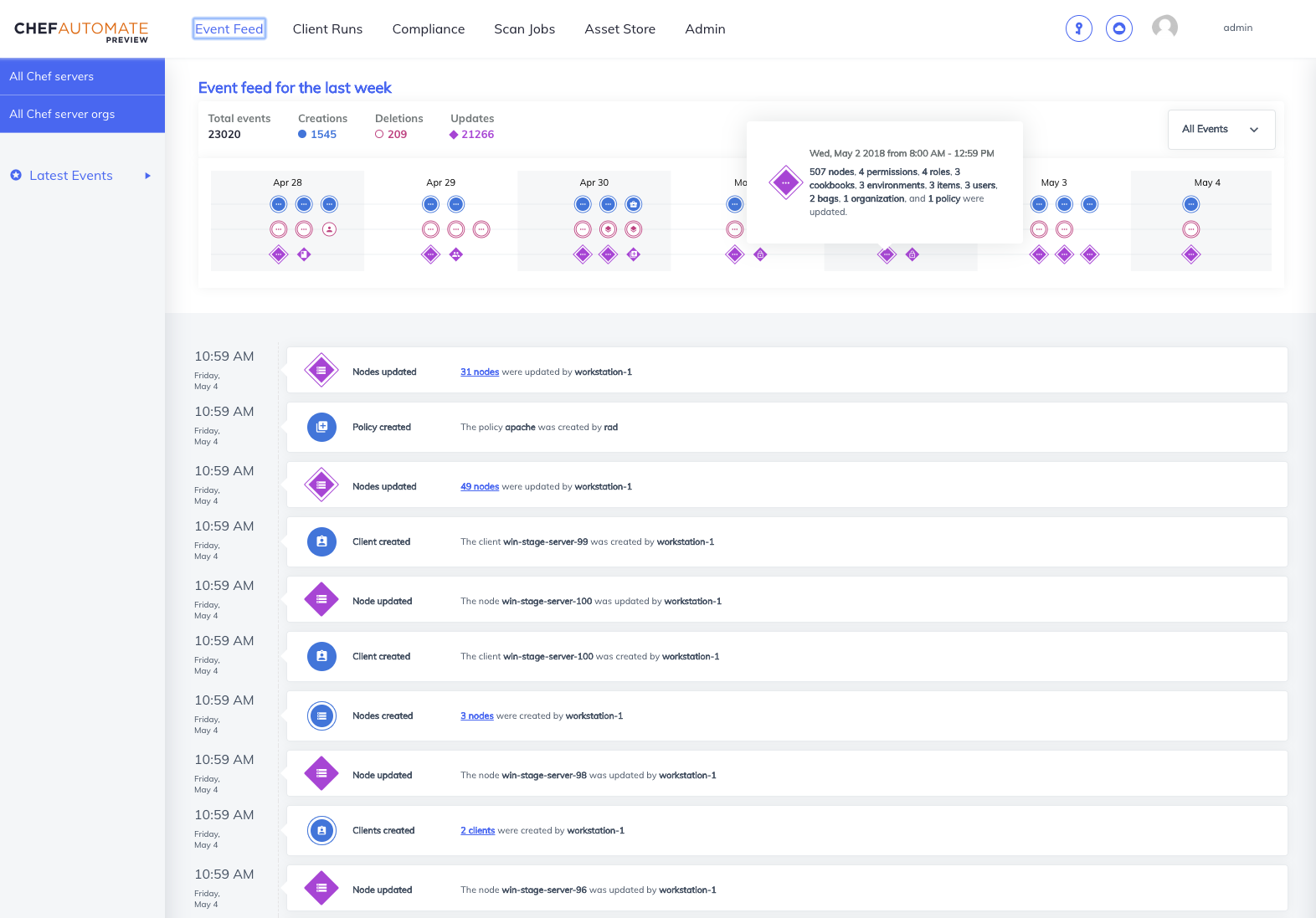
    • Enhanced operational visibility and debugging – New tools and visualizations, including a streaming event feed, trend graphs and a rich query language, help users analyze infrastructure and compliance automation data from a unified dashboard.
    • Compliance scanning and reporting in any environment – Integration with cloud compliance capabilities of InSpec 2 enhances scanning, which can now be used to evaluate cloud configurations (AWS, Azure, Google Cloud) via APIs for compliance on either an ad-hoc or ongoing basis. Chef Automate 2 also supports scanning of Cisco IOS equipment as a significant start on extending modern compliance capabilities to network devices.
    • Re-architected for speed and flexibility – A Go-based microservices architecture, with a modern, performant web UI atop a REST API, enables Automate 2 to support tens of thousands of nodes from a single installation. In-place upgrades with automatic data migration from Chef Automate 1 ensure that customers retain all historical information.

    Additionally, Chef has released something called Chef Workstation. From the release:

    Chef Workstation enables DevOps teams and practitioners to complete ad-hoc DevOps tasks using all of the familiar Chef capabilities, without agents. This provides a simple and effective way to use Chef to complete tasks and then seamlessly scale those tasks through Chef Automate.

    Capabilities include:

    • New standard desktop/laptop experience for Chef – Includes a new ‘target mode’ for executing Chef recipes or entire cookbooks remotely and Introduces ‘chef’ command as the single point of entry.
    • Foundation for a better workstation experience – Bundling all the tooling previously included in the ChefDK provides an improved user experience and cohesion between tools to deliver a seamless experience for any infrastructure automation task.

    Finally, new enhancements to Inspec, Chef’s compliance and security solution, were announced. Besides security and compliance being built into most everything Chef does, Inspec now sports:

    • Cloud configuration compliance – Verify AWS and Microsoft Azure policies, with Google Cloud Platform support in beta. More than 10 new AWS resources bring it to CIS Level 1 benchmark completeness.
    • Improved out-of-the-box experience – More than 30 new resources, including support for Cisco IOS network devices as agentless targets, are built in.
    • Drastically improved performance – Users now see up to 90 percent performance gains on Windows and 30 percent on Linux/Unix.

    I will report more as it comes here in Chicago and ChefConf 2018.

    — Alan Shimel

  • Chef Embraces Microservices to Advance IT Automation

    Chef Embraces Microservices to Advance IT Automation

    Chef at the ChefConf 2018 conference today unveiled a series of DevOps offerings, including a revamped version of Chef Automate that has been rewritten using the Go programing language to improve performance and scalability. Now based on a microservices architecture, Chef Automate 2.0 a new user interface based on a REST application programming interface (API) that also serves to enhance integration. There also are a variety of visibility and debugging tools built into the platform, including a streaming event feed, trend graphs and a query language.

    Chef Automate

    At the same time, Chef unveiled Chef Workstation, which enables members of a DevOps team to take advantage of IT automation capabilities on a local PC without having to load any agents.

    Chef also updated its Habitat application release management software to include support for Kubernetes Operator for Habitat and the Open Service Broker originally developed by the Cloud Foundry Foundation, the ability to export to Azure Container Service (AKS), a Helm chart exporter for Kubernetes clusters and integration with operational analytics software from Splunk. Habitat also is now available in an on-premises edition as well as as a software-as-service (SaaS) application.

    Finally, Chef updated InSpec, the company’s compliance automation tool. The latest version can now verify Amazon Web Services (AWS) and Microsoft Azure policies, while support for the Google Cloud Platform support is in beta. InSpec also now has built-in support for more than 30 new resources, including Cisco IOS network devices as agentless targets.

    Chef is touting InSpec performance gains of 90 percent on Windows and 30 percent on Linux systems.

    Julian Dunn, director of product marketing for Chef, said as more companies transition to emerging technologies such as containers and Kubernetes, the need to rely on IT automation frameworks increases. In fact, while container use is widespread, more than half (51 percent) of 347 application and operations professionals surveyed by Dimensional Research on behalf of Chef said they have fewer than 10 percent of their production applications deployed using containers. Dunn said that survey also finds that adoption of DevOps practices in general are still limited—just over half the respondents (53 percent) said they are using both infrastructure and app automation for DevOps.

    However, 46 percent survey respondents said by 2020 they will have more than a quarter of their applications containerized, while 45 percent said at least a quarter of their application deployments will be based on microservices. That accelerated rate of transition will require IT organizations to rely more on IT automation frameworks to implement DevOps processes, Dunn noted.

    Further complication matters, Dunn said organizations are trying to lift and shift existing applications into multiple public clouds while continuing to develop new applications faster than ever to drive various digital business transformation initiatives.

    There’s no doubt that IT organizations are relying more on IT automation frameworks more than ever. The question is, Which one will they use? There are now more IT automation framework choices than ever. Chef is betting that a comprehensive approach based on a modern microservices architecture spanning both IT management and compliance ultimately will win the day.

    — Mike Vizard

  • Chef Applies IT Automation to Meet Compliance Mandates

    Chef Applies IT Automation to Meet Compliance Mandates

    Much of the productivity waste associated with compliance requirements stems from the fact that most developers and IT operations teams aren’t aware how an application might be non-compliant until it’s too late. Aiming to eliminate that fundamentally inefficient approach to meeting compliance mandates, Chef this week tightened the integration between its Automate continuous automation platform and InSpec, an open-source project lead by Chef for specifying compliance and security policies.

    At the same time, Chef enhanced support for Docker within InSpec and released InSpec-AWS, InSpec-Azure and InSpec-vSphere as incubation projects that IT operations teams can employ to test and audit for compliance. Chef also pledged to extend InSpec beyond operating systems to include support for middleware to address compliance issues across an entire platform. The announcements were made at the ChefConf 2017 conference.

    Chef CEO says Barry Crist says that in much the same way Chef automation software turns infrastructure into code, InSpec turns compliance into code. Tighter integration between the two platforms should enable IT operations teams to automate compliance testing before code gets deployed in a production environment. In effect, Crist says, compliance becomes just another continuous process automated by Chef. This approach not only leads to faster application deployments, it also reduces the amount of time auditors must spend checking on where production applications comply with a particular mandate, as all the documentation has already been generated.

    Compliance mandates are, in many ways, the enemy of innovation. In fact, it often takes longer these days to navigate compliance issues than it does to write a piece of code. Rewriting code to comply with multiple compliance requirements over several different manual tests is a waste of time and money. InSpec makes it possible to make compliance testing a part of an integrated DevOps process in much the same way security testing is fueling DevSecOps.

    As the number of platforms that IT operations teams now need to support has expanded, the compliance testing process has become even more complicated. Crist notes that for DevOps to be truly effective, it needs to encompass not just the deployment of code but also making it possible to make compliance and security testing an integrated component of the application deployment process. Of course, as an open-source project there’s no reason developers can’t incorporate InSpec into any continuous integration/continuous deployment (CI/CD) framework they choose. Chef is just moving to make InSpec a more natural extension of its IT automation framework.

    There’s a lot of commonality in the controls implemented across various compliance specifications. That creates opportunity to automate controls to reduce the need to rework an application, either before it gets deployed or, worse, after it has been deployed into production. Longer-term, the level of commonality across compliance controls also creates an opportunity to leverage machine-learning algorithms to automate implementing those controls.

    Of course, there will also be controls that will be unique to one compliance standard or another. But the days when IT organizations need to manually address those compliance controls one application at a time are coming to an end.

    — Mike Vizard

  • Austin & Chef Give ChefConf 2016 That Warm, Fuzzy Feeling

    Austin & Chef Give ChefConf 2016 That Warm, Fuzzy Feeling

    I have written before about the DevOps community in Austin. It is one of the most welcoming and warm groups of people I have ever interacted with. Combine that with the HugOps operation of the friendly folks of Chef and you wind up with a great experience. That pretty much sums up ChefConf 2016 for me. Beyond the warm and fuzzy though, there was also a lot on display on what the future of business is all about. To paraphrase a line from the movie, The Graduate, I have one word for you: AUTOMATION.

    Automation was on full display at ChefConf 2016. And not just your grandpa or dad’s automation either. For those who think Chef is still all about configuration management and automating servers, think again. I am talking about automation extending into every nook and cranny of the business. You only had to see Alaska Airlines CIO, Veresh Sita’s presentation to understand what automation really means. But truthfully that was just one of many talks and sessions that demonstrated the power of automation and how Chef is pushing automation up and down the business.

    There was also the announcements regarding Chef Automate and Habitat. While we have covered Habitat already, a quick word on Automate. Automate which is years in the making, is actually the combination of Habitat, Chef Delivery which was released last year and defines the DevOps workflow, Chef itself and Chef InSpec, the compliance and security project based on the technology from the acquisition Chef made last year of VulcanoSec. All of these are combined in one enterprise class package that Chef CEO Barry Crist called “our flagship product”.

    Beyond that though to really give you a feel if you couldn’t make it to ChefConf this year, there was a palpable buzz around the place. I think the feeling is that so many good things are starting to come together. While many label many of these under the DevOps umbrella, it is automation, DevOps, Agile and more combining to enable businesses to do more, faster and better than they ever have before. In addition, as these trends continue to evolve and accelerate the pace of innovation also continues to accelerate.

    I had a chance to speak briefly with Dr.Nicole Forsgren, who works at Chef but is also one of the key people behind the State of DevOps survey. Forsgren said that is why we are seeing the gap between high performing IT led companies and those who are not continuing to widen. The gulf will continue to grow as companies adopting these practices pull away from those who do not.

    From my point of view it is amazing to see that since I first became involved in IT we have seen IT move from a cost center as viewed by many an executive to the engine that drives the business.  As I remarked to several people at ChefConf, we certainly live in interesting times!

    I was also able to use the Chef Newsroom to do a few interviews there. We have put them up in our DevOpsTV Youtube channel under ChefConf 2016 playlist. There are about 8 or so total but I am embedding two to give you a taste. You should check out the rest if you have a chance, as they are pretty good.

    The first is with George Miranda of Chef and we talk about Habitat and a little about Automate.

    This second interview is with well known DevOps journalist, writer and community member, Ben Kepes, enjoy!

  • DevOps Chat: Habitat by Chef with Julian Dunn

    DevOps Chat: Habitat by Chef with Julian Dunn

    julianI had a chance to speak with Julian Dunn, product manager for Chef ahead of the upcoming ChefConf conference in Austin Texas next week. Julian and I spoke about Habitat, Chef’s new open source application automation project.

    Many in the industry are hailing Habitat as something really special. Our own Tony Bradley says it could be a game changer.  Julian gives us some of the background and reasons why Habitat is important for you. He also gives us an advance look at the three Habitat related sessions scheduled for next week at ChefConf.

    If you are already going to ChefConf, be sure to hit all three of these if you can. If you are in the Austin area next week, try to make the show. We will be there covering it live.  Also the opening keynotes for Tuesday and Wednesday are being live streamed over the web.

    In the meantime here is my conversation with Julian with the printed transcript below, enjoy!

    Alan Shimel:                Hi, this is Alan Shimel, devopsy.kinsta.cloud, here for another DevOps Chat, and I’m happy to have Julian Dunn, Product Manager of Chef joining us today. Good morning, Julian, how are you?

    Julian Dunn:               Good morning, Alan, I’m doing very well. I’m melting a little bit because it’s very hot in New York, but you know, other than that—perfect summer day.

    Alan Shimel:                Yeah, it’s July in New York, it happens. Julian, we could talk about weather, I’ve certainly been traveling enough to see different ones, but let’s focus in a bit on what I wanted to really talk to you about today, and that is Chef’s new Habitat offering. Let’s assume a listener doesn’t know what Habitat is at this point. Give them a quick kind of elevator pitch on it.

    Julian Dunn:               Yeah, absolutely. Now, if you’ve read any of the materials and things like that, we’re using this tagline called Application Automation. And, you know, what on Earth does that actually mean? Well, what is the problem that Habitat solves for people?

    So, you’re an application developer today, and what you end up doing as an application developer is—well, what you want to do is, you want to spend a lot of your time doing the business logic and writing the business code that is actually gonna differentiate you from your competitors, right? So if you’re working at JCPenney, let’s say, you’re trying to write features for JCPenney’s website or mobile application or whatever to differentiate you from Macy’s and Target and Nieman Marcus or whoever your competitors are, right?

    Well, the experience of being a developer today actually ends up being that, before you write any of that program code, you have to spend a lot of time in the weeds and dealing with what I call sort of the plumbing oriented aspects of doing the programming, right?

    So just imagine if you were an interior decorator and you want to simply decorate your bedroom to whatever you wanted in there—you know, damask curtains and what have you—but you’ve spent most of your time dealing with the electrical and the plumbing. Not a particularly nice experience.

    Alan Shimel:                Mm-hmm.

    Julian Dunn:               The other thing is that, when you make those choices about what plumbing and what electrical systems you’re gonna use, that actually changes how your room is decorated. I mean, how absurd would that be, right?

    Alan Shimel:                Mm-hmm.

    Julian Dunn:               And so the notion of trying to let the application develop or be able to concentrate mostly on developing their program code and make a lot of those infrastructural choices later led us to develop Habitat, which is something that takes a little bit of a different approach than how we’ve built IT systems in the past, right?

    It’s kind of back to my analogy of the plumbing. In the past, we’ve built sort of up from the bottom towards the application, right? So we choose an operating system, we choose a bunch of stuff that sits on top of the operating system. You eventually at some point, we reach the application, right?

    And that’s an incredible waste of time for the application developer, who actually wants to start up here and define what their program logic is, right, and how that application should behave in a lot of different scenarios. And if you sort of start at the top and move towards the infrastructure, that’s the surface area that you actually end up owning as the application developer—we believe that that is Habitat.

    Alan Shimel:                Very cool. And hence the name, then, right? When you explain it that way, the name Habitat actually makes a heck of a lot of sense.

    Julian Dunn:               That’s right.

    Alan Shimel:                Yep. So, Julian, this is, some would say, you can see where Habitat is analogous—not analogous, adjacent to kind of the space that Chef plays in already. It’s a much bigger mission, if you will, than just what Chef has done to date. Is that a fair statement, you think?

    Julian Dunn:               It sure it, it sure is. You know, Chef, I think, initially started out, obviously, right, with a configuration management product that was very infrastructure oriented. And, over time, you’ve seen that our product portfolio and what we’re trying to do is a lot larger than just infrastructure configuration management, right?

    We kind of describe ourselves today as an automation company. We solve a bunch of automation problems, wherever automation is needed to help reduce people’s time to market or burdensome activities that they need to do in a regular ________, right? To really free people up, no matter what their problem domain is to being able to do the really intelligent parts of their job—the thinking parts of their job, right? And you’ll see that as we released Chef Delivery, which is a workflow system that allows people to basically implement, if you will, the principles that are in a lot of the books out there like Jez Humble’s Lean Enterprise that tell you, “This is the shape of how you should be delivering the software out to production.” Basically something like Chef Delivery is an automation arrayification or that technology—or those ideas, right?

    And then when we made the acquisition of VulcanoSec, which is the German security company, that gave us in-spec and Chef compliance that’s automating the work of compliance officers, security officers—right, folks that spend a lot of time, their job today and their pay and their experience is they spend a lot of time manually poking around systems and putting up fires manually because they don’t have a good framework and a system for describing the correctness of a particular system, right?

    And so now, as we move into—right, we’re, as a product organization, you want to be one that’s trying to address people’s pain points, right? When we started looking at what the pain was for an application developer, and they spend so much time dealing with the nuts and bolts of actually writing the code, we’re like, “How—why are systems built in this way?” We really went down a path of inquiry and we came up with Habitat as a way more application developer-centric than the perhaps infrastructure-centric things that we’ve built in the past.

    Alan Shimel:                Sure. Just two thoughts on that, Julian, I’d like to explore with you. One is—look, I’m not, I don’t hold myself out to be a Product Manager at Chef or anywhere near that integrated into it. But it feels to me, anyway, that the Chef compliance and the Chef delivery are very tactical pieces that embrace and extend Chef’s core configuration management capabilities, right?

    Where Habitat to me is more of a strategic rather than tactical type of play here, where you’re looking to set the game—the grounds, right? The stadium that we play in, whatever you wanna call it, the field, right? And so it’s a different—and again, I might be wrong, I’ll defer to you—but it feels different to me.

    Julian Dunn:               It is different in the sense that it’s a little bit iconoclastic, you’re right, in that it challenges some of the approaches that folks have been doing to try and deploy applications and get the sort of modern application characteristics that they want out there. And those characteristics are really great. I mean, one thing that’s really—as we developed this product, what really caught for us was to focus in on, “What does a modern application look like? What characteristics does it have?” And those characteristics are things like, it should be deployed immutably. It should be deployed atomically in that it’s either installed or it’s not, right? It should have certain characteristics built in. It should be aware of—it should know how to behave when it’s deployed in different scenarios, right, in different, what we call topologies.

    Alan Shimel:                Mm-hmm.

    Julian Dunn:               So you can think of, on a develop laptop, you might just have one instance. In a production environment, you probably have a number of instances, and they would have some relationship with one another, right? They might have one where you send all the rights two and the other ones are the reads, right? There might be some that are—like, think of a caching system, right? They right be hierarchical where there’s sort of a first, second, and third layer cache, like Squid or something like that, right?

    So it’s relationships between these entities, these application components, and one thing that we realized as we’re developing Habitat is, you know, as folks develop more complex applications and those applications are actually distributed systems, folks haven’t really spent a lot of time figuring out how to describe those relationships in a way that it imbues the applications themselves with the understanding about how they’re related to other components, right? The ways in which people have tried to solve the relationship problem between these components is to create sort of a central system, an orchestrator, if you will, that defines those relationships.

    And the trouble with an orchestrator is that it becomes a single point of failure, and as we know, that’s not really compatible with the cloud, right? Where in the cloud, they tell you, “You really shouldn’t have single points of failure, because you’re on an unreliable fabric,” right? So you really should have a system that knows how to recover and continue to function in the face of failure one or additional components, right?

    And so that’s where we started to come about with the architecture and the design of Habitat and how aware—how self-aware these individual components should be.

    Alan Shimel:                Absolutely. Just one other kind of comment or observation, and that is, you’re right—configuration management and compliance seem to be operational, or at least lead with operational, where Habitat clearly is a pay in the developer specter. But it’s all supposed to be one under DevOps, right? I mean, we don’t want to—I’m not into creating divisions between developers and operators, and I’m sure you guys aren’t, either, Julian.

    Julian Dunn:               Right, but I’ll tell you

    Alan Shimel:                But clearly they’re different focus—go ahead.

    Julian Dunn:               I was about to say, Alan, you know, the dirty of secret of DevOps, my observation, you know, I’ve been doing this for a number of years, and I’d love to hear your thoughts on this. But my feeling about the dirty secret of DevOps, and I go to DevOps Days and these conferences, and you survey the audience and you look at who the folks in the room are, right? And it’s something like, if you’re lucky, it’s still 80 percent Ops and 20 percent Dev, right?

    Alan Shimel:                It is, it’s OpsDev.

    Julian Dunn:               Yeah, right. So DevOps has been very much about Ops taking a lot of the good practices from Dev and learning a little bit of coding and learning that there’s a proper workflow and that you should have tests for stuff, but even if you’re not doing automated tests like Chef does, at least you should have some system for testing stuff before you just go log into a box and make changes in production and whatever.

    It’s almost like there’s this information flow that’s gone one way, but the information flow hasn’t really gone in the other way, even though we’ve had a number of iterations and generations of this technology. And so when we started asking the question, why—why have we kinda gotten from the brick wall to sort of more an English hedgerow, if you will, between Dev and Ops? How can we further develop capabilities to break down even the English hedgerow, if you will?

    Alan Shimel:                Makes a lot of sense. So, Julian, unfortunately, we’ve only got 12 or 14 minutes here and we’re running out of time. There’s a couple other things I wanted to hit. We’re recording this just the week before ChefCon, which is next week down in Austin, Texas—July 12th and 13th, or 11th, 12th, and 13th, technically. And, of course, I’m sure you’ll be there. Will there be a lot of Habitat kind of information and presentation?

    Julian Dunn:               There will. There’s gonna be three major talks, and we’re sort of billing them as the Habitat 101, 201, 301 kinda talks, right? We’re gonna have an intro and then sort of how Habitat fits into the ecosystem is sort of the 201 level talk, and then there’s a deep dive into why we made the technological choices that we did, the system design, and things like that, and that’s the 301 level talk.

    At ChefCon, we’re also gonna have something called the Habitat Zone, and we’ll program that with a few talks as well. The speakers from the 101, 201, 301, they’re gonna answer the Q&A in the Habitat zone, and that’s gonna be near the registration area. We’ll also have sort of community building—that’s one thing I didn’t mention, I don’t know, Al, if you mentioned it, but Habitat is a fully open source project.

    Alan Shimel:                Yeah, under an Apache 2.0 license.

    Julian Dunn:               Under the Apache 2.0 license, and we believed that that, we needed to make it open source to really engender a great community, similar to how created a huge community around Chef and, you know, just ways in which folks can contribute to that Habitat community is by writing plans that can build packages that live within the Habitat ecosystem.

    There’s, you know—just think of how many packages are out there within a typical kinda Linux distribution, right? There’s a lot of surface area that we would want to cover with people creating Habitat plans. That’s a great way for folks to get started. We’ll have some programming in the Habitat Lounge to talk about that with folks.

    Alan Shimel:                Yep. Julian, I’m gonna do my best to at least get the audio of this up before, in the next day or so if I can’t get it today.

    Julian Dunn:               Great.

    Alan Shimel:                And anyone hearing this, if you are in Austin or near Austin and you’re not already going to ChefCon, you really should look into it. You can get information, I guess, at getchef.io. I’m sure it’ll be listed there, just Google ChefCon.

    Julian, unfortunately, we’re just about out of time, but you know what, maybe we’ll pick this up down in Austin and we’ll do a part two or something.

    Julian Dunn:               Great.

    Alan Shimel:                Absolutely. I want to thank you for joining us today on DevOps Chat, and great—you know, I’d love to see Habitat really take off, here, and continued success to Chef and all the gang there.

    Julian Dunn:               Absolutely. Thanks very much, Alan.

    Alan Shimel:                Okay. Julian Dunn, Product Manager of Chef, thanks for appearing on this episode of DevOps Chat. We’ll see everyone next time. This is Alan Shimel for devopsy.kinsta.cloud.

  • Delivering Delight At ChefConf 2014

    Delivering Delight At ChefConf 2014

    Chef CEO Barry Crist stirs the pot to open ChefConf 2014

    The theme from ChefConf 2014 is stirring delight and if you listened to Barry Crist during todays opening keynote, then you would know its more appropriately “F****ing Delight”.  Amidst high energy, loud music and a smattering of exciting expletives, Barry Crist called for attendees to stir delight in their enterprises using DevOps methodologies and, of course, Chef.

    Crist defined delight when the customer’s experience exceeds expectations.  Using Uber as an example when traveling in New York, he joked that the influx of Uber cars was so high that it took only 30 seconds for him to wait for a ride.  And what more he didn’t have to deal with payment when exiting the car at the airport.  In short, the service not only provided the expected functionality of something as simple as a car ride, but provided a delightful experience.  The new economy, we are part of he said, is the “delight economy”.  And the call to action for ChefConf attendees is to bring others along with them into this new and leading economy.

    Using Volvo as a case study, Crist also touched on the concept that many companies, not just web development organizations, can utilize DevOps practices.  When his wife’s Volvo navigation system needed a map update, he received a set of DVDs. The DVDs needed to be manually loaded into the on-board computer while leaving the car running for 5 hours.  Crist countered that Volvo is more like a software company than a car manufacturer, but they just didn’t know it yet.  For example, this would have been an excellent case for continuous delivery in that the Volvo probably didn’t need to ship him a handful of DVDs, but just the small changes and probably could have been delivered in a much more economical means.

    Crist concluded that using DevOps methods and delivering delight isn’t limited to any industry and certainly isn’t just for web dev shops. And so ChefConf 2014 begins.