Tag: CFO

  • The Rise of the Cloud Economist: The Other CFO

    The Rise of the Cloud Economist: The Other CFO

    The new Cloud Economist job title wrangles runaway cloud costs

    Have you ever forgotten about a subscription? Maybe it was that Amazon Fresh upgrade you never used, charging you monthly payments. Or, your phone carrier slyly tacked on a feature and it went unnoticed for years. All these charges may seem insignificant, but they mount up over time.

    The same is true for cloud IT tools. Many Ops engineers know all too well the surprising bills that accompany cloud infrastructure. While cloud prices may start low, they often rise unexpectedly with hidden server costs, data replication charges, escalating API fees and other fun add-on expenses.

    Conversely, remaining at a low service tier could cause latency and a loss of revenue. Drowning in a sea of hybrid trends and feeling pressure to deploy at lightning speed, it can be difficult to keep track of which cloud models actually advance business objectives.

    Some believe an entirely new role is needed to rectify the gap between cloud and business repercussions—a Cloud Financial Officer, or the Other CFO (OCFO). An OCFO could act as a Cloud Economist, a tech-savvy ambassador who both understands the financial implications of a cloud strategy and optimizes service tiers to their necessary levels.

    I recently chatted with Leon Adato, Head Geek at SolarWinds, on how businesses could better drive cloud cost optimizations. Like a determined accountant sent in to save a struggling city (h/t to Ben Wyatt in Parks and Recreation), the OCFO may be the star companies need to slash the budget and balance the cloud checkbook.

    Why Do We Need a Cloud Economist?

    According to the “Flexera 2020 State of the Cloud Report,” 74% of companies report their annual cloud spending exceeds $1.2 million each year. At 20% of companies, it’s more than $12 million. As cloud spending skyrockets, balancing these expenses becomes business-critical.

    Yet, forecasting cloud costs is tricky. Unexpected complexities often arise with the cloud, skewing initial cost projections. Maintaining cloud oversight becomes especially complex as COVID–19 accelerates more cloud adoption across the board. Budgets are shrinking, and some companies are undertaking extreme measures to remain lean.

    Simultaneously, the ones that advocate for new technology don’t always consider cost implications. “Three clicks and you’re done means a DevOps engineer in the driver’s seat may not be aware of the cost considerations,” said Adato. In recent years, SaaS companies have stressed easy onboarding and developer experience as a top priority. The staying power of developers to adopt new tools is arguably at an all-time high. But while it’s important to improve developer workflows, developers don’t necessarily have business acumen. “Finance is a lexicon of itself,” noted Adato.

    Thus, some view a Cloud Economist role as necessary for translation across divisions. “IT divisions shouldn’t be encountering sticker shock when they view their cloud infrastructure bills,” he said. “We need IT folks to be able to pay attention to cloud costs in a meaningful way.”

    What Does a Cloud Economist Do?

    A Cloud Economist is an expert that specializes in cloud-spending and cloud cost optimizations. Such a role could help teams realize the efficiency benefits of cloud-native architecture while keeping costs lean.

    This job title truly requires “hands for code and a head for money,” described Adato. He laid out three simple goals of a Cloud Economist:

    1. Increase revenue.
    2. Decrease cost.
    3. Remove risk.

    A Cloud Economist understands the technical underpinnings behind cloud tools and how they support each other within a cloud-native ecosystem. They also appreciate maintenance realities, asking tough questions such as: Will it take 200 code pushes per day to support this microservices integration pipeline? How will server costs change as bandwidth scales? Which plan is most optimized for our needs?

    Specific Cloud Economist Duties

    A Cloud Economist must manage runaway costs associated with cloud adoption. They see the bigger picture and understand the repercussions behind cloud technologies. In terms of specific duties, the role may wear many hats.

    For example, a Cloud Economist may encourage a CSP migration, such as from AWS to GCP. Or, they may foresee the implications of future feature introduction, such as limitations across geographic zones, and advise IT teams accordingly.

    An avid Cloud Economist should also interface with monitoring and testing teams. “API testing before launch can mean the difference between a $25 cloud database bill and a $30k bill,” wrote Rapid API’s Chris McCallister in a separate blog post.

    Other Cloud Economist duties could include:

    • Logging and forecasting rising cloud costs.
    • Becoming Terms of Service (ToS) experts.
    • Avoiding costly data replications.
    • Upgrading servers.
    • Discontinuing unused instances and features.
    • Ensuring elasticity of applications.
    • Database scalability.
    • Increasing CPU power or data loads.
    • Optimizing subscription plans.
    • Considering implications behind feature updates.
    • Limiting the intake of new cloud tooling.
    • Acting as an ambassador between a company and CSPs.

    Traditional IT, or information services, as it was originally called, “has been able to avoid the need to integrate with business,” said Adato. That will likely change drastically as cloud costs escalate and thousands of very small charges amount to “death from a thousand cuts.” It appears that any business size, from startup to enterprise, could benefit from more cloud expense forethought.

    Inherently, DevOps is a cultural movement, not a technical movement, Adato noted. Assigning a Cloud Economist encourages specialization and de-siloing between disciplines, freeing up DevOps engineers to work on projects that matter to them. The role of a Cloud Economist “offloads responsibility that has always been there that may have been ignored,” he said.

    Avoid Ice Town With a Cloud Accountant

    Software architects are often sold on the idea that cloud infrastructure is a cheaper alternative to on-premises. “That statement is false,” Adato said. As an organization cloud evolves out of freemium tiers, where it began cost-wise is often far from where it ends up.

    To navigate the opaque cloud, “we need someone that has fluency and familiarity with tech, understands the platform, understands how code is updated and maintained, and can right-size the cloud platform,” said Adato. Cloud-native certainly has its benefits, but if runaway cloud costs aren’t wrangled, they could equate to revenue loss.

    As author Bob Lewis wrote: “There’s no such thing as an IT project.” We don’t do technology for the sake of doing technology. Rather, we do it in service to the business. A Cloud Economist could help ensure technology answers the business call, not vice versa.

    As of now, the OCFO is mostly a theoretical title; it could materialize as an internal team member or contract hire. Regardless, such a role could advocate for the business and keep operational overhead as lean as possible.

    In general, it may require a dash of hard realism to learn how to avoid plunging the books into a debt-ridden Ice Town.

  • The Bumpy Rise of the Tech-Savvy CFO in Healthcare Organizations

    The Bumpy Rise of the Tech-Savvy CFO in Healthcare Organizations

    The good news? The working relationship between technology leadership and financial officers in health systems organizations is improving. The bad news? Chasms between finance and IT remain, and they are common throughout health systems providers.

    Market Research firm Black Book Research recently found, in its “2019 Black Book CFO & Financial Leadership Survey,” that chief financial officers (CFOs) are no longer prioritizing cost-cutting and are becoming more aggressive in their technology spending. Interestingly, 52% of CFOs reported that they are shifting their priorities to financial technology investments, such as the implementation of advanced analytics, as well as 44% who cited increased spending on broader distributed ledger technologies.

    This is a dramatic change over previous years, where financial technology in many healthcare organizations witnessed negligence and budget cuts. “Ninety-one percent of CFOs surveyed agreed that their past organizational CIO and senior IT management did not support a culture where financial technology upgrades and acquisitions were prioritized as initiatives that impacted enterprise health system strategy,” the report found.

    The survey found that 90% of financial leaders and management strongly agreed that CIOs and IT management undervalued the needs of financial digital transformation and their financial tools. Technology leaders instead prioritized and convinced their boards that their electronic health record vendor-related offerings were the best investment going forward.

    The result? When it comes to finance technology in healthcare organizations, the world has become quite bifurcated. Consider this: Ninety-four percent of marginally performing hospital CFOs nationally claimed that they are not prepared to handle new healthcare delivery and payment models with their current financial software. Comparatively, 89% of the top financially performing hospitals in the country report having the organizational technology tools to address modified payment strategies.

    There’s also no rest for the weary financial officer, the survey found. While senior financial officers struggled with the pressures of smaller operating incomes, rising labor and supply costs, shrinking volumes, reduced reimbursements, declining patient volumes and changing healthcare delivery models, 83% report that in the past fiscal year that they received add-on responsibilities that included organizational productivity, strategic technology and innovation growth initiatives.

    “In a noticeable shift since the acquisition of enterprisewide EHR systems led by CIOs, CFOs have become the executive charged with digital transformations to improve competitive advantages, strategic growth and innovation across all customer touch points, while measuring the technologies’ ROI,” said Doug Brown, president of Black Book.

    Indeed, there has been a huge shift in CFO involvement in recent years. In fact, 88% of CFOs report having increased involvement in their health system IT agenda since the implementation of their enterprise EHR, as compared to 14% in 2015.

    But this dramatic rise hasn’t been without friction:

    • 85% of all respondents stated that their current organizational structure prevents enhanced CIO-CFO collaboration. Eighty-nine percent of CEOs interviewed disagree with this statement.
    • 82% of CFOs stated that they have an insufficient understanding of IT issues as the barrier to them not being included in technology selections and approvals prior to 2014.
    • 84% of CIOs surveyed in Q4 2018 claimed the processes and tools in finance are incomparable to IT functions and remain a significant barrier to mutual understanding.
    • 90% of all respondents agree that the absence of key performance indicators that link IT agendas to financial performance greatly limits their success.
    • 98% of respondents strongly agree that it’s the healthcare CFO’s job to ensure their organization fully realize the benefits of technology investments, not the CIO’s job, in 2019.

    While the CFO’s role in technology has grown, largely due to the substantial impact of EHR adoption—and this has caused significant stress between the CFO and CIO in many health services organizations—the working relationship is showing signs of becoming stronger and more collaborative. The report found that the continuing lack in understanding on both parties to converge on strategies, investment mindsets, healthcare customer experience, business models and agendas continue to keep the barriers high for many.

    — George V. Hulme

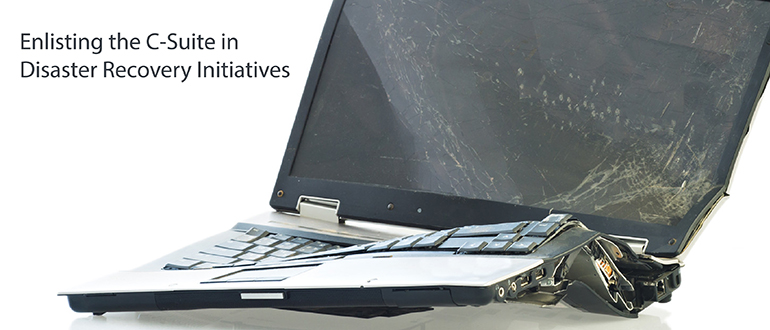
  • Enlisting the C-Suite in Disaster Recovery Initiatives

    Enlisting the C-Suite in Disaster Recovery Initiatives

    When disasters make headlines, corporate executives often have knee-jerk reactions and call for business continuity solutions to be implemented immediately. However, when push comes to shove, those very same executives tend to put up roadblocks with concerns over budget, priorities, vulnerability assessments and security.

    Perhaps more concerning, according to a June 2015 Ponemon Institute report, there are “a large portion of companies who remain vulnerable as a result of lack of executive interest in preparing for worst-case scenarios.” This creates a precarious situation for DevOps professionals that understand the severity and breadth of threats that can trigger downtime—from human error to power outages, cyberattacks and natural disasters.

    To expedite disaster recovery initiatives, IT teams must enlist top executives that influence budgeting directly. This often calls for varied approaches that speak to specific executive concerns and issues.

    Understand Your Options: Disaster Recovery vs. Backup

    It’s very common for companies to confuse disaster recovery and backup solutions. Both are available via cloud, giving teams access to capabilities that were once only available to enterprises with huge IT footprints. When you approach any executive, it’s critical to understand various services and how they can work in tandem to deliver the most cost-effective protection.

    Backup ensures companies do not completely lose data because it is backed up with copies. While it is important to have copies of data, accessing and restoring backups can take some time. Therefore, for workloads with important but not extremely time-sensitive data, backup can be sufficient while satisfying budget restrictions. In the fast-paced DevOps world, backup usually falls short.

    On the other hand, cloud-based disaster recovery ensures minimal—if any—downtime. Applications can fail over and be up in running in seconds. Further, testing can be done at will without any impact on production environments. For workloads that demand continuity of service and aggressive recovery point objectives (RPOs), disaster recovery solutions are the better option and can also deliver cost efficiencies.

    For many operational and regulatory compliance reasons, companies may require a mix of both backup and disaster recovery. When evaluating service providers, check into how easy it is to apply backup and disaster recovery based on your development and application requirements. Take a close look at pricing models associated with each—including any support fees.

    CEO/COO – Chief Executive Officer and/or Chief Operations Officer

    While CEOs and COOs generally delegate detailed budget decisions to their teams, they are still ultimately responsible for overall company performance and reputation. Anything that threatens ongoing conduct of the business is their purview. Be prepared to discuss risks in real terms, and clarify that a “disaster” can be triggered by something as simple as human error.  They will care most about considerations such as:

    • Time to business resumption [e.g. near-zero recovery time objective (RTO)]
    • Capital investment via pay-as-you-go options
    • Ability to prioritize data and workloads, both for budgetary and business continuity purposes
    • Data loss estimates, in the case of a disaster
    • Testing flexibility, to ensure an operational, reliable solution
    • Independent validation from similar customers or analysts that a solution is reliable, proven and cost-effective

    CIO – Chief Information Officer

    Theoretically, this should be the easiest executive to convince because the CIO has a personal stake in recovery, but remember CIOs have a tough balancing act between controlling budgets and limiting exposure. The 6 Disaster Recovery Doppelgangers quiz and e-book can help CIOs approach their disaster recovery challenges across the organization. CIOs generally focus on:

    • Ability to see and manage the recovery process
    • Scalability of resources with on-demand access, often honing in on flexible terms
    • Security and compliance capabilities and support
    • Testing at will to ensure solution performs despite configuration changes to the day-to-day operational environment

    CFO – Chief Financial Officer

    Everything boils down to financials for CFOs, so they should be approached from a fiscal angle that demonstrates value backed by metrics. Be prepared with unbiased, independent information that appeals to their risk averse nature. What other financial benefits might come from leveraging cloud-based disaster recovery? For example, in some cases DevOps teams are beginning to use the failover cloud as a load testing environment that would otherwise require significant on-premise investments. Disaster recovery-as-a-service (DRaaS) environments with advanced security can also be used to check for possible vulnerabilities to cyberthreats.

    CFOs often care about:

    • Flexible pricing options that can be tailored at a granular level based on services required
    • Pay-as-you-go pricing models that avoid upfront capital investment
    • Geographic constraints on their data, particularly if backups or failovers need to be maintained in a specific location due to jurisdiction requirements
    • Extended DR use cases that could offset other costs like security testing and quality assurance

    CMO – Chief Marketing Officer

    On top of branding, advertising and public relations responsibilities, CMOs have key objectives that pertain to customer loyalty and overall corporate reputation. They may not be interested in the details of services, but can be a powerful advocate that can speak to the need for business continuity solutions that will protect brand image, reinforce messages about your technology innovation and maintain excellent customer support. Familiarize yourself with real-world stories that demonstrate how media—both traditional and social—cover outages and their negative impact to business. One need not look further than the recent Delta and Southwest outages.

    The concept of DevOps is about culture as much as it is about technology, and communication and collaboration are key. By understanding the needs and responsibilities of all stakeholders involved, teams can cut through politics, efficiently protect business and begin to leverage cloud-based DR technologies for initiatives far beyond recovery, alone.

    About the Author / Lilac Schoenbeck

    iLand Head Shots 4/22/14

    Lilac Schoenbeck is vice president of Product Management and Marketing at iLand. She has nearly 20 years of experience with product management, marketing, strategy, business development and software engineering in the grid, virtualization and cloud domains. She is currently vice president of marketing at iland, a global enterprise cloud hosting provider. Prior to this role, she led cloud and automation marketing for BMC Software and has worked for IBM, Fortisphere, Innosight and the Globus Alliance. Lilac holds an MBA from MIT Sloan School of Management and a Computer Science degree from Pacific Lutheran University.

  • How to talk to your CFO about DevOps

    How to talk to your CFO about DevOps

    How to talk to your CFO about DevOps

    As DevOps practitioners, we understand the value of DevOps: It helps keep our infrastructures automated, allows us to push out code regularly, and reduces the frequency of breaks. But, does our CFO understand its value as well as we do? Probably not. The question is: How do you explain the benefits of DevOps to your CFO in order to justify the cost?

    The quickest way to a CFO’s heart is through his wallet. So, the key here is that as DevOps practitioners we need to talk in the CFO’s language, not our own. We need to speak in dollars and cents rather than bits and bytes. This is not dissimilar to many other instances when IT departments have to work with C-level teams that are business, if not technology focused. But sometimes this is incredibly hard for IT folks to do. It’s just not how we are wired, and similarly, CFOs aren’t wired to think like IT folks. While every CFO and organization is different, there are some common things they all care about.

    For example, most CFOs love to count things, especially money. Where is it going? Why? What is the benefit to the company? What’s the ROI? You know typical bean counter type of questions that make a lot of technical people squirm.

    Your CFO can be one of two types and you can have a lot to do with how your CFO views DevOps. The two types of CFO are:

    1. A CFO that understands the why behind DevOps and is a valuable ally to an IT organization.
    2. A CFO that doesn’t understand the benefits and will stifle even the best, most productive programs.

    So the question is how do you wind up with CFO number 1?  Well, part of it is that you need to educate your CFO in the value of DevOps. This is exactly a situation described in “The Phoenix Project” by Gene Kim et al, but it bears repeating here. The other part is that you need to talk to your CFO about a few key topics that will be central to winning them over.

    Let’s dig in.

    •          Generating cash (and by consequence revenue) – the lifeblood of any company, cash, is a top priority for CFOs. A strong DevOps program can tie directly to generating cash for an organization. Here are some examples of how DevOps can help in this area:

    o   New products come out to market quicker and more tightly aligned to customer needs. Translation: revenue comes quicker from new products because they are more on the mark.

    o   Products are more stable which means that there are fewer customer issues and less downtime. If the organization is subject to an SLA, there should be less money going back to customers. If they aren’t subject to an SLA, with a more stable product, customers are less likely to churn.

    o   Back-office systems such as billing and provisioning will have better uptime and reliability. Fewer errors means that there is less churn and more opportunities to sell happy customers more products and services.

    •          Reducing expenses – the other half of the equation for a CFO is how to keep costs down. DevOps can be a huge win in this area. A fundamental tenet of DevOps is automation. By automating rote tasks, your team can accomplish more. They don’t need to hire more people and/or they can take on more projects. Either way, it is a significant opportunity for IT organizations to do more with less by having resources better aligned on the most critical problems. IT organization should walk CFOs through how investments in automation can pay off.
    •          Growth – for CFOs, it’s not just about managing the revenue and the costs, it’s also about how the company is going to grow. How can DevOps help a business grow? Growth comes from the increased sales of existing products/services and/or the introduction of new solutions. Building a better product is core to the DevOps mission. In my opinion, the definition of DevOps is actually the increased probability that you will find product/market fit. This means, if you can quickly iterate to find what customers need, you will sell more of it. By building DevOps into your organization, you will also find what customers need so you can introduce new solutions as well.

    •          Long-term stability – CFOs tend to feel more comfortable with long-term stability solutions. Part of the mission of DevOps is to increase stability of the product and infrastructure. By turning around quick iterations, product solutions should continually be more reliable as well. If the product performs well, customers rely on it. The result? Loyal customer bases and steadier revenue streams. Another aspect of long-term stability is predictability of resources and expenses. DevOps can drive that predictability by closely tying demand for solutions to the expenses. A DevOps program can deliver on a regular cadence of product which can translate into increased visibility and stability for organizations.

    The conversation with a CFO about why an organization should invest in DevOps is crucial. If IT leaders can have that conversation using a CFO’s key concerns, then the outcome is very likely to be more positive. Our suggestion is incorporate the four key concerns CFOs have – cash, expenses, growth, and stability – into the conversation.