Buildkite Pty Ltd today launched a Scale-Out Delivery Platform that combines multiple previous DevOps tools into a single integrated platform.
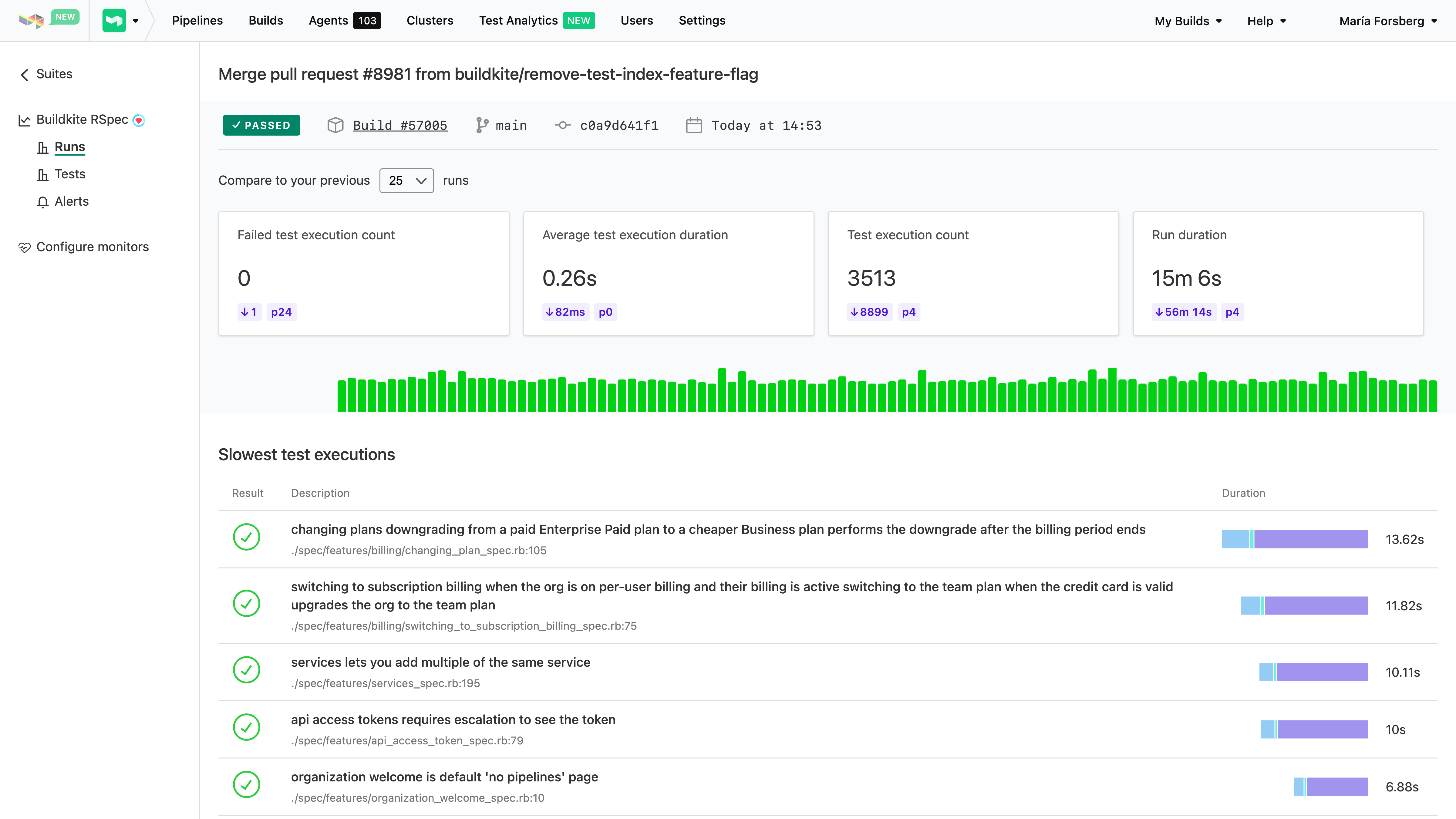
In addition to the continuous integration/continuous delivery (CI/CD) platform the company developed, the Scale-Out Delivery Platform includes Buildkite Test Engine, Buildkite Package Registries and Buildkite Mobile Delivery Cloud.
Buildkite CEO Keith Pitt said the iteration of the DevOps platform will make it simpler for organizations to implement best practices by eliminating the need to separately install and configure additional tools.
The Buildkite platform is designed to enable DevOps teams to take advantage of a concurrency capability that enables them to run 100 times as many agents and workflows as other platforms, said Pitt. At the core of that proprietary platform is a cloud-based service that enables DevOps teams to self-host customizable open source agents.
That approach makes it possible to efficiently process thousands of daily commits across massive codebases as they see fit, while also ensuring proprietary code and secrets are not made accessible to third parties, including Buildkite.

Organizations such as Airbnb, Block, Canva, Cruise, Culture Amp, Elastic, Lyft, PagerDuty, Pinterest, PlanetScale, Rippling, Shopify, Slack, Tinder, Twilio, Uber and Wayfair all opt to pay for that capability rather than rely on an open source platform because it enables them to build, deploy and update applications at scale, he added. In fact, organizations that rely on antiquated platforms for building software are essentially telling their application developers that they don’t view application development as a key business differentiator, noted Pitt.
Successful organizations are now moving beyond the CI/CD fundamentals to leverage integrated DevOps platforms that dramatically increase both productivity and the quality of the code created, said Pitt, Those organizations, for example, don’t allow flaky tests that waste precious cycles to run at all, he noted.
As the volume of code being generated in the age of generative artificial intelligence (AI) continues to increase, it’s only a matter of time before legacy DevOps platforms will collapse under the strain, said Pitt.
It’s not clear to what degree DevOps teams are currently evaluating the platforms and tools they employ but as they, for example, embrace platform engineering as a methodology for managing DevOps at scale they are naturally considering their options. Organizations that appreciate the degree to which they are dependent on software to remain competitive also have an increased appreciation for the need to ensure that only software of the highest quality gets deployed in production environments. Organizations that are serious about software development are also run by DevOps leaders that regularly “walk the manufacturing floor” to ensure there are no defects and that any changes made to existing applications are done safely, noted Pitt.
No two organizations, of course, have embraced DevOps workflows to the same degree, but just about all are looking to continuously evolve and improve. Of course, achieving that goal might be easier to achieve once AI agents begin to automate tasks in a way that eliminates many of the bottlenecks that today conspire to slow down the pace of application development.
The issue, as always, is making sure that, whatever the next advance, the underlying DevOps platform being depended upon is actually up to the challenge.