Tag: BMC Software

  • BMC Expands Scope of Mainframe Management Portfolio

    BMC Expands Scope of Mainframe Management Portfolio

    BMC this week updated its portfolio of mainframe tools as part of an effort to make mainframe platforms more accessible to IT operations teams and developers.

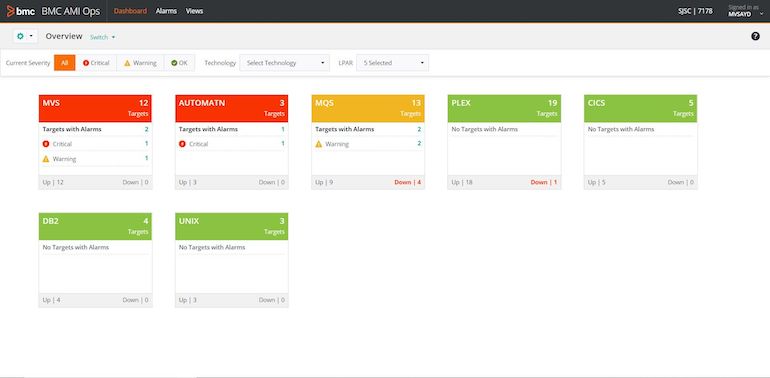
    At the core of these offerings is BMC Automated Mainframe Intelligence (AMI), which embeds machine learning algorithms in mainframe platforms to automate a wide range of processes. BMC AMI supplants the company’s existing MainView tools with a framework that promises to make artificial intelligence (AI) more accessible via a revamped user interface.

    BMC AI Ops

    John McKenny, senior vice president and general manager for ZSolutions at BMC, said an AI model based on the data collected by BMC AI can now be spun up in a matter of minutes, and can identify a potential issue days before it might otherwise occur.

    BMC AMI also exposes a REST application programming interface (API) through which more mainframe tasks will be automated.

    McKenny said as organizations accelerated digital business transformation initiatives in the last year, the need to modernize mainframe platforms became more acute. Mainframes are now the backend for multitier application environments that need to be managed in concert with other platforms, McKenny said.

    BMC is also adding Compuware zAdviser dashboards to the DevOps platform it gained with the acquisition of Compuware last year. BMC also updated Compuware Topaz for Total Test to streamline test creation for mainframe applications. There’s a growing need for better tools to test digital business processes created for the mainframe, noted McKenny.

    Other updates include Control-M job scheduler and Compuware ThruPut Manager integration, to ensure jobs run at or before their expected times on a mainframe, and an update to BMC AMI Data for IMS that simplifies database management in mainframe environments.

    Finally, BMC updated the BMC AMI Security offering with the Compuware Application Audit tool; this update allows for better capture of relevant user access and behavior data.

    McKenny said while mainframes remain one of the most secure platforms available, administrators must ensure security policies are properly implemented. IT organizations should avoid complacency and ensure zero-trust security in mainframe environments, McKenny said.

    McKenny added that, despite their long tenure and the rise of cloud computing, mainframes remain relevant. Many organizations determined that the fastest way to achieve their digital business transformation goals is by extending their mainframe platforms – platforms many of them already rely on to process and analyze transactions.

    What’s changing is the IT professionals that manage mainframes alongside other platforms, such as the cloud. Many of those IT professionals naturally expect integrated AI capabilities that enable the average IT administrator to manage a platform that was once the sole realm of dedicated IT specialists.

  • BMC Software Closes Compuware Deal, Sets Course

    BMC Software Closes Compuware Deal, Sets Course

    BMC Software today announced it has formally completed its acquisition of Compuware as part of an expanded effort to modernize mainframe environments.

    Bill Miller, president of ZSolutions at BMC, said now that the deal has been closed the combined companies will be able to more tightly integrate Compuware’s Topaz application development and deployment platform with the BMC Automated Mainframe Intelligence platform, as part of an Autonomous Digital Enterprise (ADE) initiative based on ongoing investments BMC is making in AIOps.

    Chris O’Malley, CEO of Compuware, said that level of integration will, for example, make it easier to automate the deployment of database and provisioning of mainframe resources using tools from BMC within a set of DevOps processes optimized for mainframe environments.

    The goal is to make the mainframe just one more target platform on which DevOps teams can build and deploy applications faster, added O’Malley. That’s becoming a bigger requirement in the wake of the economic downturn brought on by the COVID-19 pandemic, he said, as organizations prioritize digital business transformation initiatives that will inevitably require updates to mainframe applications.

    Rather than increasing technical debt by duplicating existing capabilities, O’Malley said more organizations will look to modernize mainframe applications to make them more accessible to a wide variety of front-end applications.

    The rate at which IT organizations that deploy applications on mainframes have been adopting DevOps has been uneven at best. Mainframe applications are often considered to be among the most mission-critical in the enterprise. Therefore, IT teams have relied on waterfall processes to build and deploy mainframe applications in a more deliberate fashion.

    At the same time, however, the use of Linux on mainframes has increased considerably in the last several years. The applications deployed on Linux operating systems on the mainframe frequently employ the same DevOps processes to deploy applications on Linux running on distributed computing systems.

    BMC’s ambitions, of course, far exceed the mainframe. The company has a portfolio of tools for managing both distributed computing and mainframe platforms. During the economic downturn, BMC is betting many IT teams will be under increased pressure to reduce the total cost of IT by centralizing the management of mainframes and distributed computing systems, among other moves.

    Of course, BMC is not the only IT vendor with similar ambitions. IBM and Broadcom, which acquired CA Technologies, are moving down a similar path. IT organizations will need to determine which providers enable them to best streamline management processes.

    In the meantime, it remains to be seen how much organizations remain committed to the mainframe. It’s generally not feasible for most organizations to move a transaction processing application running on zOS into the cloud. However, it doesn’t necessarily follow that those IT organizations will continue to invest in building and deploying new applications on mainframes instead of making them more accessible via application programming interfaces (APIs).

    Regardless of the strategy adopted, however, it is not likely that after being around for more than 50 years, mainframes will be disappearing anytime soon.

  • BMC Extends DevOps Reach to Db2 Databases

    BMC Extends DevOps Reach to Db2 Databases

    BMC Software is extending the reach of its campaign to bring DevOps to the mainframe to the IBM Db2 databases that run on the venerable platform.

    John McKenny, senior vice president, ZSolutions Strategy and Innovation at BMC, said BMC AMI DevOps for Db2 makes it possible for DevOps teams to automate changes to the Db2 schemas as part of a pipeline being employed on a Jenkins continuous integration/continuous development (CI/CD) platform.

    As part of its effort to bring DevOps processes to the mainframe, McKenny said BMC is trying to bridge the historical gap between DevOps teams and database administrators. Many DevOps teams have tried to bypass DBAs that they often perceive to be to slow to keep up with agile development processes. In mainframe environments, however, Db2 databases remain the primary source of data for applications. BMC AMI DevOps for Db2 automatically discovers and determines database schema change requirements, streamlines the review and approval process and implements those changes, he said.

    BMC AMI DevOps for Db2 is part of a portfolio of BMC automated mainframe intelligence (AMI) tools that leverage a policy engine to enforce best practices for database schemas. Those tools play a critical role in enabling organizations that continue to rely on mainframes to capture those best practices at a time when many of the IT professionals who defined those best practices are retiring, said McKenny, adding BMC will evaluate whether it will add support for other mainframe databases such as IMS based on demand.

    It’s unclear how much or even whether organizations that rely on mainframes are embracing best DevOps processes. Providers of tools for mainframe environments such as BMC are betting digital business transformation initiatives will require those organizations to replace their current application development and deployment tools and processes with DevOps processes, which are more agile. The challenge, however, is overcoming the perception that existing waterfall approaches to application development and deployment result in more reliable software. As a result, many organizations that rely on mainframes are trying to determine which methodology to employ based on the nature and criticality of the application workload.

    At the same time, BMC is investing in various forms of artificial intelligence (AI) to automate IT operations, otherwise known as AIOps. Naturally, BMC is not the only provider of IT management frameworks with similar ambitions, but it contends that after decades of providing tools to manage both mainframe and distributed computing environments, it’s in a better position than its rivals to aggregate all the data required to drive the models that are at the core of any AIOps platform.

    Of course, it remains to be seen to what degree IT organizations are comfortable with AIOps. Beyond the perceived threat to their jobs, many IT professionals are skeptical AI models are sophisticated enough to automate complex IT processes reliably. The one thing that is clear is that with the simultaneous rise of DevOps and AIOps, the way IBM platforms have been managed is about to change utterly.

    — Mike Vizard

  • DevOps Deeper Dive: BMC Software Bets on AIOps Transformation

    DevOps Deeper Dive: BMC Software Bets on AIOps Transformation

    As BMC tests the AIOps waters, the company seeks to find a balance in serving both the DevOps and ITIL populations

    It’s clear in the enterprise IT space that artificial intelligence (AI) is poised to play a significant role in IT operations, a phenomenon known as AIOps. Often with this level of IT disruption, new entrants funded by venture capitalists flood the segment, leaving incumbents to either fend off the new rivals, cede ground or, in many cases, put an end to the threat by acquiring one or more those startup companies that pose a threat to their existence.

    In the case of BMC Software, it has decided to stand its ground by aggressively investing in AIOps research and development. Most recently, BMC extended the AIOps capabilities of its existing portfolio of TrueSight IT management software through additional advanced analytics to identify patterns and anomalies within an IT environment. Other examples of BMC employing machine learning algorithms to automate IT environments tools include the ability to surface continuous recommendations for cost optimizations and automated event remediation workflows that promise to reduce the mean time to repair (MTTR).

    BMC has been making a case for AIOps as far back as 2017, but it’s only now that many organizations have enough confidence in AI to start embracing AIOps beyond the pilot stage. The challenge organizations face with AIOps are both technical and cultural: It requires a significant amount of time and effort to train and tune an AI model of each customer environment.

    [su_box title=”BMC Software Milestones”]

    • Dec. 2016: Peter Leav succeeded Bob Beauchamp as president and chief executive officer. Beauchamp remains chairman of the board of directors.
    • Oct. 2017: BMC Launches First AIOps Initiative for TrueSight
    • Nov. 2017: BMC Refinances Debt
    • Oct. 2018: BMC Software Goes Private After Being Acquired by Investors
    • Feb. 2019: BMC Partners with IBM on AI
    • April 2019: Bob Beauchamp resumes role as CEO
    • June 2019: BMC Extends AIOps Capabilities of TrueSight

    [/su_box]

    In addition, the effectiveness of any AIOps model varies based on the complexity of the IT environment. Organizations also should be concerned about the potential impact any flawed AI model might have on IT operations—it’s one thing for a human to make a mistake, but an AI model making a mistake at a level of scale could be catastrophic.

    From a cultural perspective, not every organization is yet comfortable with those AI models on current staffing, which can make some members of the IT staff less than comfortable with the whole concept.

    BMC CEO Bob Beauchamp

    It is early days for AIOps in DevOps processes. But the increased complexity of modern IT environments based on cloud-native technologies will force the issue within most organizations. BMC’s challenge is that while its management platform is employed widely in IT environments relying on ITIL-based frameworks, its footprint is comparatively nascent within organizations that have embraced best DevOps practices.

    Bill Talbot, vice president of solutions marketing for BMC, said one of the company’s advantages is access to the massive amounts of data required to train an AI model effectively. Most startup companies in this space don’t have nearly the same depth in terms of customer base, he said. That puts BMC in a better position to employ big data analytics to identify patterns and trends across multiple customers without having to know what data came from any one specific customer, unless the customer elects to share its data with BMC.

    BMC makes it a point to caution customers about rivals that make AIOps claims about their platforms but don’t actually solve a specific problem—a process known as “AIOps washing.” An AIOps platform not only needs to leverage Big Data analytics and machine learning, but it also provides the code and functionality needed to customize specific IT operations use cases, including capabilities such as automated event remediation and service resolution, optimized cost and capacity management and proactive vulnerability mitigation.

    BMC Software today stands at a crossroads. The company recently brought back former longtime CEO Bob Beauchamp to run the company day to day and has made no secret of the fact it is looking for additional investors. Making a pivot to AIOps requires access to massive amounts of funding for incumbents and startups alike.

    The next BMC act undoubtedly will involve employing AIOps across both DevOps and ITIL-based environments running on-premises and in the cloud. By any measure, that effort represents one of the most ambitious transformations ever attempted by any IT vendor.

    — Mike Vizard

  • BMC Software Advances Multi-Cloud Agenda

    BMC Software Advances Multi-Cloud Agenda

    Long before anyone ever coined the term DevOps there were terms such as IT service management (ITSM) and IT infrastructure library (ITIL) that at one time epitomized the state of the art in help desk. Now, as IT organizations enter 2018, much of the focus in the new year will be integrating DevOps processes with legacy approaches to delivering IT as a service that still permeate the enterprise.

    To achieve that goal, BMC Software has integrated BMC Remedy service desk software with the Jira project tracking software developed by Atlassian. In addition, the latest release of BMC Remedy provides support for Amazon Web Services (AWS) and Microsoft Azure public clouds.

    Nayaki Nayyar, president of digital service management at BMC Software, says the rise of both DevOps and cloud computing has clearly changed the way organizations need to manage IT. At the same time, however, traditional service desks still play a critical role in managing IT. Most enterprise IT organizations are looking to extend their investments in service desks by providing tighter integration with DevOps tools in addition to managing applications and IT infrastructure running on-premises and in a public cloud, she says.

    Nayyar also notes that modern IT management tools need to be accessible to a much broader constituency. Not only do IT operations teams want to be able to manage distributed IT resources, but also developers, business leaders and others need the ability to drill down into IT processes that affect specific applications.

    While there is widespread recognition of that requirement, Nayyar notes progress has been at best uneven. A recent survey of IT professionals published by BMC Software finds 80 percent of the respondents said new management approaches and tools are required for effective multi-cloud management. At the same time, however, 40 percent of the respondents readily admit their organization does not have a firm grasp on how much they are spending on cloud services.

    Nayyar says it’s clear IT organizations will need to rely more on various types of cognitive and artificial intelligence technologies to manage IT at scale. To provide those capabilities, BMC Software previously outlined a strategy for infusing cognitive and AI technologies across its entire portfolio. The latest release of BMC Remedy adds support for virtual agents and chatbots, in addition the ability to automatically classify and route IT events and incidents.

    Less clear is how long it will take for traditional IT organizations to modernize their environments. Large web-scale companies have already taken advantage of modern DevOps processes to transform the way IT is managed. More traditional enterprise IT organizations are still evolving, clearly borrowing many of the concepts pioneered by DevOps practitioners. But most of them don’t have the software engineering skills required to build, deploy and maintain a modern DevOps environment built from scratch. Many of them are looking to providers of packaged IT management tools to provide them with a modern DevOps experience capable of spanning both modern and legacy application environments.

    Most IT organizations will employ a raft of tools to accomplish that goal. But over time, it’s also clear most of them will eventually look to consolidate many of those tools to reduce as much of the friction inside their IT environments as possible.

    — Mike Vizard

  • BMC to Infuse AI Across Software Portfolio

    BMC to Infuse AI Across Software Portfolio

    At its recent BMC Exchange event, BMC Software announced it will be infusing machine learning algorithms and other artificial intelligence (AI) technologies across its entire portfolio of IT operations software.

    The first instance of BMC software to make use of machine learning algorithms is the latest version of TrueSight AIOps platform, which ingests data from multiple data sources to automate processes across BMC service desk, IT operations and tools for managing DevOps processes. BMC also is working with IBM to employ the cognitive computing services known as the IBM Watson cloud service across its portfolio.

    In addition, the company launched TrueSight Cloud Cost Control, a tool for managing and tracking usage of cloud services across multiple providers, and BMC SecOps Policy Service, which easier to embed compliance and testing via an external service that gets included in their software development processes.

    Finally, BMC announced it has signed an alliance with Amazon Web Services (AWS) under which the two companies will work to accelerate the migration of application workloads to the AWS public cloud.

    Dan Streetman, a senior vice president for worldwide sales and marketing at BMC, says his company is developing a product strategy around three major themes:

    • IT organizations will require management tools that will work across multiple clouds;
    • As part of general “shift left” developers now expect to be able to programmatically invoke IT operations and security services; and
    • IT professionals now expect the tools they use to manage IT to have the same types of advanced capabilities that consumer applications provide via speech interfaces such as Apple Siri or Microsoft Cortana. Various IT and customer service desks also soon will use speech interfaces to provide a highly automated self-service experience to end users.

    In fact, given the complexity of the IT tasks that now need to be managed, Streetman says a race is now on between IT vendors to live up to those expectations. Much less of a concern, he says, is any notion that AI technologies might one day replace IT professionals that by and large are already overtaxed; rather, it is apparent that IT vendors are now being evaluated on their ability to maximize existing investments in IT professionals that are already in short supply. The real opportunity is to free IT professionals to enable them to concentrate on higher-value tasks.

    Naturally, it remains to be seen how various AI technologies will impact the management of IT. It certainly will take a while for IT administrators to put their faith in AI. But as those technologies continue to mature, there may soon come a day when IT professionals look back with wonder at all the things they used to have to accomplish one manual task at a time.

    — Mike Vizard