Tag: bluemix

  • DevOps Chat: DevOps, Cognitive, IoT & Blockchain

    DevOps Chat: DevOps, Cognitive, IoT & Blockchain

    CJ Paul and Cliff UIn this DevOps Chat we sit down with Cliff Utstein, director of Offering Management, IBM Cloud DevOps and CJ Paul, distinguished engineer and chief architect, IBM Cloud DevOps. Cliff and CJ give us some insight into how some of the biggest trends in technology today—DevOps, cognitive, IoT  and blockchain—are connected. It is a great discussion with some of the people at IBM who are dealing with these subjects day in and day out.

    As usual, the streaming audio file is immediately below, with the written transcript of our conversation below that. Enjoy!

    Audio

    Transcript

    Alan Shimel: Hey, everyone, this is Alan Shimel of devopsy.kinsta.cloud and we’re here for another DevOps Chat. We have a really interesting DevOps Chat today and it’s regarding how DevOps kinda interacts and can help you get started with some of the leading sort of technology trends out there today and talking about things like cognitive and blockchain and IoT, etc. So a lot to cover in our 15-minute show, but we’re gonna do the best we can. I’m joined today by two friends from IBM. First of all, a returning guest to DevOps Chat, our friend CJ Paul, distinguished engineer and chief architect, IBM cloud. CJ, welcome to DevOps Chat.

    CJ Paul: Thank you, Alan. Glad to be here.

    Shimel: Thank you and welcome – glad to have you here. And, secondly, we have Cliff Utstein, and, Cliff, if I mispronounced your last name, I apologize, but Cliff joins us from Boston and he is the director of DevOps product development for IBM Bluemix and cloud. Cliff, welcome.

    Cliff Utstein: Thanks, Alan.

    Shimel: Did I mess up the title or the name?

    Utstein: I actually lead product management for IBM’s Bluemix – IBM’s cloud DevOps.

    Shimel: I apologize. So much for me for following the show notes. That’s what you get. [Chuckles] But, okay, fantastic. So, guys, you know, three big, kind of meaty topics out there—cognitive, blockchain, and IoT—and then how does DevOps help you get started with all of them. Let’s start with cognitive because, certainly, IBM is a market leader in cognitive and it seems like they’re building cognitive into everything. So let’s talk a little bit about that. CJ, I’ve probably spoken about this with you in the past, so, if you don’t mind, let’s start with you. How can DevOps help you get started with cognitive?

    Paul: Well, we find many customers evaluating several of these cognitive services that Watson provides. They are available as APIs in Bluemix, so this is – such as natural language understanding, natural language classifiers, the Watson conversation service, and many others like that. And many companies are looking at how to take advantage of those combination services to build interesting applications, like chatbots, that they can deploy for various use cases. So, as they look to build these applications, clearly, the way you build these applications is important.

    What DevOps proposes now is an iterative model where you rapidly take ideas and get them into code and deliver them out to market and see how effective they are. And then, you know, measure the usage and iterate rapidly from there, so using the DevOps practices and toolchains that we provide, it can greatly speed up a company’s ability, the developer’s ability, to build and deliver these leading-edge cognitive applications.


    — Alan Shimel

  • DevZone and Bluemix Garage @ the IBM InterConnect Expo Floor

    DevZone and Bluemix Garage @ the IBM InterConnect Expo Floor

    Things have been so busy here at devopsy.kinsta.cloud, I have not really had a chance to report on what a great event IBM InterConnect 2017 was. Once again this year this year the IBM InterConnect expo floor showcased the latest developments in cognitive, cloud, DevOps, security and more. But this year there was definitely a vibe of DevOps, agile and cognitive are now firmly mainstream and not just the latest shiny objects.

    We have over 40 videos of interviews and updates from this years InterConnect over on our DevOps TV Youtube channel. Included in this playlist are some great interviews with Jeff Sussna, John Comas of NBCUniversal and more.  Check them out if you have some time.

    For this article though I wanted to give you a flavor for what it was like on the expo floor at InterConnect 2017. We took our video team mobile and toured several of the areas that the floor was broken into. Two of the most crowded was the Dev Zone, that featured development trends across many areas and the IBM Bluemix Garage which was expanded this year.

    Over at the Bluemix Garage area we had a special tour guide Bluemix Garage CTO, Rachel Reinitz as well as some of her friends.  This video is pretty long, almost 30 minutes, but it really captures everything that is happening with the Bluemix Garage including some new offerings and some of the design thinking that is shaping a lot of what is happening at the garage.  Have a watch below:

    While the Bluemix Garage was all things Bluemix garage, the DevZone was some of this and some of that. It had some Watson stuff, lots of automation and more. It was broken into two main areas.  One was hands on working on laptops in a lab type of area. The other parts of the zone were more exhibits of some of the cool things being done with IBM dev tools.  Robots, beer, food and lots of other good stuff.

    Again we were lucky to have a VIP tour of the DevZone from Brian Bryson and some special guests. Have a watch of this and get a great sample of what it was like on the DevZone as they served up “steak and sizzle”.

    If you like these looks at the show floor, be sure to check out our tour of the Watson area and the DevOps and ITSM Zone from the expo floor.

    We will be following up with a few more articles highlighting some of the other great videos from InterConnect 2017 in future articles, but you can check them all out now here.

    — Alan Shimel

  • DevOps Chat: Chris Lazzaro & Peter Klenk, IBM Bluemix and IBM Bluemix Garage

    DevOps Chat: Chris Lazzaro & Peter Klenk, IBM Bluemix and IBM Bluemix Garage

    In this DevOps Chat, we catch up with Chris Lazzaro and Peter Klenk of IBM Bluemix and Bluemix Garage. With IBM InterConnect just a month or so away, it is a good time to hear what those innovative Bluemix folks are up to. Peter and Chris give us their take on new IBM Bluemix services, as well as the continuing evolution of IBM Bluemix Garage and the Bluemix Garage method.

    I will be chairing a panel at InterConnect too by the way called: DevOps, It Takes a Village. If you are going to InterConnect come say hi!

    As usual below is the streaming audio player, followed by the transcript.

    Alan Shimel:                Hey, everyone, Alan Shimel, devopsy.kinsta.cloud, here for another DevOps Chat. I’m happy to have two people as our guests on this edition of DevOps Chat. I’m joined by two friends of mine from IBM, Chris Lazzaro and Peter Klenk.

    Peter, Chris, welcome to DevOps Chat.

    Peter Klenk:                Thanks a lot, Alan, glad to be here.

    Alan Shimel:                Okay. Peter, why don’t we start off by just giving our audience a little bit of background on your position and who you are at IBM?

    Peter Klenk:                Sure. I’ve been at IBM a while doing a lot of various type things, but as we try to become a cloud company I’ve become the product manager for pretty much everything DevOps in the cloud, so how we promote working, the kinds of tools we’re offering in the cloud and so on.

    Alan Shimel:                And, Chris, how about you?

    Chris Lazzaro:           I’m Chris Lazzaro. I’m the lead architect for the Bluemix Garage Method. The Garage Method is where we try to teach customers how to be successful in the cloud, adopting best practices for DevOps and really act like a startup.

    Alan Shimel:                With scale like in enterprise.

    Chris Lazzaro:           Yep, and meet those enterprise demands.

    Alan Shimel:                Absolutely. Gentlemen, obviously the cloud is not new. It was funny. I spoke to someone the other day and they were with another large provider such as IBM, and they were transferred internally. They said, “Well, yeah, they wanted me to go to IOT and stuff because that’s where all the growth is.” I said, “What about cloud?” He said, “Oh, cloud is old news already. That’s not as strategic anymore.”

    I must admit I was somewhat blown away because everything I’ve seen says while most or the overwhelming majority of organizations have some infrastructure in the cloud, it’s a relatively small amount of their total infrastructure and the greater migration is certainly ahead of us.

    Peter, you are DevOps in the cloud. What are you seeing? Is that true, not true?

    Peter Klenk:                The reality is I think most enterprises have been experimenting in the cloud, doing pilots, doing some innovation projects, but the bulk of the workload in the world is still running in a more traditional infrastructure. We still talk to a lot of mainframe clients. We talk to certainly a lot of on-prem datacenter clients.

    There are kind of two things going on. Getting to the cloud is part of it, but I think the bigger question they ask is: how do we get more efficient, more developer productivity, more team productivity, more essentially rapid innovation, reduce the time to feedback from our clients, so that the systems we’re building stay relevant and don’t get disrupted by all these kind of born on the cloud enterprises, which we see popping up in every industry, like in entertainment, you name it?

    Alan Shimel:                Yeah. Chris, when we talk about Bluemix Garage Method and stuff, there is a certain element of that, right, taking what these startups, these, as Peter said, born in the cloud sort of startups, some of what’s in their DNA and trying to – I forgot the word of the program we use to edit DNA now, not Zipper, but whatever – trying to –

    Chris Lazzaro:           CRISPR.

    Alan Shimel:                CRISPR, you’ve got it – trying to transplant some of that DNA into these enterprises. That’s what you guys spend a lot of your time on.

    Chris Lazzaro:           We are trying to bring that rate of innovation that’s possible in the born on the cloud kind of startups, and then teach everyone how to utilize the cloud in order to get those innovative ideas that are out there as quick as possible, and reduce those barriers from going from idea to production.

    But like you said, there are a lot of enterprises out there where the backend systems of record are mainframes or just data that simply won’t ever be able to move to the cloud, and that’s why hybrid cloud is so important. Some of these new technologies like IOT and cognitive, you can start experimenting with those and still connect them back to your on-premise infrastructure.

    Alan Shimel:                Yeah. You know what? Certainly IBM is going to be the last company that tells you, “You should move off your mainframe.” But you’re right. People aren’t going to move off their mainframe, but that doesn’t mean there are some things that remain on your enterprise mainframe system and some things that are better off in the cloud, and you do have this sort of hybrid, not one-size-fits-all, and you do what’s best for that individual need. Sometimes it is staying back in the datacenter. Sometimes it’s moving up to the cloud.

    Peter, I think you hit it on the head in saying it’s all about improving productivity. If it feels good and if it’s better for the company, then do it – to paraphrase a 1960s thing.

    Of course, gentlemen, this is a big part of the whole Bluemix – not Bluemix Garage Method, but the Bluemix platform in general in the cloud. Correct, Peter? And that is to make developers or make developing more productive and more efficient. Fair enough?

    Peter Klenk:                Yeah, fair enough. I think what Bluemix is has changed since we launched it a couple years ago. I think maybe this is just indicative of what’s happening in the cloud in general, but we started talking about very specific runtime environments and you’re going to run workload on the cloud.

    It certainly is that and Bluemix has infrastructure. It has cloud foundry. It has containers. It has a serverless programming model called OpenWhisk. There are plenty of ways to run your workload in the cloud.

    But it’s also this catalog of services you can use in your application. How is that related to developer productivity? Well, no one is going to build a NoSQL database or a natural language processor or a cognitive sentiment analysis or any of these types of frameworks on their own anymore. You’re going to use services, and that’s a big part of what the platform is, is this rich catalog of services.

    It gives you a leg up in building the application for your domain, leveraging new direction models, cognitive models, IOT-type sensors and feedback systems.

    Alan Shimel:                I think it’s even more than that, Peter. You mentioned NoSQL. No one wants to stand their NoSQL up themselves, their NoSQL infrastructure up themselves. And certainly what we’ve seen with Mongo recently around security issues, it’s nice to know that you have an IBM, right, and everything they bring in the way of security, standing behind your Mongo service that IBM has stood up for you.

    I think that’s a big part of it. Who can afford to really do it right?

    Peter Klenk:                I think that’s something we bring to the table. If you look at our catalog, we’ve got open source-based things. We have third-party things. We have IBM homegrown things, like the whole Watson set of cognitive services. But with them all comes – you know, it’s a foundation of scale and security and global distribution with points of presence around the world, but you need an IBM-scale kind of partner to deliver.

    Alan Shimel:                Yeah. Chris –

    Chris Lazzaro:           So it’s that –

    Alan Shimel:                I’m sorry; go ahead.

    Chris Lazzaro:           It’s that ability to get a small application or a minimum viable product up and running very, very quickly using a platform as a service or a cloud, but then being able to scale it as required and to add those DevOps tools, the management and monitoring tools or deploy it across multiple datacenters with multiple instances. So the complexity can grow as you start gaining customers and being successful with your app.

    Alan Shimel:                You anticipated my question. That was exactly it. Really, that is sort of – because when you look at how most startups operate, they don’t create to scale immediately. It’s not build it and they come. They build it small and as they come they kind of build it bigger.

    I come from that world I should add. I spent 25 years in that world. It just seems to me to be a no-brainer to say, “Geez, if I can partner with someone who can bring me that instant scalability, and not just the cloud infrastructure as a service, but the whole kind of scalability that a Bluemix brings to me, just from a DevOps perspective that just has to make things much easier.” But it’s much more appealing and it’s probably much more economical.

    Peter, agreed?

    Peter Klenk:                Yeah, agreed, and you got to the DevOps point, which is to me is part of that whole cloud picture. It’s the platforms, the services, but it’s also the way of working, which is what the Bluemix Garage Method is all about. Chris can elaborate on that, but it’s meant to be a set of practices that teams will adopt, potentially incrementally. It’s not everything will apply to everyone out of the gate, but it’s kind of the foundation of how effective DevOps teams work. Then we back that up with a set of tools that represent the kinds of tools that support those practices.

    Similarly, everyone needs a place to store to their code, and a way to build it and push it onto a runtime on a platform like Bluemix. But, let’s face it; most of the world has on-prem stuff. They might be dabbling in other clouds. So it’s really deployed multiple places often.

    And for that little startup mentality maybe that’s all you have, but as you grow you’re going to want to add different kinds of testing. You’re going to want to move the code through more environments, to expose it to different kinds of scenarios around performance and scale and security and vulnerabilities. You’re going to want to probably have more rigorous change management policies about what gets allowed into production with what level of review.

    So when we build out the DevOps offering, we’re providing point tools. We’re partnering with point tools. But we’re really focused on how they integrate together and how they can be simple for the teams that really are just starting out, the kind of – I won’t even say two pizza teams. I’ll say the one pizza teams – but then grow up with those teams and then with those whole organizations, where now they’re deploying multiple apps across multiple runtime environments, multiple clouds, and manage the rigor and complexity that comes along with that.

    Alan Shimel:                Agree. Guys, as often happens here, our time starts getting ahead of us or behind us, but I wanted to come back to there is some new news around continuous delivery on Bluemix. I don’t know. Peter, are you the better person to share with our audience or is that a Chris thing?

    Chris Lazzaro:           Well let me set the context first and then I’ll hand it off to Peter.

    Alan Shimel:                Great.

    Chris Lazzaro:           There’s two really key points. One is as we look at DevOps methods and help people define that, IBM’s definition really starts with idea. It’s everything from going from idea to production and then managing and scaling that up.

    So we start off with design thinking, and that’s really important to really get that into your DevOps process. From there it’s all about reducing the barriers of bringing that idea into production, and you want to get rid of all the barriers and friction points. You need not just a platform that can support you, but also a set of tools that enable continuous delivery, so that your developers are curating and getting that right out into production.

    That’s where the continuous delivery service really helps. Peter, do you want to talk about that?

    Peter Klenk:                Sure. We just announced at the end of last year a new service in the Bluemix catalog called Continuous Delivery. It focuses on a few things. One is the continuous integration, continuous delivery pipeline. But another is managing the set of tools and the integrations that a team is going to need to do the whole job around software delivery.

    One thing we find in the enterprise is that it’s easy for a couple of folks to go off and start downloading a bunch of different tools, and getting them to run somewhere and use them like in their little project because maybe they’re motivated to try new stuff, but to then scale the successful patterns across the enterprise is really hard. Not everyone is as motivated. Not everyone wants to do the research to figure out what’s going to work in their environment.

    So in addition to that continuous integration, continuous delivery pipeline, we have this first-class concept called Toolchains that can be captured in templates, so that you can easily provision new teams onto, say, a source repository on an agile plan or an issue tracker and CI/CD patterns that have the right kinds of jobs and environments in them, to give you a way to just quickly bring new teams into this modern world of tools and practices.

    Alan Shimel:                CI pipelines, sure. Peter, if someone is interested in kind of toying, messing, experimenting with Bluemix continuous delivery, do you have to be on Bluemix to do it? Does it have to be on public cloud? Where could they get more information on that?

    Peter Klenk:                They can start reading about it at Bluemix.net/devops. If you have a Bluemix account, you have everything you need to get started. If you don’t, that’s something you can easily create, no monetary commitment. The service right now is free. I imagine it will remain free for small teams that just want to start trying it out. So it is running in the public cloud.

    We do have something called Bluemix Dedicated, which is a single tenant instance of Bluemix for certain enterprises that want that, and the service is also available there.

    Alan Shimel:                So private cloud, is that not in style anymore, Peter?

    Peter Klenk:                I think that’s fair. I think there are different ways to –

    Peter Klenk:                Yeah. The key point here is it’s a single tenant instance, but it’s the full Bluemix stack. So our service is available that way as well. But for tire kickers, go to the public cloud, Bluemix.net/devops.

    If you’re not quite ready for that, Chris, Garage Method. How do you get started over there?

    Alan Shimel:                We’re going to come back to that in a second, before I lose my train of thought, because it doesn’t take me much. Peter, you mentioned the toolchain aspect of Bluemix and the continuous delivery in the stuff you’re putting together. If someone is experimenting or testing the Bluemix continuous delivery, can they add other tools to the toolchain, sort of maybe do a custom integration?

    Peter Klenk:                They can. The pipeline is highly customizable through scripting. There is a set of integrations, the third-party tools available, kind of no box because it’s on the cloud, but virtually out-of-the-box. And certainly then in the applications they’re building, they certainly have access to all the other services in Bluemix as well. So there is some cool stuff.

    Alan Shimel:                Got it. Chris, let me come back to you. We mentioned Watson earlier. I remember last year at InterConnect I was kind of blown away when I realized Watson was going to be on Bluemix. With APIs anyone can hook into Watson. I met some lady who in no time created a custom dating site where Watson was picking your dates for you. I mean I’m married, it didn’t me any good, but it was still an interesting concept.

    But, Chris, when we talk about this Bluemix continuous delivery, does it work with Watson and some of the other services? And is that something we can do with the Garage Method and so forth or no?

    Chris Lazzaro:           The continuous delivery pipeline can definitely work and deploy cognitive or Watson applications. We’ve got a number of examples of those on the Garage Method site. So if you just Google Bluemix Garage Method you’ll get there.

    What’s really neat is that with these toolings and this platform, you can deploy an application that’s making use of the giant Watson cognitive capabilities and then easily tie in your logic to that. So you just plug into Watson as if it was a regular service.

    Alan Shimel:                Excellent.

    Chris Lazzaro:           So we’ve got those courses out there that walk you through it. The other place to get started would be at InterConnect this year. We’ll be having a lot of workshops and training and sessions at the InterConnect conference.

    Alan Shimel:                Let’s talk a little bit about InterConnect. Of course it’s coming up. It’s moved back a little bit this year. I believe it’s in – is it late March now or April?

    Peter Klenk:                March.

    Alan Shimel:                Peter or Chris, you don’t have the exact dates, do you?

    Peter Klenk:                I will in a second. I want to say March 20 –

    Alan Shimel:                Yeah, like March 20 to –

    Alan Shimel:                I know the 22nd is a Wednesday and that was a big thing. I’m speaking there as a matter of fact. I just got all my speaker kit stuff today.

    Peter Klenk:                The 19th through the 23rd at Mandalay Bay in Las Vegas.

    Alan Shimel:                Yes. Guys, we might as well end things off then with an InterConnect question. What are you most looking forward to this year at InterConnect?

    Peter Klenk:                Feedback.

    Chris Lazzaro:           I always love the expo floor and being able to talk directly with the clients and get that feedback and just see the cool things that are being developed.

    The other session or workshop actually that I’m looking forward to is the one around the method, where attendees will actually – by the end of the workshop they’ll have applications up and running in Bluemix that cover all the phases. So they’ll have the tooling plugged in for managing the app and the continuous delivery tools as well.

    Alan Shimel:                Got it. Peter, what about me?

    Peter Klenk:                For me it’s feedback. Last year at InterConnect we were certainly talking about the method and different tooling approaches and we had some previews, but it’s different now that we have our service out there in the Bluemix catalog with real users doing real applications and solving real problems. So I just want to hear from them and also hear some more perspectives from clients and other companies in the business about the trends they’re seeing.

    We’re going to have a couple good panels with some of the other DevOps companies. So that and then clients talking about the kinds of apps they’re building on the cloud is always fascinating.

    Alan Shimel:                I always enjoy talking to clients as well at InterConnect. It’s great stuff. And I will just mention that if you really want to sit in on a great session, there is one called “DevOps: It Takes a Village.” I’ll be hosting that one. I want to say it’s Wednesday at 9:00 AM at Mandalay Bay, but I’ll put more on that at devopsy.kinsta.cloud in the near future. Just a little personal plug guys. I’m sorry.

    Peter Klenk:                Shameless.

    Alan Shimel:                Shameless on me. Anyway, guys, I look forward to seeing you both at InterConnect. We’re actually going to probably have some devopsy.kinsta.cloud surprises there in terms of our coverage. So maybe we’ll get a chance to sit down and chat.

    But for now, Chris Lazzaro, Peter Klenk, thanks so much for being our guests on this episode of DevOps Chats, and we’ll see you in two months or so out in Vegas hopefully.

    Chris Lazzaro:           Sounds good. We’ll see you there.

    Peter Klenk:                Always a pleasure.

    Alan Shimel:    Okay. Chris Lazzaro, IBM Bluemix Garage Method, and Peter Klenk, IBM Bluemix and Cloud Services for DevOps, thanks for appearing on DevOps Chats. This is Alan Shimel of devopsy.kinsta.cloud hoping to see you on another DevOps Chat.

    — Alan Shimel

  • DevOps Chat: CJ Paul, IBM, on DevOps, ITSM, Cloud and More

    DevOps Chat: CJ Paul, IBM, on DevOps, ITSM, Cloud and More

    devopsy.kinsta.cloud editor-in-chief Alan Shimel sat down to speak with Dr. CJ Paul, Distinguished Engineer, DevOps Methods & Tools, IBM Cloud. CJ is someone we have interviewed previously on video at IBM InterConnect and is always a great source of information. In this interview Dr. Paul discussed DevOps, ITSM, Cloud, Bluemix, Bluemix Garage method and more. 

    As usual, the streaming audio of our discussion is below. You can also find it on SoundCloud and iTunes. Below the audio player is the transcript of our conversation so you can follow along. Enjoy!

    Shimel:  Hi, everyone. Alan Shimel here for another DevOps Chat on devopsy.kinsta.cloud. Thanks for joining us. I’m happy to be joined on this episode of DevOps Chat by a friend of mine CJ Paul of IBM. CJ, are you there?

    Paul: Yes. Hi, Alan. How are you?

    Shimel:  Good. Good to have you on DevOps Chat with me today, CJ. Of course you and I have done several video interviews from various conferences we’ve both attended. But you know we haven’t had the pleasure of having you here, so welcome. CJ, I’m gonna bet not everyone in our audience knows who you are. Why don’t you give a quick little background on who you are, what you do, where you work and so forth?

    Paul: Yeah. Definitely. So my name is CJ Paul. I work at IBM. I’m a Distinguished Engineer in the cloud unit. And focused on DevOps methods and tools. So some of the things that my team puts out are the Bluemix Garage Method. It’s out as a website at IBM.com/devops/method. Then we also work on the Bluemix DevOps services and you know I work with a lot of clients as they do their transformation to the cloud. And trying to develop DevOps practices along the way.

    Shimel:  Great. So CJ, you know just kind of off the beaten path here, but we’ve had several guests on DevOps Chats that are distinguished engineers at IBM. And for our listeners who you know maybe are not familiar with what that means and it’s more than just a pretty title. Can you give our listeners a little bit of insight into what it is to be a distinguished engineer at IBM?

    Paul: Oh, definitely the focus of a distinguished engineer is to leave a portfolio of products in a particular domain. So in this particular case you know I have several product teams that work on different offerings in the DevOps space. And I’m responsible for crafting the technical strategy and providing architecture and technical direction to multiples of these teams.

    Shimel: Got it. So CJ, as I think I mentioned to you in our off camera or off microphone conversations, you know the month of September is gonna see devopsy.kinsta.cloud focusing a bit on APM and DevOps. And of course this is a subject that you are you know very familiar with. And part of what you do in Bluemix and all of these things, obviously APM’s a part of it. But why don’t we start with this? Can you define for our audience, when we talk about APM and DevOps and maybe it’s in relation to ITSM, right? IT Service Management which is something you’re also very familiar with. Can you kinda pull this all together for us?

    Paul: Yeah. Definitely. Traditionally operations teams have always worried about application availability and performance. Where performance includes you know how the application might respond from different locations around the world and how the response time evolves or changes for different types of transactions. Now, as we look at DevOps and the role of the DevOps teams becoming more cross functional, a lot of the focus is shifting to how do we get the synthetic monitoring, the configuration of the monitoring and all of that to be handled much earlier in the development cycle. In fact, in an ideal world, just like our source code is written to the specs of the product, we would also create the associated operational configuration of the monitoring tool, as well as the creation of the synthetics scripts, along with the source code. And so in the ideal case you would have all that be checked into the same repo. And then as part of your continuous delivery process you’d want to make sure the operations tool is configured to monitor that particular build that is deployed in a particular environment.

    So that’s the shift in thinking that we see a lot of the teams going through is how do we actually make this possible you know where all of the setup and configuration is treated as an extension to the source code of the product and worked through the lifecycle. Because it gives various advantages. Let’s say a new build comes out and you’re going to go deploy that new build in a particular environment or perhaps even introduce it to a small subset of your users in production. When you introduce that new build with a new feature, you want to monitor that new build or that new feature. And take all of that data and make decisions on whether you now ramp up to your full population. So what we see happening is in the new world of DevOps and especially on the cloud, you know monitoring has to go very much hand in hand with the features that the development team has built. And so it’s no longer just an after the fact operations thing to worry about. It is something you have to worry about as an integral part of the DevOps lifecycle. So that’s why I think this is a really exciting time. Especially the cloud enables application teams to do A/B testing and evaluate you know performance of new features, the response times of new features as it compares to their existing version of the application that is running.

    Shimel:  Sure.

    Paul:  And so all of the new capabilities you know that are the focus area in the application performance management space.

    Shimel:  Sure. Exciting times indeed. CJ, I would be remiss if I didn’t mention on this very topic that we actually have a webinar scheduled, I believe it’s Tuesday, September 20th at 1 p.m. Eastern Time with a colleague of yours at IBM, Arun Bilgiri.

    Paul: Yes.

    Shimel:  Are you familiar? Yeah.

    Paul: Arun Biligiri.

    Shimel:  Yes.

    Paul: Yeah.

    Shimel:  And Arun is gonna be doing this on Learn Why We Must Shift APM Left in the DevOps Lifecycle. And he’s gonna be also joined by Dan Kern, Solution Architect over at Prolifics. So you know if you’re listening to this and this is a topic of interest to you, not you CJ, I know you’re interested. But our audience, I’d highly recommend. You can probably register for this off of our devopsy.kinsta.cloud. Go to the Webinar and Events page and you can register there. But it should be dead on on topic for this. So CJ, I wanted to focus back on though this idea of shifting APM left, right. So when we talk about DevOps and how we fit in things like security and QA, now APM, that seems to be a common theme of shifting these things left. Get them earlier into the development process, right. Because the earlier it’s in, hopefully the better it comes out in the end, right. I guess my question to you CJ, is can we just continue shifting everything left, right. You know what I mean? Is there a point of diminishing returns of shifting left?

    Paul: Yeah. I think in this particular case especially, you know it’s something that is a good thing to think about right from up front. Especially as the velocity of deployments increases, we would expect the development teams to be more and more you know working the monitoring of the applications in conjunction with the code. Because you’re just kind of thought to have a throw it over the wall kind of syndrome. Because you know that would be too slow in this world to make it successful. So that’s why I think the shift left is almost an inevitable side effect of the need to go faster. And also with some of the shift to cloud, you know the way things are done are also different. So more and more the application architectures and topologies are becoming more complex to handle geographically distributed deployments and so on.

    So more and more we expect the development teams that are involved to be doing some of these operations automation just like they would work on you know features for the product. So some of these concepts surround you know cycle liability engineering and so on that are being out in the industry are just examples of why you know we’ll get more and more of a DevOps perspective on things that used to be just purely operations activities in the past.

    Shimel:  Got it. CJ, my next question with you on this is and by the way we’re running low on time so I only have one or two more questions left. Is you mentioned earlier one of my favorite things happening in IBM and that’s the Bluemix Garage method, which is an open source methodology kind of taking best practices and lessons learned from IBM themselves, as well as your partners into this methodology. Talk to us a little bit. Where does APM fit into there?

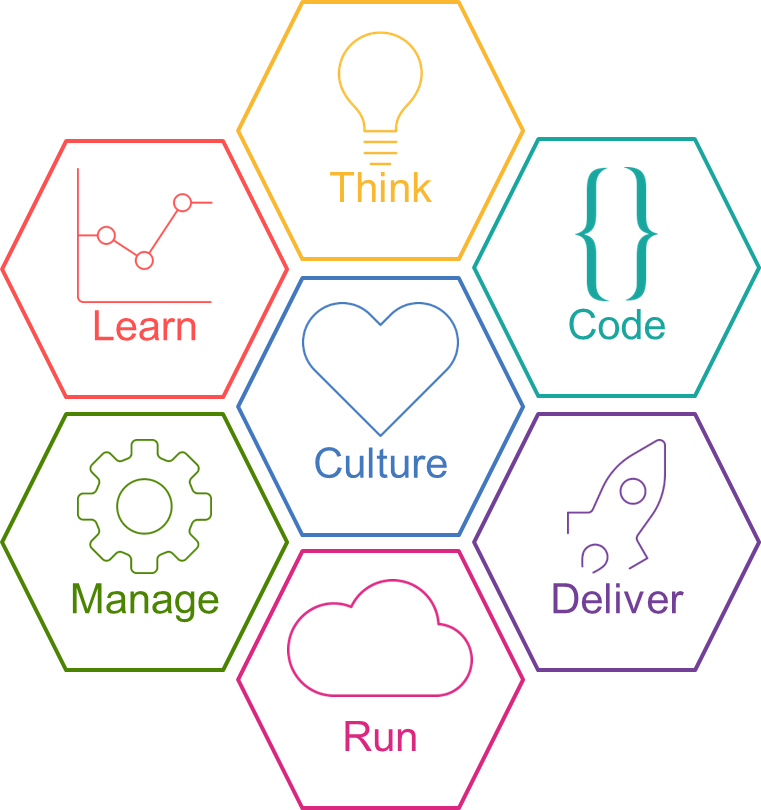
    Paul: Yeah. So with this Garage method what we’ve been doing is to take the learnings from across the industry on agile practices and design thinking and you know the latest DevOps practices and lean practices and so on. And organize it in such a way that enterprises can learn how to act like a startup but do it at enterprise scale. So within that method, we talk about how you think and plan, and code, and deliver, and run, and manage, and learn around a whole culture of DevOps. So in this particular case as we talk about application performance management, we typically think of it in managed. But as we have been discussing here, it kind of permeates through the lifecycle because you have to think about the availability of your applications as you design and build them. And you have to write the code for the synthetic monitoring steps, along with your features of the product. And you have to deploy them as part of delivery. And then clearly you’ll collect and analyze the data as part of manage and learn. So I think this whole shift left of APM fits in very nicely with the Garage method and its different lifecycle phases.

    Shimel:  Got it. CJ, I apologize, but just as I promised, yeah, we’re way over 12 minutes already and we’re gonna need to wrap things up here. But before we do, I wanted to just ask you one final question which is usually one that I ask most of our guests here on DevOps chats. CJ, for our listeners out here, if you had to recommend one book that they should read, what should be the next book they read?

    Paul: I would highly recommend folks read the Site Reliability Engineering book that has come out of Google. They talk about how engineers with development skills can automate a lot of what used to be production activities. That’s a very good read. Within IBM we’ve been doing these kinds of activities ourselves. You know me make sure that the individual squads are also responsible for their performance. But I find this is a good book for teams to look at if they haven’t already read it.

    Shimel:  Got it. Okay. CJ Paul, Distinguished Engineer at IBM. Thank you for being this episodes guest on DevOps Chats. Look forward to seeing you in person at some conference or another soon, CJ. And until then, keep up the great work.

    Paul: Thank you, Alan.

    Shimel:  This is Alan Shimel of devopsy.kinsta.cloud for DevOps Chats. Thanks everyone. Have a great day.

  • IBM InterConnect 2016: Sounding Off

    IBM InterConnect 2016: Sounding Off

    This years IBM InterConnect in Las Vegas was spectacular. Our devopsy.kinsta.cloud team covered as many of the 300+ DevOps tracks and sessions that we could. We have been editing video and getting ready to report on the show since then. Finally, we have enough ready and the time to give our full report.

    The last 6 weeks or so have been a rush here at devopsy.kinsta.cloud. I literally went straight from IBM InterConnect in Las Vegas to RSA Conference in San Francisco. Coming home from 2 weeks on the road I threw myself into putting the final touches on our DevOps Connect: CD Summit/Jenkins Days events this spring (click the link for more details on these upcoming events).

    So much to report from InterConnect that I haven’t had a chance to write up, but the good news is we have the videos to share with you all. The videos will be available on our devopsy.kinsta.cloud YouTube Channel under the playlist InterConnect 2016. We will feature some of the best in the days and weeks to come.

    Before I share the first batch of videos though I wanted to briefly go over what I consider the main news and themes of IBM InterConnect 2016:

    1. IBM and GitHub partner to deliver GitHub Enterprise as a hosted service or dedicated GitHub. While GitHub needs no introduction to most of you reading this, the ability to host your own GitHub enterprise version for your own private cloud or hybrid cloud is a major plus for organizations uncomfortable using a public repository for their code. I had a chance to speak with both IBM and GitHub folks at InterConnect and the videos on those will be available shortly. But if you are a Git user this could be something that really makes your day.
    2. IBM and VMware partner for seamless migration of VM workloads. I think this is really the short term biggest game changer coming out of InterConnect. Now all of of those VMware setups sitting in peoples private datacenter and server closets can be seamlessly moved to the cloud on IBM. While VMware always offered snap backups and such, this really makes it a no brainer to move your on premises VMware set up to the cloud quickly and painlessly.
    3. IBM brings Swift to Servers in the cloud. Swift has quickly become one of most used languages to develop client side application (mostly iPhone). IBM announced they were contributing code to the Swift community that will enable server-side Swift allowing developers who already know the language to work on the server side. Additionally, IBM Cloud via SoftLayer will be server side Swift ready. This was more of a roadmap announcement with more code and functionality to come. Important about this one is it represents some of the first fruit we have seen from the Apple-IBM partnership announced previously.
    4. Cognitive. I know it is a buzzword, but look beyond the buzzword.  Cognitive, AI or whatever you want to call it has the potential to have the biggest long term impact on how we live our life every day. Not only is IBM making great strides in Watson and cognitive capabilities, the real story is they are making it really easy for developers to hook into via API and bring this cognitive capability to developers everywhere. I spoke to one IBM security person who literally overnight used Watson cognitive to help prioritize large enterprise vulnerabilities. I spoke to another entrepreneur (video just needs her OK to release) who used Watson’s cognitive thinking to make what they claim is the smartest dating app in the market today. But frankly this stuff just barely touches the surface. Cognitive is going to touch everything we so including the IoT space, automation, health care, science and more. We may be seeing the birth of the next big thing right before our eyes.
    5. Bluemix Garage and Bluemix Garage Method – You will see several videos around the Bluemix Garage and the Bluemix Garage Method. In fact the Bluemix Garage area on the expo floor was the most visited exhibit at the show (well except for the Elton John concert I guess). In fact our first video today is a tour of the Bluemix Garage setup on the expo floor with Rachel Reinitz and Sarah Plantenberg, two of the key leaders of the team there. Bluemix Garage is key to the “innovate like a startup, scale to the enterprise” theme that was very prevalent at InterConnect. IBM is setting up Bluemix Garages all over the world to allow teams from enterprises to come in and learn how innovate like a startup. It gives them that startup feel, but with IBM’s own experience, as well as that of others who have been through the program to learn from.  In fact IBM has codified this into the Bluemix Garage Method. More than just code, it is also the processes, policies and protocols that IBM has gathered as emerging best practices for how do get things done in a DevOps/Agile manner.

    I have been following the Bluemix Garage stuff since it was announced at Gene Kim’s DevOps Enterprise Summit last October and am happy to see the progress Rachel and team are making.

    So below is our first video in the IBM InterConnect 2016 series. It is a tour of the Bluemix Garage on the expo floor this year. Below it are links to two other videos also on Bluemix Garage and Bluemix Garage Method. You can see more on the playlist we have set up.

    Also checkout these IBM Bluemix Garage & Bluemix Garage Method videos:

    Interview with IBM’s Peter Klenk on IBM’s Bluemix Garage

    Interview with IBM’s Chris Lazzaro on IBM’s Bluemix Garage Method

  • IBM BlueMix OpenWhisk Takes Infrastructure Out of the Equation

    IBM BlueMix OpenWhisk Takes Infrastructure Out of the Equation

    Thousands of people descended upon Las Vegas last week for the annual IBM InterConnect conference, where IBM shares its vision with customers and developers and makes big announcements. One of the biggest things Big Blue unveiled was BlueMix OpenWhisk, an event-driven programming service designed for a serverless computing environment.

    OpenWhisk uses an event-driven model, automatically executing code in response to external events such as incoming sensor data or designated triggers. (Event-driven programming is also called serverless programming, because the events themselves more or less become the foundation on which the programming is built.)

    Al Hilwa, program director of Software Development Research for IDC, declared the BlueMix OpenWhisk announcement to be one of the most interesting revelations at the IBM InterConnect conference. “This is IBM’s play in the hot area of serverless back-end computing supporting an event-driven application model like AWS Lambda, Google Cloud Functions and technologies from players like iron.io,” he noted. “This is the new face of PaaS, where developers do not have to worry about infrastructure.”

    I recently wrote that advances in DevOps increasingly seem to marginalize the “Ops” part of the equation, essentially making it obsolete: I noted that what you’re left with essentially is developers with the processes and tools to automate the infrastructure back end. Technologies such as containers and services such as AWS Lambda simplify greatly the process of programmatically generating, modifying and maintaining the underlying infrastructure.

    As I summed up in that article, though, Ops won’t really go away. Advances in DevOps and technologies such as serverless computing simply free operations teams. They can spend less time putting out fires or maintaining mundane configurations and focus more on big-picture issues that improve performance and help the company innovate.

    OpenWhisk is evidence of that future. It has the potential to transform IT and accelerate DevOps even more. Developers can develop and deploy applications faster and more seamlessly without the need to worry about the servers or middleware traditionally required. OpenWhisk will handle the necessary code.

    IBM suggested developers can use OpenWhisk to create microservices-based applications, where each individual task or component is developed and maintained separately. Different teams can operate in parallel on their individual elements.

    OpenWhisk joins other serverless computing platforms including Amazon’s AWS Lambda and Google’s Google Cloud Functions. As Hilwa pointed out, there are also emerging players such as iron.io. The unique value that OpenWhisk brings to the table is that it is integrated with the BlueMix platform, which means developers have immediate access to all of the apps, analysis and services BlueMix has to offer.

    IBM will open source the codebase of OpenWhisk itself. That isn’t a surprise, since BlueMix itself is based on open source code and IBM is a major proponent and benefactor of open source projects. The true potential of a tool such as OpenWhisk can be realized more quickly with the community at large helping to evolve it, but IBM can continue to act as consultants and provide deeper services for customers to help them maximize the value of OpenWhisk.

  • DevOps Chat: Rachel Reinitz, IBM Bluemix Garage Method

    DevOps Chat: Rachel Reinitz, IBM Bluemix Garage Method

    newlogoIn advance of InterConnect next week in Las Vegas, I had a chance to sit down with Rachel Reinitz,Distinguished Engineer & CTO of IBM Bluemix Garage. I have met Rachel several times and it is always a pleasure to catch up on all of the innovative things her and her team are doing with Bluemix Garage. In this conversation, Rachel and I spoke about open technologies which is a focus for us this month, as well as a big focus of the Bluemix Garage method. We also spoke about “innovating like a startup, while scaling for the enterprise”.  To learn more about the IBM Bluemix Garage Method, please visit: https://www.ibm.com/devops/method/

    You can find our conversation below and a transcript of it below that. Enjoy!

    Alan Shimel:                Hi, everyone. Alan Shimel, devopsy.kinsta.cloud here for another DevOps chat. Today’s special guest is Rachel Reinitz of IBM. Rachel, welcome.

    Rachel Reinitz:            Thanks, Alan. It’s always nice to be talking with you.

    Alan Shimel:                Yes, actually I think the last time we spoke was DevOps Enterprise Summit in San Francisco. And Rachel, for our listeners who may not be familiar or didn’t get a chance to see our video which is on YouTube from DevOps Enterprise Summit, why don’t you tell them a little bit about yourself.

    Rachel Reinitz:            So I am a distinguished engineer at IBM and I co-founded and I’m the technical lead for the IBM Bluemix Garages.

    Alan Shimel:                Excellent. And you know, Rachel, there’s been a lot of announcements and news and developments, no pun intended, coming out of the IBM Bluemix Garages that some in our audience may not be familiar with. So give us some of the highlights. First of all, what is the IBM Bluemix Garage? And what’s happening with it?

    Rachel Reinitz:            So we are a consultancy within IBM. We work with customers making them successful in adopting Bluemix. And we are unique in that we are housed in startup communities. We work with both startup customers through to enterprise customers. And really what we work on is taking an idea, a problem or a concept and applying IBM design thinking, lean startup, extreme programming, DevOps to go from that idea to the definition of a minimal viable product and then onto building it and getting it out there and testing it out with users, testing the business hypotheses, all the really good DevOps practices and utilizing Bluemix which also gives us a lot of acceleration because of the kinds of services in the environment that we are in. So that’s what we do. It’s an exciting place to work and we have – and for clients to come into with designers, architects, developers. That’s pretty much what we do.

    Alan Shimel:                Got it. Rachel, I was lucky enough to visit an IBM Bluemix Garage. I guess it was at the DevOps Enterprise Summit, around that time in San Francisco. And the best way I can explain it was it’s sort of a lab, kind of a living lab where experimentation was going on as well as education and development. And it seemed like a pretty cool environment. And both for enterprise as you mentioned, anything from enterprises on up to startups.

    Rachel Reinitz:            That’s right. I think that that’s a good summary of it. We are in the startup community so we work with the startups there. And it really helps enterprises to innovate like startups, to get kind of out of their environment into our environment, a very collaborative space as you saw, when you were visiting right in the hardest heart community, we’ve actually, in some of environment news, we’ve moved to a different space still within the galvanized community in San Francisco, a bigger space, which is really exciting. We just had a little party there. And we have other locations. We are in Toronto and in London and we have a location in Nice. Each one is in a different kind of startup community. And we are working on Melbourne. So you’ll have to come investigate some of our other locations.

    Alan Shimel:                Absolutely. We are actually doing a series of roadshows, one of which will be in London in April. We’d love to get some of the IBM Bluemix Garage folks at that. But we will talk off-line. Rachel, one of the reasons I invited you on was this month on devopsy.kinsta.cloud, we are really focusing on what we call the open technologies and open enterprise. And by that we don’t mean just open source software, though certainly open source software is part of it. But there’s more to open then software, isn’t there?

    Rachel Reinitz:            Yeah, I agree. I think that’s knowledge sharing is a big part of open, sharing different kinds of knowledge in different kinds of mediums. And I think where you’re going is to the fact that we’ve now taken what we’ve been taking in the Garage and actually merged it with what we’ve been doing in open source and DevOps Transformation within IBM and we published that as the IBM Bluemix Garage method which is out there in public, open for people to use. And we’re also looking for contributions.

    Alan Shimel:                Absolutely. And it is open, right? The whole methodology, if you will, is open. And I happen to know only because I’ve spoken to you folks before, a lot of the tools you are using are open source tools, traditional open source software. But really, when we talk about the open garage method, as I’ve heard it referred to, it’s open through and through, if you will, right? It truly is open technology.

    Rachel Reinitz:            Yes. So it’s taking the lessons that we’ve been learning, it’s providing prescriptive paths and recommendations and that crosses from our software to what we are doing in the open community and open source, open-source testing tools, third-party tools. It’s what we find is working in projects that we are doing and recommendations around specific kinds of applications like a mobile application. What do we recommend? What did we learn and are sharing those learnings as you were saying out in the open? How do you go about testing them, for example? What are your different options? Things like that.

    Alan Shimel:                Fantastic. Rachel, how big is Bluemix a part of this garage method, though?

    Rachel Reinitz:            It’s definitely a big part of it in terms of we think that using Bluemix and other IBM technologies is a way to really accelerate building these kinds of applications. But it’s not exclusive to that. So when we talk about innovative practices, when we talk about some of our toolchain, no, it could be used with other technologies. Obviously I think there’s a lot of good reasons to use it with Bluemix.

    Alan Shimel:                Sure, sure. And again, you know what, Rachel? We may have some folks who perhaps aren’t even familiar with Bluemix, why don’t we quickly give them a level set. When we say Bluemix, what are we talking about?

    Rachel Reinitz:            So Bluemix is IBM’s platform as a service. It exists in public which is then hosted in our data centers, our public data centers for software. We also have a dedicated version where we provide a managed single instance of that same capability. And then we have what we call local which can deploy onto your own systems behind your firewall. And Bluemix has multiple models for writing applications with Cloud Foundry containers and VMs. And it has a whole range of services. At last count, I think we were at about 140 and those are IBM services like our SQL DB which is a form of DB2. But it’s also third-party services like New Relic. And as I said, it runs Cloud Foundry, it runs open-source runtimes. You can bring your own runtimes. So there’s a lot of openness to it.

    Alan Shimel:                Excellent, excellent. And Rachel, you mentioned IBM was looking to work with third-party partners around this open methodology, open-source. What kind of partners, what kind of contributions would you be looking for that you think makes sense?

    Rachel Reinitz:            So we have the concept of an open toolchain where different technologies can be integrated, again, around solving a particular kind of problem like mobile. And our toolchain team works with different partners. So we are very open to partners coming in and saying hey, can we be part of the toolchain and talking about how you integrate? So for example Slack is part of what we talk about there. That’s one kind of integration. Another level of integration we have is in Bluemix itself. So we have third-party services there and we have a whole program for how a company that’s providing capability that would be of interest to developers can integrate into Bluemix and be part of our ecosystem.

    Alan Shimel:                Got it, got it. And Rachel, believe it or not, we are coming up on the – I promised you it would be about 10 minutes. We are going to run a little over but I wanted to quickly pivot, if you will. Besides this month being open technologies on devopsy.kinsta.cloud, we are also featuring our coverage of the upcoming IBM Interconnect Conference in Las Vegas. And I would imagine, pardon me, I haven’t pre-checked; but I would imagine IBM’s Bluemix Garage is going to have a prominent place at Interconnect, correct?

    Rachel Reinitz:            Yes, yes. I’m really excited about Interconnect. We have, in the expo area, we actually have basically a mini garage set up, even with a motorcycle, I’m told. And we basically take you through the journey with a focus on our innovation path and we are sitting right next door to our DevOps team who also support the method so you can come and see what we are doing in terms of serving your innovation process and we show code, of course, and delivery pipeline. And that if you want to get even deeper and know the different options, we have the DevOps booth right near us. We have customers coming and talking about the work they’ve been doing with the Bluemix Garage method. We have workshops where you can get into a roundtable and really dive into it. So there’s a ton of things going on at Interconnect around the method. And of course, I’m presenting, too.

    Alan Shimel:                Really? What are you presenting on, Rachel?

    Rachel Reinitz:            I’m presenting on the Garage and on the method. I’ll be speaking, I think it’s Monday at 6:00 PM and then there’s a variety of different sessions. And then most exciting is I have some of my clients presenting with us.

    Alan Shimel:                Really? In case anybody listening is actually attending Interconnect as they very well might, can you give us – I don’t mean to put you on the spot, but can you tell us maybe customers and which sessions customers are talking at?

    Rachel Reinitz:            I’d have to look up specific sessions but we have KS2 and ManualLife, clients I’ve worked with really closely. Those are a couple of the – oh, and we have Spigot which has a really interesting cloud sourcing platform. So those are some of the customers that are going to be speaking. And there’s maybe a couple others that are ready to be talked about yet.

    Alan Shimel:                Fantastic. And of course, on the expo floor, people can actually get hands-on with the Garage for themselves and see what it’s about.

    Rachel Reinitz:            Absolutely.

    Alan Shimel:                And just again, in case anyone listening, Interconnect is February 21-25, I believe. And it’s at Mandalay Bay and MGM Grand in Las Vegas. Rachel, just one more question. What’s next?

    Rachel Reinitz:            More. More services. More services coming on Bluemix. We just had some – there’s new analytics, there’s new Watson services. It’s more coming, more projects with clients, cool Internet of things kinds of projects, more garages in the future building up the ones we have. Lots is going on. And in the method, too. More tools in the method, more prescriptive paths.

    Alan Shimel:                Do you think we will see a Bluemix Garage method 2.0?

    Rachel Reinitz:            Not 2.0 because we continuously deliver.

    Alan Shimel:                That’s exactly right. Good jump on the answer.

    Rachel Reinitz:            We came out with our MVP at DevOps Enterprise and now we will be having, you’ll see a lot more in there for Interconnect. We will just keep on going.

    Alan Shimel:                Fantastic. Rachel, we are way over time so I’m going to need to call it a day here. But Rachel Reinitz, distinguished engineer of IBM and sort of mother of IBM’s Bluemix Garage. Welcome. Or thank you for being on DevOps Chats today. Look forward to seeing you at Interconnect February 21 out in Vegas. And look forward to continuing development on the IBM Bluemix Garage and Garage method. Thanks for appearing today.

    Rachel Reinitz:            Thanks, Alan.

  • DevOps Chat: IBM draws on deep DevOps experience to launch Bluemix Garage Method

    DevOps Chat: IBM draws on deep DevOps experience to launch Bluemix Garage Method

    RandyNewell_IBM_HIGHRES1

    With the start of the DevOps Enterprise Summit 2015 this morning IBM has made what they are touting as a major announcement. Drawing on their wide and deep experience in DevOps across multiple segments of the company, they have announced   Garage Method. What exactly is Bluemix Garage Method? Great question. I spoke today with Randy Newell, Director, DevOps Marketing at IBM about this. Below is a streaming audio of our conversation, followed by the transcript. I expect to follow up with Randy and other IBM folks this week on both DOES and Bluemix Garage Method, so look for a follow up shortly.

    [soundcloud url=”https://api.soundcloud.com/tracks/228889575?secret_token=s-uhTmi” params=”color=ff5500&auto_play=false&hide_related=false&show_comments=true&show_user=true&show_reposts=false” width=”100%” height=”166″ iframe=”true” /]

    Alan Shimel:                Hi, this is Alan Shimel of devopsy.kinsta.cloud and we are kicking off our coverage of the DevOps Enterprise 2015 Summit in San Francisco. And happy to be joined by Randy Newell of IBM. Randy, welcome to DOES 2015.

    Randy Newell:             Hey, Alan. Thanks. It’s great to be here. This is exciting.

    Alan Shimel:                Yep, there’s a lot of buzz going around, Randy. A lot of companies announcing exciting news around the event. And I think I’ve heard IBM has some announcements coming out.

    Randy Newell:             We do. We are announcing today a set of practices designed to help enterprise organizations execute and scale innovation. It’s called IBM Bluemix Garage Method and it combines the best of design thinking, Lean Startup, agile development, DevOps and Cloud, and is specifically designed to help enterprise organizations accelerate all phases of the app design, development and delivery lifecycle.

    Alan Shimel:                Very exciting. So Randy, for our audience who may not be familiar, let’s start with the basics. Bluemix Garage – it sounds like a startup, what exactly is Bluemix Garage?

    Randy Newell:            So Bluemix Garage is actually a set of physical locations that IBM has opened around the world — including in San Francisco, located in the Galvanize facility, where IBM brings clients and provides a startup type of environment. It’s really designed to bring in enterprise clients and take them through a methodology, a process, by which they go from ideation right through to delivered application in an MVP-type of situation, and really learn how to accelerate innovation. And this has worked extremely well. Where the challenge has come is how do I take that success and bring it back to my enterprise? Especially since many of these organizations are building innovation centers, lofts, etc. How do I capture that culture, that startup mentality that happened back in the Garage and scale it? And that’s what’s behind the Bluemix Garage method. So we’ve specifically named it Garage to capture that startup culture that we are cultivating within the Garage environment, and put a lot of that into the methodology and the way that people interact with it.

    Alan Shimel:                Excellent, excellent. So Randy, I’ve been lucky enough to attend other few DevOps-related events recently, and I’ve seen that as a theme from IBM, this concept of how do we bring that startup energy, that startup methodology and sort of grafted onto the enterprise tree. And this announcement today kind of sounds like maybe the culmination of that.

    Randy Newell:             It is. IBM has gone through a major transformation that reaches back almost a decade – but a lot of activity over the past couple of years where we’ve rolled out DevOps transformation within IBM to thousands of developers. And then of course, we are actually delivering DevOps transformation capabilities with clients, both at Bluemix Garages as well as through various services organizations within IBM. And so what we’ve done is taken the best of from those various methodologies and integrated that into what we’ve now named Bluemix Garage Method.

    Alan Shimel:                Got it. Now Randy, I think one of the special sauces that IBM brings to an announcement like this is the breadth of services and people that IBM brings to bear on this. Can you give me an idea of how the different segments if you will or the different parts of IBM are coming together on this into one cohesive strategy and offering?

    Randy Newell:             Well, it’s what I’ve defined as the input to this process. So you have the genesis within IBM from internal organizations, the CIO office, across different parts of Cloud and Software groups; and then of course what’s come in from what we refer to as Global Business Services. So all these have played a role. And obviously best practices coming from interaction with clients and with different business partners, as well.

    The method itself consists of a digital experience. So it is a site that you visit and on that site is a practice library of work product assets, of shared learning in the form of videos and case studies and blogs. It’s an open community where clients, business partners, IBMers and third-party tool vendors will continue to progress and advance this methodology.

    And then kind of an interesting perspective are these prescriptive adoption paths for various use cases so you can engage with the method in a role context or in a particular use case context. Let’s say I’m building a cloud native mobile app, you basically have that as a track or adoption path through the methodology.

    So we are starting off — this is delivery of version 1.0. It will progress extremely rapidly so we’ll see new tracks for these prescriptive adoption paths added on a regular basis. We are pretty excited about that and it’s a really high-value add with the methodology.

    Alan Shimel:                Fantastic. Randy, for people who may be listening to this or reading it while they’re out in San Francisco this week for DOES, any IBM sessions that will be talking about this?

    Randy Newell:             Absolutely. In addition to the IBM booth where we will be demonstrating the Garage Method there are a couple of key sessions that I would suggest people attend.

    Specifically, Tuesday, tomorrow, there’s a session with Angel Diaz, Rachel Reinitz and one of our business partners, Kristal York from PointSource, will all be talking more deeply about the Method. We will also be talking about it at an event called Night at the Garage on Monday evening, tonight, starting at 7:00 PM after the networking session is completed here at DevOps Enterprise Summit. This is an invitation to all DevOps Enterprise Summit attendees to get on a trolley with us and head 7/10 of a mile down the street from the hotel to Galvanize which is where the IBM Bluemix Garage is located in San Francisco, and join us for some demo stations where they can see more on the Method but also enjoy the bar, entertainment, and dinner. So that’s an invitation; we’d love to see everyone from DevOps Enterprise Summit join us.

    So a little bit of a plug, later this morning, Dibbe Edwards is co-presenting with USAA on DevOps Innovation. Rosalind Radcliffe is presenting on Wednesday on test automation for mainframe applications. And then our Services Line leader for North America, Mustafa Kapadia, is driving a session on differences between traditional and DevOps IT.

    Alan Shimel:                Sure.

    Randy Newell:             So there’s a lot of neat sessions and we’d love to see people of course join us in the booth as well. We can show off IBM Bluemix which is our PaaS platform; IBM UrbanCode for deployment automation and DevOps Services capabilities that are integrated  into IBM Bluemix. So lots going on within the booth in addition to the methodology that we are introducing.

    Alan Shimel:                Fantastic. I’ve actually either interviewed or met many of the people you’re speaking about and they are all good presenters. So they should be good shows. Randy, what else? There’s a lot besides IBM going on at DOES. Non-IBM related, is there one particular thing that you are looking forward to?

    Randy Newell:             I think back to last year’s event and Gene Kim set such a great tone, very collaborative; we saw otherwise competitors in the marketplace sitting together and talking about DevOps strategies. That was a great tone that seems to be persisting already at the conference this year. The conference was populated with a lot of sessions about initial successes within large enterprise. People telling their DevOps journey, initial successes. And if you remember at the time, one of the business reporters had written an article questioning whether DevOps could be applied to large enterprise. And here we are a year later and that question actually seems pretty comical now. So I think the observation, and I see Gene evolving the sessions to be this way, it’s about the “how”, right? So it’s not the proof points of DevOps so much anymore that it works and it delivers value — whether that’s measured as speed, improved quality or reduced risk. But that DevOps success is directly related to business outcomes and how you scale those successes at an enterprise level. So kind of bringing it back, this is timely for the introduction of the methodology that I described earlier.

    Alan Shimel:                Absolutely. So Randy Newell, it sounds like IBM is on top of their game here at DOES. And a lot of exciting announcements and you guys are really integrated into this whole DevOps party going on here if you will, and how we continue to evolve to the next phases of DevOps adoption. Thanks very much for checking in with us today. Enjoy DOES and will check back with you maybe at the end of the show and get some thoughts.

    Randy Newell:             Okay, great. Thank you very much, Alan.

    URL:  IBM Bluemix Garage Method – www.ibm.com/devops/method

  • Webinar: Build, test and deploy mobile apps with back-end mainframe services securely in a hybrid cloud

    Webinar: Build, test and deploy mobile apps with back-end mainframe services securely in a hybrid cloud

    You may already have a good understanding of the hybrid cloud and its benefits. But how do you get the value of the last three decades of investment in your backend infrastructure into the hands of your end users faster?

    In this webcast we will demonstrate how you can take advantage of the latest IBM technologies to quickly and easily incorporate your backend services into your mobile applications running on IBM Bluemix. We will also highlight the latest capabilities of IBM DevOps Services (IDS) and IBM Bluemix that support the end-to-end mobile development lifecycle.

    Join Kristal York, Executive Mobile Strategist, PointSource an IBM Business Partner and Rosalind Radcliffe, Distinguished Engineer, Chief Architect for CLM and DevOps as they take you on an in-depth tour of the IBM DevOps Services and Bluemix, an open-standard, cloud-based platform for building, managing and running mobile apps that connect with your back-end services securely.


    Recorded Thursday, June 25, 2015

    VIDEO

    SLIDES

    [seoslides embed_id=”2e765888697b” script_src=”https://devopsy.kinsta.cloud/embed-script/build-test-and-deploy-mobile-apps-with-back-end-mainframe-services-securely-in-a-hybrid-cloud/7999/” overview_src=”https://devopsy.kinsta.cloud/slides/build-test-and-deploy-mobile-apps-with-back-end-mainframe-services-securely-in-a-hybrid-cloud/” site_src=”https://devopsy.kinsta.cloud” site_title=”devopsy.kinsta.cloud” title=”Build, test and deploy mobile apps with back-end mainframe services securely in a hybrid cloud” /]


    Your Host:

    alan_new_head_shot Alan Shimel, Editor-in-Chief devopsy.kinsta.cloud, An often-cited personality in the security and technology community and a sought-after speaker at industry and government events, Alan has helped build several successful technology companies by combining a strong business background with a deep knowledge of technology.

    About Panelists:

    kelly-ibm-devops

    Kristal York, Executive Mobile Strategist, PointSource an IBM Business Partner

    Kristal joined PointSource in 2012 and has led teams in the financial, retail and insurance verticals. She excels at fostering a collaborative environment and leading others to solve complex business problems.  Kristal’s prior experience as a business analyst has helped as a mobile strategist to define and analyze our customer’s mobile moments. She translates those mobile moments into a mobile strategy across the organization’s business processes and systems.  Mobile demands an iterative approach so Kristal helps analyze strategic planning, usability, research, as well as consistent updating.  She uses her business analytics skills to help define adoption rates and sentiment analysis once the app is launched.  Previously, Kristal was at Cartus for 12 years, most recently Senior Business Analyst, Business Analytics and Mobile Product Owner.

    RosalindRosalind Radcliffe, Distinguished Engineer, Chief Architect for CLM and DevOps, Member of the Academy of Technology

    A Distinguished Engineer within the IBM organization, Rosalind is Chief Architect for CLM and DevOps. She is responsible for driving the DevOps for multi-platform architecture; this includes System z and Power system.


  • Transforming applications with Cloud and DevOps – one hybrid solution for multiple challenges

    Transforming applications with Cloud and DevOps – one hybrid solution for multiple challenges

    Are you on cloud yet or clouded? The answer lies in how you have adopted the transformation. Today, the world is Hybrid. For large enterprises and organizations, it always has been. Almost no enterprise is monolithic when it comes to their environments. They may already have different distributed environments and/or mainframes in their ecosystem. The advent of cloud has only added to this complexity and hybrid nature of the environments. Enterprises which have replaced their datacenter with cloud adoption, in some cases are unable to do so completely or even adopt a singular cloud solution as that remains the domain of born-on-the-web companies that started on the cloud (think Netflix) or started on physical servers and migrated very early to the cloud (think WhatsApp). You cannot think of a big bank or even a telecom giant that is a Cloud Service Provider (CSP) that fits this bill.

    For the typical Enterprise (IBM included), the cloud has replaced and consolidated large sprawls of physical servers. However, physical environments remain, and may never go away and cost of migration plays a very important part in this retention. There may be large data-heavy applications that are hosted on distributed environments that may be just too expensive to re-host on the cloud. Then there are mainframe-hosted applications that cannot be migrated to the Cloud. Or the migration to cloud may be a massive multi-year transformation that you are only starting on and will have to live with workloads spread between the cloud and the physical world for an extended period of time.

    What’s interesting is that, even the cloud itself will be ‘Hybrid’ in nature. There may be combination of on-premises and off-premises clouds adopted, with off-premise’s ‘cheaper’ cloud used for less critical workloads like Dev-Test environments, and on-premise’s cloud for business-critical workloads. There may also be the presence of a Platform-as-a-Service (PaaS) being used for developing innovative Systems of Engagement applications or for experimentation, which co-exists with an Infrastructure-as-a-Service (IaaS) Cloud for Systems of Record applications and other traditional workloads.

    That is the complex world we live in.

    DevOps and Hybrid Cloud

    Cloud is the transformation enterprises are looking for whereas DevOps practices help achieve the transformation with speed and quality. When we talk about DevOps in the Hybrid Cloud environments, there are two main scenarios that can be adopted.

    1. Cloud hosted application delivery pipeline: When adopting DevOps one adopts a set of tools that create what is an Application Delivery pipeline. This includes tools such as an Integrated Development Environment (IDE), a Source Code Management (SCM) System, a Build tool, an asset repository, Test tools, an Automated Application Deployment tool, Environment provisioning tools and application monitoring tools, etc. All these tools can be hosted in the cloud and made available as a service. If you are using a PaaS such as IBM Bluemix as your application delivery platform, it includes these DevOps services.
    2. Cloud Hosted Environments: As applications are developed and delivered to production, they pass through multiple environments. These include development environments, multiple test environments, System Integration Test (SIT), User Acceptance Test (UAT), Performance Test, and potentially other pre-production environments (names and type vary from organization to organization), and of course Production. These environments may be spread over cloud and physical infrastructure, or even multiple cloud environments.

    IBM has hosted offerings for the DevOps delivery pipeline that cover the first scenario, including its Collaborative Lifecycle Management as a Service (CLMaaS) and cloud hosted Rational Software Delivery Platform (SDP) tools available through IBMs business partner CloudOne. As mentioned before IBM Bluemix PaaS includes in it DevOps Services to deliver these capabilities in the PaaS.

    For the purpose of this post, we will examine the second scenario in detail.

    Application Delivery for Hybrid Cloud Environments:

    Let’s examine a customer scenario I worked on recently. This customer, a large bank, was looking to host all their application delivery and production environments to the cloud. For cost management, they had decided to host their highly dynamic Development and Test (Dev-Test) environments on an off-premise’s ‘public’ or ‘virtual-private’ cloud, and host their Production environments on-premise on a private self-managed cloud. At the same time, their core business systems, in this case their core banking systems, all remained hosted on a Mainframe z/OS system. They are exposing their core Banking Applications to other applications that consume their services as REST APIs via an IBM DataPower gateway.

    Enterprise_updated

    The goal of this organization is to be able to deploy complete business capabilities which comprises of services and middleware components deployed to the Production Cloud, and the back-end Mainframe. The primary challenge was to use a Deployment Automation tool that can deploy components and manage application configurations across all these multiple environments.

    The second challenge was the need to deploy applications under development as they progressed through different environments in the delivery pipeline. These environments were hosted in a public cloud. As the production environments are hosted in a private cloud, there was a need to use ‘pattern’ technology that would allow for the provisioning of ‘production-like’ environments through the lower pre-production environments. These ‘patterns’ would allow for the production environments and the pre-production environments that match, albeit with different configurations and scale, to be managed and versioned as code. These patterns would evolve as the applications and the environments they were deployed on evolved through the development iterations.

    Architecture for Application Delivery for Hybrid Cloud

    Our discussion so far now leads us to designing architectures for application delivery for Hybrid Cloud which requires a deployment automation tool that supports multiple technologies comprising the hybrid cloud environment. As discussed before, multiple technologies ranging from off-premise, on-premise clouds to physical infrastructure may be included in these hybrid environments. IBM UrbanCode Deploy with Patterns provides such support.

    IBM UrbanCode Deploy with Patterns supports two cloud pattern technologies:

    1. IBM Virtual System Patterns
    2. OpenStack HEAT/HOT templates

    This allows IBM Urbanenterprise2Code Deploy with Patterns to support both provisioning of cloud environments using these patterns, and the deployment of applications to these environments, whether to an on-premise or off-premise cloud. In addition, it supports application deployment to static environments on physical infrastructure – distributed and mainframe. The Cloud technologies supported by UrbanCode Deploy with Patterns include OpenStack Private Cloud, Softlayer, Amazon Web Services and VMWare vCenter. In addition, IBM UrbanCode Deploy with Patterns also supports deploying buildpacks to IBM Bluemix PaaS.

    It is apparent from the example above that hybrid cloud is changing the face of enterprises and organizations today. With the speed the market is changing today, one cannot depend on waiting for transformation. IBM can help enterprises with their Cloud and DevOps journey leveraging our unique cloud and DevOps expertise. On November 20, you can know more about Hybrid cloud strategies and interact with some of the industry experts like Rosalind Radcliffe (Distinguished Engineer, Chief Architect for CLM and DevOps, Member of the Academy of Technology at IBM), Richard Irving (Certified Client Technical Professional at IBM) and Wayne Monk (Vice President, Business Development and Alliances at Skytap) at the IBM DevOps Symposium in the New York area (Jersey City). We are streaming the first hour as a series of lightning talks given by few distinguished industry leaders – so join us live or on the web.