Tag: bare-metal server

  • RackN Transforms Bare-Metal Servers Into a Cloud

    RackN Transforms Bare-Metal Servers Into a Cloud

    RackN is making available an update to the RackN Digital Rebar Platform that will make it easier to employ tools such as Terraform to configure bare-metal servers.

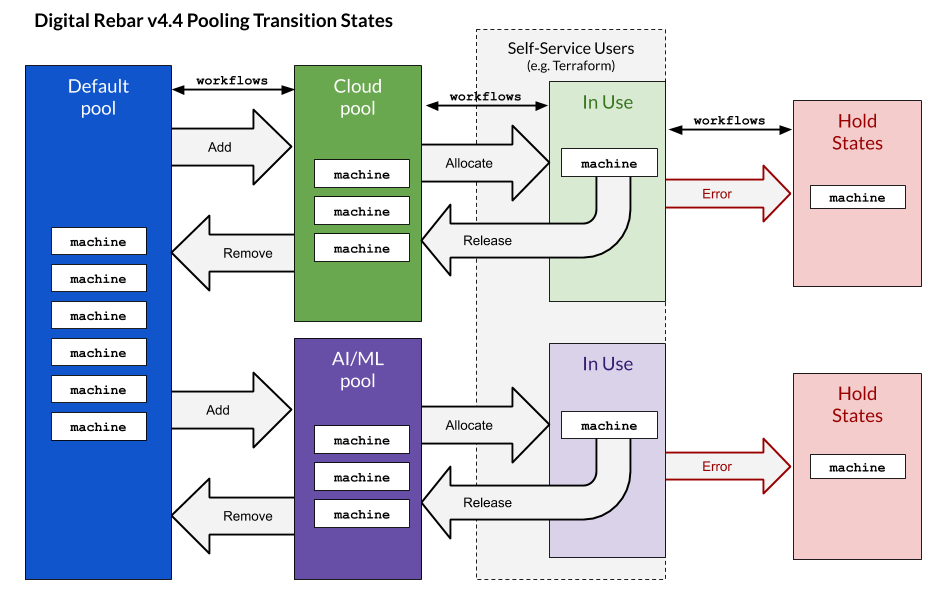
    Company CEO Rob Hirschfeld said version 4.4 of the platform adds an application programming interface (API) that enables bare-metal servers to be abstracted into resource groups. IT administrators can request a machine based on an attribute map to provision a collection of bare-metal servers as if they were a cloud platform, he said, noting RackN is also making available workflows to enable IT teams to automate the allocation and reallocation processes more easily.
    At the same time, the latest release of RackN Digital Rebar Platform adds support for Trusted Platform Module (TPM) Secure Boot, an industry standard that ensures only software that is trusted can be loaded onto a machine. Most automation platforms don’t support TPM Secure Boot, which forces IT teams to choose between the benefits of automation and having a secure platform. RackN Digital Rebar Platform is the only automation framework to support (TPM) Secure Boot in VMware environments, Hirschfeld claimed.

    Out-of-band management passwords, TLS certificates and VLANs will also be secure by default with this latest release, he said.

    Hirschfeld said IT teams want to be able to provision bare-metal servers as if they were code in much the same way they provision virtual machines. Just as importantly, they require an automation tool that enables them to just as easily de-provision those machines when it comes time to reallocate them to another workload.

    Achieving that goal, however, should not require IT organizations to hire a site reliability engineer (SRE), he said, noting the RackN Digital Rebar Platform is designed to be employed by the average IT administrator. An SRE could define workflows within the RackN Digital Rebar Platform that are reused by IT administrators; in fact, RackN plans to add support for Git repositories that will make it easier to share workflows, Hirschfeld added.

    While the reasons for deploying workloads in the cloud versus on-premises IT environments are varied, the automation advantage cloud platforms historically have enjoyed over on-premises IT environments is narrowing at a time when interest in deploying Kubernetes clusters on bare-metal servers is rising. It may be a while before most IT teams are able to manage bare-metal servers as if they were just another cloud resource. The main obstacle for achieving that goal now, however, is likely to be a lot more cultural than it is technical.

    In the meantime, IT teams should expect to see bare-metal servers employed more widely in the age of containers. There will, of course, always be a need for virtual machines, at least in the foreseeable future. The challenge is the IT infrastructure environment itself is becoming more diverse as new classes of cloud-native application workloads emerge.
  • IBM: DevOps Challenges Require Managed Services

    IBM: DevOps Challenges Require Managed Services

    The DevOps complexity associated with determining which classes of application workloads are best-suited to run on certain platform types will push an increasing number of IT organizations to embrace managed services. That’s the premise put forth by IBM, which provides such a service.

    Steve Robinson, general manager for IBM Cloud Platform Services, says it’s becoming less likely that internal IT operations teams will have the tools and expertise required to analyze and optimally deploy workloads. In fact, the number of platform choices have already exceeded the ability of most internal IT organizations to master. They include:

    • Traditional virtual machines: The most widely deployed form a virtual machine software comes from VMware. But there’s already a lot of interest starting to emerge in so-called “micro VMs” that promise to reduce the memory footprint of VMs. However, rather than replacing traditional VMs, it’s probable micro VMs would be deployed alongside traditional VMs.
    • Containers: Most containers today are deployed on top of virtual machines because of a lack of tools as well as security concerns. But as IT organizations become more adept at managing containers, many more of those containers will wind up running on bare-metal servers that will be able to attain much higher utilization rates by eliminating the need to deploy traditional virtual machines.
    • Serverless Computing: Based on event-driven architecture, these platforms can be invoked natively as functions or simply be used to host containers. In either case, the need to provision servers, storage and networking resources is eliminated because IT infrastructure resources are made available on demand in real time.
    • Graphical Processing Units (GPUs): As an alternative to Intel Xeon class processors, GPUs now are taking on many workloads involving machine-learning algorithms and big data because of their ability to process many of those workloads in parallel.
    • Field Programmable Gate Arrays (FPGAs): Based on custom integrated circuits, FPGAs are being more widely employed within a variety of cloud services.

    IT organizations today have the option to deploy any of these technologies on-premises or invoke them in the cloud. The issue most are contending with is a lack of advanced IT skills. In the absence of those skills, many IT organizations are in peril of falling behind their rivals. To overcome that issue, Robinson says it’s easier for many organizations to rely on third-party providers to manage their infrastructure while they concentrate their limited resources on application development.

    Any increased reliance on managed services to gain the benefits of a more sophisticated approach to DevOps will vary widely by organization. Crafting DevOps process that span third-party organizations takes time and effort. There’s no way to analyze a workload and then automatically deploy it on the optimal platform without any human intervention. But as IT organizations continue to struggle with mastering DevOps processes, many may conclude it makes the most sense to rely on the expertise of a third-party service provider to manage a hybrid approach to DevOps. Regardless, the pressure to show results by increasing the amount of high-quality code being generated across the enterprise is mounting.

    — Mike Vizard