Tag: as a service

  • Google Announces Availability of iPaaS Service

    Google Announces Availability of iPaaS Service

    Google today made available an integration platform-as-a-service (iPaaS) capable of invoking a range of methods to integrate applications.

    Initially developed for the Apigee application programming interface (API) management platform Google acquired in 2016, the Application Integration service can now, for example, also consume a publish and subscribe event or an event driven through a Salesforce platform.

    Amit Zavery, vice president and general manager for Google Platform, said the Application Integration service provides IT organizations with all the benefits of an iPaaS without requiring them to stand up and manage an integration platform themselves.

    The Google Application Integration service also provides access to a Visual Integration Designer tool that can be used to build workflows using a low-code tool. In total, there are now more than 75 connectors that can be used to integrate multiple Google Cloud services and third-party platforms that can run in either a cloud or on-premises IT environment, said Zavery.

    In general, visual tools are transforming how integrations are created and expanded within organizations, noted Zavery. Rather than using lower-level procedural code, a visual tool enables developers to employ low-code to create integrations. That makes it simpler to collaborate with business users that can now more easily participate in developing workflows.

    In fact, in some cases, business users, otherwise known as citizen developers, have enough technical acumen to create their own workflows using low-code tools.

    There are, naturally, going to be plenty of complex integration challenges that will require procedural code, but the bulk of the integrations required today are not especially complex.

    Regardless of who creates the integration, the number of them being employed across an enterprise organization continues to increase as more digital business transformation initiatives are launched. Developers are not going to be able to keep pace with the demand for those integrations if they rely solely on procedural code. The only way to effectively reduce the backlog for integrations is to rely more on visual tools to construct them. In most cases, the integration being created is relatively trivial. The only reason it wasn’t created sooner is there are not enough developers available to complete that task using procedural code.

    There are, of course, no shortage of iPaaS options available. As more workloads are deployed in the cloud, Google is betting the center of gravity for integration will shift toward the places where modern microservices-based workloads are deployed to reduce overall latency.

    It’s not clear whether organizations still view integration as an afterthought versus employing an integration platform around which all applications revolve. That latter approach tends to reduce the total cost of integration when compared to using multiple point products that are not managed via single framework, noted Zavery.

    Ultimately, IT teams that adopt an iPaaS are able to focus more on higher-value IT tasks. The issue is determining which integration projects really require professional developers with lots of integration expertise and which, via a low-code tool, can be handled by almost any developer.


  • Defining ‘Best’

    Defining ‘Best’

    (Note: For the last few years, I’ve been sparse with naming vendors in blogs. This one will have more than usual as examples.)

    We all have a ton of tools at our disposal. From installed tools to products to open source, we can solve any given problem in fifteen different ways. Several years ago, I wrote a blog about using what you have to get the most out of your purchases. There are several “platforms” that solve a lot more problems than just what you are currently using them for. At the time, my shining example was F5’s BIG-IP. That thing can do everything: Networking in your data center and probably cooking your breakfast, too. At the time, most people used the box to handle load balancing but then were concerned about the cost. Duh? I mean, you have a tool that can solve a fistful of problems … and you’re using it for load balancing. I mean, it’s very good at load balancing, don’t get me wrong. But I feel like quoting Marvin from The Hitchhiker’s Guide to the Galaxy. “Here I am with a brain the size of a planet and they ask me to pick up a piece of paper. Call that job satisfaction? I don’t.” (Interestingly, at the rate that generative AI is advancing, it is only a question of time before a machine throws that quote out there.)

    The thing is, investors and the hype machine told all of your vendors three things. First, that they needed a recurring revenue stream. Second, that you wanted everything as-a-service and third, that they needed to be a platform. That means that those fifteen SaaS products you’re on the hook for now want to solve all of your problems because “they’re a platform.” Some of them do a kick-arse job of it and you might very well have a SaaS license that covers whatever you need to do today.

    This is screamingly obvious for some vendors. If you’re an Akamai customer, for example, the breadth of things you can do through them is stunning. Most customers do not seem to take advantage of that to the extent they should. This is no different than that BIG-IP in your DC; it’s just as-a-service. You’re already paying for both. You should make the most of them.

    Other vendors might surprise you but  they have done the same through M&A or expanding their “platform” from marketware to reality. I have hinted at this in the not-too-distant past but will say it point-blank here. Know what your products are capable of. Tomorrow you might need some of that functionality, and knowing if it’s already in the organization (but not being used) is a big deal. Also, if the “platform” already fits into your organization, then choosing a ‘best’ solution leans toward that product line already–less integration is the best integration.

    And keep those lights on. You may have more tools than you need, but you’re managing them and keeping the organization online. You should be getting kudos for that, so I’ll offer them. Thank you. I replaced my phone this weekend and had to reconnect everything and to all of those orgs I had to log back into, reinstall or reconfigure, let me say: I am grateful for each IT person there. Even my bank, who honestly pisses me off—I’m still grateful for their IT.


  • Couchbase Revamps DBaaS Based on Document Database

    Couchbase Revamps DBaaS Based on Document Database

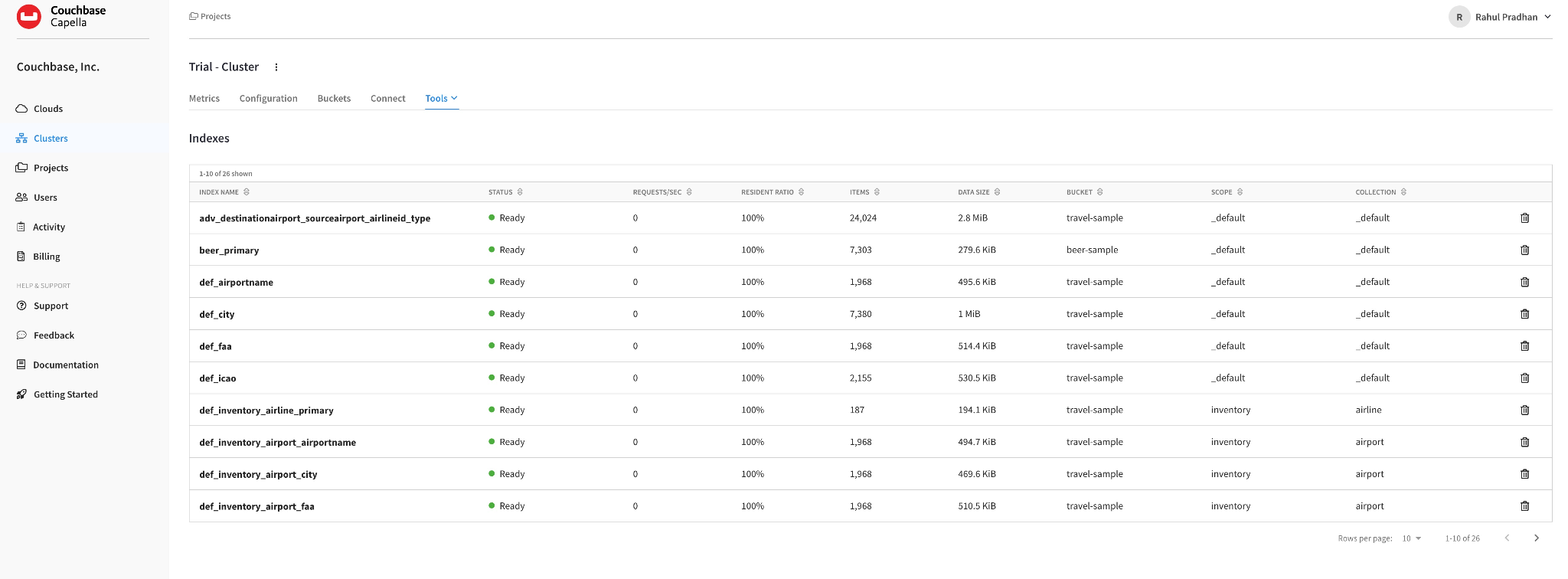
    Couchbase Inc. has unfurled a revamped database-as-a-service (DBaaS) platform dubbed Couchbase Capella hosted on the Amazon Web Services (AWS) cloud.

    Scott Anderson, senior vice president for product management for Couchbase, said that as application development continues to evolve, it’s becoming apparent more organizations prefer to have providers of databases manage those platforms on their behalf. That approach frees up database administrators (DBAs) to spend more of their time building and deploying applications, he noted.

    Couchbase Capella is based on Couchbase Server 7, which added multi-statement SQL transactions capabilities to the document database, based on a JavaScript Object Notation (JSON) format, to make it possible to also run in microseconds transaction processing applications that previously would have required a relational database to process SQL ACID transactions.

    That release of Couchbase Server 7 also added schema and table-like organizing structures, called “scopes and collections,” within the schemaless database to make it possible to add a table while transactions are running.

    As a document database Couchbase has gained traction mainly thanks to developers who have opted to employ a database they could download and deploy themselves to build applications instead of requiring a DBA to set up a relational database. However, as the number of instances of a document database proliferates, a need to manage them across fleets of servers and cloud services has emerged.

    The challenge then becomes determining whether to hire a dedicated administer or employ a DBaaS managed by a vendor. Many organizations are opting for the DBaaS approach because it eliminates the need to hire a full-time administrator. Once an organization opts for the DBaaS approach, however, it next needs to integrate that service within its DevOps workflow to build those applications.

    There is, of course, no shortage of options when it comes to DBaaS platforms. The global cloud database and DBaaS market size is expected to reach $26 billion by 2025, according to a report from Adroit Market Research. Overall, the as-a-service market reached a record $13.4 billion in the third quarter, up 55% from prior year, according to a report published by Information Services Group (ISG).

    It’s not clear to what degree organizations will ultimately wind up relying on as-a-service platforms, but since the start of the COVID-19 pandemic, the shift to this approach to consuming IT resources has increased significantly. As a result, the way internal IT teams are organized is shifting as lower-level tasks are either automated or handled by an external IT team that works for a vendor.

    Regardless of approach, the amount of data being created and analyzed within organizations is only going to grow. Organizations will need to determine to what degree it makes sense for them to manage that data versus relying on an external services provider. The challenge, of course, when relying on an external service provider isn’t just technical; it introduces a new cultural dynamic that takes some time for many IT teams to appreciate fully.

  • HPE Adds Control Plane to Greenlake Managed Service

    HPE Adds Control Plane to Greenlake Managed Service

    Hewlett-Packard Enterprise (HPE) announced today it has added a cloud platform to its managed Greenlake service, through which DevOps teams will be able to manage deployments of applications alongside HPE.

    Scott Yow, vice president and general manager for GreenLake Hybrid Cloud Software at HPE, said HPE Greenlake Central provides a control plane that makes it possible for DevOps teams to write, release and deploy code quickly, without having to manage the IT infrastructure directly in an on-premises IT environment.

    Instead, DevOps teams will have access to an array of tools and services from HPE and partners through a marketplace to create a workbench through which they can design and create applications using best DevOps practices, said Yow. For example, HPE will make it possible for DevOps teams to leverage Terraform tools from HashiCorp to enable DevOps teams to manage infrastructure as code.

    Announced at the HPE Discover More Munich event, GreenLake Central is in trial with general availability scheduled for the end of the first quarter of 2020. The goal is to make it possible for DevOps teams to access distributed IT infrastructure in an on-premises IT environment that is managed in much the same way cloud platforms are accessed, said Yow. HPE will provide the expertise required to consistently manage underlying IT infrastructure, while DevOps teams employ Greenlake Central to manage the application environment.

    The Greenlake service also surfaces a dashboard through which IT teams can leverage more than 1,000 controls to meet almost any compliance mandates. Reports generated via that console substantially reduce the time and effort required to audit the IT environment as well.

    HPE is essentially making available a “co-pilot” approach to managing IT infrastructure that enables DevOps teams to focus more of their efforts on managing applications. HPE also published the results of a survey of 1,000 IT decision-makers that finds 86% of respondents agree that “as-a-service” approaches to managing IT are now inevitable and 75% expect their organization to move toward full adoption of such models in less than five years.

    Today the Greenlake service is designed around a series of virtual machine options spanning offerings from HPE, Nutanix and VMware. However, HPE plans to add support next year for a recently launched HPE Container Platform that can be deployed on top of virtual machines or bare-metal servers. IT organizations also should expect HPE to extend the Greenlake control plane to public clouds to advance hybrid cloud computing to ensure IT organizations maintain ownership of the control plane to manage those environments, Yow said.

    Greenlake is at the forefront of an HPE initiative to transition all its offerings into a set of managed services. That “as-a-service” approach has already gained traction with more than 740 customers worldwide, including 160 new customer wins this year. By 2022, HPE has promised to make its entire portfolio available as a service.

    HPE is not the only provider of IT infrastructure leveraging managed services to provide DevOps teams with access to a more flexible IT environment. Historically, these types of managed services were provided by third-party IT services providers. In the age of the cloud, HPE is betting more organizations will prefer to have their IT infrastructure managed by the vendor that built it in the first place. Of course, as part of that transition, HPE is making a case for standardizing on its infrastructure.

    It’s too early to say how the marriage of DevOps and managed services will play out in on-premises IT environments. The one thing that is clear, however, is that DevOps teams increasingly need to manage the IT infrastructure on which their applications are deployed only if they really feel the need to do so.

    — Mike Vizard

  • Balance: The Key to Successful DevOps

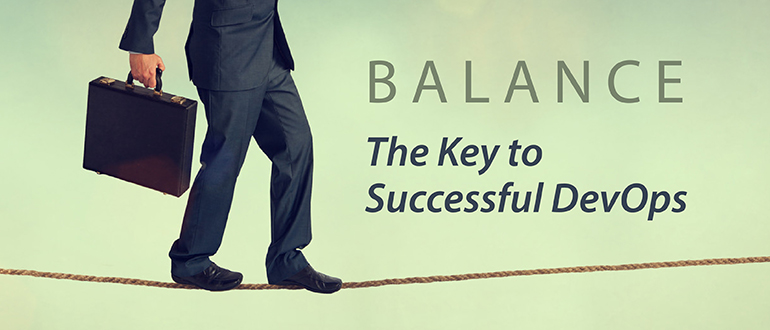
    Balance: The Key to Successful DevOps

    In the realm of IT buzzwords, DevOps is in a league of its own. The pervasiveness of the word is matched only by the variety of its definitions. Over time, much like the parable of The Blind Men and the Elephant, it has slowly taken shape out of the void, albeit in a backwards fashion. Associated terms such continuous delivery, integrated quality assurance and deployment automation have helped backlight the beast’s silhouette, but there is much more to discover.

    Generally, DevOps is defined by how it is used rather than what it is. This is helpful for those already familiar with the amorphous nature of the movement, but can be a confusing introduction for the uninitiated. To achieve a better understanding, it is important to grasp the underlying need driving the shift to a DevOps model.

    Currently, the world of IT is barreling toward a future dominated by increasingly specialized and inherently complex automated solutions. Software is taking a front row seat in ways never before possible. (Insert here)-as-a-service offerings and the demand for instantaneous and consistent deployment turnaround is at an all-time high. The days/weeks required to shuffle a solution between development and engineering is a luxury that most companies can no longer afford and is less tolerated by customers. This level of expectation is something that the traditional IT org chart was not designed to cope with. Tech companies everywhere have felt the strain of this increasing momentum, with many at a loss of how to handle it. Demanding that teams work harder, faster, longer will only get so far. And inevitably, increased intensity results in a rise in mistakes and an inferior product.

    Balance: Dev’s Yin to Ops’ Yang

    Clearly, change was and is needed. The path from development to operations needs to be streamlined at a fundamental level. However, dissolving the barriers between two longstanding departments is not without its perils. As any IT veteran will tell you, development and operations each have their own cultures, quirks and personalities. But the differences in each help create the perfect balance.

    In its purest form, development is the trailblazer, forging into uncharted territory and unearthing hidden gems. Ever the innovator, Dev values progress and change above all. This constant forward momentum is Dev’s greatest asset as well as its Achilles’ heel. The habitual urge to tinker, tweak and create can lead to frivolous or wasted effort. The results of this misguided effort can be seen in retrograde patch releases, hotfixes and other “band-aid” measures needed to undo the damage.

    On the other end of the spectrum, the operations mantra can be summarized with the idiom, “If it ain’t broke, don’t fix it.” Pragmatic to the core, stability and consistency are the guiding forces behind Ops. Change requests are usually met with a Treebeard-esque, “Don’t be hasty.” Taken to the extreme, this mindset can quickly lead to an environment running outdated, unpatched software and end-of-life hardware.

    On the surface, the differences between these two groups appear to be on the verge of irreconcilability. However, in this diversity the beauty of DevOps emerges as the strengths of each team balances out the weaknesses of their counterpart. Development is free to innovate and create knowing that their efforts will be guided by feedback from operations. Like stabilizers on a rocket, operations is able to focus on maintaining a reliable infrastructure with development providing the forward momentum. Working in unison, this duo forms a unit far greater than the sum of its parts. And with it, a company is left with an agile and stable launch pad from which to tackle the latest wave of IT challenges.

    Admittedly, the combining of development and operations into a single cohesive unit is just a piece of the entire DevOps puzzle. However, it is an important piece that is frequently overlooked. Understanding the forces and motivations at work within your teams is a pivotal step on the road to a successful DevOps transition.

    About the Author / Jared Perry

    Jared PerryJared Perry is a cloud engineer at iland, where he is responsible for maintaining the virtual infrastructure and a number of disaster recovery solutions. He holds a Bachelor of Applied Science in technology management and a Bachelor of Science in IT administration and management from Texas A&M University.

  • Why Your SaaS Ecosystem Isn’t Delivering

    Why Your SaaS Ecosystem Isn’t Delivering

    Cloud computing and -as-a-service deliverables such as SaaS have the potential to be transformational, but their value depends on whether you see them as tactical, single-purpose tools or as part of a larger and more strategically integrated ecosystem.

    The cloud today is embraced almost universally at some level and seen as an essential component of nearly any enterprise, making it easier to enter new markets, transcend physical barriers and gain access to vital services. The most common, basic approach to SaaS may best be described as a JBOS approach, or “Just a Bunch of SaaS.” In this model, SaaS is used throughout the enterprise, but only as single-purpose tools, deployed to meet the needs of a particular siloed requirement. SaaS in that respect is a quick fix, a Band-Aid, lipstick on a pig—and it has not reached its full potential.

    There is a point however, where SaaS and DevOps intersect—that point where an integration framework is superimposed over a SaaS catalog, and enterprise users now gain the advantage of each SaaS being part of a greater whole. At this point where SaaS apps and data become integrated strategically, we begin to see collaboration between IT professionals, developers and line-of-business managers; we see a higher level of automation; a more agile solution that takes full advantage of the cloud model; and finally, an overall cultural shift—all components of the DevOps movement.

    SaaS’ Potential

    The potential of SaaS is well-known and includes lower costs, agile sourcing and deployment, lower CapEx and more functionality to a wider group of users. But, the greater potential has been lost on many corporate users. IT is moving to the cloud, but is it doing so for the right reasons? By focusing on the “quick fix” aspect of SaaS, companies are missing out on the bigger picture. A more successful SaaS strategy defines the future of the business, using SaaS to stay agile and to align with business needs not just the individual SaaS instances but the entire SaaS ecosystem.

    The greater potential of SaaS is achieved when it is deployed strategically, with an integration framework—and then the benefits go far beyond lower costs and CapEx. At that point, SaaS becomes transformational.

    Unexpected Results

    With all the potential, the rapid uptake of SaaS throughout the enterprise has had a few unexpected results. In addition to a marked increase in siloed information and isolated functionality that results from a lack of integration, the “dark data” phenomenon looms on the horizon, especially as the Internet of Things creates millions of new data points that never before existed. IBM Research’s John Kelly, known as the “Father of Watson,” noted recently at the San Francisco Cognitive Colloquium that 80 percent of data remains dark, and by 2020, the number will reach 93 percent.

    With the vast majority of this unused data being generated from SaaS apps and IoT deployments, the unexpected result is an enormously untapped potential. Regardless of what the app’s intended purpose may be, who it was meant to benefit and which department deployed it, useful data is being orphaned at the source. In many cases, that data may have practical uses beyond the original intent, but those uses are never seen because it never escapes its own little corner of the enterprise.

    In addition, incumbent integration platforms do not lend themselves to the cloud and lack the SaaS adapters necessary for ad hoc integration and line-of-business usage, and the solutions that do exist still lack tools for governance, API management and IoT integration support.

    The Role of IT is Shifting

    The IT department’s role is shifting dramatically. The need for agility and flexibility, along with a growing dependence on the cloud and as-a-service software, means IT no can longer continue its centralized role, lest the benefits of the cloud be thwarted. In a recent survey conducted by NetEnrich, respondents’ greatest concerns included IT is losing its relevance (18 percent) and  business applications are crashing more because IT is not involved (22 percent).

    While businesses recognize the shift, still, 39 percent are facing difficulty integrating traditional IT, cloud and DevOps, and there is no DevOps team in more than half of the IT departments surveyed.

    The Solution

    With more than half of companies lacking a DevOps team to accommodate the integration of traditional IT and the cloud, the most pressing need is to continue re-evaluating IT’s role from one of build-and-deliver to one of facilitator. Use of an as-a-service integration framework that can be guided by and facilitated by IT but used by ad hoc integrators or developers—whose specialization is not integration but have a need to connect applications and systems quickly from time to time—is the obvious next step to resolving the issues of a SaaS ecosystem that isn’t living up to its potential.

    Such a framework can be deployed effectively using a bimodal, do-it-yourself integration approach. Those integration platforms that have begun to emerge may still be inadequate to accommodate the pervasive requirements of this major shift, since they still require IT specialists to manage the integration. The use of integration platform as a service (iPaaS) overcomes this limitation by providing a framework that empowers non-specialist IT users. Specifically, IT’s role as facilitator of this self-service platform comes into play by creating and maintaining the integration platform and a library of connectors, which then can be used not only by the integration specialists, but also by ad hoc integrators and “citizen integrators” or power users within the lines of business. As a result, the inefficient priesthood of IT is then replaced with a new balance of power between IT specialists, IT non-specialists and line-of-business users, encouraging more flexibility of integration in response to different priorities.

    The iPaaS approach brings a new level of efficiency to the many new projects that are generating storms of data, such as IoT, and it supports a move away from the older IT approach that lacks the speed and agility required in today’s environment. To make the best use of SaaS, it’s time to rethink our approach and, through universal integration platforms, bring it out into the open.

    About the Author/Renat Zubairov

    Renat photoRenat Zubairov is CEO and co-founder of elastic.io, a leading innovator in as-a-service integration.