Tag: artificial intelligence

  • A Deep Dive Into AI for IT Operations

    A Deep Dive Into AI for IT Operations

    Traditional IT administration and management techniques are reforming. By employing artificial intelligence (AI), IT operations are taking an interesting turn in the field of advancements. The term “AIOps” stands for Artificial Intelligence for the IT Operations. AIOps uses AI techniques and algorithms to monitor the data as well as reduce the blackout times. The dominance of digital businesses is introducing technological changes in their operations to streamline them and eliminate the overhead of traditional operational management. 

    Digital companies are generating abundant and information-rich data whose analysis and monitoring do not demand delays. From data collection to storage and data processing to analysis, all operations need to be frictionless to deal with them in an efficient manner. In the last couple of years, the AIOps market has exploded which is ultimately achieving the goal of reducing delays in problem-solving and identification.

    Paving the Road to AIOps

    The story starts with the need of AIOps and digital transformations. Cloud adoption and the shift toward other digital technologies are revamping the IT industry. It also includes the adoption of innovative solutions in the IT operations to make them frictionless. The technologies that are widely used in IT operations vary from AI to machine learning, big data to Internet of Things (IoT) and Application Programming Interfaces (APIs) for various use-cases to edge computing. All these innovations are penetrating into IT operations making them more smooth and sleek.

     AIOps platforms enhance and automate IT operations, using the following different approaches:

    • Using machine learning algorithms and neural networks for better analysis of gathered data. The data is gathered using IoT devices and tools connected with the source and sending data to the cloud for storage. 
    • The system automatically interprets if something is wrong in the operations. The errors are detected and solved immediately without introducing delays in the operations that are dependent on each other to complete.
    • Reducing human power by automating the processes that include the effort of individuals. 

    Components of AIOps

    The two basic components of AIOps that accelerate innovation in IT operations are machine learning and big data. Instead of spending human effort and time into cleaning, processing and analysis of the raw data collected from different platforms, IT operations are able to do all the tasks by employing machine learning algorithms and techniques to judge the nature of data and deduce necessary information from it.

    Factors Boosting the Emergence of AIOps

    AI is a promising technology that holds the confidence of building applications that can help the IT community. AI provides options for reliability, scalability and generic tools that can be deployed to promote the IT operations and boost them without utilizing human power.

    Factors boosting digital transformation in the IT industry:

    • Complex IT Infrastructure: Its operations face many challenges regarding data management and infrastructure. Manual IT operations are becoming harder to handle such as data collection, processing, cloud management, database efficiency, third-party management tools and SaaS integrations. Complexity management is a task that needs proper attention and the environment to deal in a better way. 
    • Handling Abundant Data: IoT technology is penetrating rapidly at an industrial level. IoT devices produce an abundant amount of data. Handling this much data is not the job of individuals. Therefore, by using AI-based algorithms the data is interpreted and analyzed. The performance is monitored using efficient algorithms. 
    • Increased Computing Power: The networking infrastructure has become robust. Therefore the IT industry is in dire need to enhance the processing speed also. By deploying IT solutions that harness AI and machine learning technologies, the computational power of the system can be increased. 

    Enterprises Using AIOps

    The IT companies that are complex and large to which human power is not enough for overall operations are using AIOps to automate the tasks.

    The adoption of technology has a huge impact on the success of IT companies:

    • Development Teams: Companies that have a DevOps model and struggle to manage the roles between the organization are using AI and other innovative technologies to smoothen their processes. With this, developers increase the responsiveness, agility and clarity in the IT operations.
    • Cloud Computing: Cloud computing has a big future. The companies store their huge data in the cloud and all the operations related to cloud data management need to streamline, as it has its own challenges. Therefore, to make the processes flow without errors and monitor the access, there needs to be automation.
    • Digital Transformation: Companies around the world are all active in adopting technology solutions. Whether it is a fintech, travel, healthcare or e-commerce company, all businesses are automating their processing by first digitizing them and providing the user’s facility of utilizing applications based on newly emerged technologies. Information handling can be done by making operations handled by robotics and blockchain technology. AIOps removes friction from the IT operations.

    — James Efron

  • OpsRamp Adds Recommendation Engine to AIOps Platform

    OpsRamp Adds Recommendation Engine to AIOps Platform

    OpsRamp added a recommendation engine to its artificial intelligence for IT operations (AIOps) platform that makes use of predictive analytics to suggest potential actions to either improve performance or avert downtime.

    The OpsRamp Winter 2020 Release also adds 19 cloud monitoring integrations for Amazon Web Services (AWS), Microsoft Azure and Google Cloud Platform (GCP), along with dynamic topology maps for Azure and GCP. OpsRamp currently provides integrations with more than 120 different cloud services.

    Finally, OpsRamp has added an ability to detect seasonality patterns that would otherwise generate alerts, an Alert Stats widget that makes it easier to keep track of raw alerts, synthetic monitoring and agentless discovery and monitoring of Windows Server instances.

    Bhanu Singh, senior vice president of engineering and DevOps at OpsRamp, said as IT continues to become more complex resistance to AI within the ranks of IT staffs is declining. Organizations realize that IT specialists are an expensive resource, so they need to maximize the capabilities of IT generalists as much as possible, he said. OpsQ Recommend Mode adds a predictive analytics module to the company software-as-a-service (SaaS) platform for managing IT that provides explainable and transparent analytical recommendations to help the average IT administrator head off issues that would require a specialist to solve later, said Singh.

    That visibility is critical because it still leaves the decision about what to automate in the hands of the IT administrator. However, as OpsRamp continues to learn the nuances of the IT environment, the more confidence IT administrators will have in the recommendations being surfaced, he said.

    It takes about 24 to 48 hours for the OpsRamp platform to learn enough about an IT environment to start surfacing recommendations, Singh noted, adding because OpsRamp is a SaaS platform, setting up the platform requires minimal effort.

    To some degree an increased reliance on AI among IT professionals is inevitable. AI may never eliminate the need for IT personnel, but many of the mind-numbing rote tasks that IT administrators perform today soon will be automated. The challenge that creates, however, is the IT staff needs to be able to manage IT at a higher level, which means many entry-level jobs in the IT sector may no longer be required. The challenge then becomes finding IT professionals who have the right level of skills, when many of the entry-level jobs for which they have been trained no longer exist.

    In the meantime, a race is clearly on to infuse IT management platforms with machine learning algorithms. Startups such as OpsRamp are looking to supplant legacy IT platforms that were designed for a previous era of IT. However, the providers of those platforms are clearly investing heavily in AI as part of their ongoing modernization efforts. Each IT organization will need to decide for themselves to what degree the rise of AI warrants switching management platforms.

    Regardless of the platform selected, however, the one thing IT teams can count on is that AI platforms are only going to get smarter as they continue to evolve.

    — Mike Vizard

  • Three Keys to Successful AI Adoption

    Three Keys to Successful AI Adoption

    Over the past several years, we have begun to see the emergence of artificial intelligence (AI) in businesses. According to a study for the AI Index 2019 Annual Report, more than half of respondents report their companies are using AI in at least one function or business unit. Thirty percent report they have AI embedded across multiple areas of their business. As businesses continue to develop their understanding of what is possible with AI, we can expect to see a continued increase in AI adoption.

    People used to say “software is eating the world.” Moving forward, people will be saying “AI is eating the software world.” You can expect to see standard enterprise and cloud software programs become indistinguishable from AI. Currently, the success rates of AI projects fall well short of what we see in enterprise software success rates. A 2019 study by Pactera found that 85% of AI projects fail to deliver on their intended promises. As software and AI bind together, expect to see a dramatic increase in the success rate of these AI projects. AI adoption will begin to align more with traditional success rates associated with enterprise software as a category.

    As software and AI begin to merge together and enterprises look to invest in AI, there are a few keys to success. 

    Increase Your Organizational IQ with AI 

    Human factors are public enemy number one as it relates to AI adoption. For companies wanting to invest in AI, it starts with education. Companies need to become better educated on the options available to them through AI. We need to move away from viewing AI as a black box where magic happens. Through better education, the average business consumer will be able to understand the various disciplines of AI, such as natural language processing, vision, unsupervised learning and machine learning. As companies increase their IQ relative to AI, businesses will begin to understand the difficulty of AI projects. While this will create short term challenges, it ultimately will help the success of AI adoption in the future. 

    Commit to a Journey with Frequent Recalibration

    Enterprises must move beyond merely being educated about AI in order to remain competitive. Business leaders will have to step past the exploratory and proof of concept phases and begin delivering real value to the business. This will mean the continuous delivery of intelligent solutions across several areas of the business. AI is not like traditional software projects where you measure twice and cut once, deploy and then observe for several months. It is a continuous journey of discovery that will require consistent adjustments. AI is different and requires you to make changes to existing predictive models based on your real-time findings. 

    If the Insight Is Not Actionable, It Doesn’t Matter 

    We have already seen AI become more and more embedded into analytics solutions and this is only going to continue. The convergence of AI and analytics is crucial to the success of AI projects. Over the past 20 years, analytical reporting has been provided to all users. With the addition of AI, machine learning models become analysis engines providing prescriptive actions to business users rather than the business uses having to interpret the analytics themselves. Again, this is a huge component in the success of AI adoption. It will not be enough for businesses to gain insights from their AI investment, success will be measured on what they do with those insights. Leveraging the insights from AI starts by providing actions directly to the users that can act on them within their existing workflow.

    The power of AI is still largely untapped. It is already creating a massive shift in how we work and that is only the beginning. For those who have worked in IT and software, you need to adopt a whole new approach to AI projects. In the AI world, data is the driving force rather than a necessary evil. The emerging technology will require professionals to expand their skill sets beyond the traditional technical skills and into the disciplines of math and statistics. By doing so, we can expect to see a massive increase in successful AI adoption.

    — Chris Heineken

  • How Integration Can Keep Up with Digital Demands

    How Integration Can Keep Up with Digital Demands

    Integration holds the key to accelerating innovation, but in many organizations, business systems and application integrations haven’t kept up with the demands of digital. Data still exists in a siloed blend of on-premises systems and unconnected cloud applications, and IoT has added another layer of complexity into the mix.

    Understanding the three trends below, and how to leverage them, will help organizations continue to drive innovation for years to come.

    The Rise of the Integration of Things

    It’s no secret that the adoption of IoT is increasing, generating massive amounts of data from devices and sensors. As the number of devices increases in response to the explosive growth of IoT, the amount of data increases exponentially. This explosion of devices–and its associated data–is driving the need to leverage that data for the benefit of the business, such as improved customer experience, cost and downtime reductions or efficiency and productivity gains.

    Integration is the key piece that will enable businesses to get control of this data and put it to work. Without the right integration tools, it’s only possible to leverage IoT at specific levels. Essentially, integration provides the ability to connect the data from IoT devices and enterprise applications, orchestrate workflow and enrich IoT data with contextual information from other systems for better decision-making.

    Organizations can even use integration to link IoT platforms together for a comprehensive view of data, analytics and actions–making it easier and quicker to analyze, draw conclusions from and determine how to use the data. On top of this, they can also create complex and sophisticated responses when something goes wrong by leveraging automated integration workflows.

    As we continue to connect our devices, the Integration of Things will be as important as the Internet of Things.

    Blurred Lines Between Application Development and Integration

    For cloud applications to survive and thrive, they require built-in integration with other apps and data sources. Otherwise, users are constantly switching contexts from one tool to another when trying to complete a task, and content is scattered across the organization in multiple applications and departments. Because of this, the lines between application development and integration will blur as apps are compelled to have integration embedded under the covers.

    There will be many benefits to this. First, organizations will easily create and deploy integrations directly within their products, fully baked into the user experience. These in-app integrations to third-party sources will unlock additional capabilities for users, empowering them to do more.

    Second, building integrations without the right tools and specialized integration know-how requires a lot of work. Embedded integration eases the pain of monitoring API changes and documentations so that maintenance is smoother and cheaper.

    Finally, business services can involve complex interactions with cloud apps and data that require ordering, have dependencies or may even need to be reversible on demand. Organizations can handle these sophisticated jobs by leveraging advanced integration orchestration to manage app interaction–meaning that instead of using manual code for complex data mapping, they can create a visual drag-and-drop data flow. 

    AI Powers Smarter APIs

    Businesses have already been leveraging intelligent automation to improve operations, drive innovation and personalize the customer experience. As we head into the new decade, API management will harness the power of AI with innovative ways of protecting and controlling APIs and the applications they serve.

    Service mesh, an increasingly popular way of discovering and observing services in distributed networks, will evolve into app mesh, an application-aware model of monitoring, managing and securing your APIs. API policies will be able to reconfigure dynamically based on traffic, security threats and identified patterns. Additional layers of defense will come from bots deployed in an organization’s network to constantly monitor behavior and these bots will use machine learning to improve automated threat responses for APIs.

    The integration landscape is changing, but understanding how to harness these trends will ensure organizations are well-equipped to take advantage of evolving technologies for innovation.

    — Ann Marie Bond

  • Dynatrace Extends AI Reach of APM Platform

    Dynatrace Extends AI Reach of APM Platform

    Dynatrace, at its Perform 2020 conference today, extended the reach of the Davis artificial intelligence (AI) engine it makes available via its application performance management (APM) platform to include deeper ties with mobile applications along with an ability to track key performance indicators (KPIs) such as revenue trends and customer churn.

    In addition, Dynatrace has enabled one-click integration with web analytics tools such as Adobe Analytics.

    Those capabilities are in addition to deeper integration between the Davis AI engine and Kubernetes that was announced earlier this week at the conference.

    Mike Maciag, chief marketing officer for Dynatrace, said usage of APM platforms is expanding beyond IT teams to include business users at a time when organizations are building and deploying more digital business applications. Most of those emerging applications revolve around mobile computing devices so Dynatrace is also extending the reach of the Davis AI engine to provide digital experience management capabilities, including advanced analytics and segmentation of mobile app user sessions, auto-instrumentation for additional mobile platforms such as React Native and tvOS and insights into third-party mobile applications components, he said.

    Specifically, Dynatrace multi-dimensional analytics now include crash reporting workflow and granular segmentation capabilities spanning health, performance and usage metrics across all app components and user actions. That capability will eliminate an APM blind spot most organizations have today, said Maciag.

    With more than 200 billion mobile applications having been deployed at a cost of $120 billion in 2019, Maciag said it’s apparent the scope of the challenge requires additional help from an AI engine.

    Coupled with an ability to now track how application performance is impacting KPIs, Maciag said there is now an opportunity to unlock a gold mine of business data that is locked up in observability platforms using modules such as the Dynatrace Digital Business Analytics.

    To further enable that capability, the Davis AI engine within that module provides automatic, real-time alerts on anomalies that might impact the business now using a wider array of data sources.

    It’s not clear to what degree business users might rely on APM platforms to surface events that could impact business outcomes. Most business users rely on either business intelligence (BI) applications or traditional spreadsheets to manage the business. However, as more processes become digitized using software APM platforms can surface events long before they are ever reflected in a BI application or spreadsheet. In fact, chances are good that business leaders are more likely to be able to affect the ultimate outcome sooner should they choose to analyze events in real-time via an APM platform.

    In the meantime, as application environments become more complex, reliance on APM platforms continues to grow. Once used mainly to keep track of only the most mission-critical monolithic applications in the enterprise, organizations are now tasking DevOps teams to manage entire business processes end to end basis. The challenge, of course, is most of those business processes consist of a wide variety of front and back-office applications that more often than not were built using entirely different frameworks.

    — Mike Vizard

  • Five Technology Trends to Shape Future Investments

    Five Technology Trends to Shape Future Investments

    Humans invented technology to introduce innovative products in the market. Technology’s relentless cycle of innovation has now touched humanity, redefining what it means to be a human, a meaningful change that is impacting business priorities and is expected to do so in the future.    

    The most important tech investment for C-level executives relates to digital transformation, artificial intelligence (AI), Internet of Things (IoT) and cybersecurity. With 71% of the world expected to use mobile phones by 2024 and the successes of mobile banking in developing countries, experts predict that mobile and blockchain technologies will also join to bring about more financial inclusions.

    Here are five things that C-suite business people should invest in.

    Digital Transformation: Everything Online

    As one of the weapons in the arsenal of business innovation, digital transformation has become such a buzz word that it turns people on. According to a report by Forrester, 90% of the executives believe digital transformation is a necessity for their business, and around 60% believe they lag behind in digital transformation. By the end of 2020, a company would either have transformed or will be on its way to adapt to digital transformation.

    IoT: A Thousand Points of Entry?

    Business implementation of IoT and blockchain are very popular these days. However, if we look to enterprises it’s a different story. Costs, security and current political climate are the major hurdles for the enterprise-level implementation of IoT. To get the most out of this innovative technology, businesses need to determine what stands in their way and then work on strategies to sort things out. So until the issues are dealt with, IoT will be seen as a promising technology that’s not ready for prime time.

    AI: A Real Game-Changer

    Every so often a technology comes along that has the potential to completely change everything around it. The last such thing was cloud computing. Like cloud computing, AI has been around for a long time. AI, machine learning and deep learning are catching up with the initial promises and it will become more evident in the coming years.

    Most common usage of AI and machine learning will be seen in business intelligence, automating the repeated tasks, and making future prediction using the previous data. Previously, AI has been used for decision making using data analytics and this is expected to increase in the coming years with more businesses investing in the AI-driven decision-making system. Another use of AI that will be more common is digital identity verification for online businesses.

    Ultimately, AI/machine learning and deep learning will be seen more frequently in the years ahead. However, the promises it brings are far fetched and it’s worth waiting to see the true potential of AI.

    Quantum Computing: The Next Big Thing

    Currently, in R&D, quantum computing will open new ways by solving problems that require a lot of computation. Google’s investment in quantum R&D is expected to grow and more researchers will shift their focus from AI to quantum. With the emergence of 5G, the quantum research industry will see a boom.

    DevOps: For a Customer-Centric Approach

    According to the Forrester report, firms will embrace a customer-centric approach as the DevOps speeds flatter. DevOps continues to impress the heart and minds. However, with a slow-release speed, engineers are experiencing a stress point. DevOps teams must see this as an opportunity to approach DevOps differently. Within the next six to 12 months, DevOps adoption will change and the team will implement new strategies. Testing will revolve around previous radical methods and new technology will help developers to learn new skills.

    — James Efron

  • Are US Workers Threatened by Automation?

    Are US Workers Threatened by Automation?

    There’s been plenty of predictions about the impact of automation on the workforce: from enhancing the ability of workers to do their jobs to those who argue intelligent automation will eventually decimate the human workforce. The issue even made it to the Democratic presidential 2020 primary race with candidate Andrew Yang’s “Freedom Dividend.”

    Still, if a recently published survey from business process automation provider Sykes is any indication, American workers aren’t very concerned. In fact, two-thirds of those Americans surveyed indicated they have yet to see automation on the job: 66% said that automation did not assist them with repetitive tasks in 2019. That response diverged with millennials (those 25 to 34 in this survey), with 41% saying that automaton has assisted them in their jobs last year.

    Most Americans show a positive attitude toward on-the-job automation. According to the survey, 63% of respondents said that they could be better at their jobs if automating certain tasks enabled them to do more in less time. Not surprisingly, the percentage was highest, 71%, with the youngest (18 to 24) age group. Further, two-thirds of respondents said they would more likely apply at a company that is investing in automation technologies.

    Indeed, the majority (58%) of respondent employers are actually providing some or a lot of training or other resources to help employees keep current with technological change.

    The vast majority, 84%, of respondents believe their jobs will soon involve new automation technologies and expect some of their work to be completed by automation in 2020. While most respondents were open to increasingly working with automation to complete their jobs, few want to work for bots. The majority, a sizable 87%, said they are more willing to take orders from a human than a software bot (13%).

    What industries do respondents think will be the most impacted by automation? In order, the U.S. workers surveyed believe manufacturing (65%), telecommunications (50%), and transportation (38%).

    When it comes to public programs designed to mitigate the impact of automation on the workforce. However, 57% of workers believe that the U.S. government has a responsibility to compensate workers whose jobs are lost to automation. Of those, only 32% believe Universal Basic Income is the way to address jobs lost to automation, while 25% look to the existing welfare system. About 43% of workers do not think it’s the government’s role to compensate those whose lost their job because of automation.

    The Sykes survey is based on the responses of 1,500 employed within the United States.

    — George V. Hulme

  • Five IT Ops-tackles that Stifle Business Growth

    Five IT Ops-tackles that Stifle Business Growth

    I was recently asked about the top five IT obstacles that stifle business growth, and I want to help clear a path too often lined with fear, uncertainty and doubt. In the not-so-distant past, IT was all about the tools. Solutions were more straightforward, teams were less globally connected, and the ever-present data deluge was not changing our business landscape by the millisecond.

    With this in mind, I have created a list of the five most common IT obstacles and will pinpoint the single tool you can implement to help alleviate these pain points.

    IT Staff Lack Time to Learn New Technologies

    This is not to slam our tech teams or leaders; this is just the byproduct of condensed customer schedules, tight purse strings and managing the MOOSE (maintenance and operations of the organization, systems and equipment). The demand on IT teams is high, and we don’t always have the opportunity or the resources to restructure operations for a new tool, as upgrading requires learning new APIs, UI/UX and deployment architectures.

    Difficulty Supporting New Technologies Quickly

    It is hard to keep pace with IT complexity and manage it properly. New services, applications and infrastructures are constantly being added and there are plenty of vendors out there that will get you locked into solving a single issue versus addressing your macro problems. While the benefits of upgrading are there, the difficulty lies in understanding the complexity of these systems and how to leverage them most effectively.

    Lack of Support for Hybrid IT

    Hybrid by definition adds complexity, and multi-cloud, on-prem and private/public clouds are only a few ways to make your hybrid dream a nightmare. No matter the combination, understanding different architectures and their components is a must. Additionally, we need to understand how we manage our own data as well as how our vendors are managing it.

    IT Complexity

    We need to know our machines and architectures well enough to focus limited resources on what impacts the business most. IT will always be complex—there’s always something new, and the amount of information to process is insurmountable and exhausting. Adding context to IT data can help you identify the root cause of overly complex systems. The most difficult task will be to understand the technology well enough to know what to do next. 

    Inability to Understand Business Impact in Order to Prioritize Tasks

    Prioritization is by far the most important aspect of IT. There is a lot of noise, lack of visibility, lack of context, and—the squeakiest wheels of them all—legacy tools. Prioritizing means routing the right people to the right problem to get it solved quickly and elevating IT service visibility, health and risk into the business function.

    Let’s Get Digital

    IT pros can start to tackle these challenges through prioritization and then automation, or AIOps—the principal of AIOps being to add context to data, using machine processes to enrich the data and bring it to a business level. Understand what is important to the organization and think about the outcomes important to IT. To do this, you can create a realization plan to tackle the low-hanging fruit and create achievable milestones and outcomes. For example, look for opportunities and create a crawl-walk-run phased approach driven by business priorities. Each organization has different needs and different timelines—and this process can be applied to customers, too.

    Next, take into account how your team does work and focus on automation as a principle within how you do work. One of the biggest impediments to digital transformation is culture. Remove manual processes, capture tribal knowledge and figure out how to repeat this approach in a consistent way. Additionally, absorb feedback and learn from it. This will drive acceleration when done right, and we all know that better digital experiences boost enterprise value.

    Finally, automation is useless if your data is flawed, and accuracy is a key fault for legacy configuration management database systems. Data must be accurate for effective machine-enabled automation. Leverage the tech you have to build an interconnected ecosystem that is fully integrated and automated—and that avoids tool sprawl. Have an open mind to consider new approaches and be brave enough to shed the legacy mindset. Additionally, take into consideration your partners and vendors, and how that team collaborates, to determine your strategy.

    The Light at the End of the Tunnel

    The path for today’s CIO can be unclear. But you can take bite- (or “byte-”) sized steps to put machines to work and leverage processes that deliver on AIOps. By understanding business outcomes, prioritizing automation as a principle and leveraging trustworthy internal and external relationships, you will have more time in the day for more important tasks. I measure outcomes based on customer experiences, and I ensure great customer experiences by running a great system. While your mileage may vary, moving forward is the most important part.

    — Erik Rudin

  • Opsani Applies AI to Rein in Cloud Costs

    Opsani Applies AI to Rein in Cloud Costs

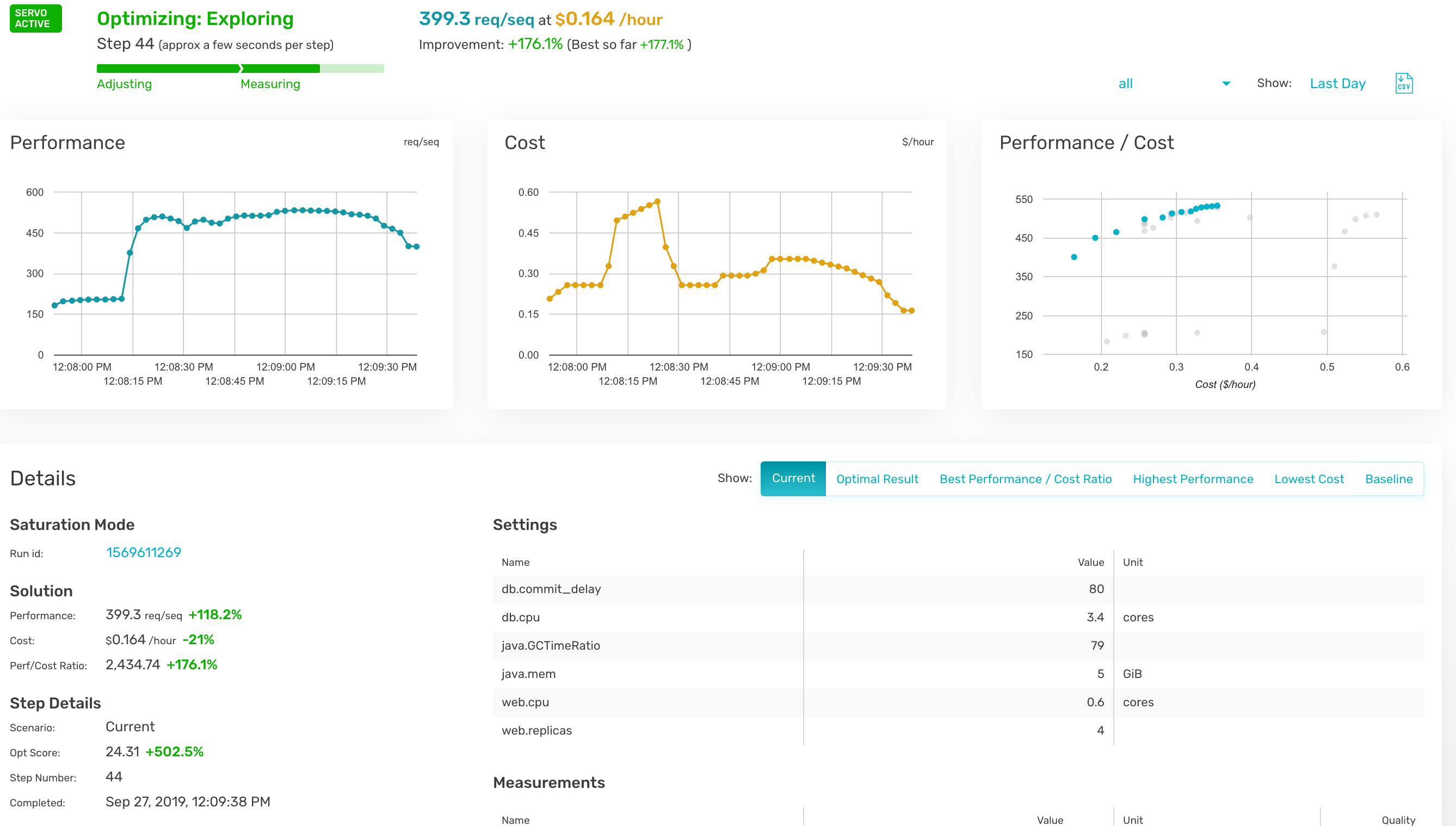
    Opsani has added support for cloud computing environments to its namesake software-as-a-service (SaaS) platform that leverages machine learning algorithms and other forms of artificial intelligence (AI) to optimize the IT environment.

    Company CEO Ross Schibler said Opsani AI not only proactively tunes resources such as CPU and memory, but it also can optimize middleware configuration variables such as Java virtual machine (JVM) type and pool sizes; kernel parameters such as page sizes and jumbo packet sizes; and application parameters such as thread pools, cache timeouts and write delays.

    Given the size and dynamic nature of most cloud computing environments, Schibler said it’s not possible for IT administrators to manually optimize cloud computing environments to match the specific needs of each class of application workload being deployed. The Opsani platform makes it possible to leverage AI to optimize settings for the lowest cost or best performance every second, he said.

    Opsani claims existing customers are seeing more than 200% increases in performance per dollar while saving up to 80% on their cloud spend.

    In addition, Opsani has made available plugins for a variety of DevOps tools including GitHub, Terraform, Jenkins, Spinnaker, Wavefront, DataDog, SignalFX, Prometheus, Splunk and New Relic, on all the major cloud computing platforms.

    Schibler said Opsani can be applied to existing monolithic applications as well as emerging microservices-based applications based on containers running on Kubernetes clusters. The goal is to make it possible for IT teams to rein in cloud costs at a time when most cloud resources are being employed inefficiently, he said.

    Individual developers are deploying applications on virtual machines in the cloud with little to no appreciation for total cost, noted Schibler. Before most IT organizations realize it, the cost of running applications on a public cloud has far exceeded budget allocations. IT organizations not only need tools to rein in those costs, but Schibler noted Opsani also makes it possible to model those costs before an application is deployed or upgraded.

    The adoption of public clouds and DevOps often go hand in hand. The challenge organizations are encountering more often is that as the number of applications running in a public cloud computing environment increases, they often wind up overprovisioning resources. Over time, the need to optimize the consumption of cloud resources becomes a more pressing financial concern. However, most IT organizations don’t have the resources or expertise needed to manually tune each instance of cloud workload. At the same time, the typical IT organization doesn’t have the ability to build its own AI engine. Opsani is making the case for a SaaS platform that provides that capability without requiring an IT organization to build its own AI models from scratch.

    Naturally, many IT professionals are dubious of AI because there may not be enough transparency into the AI models being employed. However, because Opsani is a SaaS platform, the risk of experimenting with AI to optimize cloud workloads is relatively slight. Of course, there’s no absolute requirement to employ AI at all. However, as financial pressure on IT organizations continues to mount, there doesn’t seem to be much of an alternative either.

    — Mike Vizard

  • LogicMonitor Embraces AIOps

    LogicMonitor Embraces AIOps

    LogicMonitor today announced the general availability of LM Intelligence, an extension of its monitoring platform that leverages machine learning algorithms to identify potential issues that are indicative of a major impending outage.

    Sarah Terry, manager of product management for LogicMonitor, said rather than acquiring a separate AIOps platform, it makes more sense to employ machine learning algorithms within the context of a tool that DevOps teams already are using to monitor their IT environment. Monitoring platforms collect the massive amount of data required to train those algorithms, but a separate AIOps platform has to find a way to collect that data, noted Terry.

    The LM Intelligence module created by LogicMonitor provides a root cause analysis (RCA) capability that automatically discovers infrastructure topology in both cloud and on-premises IT environments. Once an issue is discovered, LM Intelligence will aggregate all the alerts being generated into a single notification that pertains to the root cause of any potential issue. That capability will substantially reduce the amount of alert fatigue that today results in IT teams often disregarding what could be a critical alert that would have averted a system failure, said Terry.

    DevOps teams can also employ LM Intelligence to define expected performance ranges for IT resources based on historical trends. Any anomaly outside those ranges will generate a notification.

    As IT environments become more complex, thanks in part to the rise of multi-cloud computing and microservices-based applications based on containers, it won’t be feasible for the average IT team to identify all the relevant events that might be impacting that IT environment without help. There are simply too many parameters that need to be tracked. Tools such as LM Intelligence don’t replace the need for IT operations expertise as much as they augment the capabilities and expertise of the teams trying to manage complex IT environments, where there are large numbers of dependencies between systems. In effect, Terry said, tools such as LM Intelligence will enable DevOps teams to identify the signal in all the noise being generated within an IT environment.

    As IT management tools continue to evolve, DevOps teams should expect to see reliance on machine learning algorithms to become more pervasive. Rather than being a standalone platform, AIOps is quickly morphing into a feature that will become a capability embedded across a wide range of tools.

    Of course, each DevOps team will need to decide to what degree they want to trust any form of AI. However, the longer algorithms collect and analyze data, the more accurate they tend to become. That doesn’t mean DevOps teams should automate processes based on the recommendations of an AI engine; there are likely to be parameters that an AI engine may not have accounted for that could have an adverse impact. However, having the equivalent of a digital assistant that provides timely advice may soon prove indispensable.

    — Mike Vizard