Tag: artifact

  • Perforce Adds Synchronization Tool for Cross-Functional Teams

    Perforce Adds Synchronization Tool for Cross-Functional Teams

    Perforce Software has added a graphical tool, dubbed Helix Sync, that enables individuals, such as artists, to take advantage of the version control capabilities provided by its software development life cycle (SDLC) platform.

    Gerhard Krüger, cloud architect and product manager at Perforce, said that as DevOps workflows continue to evolve in the gaming and automotive industries, the need to manage artifacts such as drawings, for example, alongside software artifacts is becoming more pronounced among cross-functional teams.

    Helix Sync gives those end users access to a desktop client that enables any individual to upload artifacts into a system by dragging and dropping them into the Perforce Helix Core SDLC platform.

    Previously, end users that lacked coding skills would need to share files with developers via cloud services such as Dropbox. The Perforce approach removes the inherent friction development teams would otherwise encounter, while at the same time making sure the artifacts being shared are more secure, said Krüger. In addition, end users don’t have to be concerned about file size limitations imposed by file sharing services accessed via the cloud, noted Krüger.
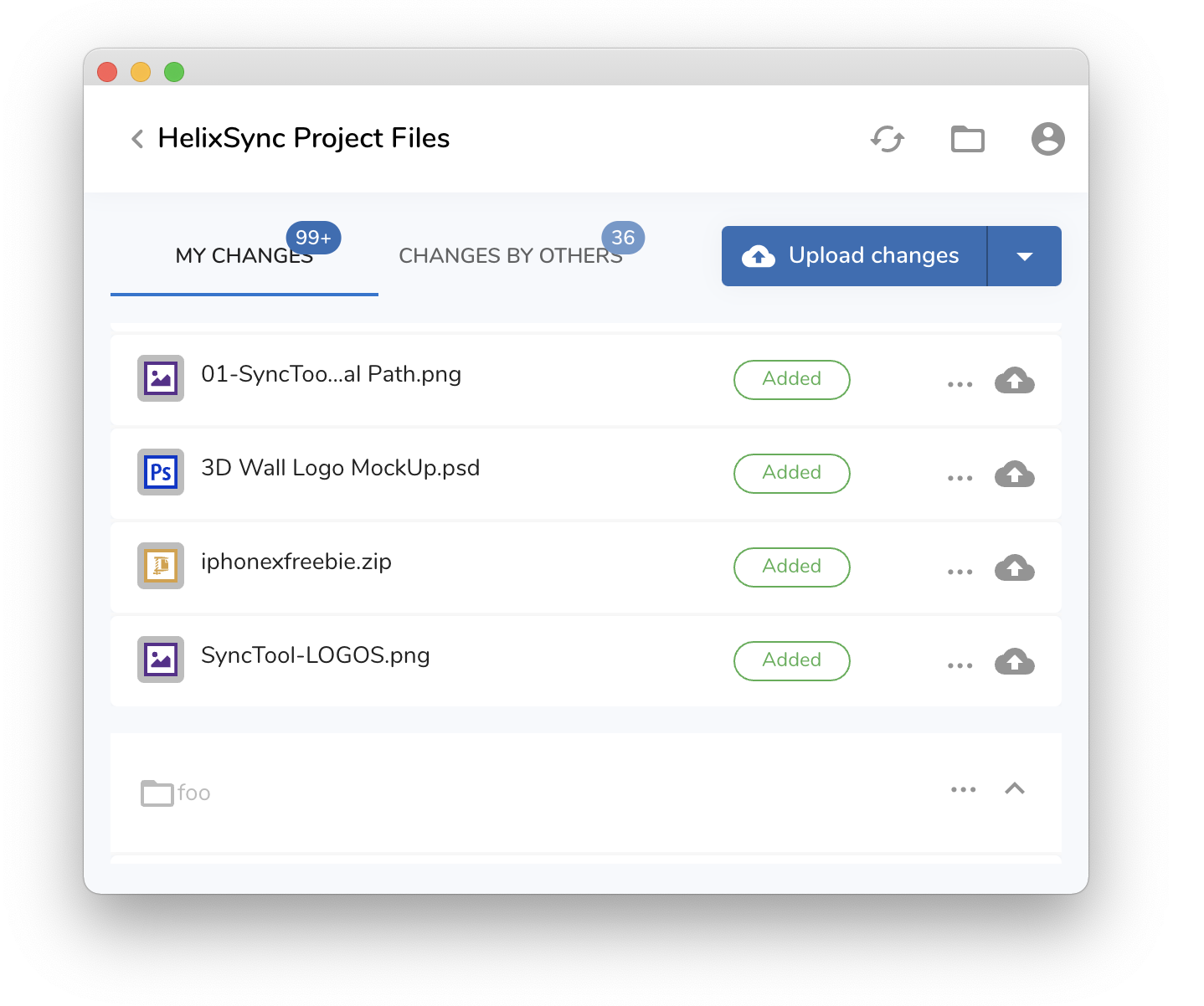
    It’s not clear how many organizations are looking to centralize digital asset management within the context of an application development process, but the fewer places that artifacts reside, the more productive IT teams tend to be. At a time when the number of application development projects within many organizations has accelerated, there’s a lot more interest in reducing the number of steps any developer has to monitor and track.

    Diagrams and other types of artwork are not the only kinds of artifacts that are finding their way into software development processes. Data scientists are building massive artificial intelligence (AI) models that need to be incorporated into application development and deployment processes. The challenge organizations face is the individuals that create many of these types of artifacts lack the programming skills required to share them via version control platforms typically employed by developers.

    With the launch of Helix Sync, IT teams should assume that, going forward, Perforce will be expanding its overall content management capabilities, Krüger added.

    It’s not clear to what degree workflows will converge as application development continues to evolve. Organizations are starting to appreciate just how dependent they are on software. As that awareness increases, it’s only a matter of time before workflows start to converge around the software development process that are employed to drive multiple digital business transformation initiatives.

    With more of the creators of those artifacts working remotely, the security of those software supply chains has also become more critical. Cybercriminals are becoming more adept at compromising the credentials end users create to access a cloud file service. Software development teams are more likely to employ more rigorous forms of authentication.

    Arguably, there’s never been more artifacts to track during the history of application development than there are today. The thing that makes managing all those artifacts even more challenging is, just like every other piece of software, they are also being continuously updated in ways that aren’t easy to discern.
  • All Day DevOps: Modern Infrastructure Automation

    All Day DevOps: Modern Infrastructure Automation

    “We’re no longer an airline. We’re a software company with wings,” claims Veresh Sita, CIO, Alaska Airlines. The success of today’s businesses rests on software. It is an integral part of infrastructure, so we need to always ask, “How can it be better? More reliable? More secure?”

    Nathen Harvey (@nathenharvey) is the VP of Community Development at Chef and the co-host of the Food Fight podcast. He is also an evangelist of automating software operations, which is what he presented on at the 2016 All Day DevOps conference.

    Nathen started his talk by stating that “automation at scale is required for high velocity IT,” making the point that in today’s environment, you can’t wait months between deployments. Enterprises are moving to continuous integration/continuous deployment, and he advocates for continuous automation.

    harvey pic1.png

    To implement automation at scale, you have to start with a dynamic infrastructure by:

    • Provisioning and setting up environments
    • Implementing dynamic scaling of compute resources
    • Migrating legacy workloads to the cloud
    • Deploy in multi-cloud and hybrid-cloud environments
    • Support heterogeneous environments

    harvey2.png

    Several speakers of All Day DevOps talked about automation, and all of them said a critical step is to treat infrastructure as code. According to Nathen, this means that to programmatically provision and configure components, such as servers, databases, firewalls, etc., you also have to treat it like any other code base. This includes version control and automated testing, but also:

    • Automated, full-stack application policies
    • Package and service installation
    • Versionable, testable and repeatable workflow
    • Scalable application policies
    • Management of interdependencies across nodes

    When you treat your infrastructure as code and deliver at scale, you can scale elegantly from one to tens of thousands of managed nodes across multiple complex environments.

    For software to be effective, users have to trust that it will do what they expect it to do. This is true from handheld calculators to self-driving cars, and it is also true when we automate our development and operations. Nathen advocates that we have to build a pipeline to production that creates faith in us that our code is ready for production.  This pipeline must:

    1. Test the code/verify locally
    2. Verify in pipeline with automated testing
    3. Approve with another engineer (aka code review or Nathen’s “four eye rule”)
    4. Build an artifact
    5. Deploy into acceptance environment to automatically test the artifact
    6. Ask someone else, “Do we want to ship this?”
    7. Ship the code with a click of a button
    8. Union (bring together dependencies and run tests)
    9. Rehearsal
    10. Delivered (ship to customers)

    What does the future hold?

    Infrastructure automation is NOT enough. Why? Auditors show up to audit your infrastructure and applications. The problem is, they use different tools—Excel spreadsheets, notebooks, PDFs, etc. This makes it very difficult to audit. Nathen advocates managing compliance documents as code, too. When we translate compliance into code, it can be executed as part of the pipeline so we can test for compliance throughout the entire life cycle.

    Finally, Nathen stresses the need to have application automation, too. Modern applications look like infrastructure as code.

    harvey3.png

    Developers can make applications that operations can deliver and run in production. This makes it easier to consume, run, and keep applications healty. Operable applications need to be:

    • Isolated
    • Immutable
    • Configurable
    • Built on a common interface for monitoring health
    • Rebuildable from sources
    • Reside in common packaging
    • Maintain runtime independence

    As enterprises implement infrastructure, application, and compliance automation, it creates a freedom for people to focus, and people are the key.

    Nathen notes that, “DevOps is a cultural revolution and professional movement, focused on how we build and operate high velocity organizations, born from the experiences of its practitioners.” He underscores that people are the future of automation. Automation places the priority on people, which enables great companies and great products.

    harvey4.png

    You can watch Nathen’s entire talk online here, where you can dig deeper into this subject. If you missed any of the other 30-minute long presentations from All Day DevOps, they are easy to find and available free of charge here.  Finally, be sure to register you and the rest of your team for the 2017 All Day DevOps conference here.  This year’s event will offer 96 practitioner-led sessions (no vendor pitches allowed).  It’s all free and online on Oct. 24.

    — Derek E. Weeks