Tag: application workloads

  • Solvo Automatically Crafts Cloud Security Policies

    Solvo Automatically Crafts Cloud Security Policies

    Solvo today announced general availability of a namesake tool that automatically creates a least-privilege policy and applies it to application workloads deployed in the cloud.

    Previously available only as a private beta, Solvo will also continually analyze a workload after it’s been deployed to enable IT teams to adjust security policies as additional updates to an application are made.

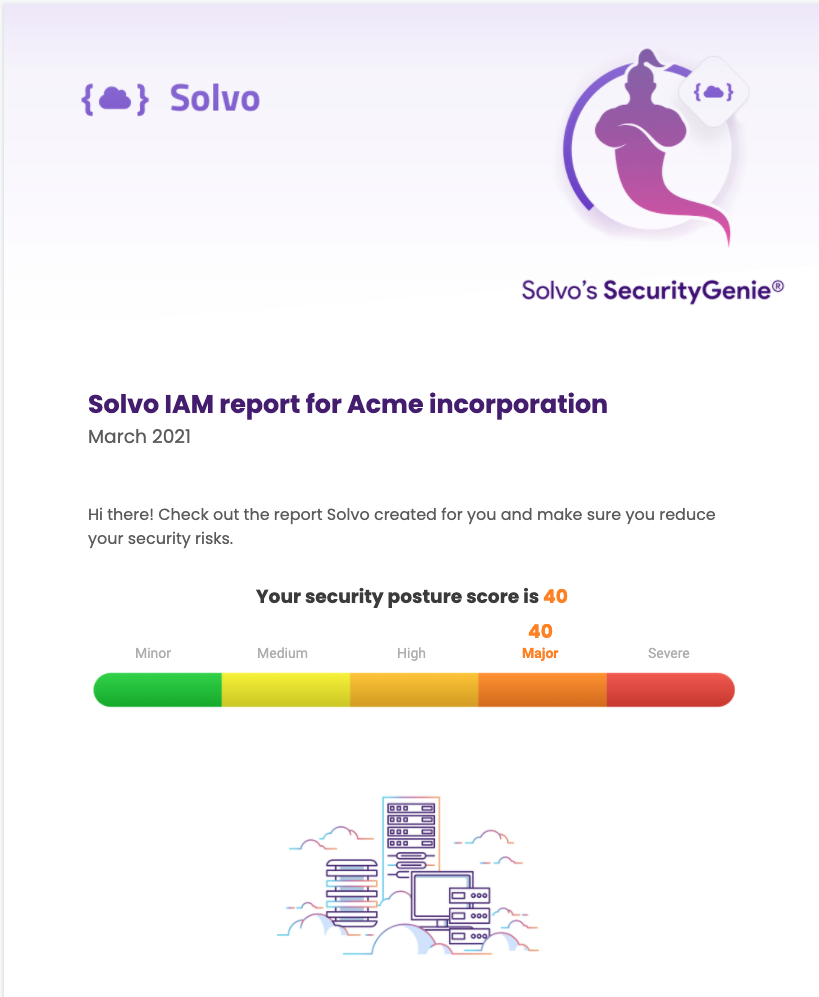
    In addition, Solvo is making available for free the Solvo Security Genie, which IT teams can use to identify misconfigurations, excessive permissions, privilege levels and third parties that may have access to accounts on the Amazon Web Services (AWS) public cloud.
    Shira Shamban, Solvo CEO, said the primary reason there are so many cloud security issues today is because developers – that lack cybersecurity expertise – are being asked to define policies. Solvo removes that burden by analyzing a workload and creating a cybersecurity policy before applications are deployed in the cloud. That cybersecurity policy can then be automatically applied by the developer.

    Shamban said that approach will reduce a lot of the DevSecOps tension that organizations are currently experiencing as they try to shift responsibility for cybersecurity further left toward developers. While no developer deliberately sets out to deploy an insecure application, shifting responsibility for cybersecurity to a developer who doesn’t really understand what’s required creates a lot of additional stress.

    The Solvo platform, available as a paid subscription or under a freemium model for individual developers and teams, addresses a lot of the cloud security issues that inevitably arise when infrastructure is provisioned as code by developers. It eliminates that stress by automating the creation and application of cybersecurity policies within the context of a DevOps workflows, said Shamban.

    However, a cybersecurity team can also manually edit those cybersecurity policies after an application is deployed, Shamban added.

    As DevSecOps best practices continues to evolve, it is clear the relationship between developers and cybersecurity teams needs to evolve, as well. For a long time, many cybersecurity teams viewed developers as the primary source of the problems they encountered. Getting used to the idea that those same developers are now going to solve those issues on their own requires a level of trust that will take time to build.

    Developers, for their part, are generally accepting of the idea that they should take more responsibility for security, so long as the tools provided to them are not selected by cybersecurity professionals that don’t appreciate application development workflows.

    In time, there is no doubt the cultural divide that exists between developers and cybersecurity teams will narrow. However, it’s arguable that more progress will be made, more quickly, if developers are allowed to choose their own security tools rather than accept an edict from on high mandating a specific approach. In fact, the best course of action for many IT teams is simply to offer words of encouragement to developers that elect to set an example for the rest of their colleagues.

  • HPE Extends Reach of GreenLake Central

    HPE Extends Reach of GreenLake Central

    Hewlett-Packard Enterprise (HPE) has made available HPE GreenLake Central, a self-service portal through which IT teams can collaboratively manage and monitor instances of servers deployed in IT environments that are managed by HPE on their behalf.

    At its core, HPE GreenLake is a managed service that allows IT organizations to pay for IT infrastructure on a consumption basis. HPE meters usage and HPE ProLiant servers and bills customers accordingly. HPE GreenLake Central provides a portal through which IT teams can track usage themselves and provision applications both from HPE and third-party software vendors.

    Data management and file management software from Cohesity and Qumulo can be provisioned via the self-service portal. In addition, HPE GreenLake systems can now be co-located in data centers managed by CyrusOne.

    Keith White, vice president for HPE GreenLake, said HPE also provides via HPE GreenLake Central integration with Microsoft Azure Access Manager and Amazon Web Services (AWS) Access Manager services to make it easier for IT organizations to compare the cost of deploying workloads on-premises versus in the cloud, in addition to identifying potential compliance issues. IT teams still will need to access a separate portal provided by either AWS or Microsoft to spin up a virtual machine in the cloud.

    HPE claims to now have more than 800 enterprise customers consuming HPE GreenLake services. With many organizations opting to focus their efforts on building and deploying software, HPE is now making the case for a service through which it manages ProLiant servers and associated HPE storage on their behalf. In the wake of the economic downturn brought on by the COVID-19 pandemic, White said HPE expects to see increased demand for consumption-based pricing for IT infrastructure.

    Of course, IT teams have been consuming cloud infrastructure using various consumption-based pricing models for years. However, there are many workloads that for a wide variety of compliance, security and performance issues that still do not lend themselves to being deployed on a public cloud. HPE GreenLake provides the flexibility of a cloud service while still employing IT infrastructure deployed in a local data center.

    It’s unclear in the wake of the downturn how many additional application workloads might be moving into the cloud. The general expectation is that because many local data centers have been inaccessible during the pandemic, more organizations naturally will shift workloads to the cloud. However, a managed service from HPE also serves to eliminate the need to manage servers in an on-premises IT environment that are managed remotely by HPE. IT teams can remotely log into the HPE GreenLake portal from wherever they are located.

    Undoubtedly, the relationship between IT teams and vendors such as HPE is evolving. Many rote infrastructure tasks increasingly are becoming automated not just by the IT team, but also by the vendor that built the server or storage system. Of course, the automation being provided by the IT vendor only applies to their latest generation of infrastructure.

  • VMware Adds vRealize Automation to Cloud Platform

    VMware Adds vRealize Automation to Cloud Platform

    At the core of the VMware approach to cloud computing is a VMware Cloud Foundation platform that combines storage and network virtualization software with the company’s core hypervisor platform. Now via the release of VMware Cloud Foundation 2.3, integration with the VMware vRealize portfolio of IT automation software is being added.

    Matt Herreras, director of product marketing for VMware, says the inclusion of VMware vRealize Automation, vRealize Operations and vRealize Log Insight will make it easier to deploy application workloads on a platform that VMware manages on behalf of customers, whether it’s deployed on-premises or in a public cloud.

    IT organizations will also be able to use the management console VMware provides with VMware Cloud Foundation to configure the vRealize automation framework.

    At the same time, VMware is adding support for heterogeneous servers within a single rack, including be able to specify specific servers for each workload domain.

    Additionally, VMware has revealed it is working with Intel to include the latest family of Intel Xeon Scalable processors in an existing Intel Select Solutions for VMware Cloud Foundation program. Those processors are expected to be certified in the first half of 2018.

    VMware Cloud Foundation is rapidly becoming a centerpiece of the VMware approach to DevOps. VMware claims that a VMware-based cloud can be spun up six to eight times faster using VMware Cloud Foundation, while total cost of ownership of a private cloud will drop 30 percent to 40 percent and administrator productivity will increase by a factor of two.

    IT organizations that have standardized on VMware are under significant pressure from developers to become more agile. In many cases, those developers end-run the internal IT organization by programmatically invoking cloud services, even if it would be more cost-effective for the application workloads to deploy locally. The challenge those administrators and VMware both face is convincing developers that VMware environments are flexible enough to meet their need to access IT infrastructure on demand, now that an IT automation framework has been tightly coupled with VMware Cloud Foundation.

    In the meantime, VMware is also betting that as large numbers of existing applications are lifted and shifted into the cloud, most IT organizations would prefer to not have to refactor them. To allow IT organizations to avoid that issue, VMware is making VMware Cloud Foundation available jointly with Amazon Web Services (AWS), while partners including IBM provide their own managed instance of VMware Cloud Foundation. Herreras notes that the VMware vRealize automation suite also includes tools for managing AWS and Microsoft Azure environments as an extension of a local VMware environment.

    In addition, VMware has invested in container technologies including Docker containers and Kubernetes clusters, which can be deployed on VMware. Herreras says that from an IT operations perspective, the company is betting that most IT organizations will prefer to deploy legacy monolithic applications and emerging microservices applications on top of a common base infrastructure to minimize costs.

    It might be a little while longer before VMware can completely pull all the elements of its DevOps strategy together. But the one thing that is clear is that, at the very least now, the company understands just how much of its continued future relevance in enterprise IT is at stake.

    — Mike Vizard