Tag: application security

  • Legit Security Applies AI to Detect Vulnerable Application Secrets

    Legit Security Applies AI to Detect Vulnerable Application Secrets

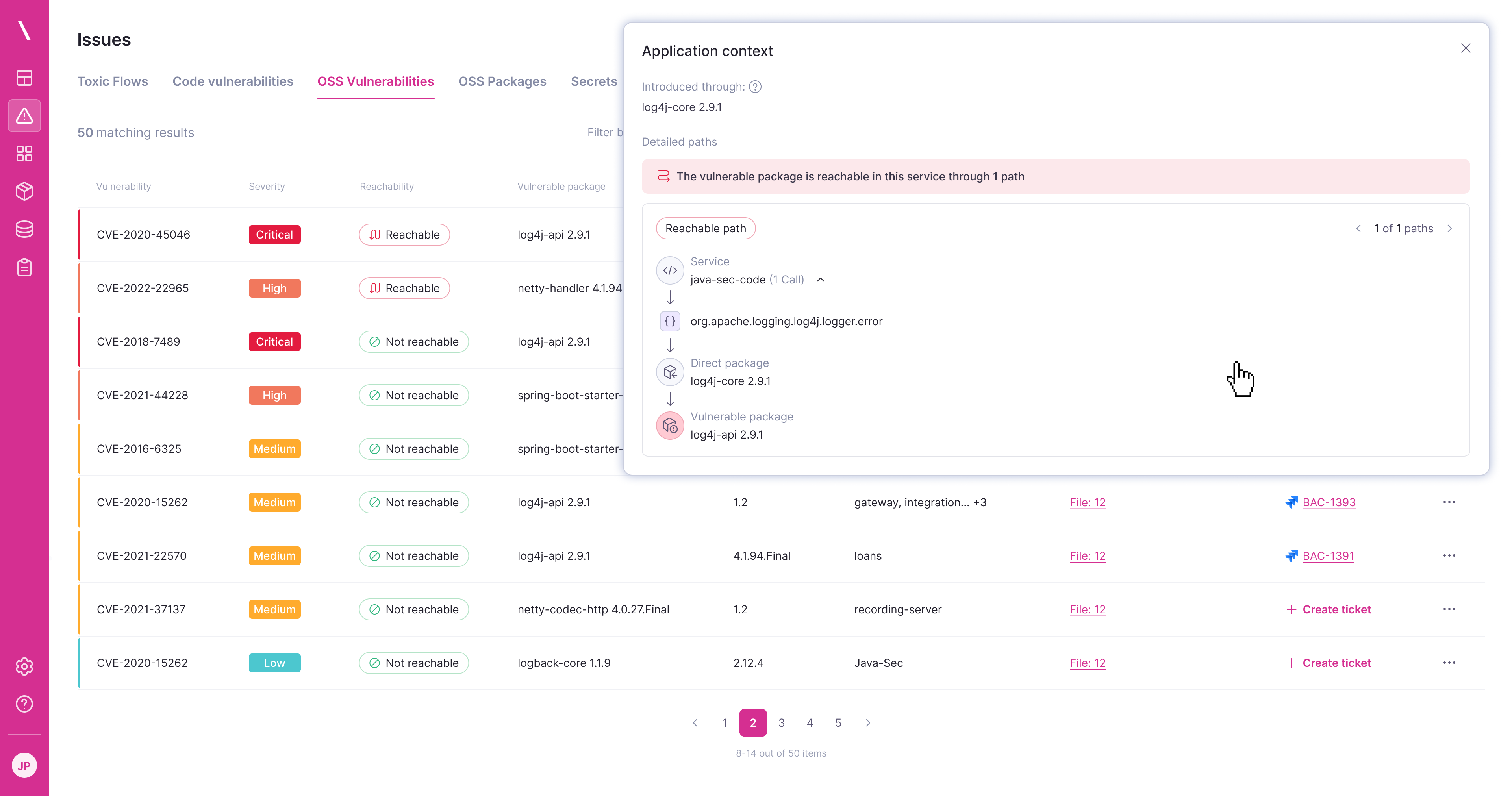
    Legit Security today announced it has expanded the scope of its application security posture management (ASPM) platform to make use of artificial intelligence (AI) to discover secrets more accurately in applications that cybercriminals can actually exploit.

    Scanners typically generate high false positive rates to the point where developers often start to ignore them. As a result, it’s not uncommon for secrets to be discovered in an application even though an alert was generated.

    Legit Security CTO Liav Caspi said the company is now applying a large language model (LLM) specifically trained for source code along with prompt engineering techniques and heuristics to reduce the level of alert noise that developers would otherwise see when scanning for secrets. The overall goal is to correctly identify access keys, passwords, application programming interface (API) keys and other personally identifiable information (PII) that should not be exposed once an application is deployed in a production environment, he noted.

    That capability can be applied to detect secrets across all development assets, including code repositories, source code management (SCM) tools, build tools and logs, artifacts and private and public documentation. In addition, this approach also uncovers toxic combinations of secrets or ones that might lie buried within assets such as source code history or modified Confluence pages that developers often forget exist, noted Caspi.

    Legit Security also enables DevSecOps teams to apply preventive guardrails on developer endpoints using the Legit command line interface (CLI) to stop secrets from being exposed before code is pushed. In addition, automated workflows can reach developers as part of a pull request or create Slack messages or Jira tickets to streamline remediation. DevSecOps teams can also continuously triage results to create a baseline that includes exceptions.

    As part of a larger effort to secure software supply chains, Legit Security has developed a software-as-a-service (SaaS) platform designed to apply security policies across an entire software development life cycle. The company is now extending the capabilities of that platform using AI technologies to detect secrets in both source code and all the components that make up a development pipeline as they are added.

    In the wake of an executive order requiring federal agencies to better secure software supply chains, there is now more focus than ever on application security. Unfortunately, many developers are a little too cavalier when it comes to managing secrets during the application development process. They often leave secrets in plain text to facilitate workflows, but more often than many care to admit, those secrets are not removed before an application is deployed. Knowing this, cybercriminals have learned to scan applications for those exposed secrets. Once gained, they then appear to be just another legitimate user of an application that might not be discovered until malware is activated.

    It may be a while before the cultural and technical issues that conspire to make the software supply chain insecure are fully addressed. In fact, the problem may get worse before it gets better—simply because the pace at which distributed applications are being built and deployed only continues to accelerate. At the same, the cost of making a secrets mistake is also only going to increase as regulations become more stringent. In fact, it’s now only a matter of time before stiff fines intended to make an example of one or more unfortunate organizations are eventually going to be levied.

  • 2024: The Year of Testing

    2024: The Year of Testing

    Caveat: I currently cover DevOps – including test – and security – including the *AST. This does give me a viewpoint that others may not have, and also potentially gives me blinders that others may not have. I am not generally a predictor but a reader of direction. Proclamations like this are rare for me and are shorter-term/more tactical than the grab bag of predictions usually seen this time of year.

    I was thinking about this one this morning; the direction of travel of traditional and security testing is very similar at the moment. We are seeing the vast complexity of the overall space and the rapid growth of automation come together to once again make all testing a topic worthy of consideration.

    I loved test-driven development (TDD). I can’t speak for others, but RPC/API is just a cool way to implement centralized functionality, and TDD is almost mandatory to develop APIs and the clients that call them. There is no UI to distract or have separate requirements in API development; there is a stated function and correct or incorrect behavior. To a computer scientist, this is predictable beauty. TDD made it more than predictable—it made it a trail through the woods. “We know it needs to do X, Y and Z, with the only side effects being A,” can be detailed with tests to prove that is what it does, and then look to prove the “It doesn’t have other side effects” part. And you can do it all while developing—no need for dev/test iterations. Like any IT solution, it isn’t a great fit for everything, but even if it isn’t called TDD, it is nearly impossible to develop API-based solutions without some level of TDD.

    The thing is, TDD is absolutely a developer’s tool. Developers and DevOps pretty much must use it to turn out usable APIs. The test team only has a use for a subset of those tests. Because if the dev team did it right, they passed all the TDD tests, and the test team’s role in that scenario is to look closely at what the developers might have missed. Integration is often beyond the control of an individual dev and/or API, for example, because many different clients may be integrating with it. Test teams, in a true TDD shop, fill the gaps with meaningful tests that evaluate the overall application quality.

    Security testing—at least static application security testing (SAST) and increasingly dynamic application security testing (DAST)—are also becoming a core part of the development process. This is as it always should have been. It is far easier to fix a security flaw (or any flaw) at the design/early code stage than in a testing process after deployment. The quality of security testing inputs is also increasing, making it far more viable. And finally, the tools are being effectively integrated. Being a developer who did a lot of security work because we often needed it and had no one to do it, I will say I get a little rush about being told right in my IDE about the security risks in my code. I write, I see, I revise where necessary, and I turn out better code. All without having to pause for security or bang heads over policy.

    To date, all this testing is separate, but I suspect, having vaguely the same location in the process of development, that testing will all occur together and the markets may even start to merge a bit—though merger of security testing and functional/performance testing tools is a bit of a stretch, it is more possible than in the past. In most orgs, even though developers have an increasing stake in both sets of testing, the target purchasers are still two different groups—security versus test—with different priorities. That’s why I think they aren’t likely to merge any time soon.

    While AI in most technology spaces is currently experiencing the same level of FUD as XML, Java, JavaScript or low-code was in the past, all super-hyped tools in tech do have a sweet spot. Security and testing are in that sweet spot for AI. Both in test generation and in results evaluation, it does it better, faster and with more coverage while giving staff a concrete set of results to pore over and improve security posture and/or code quality. I cannot say loudly enough that in terms of enabling the steps in the SDLC that have suffered from a lack of resources and timeline to write, execute and evaluate tests, AI is a game-changer.

    So, all of these things together mean that 2024 is a good time to take a hard look at your testing environment(s) and architecture, both traditional testing and security testing. Now that AI has made advanced automation a fact, it is time to consider implementing the level of testing we always knew we should have but never had the resources. Build it right into the build process and make it part of the organizational DNA—just like Agile is.

    If you could hire a specialist who would paw through your code and give you a list of the 25 things you need to fix first, you would do it. That is, essentially, what modern testing tools are. They can do more tests, evaluate more issues and side effects and filter down to the “No—this is really important!” list without costing the team a ton of time.

    And keep rocking it. We’re all sitting on bugs and vulnerabilities. I do hope we are way past denying that fact. Apps are big old complex monsters; these days, sometimes built from generations of technologies cobbled together. Of course they have issues. Even yours. So let’s take steps to clean it up, just a little bit. And keep clipping along.

  • Fortifying the Castle: A Quest to Secure the SDLC

    Fortifying the Castle: A Quest to Secure the SDLC

    Every business is a software business today. But as the pressure to churn out new applications and features grows, so do the chances of developers making mistakes. Tackling these challenges doesn’t just require more diligent developers, it requires continuous education across the software development life cycle (SDLC).

    To borrow a metaphor from Arthurian legend, it’s a never-ending battle against hidden risks and formidable adversaries. It will require security champions to share their wisdom and bring order to the kingdom.

    A Kingdom Under Siege

    These are dark times for those fighting the good fight. The threat landscape is a wild and unruly place where risk is everywhere, and adversaries often have the upper hand. They have the advantage of surprise and are masters at hiding in the shadows. But the threat is real. One vendor blocked over 146 billion threats last year alone.

    Many of these attacks take advantage of vulnerabilities in code. It’s a problem made more acute by the widespread use of open source components by today’s developer teams. One estimate suggested that last year alone, developers made 3.1 trillion requests for these components from the top four open source ecosystems. Yet many of these components contain vulnerabilities. According to the Linux Foundation, the average application development project features 49 vulnerabilities across 80 direct dependencies. Worse are the indirect dependencies that are far harder to track and, by some estimates, account for six in every seven project vulnerabilities.

    That makes software supply chain attacks and breaches far more likely, especially as threat actors are actively placing buggy components in upstream libraries with the hope they’ll be downloaded en masse. It’s also getting more likely because developers are coming under increasing pressure to deliver. It’s claimed that over half of developers handle a hundred times more code than they did a decade ago. And most are under pressure to write code faster. This increases the chance of mistakes happening, which in turn can cause significant financial and reputational damage.

    Fighting Back

    The answer to these mounting challenges has traditionally been to focus on “shifting left” or moving testing and scanning earlier in the SDLC. To ensure products are designed with security from the outset, it’s essential to follow “secure-by-design” principles. However, this is only half the picture. Scanning for vulnerabilities is certainly important, but even better is to ensure teams are building more robust code from the outset. Prevention is always cheaper and more effective than cure.

    This is where continuous secure coding education comes in. Continuous because technology and market demands are always changing. In this dynamic world full of risk, a one-and-done approach simply doesn’t cut it. Further, courses should be extended beyond the realm of the developer to every member of the SDLC team: From project management and UX specialists to QA, product management and beyond. All must share a common goal with a common responsibility to produce more secure code. Some will be security champions who share best practices with other stakeholders. But everyone must be pulling in the same direction.

    Time to Fortify the Castle

    So once the kingdom has assembled its diligent developers and security champions, what’s next? With the knowledge and skills imparted through continuous training, plus additional automated checks, real progress can be made to enhance security and resilience.

    If you’re familiar with the OWASP Top 10, you’ll recognize concerns such as server-side request forgery, misconfiguration, using vulnerable components and shortcomings in security logging, cryptography and software integrity. A stronger focus on foundational security practices like the principle of least privilege, separation of concerns and layered defense can mitigate these risks. Among the most prevalent threats are injection attacks, which include SQL injection and cross-site scripting. However, by using tools and having developers well-versed in strategies like input validation, parameterized queries, data cleansing and secure LDAP queries, these threats can be effectively addressed.

    Above all, it’s important to remember that everyone has a part to play in fortifying the castle, in protecting the kingdom from a mounting and formidable agglomeration of threats. That means, as a baseline, that everyone should be getting some form of continuous secure coding training. There’s no time to waste.

  • New Relic Adds App Security Testing Tool to Observability Platform

    New Relic Adds App Security Testing Tool to Observability Platform

    New Relic today made available a public preview of an application security testing tool that will be integrated into its observability platform.

    Esteban Gutierrez, CISO and vice president of information security for New Relic, said the New Relic Interactive Application Security Testing (IAST) will provide DevSecOps teams with the context needed to identify the root cause of a cybersecurity issue down to specific lines of code.

    DevSecOps teams will be able to take advantage of IAST to identify vulnerabilities both in code as it is written and after it has been deployed in a production environment without any false positives, he noted.

    New Relic achieves that goal using deterministic testing techniques that surface an actual proof-of-exploit using observability data collected from both applications and the underlying infrastructure upon which they depend, said Gutierrez. DevSecOps teams are then provided with guided remediation suggestions, guardrails and tracking tools to both remediate the issue at hand and prevent it from reoccurring, he noted.

    New Relic IAST takes advantage of the agent software New Relic provides to collect observability data, which reduces the total cost of DevSecOps by providing IT teams that have adopted the New Relic platform with an integrated set of application security testing tools that doesn’t require them to acquire and manage a separate additional platform, added Gutierrez.

    That approach also ensures that application security testing is integrated with the continuous integration/continuous delivery (CI/CD) platforms that New Relic already observes, he added.

    The reason most vulnerabilities are not remediated in a timely fashion is the DevOps teams responsible for creating and deploying the required patches lack any context. They often don’t know, for example, how many instances of a vulnerability there might be or the actual level of severity. Without those insights, it becomes exceedingly difficult to prioritize remediation efforts, noted Guttierrez.

    As application security requirements become more stringent in the wake of forthcoming legislation, it’s now more of a question of when than if organizations will be required to better secure their software supply chains. The issue DevOps teams face now is finding a way to integrate application security testing tools into existing DevOps workflows without slowing down the pace at which applications are being developed.

    Of course, not every vulnerability discovered requires the same level of attention. Depending on its severity and likelihood of being exploited, DevOps teams need to prioritize which vulnerabilities need to be remediated first. There simply are not enough resources available today to fix every vulnerability an application might have. For the foreseeable future, there will remain technical debt involving vulnerabilities that will need to be addressed after an application is deployed in a production environment.

    The issue, of course, is that cybercriminals are getting more adept at exploiting those vulnerabilities. The amount of time any DevOps team has to resolve issues before they result in a breach continues to dwindle.

  • Shift Left With DAST: Dynamic Testing in the CI/CD Pipeline

    Shift Left With DAST: Dynamic Testing in the CI/CD Pipeline

    Dynamic application security testing, or DAST, is a process used to evaluate an application’s security while it’s running rather than while it’s in a static state. This method involves simulating attacks on an application, identifying vulnerabilities and analyzing the responses. DAST focuses on the exposed HTTP and HTML interfaces of web-enabled applications, making it an excellent tool for spotting security vulnerabilities that may occur during an application’s active runtime.

    DAST is a ‘black-box’ testing method, meaning it tests the application from the outside in—much like a potential attacker might. It doesn’t have access to the source code and instead focuses on the application as a whole rather than its individual components. This external perspective enables DAST to discover potential security threats that static testing methods might miss.

    While DAST is an effective security testing tool, it becomes even more potent when paired with a shift left approach.

    Understanding the Concept of ‘Shift Left’ in Software Testing

    Shift left is a practice in software development where testing is conducted earlier in the life cycle—that is, it’s ‘shifted left’ on the project timeline. Traditionally, testing was seen as the last phase before the release of a software product. However, with the shift left approach, testing becomes an integral part of every stage of the development process from planning to deployment.

    This approach has several advantages. It allows for the identification and resolution of issues earlier in the development process, reducing the cost and effort required to fix them later. It also encourages collaboration between developers and testers, fostering a more cohesive, efficient development environment.

    Shift left is not just a testing strategy but a philosophy that promotes preventive measures over reactive solutions. It’s about building quality and security into software from the get-go, rather than tacking it on at the end.

    DAST in the Context of Shift Left

    Importance of DAST in Early Stages of Development

    The integration of DAST in the early stages of development is crucial for several reasons. First, by conducting dynamic security testing from the onset, teams can identify vulnerabilities earlier, making them easier and less costly to fix. This proactive approach helps to prevent security issues from becoming ingrained in the code, which can lead to significant problems down the line.

    Second, early integration of DAST encourages a security-focused mindset from the beginning of the project, promoting a culture of security within the team. This cultural shift is crucial in today’s cybersecurity climate, where threats are increasingly sophisticated, and the stakes are higher than ever.

    How DAST Complements Other Testing Methods

    DAST doesn’t replace other testing methods; rather, it complements them. While DAST focuses on external vulnerabilities, other testing methods like static application security testing (SAST) can target internal issues. By combining these methods, teams can achieve a more comprehensive view of their application’s security.

    In a shift left approach, this combination of testing methods can be very powerful. By conducting these tests early and often, teams can ensure that both the external and internal aspects of their application are secure. This layered approach to security testing can help to catch any vulnerabilities that might otherwise slip through the cracks.

    Incorporating DAST Into the CI/CD Pipeline

    1. Understanding the Application Structure

    Before we can integrate DAST into the CI/CD pipeline, it’s crucial to understand the structure of the application we’re working with. This involves understanding the layers of the application, the technologies used and the data flows. By analyzing the application’s architecture, you can identify the critical components that need more attention during the security testing phase.

    Understanding the application structure is not just about knowing the technology stack. It’s also crucial to understand the business logic and the functionality of the application. This will allow you to create better test cases during the DAST process. Additionally, understanding the application structure will enable you to make better decisions when configuring the DAST tool, leading to more efficient and effective security testing.

    Finally, understanding the application structure will help you prioritize the vulnerabilities found during the DAST process. Not all vulnerabilities are created equal; some might be more critical due to the data they expose or the potential damage they could cause to the application. 

    2. Configure the DAST Tool

    The next step is to configure the DAST tool. This involves setting up the scanning parameters, defining the test cases, and tuning the tool to reduce false positives.

    When configuring the DAST tool, it’s important to strike a balance between thoroughness and speed. You want the tool to be able to identify all potential vulnerabilities, but you also want the scanning process to be fast enough not to slow down the development process. This balance can be achieved by carefully selecting the scanning parameters and continuously tuning the tool based on the results of the scans.

    Additionally, when configuring the DAST tool, you should consider the unique characteristics of your application. For example, if your application uses a specific technology or framework that is known to have certain vulnerabilities, you should ensure that the DAST tool is configured to test for these vulnerabilities. Similarly, if your application handles sensitive data, you should prioritize testing the components that process and store this data.

    3. Integrating DAST Into the CI Pipeline

    The next step is to integrate DAST into the CI pipeline. The CI pipeline is a sequence of steps that developers follow to merge their changes into the main codebase. By integrating DAST into this pipeline, we can ensure that every code change is automatically tested for security vulnerabilities.

    Integrating DAST into the CI pipeline can be achieved using various tools and plugins. Most DAST tools provide APIs that allow you to automate the testing process. By using these APIs, you can trigger a DAST scan every time a new code change is pushed to the repository. This allows you to catch vulnerabilities early in the development process, reducing the cost and time needed to fix them.

    However, integrating DAST into the CI pipeline is not a one-time task. It requires continuous monitoring and tuning to ensure that the testing process remains effective. You will need to update your DAST configurations as the application evolves, add new test cases as new features are developed, and fine-tune the testing process to reduce false positives. 

    4. Scan for Vulnerabilities

    After integrating the DAST tool, you can start scanning for vulnerabilities. The scanning process involves executing the test cases defined during the configuration phase and identifying potential security issues in the application. Depending on the size and complexity of your application, this process can take from a few minutes to several hours.

    During the scanning process, the DAST tool will interact with the application just like a real user would. It will send inputs to the application, observe the responses and analyze them for signs of security vulnerabilities. This dynamic approach allows the tool to identify vulnerabilities that static analysis tools might miss, such as runtime vulnerabilities and issues related to the application’s business logic.

    5. Analyze and Prioritize Findings

    Once the scanning process is complete, the next step is to analyze and prioritize the findings. The DAST tool will provide a report of the identified vulnerabilities, including their type, location and potential impact. This information should be used to prioritize the vulnerabilities based on their risk to the application and the business.

    Analyzing and prioritizing the findings is not an easy task. It requires a deep understanding of the application, the business, and the threat landscape. You need to consider various factors, such as the potential impact of the vulnerability, the likelihood of exploitation, the sensitivity of the affected data, and the complexity of the remediation process. By considering these factors, you can prioritize the vulnerabilities and focus your efforts on those that pose the highest risk.

    In addition, analyzing and prioritizing the findings should involve all relevant stakeholders. Developers, security teams, and business leaders should all participate in this process, as they each bring unique perspectives and insights that can help make better prioritization decisions.

    6. Remediate and Retest

    After analyzing and prioritizing the findings, the next step is to remediate the vulnerabilities and retest the application. Remediation involves modifying the application’s code or configuration to eliminate the identified vulnerabilities. Depending on the complexity of the vulnerabilities, this process can involve simple code changes or significant architectural modifications.

    After remediation, it’s crucial to retest the application to ensure that the vulnerabilities have been effectively addressed. This involves running the DAST tool again and verifying that the previously identified vulnerabilities are no longer present. Additionally, retesting allows you to check for new vulnerabilities that might have been introduced during the remediation process.

    Remediation and retesting is a continuous process. As new vulnerabilities are discovered and new features are developed, you will need to repeat this process to ensure the ongoing security of your application. This continuous effort is a critical component of the shift left with DAST strategy.

    7. Continuous Monitoring and Updates

    The final step in incorporating DAST into the CI/CD pipeline is continuous monitoring and updates. This involves regularly checking the effectiveness of the DAST tool, updating its configurations as the application evolves, and tuning it to reduce false positives.

    Continuous monitoring and updates are crucial to maintaining the effectiveness of your shift left with DAST strategy. As the application evolves and the threat landscape changes, the DAST tool needs to be updated to remain effective.

    Conclusion

    In conclusion, incorporating DAST into the CI/CD pipeline is a powerful strategy to enhance the security of your software. By understanding the application structure, integrating DAST into the CI pipeline, configuring the DAST tool, scanning for vulnerabilities, analyzing and prioritizing findings, remediating and re-testing, and continuously monitoring and updating, you can unleash the power of shift left with DAST. This comprehensive approach will allow you to identify and address security vulnerabilities early in the development process, leading to more secure and reliable software.

  • Communicating Common Web App Security Threats to Developers

    Communicating Common Web App Security Threats to Developers

    Automated security testing tools enable us to identify web application vulnerabilities early and often, but what happens after a vulnerability has been identified? Does your security team have the coding skills to mitigate it themselves, or are your developers suddenly security experts once a vulnerability is discovered? Most likely not. So, how do we go from finding vulnerabilities to fixing them? Enter a key component of shifting left: Collaboration between security and developer teams. And a portion of that involves providing developers with the context they need to prioritize and remediate threats appropriately.

    Useful context includes (but is not limited to):
    – The vulnerability type
    – How it works
    – What malicious actors can accomplish by exploiting the vulnerability
    – Ways to mitigate

    The list below provides context around five common web application security threats to help you collaborate on resolutions with your developers. A shared understanding of these threats and how to mitigate them early in the development life cycle will significantly improve overall security posture without impacting software delivery.

    SQL Injection

    A SQL injection attack is executed when an attacker injects malicious code into an application’s database through user-controlled data. While these types of attacks can accomplish many different things, there are several common outcomes. SQL injection attacks can enable attackers to gain unauthorized access to sensitive data stored in the database, and largely depending on what data is stored in a particular database, can result in access to authentication information, financial information and personal data. The second key outcome is the manipulation or removal of data. Malicious actors can then leverage this outcome to access the larger infrastructure and find even more sensitive information.

    To help protect against SQL injection attacks, organizations should never implicitly trust and always validate user input and utilize input encoding, prepared statements, parameterized queries or stored procedures instead of dynamic SQL statements whenever possible. By combining frontend and backend standards to prevent SQL injection from happening, your application can increase its security against this type of threat.

    Cross-Site Scripting (XSS)

    Another common web application attack is cross-site scripting (XSS) which involves inserting malicious code or script into a website. The website will then execute on the given script, enabling attackers to steal sensitive user data, such as session tokens and cookies.

    There are three main types of XSS attacks we regularly encounter: Reflective, stored and DOM. Reflective XSS attacks insert malicious code into a website that is immediately executed, whereas a stored XSS attack involves injecting malicious code into a website that is stored and executed later. DOM XSS is an attack pattern that is used more in single-page applications but acts similarly to reflective XSS. If successful, a cross-site scripting attack can lead to the theft of user session IDs and/or website defacement and lead to redirection to malicious sites, thus enabling phishing attacks.

    Similar to SQL injection attacks, to protect against cross-site scripting, organizations must never implicitly trust and always validate user input and use output encoding techniques while also using auto-sanitization libraries such as OWASP AntiSamy and implementing a content security policy.

    Cross-Site Request Forgery (CSRF)

    Cross-site request forgery (CSRF|XSRF) attacks trick users into performing an action on a website without their knowledge or consent. This is often achieved by inserting a malicious link or form into a website where a user is already authenticated. When the user clicks the link or submits the form, the action is performed on their behalf, leading to potential data loss or unauthorized access.

    Mitigating these types of attacks requires leveraging CSRF protections which are built into the framework you are using, if applicable. Using CSRF tokens, which are unique, randomized values associated with a user’s session and can verify the authenticity of a request will also help migrate an attack. In addition, SameSite cookie settings can help prevent attackers from being able to send requests on behalf of a victim.

    Insecure Direct Object References (IDOR)

    Insecure direct object references (IDOR) occur when an application exposes direct object references, like URLs or database keys, which allow attackers to gain access to restricted data by manipulating these references.

    Safeguarding against IDOR requires the implementation of proper access controls and session management, ensuring that only authorized users have access to certain resources or data. Also, avoid using predictable references and instead utilize globally unique identifiers (GUIDs) to prevent attackers from guessing the direct object references they need to access restricted data.

    It is important to remember that IDOR-based vulnerabilities don’t occur singularly and are coupled with other vulnerabilities to become an effective attack vector.

    Remote Code Execution (RCE)

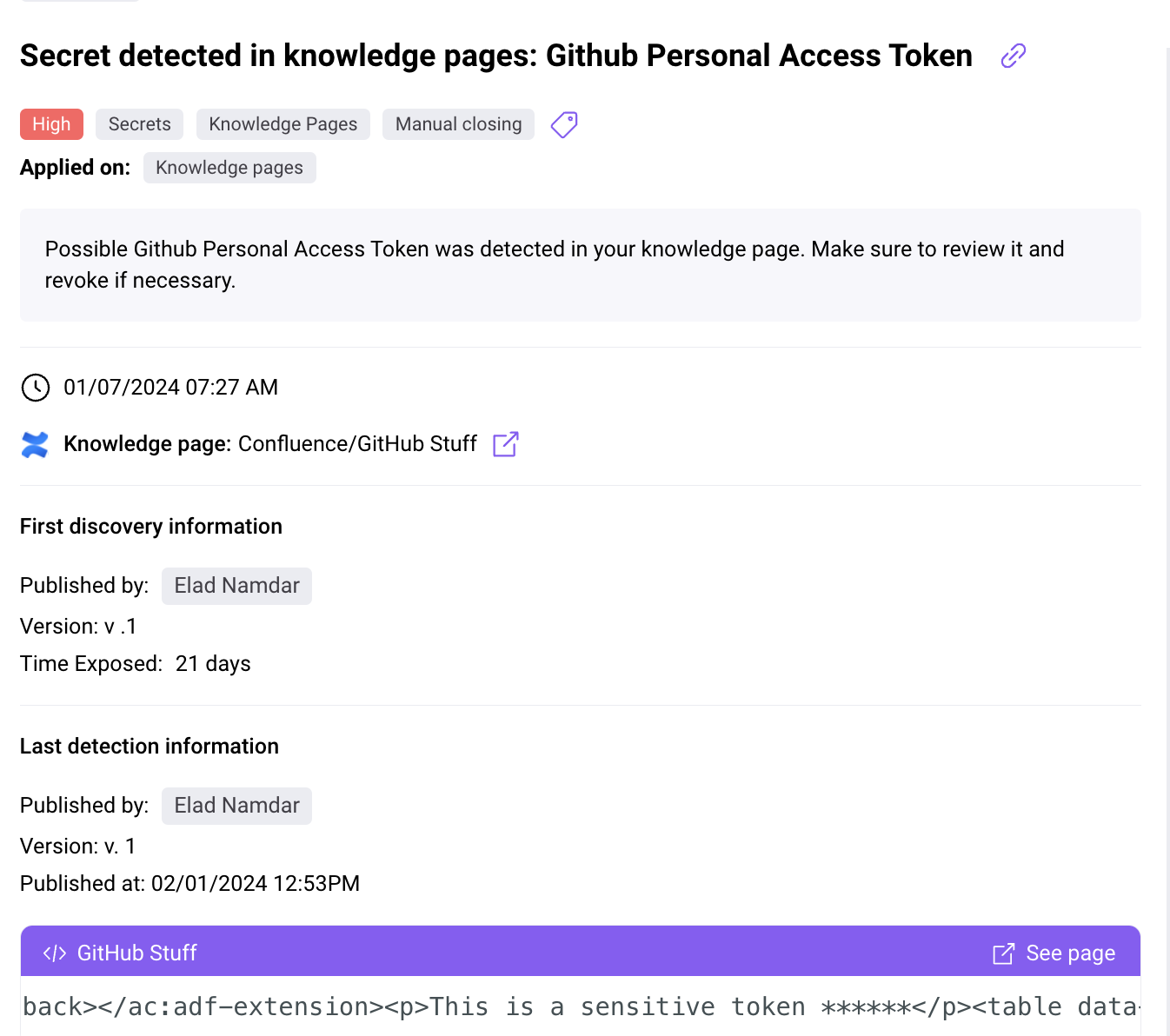
    Remote code execution (RCE) gives an attacker the ability to execute arbitrary code on a server, which can lead to the compromise of entire systems and offer unauthorized access to highly sensitive data. RCE attacks can occur through an array of means, including exploiting vulnerabilities in code libraries or injecting malicious code through user input fields. As illustrated by the critical zero-day exploit discovered in the Java logging library Log4j in December 2021, RCE can be a determinantal vulnerability.

    A successful RCE attack can cause denial-of-service (DoS) attacks, expose sensitive data, lead to illicit cryptocurrency mining and the execution of malware. In more severe instances, a successful RCE attack can allow an attacker to gain full control over the compromised machine.

    The good news is organizations can implement the same tactics used for protection against SQL Injection and XSS—never implicitly trust user data and adhere to strong user input sanitization and validation.

    Understanding Common Threats

    Safeguarding applications and ensuring a sound security posture requires both security and developer teams to have a shared understanding of common threats and the associated risks.

    The details provided in these examples only scratch the surface in terms of useful context for developers. When you can pinpoint when a vulnerability was introduced, which repository branch and code commit it’s associated with and whether it is exploitable from the outside, you create a powerful feedback loop that accelerates fixes.

  • Bionic Extends Application Security Posture Management Platform

    Bionic Extends Application Security Posture Management Platform

    Bionic this week added a pair of tools to its application security posture management (ASPM) platform that make it simpler to triage threats based on severity and attach a risk score.

    Josh Cho, senior director of global systems engineering at Bionic, said the Bionic Signals and Business Risk Scoring tools ingest data from third-party security tools to provide analytics capabilities. The first two vendors with which Bionic has integrated its ASPM platform are Wiz and Sonatype.

    The goal is to partner with additional vendors that provide unique cybersecurity capabilities that don’t compete with one another, said Cho.

    The agentless Bionic ASPM platform enables organizations to manage application risks by continuously collecting data from services and their dependencies, application programming interfaces (APIs) and DevOps data flows both in pre-production environments and after applications are deployed. Bionic then assesses any changes made to those environments based on a set of cybersecurity policies it provides. If an issue is discovered, the platform will create an alert informing the appropriate development team of best practices that eliminate the issue.

    While there is a lot of effort being made to shift more responsibility left toward application developers, there is often not enough cybersecurity context provided, said Cho. Bionic’s ASPM platform aggregates data from multiple tools to enable DevSecOps teams to better prioritize their remediation efforts, he added.

    It’s not clear how much organizations have embraced DevSecOps best practices, but one of the issues that needs to be addressed is the often-conflicting alerts generated by the various tools being used. Bionic is making a case for an ASPM platform that synthesizes data from multiple sources to streamline DevSecOps workflows.

    One way or another, more organizations will be embracing DevSecOps to better secure their software supply chains as more regulations are mandated. The challenge they face today is that most application developers—and the DevOps teams that support them—don’t have a lot of cybersecurity expertise. As a result, it becomes difficult to discern which vulnerabilities require immediate attention and which can be addressed in a regular update. In some instances, an alert generated by a cybersecurity team may not even been relevant—because the application in question is not internet-facing or the impacted module has not been loaded.

    In fact, it’s that very lack of context that often results in application developers disregarding the alerts generated by cybersecurity teams. Whenever there is a breach, however, cybersecurity teams always demand to know why their alert was ignored.

    No developer, of course, deliberately sets out to build and deploy vulnerable applications. In the race to meet delivery deadlines, there are always going to be tradeoffs. The issue then becomes keeping track of the cybersecurity technical debt that accumulates over time. An ASPM solution provides a means to keep track of that debt to enable DevSecOps teams to keep the risk in perspective.

  • How to Avoid Risk When Using Multiple Low-Code Platforms

    How to Avoid Risk When Using Multiple Low-Code Platforms

    Organizations are still increasing their use of low-code/no-code (LCNC). But this adoption isn’t always consolidated around one tool—frequently, multiple low-code/no-code platforms are used under the same roof. In fact, Gartner predicts that by 2024, 75% of large enterprises will be using at least four low-code development tools for both IT application development and citizen development initiatives.

    Utilizing multiple low-code/no-code platforms simultaneously introduces some security concerns. This is partially due to a lack of standard policies to govern different platforms in the same way. Low-code platforms are often incompatible with traditional IT security processes, like vulnerability scanning, manual code reviews and runtime security monitoring. Organizations going all-in on citizen development need safe ways to use low-code/no-code platforms. So, how can they safely enable this innovation without hindering productivity?

    I recently met with Michael Bargury, CTO and co-founder, Zenity, about securing LCNC systems. Bargury, who oversees the OWASP Low-Code Top Ten list, has significant insight into both the benefits and drawbacks of low-code/no-code platforms. Below, we’ll review the potential risks of using multiple low-code platforms and consider ways to mitigate these concerns.

    Why Companies Have Multiple Low-Code Platforms

    Interest in low-code has been rising, and low-code/no-code adoption continues to accelerate across enterprises. According to Bargury, large enterprises often don’t get a choice in the matter—low-code tools are arising organically, and it’s challenging to keep a lid on their proliferation.

    One way this occurs is that low-code becomes embedded into the SaaS platforms everyone already uses. Software platforms integral to business operations, like Salesforce, Microsoft Office and ServiceNow, have arguably mutated into low-code platforms, making them more like cloud providers than SaaS vendors, said Bargury.

    The other way low-code platforms emerge is through bottom-up transitions, says Bargury. This could be a specific knowledge worker working in a subset of the business to automate a domain-specific operation or integrate various tools. Then, there are the platforms, like OutSystems, Mendix or Mulesoft that specifically target professional developers.

    Organizations going all-in on citizen development may build a center of excellence and focus efforts on a single platform. And low-code platforms targeting developers will sometimes encourage more consolidation. Yet, “different platforms solve different use cases better,” explained Bargury. As a result, you will usually have a few converging in the same enterprises.

    Potential Security Concerns of Multiple Low-Code Platforms

    The emergence of low-code is similar to the bring your own device (BYOD) movement. IT and security leaders fought to avoid it at one point, but nowadays, everyone does it. So, what are the security implications if low-code becomes similarly ubiquitous? Well, no matter how it’s generated, low-code-bred programs are still applications susceptible to the same logical problems. And unfortunately, compared to your typical traditional code development life cycle, low-code development is fraught with discrepancies, says Bargury.

    Immature CI/CD Pipelines

    Some platforms do not offer the kind of mature CI/CD process one would expect from a software development platform. For example, there may be no way to create tests or separate your environments. Since there’s no coherent and consistent way to push code from development into production, you lack a way to apply secure development across platforms. “You don’t have a way to ensure every piece of software is up to your standards,” said Bargury.

    Opaque Underyling Codebases

    In traditional software development, you apply your own security reviews to ensure applications don’t contain risks. This includes shift-left scanning, security gates, manual reviews to catch mistakes early on and runtime scanning to catch unknown vulnerabilities in production. But there aren’t always parallels in low-code development. Low-code solutions typically have their own way of doing things with fewer standards, and they avoid exposing the underlying code and Git, said Bargury.

    Lack of Visibility

    As such, with low-code obfuscation, you lose a degree of visibility into how an application runs. Logs may be insufficient or wholly inaccessible. It’s also tricky—or at times impossible—to set up runtime monitoring, let alone scan various platforms. This means that low-code users can’t leverage powerful observability tools to identify errors and remediate security holes.

    Lack of Unified Policies

    Finally, establishing common authorization and permissions across multiple low-code development platforms is another hurdle. Since low-code vendors have their proprietary building blocks, you’re unable to leverage something like OPA or Kyverno to create and unify policies. Lacking shared policies across tools makes it challenging to verify that best practices have been implemented, says Bargury.

    How to Secure Multi-LCNC

    Low-code can grant much creative potential. But, knowing the above risks, what should IT be doing to reduce risks around low-code—especially when using multiple platforms? Well, Bargury shared several steps to help cybersecurity leaders start safely addressing the emergence of increasingly low-code capabilities.

    1. Take low-code development under the application security umbrella. First, low-code must be brought under the security umbrella, if it isn’t already. “It should be part of their mandate,” said Bargury. Shift the responsibility to professionals well-trained in resolving threats.
    2. Understand your surface area. As a basic security tenant, you can’t secure what you don’t know. Thus, Bargury recommends increasing your visibility into each low-code platform by collecting logs when possible and centralizing your analysis.
    3. Create automated guardrails. Next, it’s critical to identify your risks and set guardrails for your low-code users—especially when citizen development is involved. The OWASP framework provides a good overview of common risks and mitigation advice across robotic process automation (RPA), integration and low-code. In general, it’s important to design permissions with the rule of least privilege in mind. This can help reduce the chance of vulnerabilities like LCNC-SEC-03: Data Leakage and Unexpected Consequences and LCNC-SEC-01: Account Impersonation.
    4. Address gaps within the development life cycle (SDLC). Lastly, low-code platforms often provide the building blocks to secure applications, but it’s still up to you to ensure they are safely used. Cybersecurity teams should continually audit the low-code SDLC to ensure holes don’t persist.

    You’re Responsible for Securing Low-Code Development

    Low-code development platforms aren’t 100% safe from harm. It’s not out of the question for hackers to abuse low-code platforms and turn them against their owners. For example, Microsoft’s Detection and Response Team (DART) reported how a hacker group used entry to a low-code tool to remain hidden within an organization for six months, using credential stuffing to access an administrative account. By creating automations, they were able to use internal discovery tools and exfiltrate secrets and data that could have been used for privilege escalation.

    As you can see, there are legitimate concerns for low-code, especially at scale. However, security responsibility is not always that transparent. To date, there isn’t an equivalent of a shared cloud responsibility model in the realm of low-code development. As such, at the end of the day, you need to take the reins to own the applications that you build and ensure everything is secure.

  • Cycode Leverages eBPF to Secure CI/CD Pipelines

    Cycode Leverages eBPF to Secure CI/CD Pipelines

    Cycode today added a Cimon extension to its application security platform that uses extended Berkeley Packet Filtering (eBPF) to thwart cyberattacks against continuous integration/continuous delivery (CI/CD) pipelines.

    Alex Ilgayev, head of security research for Cycode, said Cimon uses eBPF to inspect network connections, running processes and file modifications within a pipeline to learn standard behaviors. Armed with those insights, Cimon will then surface any anomaly in real-time, he added.

    DevOps teams can then craft and embed security and compliance rules within their pipelines based on the severity of the anomalies discovered, said Ilgayev.

    eBPF makes it possible to run sandbox programs at the kernel level without adversely impacting performance. In effect, eBPF bridges the boundary between kernel and user space by enabling developers to combine and apply logic across multiple subsystems that, historically, were completely independent of one another. That approach enables, for example, a security tool to scale to the point where it can identify threats at much higher levels of throughput to improve overall scale at a time when the volume of cybersecurity attacks continues to increase.

    Cycode is taking advantage of eBPF to enable DevOps teams to not only defend against known attacks involving malicious package installation, typosquatting, repojacking, dependency confusion, dependency hijacking and other types of dependency attacks but also zero-day threats, noted Ilgayev.

    Cycode provides a platform for mapping metadata and events using graph technology that makes it simpler for application development and cybersecurity to consolidate alerts generated by their DevSevOps tools. Most recently, Cycode added a Cycode Application Security Orchestration and Correlation (ASOC) module that will automatically discover all the tools that make up a DevSecOps workflow without requiring any integration effort.

    The approach enables the Cycode platform to discover, for example, dependency issues that would otherwise be missed by software composition analysis (SCA) or static application security testing tools (SAST).

    While a lot of progress has been made in terms of adopting DevSecOps best practices, many organizations are still struggling with securing their software supply chains. Most of the members of a DevOps team have limited cybersecurity expertise, so they need the help of a cybersecurity professional to determine what specific actions are required to remediate a vulnerability. Cybersecurity professionals, conversely, don’t have a lot of application development expertise.

    As the number of regulations specifically focused on application security steadily increase, every organization that builds software will soon need to embrace DevSecOps to better secure software supply chains. Unfortunately, developers have too often viewed cybersecurity as an obstacle to deployment while cybersecurity teams have historically considered developers to be a primary cause of the breaches they are expected to clean up. The first step toward bridging that divide is, of course, to realize that application developers and cybersecurity teams need to be invested in each other’s success.