Tag: application security

  • WhiteSource Offers Free Spring4Shell Vulnerability Tool

    WhiteSource Offers Free Spring4Shell Vulnerability Tool

    WhiteSource has launched a free command-line interface (CLI) tool that detects vulnerable open source Spring4Shell vulnerabilities (CVE-2022-22965) that are impacting Java applications built using the Spring development framework.

    Susan St. Clair, director of product management for WhiteSource, said the WhiteSource Spring4Shell Detect tool is similar to the tool the company made available earlier this year to detect Log4Shell vulnerabilities in Java applications. It provides an exact path to direct and indirect dependencies along with how to find a fixed version of the Spring framework to accelerate remediation efforts.

    Spring4Shell is yet another zero-day vulnerability that has been given a 9.8 severity score. As a result, DevOps and cybersecurity teams are now racing to update applications impacted by this vulnerability before cybercriminals can exploit it. The Spring4Shell vulnerability enables remote code execution (RCE), and the Java applications impacted employ versions 5.3.17 or 5.2.19 of the Spring framework and version 9 or higher of the Java Development Kit (JDK).

    The vulnerability allows an attacker to remotely execute arbitrary code on the target server. It allows attackers to abuse a RequestMapping annotation that maps incoming HTTP requests into their appropriate handler functions. The vulnerable condition occurs when RequestMapping is used in conjunction with traditional Java objects as the handler parameter. Such an attack might allow access to all website internal data, including any database. It might also allow access to additional internal resources to gain more permissions or to pivot to other parts of the internal network.

    It’s not clear how pervasively Spring4Shell might impact Java applications compared to Log4Shell vulnerability that affected a logging tool, but more security researchers are looking for RCE vulnerabilities within Java application environments. Organizations now will need to determine whether to maintain legacy applications that might be subject to more zero-day vulnerability discoveries or replace them with newer applications that are developed in a programming language that might be more secure. There is, of course, no guarantee a new application will be more secure than a legacy application, but the chances are good a modern application will have fewer vulnerabilities than a legacy application simply because the underlying programming tools and platforms are more advanced from a security perspective.

    In the meantime, DevOps teams likely will be looking for instances of Spring4Shell vulnerabilities for months to come. DevOps teams that have access to a software bill of materials (SBOM) naturally will be able to find those instances more easily than organizations that don’t. However, the percentage of organizations that have SBOMs is still comparatively low. However, as zero-day vulnerabilities become a larger security issue, SBOMs are being implemented more widely as organizations review their software supply chains.

    Whatever the path toward ensuring application security ends up being the level of scrutiny being applied to application development and deployment, processes will in the months ahead accelerate the adoption of best DevSecOps practices across organizations large and small, whether they like it or not.

  • 3 Must-Haves When Implementing DevSecOps

    3 Must-Haves When Implementing DevSecOps

    The term DevSecOps is already more than a dozen years old. DevOps—the practice of combining software development with IT operations to deploy applications faster—was first coined in 2008 and refined in a historic conference presentation in 2009. DevSecOps—the concept of baking in security at every stage of Agile development, rather than tackling it at the end—followed soon after. 

    Despite a huge amount of industry conversation and activity around DevSecOps, it has been hard to tell just how much traction the movement has been gaining.

    In a 2020 survey of 1,500 IT professionals around the world by the Synopsys Cybersecurity Research Center, 63% reported that they are incorporating at least some DevSecOps activities into their development pipelines. “At least some” indicates, however, that a portion of the adopters have yet to fully embrace DevSecOps. And what about the other 37% who haven’t incorporated it at all?

    Nevertheless, two factors suggest that DevSecOps is starting to pass a tipping point on the way to mainstream adoption.

    One, the prodigious number of cyberattacks that have been hitting companies and government agencies demand aggressive and proactive approaches to address security, which is exactly what DevSecOps does.

    Two, the pandemic has been a powerful accelerant for digital initiatives. For example, global spending on public cloud services was predicted to grow slightly more than 23% in 2021, to $332.3 billion from $270 billion in 2020, according to a forecast from Gartner. In addition to the greater reliance on technology driven by COVID-19, increasing use of emerging technologies such as containerization and edge computing are fueling higher cloud spending. All of this points to the need for organizations to take security risk into account throughout the modern software development life cycle.

    The logic behind DevSecOps is undeniable. Viewing security as a shared, collaborative responsibility among development, operations and security functions starting at the earlier possible stage—the methodology known as shifting left—rather than in silos enables the deployment of secure software at the speed and responsiveness that today’s business conditions require.

    Companies that have successfully meshed the three functions under the broader DevOps paradigm enjoy radically reduced friction in software development and production. These organizations can deploy software faster and more safely with fewer design flaws, misconfigurations and other missteps that can lead to security issues.

    Companies not as far along in their DevSecOps journeys tend to have espoused some of its practices but not consistently. Clunky, linear waterfall approaches persist here and there. Vulnerability management remains a reactive box-checking effort later in the life cycle, forcing developers to backtrack and fix the code rather than a proactive, preventative process seamlessly integrated from design to production.

    The more advanced organizations typically focus on three key ingredients to assure success.

    1. Education. DevSecOps is a cultural shift as much as a technological one. It requires a new mindset that empowers developers to take ownership for creating secure code at the beginning of the software development life cycle. Thus, IT leaders can’t simply snap their fingers and expect DevSecOps to take hold without educating team members on why it is so critical and how it drives rather than disrupts great work.

    “Organizational learning and change are key to allowing DevOps to flourish,” senior Gartner analyst George Spafford wrote. “In other words, people-related factors tend to be the greatest challenges, not technology.”

    This means that before introducing DevSecOps into an organization, it is important to connect the endeavor with the value it will bring and explain why it will allow the business to deliver more value to customers and improve its competitiveness.

    2. Process. The right DevSecOps policies and processes can spell the difference between a nimble software development machine and one still bogged down by inefficiency.

    For instance, many organizations that rely heavily on scanning tools to detect vulnerabilities assign nonsensical policies to their use. Let’s say that vulnerabilities of a particular score or type need to be eliminated before code is deployed to production. But what if the flaw resides in an unimportant section of the code and is unexploitable?

    The best DevSecOps initiatives include policies and processes that seek to understand the entire context of a project, from design to production and handle everything in a way that reflects the context of true risk to security and compliance requirements rather than merely running all code through the same pipeline.

    3. Tooling. Fact: Without the right automated tools that provide deep visibility into code, a DevSecOps implementation doesn’t stand a chance.

    To carry out the qualities of collaboration and agility that DevSecOps promises, organizations should gravitate toward tools that give developers all the relevant information they need to make more informed decisions.

    These tools must truly simplify the addition of security into DevOps methodologies by automating various manual processes that traditionally have slowed everything down—threat models, security and compliance reviews, pentests and risk assessments and the like. The tools can’t just aggregate data from silos — which fails to provide enough contextual information and generates too many false positives —they need to provide holistic relief to overburdened teams in securing applications at the feature request, commit, pull request and CI/CD stage.

    By keeping these three elements in mind, organizations can fulfill DevSecOps’ potential as a true game-changer. As DevSecOps continues to cross the chasm to more universal adoption, organizations can look to earlier adopters for guidance on how to do DevSecOps right.

  • Secure Software Summit Series: Focus on Preventative Readiness

    Secure Software Summit Series: Focus on Preventative Readiness

    The connected world economy and the COVID-19 pandemic forced companies to accelerate digital transformation. Sophisticated cybercriminals have seized this forced acceleration to lay the groundwork for cyberwarfare. In reaction to recent attacks ranging from the SolarWinds breach to the recent Log4Shell exploits, many companies have quickly isolated and patched their systems. However, these reactive fixes do not work all the time; nor does the watch-and-wait approach. We must focus on re-engineering our organizational operations and culture to build and maintain preventative readiness. Companies and infrastructures need to be more resilient and secure from the start by building secure coding practices into the development process.

    Secure Software Summit

    At the beginning of 2022, ShiftLeft hosted the Secure Software Summit to provide industry experts and practitioners in the software development world a platform to discuss the latest methods and breakthroughs in secure coding and development practices—securing code earlier and better has become a discipline unto itself!

    Some of the main takeaways from the event were:

    SBOMs are in Your Future

    In the very near future, organizations will need to better account for all the software and components of their applications, most likely via a software bill of materials (SBOM). The U.S. government has mandated barebones SBOMs, and we will soon see private industry start to mandate them, too, as part of procurement processes and auditing. This will enforce greater transparency and automate discovery of all dependencies and components in a way that, until now, was not common. Software composition analysis (SCA) will make this process easier and will become a standard part of the build process and the application development life cycle.

    Securing Open Source is Critical

    With Log4Shell and other open source software (OSS) supply chain attacks, application security teams must learn how to more intelligently update and secure the most critical OSS components and infrastructure. The average AppSec team needs to sift through massive piles of vulnerabilities and suggested security fixes — far more than they can possibly fix. We have seen record numbers of new vulnerability disclosures in each of the past four years. Proper prioritization based on whether a vulnerability can significantly impact an organization’s own applications and infrastructure is now essential amidst the blizzard of OSS dependencies that make up the modern application.

    Digital Threats Impact the Real World

    For many organizations in non-tech verticals such as health care that consume a lot of software, application security is at a crisis point—software vulnerabilities can literally put lives and our economy at risk. Researchers have correlated increases in mortality with hospitals running at higher levels of stress and capacity. When ransomware or other attacks impact health care institutions, the effect is the same as a massive pandemic flooding the ER: Doctors can’t use systems or equipment, care is rationed, patients are turned away and everything becomes more time-consuming. The net result is more deaths. Securing these systems against attacks becomes a matter of life or death—literally.

    Culture Change Must Come First

    Organizations will deploy new security architectures such as zero-trust, but these attempts will only be successful if AppSec and development teams change the culture around security. Organizations must recognize that the new normal is a state of constant renewal of trust. This will be challenging; constant renewal of trust requires entirely new infrastructure and a new mindset that can be hard on humans. It means implementing multifactor authentication in many more places and removing conveniences like administrative accounts that have blanket access to systems; it requires implementing least privilege practices. Software development will need to bake this constant renewal of trust into workflows and tooling to make it the new normal.

    Shift From Reactive to Proactive

    AppSec and development teams must shift from reactive approaches that tend to mobilize most resources during a breach or an incident and emphasize more proactive approaches such as better software security analysis and security chaos engineering. Knowing the unknown unknowns before they become a problem is key here. Netflix, which pioneered chaos engineering, recognized that stressing systems frequently and constantly to see how they behave under adverse conditions often yielded surprising insights that could improve security (and resilience, more broadly). As mentioned above, creating better ways to prioritize vulnerabilities and focus on the ones that are actually attackable shifts the task from a hopeless burndown to a targeted and proactive tactical exercise that is manageable. 


    Stay tuned for more articles to follow written by the following keynote speakers from the event:

    • Aaron Rinehart, Verica – Security Chaos Engineering
    • Dan Lorenc, Chainguard – The State of OSS Supply Chain Security
    • Steve Springett, OWASP – Behold the SBOM
    • Shinesa Cambric, Microsoft – Importance of Securing Software with a Zero Trust Mindset
    • Malcolm Harkins (Epiphany Systems), Rob Lundy (ShiftLeft) and Bryan Smith (RiskLens) – Reachability and Attackability
    • Abhishek Arya, Google – Measuring and Mitigating Risks in Open Source Software
  • Linux Foundation Lists Top Open Source Libraries

    Linux Foundation Lists Top Open Source Libraries

    The Linux Foundation today published a report that provides access to eight lists of the top 500 open source libraries being used by organizations as part of an ongoing effort to help better secure software supply chains.

    The Census II of Free and Open Source Software—Application Libraries report is based on usage data from providers of software composition analysis (SCA) tools such as Snyk, the Synopsys Cybersecurity Research Center (CyRC) and FOSSA. The report itself was compiled by the Harvard Lab for Innovation Science.

    The eight lists are made up of four that include version numbers and four that are version agnostic. The lists are separated into npm and non-npm packages because npm packages would dominate any ranking created. The top non-npm packages being employed include maven, nugget, Go and cargo.

    Frank Nagle, assistant professor at Harvard Business School, said the report is intended to provide organizations with some guidance in terms of knowing what open source packages are used in the wake of recent vulnerabilities discovered in the widely employed Log4j software used to manage logs within Java applications.

    Many of the organizations impacted by that vulnerability were unaware of just how widely deployed Log4j was within their enterprise IT organizations. IT organizations should evaluate the sustainability of those projects in terms of the number of contributors and maintainers that are working to ensure the security of those libraries.

    One of the biggest challenges is to find a way to standardize naming schema for software components and the overall management of versions of different libraries, noted Nagle.

    Ultimately, the goal is to convince more enterprise IT organizations—and the vendors that support them—to make more resources available to secure those libraries, noted Nagle. Much of the most widely used open source software is developed and maintained by only a handful of contributors. Many of those contributors argue that, while they made that software available for free, it is the responsibility of the organizations employing it to secure it.

    The Linux Foundation is moving to become a conduit through which it will make available additional resources to help better secure open source software. The Open Source Security Foundation (OpenSSF), a consortium hosted at the Linux Foundation, earlier this week announced that 19 additional organizations have joined OpenSSF to help identify and fix security vulnerabilities in open source software and improve tooling, training, research, best practices and vulnerability disclosure practices.

    Brian Behlendorf, executive director at OpenSSF, said in addition to making resources available, it’s clear there is a need for some form of a third-party audit of open source software as organizations are more broadly employing that software across their software supply chains.

    New premier member commitments to OpenSSF are now coming from 1Password, Citi, Coinbase, Huawei Technologies, JFrog and Wipro. New general member commitments are being made by Accuknox, Alibaba Cloud, Block, Inc., Blockchain Technology Partners, Catena Cyber, Chainguard, DeployHub, Gravitational Inc., MongoDB, NCC Group, ReversingLabs, Spotify and Wingtecher Technology. New associate members include Institute of Software, the Chinese Academy of Science (ISCAS), MITRE and OpenUK.

    Other efforts led by the OpenSSF include an Alpha-Omega Project to better secure open source security posture, scorecards that identify risks of the dependencies within more than one million projects, multi-factor authentication tokens and a Project Sigstore initiative to sign, verify and protect open source code.

    It may be a while before open source software achieves the level of security the IT industry strives for. On the plus side, however, there have never been more resources allocated to achieving that goal.

  • How to Build an Effective API Security Strategy

    How to Build an Effective API Security Strategy

    Application Programming Interfaces (APIs) enable organizations to grow their businesses and drive innovation. APIs allow applications to easily transfer data to external third-party developers, business partners and internal departments. Since APIs have access to valuable and sensitive data, they have increasingly become a target for cyberattacks.

    At the API Security Summit, taking place on March 3, distinguished cybersecurity leaders will discuss the top API security vulnerabilities to be on the lookout for and how to build an effective API security strategy.

    The agenda for the API Security Summit will explore the following topics:

    • The importance of API security testing
    • The role of APIs in their environment
    • How are hackers getting in? What can we learn from them?
    • How API attacks are different from traditional application attacks
    • What leading CISOs are doing today to protect themselves
    • How APIs are increasing the attack surface
    • Why API management is not enough for API security
    • The benefits and limits of “shift left” tactics
    • Ways to increase API security fluency across your organization
    • How to drive automation across dev and security teams

    The speaker lineup features top security experts, including:

    • Corey Ball, cybersecurity consulting manager at Moss Adams
    • Dr. Katie Paxton-Fear, lecturer of cybersecurity at Manchester Metropolitan University
    • Tom Salmon, head of cybersecurity at bp Launchpad
    • Nir Valtman, CEO at Arnica and former head of product security at Finastra
    • Tyler Warren, deputy information security officer at Prologis
    • Jeff Serota, principal security engineer at Ally Bank
    • Jack Hart, InfoSec professional and API security lead at City National Bank
    • David Biesack, chief API officer at Apiture
    • Curtis Simpson, CISO at Armis
    • Anthony Doerga, founder at AppyThings

    For more information and to register, please visit the API Security Summit website.

  • How to Seamlessly Transition to DevSecOps

    How to Seamlessly Transition to DevSecOps

    In the last few months, the cybersecurity world has been taken by storm following the discovery of the Log4Shell vulnerability. The zero-day had the potential to put much of the connected world at risk and left security teams scrambling to quickly apply security patches to software just before Christmas 2021.

    As a result of the chaos caused by Log4Shell, many organizations kicked off the new year by carrying out security assessments to identify ways to improve detection and mitigation of future vulnerabilities. One approach that is gaining a lot of attention is DevSecOps.

    DevSecOps introduces and automates security in the earlier phases of the software development life cycle rather than bolting it on at the end. The approach saves money, saves time on tedious manual tasks, helps organizations meet regulatory compliance requirements and significantly reduces the risk of critical security bugs being found after an application’s final build.

    However, when it comes to kicking off DevSecOps projects, there are a few challenges application security teams need to overcome first to ensure their programs fit seamlessly into CI/CD pipelines.

    DevSecOps Isn’t Simple

    While moving to DevSecOps delivers organizations clear benefits in the way of security, one of the key concerns for business leaders is that it slows down the delivery pipeline of software and applications. Today, being an agile software delivery machine is essential and a critical part of an organization’s survival, so no business leader wants to put development velocity at risk because of security testing.

    Application security teams are tasked with ensuring DevSecOps fits seamlessly into software and application delivery, without causing delays or adding more pressure onto already over-stretched DevOps teams. As a result, they need to identify which tools are needed for security testing and integrate them into development stages seamlessly as well as which ones can be automated and which can scale to meet the demands of CI/CD pipelines.

    The great news for application security teams is there are hundreds of security tools available; the bad news is choosing which to use and learning how to use them is a minefield, even for those with the right training and know-how.

    A DevSecOps automation program needs lots of technical aspects to come together to make it work. Security teams need static analysis tools to check the code, third-party library analysis to check the dependencies, separate analysis to check the infrastructure-as-code configuration, scanners to check the containers for issues, tools to test the running system, cloud security checks and infrastructure testing for patches and ports. They also need to match these tools up to the right technology each team is using and keep up with the constant changes.

    So, what are the most important features that application security teams should look for in DevSecOps security testing tools?

    Tips for Approaching DevSecOps

    Security teams need a way to manage their security tools so that tedious tasks are removed but collaboration with development teams is streamlined. They need a platform that handles the automation process, flags only the issues they want to flag and presents them in a way that is accessible to everyone, from execs to board members to developers.

    You’re Going to Need a lot of Security Tools

    We commonly see teams using 10+ tools to cover the needed checks, so be prepared to chain together multiple security tools. Some to check each source code language the development teams are using, more to check your containers, cloud setup and dynamic testing against the staging system, etc. 

    Tip: Be prepared to do some up-front analysis to establish which security tools are going to make up your DevSecOps initiative.

    Think of the Day-to-Day ‘Security-as-a-Service’

    How are you, or your teams, going to work with the security tools? Is someone going to check the output of 10 tools in every build? Are they going to compare each set of issues against the last to see what’s new? How will they handle the open source tools that don’t track false positives? This is a major part of the DevSecOps process, and a very common place where we see processes fail—if the automation of the tools leads to awkward handling of vulnerabilities, it’s doomed.

    Tip: Have tools send their vulnerabilities to a centralized store for ease of use.  

    Tip: Track the difference between runs so it’s easy to see new and high-risk issues.  

    Tip: Think of how developers and security teams can more easily collaborate on issues.  

    Tip: Think of how false positives, duplicates or non-issues can be handled and tracked so developers are not flooded with the same issues over and over again.

    Be Flexible With Your Security Tools

    No matter how you intend to integrate security tools, know that different teams are going to need different tools. Some will use Docker, for example, others won’t. Often, different development teams end up working in different coding languages, which means there will also be different security tools required to scan. Some teams will be up and running with DevOps, others won’t be there. Keeping security testing consistent and repeatable is difficult.

    Tip: Whatever DevSecOps platform you use or build, make sure you can slot in the right tools for the right job. If you’re too rigid, you’ll waste time running tools and dealing with nonsense issues and no one will want to play with you.

    Work With the Existing SDLC Environment

    If your teams use Jira to track development tickets, for example, work with that and have new issues entered and tracked there. If they use five different DevOps pipeline platforms, be prepared to integrate and work with each of them. If you have metrics for security, know how you’re going to track changes per repo, project, team, division, etc. for each pipeline run and all the various categories of tools.

    Tip: Run your DevSecOps implementations where your development teams are, work with their systems and make security an easy extension of their existing workflows.  

    Tip: Be able to track historical metrics across categories of issues and tools, so you can show what good progress you’ve made, and where your security investments are (and are not) working.

  • Why Developer-First is the Future of AppSec

    Why Developer-First is the Future of AppSec

    DevOps culture and rapid cloud adoption mean developers are shipping code faster than ever and, in many cases, security teams struggle to keep up. To avoid relegating security to afterthought status, organizations must shift left and adopt a developer-first approach to application security (AppSec).

    Organizations that depend on software development need a solution that accomplishes two essential things to adapt and survive: Risk-appropriate security measures and an even distribution of functions across the stack. First, risk-appropriate security measures must be applied to all software before it is delivered or deployed. Second, they must adopt processes that enable security functions to be distributed across the development stack in a way that will not slow down the pace of development.

    Just as the entire development process starts with developers, integrating security should also start with a developer-first approach. Developer-first AppSec is the future; here’s how organizations can evaluate tools that will help them adopt a developer-first approach.

    Why Developer-First is the Future

    Developers outnumber application security engineers by as many as 100 to one, and AppSec functions cannot scale if security practitioners are the only ones responsible for security. This imbalance suggests that organizational leaders must better distribute security ownership across the developer teams that own the software asset.

    As it stands today, many companies expect developers to build and deploy software faster than ever before. Security teams often can not keep pace with software development, and they become a roadblock to software delivery. To meet project development deadlines and their key performance indicators (KPIs), developers tend to leave security teams behind. They do not have the time or the incentive to slow down development because application security tools or processes are slow and cannot keep up.

    Security and developers are at cross-purposes in today’s software development model. They are pseudo-adversaries because AppSec teams know what it takes to make code secure, or at least they know how to find vulnerabilities. And, on the other hand, developers need to write code that works well and meets the sprint’s deadline.

    Friction Between Teams

    This growing problem creates friction between these two teams. It’s not that security teams don’t care about the organization’s need to produce quality software quickly or that developers don’t care about security. It’s just that each team is measured and incentivized to achieve opposing objectives. AppSec programs must create a developer-first approach to building software quickly and securely to combat this growing problem.

    It is not feasible for organizational leaders to provide security engineers with the entire business or environmental context behind software applications. In this sense, AppSec teams are working with limited vision. They may not see how the software fits into the organization’s big picture or understand its priorities.

    With limited contextual understanding, security teams necessarily rely on developers to make decisions about acceptable risks. If left to their own devices to view the world through a security-centric lens, AppSec teams could get bogged down—potentially spending too much time enforcing security measures that do not apply to the task at hand.

    Since developers are building the software and know what the services are designed to do, security engineers must defer to a developer-first approach so that decisions about security issues will align with the business context and acceptable levels of risk.

    Finding a Developer-First AppSec Platform

    Below is a condensed guide to help organization leaders evaluate potential AppSec platforms. These questions will help identify a solution that will enable the organization to build a developer-first security program.

    • Will the solution flood the developers and AppSec team with more and more results, or will this help them fix the essential gaps?
    • Will the solution provide context to help developers focus their limited time on security work that matters, or will it end up wasting time on things that may not even present a risk?
    • Will the solution help build security measures as guardrails to prevent security issues in the first place?
    • Is the solution flexible enough to enable building custom application security checks and policies in the SDLC?
    • Does the solution provide flexible ways of communicating actionable security information directly to developers in real-time within dev tools like source control systems, CI/CD platforms or engineering task management systems?

    There are an overwhelming number of application security solutions on the market today, most of which are designed to create security alerts about every conceivable threat regardless of the business context of the software being developed. More tools are then needed to manage the identified vulnerabilities.

    What This Future Will Look Like

    AppSec teams must recast themselves as security facilitators providing expertise for solving complex challenges and maintaining oversight of the developer teams’ security efforts. Developers should own tactical security tasks, but the AppSec team should continue to be the experts in making risk-based decisions and driving security accountability across the business.

    Inside many organizations, application security is only beginning to become integrated into developer workflows. This integration creates both opportunities and challenges. As organizations strive to make AppSec an enabler that aids developers in creating secure software quickly, developer-first AppSec programs let businesses make their digital transformation journey safer and faster.

  • Best of 2021 – From Agile to DevOps to DevSecOps: The Next Evolution

    Best of 2021 – From Agile to DevOps to DevSecOps: The Next Evolution

    As we close out 2021, we at devopsy.kinsta.cloud wanted to highlight the most popular articles of the year. Following is the ninth in our series of the Best of 2021.

    As the workforce shifts to remote locations, networks are becoming more diffuse as the edge gets farther away. At the same time, the number of devices and applications on those networks continues to rise. Some estimates suggest that, by 2030, there will be 15 connected devices for every person on the planet.

    The rapid expansion of the remote workforce and their associated application needs has created a significant challenge for both application developers and the IT professionals tasked with deployment and maintenance of applications. Finding the right balance between speed of release and stability and reliability of applications – never an easy task – is paramount for the success of any organization.

    Agile and DevOps evolved to help organizations strike this balance, providing the best possible customer experience in the shortest realistic time frame. But have Agile and DevOps fulfilled that promise?

    The Promise of the Agile Manifesto

    While Agile as a methodology has been known and followed for nearly two decades, the ways in which organizations have applied Agile have been as varied as the organizations themselves.

    The Agile manifesto set out four basic values when it was first written in 2001:

    • Individuals and interactions take precedence over processes and tools.
    • Working software takes precedence over comprehensive documentation.
    • Customer collaboration takes precedence over contract negotiation.
    • Response to change takes precedence over mindlessly following plans.

    Agile processes are applied across a range of development activities, from development of standalone applications to development of cloud-native business applications. The Agile Manifesto also contains several more principles that further explain what the values mean when put in practice.

    These Agile principles can be condensed into a few areas of focus:

    Prioritize the customer over the product

    Agile development requires continuous customer engagement throughout the entire development process, with the end goal being frequent product delivery based on specific customer feedback. While this can present challenges for an Agile team, particularly when customers demand changes late in the development cycle, Agile maintains that the best way to elevate customer experience is to make the customer part of the development process.

    Trust Agile Teams to Self-Organize and Self-Manage

    Agile focuses on smaller teams that remain in constant communication with customers, as well as with each other. These teams should include both developers and those with knowledge of the larger business requirements being met through development. For these teams to work effectively, trust is key. Agile posits that self-organized teams, given leeway to pursue their projects in the way they see fit, result in the shortest development cycles.

    Keep it Simple

    Agile teams require simplicity. This correlates with Agile’s disdain for overuse of process. Agile seeks to minimize the total amount of work required, thus minimizing overall development time.

    Agility Leads to Agility

    Just as Agile teams continuously improve their product and the customer experience, they also constantly improve themselves. Constant evolution of teams and the processes they employ (remember, teams before processes) improves team agility itself.

    While the Agile values and principles seem simple, effective application of the values and principles is another story entirely. Indeed, at times, the implementation of Agile development has violated the very first value of the manifesto by focusing on which tools and processes should be used. But, in an environment where more users are clamoring for more products and services, implementation of Agile methodologies is not just important, it is imperative.

    Building on Agile with DevOps

    The precise meaning of the term itself and the scope of DevOps remain a source of debate. At a high level, DevOps is the marriage of the development cycle with post-development activities, such as deployment and maintenance.

    According to open source contributor Barbara Ericson of Cloud Defense, “Instead of IT operations and software development being siloed off from each other, DevOps breaks down the traditional boundaries that previously existed between them in order to achieve continuous integration and continuous delivery (CI/CD) of quality software features and applications to end users.”

    Just as with Agile, the effective implementation of DevOps requires cultivating a DevOps culture within the organization. However, Agile and DevOps are also not mutually exclusive. That is to say, DevOps is not merely a replacement for or an evolution of Agile. Although Agile and DevOps differ in their structures and approaches, they can work in unison to achieve the ultimate goals of speedy deployment and enhanced customer experience.

    While Agile and DevOps share common goals, they have not always agreed on how to achieve those goals. DevOps differs in many respects from Agile, but, at its best, DevOps applies Agile methodologies, along with lean manufacturing principles, to speed up software deployment.

    One area of particular tension between Agile and DevOps is that the latter relies heavily on tools; in particular, when it comes to the automation of testing and deployment processes. But DevOps can overcome the resistance of Agile developers to tool usage simply by applying Agile principles themselves.

    Effectively, DevOps proponents must convince Agile teams that dogmatic adherence to the underlying principles of Agile is actually inconsistent with Agile in the first place. Ironically, Agile developers who insist that the process is always bad actually violate Agile principles by refusing to acknowledge the benefits offered through change, another Agile principle.

    The challenge is to have the Agile development teams trust in the automation efforts of DevOps, while at the same time encouraging the DevOps team to consider the business goals of deployment rather than pursuing speed of deployment for its own sake.

    With constant communication between the Agile team and DevOps team (another Agile principle), development can achieve a degree of comfort with DevOps tasks and processes. This means that testing and deployment automation can proceed quickly, resulting in a decreased time to market, overall.

    Ultimately, Agile and DevOps can work together most effectively when they recall their shared goals: smaller change increments based on feedback resulting in faster delivery cycles.

    Continued Evolution: DevSecOps

    As networks expand and businesses continue to integrate cloud-based services (in many cases, building multi-cloud environments), security issues become more and more complex. One area in which Agile is lacking is in integrating security into the development process. Unfortunately, in an Agile environment, application security is often an issue addressed after development, rather than as part of the process. Enter the next iteration of DevOps: DevSecOps.

    DevSecOps revolves around three basic principles: ensuring data security while minimizing inconvenience for users in accessing data, using development tools that identify risks as early as possible in the development process and ensuring data encryption using technologies such as secure sockets layer (SSL) and virtual private networks (VPNs).

    While DevSecOps and Agile may also disagree about the priority of tools, security must become an integral part of any development project. This is why Agile, DevOps and DevSecOps must all work together to ensure not only rapid deployment but secure deployment.

    The Next Evolution

    Agile and DevOps were both important evolutions of the software development process, but DevSecOps is the next evolutionary step. Despite a few disparate characteristics, Agile, DevOps and DevSecOps can and should work in unison to achieve their shared goal: the best possible customer experience and short deployment cycles.

  • Oxeye Platform Helps Fix Code Vulnerabilities

    Oxeye Platform Helps Fix Code Vulnerabilities

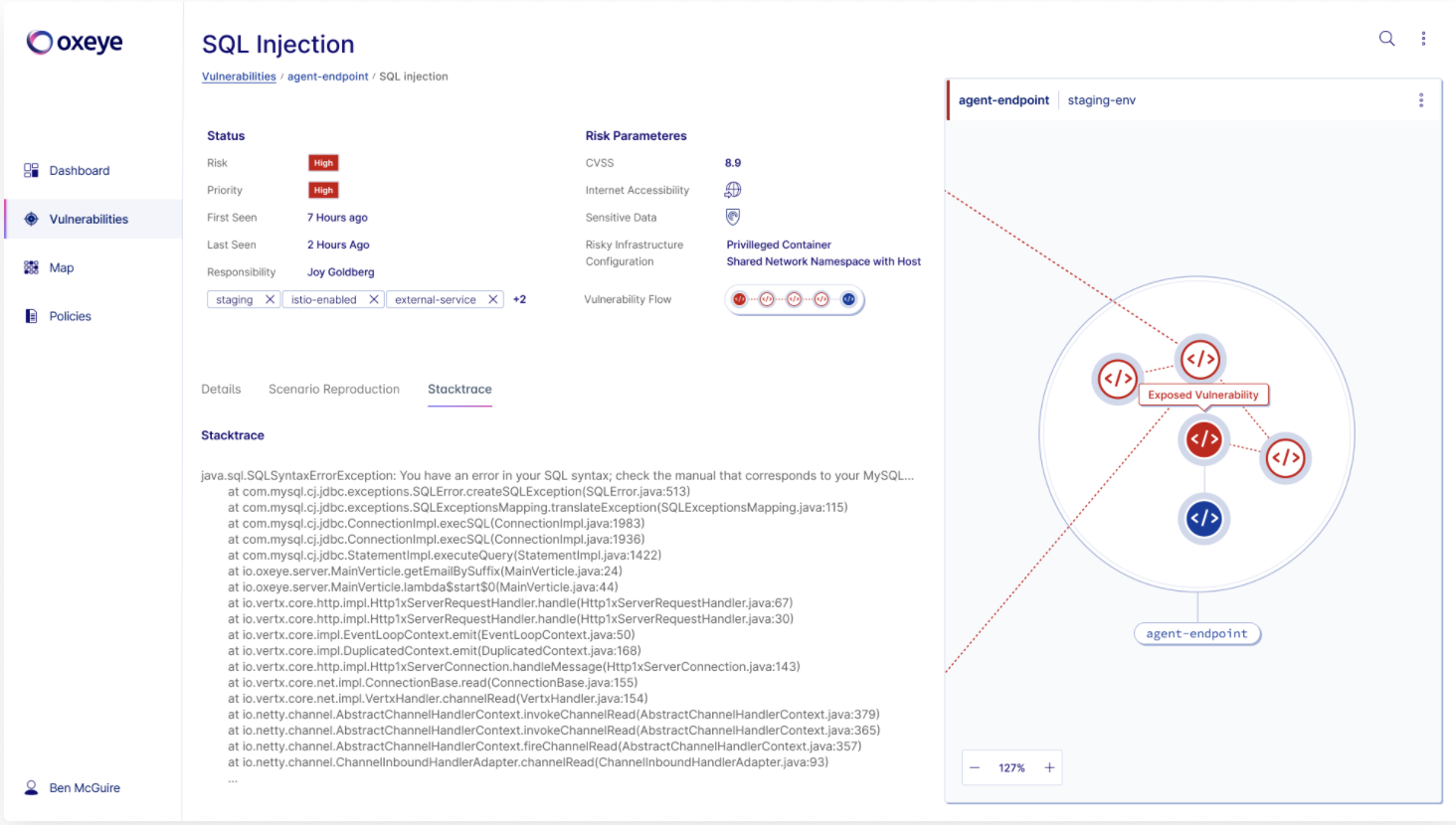
    Fresh from raising $5.3 million in seed funding, Oxeye emerged this week from stealth to launch a namesake application security testing platform that, in addition to pinpointing issues in code, also provides advice to best remediate the issues it found.

    The Oxeye platform requires developers to download an observer tool that scans code for vulnerabilities. Once pinpointed, the Oxeye platform guides developers through the remediation process without requiring them to inject agent software into every application.

    Oxeye CEO Dean Agron noted developers don’t typically have a lot of cybersecurity expertise. As application environments become more complex—thanks to the rise of microservices-based applications—it only becomes more likely that mistakes will be made. The only way to resolve security issues before applications are deployed in a production environment is to augment developers using a platform that finds vulnerabilities all the way down to specific lines of code, he said.

    In theory, responsibility for application security is being pushed further left toward developers as organizations embrace DevSecOps best practices. However, making developers more accountable for security without providing them the tools required to achieve that goal is not going to improve the overall state of application security.

    The challenge organizations face today is finding a way to empower developers to address security issues without slowing down the rate at which applications are built and deployed. The best way to achieve that goal is to give developers access to a security tool designed to both analyze code for vulnerabilities and explain how to avoid encountering that issue again, said Agron.

    Left unaddressed, the current software supply chain crises will only deepen, added Agron. According to International Data Corp. (IDC), more than 500 million digital applications and services will be developed and deployed using cloud-native platforms by 2023. That’s roughly equal to the total number of applications and services deployed over the last 40 years, according to IDC.

    It’s not clear to what degree the rise of digital applications might force the DevSecOps issue within more organizations. It’s is clear that a new generation of more complex applications based on microservices is being rolled out to drive a wide range of mission-critical applications. The more business value an application has the more attention it inevitably attracts from cybercriminals.

    Regardless of the type of application, it’s apparent that there is a pressing need for a way to better secure applications. The further left that process starts the less costly it becomes to achieve and maintain security. Cybersecurity teams have a vested interest in helping developers do the right security thing as early as possible if no other reason than to reduce the number of vulnerabilities they will inevitably discover later.

    Making developers more aware of security issues is, of course, only the first step. However, in the absence of any tools that can be easily incorporated within an application development workflow, the concerns being raised will amount to little more than yet another sermon that will be ignored as developers once again rush to meet yet another application delivery deadline.

  • AppSec Marketing in the Age of DevSecOps

    AppSec Marketing in the Age of DevSecOps

    A while back, I had a conversation with a friend I went to school with (currently a senior member of the engineering team at a large retail chain) who was tasked with the job of identifying potential application security partners (he addressed vendors as partners, which I personally liked) to collaborate with on various areas as part of their product security initiative. The following piece emerged as an extension of my immediate thoughts when he shared his views of what could have made his experience of interacting with front-line sales and marketing folks better.

    In the context of DevSecOps, much has been said about the need for engineering to speak security, security to speak code, DevOps to speak security, etc. But as a technology service provider (TSP) riding the current wave of application security, it’s almost mandatory for the sales and marketing teams to also speak relevant tech!

    Application Security Is Not One-Size-Fits-All

    Application security, as a practice area, is dynamic. No two applications are the same, even if they belong in the same market domain, presumably operating on identical business use cases. Some (of the many) factors that cause this variance include technology stack of choice, the programming style of developers, the culture of the product engineering team, priority of the business, platforms used etc. This, consequently, results in a wide spectrum of unique customer needs.

    Take penetration testing as an example. This is a practice area that is, presumably, well-entrenched both as a need and as an offering in the application security market. However, in today’s age, even a singular requirement such as this could make or break an initial conversation. While for one prospect, the need could be to conduct the test from a compliance-only perspective, another’s need could stem from a proactive software security initiative. There are many others who have internal assessment teams and often look outside for a third-party view. Others who are further along the maturity curve could be looking to up their game through a hybrid approach of tool automation with a complementary method of manual assessments. I’m not even considering the added complexity involved in the nomenclature of such a service—is it called penetration testing, security testing, vulnerability testing, VAPT (which actually is a combination of two independent practices) etc.?

    Each of these unique needs emerges from buyer personas which emerge from varying degrees of informed decision making. TSP’s would need to retrofit their positioning accordingly. They often run the risk of underwhelming a mature buyer or overwhelming an early practitioner, especially in high variance offerings such as security tooling, security regression and threat modeling, for example. While some might argue that losing an overwhelmed prospect could be the result of their accurate customer segmentation, there are other reasons for this.

    Scoping questions, such as the ones below, can significantly help technology marketers strike the right chord with their prospects and elevate the experience of the initial interaction.

    • What is the motivation for the penetration test? Is it compliance regulation, internal validation, business drivers, their customers’ needs, etc.?
    • What are they specifically looking from a third-party partner? Is it external certification, a specialized approach, uncovering logic flaws, etc.?
    • What is the current appetite (measured in resource bandwidth, commerce) to take on your advanced offering? (Such as automation, regression etc.?)
    • How security aware are the developers? Can they take the findings to their logical conclusion through successful remediation?

    DevSecOps Is About the Journey, Not the Destination

    Ever since the surge of DevSecOps, marketers and practitioners have been vocal about the possibilities and advantages that smart automation brings with it. Think tanks, too, have statistically alluded to its benefits in terms of cost savings and bandwidth efficiency, among others. Though recent marketing campaigns have rather effectively communicated the ‘what of DevSecOps and AppSec automation, more awareness of the ‘how’ of DevSecOps is needed. TSP marketers need to design and propagate content on use cases focusing on the implementation challenges and suggested how-tos. Such content not only helps build trust and credibility but also allows segues for tech marketing to collaborate with security engineering. Some of these include practical guides on open source tool automation and sample automation scripts and libraries, data sheets on resource optimization through automation and handbooks on vulnerability remediation, just to name a few.

    This collaboration between marketing and sales and security would provide an opportunity for the former to get themselves well entrenched in the practical workings of the service or solution that they are responsible for positioning. Ironically, this also allows them to appreciate constraints that would prevent them from over- or under-committing business value to their prospects through their messaging. This is especially more relevant with the numerous myths that surround application automation and DevSecOps in general.

    The DevSecOps Rolodex

    In 2012, I had the opportunity to meet with one of the senior CISOs in the industry. After some initial small talk, I was introducing what we did and how we thought we could help his team. I was 70 seconds into what was my planned 180-second pitch when he respectfully stopped me, pulled out a rather impressive Rolodex from his desk and said, “I could point you to 15 companies in a 20-mile radius who could help me with exactly what you’ve offered me. I wonder if there’s any secret sauce?”

    Startled, embarrassed, I managed to gather my thoughts and moved to the final 30 seconds of the pitch, though with much hesitation. As luck would have it, he found little bits of the secret sauce. The meeting obviously did not go exactly as I had planned, but it didn’t go badly, either. However, it made me realize that our customers and prospects often know just as much—or even more—about our competition than we do. Everybody is selling, all the time. So, someone else has already made their 70-second pitch. Not everyone gets lucky enough to be given an opportunity for a pause! It’s up to us to find the secret sauce and make that close in the final 30 seconds.

    We are riding a very healthy wave of application security focus right now, and it’s paramount that technologists and marketers collaborate to identify and nurture their own secret sauce in their messaging and positioning. After all, this is what is going to keep the person at the other end of the table from reaching out to others in their DevSecOps Rolodex!