Tag: app dev

  • Bitrise Tightens Mobile DevOps Integration With AWS Cloud Services

    Bitrise Tightens Mobile DevOps Integration With AWS Cloud Services

    Bitrise this week will tighten integration with its DevOps platform for building and deploying mobile applications and the application development services provided by Amazon Web Services (AWS) cloud.

    Announced at the AWS re:Invent 2023 conference, the goal is to provide easier access to automated building, testing and release management capabilities provided by AWS as part of an effort to increase overall efficiency.

    Bitrise CEO Barnabas Birmacher said those capabilities will streamline workflows for a Bitrise Mobile DevOps platform that has been specifically designed for building and deploying mobile applications that typically need to be updated frequently.

    Based on a continuous integration/continuous delivery (CI/CD) platform developed by Bitrise that can be deployed in an AWS cloud computing environment, the integrations will make it simpler to build and run mobile applications at scale, noted Birmacher.

    The goal is to reduce the total cost of building mobile applications while at the same time improving developer productivity for mobile applications that have to be thoroughly tested before being made accessible via an application store, he added.
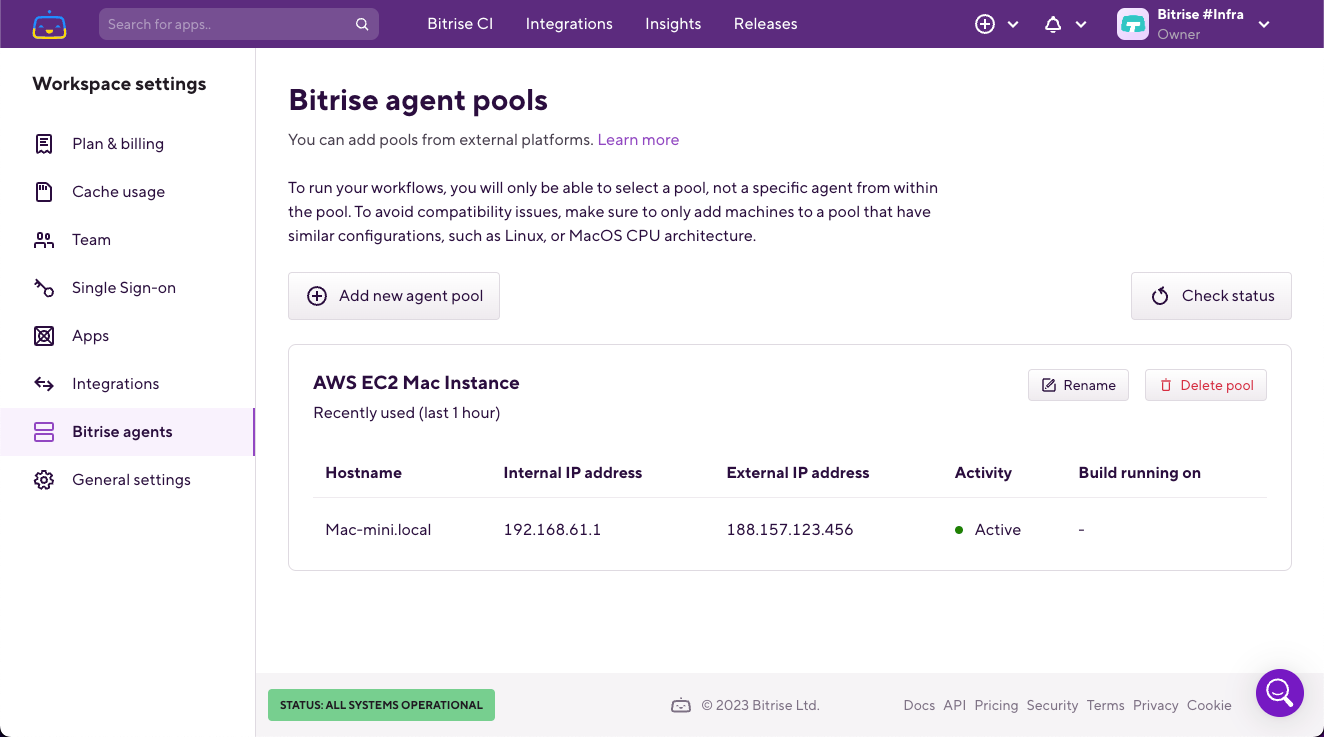
    It’s not clear how many organizations will prefer to have a dedicated CI/CD platform for building and deploying mobile applications versus using the same CI/CD platform they might already be relying on to build and deploy other applications. Bitrise claims to have more than 6,000 customers, including Reddit, WISE, Equinox and Philips Hue.

    As the percentage of mobile applications that make up an organization’s portfolio continues to increase, the pace at which those applications need to be updated lends itself better to a CI/CD platform optimized for those types of applications, said Birmacher.
    In fact, a recent survey conducted by Bitrise found 62% of respondents have been adversely impacted by manual processes that slowed the rate at which mobile applications were deployed and updated. The survey also found (44%) of respondents reported their release approval process is mostly or entirely manual, with only 9% having fully automated application releases.

    The survey also found that nearly two-thirds of organizations (66%) have deployed applications that can’t be opened in two seconds or less, which is widely considered the accepted level of performance required for mobile applications. In addition, three-quarters of organizations (75%) required more than two days to address bug fixes.

    Many mobile apps have become increasingly mission-critical thanks to digital business transformation initiatives. Consequently, the amount of focus on them within most organizations is high; any issues that arise are likely to be noticed at the highest echelons of an organization. That level of attention can easily put pressure on DevOps teams, mainly because the general expectation among end users is that mobile applications will be regularly updated with new functionality. However, if release processes are largely manual, regularly improving the user experience can become problematic.

    Each IT organization will need to decide for itself how best to go about building and deploying mobile applications, but the one thing that is certain is adjustments to DevOps workflows will need to be made as a lot more of these applications are continuously built, deployed and updated.


  • Survey Surfaces Application Modernization Challenges

    Survey Surfaces Application Modernization Challenges

    A survey of senior IT leaders suggested the level of confidence in application modernization projects that many organizations initially had is now starting to wane.

    The survey polled 200 senior IT leaders at organizations with more 1,000 employees and was conducted by Global Surveyz Research on behalf of EvolveWare, a provider of platform for automating application modernization processes. The survey found 70% of respondents reported they were confident or very confident in their understanding of their applications when they prepared for modernization. However, that level of confidence dropped to 41% at the planning stage and even lower (28%) at the point the project began, the survey found.

    More than half of respondents (51%) are already experiencing or anticipating critical issues that need to be addressed immediately, the survey found. The top areas of importance are understanding the parts of the code that contain business policies (47%), database access details (43%) and understanding the complexity (40%).

    EvolveWare CEO Miten Marfatia said the survey makes it clear organizations are encountering issues associated with capturing tribal knowledge that has been lost mainly because the teams that initially built an application are no longer with an organization. In fact, the survey found a full 81% of respondents reported they currently have or anticipate challenges hiring or retaining talent to support legacy applications. Nearly half (46%) currently don’t have enough talent available to manage legacy applications.

    The survey found the primary reason these initiatives are launched is to boost employee productivity (40%), followed by retiring mainframe infrastructure (37%), reducing the dependency on legacy code (36%), reducing maintenance costs (30%), improving customer experience (29%) and cloud migration (22%). Most of these projects are generally focused on critical applications (55%) as well as applications that have few or no dependencies (55%), the survey finds.

    The primary success metrics for assessing these projects, however, are improving customer experience (46%), the readiness to migrate to the cloud (46%) and meeting the performance requirements of the modernized application (45%).

    Less than a third of respondents (31%), however, reported having access to modern tooling. More than half would like to automate code transformation and business rules extraction (BRE) while 40% would like to automate documentation.

    Nearly two-thirds (64%) said freezing code during the modernization process would have significant business and financial consequences, with 59% noting that finding a way to modernize applications without freezing code is at the top of their technology wish list.

    Application modernization efforts usually have multiple goals. IT teams are usually motivated by a desire to reduce the amount of time and effort required to support legacy applications that are generally less efficient than modern applications. In addition, many IT teams are also looking for ways to reduce the total cost of running those applications, especially during uncertain economic times. Business leaders, meanwhile, are funding digital business transformation initiatives that typically require some level of modernization of legacy applications.

    Regardless of motivation, it’s apparent many IT teams initially underestimate the amount of effort required to achieve those goals.

  • Will App Dev Become a Normal Competency?

    Will App Dev Become a Normal Competency?

    With a shortage of available developers, companies are considering low-code methods to meet massive application development needs. As a result, by 2024, citizen developers will be responsible for 65% of applications, Gartner predicted. So, if technical ability rises across the board, will application development become an expected skill set for tomorrow’s digital workers? And if so, when?

    “Application development will become a normal competency,” said John Bratincevic, senior analyst, Forrester. Bratincevic recently gave a talk at the Rethinking “How” into “Who” with Low-Code event, presented by TrackVia.

    I asked Bratincevic to dive deeper into how application development is becoming democratized. In short, the low-code movement has permanently altered expectations around who can be involved in application development. To him and others within the industry, leveling up with citizen development knowledge could be vital to retaining a competitive advantage in the future digital-native workplace.

    The Undigital Condition

    As more and more companies digitally transform, they are evolving into software companies. In this new paradigm, “software is an expression of the business,” says Bratincevic. Yet, most organizations have not entirely digitally transformed. According to Forrester’s Q1 2020 Global Digital Process Automation Survey, 76% of companies still rely on paper-based processes, and 94% use Excel or email-based processes.

    Unfortunately, developer talent is too few and far between to rectify this “undigital condition,” and existing IT teams are struggling to keep pace with demands for more software-based processes. Too often, teams are told to get in line and wait for experts to develop software when they can, said Bratincevic. This gap results in a less adaptive structure that limits new ideas.

    “All organizations are probably, to some degree, adaptive, but their improvement and adaptation are typically only periodic and conducted by specialists,” wrote Mike Rother, Toyota Kata. “In other words, such organizations are not, by their nature, adaptive.”

    A New Generation of Citizen Developers

    The old model is not realistic anymore, said Bratincevic. Instead, a new generation of citizen developers could use no-code and low-code platforms to program operational tasks themselves. These tools use visual, declarative techniques instead of programming and are “empowering employees outside of IT to deliver apps,” Bratincevic said.

    So what is the demographic behind citizen development? Reports show that younger, digital-native employees are more likely to use low-code platforms. According to the TrackVia report The Next Generation Worker: The Citizen Developer, 50% of citizen developers are 18 to 29 years old. The study also found that citizen developers are 13% more likely to expect promotions, correlating citizen development experience to career advancement.

    In this projected economy, “digital elites” seem well-positioned to progress, whereas others are in dire straits. “Knowledge workers with simpler, more focused roles (e.g., a “coordinator”) and without digital skills are at risk,” said Bratincevic. Thankfully, low-code could offer a practical way to enter the tech field and increase job security.

    Leveling Up From Productivity Tools

    Today’s average worker is quite familiar with personal productivity apps such as email, social communications, calculations and other consumer technologies. Just as productivity tools have become commonplace, Bratincevic predicts that application development will become a standard skill set in the future.

    Other IT leaders agree that coding literacy will soon become ubiquitous. Apple CEO Tim Cook, for example, recently emphasized to the U.S. president that “we believe strongly that it should be a requirement in the United States for every kid to have coding [education] before they graduate from K–12 and become somewhat proficient at it.”

    Application development may become a typical proficiency; however, the exact nature of software development is up for debate — especially as development environments add more abstraction layers to the lower stack that only involve programming languages indirectly. For example, Bratincevic describes how those learning to code often use a service like code.org, which involves low-code tooling and games to help educate students. “I see the same pattern for the adult professionals in the workforce,” he said.

    Future application development may not even resemble programming in the traditional sense. “Once ‘development’ on these kinds of tools becomes ubiquitous, we may not even call it application development anymore,” Bratincevic said. “It will just be — work.”

    Goals for Citizen Developer Programs

    According to an Outsystems report, 20% of companies adopted low-code to enable citizen developers to construct applications. “One of the main reasons firms are buying low-code is to enable non-IT folks to develop,” noted Bratincevic. “I routinely get inquiries from enterprises who are looking to accomplish this very thing, at scale in their organizations.” In particular, he notes apps of substance being created within health care, vehicle manufacturing, oil and gas and insurance industries.

    It appears more and more organizations are sanctioning a new wave of citizen developers. So what goals should these new citizen development programs aim to achieve? Bratincevic shared the following benchmarks:

    • Digitize. Everything. Always: Foster a digital problem-solving culture and develop a digital workforce.
    • Balance autonomy and control: Citizen developers shouldn’t have to ask permission to make a spreadsheet. Yet, guardrails are necessary for more far-reaching programs.
    • Take charge as privateers: He recommends organizations start by adopting an autonomous, business-led team, which he calls a Privateer model.

    Low-code could also help bring shadowy, rogue IT to light and rehabilitate it in a sanctioned way.

    The Era of Low-Code

    In 2021, the low-code market is estimated at $13.8 billion, said Gartner. SD Times even coined 2021 the “year of low-code.” But, since the citizen developer movement has permanently raised the bar, I would edit this statement to say we have entered the era of low-code.

    For more information and case studies on citizen development, I recommend watching the panel webinar Citizen Developer Movement with Forrester: Rethinking “How” into “Who” with Low-Code. In addition to John Bratincevic, it features Dave Garret, chief strategy and growth officer, PMI, (who I’ve spoken with in the past on How To Foster a Culture of Citizen Developers) and Joshua Yaklin, SVP of operational risk, Stearns Lending.

  • Oracle v. Google and Its Impact on APIs and Code

    Oracle v. Google and Its Impact on APIs and Code

    What, if any, impact will the Supreme Court’s rulings on Oracle v. Google have on the industry at large?

    TL/DR: It is unlikely to impact the vast majority of us, vendor and enterprise developer alike.

    Disclaimer: I am a technologist, not a lawyer. I have done some research, and talked to lawyers, but all that I say here is opinion—even my direct quotes of lawyers are their opinion. The Supreme Court can and has caught people off guard and taken cases in different directions than expected. Though I believe this path is the one it will follow, nothing is assured until the Court rules.

    Throughout this blog, references to The Case are actually using Harvard’s case document.


    Background

    On Nov. 15, the U.S. Supreme Court agreed to hear a dispute between Oracle and Google. The Oracle v. Google case has been going on for nearly a decade. And its roots go further back than that.

    The origins of the case go back to 2005, when Google and Sun Microsystems discussed the licensing of Java for Android. This will likely be important because it shows that Google knew it was someone else’s intellectual property (IP). More on this later.

    The crux of the case falls into three parts:

    1. Eight files that were decompiled and used. In one court case, these were found to never have made it into distribution and only used for testing (which limits liability).
    2. Two source files from Java used directly. These were found to be infringing, but damages were set to zero with consent of both legal teams.
    3. The part at issue: the copying of the entirety of Java’s interface from 37 modules. Most tech writers imply this as 37 APIs. It is not—it is hundreds of classes and thousands of methods. The 37 is the number of Java packages.

    The case has been through four court hearings/rulings so far. To sum up the relevant parts of these cases:

    1. The first case (split between a jury and district court, running at the same time) included patent violations. Those were defeated and Oracle has not appealed that defeat. On copyright infringement, the court found that Google did violate copyright on the 37 packages and the directly copied source code, but not on the eight decompiled files. The jury could not settle the issue of “fair use” of the 37 packages.
    2. The district court decided that the eight decompiled files and the copied source code for one function were violations, but remanded the rest back to the jury trial to settle the issue of fair use.
    3. In the end, the district court determined that APIs are not protected by copyright. Their decision involved two parts:
      1. That there is only one way to write a given API.
      2. The interface code and hierarchy can be replicated by third parties without violating copyright because it is an interface and not content.
    4. On appeal, the finding was reversed, and APIs were deemed copyrightable, sending the case back again.
    5. At this point, Google asked the U.S. Supreme Court to intervene. The court chose not to.
    6. Back at jury trial, the court found that while APIs may be copyrightable, Google’s use was fair use in the legal sense. This is the one topic the jury could not originally agree upon.
    7. Oracle appealed this decision, and the District Court ruled that it indeed was not fair use to copy the structure and exact interfaces.
      1. Where the jury and the district court appear to disagree is in the idea of APIs. Calling a publicly documented API is obviously fair use, and the jury latched onto that idea. The District Court appears to acknowledge the difference between calling an API and copying it.
    8. And after some tumultuous hearings and years in the court, the Supreme Court has agreed to weigh in on the issue.

    The real problem here is that copyright law is not a great fit for software. It never has been. If I rewrite your Java application in Python, using the same exact structure and naming, is that protected? All of the “words” have changed. It is akin to rewriting your Hindi book in English without a direct translation  … except that in software there is the added issue of it behaving exactly the same.

    But we can’t fix the misapplication of copyright law to software—only Congress can. So what to expect?

    A fair number of people, from the open source community and from businesses that see opportunity in a ruling that favors their world  view, are advocating that affording copyright protection to APIs is a horrible idea because it would hurt independent developers. This is not quite true. Independent developers are not generally copying Java. While this case does have bearing on coding practices and what developers can do, it does not have a huge impact on innovation, just on copying others’ work and how that is achieved—much like the “reverse engineering” court cases of the ’80s.

    There are good arguments on both sides of this case, but it seems to me that fair use will lose. They are public APIs in the sense that anyone can call them; indeed, some of these packages are so core to the system that you could argue every app must call them. But calling a function is not the same as re-creating it. In that sense, they are not in the public domain. Anyone can read a book, but that does not make it public domain.

    But no matter how this turns out, it is all good for the industry. This uncertainty has hung over the IT sector for nearly a decade. Just like when a new boss comes along and there is uncertainty in the department until everyone adjusts to the new demands/style of the boss, a solid ruling will allow settling to start. The industry can adapt once it knows what the rules are and we can move along.

    The real long-term answer is to have an equivalent to copyright and patent that is designed around the unique parts of computer code. Clearly, software is not the same beast as a book or magazine. The considerations are half-patent and half-copyright, and trying to bend those two to meet the needs of software has created some serious issues. Oracle quoted a 1995 case to showcase this problem—the company is quoting it to win the appeal, but it should be quoted as the reason the protections need to be designed for this medium that is not a publication and yet consists of words whose sequence matters: “Applying copyright law to computer programs is like assembling a jigsaw puzzle whose pieces do not quite fit.” (attributed by Oracle to the concurring opinion of J. Boudin in Lotus Dev. Corp. v. Borland Int’l, Inc., 1995).

    One interesting bit that the courts thus far have ignored, and I would love to see the Supreme Court take up, is this: If Google entered into licensing negotiations, the company knew it was Sun/Oracle’s IP. To then go and copy parts of it without licensing appears wrong on its face. It would be interesting to understand the process that ended in the copying and hear whether that bears upon the legal standing of the case. I can think of both malicious and innocent routes to get there; it would be interesting to hear testimony about motivations and thought processes.

    But even without delving into the licensing negotiations, this case stands to redefine copyright with regards to software. J. Michael Keyes, a partner at the international law firm Dorsey & Whitney, had this (and more) to say:

    “One of the issues that the court may decide is the scope of copyright protection for software. Google had early success below in convincing the trial judge that the snippets of copied code were not copyrightable. Google may urge to have the court take a look at this issue anew. Another huge implication is the scope of fair use. The jury found that Google’s use was “fair” and that it was not liable for infringement. The appellate court overturned that jury conclusion and found that Google’s use was not fair as a matter of law. The Supreme Court will likely wade into this thicket and provide guidance on the scope of fair use in the context of software code and what role an appellate court plays in reviewing jury decisions in that regard.”

    What we (all of us) do not want to do is confuse “good for the industry” with “legal standard.” It is not the court’s job to do what we think is best for the industry; it is the court’s job to determine applicable law and what that implies needs to happen. Presumably, the Supreme Court will do just that. And it may not please any of us. But if we think the current iteration of the law is flawed, that is something to take up with elected representatives, not ask a court to “fix” on the fly.

    For the vast majority of us, though, it impacts our development not at all. Using APIs or forking open source projects are all still perfectly acceptable, and no ruling by the Supreme Court is going to change that—because copying someone’s APIs is the issue here, not using them. And open source licenses allow for copying and improving projects. So carry on. Get the job done. And read about the Supreme Court’s final decision with a smile, because either way, the industry will adapt to the new normal and continue forward.

    — Don Macvittie

  • Think of the Future When Building Delivery

    Think of the Future When Building Delivery

    We’re in a strange state of the pendulum swing right now, where speed of delivery is king and all else seems to take a back seat. Many orgs even place quality behind speed in the claim that “we’ll get it right later,” but I’m talking about the more universal rush to deploy and the infrastructures we’re building to do it.

    In short, look around your organization. Do you have apps more than 10 years old? Are you working on the same type of app? Then spin your mind ahead and consider what it will be like for someone in that time.

    Future-Proofing Delivery

    You cannot stop the advance of technology, but you can make the environment adaptable. There are some easy tricks to provide for the future when it comes to your DevOps toolset.

    COBOL Still Needed. Source: Hackerrank.com

    Virtually Perfect

    First, build your continuous integration/continuous deployment/application release automation (CI/CD/ARA) architecture on virtual machines (VMs) or cloud instances. If your standard is containers, then use them—but on top of a VM. The reason is simple: Given the vagaries of business environment and IT priorities, a fully installed VM gives you a buffer—you have everything needed to run the environment in a contained package. Containers alone won’t be good enough, as the underlying OS impacts container operations. As an extreme example, the switch to Red Hat Enterprise Linux (RHEL) 7.0 was massive and broke things. A DevOps environment based solely on containers would break with it, while a VM running RHEL  5 or 6X would keep clipping along, as long as your virtualization environment ran.

    Get Versions In-House

    While the executables for any CI/CD/ARA toolset and development languages will be in-house, there is far more to a modern development environment than just those parts. The libraries/modules your code relies on must be available. Increasingly, we pull them on build, but that becomes a problem when suddenly they are significantly changed or downright missing. There is a market of hosted, verified module vendors out there these days that guarantee availability of a given version of each module they support, and that is an option; however, a better one is to pull them once and put them into your own enterprise repository. Is it another thing to maintain? Yes. But it might save your project from having to emergency patch—and frankly, that kind of insurance is worth it.

    Choose Wisely

    Like any relatively new market, there are a lot of CI/CD/ARA toolsets out there. Do evaluations; don’t just grab the one that a team member likes or is familiar with. Look at the longevity and stability of the project/vendor as much as the tool, because we’re talking about hedging for the future. In the early days (and even occasionally today), open source aficionados would say “We have the source, we’ll do fine,” which is technically true, but most organizations aren’t in the business of maintaining their dev/deploy tools and don’t want to be, so a little research goes a long way.

    Plan as Though You Chose Poorly

    Know what you’ll do if, in spite of evaluations, the project/product you chose goes away. While it’s not CI/CD, I was on a team that selected Mambo right before the big team split that created Joomla and doomed Mambo. Our choice was intelligently made based upon available information, but things still came around to burn us. And it could happen to your choice, too, whether you choose open source or commercial. So have an idea of what you would do in that scenario and document it. If we adopt enough IT tools, it’s guaranteed that some of them will fail over time, so this is not a totally wasted exercise. And should you ever need it, knowing what the plan is before things are falling apart helps keep level heads.

    Quality Over Speed

    Remember that time to delivery is super hugely important, and for decades was not given the credence it deserves. But as I mentioned above, recognize that right now the pendulum has swung so far the other way that many shops have a “just get it out, we’ll make it better later” mentality. Don’t join in where your DevOps environment is concerned. The architecture you are constructing should be for the long run—unless you enjoy rebuilding it regularly and the delays to production code such rebuilding threatens, then ignore this point.

    Security, Security, Security

    DevOps and security has had a rough relationship, but let’s talk about your DevOps environment instead of security’s impact on rapid delivery. Once you’ve thrown all of your build into one easy-to-use tool, the risk from a successful outsider or a risky insider is commensurately larger. Use tools that support role-based access control (RBAC) and make sure application programming interfaces (APIs) are properly locked down. Give security the time it needs to build a list of recommendations for DevOps toolsets that will protect them in almost any eventuality. Because the combined ability to mess with the build process and the deployment process through one automated toolset is powerful and dangerous, make sure you’re monitoring and it’s secure.

    Consider a Modicum of Standardization

    In my entire career, “We are an X shop” has never seemed to work. I’ve been at places that tried to use a single database vendor or a single development language, and inevitably, other forces override these directives. But there is a benefit to keeping the number of languages or database variants down, and that benefit is most felt in the CI/CD space. Keeping track of which DB goes with this project, or keeping that DB up to date—or determining the new release will introduce incompatibilities—all falls on the DevOps environments. Keeping the amount of accumulated future change down is in the organization’s best interests.

    Make Cool Stuff

    Every time I think I’ve maxed out on awe, something new comes along. We are on the cusp of fully automated build/test/deploy with ARA tools calling both CI/CD tools and application provisioning tools. Keep pushing the edge, give vendors your feedback or projects your mods, and making it better. Because there’s a fundamental change here that we want to see through to the end. And I love playing with the toys.

    — Don Macvittie

  • SolarWinds Powers Instacart’s DevOps Efforts

    SolarWinds Powers Instacart’s DevOps Efforts

    Instacart is an Internet-based home delivery service for groceries. Its mobile app and website enables consumers to leverage its service, which operates in 17 cities across the country. Customers order through the app, and Instacart’s personal shoppers fulfill those orders at local stores. Forbes magazine named Instacart the Most Promising Company of 2015, citing its growth since the company’s 2012 inception, notes Nick Elser, director of Engineering at Instacart.

    DevOps touches critical business applications at Instacart, including the apps and APIs for both iOS and Android mobile operating systems. It also supports back-end systems such as processes rooted in machine learning that assign grocery lists to shoppers and a pipeline that retrieves retail partner product data about available grocery items nightly.

    Key Mobile Development Challenges & Goals

    The Instacart DevOps shop is tasked with maintaining infrastructure in software, expanding the current business apps through innovations, and scoping and building future software for the company and its services. “We needed better infrastructure-monitoring solutions in place to save time and help scale parts of the infrastructure as the company continued to grow,” says Elser.

    Elser and his team looked at SolarWinds‘ capabilities, and were enticed by the Librato cloud-based monitoring tool’s potential to safeguard the performance and uptime of the company’s mobile APIs. “Our customers demand a high level of reliability from their consumer services,” says Elser. “Librato ensures the reliability of our mobile APIs by keeping a close eye on the health of our internal/external services.”

    Instacart hoped to use SolarWinds to support its infrastructure-scaling efforts. By enabling Instacart to leverage aggregates of logging data and statistics reports, Elser and his team could focus on creating an increasingly innovative and fruitful grocery delivery service. “We wanted to concentrate on scaling our operations, fleet of shoppers and metropolitan presence, as well as identifying processes that would enable us to move faster as a team,” explains Elser.

    Applying SolarWinds Tools

    With the software libraries they needed already present in the programming languages and environments they had on hand, implementing the SolarWinds tools to serve Instacart’s intended goals was relatively pain-free. One tool, Papertrail, required only a minor adjustment to existing config files to forward log records.

    Papertrail log management tool eased logging duties for the entire Instacart infrastructure. “I could have Papertrail on all my boxes, give it an endpoint and it would be aggregated into different buckets based on host names,” says Elser.

    Instacart also added SolarWinds’ Pingdom solution to notify the team about website downtime issues. This enabled the team to gauge real-world user experiences with uptime and to assess synthetic transactions for issues that could concern customers. “Pingdom was the most flexible uptime monitoring tool my team could find,” says Elser.

    Librato also proved worth the effort, thanks to its many value-adds. “We received a lot of free advantages with Librato because it came with Amazon CloudWatch integration,” says Elser. This made it fairly trivial to add instrumentation to our apps.”

    Using Librato ultimately enabled Instacart to create graphs to identify correlations in event data—instances where some relationship exists but falls short of cause and effect. Instacart could then use that data to pinpoint and resolve security breaches. “We also use the Librato CloudWatch integration to monitor database loads, as these affect the infrastructure’s health,” says Elser.

    By integrating Librato with Heroku and AWS CloudWatch and applying other SolarWinds apps, Instacart gained visualizations of important infrastructure elements and transparency into its entire software stack for monitoring stack health.

    Other Tools

    Instacart also uses other tools to help its DevOps, including Crashlytics mobile crash and usage tracking application, Urban Airship mobile push notification tool, Branch.io deep-linking application and the Rollbar exception tracking tool.

  • 4 DevOps strategies to stop your application having sand kicked in its face

    4 DevOps strategies to stop your application having sand kicked in its face

    While recently thumbing through some old comic books, I got a laugh from all the quirky advertisements. Fantastic promotions of awesome gadgets – like x-ray specs and radio wrist watches. Each designed to extract a gullible kid’s hard earned allowance. Of course they were all too good to be true and probably left many kids disappointed — and maybe like me, just a tad cynical.

    I spied one ad that actually got me thinking about DevOps. It’s the famous “kick sand in your face” strip, which to those unfamiliar offered “98 pound weaklings” a sure fire program to build muscles, beat up bullies, and make lots of new friends down at the beach.

    In IT we also have weakling apps we wish could be stronger. Services so brittle and fragile that any proposed change, update or enhancement is seen as risky – perhaps even career threatening.

    So is it possible to beef up these veritable data center weaklings? Can we also find a way to turn the tables and make our apps stronger?

    Well yes we can, but only with some new thinking. But definitely not (if like kids reading comics), we get sucked in by outrageous DevOps claims, along with a raft of gadgets and tools that never quite live up to our expectations.

    Here are four things to consider as you look to toughen up your apps:

    1. Problem fixing is on the decline – successful businesses finally get that mobile and cloud is the only way to engage customers at scale. This means IT operations won’t have nearly as much stuff to keep watch over in the future. While some mourn the loss of visibility, it actually forces us to do a much better job at what’s really more important – ensuring an awesome customer experience. IT Operations as a discipline will no longer be judged on how effective it is at fixing problems, but on its ability to detect service issues before they impact customers. Therefore app toughness means less after-the-fact causal determination and more analytics for pre-emptive strikes on emerging apps problems – especially those about to bite the business.
    1. Issues now lurk in the “shadows” – developers now have lots of control. With the ascendance of agile and new techniques like test-driven-development and infrastructure-as-code, activities like build, configuration management and provisioning can be codified into work streams. This leads many to argue that operations as a function is defunct (or at least soon will be). After all, if operations doesn’t need to be involved, why is the function needed at all? Unfortunately this “shadow Ops” logic neglects to consider an inconvenient truth – basically that performance and supportability are not top-of-mind issues for developers. So while we have faster lead times, the reality could be a steady stream of weaker apps. That’s what you call “failing fast”, but not as DevOps intended it.
    1. Agile Operations is about “Craftsmanship” – since developers can’t always be counted on to instill quality, its incumbent on IT Operations to help teams build these capabilities. This doesn’t mean trying to impart years of ops knowledge, but actually crafting this expertise into automated solutions – solutions others will use to improve the performance and supportability of applications in context of the actual task being conducted. This could include:
    • Making more accurate performance data available during development so as to code and test against realistic conditions
    • Integrating change management processes with release automation so as to activate change approvals and co-ordinate all workflows – essentially ensuring compliance while eliminating typical delays from manual handoffs
    • Providing earlier guidance to developers on code defects by incorporating standardized, consistent and scalable monitoring into every new release stage
    • Working with business analysts and development to gain usability and customer experience insights from newly released mobile apps
    • Collaborating with developers and service managers to make applications easier and less costly to maintain and support – essentially ending the 3:00am head scratching and blame games!

    Looking at these examples it’s obvious the new IT Ops craftsman won’t linger behind the production curtain. On the contrary, they’ll be the ones working across the entire software pipeline; focused squarely on acquiring new skills and building solutions to drive better business outcomes. Those who blissfully remain in denial, preferring instead to watch monitoring consoles and build out physical infrastructure have a lot to lose.

    1. Application resilience is so yesterday – With on-premise applications the traditional logic has been to associate reliability with preventing and/or recovering quickly from problems. But highly distributed, scalable, cloud-native apps are very different, so our approach also has to change. These applications are the epitome of complexity (only on steroids), introduce many more moving parts, and will service unknown demand – meaning failure is inevitable. Therefore design and operational practices must move beyond break-fix, to ensuring inevitable failures have a minimal effect on customer experience and that each application release ‘learns’ from the experience – yes, actually gets stronger.

    While the old 98 pound weakling comic book advertisement is kind of hokey, many businesses are getting sand kicked in their faces by digital disruptors. So before it’s too late, start re-engineering the operational practices needed to toughen up your applications. Just remember that while rapidly developed apps now deliver your business muscle, they’ll atrophy just as quickly if you neglect quality and performance.

  • The Third “S” To A Successful App: Street Smarts

    The Third “S” To A Successful App: Street Smarts

    We have discussed how scalability and simplicity are leading factors to an app’s success, but in addition to having a strong coding skill set, developers need street smarts, or knowledge of the state of the market and of themselves. Why? Because an app is unlikely to reach its full potential and achieve success without the developer knowing their strengths and what markets to build for. That is the third “S” to successful app.

    Know Your Strengths

    A key characteristic developers need to know is their strengths. People are always coming up with new ways of doing things, and it is easy to get caught up in the latest programming language or new database technology. While new tools can be helpful and support your development initiatives, it can also be time consuming to learn how to use them. When you have a great idea, stick with your strengths and build a product you know will work, without losing time.

    Identifying strengths also applies to choosing which platform to develop for. The language or platform you are strongest at or have a specific preference for should be used for at least the first version because it will allow you to make iterations more quickly.

    With strengths come weaknesses, and it is important to be able to identify those as well. For example, sometimes a developer is unable to go out into the field to gather user feedback. When this is the case, it may be wise to look into bringing in a market expert. This is an individual who is an industry expert in a certain marketplace; ideally for a market that you have an app idea for. By bringing in a market expert, you’re able to marry your coding skills to their market knowledge to gain deep industry knowledge of the marketplace while allowing the developer to focus on building something great.

    Market Validation

    Whether a specific market expert is brought in or not, a good app developer should realize the importance of user feedback immediately. More often than not, a developer will have an idea for an app and go into a code trance, where they start hacking and building code but does not take the time to develop a long-term plan for their vision. Building an app without market validation can be very risky, as developers want to get into the code but fail to take a step back to identify what they can use to validate the need for their app.

    AppSumo, an app that offers bundles of software for discounts, started out with a very lean model where the developers would manually input website traffic data into a spreadsheet and then analyze the purchasing behavior of their target audience. AppSumo had no code written at all, but this manual data input allowed them to validate the need and demand for their product. Because of this initial research, when they started writing their code, the team knew the app would be valuable.

    Ship Imperfect Products

    Once you have market validation, you’re ready to build and eventually ship your product. It’s important to know where to cut corners in the beginning so you can ship product as soon as possible, and also knowing where you can’t to ensure you’re shipping a quality product. This is ultimately the hardest facet of management: knowing how much tech debt to accrue and when to pay it off.

    In the case of a brand new app, it may be best to accrue tech debt and solve it at another time because shipping a perfect product that no one uses means you’ve essentially wasted precious time. Willingness to failure is critical to success. It is rare to release an app that has perfect product fit, that perfection comes from rounds of testing and versions. Therefore, a key component of developer street smarts is a willingness to ship imperfect product.

    Final Thoughts

    Gaining effective developer street smarts means interacting with other developers to learn their perspectives and gain their knowledge. Sharing stories, asking questions and challenging yourself are all a part of becoming a better developer. This means taking some time off-screen and going to meetups, listening to talks and elevating your skills by learning new things. You’re also growing your professional network which increases opportunities for your business and your personal brand. These opportunities begin through the online channels with research, but getting out in the world and making face-to-face connections is invaluable for becoming a better developer and creating the best apps.

  • App Dev: Stop Spinning Wheels on the Spinning Wheel

    App Dev: Stop Spinning Wheels on the Spinning Wheel

    When it comes to websites and apps – speed matters; today’s consumers want everything yesterday. Recent studies show that there is no surer way to lose the trust of a consumer than to produce an app with sluggish performance. Recently, Amazon reported that for every tenth of a second of latency, sales decrease by one percent. Furthermore, almost half (48 percent) of consumers stated that they immediately uninstalled an app after slow performance. That’s a huge cost that translates directly to the bottom line.

    Today’s websites and applications are hyper competitive when it comes to user experience (UX). Consumers are educated – and if the digital experience isn’t engaging and effective, they will leave for a digital channel that does deliver that experience.

    The problem lies in the collaboration between UX designers and line of business teams. UX designers load up their sites and apps with cool content and hot third party JavaScript for a strong visual appeal. Following that, teams who are looking at competitor’s digital properties ask for even more content to be added in hopes that the app will be even more useful. Unfortunately, with this strategy, the end result is an incredible experience that probably performs somewhere between “eh” and “terrible”. Off go the consumers because the one thing they hate worse than something boring? Something slow.

    So, it’s tough being a designer; contrary to popular belief, the reality is that web loading speeds on average are actually getting slower on a global scale. As more users flock to social media, and ecommerce sites to get their fix of images, videos and interactive plugins, web speeds have been plummeting. Factor in that 50 million people in the U.S. now watch streaming video on mobile phones, and the issue become clear. High-speed Internet is no longer enough to get content to consumers in a timely manner. In fact, you have to assume high speed is irrelevant because so much interaction is now “over the air” mobile.

    The question now becomes, what can designers, developers and organizations do to maximize experience and keep things fast in a world where performance is slowly degrading?

    Testing is Mission Critical

    It’s not rocket science that before a website or app is released into the wild, it needs to be tested and then deployed it in a way where it can be monitored to check it for performance issues, or any bugs that might annoy users into never looking at it again. The “it will get better” model of the past is dead. You have to get it right the first time.

    However, testing and monitoring once isn’t enough; because there are so many variables that are introduced by 3rd party content – from a paid ad slot to an image to logins for social accounts to all the various marketing tags. A failure on the part of any one of these sources can damage performance. Furthermore, those third party bits are part of long chains of infrastructure themselves– with lots of exposed weak points. If your third party social media login JavaScript object can’t communicate to its house – or the pipe it’s house uses to talk to Facebook is down, all the consumer knows is that they won’t be back.

    As good of an idea as it may seem to drop in one more marketing or advertising capability to increase the revenue generated by applications, it needs to be tested and monitored first to make sure it doesn’t have the opposite effect. Without fully assessing the risks associated with the addition of these services, it’s hard to evaluate whether it will help or hurt the business.

    Finally, be sure to load test at different traffic levels. It can be easy to focus testing on best-case scenarios, but be aware that once released, apps need to perform under a whole host of different network conditions.

    Keep It Simple, but Don’t be Stupid

    Design is always a balance between the desire to give consumers more functionality and a more interactive and friendly UI. For many organizations, this means coming up with something snazzy, and then having developers and operations make sense of it to enable performance. So – often to avoid potential points of contention – the bias drifts towards being safe and ensuring performance at minimal cost.

    Ultimately, the best experience will equal more sales, more views, more consumers, and better ROI. It actually is rooted in economic fact – the experience can and will drive more revenue, but only by investing in support.

    So, how do you maintain and stretch experience without blowing up performance? The key is being predictable by spending time on research, evaluating different options and constantly testing them to see what provides the right balance of experience and performance. Just because you have been using the same social media JavaScript object from a well-known source doesn’t mean you shouldn’t always be comparing it against other alternatives. And given that at least 30% of web pages come from third parties, this means there is a lot of continuous monitoring and research to do.

    Scientific Method

    Ultimately what we are doing here is taking the artist’s mindset of maximizing creativity, and applying the scientific method. Researching all those third party options and checking their performance – before presenting to the DevOps team – provides the ammunition to show that it’s possible to affordably deliver great performance and a great experience. Then, partnering with DevOps to constantly monitor third party content makes sure that at the first sign of degradation, backup providers are waiting in the wings to be deployed.

    About the Author/Adam Thier

    adam-thierAdam Thier is the Executive Vice President of Engineering at Keynote Systems. He brings Keynote over 25 years of software development and product experience ranging from a number of successful startups through engineering leadership roles at industry leaders such as SAP. In particular, he is an expert in analytic applications, predictive analytics, massively parallel in-memory databases, and columnar store processing.
     
    Prior to Keynote, Thier was the Senior Vice President of Frontline applications at SAP, and prior to that ran development for Hyperion’s applications portfolio prior to its acquisition by Oracle. Thier is an avid proponent and practitioner of design thinking and credits most of the success of the products he has been responsible for to deep engagement with customers and continuous co-innovation.  Thier has a BA from Marist College.
  • The Second “S” To A Successful App: Simplicity

    The Second “S” To A Successful App: Simplicity

    When developing an app for the first time, there are important factors that need to be taken into consideration, such as scalability as previously discussed. Ensuring the app can scale with a growing user base is paramount to success, but how do we ensure the user base will steadily increase? While there are a plethora of factors that lead to app success and increased downloads, one to keep in mind is simplicity. Every app essentially starts as a simple idea, yet can easily become packed with unnecessary features and lose its focus and core purpose.

    Keeping an app simple starts with understanding the market need in the beginning of development, not losing sight of the app’s core purpose and understanding which features are most critical to the app’s functionality.

    How simple is too simple?

    There is a fine line between simple and too simple and developers are often faced with the challenge to find the right balance between the two.

    Finding that balance is a difficult feat, but not impossible. It begins with determining how the app meets the market’s need and building the app to meet it. From there, the app’s feature set can increase. Push for Pizza is a great example of an app that has one simple purpose: allow its users to order a pizza with a single push. The user simply chooses which toppings they would like, pushes the pizza button within the app and it’s on its way to their location. Push for Pizza began as a simple idea and the developers built an application to meet the demand. From there, the app has seen great success and has increased the feature set, such as the ability to add coupon codes.

    Using simplicity to create customer delight

    The moment of customer delight is a manifestation of having a really simple but powerful idea. There are few apps that have created customer delight by doing something for the first time or presenting an experience in a new way. The best example is Uber. When the service launched, users for the first time were able to see the cars moving in real time, which was unlike any other taxi or ride sharing experience at that time. Uber offered a completely painless service and has changed the way people travel.

    Using simplicity to create customer delight comes from focusing on doing one thing, and both Uber and Push for Pizza do it well. However, that moment of customer delight is hard to achieve; but when it is, the app has accomplished either something simple or done something complex but presented it in a simple way. The key to customer delight is focusing on the app’s core purpose.

    Be original and don’t take short cuts

    A current trend in app development is the “hamburger menu,” or the three line button within the app that pulls out to the app’s menu. There is pushback in the developer community on this type of design because there isn’t any taxonomy for what will be included in the menu itself. The hamburger menu is working against simple apps and is hurting effective user interface (UI) design. Effective, and successful apps should be guiding the user through each stage or feature in a simple manner, not using shortcuts to jump to the end.

    Instagram is a great example of an app presenting features and menus in a new and simplified way. The app walks the user through each step with the appropriate feature set as opposed to throwing each feature in one pull out menu. To achieve the same type of simplicity, stay focused on what the core purpose of the app is, to eliminate unnecessary features from piling up in menus.

    Final Thoughts

    Developers strive to deliver the experiences that will change the way people work and live, and they are created from simple ideas. When building your first app it’s easy to succumb to including every new, trendy feature. But it’s important not to lose sight of the app’s purpose, as that is what will drive customer delight and keep the user base growing. These are some of the keys to a successful app.