Tag: APIs

  • Postman Survey Shows Focus on Building and Deploying APIs

    Postman Survey Shows Focus on Building and Deploying APIs

    A survey of more than 28,000 developers and application programming interface (API) professionals published today by Postman found nearly half of respondents (49%) are now spending the majority of their time developing APIs. More than a quarter (28%) now spend 20 or more hours per week working with APIs.

    Kin Lane, chief evangelist for Postman, a provider of a platform for building APIs, said that shift reflects an increase in software development and integration activity that began at the start of the COVID-19 pandemic. Almost two-thirds of respondents (63%) said the pandemic somewhat or significantly affected their work, with almost half of those respondents noting that changes made with their organization were enabled and supported by APIs.

    Additionally, a full 94% of respondents said the investment of time and resources into APIs will increase or stay the same for the next 12 months. The biggest obstacle to creating APIs is lack of time (45%) while the biggest obstacle to consuming an API is lack of documentation (55%). In terms of API goals, the survey found that quality (80%), agility (66%) and reliability (65%) are the top three goals among survey respondents.

    However, the survey also noted only a third of respondents said they could build and deploy an API in anywhere from a single day to a week, with most requiring one week to a month. About one-third also said they deploy APIs to production between once per week and once per month. More than 80% of respondents noted that less than 25% of their changes fail while a similar percentage said they can recover in less than a day with a third reporting they fully recover in less than an hour.

    The Postman survey also found that more than three-quarters of respondents (76%) have less than five years of experience with API development. Only half of respondents indicated that they agree or strongly agree that the leadership of their API team has a clear sense of where their API practice should be in five years. However, microservices (58%) and Kubernetes (50%), containers (46%), serverless architecture (44%) and GraphQL (35%) were ranked among the technologies that respondents were most excited about heading into 2022.

    On the plus side, more than 60% of respondents felt their API leadership and governance teams demonstrated a “willingness to change” as well as duly considering “the interests and opinions of employees.” When it comes to regularly providing feedback and process, more than half of leadership and governance teams (53%) scored well.

    The top two ways API teams collaborate is via a dedicated collaboration platform (50%) or by publishing API artifacts to repositories such as GitLab, GitHub and Bitbucket (45%), according to the Postman survey. The most widely used DevOps tools are Jenkins (37%), Azure DevOps (26%), GitHub Actions (25%), AWS DevOps (23%) and GitLab Pipelines (22%).

    In terms of deploying APIs, continuous integration/continuous delivery (CI/CD) platforms are the most widely employed (57%), followed by deploying APIs in the cloud (38%), frameworks (34%) and custom-built deployment methods (27%).

    Just over 70% of respondents ranked security and performance as the top factors considered when integrating with an API. When producing an API, however, the top factors are integration with internal systems, integration with external systems, adding functionality to an internal system and enhancing functionality for an end customer. Similarly, when consuming an API the top factors are integration with external systems, adding functionality for end customers, adding functionality to internal systems and integration between internal systems.

    In general, Lane noted that, as more APIs are developed and deployed to drive various digital business transformation initiatives, organizations will need to pay more attention to API discovery and management. There’s a tendency for different teams within organizations to not only create redundant APIs but also forget about so-called zombie APIs that are no longer supported but can still be exploited by cybercriminals.

    Overall, Lane said the survey makes it clear more organizations are pursuing an API-first approach to digital transformation. The challenge now is managing all the APIs that can quickly become too much of a good thing.

  • How do we Bring APIs Into Decentralized Web3?

    How do we Bring APIs Into Decentralized Web3?

    Blockchain-based applications are growing in popularity and underscore the decentralized Web3 movement. Simultaneously, web APIs are helping port data and reusable functionality across application types and are driving microservices development practices. So, how do we bring these two paradigms together?

    There are many cases where a blockchain-based smart contract may require data updates that only a web API request can fulfill. For example, perhaps the smart contract needs to access the latest price of a given stock ticker. Or, perhaps on-chain activities are contingent on the weather at a particular time. The ubiquity of APIs means there are thousands of helpful features available for the task at hand. Yet, integrating them into Web3 applications is tricky.

    Interestingly, the API3 Alliance is making strides to introduce an industry-standard solution to bring APIs to Web3 applications. API3 provides a vendor-neutral standard gateway to apply on top of existing APIs that helps them appeal to decentralized apps. The vendor-neutral API Alliance already consists of many APIs across various verticals and appears to be gaining more traction.

    I recently met with API3’s co-founder, Heikki Vänttinen, to learn more about the challenges of introducing traditional web APIs into blockchain development. According to Vänttinen, whereas previous solutions relied on a third-party middleware or ‘oracle,’ the best way to incorporate an API request and response system into smart contracts is through a node operated by the API provider themselves. Such a system could help blockchain-based applications leverage myriad software-as-a-service solutions, essentially uniting the two worlds.

    The State of APIs in Web3

    The number of APIs is growing exponentially. As companies reinvent themselves with digital transformation, APIs have become the glue for interconnecting the applications we use on a daily basis. When it comes to APIs, there are a growing number of potential use cases for blockchain—the technology is not just relegated to cryptocurrency; rather, it can power a number of scenarios that require smart ledgers.

    Since APIs drive much of the functionality in modern software development, it makes sense that they may be useful in decentralized app development. For example, a blockchain-based decentralized finance (DeFi) app that handles lending and borrowing may want to call an API to collect raw data for a liquidation price, says Vänttinen. Or, a smart contract may wish to acquire the cost of an asset as a conditionality for making a purchase. Hooking into public APIs to check local weather or flight arrival information could affect how smart contracts respond.

    There are many use cases for incorporating APIs into a distributed ledger system. However, “blockchain applications are not able to call APIs natively,” Vänttinen explained. The incompatibility is due to the nature of blockchain technology, said Vänttinen, as it requires consensus from multiple parties to maintain the smart contracts. For this reason, blockchain applications require a middleware piece to connect a blockchain node to an API, relaying data responses from outside of the chain.

    Incorporating APIs Into Blockchain

    As Vänttinen described, previous attempts to connect APIs to Web3 architectures have revolved around a third-party middleware node. Yet, externalizing integration responsibility in this way creates a centralized point of failure, which defeats the purpose of a decentralized environment altogether.

    Instead of relying on such a dependency, Vänttinen advocates for a “first-party oracle approach,” in which API providers operate a layer in front of their APIs. This enables a request-response mechanism for smart contracts, allowing blockchain applications to initiate API requests from on-chain and incorporate the responses into the contracts. This method retains immutability and trustlessness, which is inherent to the distributed ledger.

    One solution enabling such an architecture is Airnode, a Web3 middleware that connects any web API directly to any blockchain application. Companies that have adopted Airnode make up the API3 Alliance, which is “a collective of API providers who have signed up to enable this first-party use of their API for Web3 applications,” said Vänttinen. “Adopting Airnode is a pledge from API companies to make their API blockchain-compatible.”

    The API3 Alliance is one significant initiative aiming to extend the capabilities of smart contracts and blockchain applications. This could enable such environments to call an API to send a text message or email, or grab sports scores, collect maps data and so on. Thus far, participating APIs in the API3 Alliance come from sectors such as agriculture, biotechnology, communications, open banking, insurance, supply chain management and many others. The initiative also accepts applications from API providers that want to join the marketplace.

    Benefits of a Common Web3 Integration Layer

    So, what are the benefits of embracing an industry-standard middleware for web-API-to-blockchain connectivity? Well, according to Vänttinen, it is the best way to enable complex off-chain computation. Enacting intricate computing on the chain is quite resource-intensive, resulting in high transaction fees. By extending particularly complicated calculations externally, blockchain applications could reduce operational overhead. “The industry is long overdue for connection between the real world and blockchain,” said Vänttinen. (By real-world, I assumed he meant other architectural styles that pre-date blockchain.)

    Having a standard implementation could also reduce the development burden for the API provider to support nuanced technologies. Whereas other solutions would require someone in-house to operate blockchain nodes, Airnode is more of a plug-and-play API gateway that could be deployed on AWS as a Lambda function, Vänttinen said. This usability makes it easy for API-based services to appeal to Web3 applications, thus quickly opening a new potential growth segment.

    Of course, Vänttinen admitted, the concept of syncing with off-chain processes is still at a very early stage. There are competing philosophies about how to address it on the market, and some foundational issues have not yet been resolved. For example, most efforts have focused on Read operations to acquire raw data. The next step will be having the middleware ‘oracle’ incorporate off-chain Write capabilities, too. Furthermore, more PubSub-like formats will be important to enable event listeners capable of reactive qualities.

    Final Thoughts

    The Web3 trend is bringing more decentralized, blockchain-based applications to fruition. But, such applications can’t operate in a closed-off world. To experience the full breadth of digital possibilities, they’ll likely need to figure out how to incorporate off-chain computations and mesh with alternative communication software libraries. Naturally, this will require integrations with web APIs, which have become an important method of cloud-based communication.

    The API3 Alliance is “here to propose a solution to the API connectivity problem for Web3,” said Vänttinen. “When a data provider is blockchain-compatible, you can apply the reputation of the data provider in this decentralized data feed … The importance of this becomes more clear when you talk about connecting off-chain services and microservices with smart contracts.”

    Airnode and the surrounding API3 Alliance is one initiative spearheading the connection of APIs and smart contracts. But, this is just one method in a maturing field. What do you think about bridging the two paradigms? Comment on your experience below!

  • CNCF Adopts Meshery to Advance Service Mesh Management

    CNCF Adopts Meshery to Advance Service Mesh Management

    The Cloud Native Computing Foundation (CNCF) announced this week during the ServiceMeshCon/KubeCon + CloudNativeCon conference that Meshery, a service mesh management plane created by Layer5, has become a sandbox-level project.

    In addition, Layer5 has also donated Service Mesh Performance (SMP), a set of tools for measuring the efficiency of a service mesh, to the CNCF. SMP provides an open source framework to define standardized benchmarking practices, performance test configurations and measurements as part of an effort to create a MeshMark index for rating a service mesh. A set of service mesh performance methodologies will also be published by the IEEE later this month, developed in collaboration with engineers from Layer5, Intel, Red Hat and HashiCorp.

    Layer5 CEO Lee Calcote said the goal is to make it simpler for IT teams to determine which service mesh to employ based on their specific use case requirements.

    Several service mesh platforms are starting to gain traction as a means to both manage application programming interfaces (APIs) and provide a layer of abstraction between lower-level networking and security APIs that makes those services more programmatically accessible to developers.

    Meshery itself is an implementation of SMP and the conformance tool created for the Service Mesh Interface (SMI), a separate CNCF project to promote interoperability between service meshes. Meshery is based on a set of microservices that are designed to make the platform easily extensible.

    That approach makes it possible to manage multiple instances of service meshes that might be deployed on virtual machines as well as Kubernetes clusters using a range of management tools that are part of the Meshery project.

    Meshery supports AWS App Mesh, Citrix Service Mesh, HashiCorp Consul, Istio, Kuma, Linkerd, Network Service Mesh, NGINX Service Mesh, Open Service Mesh and Traefik Mesh. Meshery also provides IT teams with more than 60+ best practices in the form of templates that can be used to deploy a service mesh.

    It’s still early days as far as adoption of service mesh in the enterprise is concerned. Most IT teams still rely on either proxy software or a gateway to manage APIs. However, as the number of APIs that need to be managed steadily increases, it won’t be long before many IT teams start to at least evaluate a service mesh.

    In the longer term, the impact those service meshes are likely to have on the management of IT could be profound. It is becoming apparent that a service mesh also provides a higher level of abstraction for invoking networking and security services. In fact, the service mesh may wind up playing a key role in driving the convergence of network and security operations with DevOps best practices.

    In the meantime, IT teams will need to decide to what degree they may want to standardize on a single service mesh versus letting individual teams implement their own preferred platform that could one day be centrally managed via Mashery. One way or another, the way APIs are managed and invoked will soon fundamentally change forever.

  • The Role of APIs in Mainframe Modernization

    The Role of APIs in Mainframe Modernization

    Mainframes are historically clunky systems. They are incredibly secure and can process impressive calculations, yet they are complex to manage and challenging to extract data from. This reality is at odds with modern cloud-native infrastructure, which emphasizes distributed computing and portable microservices. So, how can existing mainframes adapt to this connected, data-driven economy?

    I recently met with Dr. Alex Heublein, president at Adaptigent, to talk about the state of legacy modernization. According to Heublein, many mainframes are here to stay for the foreseeable future. However, enterprises are continuing to get value from these systems by adding an integration layer on top of them. By using a REST API layer on top of a mainframe, enterprises could finally open up these systems. This could facilitate bidirectional communication with newer cloud-native services, enable phase migration and edge closer to real-time processing.

    State of Mainframe Modernization

    The software industry changes every day. “Nothing in the tech field is permanent,” said Heublein, yet some legacy technologies will persist into the foreseeable future. In terms of mainframe adoption, Heublein sees a couple of categories of users. First are the large financial services organizations, such as large banks and insurance companies, which are considerably invested in their mainframe architectures and which will likely continue to rely on mainframe environments for their policy management and core infrastructure. “I think there’s a lot of good reasons for that,” explained Heublein. “If you want to process billions of transactions a day, [mainframe] is still a good option.”

    That said, regulations and market pressures are influencing a global movement toward open banking. For example, PSD2 mandates open banking in Europe and industry consortiums like Financial Data Exchange (FDX) are directing it in the U.S. market. These initiatives are encouraging financial services to transform their legacy environments and spurring cloud migration, especially for applications that aren’t mission-critical.

    Heublein pointed out a few different patterns in enterprise mainframe modernization. One approach is that enterprises are rewriting or re-architecting old COBOL applications and keeping them on-premises. Or they are porting and re-platforming the application; moving a COBOL app to a Windows or Linux system, for example. Finally, some are shifting straight to the cloud. For solutions that don’t need to be on the mainframe, enterprises may shift toward cloud-native to free up capacity.

    APIs Enable Legacy Modernization

    Distributed cloud technology is helping businesses scale to the right level. Yet, it’s difficult to jump off the mainframe entirely, noted Heublein. “Very rarely can you take all your stuff and move it all at once,” he said. “It’s a tough pill to swallow.” It’s especially difficult to move core banking infrastructure to a distributed environment—an instant shift could introduce security risks. For this reason, he recommended a ‘phase migration’ approach in which individual components are slowly migrated. For example, an insurance provider may shift their claims engine, policy engine and ratings engine to the cloud one at a time.

    As a result of phase migration, however, engineers must simultaneously support both on-premises and cloud-based applications. They must also ensure bidirectional communication so that these systems can exchange data. This is where a REST API transactional layer is necessary, Heublein explained. Such a layer could enable bidirectional communication between the mainframe and cloud-native applications, abstracting complexity when calling out to the modern world, or intercepting cloud data and filtering it into a format mainframe technologies can process.

    To increase developer usability, abstracting complexity from the mainframe integration process will be the key to building out connectivity. This could involve a codeless development approach with a COBOL sub-routine to call external systems, Heublein said. Automatic restructuring of data will be necessary to enable fluent bidirectional communication, too.

    Four Business Drivers of Mainframe Integration

    So what is the end result of putting an integration layer on top of mainframe systems? According to Heublein, there are four key business benefits of using such an abstraction layer:

    1. Orchestration: Software ecosystems often need to make multiple calls to different applications to collect and transform data. Yet, mainframe environments are very complex and challenging to integrate with. More usable integration fabric for mainframe systems could enable better orchestration of workflows in a developer-friendly manner. By using a REST interface, all apps could be calling the same interface, thus greatly simplifying orchestration between disparate services.
    2. Sustained Adaptability: The world is rapidly accelerating, and enterprises need to maintain and modify these APIs very quickly. Organizations require “sustained adaptability” to adapt and survive in the digital world, said Heublein. Mainframe systems, however, were not designed for the 21st century. Thus, low-code integration layers are critical to empowering rapid development.
    3. Data Transformation: Data is powerful for the business. Data is not only a commodity in and of itself but also is required for AI and machine learning. However, mainframes have a completely different way of encoding data. Thus, there is a need to transform this data into a modern format that businesses can consume. An integration layer between these systems can deliver an improved data consumption model.
    4. Real-Time Processing: You may think online payments happen in real-time; however, payment apps like Venmo are really just an abstraction layer over bank transactions, which may clear as little as twice a day. In short, mainframes are not great at real-time processing. However, more usable integrations to this infrastructure could enable user-facing applications to interact more closely to real-time.

    Another concern is security. Opening up mainframe environments that house core financial infrastructure must be done with extreme care—especially as API attacks remain the number-one rising threat in the software landscape. All organizations building out new integrations will require a secure layer from an outbound standpoint. Heublein said this often involves placing an API management layer or gateway in front of the integration layer. This system enables authorization and functions like a firewall between the internal and external world. It can also enable logging and prevent denial of service attacks, he explained.

    Improving Agility for Legacy Systems

    Legacy systems are entrenched in older technology and carry lots of technical debt, forcing operations to move at a slower pace. Maintainers are also culturally a bit different than the newer breed of cloud-native engineers. “Mainframe people are not … fast,” said Heublein.

    DevOps folks want to build, test and promote projects to production very quickly and, arguably, this agility is necessary to satisfy rising digital innovation demands. Improving integration capabilities for on-premises systems could enable businesses to better utilize preexisting investments while also improving agility.

    Low-code/no-code capabilities could also increase collaboration potential, Heublein added, which could bridge the gap between on-premises engineers and fast-moving business folks. When adopting low-code/no-code tools for mainframe integration, he cautioned against general-purpose citizen developer frameworks. Whereas universal integration layers can work well for many situations, he stressed that a very specific boundary box is best for building APIs for mission-critical applications.

    How is your organization approaching modernization for legacy systems? Let us know in the comments below!

  • Securing Microservices Vs. Monolithic Apps

    Securing Microservices Vs. Monolithic Apps

    New requirements for Securing Microservices Vs. Monolithic Apps

    Enterprises are migrating from monolithic applications to microservices, hoping to accelerate software deployment and improve scalability. Security is sometimes glossed over in these transitions.

    Simple best practices like authenticating users and using SSL are still important to follow. But teams need to think through important differences between the two architectures to ensure new risks are not inadvertently introduced.

    As you begin  migrating from a monolith to microservices, some of these issues may seem relatively trivial. But left unaddressed they can create substantial security vulnerabilities, reduce performance, and result in technical debt.

    Some of the most important differences to consider include the number and size of attack surfaces, and how and where teams manage business logic security. Teams also need to think through the additional complexity of increased communication between microservices running in separate containers or machines. New issues also need to be addressed when application state is stored externally.

    1. One Larger Versus Many Smaller Attack Surfaces

    The biggest difference relates to the size and number of attack surfaces. A monolithic application is by definition a single application with a single attack surface. In contrast, a microservice architecture spreads the same functionality across multiple, independently running microservice applications, each with their own attack surface.

    The attack surface on the single monolithic app is also larger than on each microservice because the application has far more responsibilities to control.  In contrast, the attack surface of each microservice is much smaller because they are limited in what they can do. In traditional web application security, a web application firewall can protect the entire application in aggregate. With microservice security, however, teams need  to think about securing the connections to each microservice using a more adaptable firewall.

    2. Managing Business Logic Security

    Web application firewalls provide a front line of security to track what clients are requesting data and ensuring they have the appropriate credentials. Monolithic applications often add an additional layer of business logic security using a servlet. This performs logical filtering within the app itself to ensure requests are reasonable before passing them to the appropriate component.

    As a result, monolithic app components can operate on the assumption that the request has been validated at the application programming interface (API) level by the servlet. The servlet can keep track of who is making calls into the application and block requests that fall outside the bounds of normal behavior. A microservice rarely if ever has any idea about what has been done between other microservices. They are typically designed to operate independently from the details of everything around them, which means that business logic-level attacks are easier to perpetuate.

    3. Service-To-Service Complexity

    In a traditional monolith, messages are passed between functions within the application. In a microservice architecture, this traffic passes between multiple services that may reside behind a common firewall or separate firewalls.

    Developers may mistakenly believe these communications are safe when the messages are passed between services that exist behind a common firewall. But because of the dynamic nature of microservices, sometimes these communications are passed over wider networks. There can be security issues when data is passed between applications in plain text.

    Teams should consider encrypting data in transit as it is passed between microservices, and then encrypting data at rest when it is stored.  This encryption requires teams to think about creating an encryption process that runs in conjunction with provisioning and managing microservices. Each service needs to be provisioned with a public certificate and private key. There also needs to be a method for revoking  certificates and issue new ones when services are decommissioned or compromised.

    4. Authentication Latency

    Microservices can also increase the number of authentication steps required to execute a transaction. In traditional application security, an API security service only needs to secure one link between client and server.   With microservice security, additional consideration needs to be given to securing the connection from a client to each microservice and to the calls between them. This increases the number of security steps required for requesting and processing security tokens. Unless this process is efficiently engineered, each request can add latency and degrade performance.

    Some organizations may skip some of these steps, under the assumption that these services are communicating on a secure virtual private network. However, this can increase app vulnerabilities if the network is compromised. Another approach lies in implementing a better strategy for API security.

    5. Immutability

    Monolithic applications manage data as part of their operations. In contrast, microservices are architected so all data is stored external to the microservice, which is called immutability because the service does not change state. This makes it easier to spin up new instances or kill running ones without affecting the application as a whole. But because the microservice itself does not change, an external process needs to maintain a list of which microservices are allowed to talk to others. These need to be managed centrally and then either pushed out or pulled in to each microservice automatically.

    Another challenge is data integrity. In a traditional application, the state of a transaction can be monitored internally; if a step cannot be completed the entire transaction can be rolled back. In a microservice architecture this kind of state management needs to be managed externally.

    6. More Services To Monitor

    Traditional infrastructure-based monitoring was designed for providing endpoint and server security. Microservices generate more traffic between services at a finer level of granularity,  which can make it harder to automatically enable application observability through metrics, logs, and tracing. This is difficult enough just for measuring operational health, and even harder for tracking security posture.

    Another challenge confronting security designers lies in ensuring consistency for application observability data generated across microservices. At the least, security requires good logging and integration into incident response systems to alert security analysts to the possibility of subtle and slow-moving security breaches. More sophisticated approaches can combine these richer data sets with machine learning to help detect and block attacks without burdening teams with false positives.

    Planning for a New Security Posture

    None of these security concerns should be deal breakers for transitioning to a microservices architecture. But as enterprises begin to scale up their microservices implementation, these issues will grow in complexity. A little planning upfront could reduce the need for significant rework down the line.

    Security tools such as Traceable’s Defense AI are emerging to address these challenges in a more automated way. The key lies in balancing the appropriate set of rich observability data and machine learning, with a deep understanding of the rapidly evolving API threat landscape.

  • The Uber API Authorization Vulnerability

    The Uber API Authorization Vulnerability

    What Happened

    In September 2019, a critical bug was discovered on Uber API, which allows merchants, service providers and others to offer ride-sharing services to customers. Uber had exposed a vulnerable application programming interface (API) endpoint that allowed attackers to steal valuable data, including personally identifiable information (PII) records and authentication tokens of riders and drivers. The leaked authentication token could be used to perform a full account takeover.

    Luckily for the company, the vulnerability was discovered before harm could be done. But the case is an example of where traditional security systems can fail to find potential threats because they lack the business context for the application’s logic. Let’s take a closer look at what happened and the implications.

    Technical Details

    When a new Uber driver joins the platform through a referral link, their browser communicates with the API host  “bonjour.uber.com”. The registration process triggers an API call to the API endpoint of:

    POST /marketplace/\_rpc?rpc=getConsentScreenDetails

    The API receives the “userUuid” parameter from the client and returns details about the user. This information is used to populate the consent screen on the client-side:

    As part of a legit flow, the user should send only his own user ID.

    The API endpoint is susceptible to two types of API vulnerabilities:

    • BOLA (Broken Object Level Authorization). Because the program didn’t validate that the client who sent the request had access to the user represented by the user ID parameter, the client could access data of other users by changing the user ID.
    • Excessive Data Exposure. The API response contains a large JSON object with all the user’s details. The API returned this information, even though the client didn’t use it.

    Why Current Security Solutions Can’t Detect This

    When we look carefully at the exploitation flow, we find the attack involved a very subtle change in the API call, replacing one user ID with another. In order to detect such a small change in the traffic, a deep understanding of the business logic of the app is required.

    Current security solutions in the market lack that understanding, usually acting on the context of a single HTTP request. They don’t deeply understand important components of the application that are required to detect BOLA and other authorization vulnerabilities.

    How Traceable AI Solves the Problem

    The Traceable Defense AI approach to detect API attacks is very different than other security solutions. In a nutshell, it observes the data as it is passes through the API and the microservices of the app. It then uses machine learning algorithms to discover the application’s business logic, providing full visibility into the users and their roles, the API endpoints they communicate with, and the resources that the endpoints interact with behind the scenes.

    This methodology allows Traceable to create a baseline of what a legitimate user’s flow looks like, and hence to detect the most sophisticated and subtle API attacks, including BOLA.

    Interested to learn more?

    Watch our recorded demo and see Traceable Defense AI in action!

  • BMC Extends DevOps Reach from the Mainframe

    BMC Extends DevOps Reach from the Mainframe

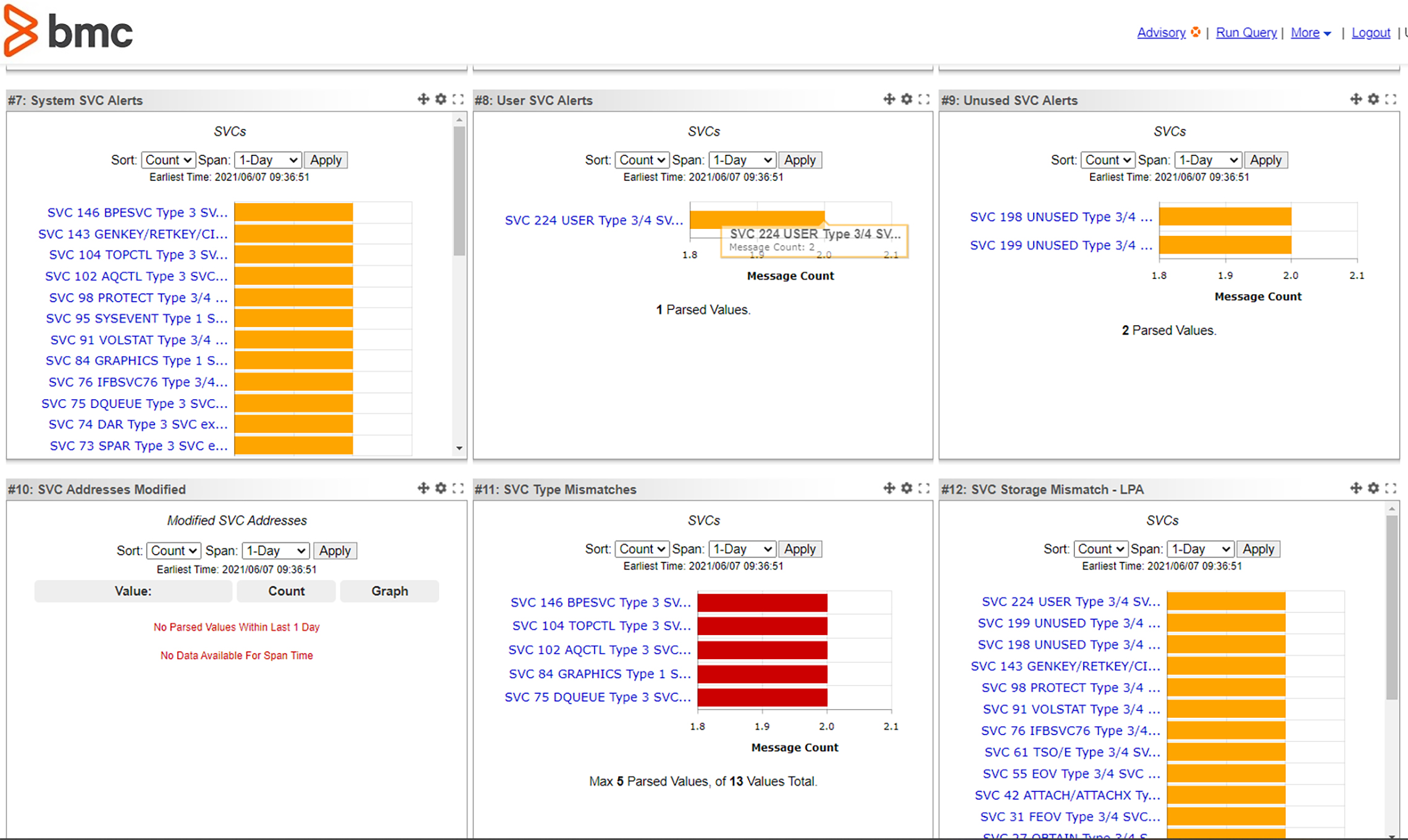
    BMC today announced it has extended its DevOps platform for mainframe environments to provide integrations with GitHub Actions, a framework for managing workflows, and HCL Launch, a continuous delivery platform from HCL Software. BMC gained the DevOps platform with the acquisition of Compuware in June 2020.

    John McKenny, senior vice president and general manager for intelligent Z optimization and transformation at BMC, said those integrations—along with existing support for DevOps platforms such as Jenkins, GitLab and VS Code—make it possible to accelerate the development of applications that include mainframes as part of a larger distributed computing environment. DevOps teams, for example, can now employ an HCL Launch plug-in for the BMC AMI DevOps for Db2 tool to automatically capture and propagate database changes across IBM Db2 databases.

    At the same time, BMC also enhanced a BMC AMI Ops Monitor for Java Environments that automatically discovers all Java virtual machines (JVMs) running on z/OS environments on a mainframe. The BMC AMI Ops Monitor for Java Environments now includes the ability to discover the application programming interfaces (APIs) and services invoked by those JVMs.

    BMC also revealed today that its Workflow WiZard tool has been accepted as part of the open source Zowe initiative launched by the Open Mainframe Project. The Workflow WiZard makes it easier to install, configure and maintain software installed on mainframes running z/OS.

    Finally, BMC revealed it has extended its privileged access management (PAM) tools by enhancing the supervisor call screener and Unix System Service (USS) data enrichment capabilities of BMC AMI Security software. Based on technology BMC gained with the acquisition of RSM Partners, this enhancement increases the level of protection BMC AMI Security software provides to thwart attacks by surfacing suspicious activity, such as from malicious insiders that may have compromised administrator credentials, said McKenny.

    BMC mainframe

    These days, McKenny noted, everything is under attack because the minute cybercriminals discover a way to compromise one platform, they almost immediately try to apply that same technique against other platforms. Mainframe environments, which tend to process an organization’s most valuable data, naturally are a high-value target, added McKenny.

    In general, McKenny said IT organizations that rely on mainframes continue to make steady progress toward embracing DevOps best practices. A recent survey conducted by Forrester on behalf of BMC found 80% of respondents said their mainframe development tools needed significant improvement to provide more value.

    The need to accelerate digital transformation initiatives, which typically require access to data that resides on mainframes, are, in many cases, forcing the DevOps issue within many organizations. Software development teams that build mainframe applications are almost always required to create APIs that make it easier for other applications to consume that data.

    Not every organization, of course, has a mainframe. However, as digital business transformation continues to evolve, the number of applications that need to consume mainframe data will steadily increase. The challenge facing mainframe application management teams is finding a way to provide that access without using traditional waterfall processes to build the required APIs.

  • Digital Customer Experiences: The Future is Modular

    Digital Customer Experiences: The Future is Modular

    With the proliferation of microservices and APIs, will UIs go modular too? Some technologists note a rising trend around smaller, intent-based customer experiences that more directly mirror API endpoints.

    I recently met with Adam Evans, co-founder and CTO of Airkit, to better understand what’s broken with today’s digital customer journeys and how they need to evolve. He predicted that single-purpose experiences will become more pervasive in the future. In the process, we’ll likely encounter fewer native apps and fewer downloads. To enable all this, he’s putting faith in low-code to bring easier integration and automation patterns to more developers.

    The State of Digital Experiences

    Digital customer experiences are becoming increasingly connected and web-based, and at times, disconnected from the core service. In headless environments, end users are engaging with companies through more and more abstraction layers, such as chat, SMS, voice or email notifications. These interactions are increasingly modular and event-driven, noted Evans.

    Increasingly, user encounters are the result of trigger-based patterns activated when user action is required. Not only is the communication style changing, but new devices and platforms have emerged, further making a case for a decoupled development approach. B2C apps become more modular in this transition, presenting experiences built around specific tasks and closely reflecting the specialized microservices or APIs that drive them. Consider the rise of the single page application (SPA) style or AWS Lambda as evidence.

    As more automation and subscription models enable a “set and forget” attitude to commercial software, Evans predicted we’ll likely see more intent- and event-driven workflows emerge. He said these reimagined UIs would shroud platform complexity and, instead, focus on single, specialized actions, like submitting an insurance claim, checking the status of a package or updating your coffee subscription.

    A Broken Customer Journey

    So why would end user digital experiences evolve into more intent-driven applications? Well, complex digital platforms can get feature-bloated very quickly. Bulky applications with many menus are difficult to navigate, thus impacting user experience.

    As Evans describes, generic interfaces often display tons of information irrelevant to the task at hand. “Don’t make me go through generic interfaces to help me do something specific,” he said.

    Clunky interfaces are at odds with small digital tasks that involve an attention span of 20 seconds or less. Evans describes these as “micro touchpoints in our daily lives where you don’t need traditional, large applications.” These actions could be, for instance, looking up COVID-19 infection rates, checking your credit card balance or updating a streaming subscription, he said.

    Organizations have other imperatives to improve user experience, too. For example, if a platform isn’t self-service, it can increase support calls, which can cost a company significant resources. Plus, if the service isn’t event-driven, users must routinely check in of their own accord, which could waste time and encourage tech anxiety.

    Single Page Applications

    In the age of modular microservices, the days of bulky apps and “manual polling” may be limited. To Evans, the solution lies in expressing the “minimum way to represent the transaction of that interface.”

    “How do we keep moving smaller divisions from the back end to the way interfaces are built?” Evans asked. Similar to the way microservices architecture separates domains, Evans noticed UIs segmenting attention along API endpoints. He envisioned more single-purpose experiences being constructed that extend APIs and microservices with a user interface.

    Technically, this may result in more single page applications being developed. Niche UI layers that map APIs would likely carry a data model, Evans described, so that micro apps are delivered with data for entering fields into API calls. As they are web-based, asynchronous single-purpose experiences could also transcend the barriers of app stores and third-party marketplaces.

    Potential Benefits of Modularity

    More intent-based workflows mean less overhead for the user, bringing quicker, more convenient access to the problems they want solved. Sure, users still register with a core service, such as their bank, coffee subscription service or insurance agency for centralized account management. But, users frequent account centers less often, as the periphery of interactions around them continues to grow.

    “The future of apps will look more like individual, intent-based micro apps,” Evans reiterated. These would reflect a metronome of touchpoints Evans called “little moments of delight.”

    Pinging users only when action is required could reduce check-ins, thus reducing digital anxiety. Aside from the user benefits, deployment and maintenance for small applications may be easier to support, said Evans. Lastly, more isolated intentional customer experiences increase engagement, response rates and sales, he added.

    Using Low-Code For Customer Experiences

    Connected digital experiences are relying more and more on APIs. Yet, API integration can be difficult, even for experienced programmers. So, how do we make it easier for people to build interfaces to hit these APIs? Building user-facing layers on top of APIs will require great developer experience, says Evans.

    Lately, low-code has been dominating these discussions. With greater emphasis on visual-driven development, low-code is empowering non-technical employees. To Evans, low-code capabilities will be essential to influence how future customer journeys are constructed.

    Evans noted how low-code “changes the whole game around how apps are built.” For example, branded experiences often require reusable code and common libraries, all of which low-code platforms excel at. In addition, when working with APIs, a “layer over REST design is essential to maintain state and enable long-term processing,” he said.

    Will The New Digital Journey Go Micro?

    Complex interfaces seem to work for conglomerate giants like Amazon. But other scenarios may benefit from more single-purpose workflows. As platforms become more extensive, the user interactions need to become leaner to avoid added stress. As a result, Evans predicts that micro, trigger-based B2C touchpoints will become more common in the coming years. In this paradigm, better UI extensions of common APIs could help bring people into the equation.

    “We’ll see a lot of cool stuff in the next decade,” he said. “Future apps won’t look like what past ones looked like.” As IT moves to support new, multiple channels, such as chat, voice, web and VR/AR, our perception of what an application is also will inevitably alter.

    In tomorrow’s “great unbundling of apps,” as Evans called it, “if you don’t use it every day, there’s a pretty good chance it doesn’t need to be there.”

    There are many schools of thought on the best methods to retain quality user experiences. Do you think modularity is the answer? What do you think tomorrow’s digital experiences will look like? Feel free to let us know in the comments below.

  • API Security by Design

    API Security by Design

    “APIs are nothing new,” said Secure Code Warrior co-founder and CTO Matias Madou, but they have recently become more widely used.

    And where they were once a local mechanism, they are increasingly used in a distributed manner, partly because of changes to application architectures. Another reason is that users are increasingly likely to access systems from outside the organization, whether they are customers, suppliers or employees working at home.

    Potentially anyone and anything can access an API, so developers and architects should therefore assume that APIs are exposed, and treat requests accordingly.

    This means addressing issues such as authentication and authorization, and generally ensuring that the only data exposed by the API is the data that’s supposed to be exposed.

    So assume every API call is malicious, suggested Madou.

    Start at the Beginning

    Achieving API security starts with the design and architecture, so jumping in and writing code immediately is a mistake. Unfortunately, starting with a completely blank slate is unusual, and some code will likely already exist. In that case, it is especially important that the design makes provisions for possible weaknesses.

    If you want secure APIs, then ensure that everyone working on the project – architects, developers, testers and so on – are “very security savvy,” said Madou.

    The need to improve skills is often triggered when the company or one of its competitors experiences a problem.

    So teams should work to identify any existing problems, realize they need to proactively avoid the underlying issues, and undergo appropriate training, he says.

    The trouble is, “security and developers are not often the best of friends,” Madou said. So, developers tend to think that security is the responsibility of their security colleagues. But there should be a common goal: making reliable and secure software.

    “Security needs to help developers,” he said. One way of achieving this is to appoint a ‘security champion’ to act as a bridge between the security and development teams. An embedded security person can help developers realize that security is an enabler, not a blocker.

    Help When Help’s Needed

    Embedding communication from the security team into developers’ workflows is another part of the process. Slack is one possible conduit. Security people need to be wherever developers discuss issues. Then, they can take advantage of opportunities to say things like, “it looks like you’re having problems with SQL injection. Here’s some training material that might help.”

    Developers live in their IDE, so that’s where integration should occur. But design such systems to help developers, not to control them. “Developers are people, not robots controlled by machines,” Madou warned.

    Another consideration is that it’s important to avoid unnecessarily interrupting developers. Such systems should therefore predict what a developer is about to do and deliver appropriate guidance.

    For example, if someone codes a database connection, the system could offer the statements that securely retrieve information. Then, the developer can copy and paste them instead of starting from scratch each time. Using new code every time carries the risk of introducing vulnerabilities.

    “It’s tricky to make these systems,” Madou admited, but he predicted they will become increasingly common in the coming years.

  • Netlify Acquires FeaturePeek to Streamline App Feedback Process

    Netlify Acquires FeaturePeek to Streamline App Feedback Process

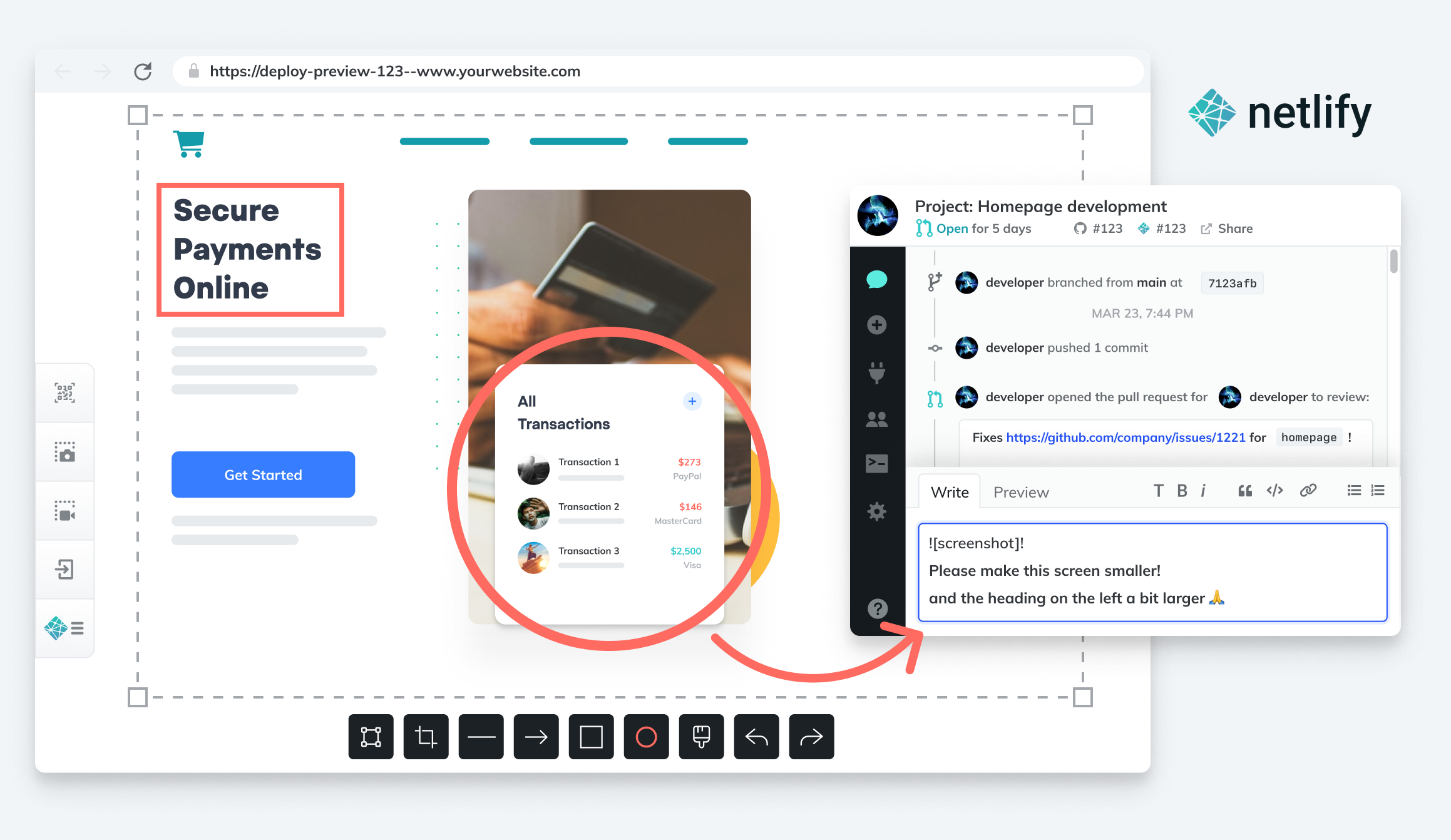
    Netlify announced today it has acquired FeaturePeek as part of an effort to make it simpler for DevOps teams to create a portal through which application stakeholders can both inspect a web application developed using JavaScript and leave comments for developers.

    Matt Biilmann, CEO of Netlify, said Netlify will embed that collaboration capability in the next iteration of its Netlify Deploy Previews. That tool makes it currently possible for a front end pull request from a Git repository to automatically generate a live preview of the site with a unique shareable URL.

    The current version simply shares URLs with application stakeholders, versus enabling DevOps teams to create a portal through which the review process can be centrally managed to make feedback more consistent, said Biilmann. Each piece of feedback from an application owner or stakeholder made via the portal will become a comment on the Git pull request, or can be shared via any collaboration tool a development team employs alongside a Netlify workflow, noted Biilmann.

    In the meantime, Netlify is also making available a free user role license for reviewers that want to make use of Netlify Deploy Previews to view recent updates to applications.

    Netlify has been driving adoption of a serverless computing framework based on a JAMstack architecture for building JavaScript applications faster. An application based on a JAMstack architecture isolates the front end and back end end of an application to make it possible to prebuild front ends that are highly optimized around static pages to make web applications faster. The name JAMstack is a mashup of JavaScript, application programming interface (API) and markup language.

    The need for more collaboration between developers and stakeholders has become more pronounced, in part, because organizations have significantly accelerated the rate at which they are investing in digital business transformation initiatives, noted Biilmann. With organization more dependent on software than ever, it’s critical for them to streamline the feedback cycle as the number of application stakeholders within organizations steadily increases, added Biilmann.

    As the relationship between DevOps teams and the rest of organization continues to evolve, the amount of feedback any team is likely to receive will continue to increase. Everyone from sales teams to the board of directors now realizes how dependent the business is on software. DevOps teams will need to way to organize and prioritize that feedback. They should also expect application owners and stakeholders to follow the progress of software development projects more closely than ever because, in many cases, financial projections are now based on assumptions being made about software delivery timetables.

    Many DevOps teams have been making the case to have a more central role in business planning for years. Now that many of them are getting a seat at the proverbial business planning table, however, they may soon realize they don’t really have the processes in place to absorb the overabundance of enthusiasm and anxiety that application stakeholders are likely to generate in equal measure.