Tag: ai

  • How to Make the Most of In-House Software Development

    How to Make the Most of In-House Software Development

    Let’s be blunt: Maintaining an in-house software development team can be tough. You must hire skilled developers – which is no easy feat in today’s economy, where talented programmers remain in short supply – and then manage them on an ongoing basis. You must also ensure that your development team is nimble enough to respond to changing business needs and that it can adapt as your technology stack evolves. Given these challenges, it’s no surprise that most organizations now outsource application development instead of relying on in-house teams.

    But I’m here to tell you that just because in-house development can be hard doesn’t mean that outsourcing is always the best approach. On the contrary, IT organizations that choose to invest in in-house development for some or all the work can realize lower overall costs and a competitive advantage by creating domain-specific expertise. Keeping development in-house can help organizations address unique security requirements and maintain full control over the development lifecycle and roadmaps. For businesses with specialized technology, security and operational needs, in-house development is often the best strategy.

    Managing an in-house development team presents some steep challenges. At Komprise, we have refined several practices to keep our team efficient and productive, even in a business environment that is constantly changing.

    Scaling Up

    Scaling teams up is a key challenge for in-house development teams. Finding skilled developers to grow a team can be very difficult, especially when working with a bespoke technology stack.

    There is no simple solution to this challenge, but there are steps you can take to maximize your ability to find and hire development talent. For example, we invest significantly in engaging with college students, allowing us to identify promising developers while they are still in training.

    At the same time, we invest in upskilling our developers who are already on our team so they can take on additional responsibilities. We train our engineers in the latest cloud development and security skills and knowledge. The notion of embedding security into our designs and practices is fundamental to what we do. We also rotate engineers between different teams so they learn new technologies that are important to our business. This strategy allows us to align the work for every developer with their interests and to build reusable skills within our teams. We also hold a technical brown bag three times per month where we cover issues like development for cloud and how it differs from on-premises due to costs or how to design for performance and scalability.

    Focus on Customer Value

    Figuring out which features customers want most is a constant challenge. To address it, we quantitatively track how our customers use our product – which functionality they use most often, for example, and how usage patterns vary across different customer demographics. We evolve these metrics as we develop the product. Additionally, we identify customers who are “power users” and occasionally set up calls between them and our developers to gain additional insight into what customers want. Our marketing team also conducts customer advocacy interviews with our users to learn more about what they like and don’t like.

    Looking at third-party applications and interfaces helps us gain perspective on how best to meet user needs, too. For example, we might examine how Wayfair or Amazon are evolving their UI constructs to inform how we could change our product interface in ways that better meet customer needs. We want our B2B product to be as easy to use as consumer products.

    Invest in QA

    Quality Assurance (QA) operations are distinct from development operations, but if you want a successful in-house development team, you need a great QA team, too. Our QA engineers complement our in-house developers by helping them to deliver the highest-quality product, while also strategizing over how best to handle scale and efficiency challenges. In addition, we’ve invested heavily in QA automation, allowing us to test our applications thoroughly while keeping our team lean and efficient. This ensures that as our product feature set expands, our ability to test the entire product does not increase and we can maintain a monthly release cadence. We use test harnesses to simulate error and failure conditions, by injecting failures into the system or making our network experience a brownout or a blackout. You can’t automate every software test, but you can automate most of them, and QA automation is one of the key ingredients in effective development operations.

    Leverage AI Strategically

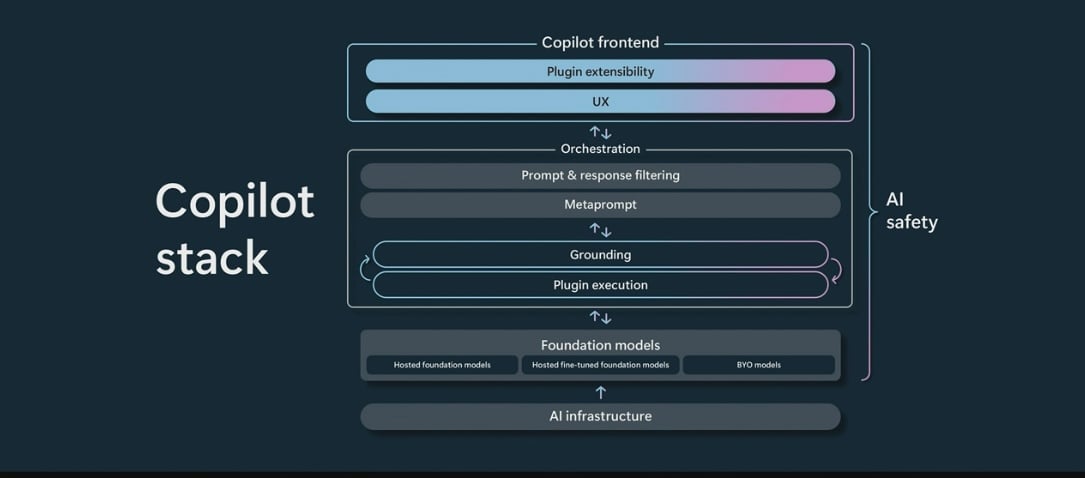
    AI is not the solution to every development challenge, but when used properly, AI can accelerate development and help in-house developers work more efficiently. Using AI tools to churn out code has become a hot use case for AI in development since the introduction of solutions like Copilot. AI can be a very useful solution, but the quality of the results it delivers hinges on the quality of the data it ingests. Inhouse development teams working on AI applications have much to consider from the data perspective. To leverage unstructured data, they need ways to find it across data silos, enrich it with new metadata as needed to support search and leverage AI tools like Amazon Macie and Rekognition to further refine the data.

    Optimizing In-House Development for the Long Term

    The importance of keeping in-house development teams happy and productive is likely only to increase as the tasks they work on grow more complex and as new paradigms, like those driven by AI, change the way developers work. The more IT organizations and enterprises can upskill their existing developers and empower them with the right tools and processes to succeed, the better they can leverage their teams to build products and features that bring value to the business.

  • Using LLMs to Automate Pipeline Conversions From Legacy to Tekton

    Using LLMs to Automate Pipeline Conversions From Legacy to Tekton

    There have been many technological advancements in the market today, but the main hindrance is the cumbersome process of switching from the existing technology/framework to the new one. This is where teams and organizations are left behind in the tech curve. In the DevOps landscape, CI/CD pipelines are the backbone of DevOps, and how you work with them largely dictates your DevOps efficiency.

    CI/CD pipelines, too, like other major technologies and frameworks in the past, have seen various evolutions; the latest among them is being made reusable in an attempt to standardize CI/CD. However, here too, there are several cons:

    1. The pipelines are not proprietary to end-user enterprises and belong to the DevOps platforms which are not open-source
    2. Migrating to these platforms and pipelines is a huge task
    3. They may not be as efficient as depicted

    Speaking of new advancements in technology, most might be familiar with Tekton for CI/CD pipelines: It is Google’s open source framework that is now a graduated CDF project. It redefines how pipelines are built (through reusable tasks) and these tasks are open source and community-vetted. They allow for pipeline authorship, and enterprises can re-use them across platforms that are compatible with Tekton, thus preventing vendor lock-in.

    While this mitigates the first challenge of pipeline ownership and migrations, however, the same problem plagues DevOps teams – transitioning from existing legacy technologies/frameworks to newer, much more capable frameworks like Tekton.

    However, what if there was a way to seamlessly automate your transition from legacy pipelines to cutting-edge, reusable Tekton pipelines without toil? This is precisely what the article aims to explore – automating the conversion of Yaml scripts of existing pipelines to Tekton Yaml scripts.

    Let us consider the three most popular CI/CD platforms for this use case – Jenkins, GitLab and Azure DevOps. Before we proceed to the proposed approach to achieve this (which is detailed in the second half of this article), let us first look at the limitations of Jenkins, GitLab and Azure Pipelines and why one should convert.

    Common Limitations of Jenkins, Azure and GitLab Pipelines

    Resource Intensive: Legacy pipelines can be resource-intensive, especially for larger organizations or projects. Managing server resources, optimizing configurations and ensuring sufficient hardware can be a challenge.
    Complex Setup: Setting up and configuring Jenkins, GitLab and Azure DevOps can be complex, particularly for self-hosted instances. This complexity may require experienced administrators and substantial time investment.
    Plugin and Integration Compatibility: All three platforms may face compatibility issues with certain plugins or integrations.
    Scaling Challenges: Scaling in organizations, especially when dealing with multiple microservices, necessitates a shift from individualized scaling to a template-based approach. Failing to do so leads to a chaotic increase of pipelines, undermining standards and organizational processes.
    Costs: While both Jenkins and GitLab offer free and open-source versions, some advanced features or capabilities may only be available in higher-tier paid plans. This can lead to cost considerations at scale.
    Customization Complexity: These platforms can be complex to customize workflows and integrate custom scripts as they require advanced scripting knowledge.
    User Interface Complexity: Though they have feature-rich interfaces, it can sometimes be overwhelming for new users to navigate the platforms and find specific settings or options.
    Limited Native Integration & Plugins: The native integrations of Jenkins, GitLab and Azure may not cover the full spectrum of tools and services a team may need. Additional integration efforts or third-party tools may be required to bridge gaps in the development workflow.

    As can be seen in the above limitations, many are common including scalability challenges, being resource intensive, limited integrations etc. All the challenges boil down to one common denominator: Complex pipeline management at scale.

    This is where a framework like Tekton can help tackle all the challenges at once, by just easing pipeline management: with its K8s-native pipelines that are reusable, open source and tasks that are community-vetted.

    Tekton Pipelines: Advancing CI/CD with Kubernetes-Native Automation

    Tekton, an open-source project, is rapidly gaining traction as a game-changer in the world of CI/CD pipelines. Its Kubernetes-native design is a standout feature, seamlessly integrating with Kubernetes clusters to harness its scalability and resource efficiency.

    Furthermore, Tekton’s cloud-native roots ensure it can execute tasks in lightweight, ephemeral containers, optimizing resource utilization. The ability to declare CI/CD pipelines as code, coupled with GitOps practices, enhances automation and reproducibility.

    How are Tekton Pipelines Different?

    Kubernetes-Native Automation: Tekton pipelines are deeply integrated with Kubernetes, utilizing Custom Resources and Operators to define and execute CI/CD workflows.

    Declarative and Modular: These pipelines are defined declaratively using YAML manifests, promoting version control, collaboration and code reviews. The modular design of tasks and pipelines enables teams to create reusable components for building, testing and deploying applications.

    Containerization and Isolation: Each task in a Tekton pipeline runs within a dedicated container, ensuring isolation and reproducibility of the build and deployment environment.

    Event-Driven Architecture: Tekton pipelines can be triggered by various events, such as code commits, pull requests, or external events, providing a responsive and event-driven CI/CD process.

    Scalability and Efficiency: Tekton pipelines leverage Kubernetes’ inherent scalability, enabling efficient execution of tasks across a dynamic pool of worker nodes.

    Visibility and Observability: They offer built-in monitoring and logging, allowing teams to gain insights into pipeline execution, track progress and diagnose issues.

    Integration and Extensibility: Tekton pipelines can be easily extended with custom tasks and integrations, enabling teams to connect with various tools, services and cloud platforms.

    Cloud-Native Best Practices: By embracing Tekton pipelines, organizations align with cloud-native best practices, promoting the use of Kubernetes and containerization for streamlined application delivery.

    Why Transition From Jenkins, GitLab, and Azure Pipelines to Tekton Pipelines?

    Migrating from Jenkins, GitLab, or Azure pipelines to Tekton pipelines can be a strategic choice, especially for organizations deeply entrenched in Kubernetes and cloud-native methodologies.

    Optimize Kubernetes-Centric Workflows: Projects tightly integrated with Kubernetes may find Tekton pipelines more aligned with their ecosystem.

    Accelerate Cloud-Native DevOps: Organizations aiming to embrace a cloud-native approach and leverage Kubernetes infrastructure.

    Performance and Scalability: Tekton pipelines run on clusters that can dynamically be created and destroyed according to demand, thus taking resource optimizations to the next level.

    Cloud-Native Best Practices: Best practices, such as containerization, declarative configuration and infrastructure-as-code are a natural fit due to their Kubernetes-native design.

    Proposed Workflow for Automating Pipeline Conversions at Scale

    The overarching objective of this workflow is to facilitate a seamless conversion process using large language models (LLM) without delving into the intricacies of fine-tuning but rather using the benefits of prompt engineering. Central to this approach is the use of the chat context and the strategic application of roles for LLM models to establish context. Along with this, sample pipelines are leveraged to train and fine-tune the model to define how the corresponding YAMLs of all these platforms look for any given pipeline.

    The use of prompts and instructions tailored to fit the use case of generating contextual pipeline YAML and conversion of Jenkins/Gitlab pipelines to Tekton pipelines makes this workflow possible. We maintain a context and a contextual mapping of real-world examples and the most appropriate prompt designs to produce the most accurate responses. The role of users in this context adds weight and further refines the response received.

    However, before proceeding into details and examples, let’s set the base for what exactly generative AI means and its context in our use case:

    Generative AI and LLM for Automating YAML Script Conversions

    Generative AI, such as LLMs, create content like text, benefiting from patterns in large datasets. Large language models (LLMs), with billions of parameters, excel in generating human-like text by understanding language structures. They have broad applications, including natural language understanding, summarization, translation and content generation, promising automation and human-like interactions with AI.

    Adapting the Model to Solve Real-world Use Cases

    Fine-tuning and prompt engineering are two common methods used to train large language models (LLMs) like GPT-3, BERT and others. These methods help adapt pre-trained models for specific tasks or generate contextually relevant responses. Both fine-tuning and prompt engineering play crucial roles. Fine-tuning helps the model comprehend complex use cases, while prompt engineering provides detailed requirements, extracting the best results from the model.

    Why Prompt Engineering?

    Prompt engineering stands out as a highly advantageous approach in specific use cases where precision, control and customization over AI model behavior are paramount. This method empowers developers and users to meticulously design input prompts, effectively guiding AI models to produce contextually relevant and desired responses.

    Prompt engineering is both an AI engineering technique for refining large language models (LLMs) with specific prompts and recommended outputs and the term for the process of refining input to various generative AI services to generate text or images.

    The process of prompt engineering to fit our use case includes :

    Defining the goal: The first step in the process of AI prompt engineering involves setting a clear objective.

    Crafting the initial prompt: With the goal in mind, it’s time to draft an initial prompt. This could take the form of a question, a command or even a scenario, depending on the goal.

    Testing the prompt: The initial prompt is then input into the language model, and the response is analyzed.

    Analyzing the response.

    Refining the prompt: With the insights gathered from testing and analysis, it’s time to revise the prompt. This could involve making it more specific, adding more context or changing the phrasing.

    Iterating the process: The testing, analyzing and refining steps are repeated until we are satisfied that the prompt consistently guides the model toward generating the desired response

    To conclude, here’s an example of typical YAMLs from Jenkins, GitLab and Azure DevOps, and how the same YAML looks when converted to a Tekton YAML. This goes a long way in facilitating teams to finally make a jump from their existing pipelines to cutting-edge reusable pipeline frameworks:

    Jenkins YAML

    GitLab YAML

    Azure YAML

    Converted Tekton YAML

  • SmartBear Acquires Reflect to Gain Generative AI-Based Testing Tool

    SmartBear Acquires Reflect to Gain Generative AI-Based Testing Tool

    SmartBear this week revealed it has acquired Reflect, a provider of a no-code testing platform for web applications that leverages generative artificial intelligence to create and execute tests.

    Madhup Mishra, senior vice president of product marketing at SmartBear, said the platform Reflect created will initially be incorporated into the company’s existing Test Hub platform before Reflect’s generative AI capabilities are added to other platforms.

    Reflect provides access to a natural language interface to create tests using multiple large language models (LLMs) that it is designed to invoke. It can also understand the intent of a test to understand what elements to test regardless of whether, for example, a button has been moved from one part of a user interface to another, said Mishra. Test step definitions, once approved, can also be automatically executed using scripts generated by the platform.

    SmartBear has no plans to build its own LLMs, said Mishra. Rather, the company is focusing its efforts on providing the tools and prompt engineering techniques needed to effectively operationalize them, he added.

    Reflect is the tenth acquisition SmartBear has made as part of an effort to provide lightweight hubs to address testing, the building of application programming interfaces (APIs) and analysis of application performance and user experience. Last year, the company acquired Stoplight to gain API governance capabilities.

    Rather than building a single integrated platform, the company is focused on providing access to lightweight hubs that are simpler to invoke, deploy and maintain, said Mishra. The overall goal is to meet IT teams where they are versus requiring them to adopt any entirely new monolithic platform that requires organizations to rip and replace every tool they already have in place, he said.

    There is little doubt at this point that generative AI will have a profound impact on application testing in a way that should ultimately improve the quality of the applications. As the time required to create tests drops, more tests will be run. Today, it’s all too common for tests not to be conducted as thoroughly as they should be simply because either a developer lacked the expertise to create one or, with a delivery deadline looming, they simply ran out of time.

    Naturally, the rise of generative AI will also change how testing processes are managed. It’s not clear how far left generative AI will push responsibility for testing applications, but as more tests are created and run, they will need to be integrated into DevOps workflows.

    Of course, testing is only one element of a DevOps workflow that is about to be transformed by generative AI. DevOps teams should already be identifying manual tasks that can be automated using generative AI as part of an effort to further automate workflows that, despite commitments to automation, still require too much time to execute and manage. Once identified, DevOps teams can then get a head start on redefining roles and responsibilities as generative AI is increasingly operationalized across those workflows.

  • Legit Security Applies AI to Detect Vulnerable Application Secrets

    Legit Security Applies AI to Detect Vulnerable Application Secrets

    Legit Security today announced it has expanded the scope of its application security posture management (ASPM) platform to make use of artificial intelligence (AI) to discover secrets more accurately in applications that cybercriminals can actually exploit.

    Scanners typically generate high false positive rates to the point where developers often start to ignore them. As a result, it’s not uncommon for secrets to be discovered in an application even though an alert was generated.

    Legit Security CTO Liav Caspi said the company is now applying a large language model (LLM) specifically trained for source code along with prompt engineering techniques and heuristics to reduce the level of alert noise that developers would otherwise see when scanning for secrets. The overall goal is to correctly identify access keys, passwords, application programming interface (API) keys and other personally identifiable information (PII) that should not be exposed once an application is deployed in a production environment, he noted.

    That capability can be applied to detect secrets across all development assets, including code repositories, source code management (SCM) tools, build tools and logs, artifacts and private and public documentation. In addition, this approach also uncovers toxic combinations of secrets or ones that might lie buried within assets such as source code history or modified Confluence pages that developers often forget exist, noted Caspi.

    Legit Security also enables DevSecOps teams to apply preventive guardrails on developer endpoints using the Legit command line interface (CLI) to stop secrets from being exposed before code is pushed. In addition, automated workflows can reach developers as part of a pull request or create Slack messages or Jira tickets to streamline remediation. DevSecOps teams can also continuously triage results to create a baseline that includes exceptions.

    As part of a larger effort to secure software supply chains, Legit Security has developed a software-as-a-service (SaaS) platform designed to apply security policies across an entire software development life cycle. The company is now extending the capabilities of that platform using AI technologies to detect secrets in both source code and all the components that make up a development pipeline as they are added.

    In the wake of an executive order requiring federal agencies to better secure software supply chains, there is now more focus than ever on application security. Unfortunately, many developers are a little too cavalier when it comes to managing secrets during the application development process. They often leave secrets in plain text to facilitate workflows, but more often than many care to admit, those secrets are not removed before an application is deployed. Knowing this, cybercriminals have learned to scan applications for those exposed secrets. Once gained, they then appear to be just another legitimate user of an application that might not be discovered until malware is activated.

    It may be a while before the cultural and technical issues that conspire to make the software supply chain insecure are fully addressed. In fact, the problem may get worse before it gets better—simply because the pace at which distributed applications are being built and deployed only continues to accelerate. At the same, the cost of making a secrets mistake is also only going to increase as regulations become more stringent. In fact, it’s now only a matter of time before stiff fines intended to make an example of one or more unfortunate organizations are eventually going to be levied.

  • 2024 Infrastructure Tech Predictions

    2024 Infrastructure Tech Predictions

    Ganesh Srinivasan, partner at Venrock, co-authored this article.

    2023 was a rollercoaster like none other; from the death of the modern data stack sprawl to the birth of generative AI, we are only at the beginning of a new era in the ‘art of the possible.’ We guarantee 2024 won’t be a disappointment.

    With a new year approaching, it’s the perfect time for us to examine what we anticipate being the biggest developments in the year ahead. Here is what we think is going to happen in 2024:

    1. OpenAI’s Reign Challenged

    With the emerging learnings in core neural net architectures that led to the transformer and dominance by OpenAI, it is likely that their imminent release of GPT5 will be surpassed in specific performance benchmarks by a new entrant on the backs of more efficient architectures, improved multimodal capabilities, better contextual understanding of the world and enhanced transfer learning. These new models will be built on emerging research in spatial networks, graph structures and combinations of various neural networks that will lead to more efficient, versatile and powerful capabilities.

    2. Apple: The New Leader in Generative AI

    One of the most important players in the generative AI space is only starting to show their cards. 2024 will be the year Apple launches its first set of generative AI capabilities, unlocking the true potential of an AI-on-the-edge, closed architecture with full access to your personal data – showing that Apple is actually the most important company in the generative AI race.

    3. Building for Client-First

    The last decade has reflected a shift away from fat clients to server-side rendering and compute. But the world is changing back to the client. Mobile-first experiences will be required to work in offline mode. Real-time experiences require ultra-low latency transactions. Running LLMs will increasingly be required to run on the device to increase performance and reduce costs.

    4. Death of Data Infrastructure Sprawl

    The rapid growth of the data infrastructure needs of enterprises has led to an increasing sprawl of point solutions, from data catalogs, data governance, reverse extract, transform, load, and airflow alternatives to vector databases and yet another lakehouse. The pendulum will swing back to unified platforms and fewer silos to bring down the total cost of ownership and operating overhead going into 2024.

    5. Approaching the AI Winter

    Generative AI in 2023 could be best characterized as the ‘art of the possible,’ with 2024 being the true test to see if prototypes convert into production use cases. With the peak of the hype cycle likely here, 2024 will experience the stage of disillusionment where enterprises discover where generative AI can create margin-positive impact and where the costs outweigh the benefits.

    6. The Misinformation Threat

    While image and video diffusion models have unlocked a new era for digital creation and artistic expression, there’s no doubt that its dark side has not yet taken its toll. With a presidential election in the wings, diffusion models as a machine for political disinformation will emerge to become the next major disinformation weapon of choice.

    7. AI’s Real-World Breakthrough

    Coming out of the ‘field of dreams’ era for AI, 2024 will represent a breakthrough for commercial use cases in AI, particularly in the physical world. Using AI for physical world modalities will unlock our ability to change and engage with the machines and devices around us, from understanding machine telemetry for problem detection to distilling insights across thousands of real-time sensor feeds.

    8. S3: The Growing Threat to Snowflake

    AWS S3 is about to become the biggest competitor to Snowflake. With a rapidly growing ecosystem of tools emerging as the compute layers on top of S3 leverage their ultra-low costs, high availability, Availability Zone support, and new single-digit millisecond latency service, everyone’s ‘Snowflake cost problem’ is about to have a new set of attractive alternatives.

    9. The Rise of Flink and Operational Analytics

    If business analytics drove the first wave of the data infrastructure evolution, operational analytics will drive the next wave, with Apache Flink at the center of it. Enterprises will begin en masse adopting real-time and streaming capabilities to begin using data to drive operational decision making. This will create new value in areas such as logistics, financial transactions, inventory management and fraud detection.

    10. The Developer AI Stack

    Going into 2024, AI’s most significant impact in the digital world will be unlocking developer productivity. From code generation to debugging to build management, AI will unlock a new level of developer productivity that we haven’t seen since the advent of the cloud.

    If you agree, disagree or would like to share your own 2024 predictions with us, please reach out on X at @ethanjb and @gan3sh.

  • The Age of Platform Engineering: What to Expect in 2024

    The Age of Platform Engineering: What to Expect in 2024

    Platform engineering has been gaining traction over the last few years, with some likening it to the next iteration of DevOps. Gartner has called it one of the top strategic trends of 2024 – and has predicted that 80% of large software engineering organizations will establish platform engineering teams by 2026. But what’s driving the momentum?

    I believe it’s a result of maturity in the adoption of the cloud by enterprises of all sizes and shapes. As more and more enterprises started using the cloud and embraced DevOps as a path towards quickly taking features to the market, there was a clear need to rethink how the underlying infrastructure and platforms were used for enterprise applications. Platform engineering emerged as the new path to building and managing the underlying application infrastructure.

    It’s been a growth year for platform engineering, but in today’s era of hybrid-cloud-meets-generative-AI, we see new trends emerging in this space. So, what’s next? Here is what we expect to see as we head into 2024.

    Product-Centric Funding Model

    Traditionally, IT was seen as a gatekeeper and cost center. With the cloud, developers gained more leverage in procuring the infrastructure they wanted for their applications. Enterprises realized the value of modernizing their IT operations to meet this modern need and wanted to transform their cloud operations to be part of the innovation team. They see platform engineering as the transformational approach that aligns cloud operations with developers and business users. However, platform engineering requires a product-centric funding model instead of project-centric models in the past, as a product-centric model doesn’t have a start and end date like projects and aligns closely with the product lifecycle with ongoing funding. Enterprises need to recognize this shift from the status quo widely, and we expect this realization to come for businesses in 2024.

    Platform Engineering as an Extension to DevOps

    As enterprises embraced DevOps to accelerate their application development, they still used the traditional gatekeeping models with cloud operations. The embrace of traditional guardrails in the cloud created friction and slowed innovation. With its “as code” model, platform engineering is well suited for reducing friction and accelerating innovation. We expect organizations to embrace platform engineering as the natural extension of DevOps to operate at the speed of business.

    Generative AI Capabilities

    Generative AI is at the peak of the hype cycle as we close out 2023, and in 2024, we will see some enterprise-ready use cases come to life. Generative AI will augment platform engineering with code assistants to create infrastructure-as-code, governance-as-code and security-as-code to ensure smooth Day 2 operations. We will also see chatbots leveraging generative AI to help SREs and other platform engineering pros with documentation, infrastructure playbooks and other relevant use cases.

    2024 is a critical year for organizations as they fend off the economic forces and embrace technological advancements to compete in the global market. Most CXOs will see platform engineering as the top strategic trend to focus on because it brings productivity and cost efficiencies to their organization. This is only the beginning, and the coming decade will be defined by platform engineering, laying a firm foundation for AI-driven innovation in enterprises.