For most of its short life, Claude has lived inside a chat window. You type, it responds. That model is changing fast.
Anthropic recently expanded Claude Code and Claude Cowork with a new computer use capability that lets the AI directly control your Mac or Windows desktop — clicking, typing, opening applications, navigating browsers, and completing workflows on your behalf. It’s available now as a research preview for Pro and Max subscribers.
The short version: Claude can now do things at your desk while you’re somewhere else.
How it Actually Works
Claude doesn’t reach for the mouse first. It prioritizes existing connectors to services like Slack or Google Calendar. When no connector is available, it steps up to browser control. Only when those options don’t apply does it take direct control of the desktop — navigating through UI elements the way a human would.
Claude always requests permission before accessing any new application, and users can halt operations at any point.
That layered approach matters. It reflects a design philosophy that limits how often the AI needs to interpret raw screen pixels, which is slower and more error-prone than using a structured API. Screen-based control is the fallback, not the default.
The feature is built partly on technology from Vercept AI, a startup focused on AI-powered computer control that Anthropic acquired roughly four weeks ago. By all accounts, the integration moved quickly. According to co-founder Kiana Ehsani, her team shipped its first product less than four weeks after joining Anthropic.
Dispatch Makes it Practical
Desktop control is more useful when paired with Dispatch, a companion feature Anthropic rolled out alongside computer use. Dispatch lets you assign Claude tasks from your phone. You can tell Claude to automatically check your emails every morning, pull some metrics every week, or spin up a Claude Cowork or Claude Code session for a report or a pull request.
You assign a task from your iPhone — commuting, at a coffee shop, in a meeting — and Claude picks it up on your Mac at home or in the office. When you get back to your desk, the work is done.
That’s not a hypothetical workflow. For developers who already live inside Claude Code, it means delegating UI-heavy tasks — file management, legacy app navigation, browser-based workflows — without needing to sit at a terminal. For non-developers using Cowork, it means getting more done with fewer context switches.
Two Tools, Same Capability, Different Audiences
Claude Code is the command-line coding agent built for developers — helping engineers write code, run tests, submit pull requests, and manage repositories from the terminal. The computer upgrade extends its reach beyond the terminal, letting it interact with any application on your Mac. Claude Cowork is designed for everyone else. It lives inside the Claude Desktop app and was introduced in January 2026 after Anthropic noticed that developers using Claude Code were applying it to far more than coding.
Both tools now share the same computer use capability. The entry point just depends on your workflow.
“Full desktop control marks a structural shift in what AI platforms are expected to deliver. The standard is moving from generating content to executing workflows, and Anthropic, OpenAI, and Google are all competing to own that execution layer,” according to Mitch Ashley, VP and practice lead for software lifecycle engineering at The Futurum Group.
“The security implications require equal attention. Prompt injection against an agent with full desktop control is a different threat model than injection against a text interface. Enterprise teams need governance in place before deploying this, not after.”
The Security Conversation Can’t Wait
Anthropic is unusually candid about where this feature stands. The company published its own warning: “Computer use is still early compared to Claude’s ability to code or interact with text. Claude can make mistakes, and while we continue to improve our safeguards, threats are constantly evolving.”
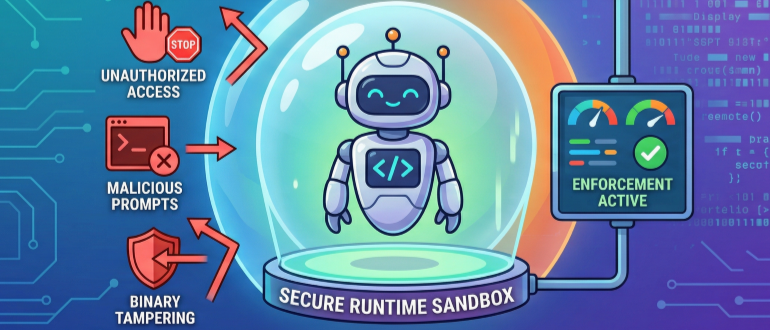
The core concern is prompt injection. A malicious actor could embed hidden instructions inside a webpage or document that Claude reads, causing it to take actions the user didn’t authorize. Anthropic says it has built automated scanning to detect prompt-injection attempts, but the company acknowledges this is an evolving threat.
There’s also a precedent worth noting. A data exfiltration vulnerability in Cowork surfaced just two days after its January 13 launch. With full desktop control now in the picture, the attack surface is larger. Anthropic has implemented safeguards, but the security calculus is meaningfully more complex here than it was with text-only interactions.
For now, Anthropic recommends against using the feature alongside applications that handle sensitive data. That’s a reasonable guardrail, but it also signals that this technology needs more maturation before it’s enterprise-ready at scale.
What the Trajectory Looks Like
Claude Code has surpassed $2.5 billion in annualized revenue, up from $1 billion in early January 2026. The pace of development matches those numbers. Arriving just ten days after a macOS-only debut on March 24, the Windows launch marks Anthropic’s fastest platform expansion for a feature still in research preview.
The bigger picture here isn’t just about one AI assistant doing tasks at your keyboard. It’s about what developers and enterprise teams will expect from AI platforms going forward. The standard is moving from “help me write this” to “go handle this.” Anthropic isn’t alone in chasing that goal — OpenAI and Google are both pushing in the same direction — but full desktop control is a meaningful step toward an AI that operates inside your workflow rather than alongside it.
The research preview label is honest. This isn’t finished. But it’s working, it’s expanding fast, and the productivity implications for teams willing to test and iterate are real.