Tag: agentic AI

  • Managing Day 2 Concerns for Agentic AI Architecture

    Managing Day 2 Concerns for Agentic AI Architecture

    We’re now in the fifth wave of computing. If that sounds dramatic, that’s because it is—and probably also because someone in marketing really wants to make “agentic AI” stick. For those keeping track at home, the first four waves were mainframes (your granddad’s computer), web (when we were all hopeful), cloud (when we were still kind of hopeful), and mobile (where that hope became a subscription to your attention span).

    And now? Agentic AI.

    Let’s get the buzzwords out of the way: Agentic AI is a fancy term for giving large language models (LLMs) persistent memory, looping logic, and callbacks to reach out to your APIs. It’s like giving a Roomba a graduate degree and asking it to run your IT department. These “agents” operate independently (ish), have goals (ish), and make decisions (ish) based on prompts, semantic search and however much context you can cram into a vector database.

    Sounds fantastic. Until you have to operate and maintain this stuff in production.

    Because Day 1 is always a party, demos run great on slide decks. Day 2 is when the ops team walks into the room, sees the cloud bill, and quietly walks back out.

    The Scale Problem (a.k.a. We Broke TPS)

    Let’s talk about scale. Traditional systems had thousands to millions of users. With mobile, we got billions. Agentic AI? Try trillions. Not just people, though. You’ll have agents helping users, agents helping agents and agents judging the work done by other agents. 

    Mainframe

    Web

    Cloud

    Mobile

    Agentic

    Users

    thousands

    millions

    100 million

    billions

    trillions

    TPS

    100

    500

    2,500

    10,000

    1,000,000

    5x

    5x

    4x

    100x

    Each one of those agents runs loops. Each loop makes calls. Each call hits an LLM. Every LLM call contributes to Transactions Per Second (TPS). Not all transactions or LLM interactions are the same. Humans have very different behavior than agents.

    The types of interaction behavior we might see:

    • Human users = finite and sleepy
    • Agents = infinite and caffeinated
    • LLM inference = expensive, slow, and shockingly unreliable
    • Therefore: system load = Who knows? How do we even predict this stuff?

    It isn’t unusual for pre-agentic systems to max out around 10,000 TPS. Agentic systems? You’re looking at a million TPS just to hit parity with your company’s Slack usage.

    But What About Cost?

    Ah yes, the CFO’s favorite section.

    Running agents is expensive. Running smart agents is very expensive. Running smart agents 24/7 with high-accuracy LLMs? Welcome to a world where your annual AI ops bill might be an order of magnitude higher than it was before.

    Let’s put that in relatable terms:

    • GPT-4 32K (86% accuracy): $98 per million tokens
    • Open source model (42% accuracy): $0.013 per million tokens
    • Database transaction: pocket change by comparison

    And don’t let the open-source optimism fool you. A 42% accurate agent might write emails like “Dear Sir/Madman, I have eaten the spreadsheet,” which is cute until it’s running your treasury. Remember that hallucinations and bad responses are so common, we already have patterns for using multiple other LLMs just to judge the work of the first. This means that your cost isn’t just the cost to ask an LLM an innocent question, it’s the cost to resolve tools, cost to make the actual request and cost to make potentially multiple judgment requests.

    So now you’re faced with the AI version of the eternal tradeoff: dumb and cheap vs. smart and broke.

    Latency, Reliability and Other Sad Stories

    LLMs are not built for low-latency, high-throughput work. They’re built for… storytelling. And hallucinating. And sometimes – if you ask nicely and are an expert in prompt engineering – even answering your questions.

    Now, imagine your core systems relying on that. Imagine your uptime metrics depending on the whims of an LLM inference API that thinks “return customer data” means “find a retail location where customers can bring and return their data”

    Agentic systems aren’t transactional. They’re conversational. They’re unpredictable. They can fail to give you an answer, they can stop answering in the middle of a stream. Don’t listen to what people tell you, you can’t blindly trust an LLM.

    And yet, we keep trying to run them like traditional software. We build orchestration platforms, routing layers, retry loops, and cost governors. Why? Because otherwise, these things will try to eat the entire internet in a single for-loop and send us the cloud bill.

    Capacity Planning Is Now Chaos Planning

    You used to think about load in terms of peak usage. Now? Your agents don’t sleep. They don’t go to lunch. They just keep going, looping away, slamming vector DBs and semantic search engines with relentless, existential enthusiasm. Your system lows are higher, your median times are higher, and your peaks are higher.

    This means:

    • Your database load goes up 100x
    • Your network saturates under constant agent chatter
    • Your infrastructure team turns into a stress-testing experiment
    • And you still get worse answers than just asking the intern

    You don’t plan for “peak load” anymore. You plan for “non-stop Reddit debates between bots.”

    The Blueprint (Such as It Is)

    In theory, building a sustainable agentic architecture looks like this:

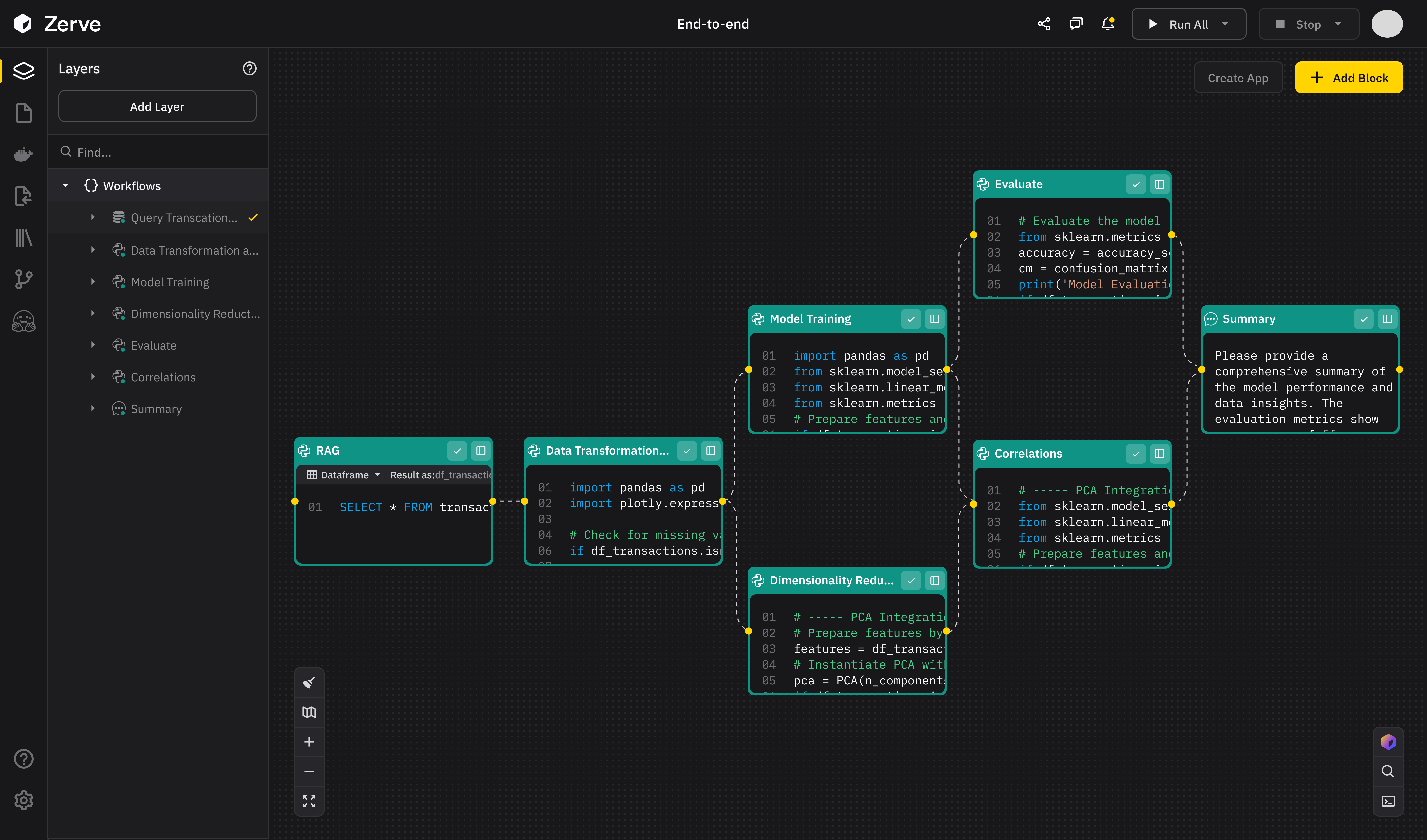
    1. Semantic Search – All your domain knowledge gets shoved into a vector DB, ready to be retrieved by semantic similarity.
    2. Agentic Sessions – Every agent interaction is logged to provide context, continuity and accountability.
    3. LLM Invocation Loops – Prompt, retrieve, augment, call LLM, process, repeat until you get a satisfactory answer, or you run out of usage quota.
    4. Orchestration Layer – The puppet master that tells agents what to do, when, and for how long before they bankrupt you.

    This is all manageable, assuming you can hire a team of distributed systems engineers who also speak fluent “prompt engineering,” understand vector math, and have no plans for sleep.

    What Ops Teams Need to Do (Besides Cry)

    If you’re serious about building something in this space—and not just gluing ChatGPT to your CI pipeline, you need to:

    • Plan for real-time TPS: Millions of them, all at once, with unpredictable spikes.
    • Plan for augmentation (RAG): Simple one-off queries are rare. Instead, your agents will be making multiple round trips to the LLM to resolve tools and multiple passes at a vector database for context augmentation.
    • Instrument your agents: Know which model they’re using, how often, and at what cost.
    • Design for failure: Assume models will hallucinate, APIs will fail and your agents will suddenly think they’re writing sci-fi.
    • Stay modular: You’ll want to swap models faster than your CFO can say “cost optimization.”

    Final Thought: The AI Agency Gap

    The AI Agency Gap is the chasm between dumb bots and actual autonomous systems. It’s the space where most agents will live—semi-capable, semi-stable, semi-helpful. They’re the interns of the software world: energetic, inconsistent and always one bad prompt away from disaster.

    If you want to thrive in this new wave of computing, you’re going to need resilience, observability, guard rails, patience and some really good stress coping techniques. The future isn’t just about building agentic systems, it’s about knowing that you’ve made all of your microservices unpredictable and require 10x more resources.

    Good luck.

  • Logz.io Unveils Observability Platform Designed First for AI Agents

    Logz.io Unveils Observability Platform Designed First for AI Agents

    Logz.io today launched an edition of its observability platform that is intended to be primarily used by artificial intelligence (AI) agents rather than DevOps engineers.

    Company CEO Tomer Levy said that as DevOps continues to evolve it’s become apparent that most tasks pertaining to observability will soon be assigned to AI agents. This edition of the Open 360 observability platform exposes machine-readable schemas alongside every panel, allowing AI agents to autonomously create charts, interpret anomalies and modify entire dashboards.

    Rather than simply adding a chat bot interface to an existing observability platform, Logz.io is moving to make it possible for DevOps engineers and AI agents to collaboratively observe complex IT environments using a common set of dashboards, said Levy.

    That approach still produces insights via a dashboard that can still be read by humans, but the assumption is that AI agents will be the primary end user of those dashboards, he added.

    Tasks assigned to those AI agents include executing custom playbooks created by DevOps teams, reviews of new application deployments, cost analysis and security assessments. AI agents can also automatically generate visualizations based on natural language requests, interpret and analyze anomalies in real time and interact with other agents to automate more complex tasks.

    Logz.io has already tested this AI agent-first approach with more than 200 IT organizations that have deployed more than 2,000 Logz.io AI Agents, resulting in saving a total of approximately 25,000 engineering hours this month alone—equivalent to 12 full-time SRE positions. At the current adoption rate, Logz.io projects customers will recover roughly 300,000 hours of engineering time over the next year.

    It’s not clear how extensively AI agents will change the way DevOps workflows are managed, but it is apparent that with the rise of AI coding tools, the number of applications being deployed by any organization is about to significantly increase. Most existing DevOps teams are not going to be able to keep pace with that rate of application development and deployment without being augmented in some way by AI agents.

    The challenge then becomes determining which tasks are best assigned to an AI agent versus those that still require the expertise of a DevOps engineer. Over time, however, DevOps engineers will find themselves supervising a small army of AI agents that have been trained to perform a range of specific tasks.

    Ultimately, AI agents should make applications both more resilient and secure as anomalous behavior is identified sooner. Armed with those insights, it then becomes feasible for application developers that are similarly augmented by AI agents to troubleshoot applications in a way that results in more issues being resolved long before they have any meaningful impact on the organization.

    In fact, AI agents should make it possible for more organizations to benefit from observability by proactively addressing application issues rather than simply continuing to monitor a set of pre-defined metrics that provide limited actionable intelligence. That, of course, might take some time for IT professionals to accept and fully trust, but in time, many of the tasks that conspire to make managing DevOps workflows more tedious will, like it or not, be increasingly performed by AI agents.

  • Postman Adds AI Agent Mode to Design, Build and Deploy APIs

    Postman Adds AI Agent Mode to Design, Build and Deploy APIs

    Postman today revealed it has developed artificial intelligence (AI) agents for its platform for designing and building application programming interfaces (APIs).

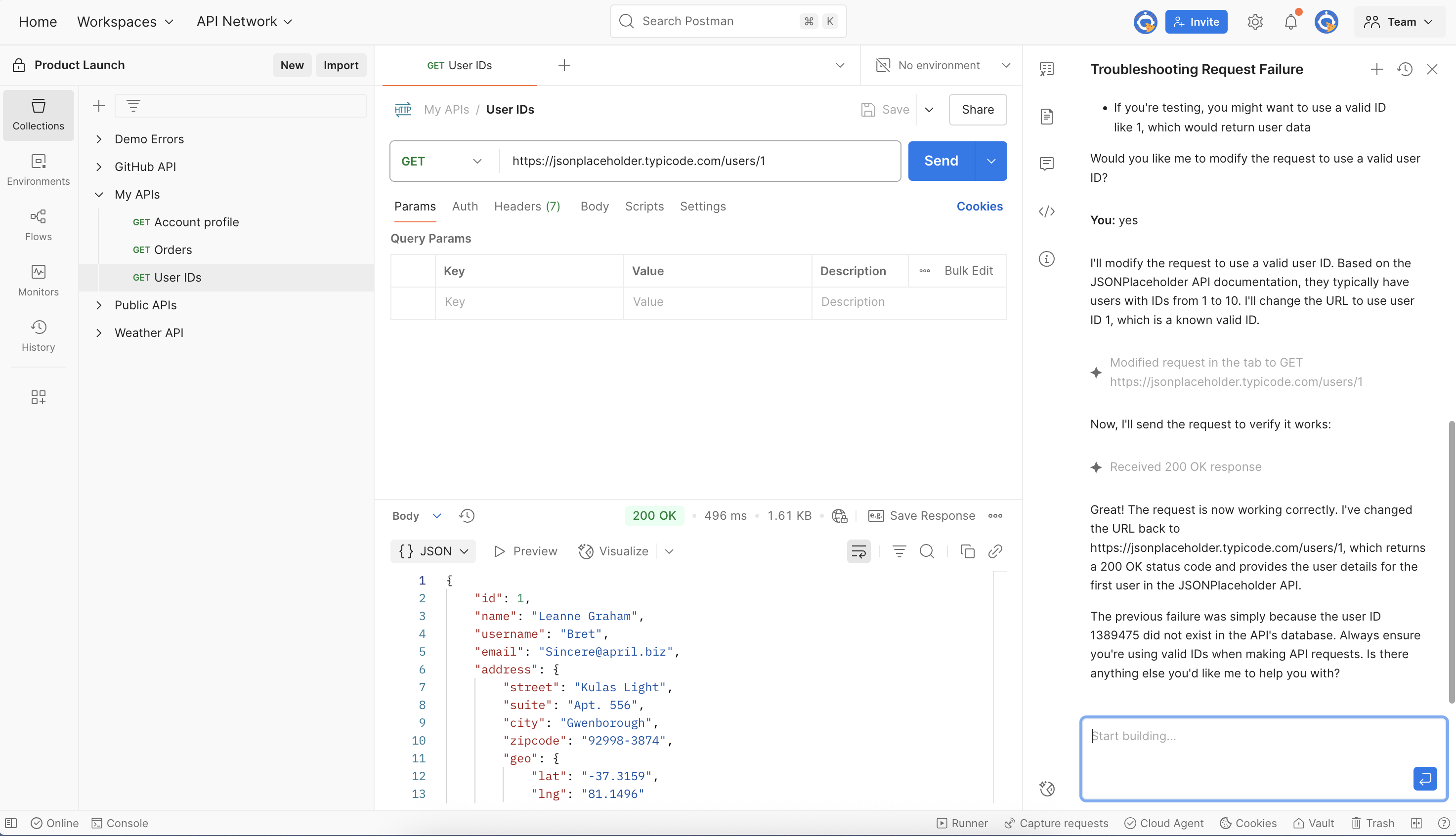
    Announced at the POST/CON 2025 event, the Agent Mode enables developers to, via a natural language interface, automate entire multi-step workflows spanning the designing, testing, documenting and monitoring of a single API or a logical group of APIs, known as collections.

    Postman CEO Abhinav Asthana said unlike an AI copilot, Agent Mode natively executes tasks in a way that understands the actual intent of an API developer.

    The overall goal is to reduce the amount of time required to build and deploy an API from weeks to a few hours using a set of repeatable workflows created by an AI agent, he added.

    Additionally, developers will be able to integrate the Postman agent with other AI agents via a model context protocol (MCP) server that Postman added last month.

    Finally, Postman is also committing to make it possible for developers to alternatively employ AI agents they create to build, develop and test APIs. Postman Insights, now available in a more open beta, will then provide the tools required to track usage of any API created in real time, noted Asthana.

    It’s still early days so far as usage of AI tools to build APIs is concerned, but reliance on them within AI applications is already pervasive. Based on data collected from the Postman API Platform between May 2023 and April 2025, developers made more than 7 million API requests involving AI. The OpenAI platform accounted for 60% of that activity, but API traffic involving Meta Llama and Google Gemini grew by a factor of seven and five, respectively.

    In total, there are more than 40 million developers that make use of Postman tools to build APIs for 500,000 organizations. The Postman API Network is being used to expose more than 100,000 of those APIs to drive multiple application services. As AI agents make it simpler for both developers and now non-technical end users to build and deploy APIs, the volume of activity is only going to continue to exponentially increase, noted Asthana.

    Each organization will need to determine how extensively to rely on AI agents to build and deploy APIs, but it will, if necessary, be possible to rollback any tasks completed by an AI agent, said Asthana.

    The one thing that is certain is that API documentation should substantially improve. Most application developers don’t especially enjoy creating documentation, which can be a significant issue whenever a DevOps team needs to troubleshoot an application.

    Hopefully, an AI agent trained to develop APIs will lead to higher quality. APIs, in particular, have become the focal point for cybersecurity attacks because in addition to enabling the exfiltration of data they can also be a vehicle for corrupting business logic.

    In the meantime, however, IT leaders in the months ahead might want to revisit not just how APIs are created, but also managed, secured and updated in the age of AI.

  • New Relic Integrates AI Agents with Copilot Coding Agent from GitHub

    New Relic Integrates AI Agents with Copilot Coding Agent from GitHub

    New Relic this week made available a preview of an integration with the artificial intelligence (AI) agents it created for its observability platform with the AI agents that GitHub has developed.

    Nic Benders, chief technical strategist for New Relic, said AI agents that the company has developed will now be able to create an issue that GitHub Copilot will be able to use to improve an application. GitHub Copilot will analyze the issue, draft a fix, and submit a draft pull request for human review. The New Relic platform will then validate the change once it is merged.

    In effect, the New Relic and GitHub agents are creating a virtuous cycle to address incidents and performance as they arise, said Benders.

    Just as importantly, the New Relic agents are creating issues in a semi-structured format that is human readable, so DevOps teams will have the option of either assigning that task to a human developer or GitHub Copilot, he added.

    New Relic is making this capability initially available to eligible accounts that are also Copilot Pro+ or Copilot Enterprise users. Launched at the Microsoft Build 2025 conference, the GitHub Copilot coding agent is currently available as a preview to GitHub Copilot Enterprise customers and GitHub Copilot Pro+ users.

    While DevOps teams are making greater use of AI tools, it might be a few years yet before they are fully mastered, noted Benders. Using AI tools to generate code is one thing but integrating AI agents into DevOps workflows is a more complex endeavor, he noted.

    Nevertheless, a recent Futurum Group survey finds 41% of respondents expect AI tools and platforms will be used to generate, review and test code, while 39% plan to make use of AI models based on machine learning algorithms. The challenge now is identifying the specific tasks that might best be handled by an AI agent to reduce the overall amount of toil that goes into software engineering, said Benders.

    Ultimately, AI agents will also make DevOps teams less dependent on a confusing set of observability dashboards as AI agents begin to proactively discover issues, hopefully, before they have any significant adverse impact on application environments.

    Each organization will need to determine for themselves the degree to which they are comfortable relying on AI to build and deploy applications, but at this point, it’s more a question of how much rather than if. There are clearly productivity gains to be had so long as the work of AI agents remains closely supervised by DevOps engineers that have the expertise required to ensure that application quality is maintained and enhanced.

    In the meantime, DevOps teams should be aggressively experimenting with AI tools and platforms, said Benders. Like most powerful tools, it requires knowledge and expertise to get the most out of AI that only comes with hands-on experience, he added.

    After all, the DevOps goal has always been to automate as many tasks and workflows as possible. AI agents are only the latest in a long series of tools and platforms that enable DevOps teams to achieve that goal.

  • Perforce Commits to Building Agentic AI Fabric for DevOps Workflows

    Perforce Commits to Building Agentic AI Fabric for DevOps Workflows

    Perforce Software this week committed to building an agentic artificial intelligence (AI) framework that will be embedded across its entire portfolio of DevOps tools and platforms.

    Company CTO Anjali Arora said Perforce Intelligence will provide access to a set of AI agents that have been trained to automate a range of software engineering tasks that DevOps engineers will be able to orchestrate.

    Additionally, Perforce is committing to using the same fabric to integrate its AI agents with other AI agents being developed by, for example, cloud service providers, she added.

    Perforce, for example, has already added several AI agents to platforms such as Gliffy, a diagramming platform for Confluence, a Wiki-based collaboration platform for sharing documents provided by Atlassian.

    Next month, AI agents will also be added to the Puppet Enterprise Advanced platform to provide access to Puppet Infra Assistant, a natural language chat interface that allows DevOps teams to quickly understand what is happening across the IT environments that have adopted the IT automation that Perforce acquired in 2022.

    Via that interface, it becomes possible to know how something is working, what versions of modules or server operating systems are being used and whether something is in or out of compliance without needing to know the Puppet programming language.

    Ultimately, the AI agents being developed by Perforce will make it simpler for DevOps teams to create and maintain workflows across a portfolio of DevOps tools and platforms that Perforce has acquired over the past few years, including BlazeMeter, an application testing platform, Delphix, a provider of data masking platform, and, most recently, Snowtrack, a provider of version control software used by application designers.

    The overall goal is to eliminate the need for scripts, frameworks, or other legacy approaches to integration in favor of AI agents that share access to an orchestration framework. Those agents will be able to proactively adapt as changes are made across the entire software development lifecycle (SDLC), said Arora.

    DevOps teams that have had early access to these AI agents have seen 50% efficiency gains while increasing test coverage by 20%, according to Perforce. In time, it’s apparent DevOps teams will be able to more effectively manage a much broader portfolio of applications, noted Arora. The challenge will be adapting existing DevOps cultures to include AI agents that software engineers are assigning tasks to complete, with the help of other AI agents and policy controls to provide governance functions and validations of output, she added.

    It’s not clear to what degree DevOps teams have adopted AI, but research from the Futurum Group finds 41% of respondents expect generative AI tools and platforms will be used to generate, review and test code. A total of 39% also plan to make use of AI models based on machine learning algorithms.

    Regardless of what type of AI technologies are adopted, hopefully, DevOps workflows and pipelines will soon be reconstructed in a way that is significantly less fragile as more scripts and connectors are eventually replaced by AI agents.

  • Red Hat Previews Series of Updates to Ansible Automation Platform

    Red Hat Previews Series of Updates to Ansible Automation Platform

    Red Hat today at AnsibleFest 2025 previewed support for the Model Context Protocol (MCP) developed by Anthropic within Ansible Lightspeed, a set of generative artificial intelligence capabilities based on large language models (LLMs) specifically trained by Red Hat and IBM to automate IT tasks.

    Any LLM or associated AI agent will soon be able to invoke AAP to execute a playbook. Additionally, IT teams can make use of Ansible policy enforcement based on Open Policy Agent (OPA) framework to establish guardrails for any AI agent or LLM accessing MCP.

    Red Hat also previewed a customizable dashboard for the Ansible Automation Platform (AAP) that makes it simpler to surface the economic value created by an automated workflow. IT teams will be able to ascribe a value to an automation that will then generate a dashboard showing its value based on how often it runs. That dashboard can then be saved as a PDF file or embedded directly into a spreadsheet application that can be shared with finance teams to help evaluate the return on investment in automation.

    Finally, Red Hat and HashiCorp previewed additional integrations planned with the Terraform infrastructure-as-code platform following the acquisition of HashiCorp by IBM, the parent company of Red Hat.

    Sathish Balakrishnan, VP and general manager of the Ansible business unit within Red Hat, told conference attendees there will soon be more out-of-the-box integrations to enable automated workflows that include Terraform IaC tools that are widely used to provision IT environments. The two platforms together provide a highly complementary set of capabilities for automating IT workflows on a more end-to-end basis, he added.

    HashiCorp CTO Armon Dadgar, meanwhile, added there will soon be more Terraform hooks into AAP to provide deeper integrations into production environments.

    It’s not clear how many DevOps teams are looking to integrate Terraform with Ansible, but the opportunity to automate IT processes more fully presents an opportunity to streamline workflows. The challenge, as always, is aligning what are often different teams within the same organization.

    Regardless of the approach, it’s clear that as more workflows are automated, the overall level of toil experienced by IT professionals should sharply decline in the months ahead—especially as AI models are more broadly applied—even as the number of applications deployed in production environments continues to exponentially increase.

    It’s not likely those AI models and agents will replace the need for DevOps engineers and IT administrators any time soon. However, the nature of those roles is likely to profoundly change as more tasks are assigned to AI agents that are supervised by an IT team.

    In the meantime, those IT teams would be well-advised to start identifying which manual tasks being performed today might soon be automated using a combination of Terraform tools and AAP that share access to the same core AI model and agent technologies. Truth be told, chances are high the bulk of that list will be made up of tasks that no one really enjoyed doing in the first place.