Category: SaaS

  • AWS Cost Management in 2024

    AWS Cost Management in 2024

    AWS cost management involves strategies and practices aimed at controlling and optimizing the expenses associated with using Amazon Web Services (AWS). As businesses scale and diversify their use of AWS services, it becomes crucial to manage costs to ensure cloud expenditures remain aligned with business objectives and budgets. Effective cost management in AWS encompasses understanding billing and account structures, monitoring usage and costs in real-time and making informed decisions about resource allocation and deployment.

    At the core of AWS cost management is the ability to visualize and analyze cloud spending. AWS provides detailed billing reports and cost management tools that enable users to track their usage patterns, identify trends and pinpoint areas of inefficiency. Many organizations use third-party tools to get more detailed insights and savings recommendations. This data-driven approach allows organizations to adjust their cloud usage to avoid unnecessary costs, such as by shutting down idle resources or choosing more cost-effective service options.

    Furthermore, cost optimization techniques, such as selecting the appropriate pricing models (e.g., Reserved Instances, Savings Plans), optimizing resource utilization (e.g., scaling resources to match demand) and applying cost allocation tags for granular tracking, are critical components of AWS cost management. These practices help businesses allocate cloud costs accurately across departments or projects, enabling better planning, budgeting and accountability.

    The Importance of Cloud Cost Optimization for DevOps Teams

    Cloud cost optimization is crucial for DevOps teams to ensure efficient resource utilization and cost-effectiveness in cloud environments. As cloud infrastructure becomes more complex and dynamic, DevOps teams face the challenge of balancing performance, scalability and cost. By adopting cost optimization strategies, teams can identify wasteful spending, optimize resource allocation and ensure that cloud investments align with business goals and operational requirements.

    For DevOps teams, cloud cost optimization involves continuous monitoring, analysis and adjustment of cloud resources. This iterative process allows for the fine-tuning of systems to achieve optimal performance without overspending. Techniques such as auto-scaling, choosing the right instance types and employing cost-effective cloud services are part of this optimization. 

    Additionally, implementing budgeting controls and cost alerts helps prevent unexpected expenses, enabling teams to allocate resources more efficiently and respond quickly to changes in demand. Through effective cost optimization, DevOps teams can contribute to the overall financial health of an organization by maximizing the value of cloud investments while supporting rapid development and deployment cycles.

    AWS Cost Management Best Practices in 2024

    Cloud cost management is evolving. Here are some of the best practices that will become more important in 2024 and beyond.

    Adopt Serverless Architectures Where Appropriate

    Serverless architectures, also known as function-as-a-service (FaaS), allow developers to build and run applications without having to manage any servers. This means you only pay for what you use, which can significantly decrease costs when compared to traditional server-based architectures.

    In addition, serverless architectures can scale automatically to meet demand, eliminating the need for manual intervention. This can free up valuable time for your IT team to focus on other important tasks. Furthermore, serverless architectures are highly flexible, allowing for rapid development and deployment of new features and applications. This can significantly reduce time-to-market, which can provide a competitive advantage in today’s fast-paced digital economy.

    Utilize Spot Instances for Flexible Workloads

    Another effective strategy for AWS cost management is to utilize Spot Instances for flexible workloads. Spot Instances are spare AWS EC2 instances that are available at up to 90% off the On-Demand price. This means you can significantly reduce your AWS costs by strategically bidding on and using Spot Instances when demand is low.

    However, it’s important to note that Spot Instances are not suitable for all workloads. They are best suited for flexible, interruptible workloads that can withstand occasional downtime. This includes tasks such as batch processing, data analysis and non-critical background tasks.

    In addition, it’s crucial to have a robust strategy in place to handle Spot Instance interruptions. This can include setting up Auto Scaling Groups, using Spot Fleet or leveraging third-party tools. By effectively managing Spot Instances, you can significantly reduce your AWS costs while maintaining operational efficiency.

    Implement FinOps Principles

    FinOps, or cloud financial management, is a set of principles and best practices designed to help organizations manage and optimize their cloud costs. Implementing FinOps principles is a critical component of AWS cost management in 2024.

    FinOps involves three key principles: Visibility, optimization and governance. Visibility means having a clear understanding of your cloud usage and costs. This can be achieved through comprehensive tagging, detailed cost reporting and regular cost reviews.

    Optimization involves ensuring that you’re using your cloud resources efficiently. This can involve right-sizing your instances, leveraging savings plans and reserved instances and automating your resource management.

    Governance involves setting up policies and procedures to manage your cloud costs. This can include setting up budget alerts, implementing cost approval workflows and regularly auditing your cloud usage and costs.

    Leverage AI for Cost Optimization

    Leveraging artificial intelligence (AI) for cost optimization is a growing trend in AWS cost management. AI can analyze vast amounts of data quickly and accurately, providing valuable insights into your cloud usage and costs.

    For example, AI can identify inefficiencies in your cloud infrastructure, such as underutilized instances, unnecessary data storage, or expensive data transfer. By addressing these inefficiencies, you can significantly reduce your AWS costs.

    In addition, AI can provide predictive analytics, allowing you to forecast future cloud usage and costs. This can help you plan your budget more accurately and make informed decisions about resource allocation.

    Use Sustainable Computing to Reduce Costs

    Sustainable computing, or green computing, is the practice of using computing resources efficiently while minimizing environmental impact. By adopting sustainable computing practices, you can not only reduce your environmental footprint, but also reduce your AWS costs.

    One strategy is to use energy-efficient instances, such as those powered by the AWS Graviton2 processor. These instances deliver superior performance while consuming less power, resulting in lower costs.

    Another strategy is to utilize AWS’s carbon footprint tool, which can help you measure the carbon emissions associated with your AWS usage. By reducing your carbon emissions, you can reduce your environmental impact and potentially qualify for carbon credits, which can offset your AWS costs.

    In conclusion, AWS cost management in 2024 requires a comprehensive approach that includes adopting serverless architectures, utilizing Spot Instances, implementing FinOps principles, leveraging AI and using sustainable computing. By following these best practices, you can effectively manage your AWS costs, optimize your cloud infrastructure and ensure the maximum return on your cloud investments.

  • ngrok Previews API Gateway Service to Streamline App Networking

    ngrok Previews API Gateway Service to Streamline App Networking

    Under an early access program, ngrok today made available an application programming interface (API) gateway that can be consumed as a service.

    Rather than having to deploy, maintain, and secure API gateways themselves, application development teams, via a single command or function call, can now invoke a service through which they can route API traffic, authenticate and authorize access, and apply rate-limiting policies using an ngrok policy engine.

    ngrok CEO Alan Shreve said this approach also makes it simpler for IT teams to unify ingress management at a time when application networking is becoming more challenging to manage. That approach also reduces friction because instead of being dependent on an IT operations team, it gives developers more direct control over APIs, he added. Today, most access to APIs is granted after developer first create a ticket request in an IT services management (ITSM) platform, noted Shreve.

    In addition, the ngrok gateway also streamlines access to APIs spanning multiple clouds and on-premises IT environments in a way that enables organizations to implement a multi-cloud computing strategy, he added. Today, many organizations are locked into a single platform because they are dependent on the API gateway services provided by their cloud service provider, noted Shreve.

    Finally, organizations will only need to pay for the API gateway service based on actual usage versus incurring the cost of acquiring a gateway upfront, said Shreve.

    Previously, ngrok has been making available software development kits (SDKs) to provide programmable access to its API gateway. The as-a-service option being offered now is the next logical extension of that effort, noted Shreve.

    In general, more infrastructure than ever is being consumed as a service, so making available an API gateway service is only the latest example of that larger trend, he added.

    Each organization, based on total cost, will naturally need to decide when it makes the most economic sense to consume IT infrastructure as a service; however, as application networking continues to become more challenging to manage at a time when the number of IT professionals with that expertise remains limited. Relying on a service provides a viable alternative for managing what are often hundreds of APIs spanning a distributed computing environment.

    It’s not clear yet precisely which teams within an IT organization are assuming responsibility for application networking, but as layer 4 through layer 7 of the networking stack become more programmable, more responsibility for networking can be assumed by DevOps and platform engineering teams. Existing networking teams, meanwhile, continue to manage the physical networking underlays used to route network traffic. Regardless of how application networking evolves, the rigidity that has characterized the delivery of network services is starting to fade away in a way that makes it possible to dynamically invoke networking services as needed.

    IT teams must decide how best to approach application networking across legacy monolithic applications, microservices and event-driven applications. The goal, however, should be to eliminate as much friction as possible at a time when applications have become more dependent on networking services than ever.

  • Digibee Adds AI Tool to Accelerate Migration to Integration Platform

    Digibee Adds AI Tool to Accelerate Migration to Integration Platform

    Digibee is leveraging artificial intelligence (AI) to make it simpler to migrate to its integrated platform-as-a-service (iPaaS) environment by converting code into a JavaScript Object Notation (JSON) format.

    A translator tool created by Digibee invokes large language models (LLM) to convert that code into a JSON file that can then run on the Digibee Integration Platform.

    Initially, that capability is being made available to facilitate migrations from the Mulesoft integration platform made available by Salesforce, with support for other legacy integration platforms planned for 2024.

    Digibee CTO Peter Kreslins Junior said this approach reduced the level of time and effort required to switch platforms by using generative AI to map and refactor legacy integration code. That refactoring process doesn’t completely automate the reverse engineering of workflows, but it does substantially reduce the total cost of switching platforms by, for example, automating data migration and simplifying the transfer of configurations, he noted.

    Generative AI also eliminates the need to rely on documentation or maps that either may be limited or non-existent, added Kreslins. Instead, all the integration patterns used can now be automatically discovered by an LLM, he added.

    IT teams will still need to vet and test the code created by the translator tool, but overall, the speed at which any migration effort is made should be accelerated, thanks to the rise of generative AI, in 2024. Many organizations are locked into various platforms today simply because the effort required to rework the code that has been created to extend them has required either too much effort on their part or the contracting of expensive consultants. A migration project that might have taken a year or more can now be accomplished in a few days, said Kreslins. The overall goal is to reduce the current level of pain IT teams experience when migrating between platforms, he added.

    It’s not clear if the rise of generative AI platforms that make converting code into other formats and languages simpler will drive a wave of migrations, but there are many organizations relying on legacy platforms that are not nearly as easy to use as more modern alternatives. As the time and effort required to make those transitions is reduced, more IT teams will be, at the very least, more open to considering their platform options. The providers of those legacy platforms will naturally have to invest in new capabilities much faster to discourage customers from migrating to another platform.

    In the meantime, the amount of code that will need to be integrated is about to exponentially increase as developers rely more on LLMs to generate code. The downstream implications of that increased pace of application development for DevOps teams are profound. It’s not clear to what degree those teams can increase the level of scale at which they today manage application deployments.

    The one thing that is clear is there is no going back because, so far as application development and deployment are concerned, the proverbial AI genie is out of the bottle.

  • How Encryption Innovation Will Power Cloud Privacy for Developers in 2024

    How Encryption Innovation Will Power Cloud Privacy for Developers in 2024

    For developers, the surge in cloud computing adoption has brought both new opportunities and challenges. On the one hand, developers are turning to cloud services for data storage, processing and accessibility due to their flexibility, convenience and cost-effectiveness. And because the cloud takes care of these infrastructure and operational concerns, it’s allowing developers to focus on coding, innovation and delivering value to end-users. It also allows companies to scale more easily when their market grows or when new hardware becomes available.

    However, this paradigm shift has led to the accumulation of vast volumes of sensitive data on remote cloud servers—including personal, health, financial and proprietary business information. As the volume of sensitive data on the cloud continues to grow, it has naturally raised mounting security concerns, from data breaches and cyberattacks, to unauthorised access and the complexities in complying with specific industry regulations, such as GDPR or CCPA.

    For some, having to rely on the cloud provider to maintain robust security practices and data protection has also led to hesitancy in sharing data, both within and between organizations. This not only limits the potential for data-driven collaboration, research, and innovation—essentially halting progress in fields like health care, science, and social sciences—but businesses of all types and sizes could miss opportunities for cost savings, scalability, and efficiency if they’re not willing to adopt innovative technologies. There are also cases when companies are forbidden to do something by law because of privacy, again causing roadblocks.

    All of this has meant that up until now, maintaining data privacy while making the most of cloud computing has been somewhat of a balancing act for developers and companies. Companies want to fulfill their clients’ needs, while developers have to find technical solutions that provide the level of privacy required.

    Traditional Encryption methods Vs. Fully Homomorphic Encryption (FHE)

    Currently, there are several technologies and practices employed to protect data in the cloud, one of the most commonly used being traditional data encryption, which provides protection only during data transmission and storage.

    However, when data is processed, it must be decrypted—at which point it can expose data to eavesdropping, rendering it susceptible to potential threats. The aim of FHE is to ensure that the computations can be carried out on cloud-based machines while the data itself remains encrypted. With FHE, the data is really encrypted end-to-end: not only is it encrypted during transport and storage, but also it is encrypted during computations. It is only when the data or results are sent back to the client side that they are decrypted.

    This means that in the event of a data leak, the exposed information would be rendered meaningless without the decryption key, which stays securely in the hands of the owner. In other words, neither the cloud provider nor any potential spyware on the cloud machine would have the capability to decrypt the encrypted data.

    This approach, which ensures sensitive data remains encrypted throughout its entire life cycle on the cloud, even during processing and analysis, significantly enhances data security and privacy.

    Current Limitations and FHE’s Future Developments

    While developers using traditional cloud services previously had to decide whether to use the cloud with some privacy concerns or forgo its benefits altogether, with FHE we are starting to see a possible shift in attention from users’ reliance on the cloud provider to a more user-controlled approach.

    As FHE becomes more widespread, users gain the ability to make their computations over any cloud provider, even those they may not fully trust. This means the upfront costs of building new cloud platforms can be lowered by providing only FHE computation.

    While the encryption of data ensures that computations are secure and no unauthorized access or breaches can occur, this new tech is not without its limitations. For the enhanced security FHE offers, there may come a trade-off of longer execution times. Presently, we are mainly reliant on CPUs for computations. However it’s worth noting that as the technology advances and hardware accelerators become available, the execution time is expected to improve in the future. In fact, we anticipate that by 2026, FHE implementations will see a considerable increase in speed, potentially by factors of 100x or 1,000x, expanding the applicability of FHE to a wider range of use cases.

    Other benefits currently being worked on include usability. FHE had a reputation of being very complex and so used to be reserved for those with cryptography PhDs. By developing open source tools and extending the community’s knowledge around FHE, the aim is to democratize FHE so that anyone can use it, companies can experiment free of charge and check if it fulfills their needs.

    Looking to the future, privacy will likely remain high on the agenda for almost everyone. Thankfully, with new encryption technologies rapidly developing in terms of speed and usability, developers look set to achieve this, ensuring their cloud-based applications and services are as secure as possible.

  • Microsoft Previews Additional Copilot Tools for Azure

    Microsoft Previews Additional Copilot Tools for Azure

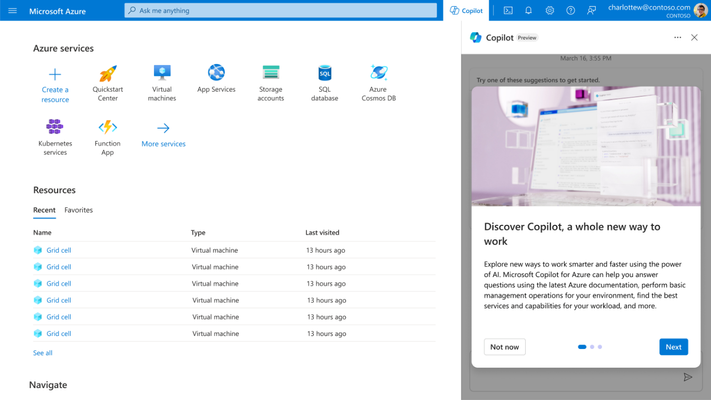
    At its Ignite 2023 conference, Microsoft this week previewed Copilot tools to simplify the management of the Azure cloud service along with a tool that streamlines the building and deploying of artificial intelligence (AI) applications on the Azure platform.

    In addition, Microsoft launched Microsoft Copilot Studio, a low-code tool that automates the process of creating data integration plugins and adding custom copilots within the Microsoft Copilot for Microsoft 365 tool that Microsoft previously launched.

    Microsoft Copilot for Azure leverages large language models (LLMs) to enable IT teams to use natural language to create, configure, discover and troubleshoot Azure services. It also enables IT teams to create complex commands, ask questions and optimize costs.

    Erin Chapple, corporate vice president for Azure Core at Microsoft, told Ignite attendees that Microsoft, along with a handful of customers, is already using Microsoft Copilot Azure to manage Azure infrastructure.

    In the long term, it’s clear that Microsoft is moving toward streamlining the building and deployment of AI applications using Azure AI Studio, a framework for invoking the AI models that Microsoft makes available on the Azure platform. The goal is to make it possible for organizations to create their own copilots based on AI models they have trained.

    It’s still early days in terms of organizations leveraging AI models to build applications, but it’s already apparent that DevOps and machine learning operations (MLOps), along with data engineering and cybersecurity best practices, will need to converge. Microsoft is making a case for Azure AI Studio as the framework that will enable IT organizations to achieve that goal.

    Of course, Microsoft is not the only provider of IT infrastructure resources with similar ambitions, but thanks to its investments in OpenAI and the acquisition of GitHub, it is furthest along in terms of defining a framework for building AI applications at scale. Last week, GitHub previewed an extension of the Copilot tools it already provides to help developers write code that leverages generative AI to automatically propose an editable plan for building an application based on natural language descriptions typed into the GitHub Issues project management software. Copilot Workspace will generate editable documents via a single click that can be used to create code that developers can then visually inspect. Any errors discovered by application developers or the Copilot Workspace platform can also be automatically fixed.

    At the same time, GitHub has extended the scope and reach of Copilot Chat to make it simpler for developers to use natural language to discover issues in their code base.

    Generative AI is already having a massive impact on the rate at which applications are developed, but that code still needs to be reviewed. Chat GPT is based on a general-purpose large language model (LLM) that is trained by pulling in code of varying quality from all across the web. As a result, code generated by the platform might contain vulnerabilities or be inefficient. In many cases, professional developers still prefer to write their own code.

    Of course, not every programming task requires the same level of coding expertise. In many instances, ChatGPT will generate, for example, a script that can be reused with confidence across a DevOps workflow. There is no shortage of mediocre developers who are now writing better code thanks to tools such as GitHub Copilot, and soon, domain-specific LLMs will make it possible to consistently write better code based on validated examples of code.

    The next challenge is going to be finding a way to manage increased volumes of code. There is no doubt that AI will be applied to the management of DevOps pipelines, but for the moment, at least, the pace at which AI is being applied to writing code is already exceeding the ability of DevOps teams to manage it.

  • What the Future Holds for FinOps and DevOps

    What the Future Holds for FinOps and DevOps

    FinOps, or financial operations, is a cultural practice that brings financial accountability to the variable spend model of the cloud. It’s a strategic approach combining systems, best practices and culture to increase an organization’s ability to understand cloud costs and make informed decisions.

    In essence, FinOps is a framework for managing cloud operating expenses (OpEx). It’s about bringing together technology, business and finance professionals to ensure that companies can get the most out of their cloud investments. The goal is to provide businesses with a better understanding of their cloud usage and costs, enabling them to make strategic decisions about resource allocation and cost management.

    FinOps bridges the gap between finance and operations. It’s not just about monitoring costs; it’s about understanding why those costs occur, how they relate to business value and what can be done to optimize them. It’s a comprehensive, cross-functional and continuous approach to managing cloud expenses, ensuring that businesses can maximize their return on investment (ROI) in the cloud.

    What Does FinOps Mean for DevOps Teams?

    Traditionally, DevOps has been focused on improving the speed, efficiency and quality of software delivery. But with the advent of cloud computing, cost has become a crucial factor. The dynamic nature of the cloud, with its pay-as-you-go model, means that costs can quickly spiral out of control if not properly managed. This is where FinOps comes in.

    Budget Responsibility

    As a DevOps team member, you’re likely used to thinking in terms of speed, performance, and quality. With FinOps, you need to add cost to that equation. You’re not just responsible for delivering high-quality software quickly; you’re also accountable for the cost of that delivery. This requires a shift in mindset, moving from a project-based budgeting approach to a product-based one.

    In a project-based approach, you have a fixed budget for a specific project. Once the project is finished, so is the budget. In a product-based approach, on the other hand, you’re responsible for the ongoing costs of a product throughout its life cycle. This means you need to consider not just the cost of development, but also the cost of maintenance, support, and continuous improvement.

    Resource Optimization

    In the context of FinOps, resource optimization is all about making sure you’re getting the most bang for your buck. You want to ensure that you’re using your cloud resources as efficiently as possible, minimizing waste and maximizing value.

    Resource optimization can involve a variety of strategies, from rightsizing instances to eliminating idle resources. But it’s not just about cutting costs; it’s also about aligning costs with value. You need to understand the value that each resource brings to your organization and allocate costs accordingly. This requires a deep understanding of your cloud usage and a commitment to continuous monitoring and improvement.

    Collaboration With Finance

    One of the key aspects of FinOps is the collaboration between DevOps and finance. You’re no longer working in silos; you’re part of a cross-functional team working towards a common goal. This requires open communication, mutual understanding, and shared responsibility.

    As a DevOps team member, you need to understand the financial implications of your decisions. You need to be able to articulate the value of your work in financial terms, demonstrating how your efforts contribute to the organization’s bottom line. At the same time, you need to be open to feedback and guidance from your finance colleagues, learning from their expertise and incorporating their insights into your decision-making process.

    Performance Metrics

    Performance metrics are crucial in the world of FinOps. They provide the data you need to understand your cloud usage, monitor your costs and make informed decisions. But these aren’t just any metrics; they’re metrics that align with your business goals and reflect the value of your cloud investments.

    These metrics might include cost per workload, cost per user or cost per unit of output. The key is to choose metrics that make sense for your organization, providing meaningful insights that can guide your resource allocation and cost management efforts. And remember, these metrics need to be regularly reviewed and updated to reflect changes in your cloud usage and business needs.

    Automation of Cost Controls

    Automation is a key tool in the FinOps toolkit. It can help you streamline your cost management processes, reduce manual effort and increase accuracy. From automated alerts to automated remediation, there are many ways automation can improve your FinOps efforts.

    With automated alerts, you can be notified when your cloud costs exceed a certain threshold. This allows you to respond quickly, addressing issues before they become major problems. With automated remediation, you can take this a step further, automatically adjusting your cloud resources in response to changes in demand or performance.

    Future FinOps Trends

    The year 2024 promises to be an important one for FinOps, with several trends poised to redefine the landscape:

    1. AI Algorithms for Cost Analysis and Prediction

    The use of AI algorithms for real-time cost analysis and predictions is predicted to be a major trend in 2024. AI enables the automation of complex financial calculations and projections, allowing for more accurate and timely decision-making. AI is already not just analyzing and predicting costs but also providing actionable insights to optimize these costs.

    The power of AI in FinOps lies in its ability to process massive amounts of data quickly and accurately. It can analyze past and current financial data, identify patterns, and predict future trends. This means that instead of reacting to financial changes after they happen, you can be proactive and make strategic decisions based on accurate predictions.

    The use of AI in FinOps will also enhance risk management. By predicting potential financial risks, AI can help organizations take preventive measures and mitigate the impact of these risks. The integration of AI in FinOps is a trend you cannot afford to ignore if you aim for financial operations excellence.

    2. Empowering Teams to Manage Their Own Cloud Costs

    Traditionally, financial operations and cost management have been centralized functions. However, the advent of cloud computing and the shift toward decentralized work models have resulted in a new trend—empowering individual teams to manage their own cloud costs. In 2024, we can expect this trend to gain further momentum.

    In a cloud environment, costs are often directly linked to usage. This means that the teams using the cloud resources are in the best position to control these costs. By empowering these teams to manage their own cloud costs, organizations can promote accountability, encourage resource optimization, and ultimately achieve cost efficiency.

    This approach requires a shift in mindset and the development of new skills. Teams need to understand the financial implications of their actions and make cost-effective decisions. They also need tools and processes to monitor their cloud usage and manage their costs effectively.

    3. Managing Costs Across Multi-Cloud and Hybrid Cloud Deployments

    The use of multiple cloud providers and the coexistence of cloud and on-premises data centers have added a new layer of complexity to financial operations. Managing costs across these diverse environments is a major challenge, and it’s another trend that is expected to shape FinOps in 2024.

    With multiple cloud providers, each with its own pricing model and billing system, cost management can be a daunting task. Add to this the costs of maintaining on-premises data centers, and the complexity multiplies. In 2024, organizations will need to adopt strategies and tools that enable them to manage these costs effectively.

    One of these strategies is the use of cost management platforms that provide a unified view of costs across multiple environments. These platforms can track and analyze costs, allocate them to the appropriate departments or projects, and provide insights for cost optimization. They can also automate cost reporting and forecasting, easing the workload of financial teams.

    4. Emphasizing the Security Aspects of FinOps

    As financial operations become more complex, the risk of abnormal spending patterns or unauthorized activities increases. Identifying and addressing these issues promptly is critical to prevent financial losses and maintain financial integrity. In 2024, the identification of abnormal spending patterns or unauthorized activities will be a key focus area in FinOps.

    Tools and technologies that enable real-time monitoring and anomaly detection will play a crucial role in this regard. These tools can analyze financial data, detect deviations from normal patterns, and alert you to potential issues. They can also help you trace these anomalies back to their source, facilitating investigation and resolution.

    Moreover, organizations will need to strengthen their internal controls and governance mechanisms. They will need to define clear responsibilities and accountabilities, establish robust approval processes and enforce strict access controls. Regular audits and reviews will also be essential to ensure compliance and detect any irregularities.

    5. Measuring and Optimizing for Environmental Impact

    The environmental impact of financial operations is a concern that cannot be overlooked. As organizations strive to be more sustainable, measuring and optimizing for environmental impact is becoming a key aspect of FinOps. This trend is expected to gain prominence in 2024.

    The environmental impact of financial operations is largely tied to energy consumption. In a cloud environment, for instance, the energy consumed by data centers contributes to carbon emissions. Therefore, optimizing cloud usage not only reduces costs but also reduces environmental impact.

    To measure and optimize for environmental impact, organizations will need to track their energy consumption, calculate their carbon footprint, and implement strategies to reduce it. These strategies can include using energy-efficient technologies, optimizing resource usage and sourcing renewable energy.

    Conclusion

    In conclusion, FinOps is a dynamic and evolving field. The trends and predictions outlined above provide a roadmap for achieving financial operations excellence in 2024. By harnessing the power of AI, empowering teams to manage their own cloud costs, managing costs across diverse environments, emphasizing security in FinOps and optimizing for environmental impact, you can take your FinOps program to the next level.