Category: Promo

  • Zenhub Brings Generative AI to Software Project Management

    Zenhub this week made available an edition of its project management platform for software engineering teams that makes use of generative artificial intelligence (AI) to summarize reports and identify bottlenecks to help streamline DevOps workflows.

    Aaron Upright, the co-founder of Zenhub, said the company plans to work with each Zenhub AI customer to enable them to securely use their personal data to train an AI model using the ChatGPT platform to make DevOps teams more productive.

    For example, DevOps teams will be able to use historical sprint data to identify bottlenecks more easily. Natural language processing (NLP) will also enable teams to reduce the impact of project label sprawl by making it easier to associate related projects regardless of naming conventions.

    Overall, the quality of data being collected will also improve story point estimations, noted Upright.

    It’s still early days as far as the usage of generative AI within the context of project management applications is concerned, but the potential AI has to transform the role of project managers is already apparent as more data is collected and analyzed by AI models. Rather than reacting to changes to project schedules as they occur, it should become easier for project managers to proactively surface issues that might have previously delayed or derailed a software development effort.

    Project managers should also be able to better track the return on investment (ROI) metrics for any given project as changes occur, added Upright.

    In theory, project managers augmented by AI models should be able to simultaneously manage more complex development efforts at levels of scale that previously would have been unachievable. The challenge is making sure project managers have visibility into the suggestions being made by AI platforms. Often when presented with conflicting data they will make up an inaccurate response, also known as a hallucination.

    However, the narrower the range of data used to train an AI model the more accurate it tends to become. The critical issue many organizations will initially face is vetting the quality of the data being used to train the AI model. In addition, organizations will also need to make sure that no biases have been inadvertently injected into an AI model because the data used to train it was either flawed or inaccurate.

    Ultimately, the amount of toil that project managers regularly experience should decline considerably as AI continues to advance. The expectation should be that AI will soon be pervasively applied across multiple project management applications. The race is now on to deliver on that promise.

    In the meantime, project managers might want to start assessing which tasks they perform daily that are likely to be automated. This will enable them to add higher levels of value by having the time needed to focus more on strategic imperatives. After all, every minute spent checking to see whether data is accurate is one less minute spent understanding what needs to be done to affect a better project management outcome.

  • System Initiative Open Sources Digital Twin Tool for DevOps

    System Initiative Open Sources Digital Twin Tool for DevOps

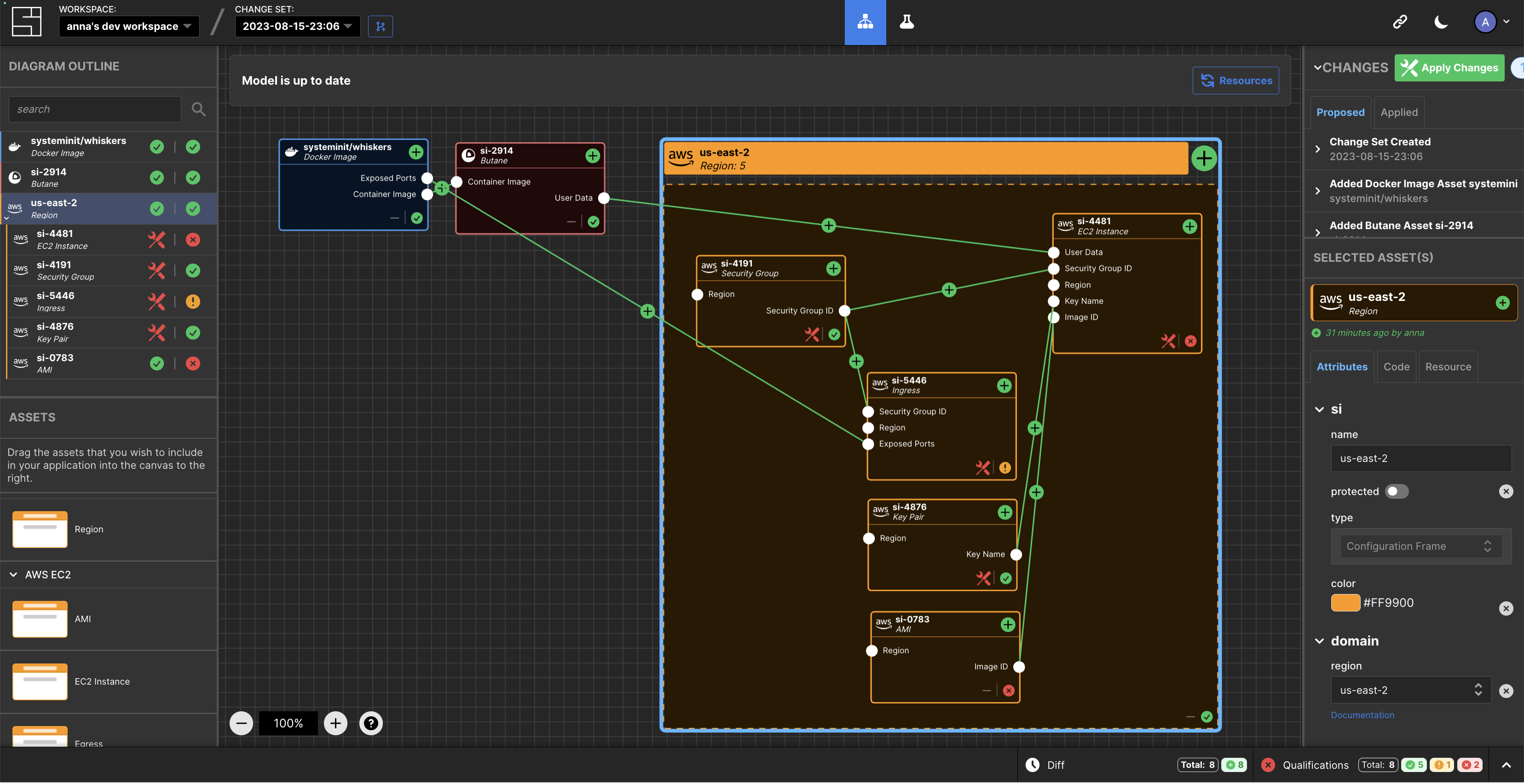
    System Initiative (SI) today announced it is making the digital twin tool it developed to manage DevOps workflows available under an open source Apache 2.0 license.

    Company CEO Adam Jacob said the approach will enable third parties to contribute to a project that is still early in its development cycle while SI provides commercial support via a subscription service.

    SI has developed a tool that creates a digital twin of a DevOps environment that provides a level of abstraction that makes it simpler to manage complex workflows at scale.

    At the core of that effort are models of IT environments created by the SI platform accessed via a visual interface. The automation framework built into the platform uses the relationships between models to infer configuration dynamically and generates typescript code that a DevOps team can then apply to automate a task.

    Feedback loops are provided in real-time to give insight into the viability of a configuration, in addition to eliminating the need for state files to track and ‘plan’ versus ‘apply’ stages.

    This approach streamlines a lot of the complexity that creates bottlenecks in DevOps workflows in what heralds the arrival of a new DevOps 2.0 era, said Jacob.

    In general, SI is making a case for an alternative approach to managing DevOps as the existing platforms and framework are fundamentally broken, added Jacob. Models that create digital twins of DevOps environments represent the arrival of a new era of software development and deployment, he noted.

    As more organizations realize their dependency on software to drive digital processes many are then looking to improve the productivity of developers and the DevOps teams that support them. Unfortunately, many DevOps teams are supporting DevOps workflows using custom code that varies widely in quality. Rather than rely on a DevOps engineer to write code, the SI digital twin tool will create code that can be applied more consistently to create DevOps workflows programmatically.

    One of the reasons few organizations today have fully automated DevOps across the application development and deployment process is that it’s simply too difficult to achieve using legacy tools and DevOps platforms. It’s not clear to what degree a digital twin approach to managing DevOps will resolve that issue, but when coupled with the arrival of artificial intelligence (AI) capabilities the way DevOps is managed is clearly about to transform.

    It may take a while for that transition to occur, but DevOps teams that have historically embraced automation are at the very least going to aggressively experiment with technologies that promise to eliminate much of the drudgery that makes DevOps more tedious than need be. The issue, as always, will be determining which technologies live up to the current level of hype being generated in a way that can be easily adopted.

  • Latest Redis Update Streamlines Management of Platform

    Latest Redis Update Streamlines Management of Platform

    Redis made a unified release of its namesake data store available today for consistent deployment across all supported platforms. Previously, the pace at which upgrades were made was staggered across different offerings only as they became available.

    At the same time, Redis is moving to unify client libraries used to access its open source data store by working directly with the community maintainers of the five most popular client libraries—Jedis (Java), node-redis (NodeJS), redis-py (Python), NRedisStack (.Net), and Go-Redis (Go).

    Other capabilities added to version 7.2 of the platform include support for auto-tiering, to more easily migrate less frequently accessed data to less expensive storage devices. This is managed via an enhanced interface for the Redis cluster management and data integration tools, available in preview. Both make it possible to consume data in real-time from another data source, such as a SQL database. Developers can also take advantage of triggers and functions to build those types of applications.

    Redis is also previewing a search tool for vector data used to create generative artificial intelligence (AI) applications. Rather than employing a separate vector database to build these applications, the Redis platform supports this data type to enable generative AI applications to run alongside other classes of applications accessing the same data.

    Redis CEO Rowan Trollope said collectively these efforts will help DevOps teams reduce costs and streamline the management of upgrades to the platform and updates to applications accessing it.

    Most organizations initially adopt Redis to provide a layer of cache using a data store that runs in-memory. However, as more applications are developed many organizations wind up using Redis as their primary database for applications that require a lot of interactivity, noted Trollope.

    While developers primarily make that architectural decision, the overall management of the Redis data store falls to DevOps teams that will now find it easier to streamline workflows across multiple instances of Redis running in the cloud, or on a Kubernetes cluster, added Trollope.

    Of course, in some cases, organizations still rely on database administrators and data engineers to manage those workflows, but as DevOps continues to evolve, more instances of data stores are being incorporated into workflows managed by a DevOps team. The ultimate goal should be to align DevOps and DataOps best practices to increase the productivity of developers and data science teams building generative AI applications using vector data to customize an existing large language model (LLM).

    Regardless of the motivation, what’s clear is the volume of data that needs to run in-memory continues to increase substantially. As that shift continues to occur, more latency-sensitive applications are being deployed. Maintaining the performance of those applications across a highly distributed enterprise environment with multiple service dependencies requires a level of DevOps expertise that is still difficult to find and retain.

  • Best of 2022: Three Cloud Trends to Watch in 2022

    Best of 2022: Three Cloud Trends to Watch in 2022

    As we close out 2022, we at devopsy.kinsta.cloud wanted to highlight the most popular articles of the year. Following is the latest in our series of the Best of 2022.

    Many developers and startups view cloud services as simply “compute”, “storage” and “networking.” The cloud has matured to the point where customers often don’t think about the underlying infrastructure, service levels or debate the merits of on-premises versus cloud&;mdash;instead, they are increasingly cloud-first. In fact, December of 2021 marked Amazon Web Services (AWS) marked its tenth AWS re:Invent conference—the company’s annual conference for customers and partners.

    While many startups don’t think twice about centering their IT strategy around the cloud and SaaS offerings, the enterprise has been slower to adopt cloud computing at scale. The conversation for these companies revolves around security, compliance, SLAs and the loss of control over their technology stack. In many ways, little has changed about the questions that enterprises are asking about the cloud.

    As the year starts, I’ve been reflecting on various conversations I’ve had with a variety of IT and business leaders, Digital CxOs and vendors. Below are three trends that I will be tracking this year.

    1. Alternative Vendors Gain Momentum

    The “big three” hyperscalers continue to dominate the market and garner the bulk of customer and partner attention. However, we are seeing increasing interest in the alternative cloud market. The alternative market includes vendors outside of the big names (AWS, Microsoft Azure, Google Cloud, Oracle, IBM and Salesforce). Developers and businesses are increasingly looking at alternative vendors and their offerings because they are easier to use than hyperscalers, less expensive and offer more predictable pricing models. In addition, with the tight labor market, hiring developers that are, for example, AWS certified can be extremely expensive. On the other hand, because alternative clouds are less complex, developers do not need to have the same certifications.

    You might ask: What about the global scalability, quantum computing and/or the thousands of APIs that the hyperscalers offer? The truth is that most small and midsize businesses don’t actually need any of those capabilities and don’t want to help subsidize the R&D that these technologies require. Companies to watch in the alternative cloud market include Linode, Digital Ocean, OVHcloud, UpCloud, Hetzner and Equinix Metal. In 2021, Techstrong Research published a report, DevOps and the Alternative Cloud, that dives deeper into these alternatives.

    2. Industry-Specific Cloud Ecosystems Expand

    Banking, insurance and companies in other highly-regulated industries have been slow to adopt cloud computing. However, the market is quickly evolving and businesses are rethinking their approach to the cloud. One of the reasons these regulated companies are starting to invest more heavily in the cloud is because customers have heightened expectations when it comes to how they engage with businesses. If customers are unhappy, it’s easier than ever to find alternatives. These highly-regulated companies and industries are being increasingly challenged by fintech, insurtech, healthtech and other industry-focused startups.

    Just as importantly, vendors are realizing that one size doesn’t fit all. Regulated industries need specific clouds that meet their regulatory and compliance needs. These industry-focused clouds aren’t being designed as an entire ecosystem where a variety of technology partners can offer their software to regulated industries. Instead, vendors have taken two different approaches to offering industry-specific offerings. Some providers are offering pre-built but customizable applications. Some notable announcements in the area of banking clouds include the following:

    • Goldman Sachs and AWS are working together to create data management and analytics solutions for financial services organizations (announced at re:Invent 2021). The result of this collaboration is the Goldman Sachs Financial Cloud for Data. It’s unclear if AWS will be offering a more general financial services ecosystem in the future.
    • IBM continues to grow its Cloud for Financial Services in terms of signature clients and partners. IBM built its cloud for financial services in collaboration with Bank of America, then hired the bank’s CTO, Howard Boville, to head up IBM’s hybrid cloud business.
    • Microsoft announced general availability of the Microsoft Cloud for Financial Services in November of 2021 (interestingly, it’s not named Azure for Financial Services). The company already has a large footprint in the financial services industry, and we’ll be tracking the adoption of Microsoft Cloud for Financial Services closely. In September 2021, Wells Fargo unveiled their digital infrastructure strategy that relies heavily on its partnership with Microsoft, but there is no mention of Wells Fargo using the Microsoft Cloud for Financial Services.

    I expect other industry-specific clouds to follow a similar pattern—with large vendors partnering with key industry incumbents to create cloud ecosystems that meet the performance, security and compliance requirements for that industry. For example, you can certainly imagine Oracle creating a Cloud for Health Care after the acquisition of Cerner closes.

    3. Software Supply Chain Becomes a Key Security Focus

    “Supply chain” was a key phrase across all industries and job functions in 2021. I’m particularly tracking the software supply chain—which, as you can imagine, is immense and complex. In essence, your software supply chain includes anything that might impact your software. That includes APIs, cloud services, containers, your DevOps pipeline and all of the open source components that you use. Software has many dependencies, and understanding the supply chain is critical to knowing your security and risk exposure. Take, for instance, the recent Apache Log4j vulnerability. Use of Log4j is pervasive, but how many companies were actually able to quickly identify what software is at risk? Check out Alan Shimel’s December blog post, Log4j: It’s All About the Supply Chain, Baby! to learn more about software supply chain security. In addition, API security is going to be a very hot topic in 2022.

    However, people remain the number-one cybersecurity threat. Although complex cyberattacks by ransomware gangs and state-sponsored actors get much of the attention, cloud misconfigurations and unpatched software are likely your biggest threats. Understanding your software supply chain will help uncover potential weak points and allow you to add automation, observability and/or other security tools to help spot potential problems.

    The Cloud Evolution

    Although the cloud isn’t new, the cloud market is continually evolving. While the developer community has been quick to adopt cloud computing, large enterprises have lagged—and regulated industries have been even slower. The alternative cloud market is offering different options for developers and businesses that don’t want the complexities of hyperscalers and don’t need their endless options and global footprint. At the same time, regulated industries are changing their cloud strategies thanks to cloud offerings that are uniquely focused on the challenges of their industry. Finally, you need to secure your software and data no matter where it resides. Focusing on your software supply chain will help ensure you can react to security vulnerabilities and update elements when needed.

  • Best of 2022: Trends in Blockchain for 2022

    Best of 2022: Trends in Blockchain for 2022

    As we close out 2022, we at devopsy.kinsta.cloud wanted to highlight the most popular articles of the year. Following is the latest in our series of the Best of 2022.

    Blockchain is hot right now. The industry has a staggering CAGR rate of over 69% between 2019 to 2025. Blockchain is no longer only relevant to cryptocurrency, either—blockchain-based applications are emerging to support many other scenarios that require decentralized data storage and accessibility.

    I recently met with Medha Parlikar, co-Founder and CTO, CasperLabs, to learn about some of the top trends that will likely impact this burgeoning sector in the coming months. According to Parlikar, we are still in the early stages of both blockchain and NFT development, and 2022 will see continued growth in the sector.

    These movements will likely include more significant investment into blockchain technologies and the emergence of nuanced business models that leverage NFTs. Proof-of-stake (PoS) models will likely become more critical to curbing negative climate impacts and more solutions will emerge to support the development and operations that sustain blockchain-based applications.

    Continued Blockchain Investment

    First, we will likely see greater investment in blockchain technology in the coming year. Unsurprisingly, finance will probably experience the most adoption, as the use of blockchain in the financial sector is anticipated to reach a value of 22.5 billion U.S. dollars by 2026. But outside of finance, blockchain investment will seep into innovative areas as well. For example, spending on blockchain in health care is expected to rise to $5.61 billion by 2025.

    Blockchain not only appeals to corporate interests—developers on the ground seem excited as well. “Developers are waking up to the opportunities that blockchain brings,” explained Parlikar. “We’ll see a big increase in developers moving into blockchain.” She pointed to a surge of developer interest in blockchain to construct tools that go beyond widgets to extract real business value.

    We’re also seeing a peak of interest in blockchain funding from nation-states. For example, in 2021, the European Union announced plans for a multibillion-euro investment into blockchain infrastructure.

    Uncertainties Around Regulation

    Blockchain is ushering in major economic shifts. But the cryptocurrency market is still a ‘wild west’ with little regulation. According to recent reports, it appears the U.S. Securities and Exchange Commission is gearing up to more closely regulate the cryptocurrency industry in 2022.

    “More investment in blockchain is bringing it into the mainstream, but what’s holding back a lot of adoption is regulatory uncertainty,” said Parlikar. Forbes similarly reports regulatory uncertainty as the biggest challenge facing blockchain entrepreneurs.

    Blockchain is no longer relegated to the startup domain, either; well-established financial institutions also want to participate in the massive prosperity, said Parlikar. This excitement is causing a development-first, law-later mindset, similar to the legal grey area that followed Uber as it first expanded its rideshare business.

    “[Blockchain] businesses are trying to hedge risk,” Parlikar explained. “We want to comply and aren’t doing nefarious things intentionally—there’s just a tremendous opportunity to innovate and streamline operations and increase the end-user experience.”

    New NFT Strategies to Emerge

    If you follow any artist accounts on Twitter, you’ve probably heard a lot about NFTs lately. Non-Fungible Tokens (NFTs) use blockchain technology to imprint ownership and value onto all types of assets.

    “I see NFTs as a great representation of the real world,” said Parlikar. Blockchain-fueled NFT technology is creating marketplaces out of ephemeral or purely digital things—such as 3D artwork—which could not be easily traded on typical markets.

    But, we’re likely only on the cusp of overall NFT usage. “The value of NFTs is still underutilized,” said Parlikar. Right now, NFT marketplaces are mainly just about asset ownership. But there’s no reason one couldn’t build, for example, an NFT rental system that shares access for a period of time, or one that offers subscriptions for recurring revenue, she suggested.

    “[There are a] lot of interesting markets that could emerge,” said Parlikar. For example, combining NFTs with the internet of things (IoT) could bridge the metaverse to the real universe, proving ownership for our physical assets.

    Proof-of-Stake (PoS) Response to Energy Backlash

    The dark side of cryptomining is that it takes significant computational power. Unnecessary computation is a drain on energy that exacerbates humanity’s environmental impact. And, if your say in a network is correlated solely with computational power, there will inevitably be an escalating computational arms race to one-up others in the network.

    This is why Parlikar is putting faith in proof-of-stake blockchains. “Proof-of-stake is definitely the way to go,” she said. In PoS networks, power is tied to the state of each actor in the network, which can be determined or modified by a consortium. Participants can agree on the governance model and set boundaries. This is opposed to proof-of-work (PoW), in which your power in the network is directly correlated to computational power.

    PoW systems become unsustainable for enterprises trying to spin up their own blockchain networks, or when attempting to lift up an entire industry, Parlikar explained, as well as increasing negative environmental impacts. Thus, PoS are a better fit to bring collaboration to enterprise-grade consortium networks.

    More Blockchain DevOps Solutions

    Overall, blockchain penetration is still relatively low. This is, in part, due to the fact that it’s still tough to use. As I’ve covered before, blockchain-based development is still relatively inaccessible. It requires nuanced theory to grasp and specific technical knowledge to implement. “It’s not trivial,” added Parlikar. “Dealing with private keys, obtaining keys—it’s still very complicated to get started.”

    Managing a blockchain could also use a dose of DevOps. Yet, blockchain’s immutability and decentralized nature create friction with traditional DevOps. “The majority of protocols will not allow you to put a smart contract under CI/CD,” Parlikar explained. Thus, organizations may opt for blockchain solutions that play nicely with test-driven development. These solutions will likely enable the ability to iteratively develop using established DevOps pipelines.

    Benefits and Challenges Ahead

    Interest in blockchain and distributed ledger technologies continue to surge. But, what are the end benefits of this blockchain and NFT-infused reality? According to Parlikar, we are heading toward “a world with greater trust and transparency.”

    Blockchain ensures provenance. To put it plainly, it validates that something was done at a certain point in time. With this knowledge, participants in a network could prove things beyond a shadow of a doubt.

    This has the power to avoid corruption and unlock more collaboration and value potential. “You don’t have to trust an individual—you can trust the information they are providing,” said Parlikar.

    It’s still early in the blockchain revolution. “Blockchain technology is still at the embryonic stage and facing many challenges,” wrote the European Commission in their report, Blockchain Now and Tomorrow: Assessing Multidimensional Impacts of Distributed Ledger Technologies. For blockchain to reach ubiquity, the community will have to overcome challenges, including lowering the energy footprint, improving developer usability and responding to impending legislation.

  • Techstrong TV: Leveraging Low-Code Technology with Tools & Digital Transformation

    Techstrong TV: Leveraging Low-Code Technology with Tools & Digital Transformation

    Low-code is playing a big role in Henkel Corporation’s digital transformation by connect remote workers with 30 shop floors all over the globe. Catarina Pinto, Henkel Digital Transformation Manager discusses how the team leverages low-code technology to deliver weekly releases across ten apps. HCL Software AVP Product Management Andrew Manby shares the role HCL Volt VX is playing at Henkel and other customers’ digital transformation initiatives. The video and a transcript of the conversation are below.

    Announcer:                 This is Digital Anarchist.


    Interviewer:                Well, the really great pleasure being joined by two very fantastic people talking about low-code/no-code and some of the impact from digital transformation projects. First joining me is Catarina Pinto, who is the digital transformation manager with Henkel, and she’s – Henkel Corporation. She’s gonna be talking about their project and involve low-code and that has been taking place. And a repeat guest, returning guest sitting in the right-hand chair is Andrew Manby, who’s AVP product management with HCL Software. Welcome to you both.


    Interviewee 1:             Thank you so much.


    Interviewee 2:             It’s great to be back,  Mitch.


    Interviewer:                Welcome back. Well, let’s do this. Andrew, why don’t you briefly introduce yourself, and then, Catarina, I’ll have you do the same, tell us a little bit about Henkel, and then we’ll go right into talking about your transformation project.


    Interviewee 2:             Right, perfect. So my name’s Andrew Manby. I head up product management for our HCL Digital Solutions portfolio. My specific focus and passion is really about digital transformation and using low-code to do that, and our tool of choice here is Volt MX, our low-code tool for professional developers.


    Interviewer:                Funny, that’s our topic today. And then –


    Interviewee 1:             I think this is.


    Interviewer:                Yes, go ahead.


    Interviewee 1:             Sure. Catarina. I am, as were said, digital transformation manager here at Henkel. I’m based in Amsterdam and I mainly work with the factories, so my goal is to lead partly the digitalization of the factories. I’m responsible in leading a global project that is the Connected Worker, where we basically aim to augment our workers in the shop floor. One of the biggest parts in this program is the Connected Worker apps, and that’s made with Volt MX as well.


    Interviewer:                Excellent. Well, I’m sure that a lot of interesting things have been happening over the last 18 months plus. How long has this project, digital transformation project been happening? Has it been more related to the pandemic, or is this part of the bigger program that’s going on across the company?


    Interviewee 1:             This is part of the bigger program we have. It’s one of our core pillars in the company, and it has been in full force since I joined, so 1. years ago.


    Interviewer:                Great. So your part of the project, would you say that’s a big component of it or one of several?


    Interviewee 1:             In this moment is the strongest component of it, so especially the Connected Worker apps, but we have a lot of things going on in our factories. We have a very powerful digital backbone. There are plenty of articles out there, business cases out there in terms of our digitalization in the supply chain, especially in Laundry, where I sit in this business unit. And basically what we aim is to extend this super powerful backbone that connects our machines in more than the 30 sites that we have worldwide, and also give the extra information of the user, so the knowledge of the person that is operating the machines, that is making sure that products are with extreme quality, that is making sure that everything is safe in the shop floor.


    Interviewer:                Now, we talked about the project you’re doing and with remote workers to the factory floor. Is that people who are across all 30 of those locations generally? Is it more concentrated in certain areas, locations?


    Interviewee 1:             No, we have, we are a real global program, so whenever we deploy an app it’s for everyone. It certainly helped during the pandemic because there was less need for people to be all the time in the shop floor if they are not business critical, and you can still see all the information from far away about what is going on in the shop floor, and basically are establishing a new way of communication here.


    Interviewer:                Great. And are you most of the way complete with this project? Are you still in the sort of early throes of it? Where are you at on your journey for this particular initiative?


    Interviewee 1:             So I would say that we are certainly in the scale up phase. So imagine this as a mini startup within the company where we see in the shop floor what are the processes that we can digitalize, so basically everything that is done in paper we will try to create an app or incorporate in our ecosystem so that we allow this information to be part of our data lake and really have insights from that. So we will work on everything from designing the product based on customer needs, so a lot of needs finding that is out there. Product design is also on our feet. Then we do the development with two teams of developers in this moment that we have, one in Cairo, one in Serbia. And then we also lead the implementation within the factories, so it’s a big project with a lot of scoping and that really hits all the parts of the factory, be that continuous improvement, be that safety, quality, and other departments that we are also thinking about expanding to.


    Interviewer:                Yeah. Mission critical for sure. So let’s talk a little bit about the role of low-code and the tools that you’re using, obviously Volt MX being one of those. And I know you’re here not as an endorsement necessarily, but clearly you’ve partnered with HCL Software and they’re playing a role in this also. Is low-code type tools, is that something relatively new to Henkel, or have you been using those types of tools for quite some time?


    Interviewee 1:             So they are relatively new, since the project started I would say, but it was super important for us because we really wanted to be very quick to market. And since the beginning of the project we kind of work like an Amazon company would do, so our goal is to get products that are unfinished into the shop floors, so MVPs, and make sure that we kind of use it as a playground with the people in the shop floor to get real user needs, to make sure that it’s customizable to 30 locations. So it’s really important for us to be not only fast in getting the MVP, but also fast in getting the feedback introduction of our people. So we are very people based, very customer obsessed. We really did this very big mindset shift in terms of it’s not creating the whole product and then shipping, but delivering that iteratively with the people that will use it in their day-to-day, and here low-code plays a very important role because it allows us to be very fast in getting to the market needs.


    Interviewer:                Yeah, a very lean approach doing MVP, rapid development iterations of your releases, so totally, that’s a great use of low-code type technology. Andrew, are you working directly with Catarina on this in the organization, or kind of observing as part of the HCL team from a little bit more distance?


    Interviewee 2:             I would say observing more about what they’re doing, and I think there’s a good interchange between our people in Europe working with Catarina and her team. We want to invest in some future innovation things that they’re looking at as well, and to bring those and help Catarina. Because I think part of the value that I hear from customers is us coming to the customer and saying, “Well, we’re sort of seeing these trends. How do they apply to your individual business?” And then take them through a period of exploration to really try and understand what is your digital vision? Now let’s get concrete on a specific area, and how does that innovation really help?

    I think in terms of Henkel, they are a leading innovator in digital transformation. I mean I, given the types of things they’re doing, they’re very data centric and very outcome oriented, and I think this initiative dovetails. But what delights me about what some of Catarina’s point of view is very pragmatic, but it’s – I think one of the things that you said, Catarina, is when you’re interacting with the people on the shop floor, you’ve got to show the value to them directly. Right? So if it’s – I was thinking about the expression you have. It’s not only simplifying their lives, but it’s as easy as paper. It’s got to be. Yeah.


    Interviewee 1:             Exactly. With our biggest competitor, so in the end it’s really difficult to compete with, and that was really a key, it plays a key role that we really have the interest of the people. And if people feel ownership in the sense, oh, I asked for this feature. Two days later it was there, it’s so much more important. They understand. And in the beginning I had to do a lot of push to say, “No, please give me your feedback. Bring me your problems. That’s exactly why I am here. I’m contacting you every day.” Until the problem today that is I get my inbox flooded with all the requests, and I don’t know where to turn to. But I think it’s much, much more – it’s a much better environment.


    Interviewee 2:             Yeah. So that’s actually interesting, Catarina, ’cause you’ve reached that sort of tipping point where it’s actually, instead of being push, it becomes a pull –


    Interviewee 1:             Exactly, and that –


    Interviewee 2:             – from the factories, which is tremendous, and I think you were also telling me where they’re actually saying now is, you know, we want these features and we want more iPads. Right?


    Interviewee 1:             Yeah, and that’s a big pull from the company as well, but I think it’s, I see it as a very positive insight into the program. Just building on the previous point, for example we are trying to build now a product, also app-based, but the idea is that it’ll be a company-wide product, so be for all the functions within the factory. And especially in the beginning I was a little bit unsure. I was thinking maybe this is too much. And then one of the factories just told me, “Hey, if you add these two little things, I can push this all over the factory.” Like okay. One week later, they were implementing in all functions, and I got, wow, that’s amazing. I didn’t even need to do marketing because their, it was one of their biggest needs, and we are really cooperating with HCL to really take this to the next level, and I think it will be a very awesome product.


    Interviewer:                What’s interesting is over so much time people have gotten conditioned when requesting technology applications, systems, you know, they don’t get what they want very quickly, at least they haven’t historically, and so I imagine it’s a big shift, a big mind – initially they didn’t expect you to be able to deliver as quickly as you are, and now that they are, of course, they flood your inbox. Right? Be careful what you ask for, too, right?


    Interviewee 2:             Yeah. Yes, exactly.


    Interviewee 1:             _____.


    Interviewer:                I’m curious, how many people do you have working on the project? And is this inside IT? Is this outside of IT? How’s it considered –


    Interviewee 1:             No, it’s inside IT. So we have in this moment four developers sitting in two places, two kind of scrum masters, say it like this. I act as product owner as well, so I have a lot of hats during the development of the products, so from end to end of the products, but that’s basically the core of the team. So very, very small team, and we really need – it’s like I said, like almost a mini startup, and we have ideas and we say, “Okay, find a way to do it. Let’s do it. Let’s put this into the ground and let’s make people happy with what we do.”


    Interviewer:                Are you doing sort of an agile two-week sprint type approach?


    Interviewee 1:             One-week sprint –


    Interviewer:                Are you doing more DevOps release it as it’s ready, it’s tested, it’s good to go?


    Interviewee 1:             In this moment we are doing one-week sprints, so really we – especially because we have a lot of apps simultaneously. So we have in this moment around ten apps that are part of our major ecosystem that all need some kind of maintenance or they have new requests from the guys on the shop floor, or I have new ideas that I want to implement. They are based obviously in customers’ feedback. So it’s really very, very fast. We don’t release in all of the streams of course, but we try always to be very based on customer requests and superuser centric.


    Interviewer:                So how would you say using low-code, using Volt MX low-code kind of tools, how does that – has it fundamentally changed your ability to deliver that quickly? Is it that revolutionary? Is it sort of an evolution of a journey you’ve been on to get to this point? How would you describe it?


    Interviewee 1:             I think it certainly helps, and especially with the connection with HCL that provides a lot of support so that we can also take advantage of this low-code product, that we can create things that are repeatable. Right? That we don’t have to reinvent the wheel every time that we build something. And here really the size of the market decreases, yes.


    Interviewer:                Interesting. And something Andrew and I have talked about is the citizen developer, the professional developer, inside, sometimes both inside IT, can also be external. Would you consider your team more of a professional development team as what people – that’s their jobs is being developers, or are these citizens, business people sort of performing the development functions?


    Interviewee 1:             In this moment a little bit more towards the professional developers here, because we really are not that big and we really have a lot of apps, so we really need to be a little bit more focused on that.


    Interviewer:                Interesting. I’m curious, Andrew, what do you see – you see some commonalities between things that are contributing to the success that Catarina is having at Henkel that you maybe have seen with other customers?


    Interviewee 2:             Yeah, absolutely. Yeah. I mean our focus, Mitch, is predominantly in enabling people like Catarina and Henkel with the professional development teams, and they don’t need to be big teams. I mean you can tell they’re a very agile team, a very responsive team. It’s very impressive to hear that. In our world, it’s really that idea if they’ve got the vision around the digital transformation and a willingness to be able to do that, we can help facilitate to do that very quickly with them, and I think it’s really that partnership. Sometimes that’s simply just being able to sit down, train, work with the customer, train them, build some prototypes, and sometimes it’s a little bit more of a discussion around a business process that they want to re-engineer. And we have a, what we call a studio process where we can bring them in, we can reimagine or think about what that would look like, build a prototype, and then get the feedback from the people on the ground about whether that would work. And sometimes either of those approaches works. it just really depends, I think, on the maturity of the organization.

    But what I also find interesting, which is embedded in what Catarina was saying about the only if you add that couple of thing, you know, we’re seeing that – we did a session recently with Jarrod from VELCO which is up in Vermont, the Vermont Electric Company, and they’re like the nation’s first purely distribution network, and they’ve got about 15 apps out there and they’re starting to think about how can they sort of consolidate some of those apps and build some super apps in the area of field service. So we’re seeing the folding in on some of those developments to go in new directions, but one of the impressions and the feelings I get talking to the customers, where they start and where they end up are two different places. I mean like the old adage, right? There’s always new ideas that come from customers that take them in different directions. In the case of VELCO, they have a scientific application which is part of the government reporting to say, you know, in times of hot temperature, what happened on the loading of the transmission lines. So that required them to integrate with MATLAB software and lets you do some heavy computational analytics.

    So I mean what we’re seeing is people are asking the questions, and we’re sitting down with them and figuring out how to do it, so it’s an exciting time.


    Interviewer:                It definitely is. And Catarina, sorry for stumbling on your name. I’m curious, success breeds more success, or certainly brings a lot of attention, and one of the things that’s happening in this whole COVID time acceleration of digital transformation projects is as people had success other parts of the organization started looking at that and say, “Well, how come they can deliver in a week, and we deliver every two months,” or every whatever. Are you getting some attention from the rest of the organization? Is that part of why you’re adding more apps, or are other groups looking at potentially spinning up and doing low-code kind of work?


    Interviewee 1:             A little bit of both. So from our organization, I would say yes because we are really working, maybe we are even extreme agile because we are one-week sprint. But the mindset shift of delivering products to the shop floor that are not extremely ready, that are still to be improved, that are lending pages in apps that then are created with the people, I think it’s an almost new paradigm shift that we are starting to see more and more and more, and people are also requesting things that are more useful for them for their daily lives.

    And one of the things that we are also doing is we are going into this exact idea of having less mini apps and have one core that connects our backbone to different modules, and the apps worked basically as modules and puzzle pieces. And that’s more or less type of ecosystems that we want to have, one thing that connects everything that’s basically our core, this big problem that I was talking about, and then having the different workflows that the guys have to do every day, just piece in in order to make the complete puzzle.


    Interviewer:                Wonderful. This has been fascinating. Thanks for sharing your story with us, and congratulations on your success, and congratulations also to the HCL software team with a very apparent, a happy customer and productive team using your technology and leading digital transformation. Catarina Pinto, thank you for joining us from Henkel, and Andrew Manby, thank you of course from HCL Software.


    [End of Audio]

  • Survey Predicts Massive Migration to the Cloud

    Survey Predicts Massive Migration to the Cloud

    A global survey of 1,600 enterprise IT decision-makers found more than half are working for organizations that plan to eliminate the use of data centers over the next two years.

    The survey was conducted by Aryaka, a provider of a secure access service edge (SASE) platform, and found a quarter of the respondents have closed 25% to 50% of their office sites; 75% of respondents said at least a quarter of their employees will remain remote permanently post-pandemic. Just under a third (32%) expect at least half of their workforce would be permanently remote.

    Despite the apparent accelerated shift to the cloud, the report found a full three-quarters of respondents (75%) are projecting at least a 10% growth in IT spending, with a quarter expecting IT budgets to grow 25% or more. Nevertheless, more than a third (36%) report they have IT cost concerns.

    David Ginsburg, vice president of product and solutions for Aryaka, said the shift to the cloud in the wake of the COVID-19 pandemic is being driven mainly by digital business transformation initiatives that require applications be quickly built and managed by IT teams that are working from home themselves. With the pandemic entering the third year, a hybrid workforce that regularly shifts between home and the office is now permanent, he noted.

    Consequently, with more people working from home, nearly two-thirds of respondents (64%) said they will shift toward a SASE-based approach over the course of the coming year to provide secure access to cloud applications over a software-defined wide area network (SD-WAN). Over two-thirds of those respondents said they will opt for a managed SASE offering rather than build and maintain these platforms themselves.

    SASE was originally coined by Gartner to describe a cloud-delivered service that brought together networking and security offerings. Those offerings should include a firewall-as-a-service (FWaaS), secure web gateway (SWG), cloud access security broker (CASB) and zero-trust network access (ZTNA). In effect, it’s a secure software-defined wide-area network (SD-WAN). As organizations adopt SASE-based platforms and services, just under a third of respondents (61%) are recognizing that dynamic bandwidth reallocation will be a very important requirement as workers shift between the office and home.

    The transition to SASE involves setting a strategy (35%), phasing out of legacy virtual private networks (32%) and consolidating cloud security with zero-trust (29%). Top desired capabilities include SWG (47%), SD-WAN (36%) and FWaaS (28%). A full 41% reported that responsibility for networking and security decisions have now been consolidated into a single team. However, only slightly more than a third (34%) said security is a major priority.

    The implications of a shift to the cloud at this rate and level of scale are likely to have a profound impact on DevOps teams. While cloud infrastructure is designed to scale on demand, accessing applications across an SD-WAN can have a significant impact on application performance. The survey, however, finds only 29% of respondents are concerned about whether applications will perform properly. Nevertheless, well over two-thirds (69%) said there will be an increased focus on observability and control, while 42% noted identifying slow performance for remote and mobile users will be a key issue and 37% expected slow performance at the branch office to also be an issue. Lackluster application performance is a time sink, according to 42% of respondents.

    Naturally, many IT teams will add new tools and platforms to deploy and manage cloud applications. The Aryaka survey found that only slightly more than a quarter of respondents are concerned about the newness of the technology they might employ.

    The coming year is shaping up to be incredibly disruptive to the IT landscape. The challenge is making sure balance is maintained between cost, flexibility and application performance.

  • Harness CD Platform Now Available via Source-Available License

    Harness CD Platform Now Available via Source-Available License

    Harness today announced a free community edition of its continuous delivery (CD) platform is now available under a source-available license rather than a more traditional open source license.

    Scott Sanchez, chief marketing officer for Harness, said the goal is to make CD as accessible to developers and DevOps teams as their current CI platform. Harness already makes an open source edition of its continuous integration (CI) platform available.

    The Harness CD platform is available under a Polyform Shield license that provides free access to the platform, including the right to use, modify and distribute it but not launch a competitive offering. A source-available license is an alternative to an open source license that allows an organization to potentially create a fork of the Harness CD that could, for example, be delivered as a cloud service. That specific issue has led to scenarios where vendors that create an open source project find themselves competing for revenue against a cloud service provider that is not necessarily as committed to contributing and maintaining the primary open source project. At this juncture, it’s not clear how many other vendors that make software available under an open source license might take a similar tack.

    While most organizations that embraced DevOps have been able to successfully implement a set of CI best practices, the number of organizations that have implemented CD is not nearly as high. One reason for that is automating deployments across platforms has never been especially easy. Each platform tends to be customized to the point where it is difficult to automate application deployments. In effect, each platform is its own unique type of “snowflake.”

    However, as the number of digital business transformation initiatives continues to steadily increase, the need to regularly update application experiences is going to require more organizations to implement a set of CD best practices. A source-available license should help increase the number of DevOps teams that can access and experiment with a CD platform, noted Sanchez. The challenge, of course, is that many of those applications are now based on microservices with components widely distributed across an IT environment.

    Historically, CI and CD have been synonymous when viewed within the context of a CI/CD platform. It’s not clear to what degree DevOps teams will look to better leverage the CI/CD platforms they already have in place rather than deploying a dedicated CD platform for IT operations teams and letting developers choose whatever CI platform they prefer. In general, a recent survey conducted by the Continuous Delivery Foundation found that 80% of respondents that work for companies with two or more employees are involved in DevOps to some degree.

    Regardless of approach, the coming year is shaping up to be one where many more organizations take DevOps initiatives to the next level. Arguably, as more organizations realize how dependent they are on software to differentiate themselves from rivals, the ability to deliver new application experiences has become critical. At the core of those efforts is a set of DevOps best practices that will ultimately determine just how competitive those organizations will be.

  • Testlio Adds Fused Testing to Automate Testing Platform

    Testlio Adds Fused Testing to Automate Testing Platform

    Testlio announced today it is adding fused testing capability to its application testing platform; Testlio is used by IT organizations to manage application testing teams consisting of internal employees and external contractors vetted by Testlio.

    Fused testing describes the combination of automated and manual testing IT organizations use to improve overall productivity. Fused testing strikes a balance between tests that can be automated and those that still need to be performed by a human.

    To achieve that goal, Testlio has partnered with Applitools, BrowserStack, Headspin, Mabl and Sauce Labs. Failure signals and session artifacts from these tools can be pushed to the Testlio platform to streamline the triage of test results. Testlio is making six device slots and 100 hours per month of automated testing processing time available at no additional cost.

    Finally, Testlio has set up an automated testing center of excellence (CoE) as part of an expansion of its professional consulting services it provides to help organizations implement testing best practices.

    Testlio CEO Steve Semelsberger said those integrations will make it simpler to augment human testers and increase the rate at which applications can be tested as many organizations are accelerating the rate at which those applications are being built and deployed.

    As organizations seek to implement continuous testing within the context of a DevOps workflow it’s apparent there will need to be more reliance on automation to keep pace with application development, he added.

    Through its platform, Testlio provides organizations with access to more than 10,000 freelance application testers on demand. That network of testing professionals can create, run, optimize and diagnose automated tests using Appium and Selenium frameworks written in programming languages such as Python, Java and Node.js. Only 3% of the freelance application testers that apply to join the Testlio network have been accepted, noted Semelsberger.

    The degree to which organizations prefer to rely on internal employees versus contractors to test applications will naturally vary. However, it’s difficult to predict what volume of tests will need to be performed—and when they should be performed—to preserve application development timetables. Contractors provide IT organizations with a degree of testing flexibility that is becoming an absolute requirement given the current challenges of hiring and retaining professional application testers, said Semelsberger.

    Application testing is, of course, difficult to apply uniformly no matter how many testers are available. In addition to providing access to experienced freelance testers, Testlio also provides a platform for managing the overall testing process. The challenge is then aligning those testing tasks with the various application development projects the organization has launched.

    Regardless of the approach to testing, the need for it has never been more critical. As organizations embrace a wide range of digital business transformation initiatives, a much higher percentage of the applications are now externally facing. The tolerance for suboptimal application experiences among customers and partners is much lower than that of internal employees. As such, first impressions, like it or not, are going to determine the success and failure of most of those application initiatives.

  • White House Meeting Puts Spotlight on OSS Sustainability

    White House Meeting Puts Spotlight on OSS Sustainability

    A recent meeting between IT industry leaders and White House officials highlighted open source software sustainability concerns as high-profile breaches and zero-day attacks have many organizations reviewing their software supply chains.

    The White House published a statement describing, among other things, how participants had a “substantive and constructive” discussion on how to make a difference in the security of open source software while continuing to effectively engage and support the open source community.

    Meeting participants included Deputy National Security Advisor for Cyber and Emerging Technology Anne Neuberger, National Cyber Director Chris Inglis, and officials from the Office of the National Cyber Director, Office of Science and Technology Policy, the Department of Defense, the Department of Commerce, the Department of Energy, the Department of Homeland Security, the Cybersecurity and Infrastructure Security Agency (CISA), the National Institute of Standards and Technology and the National Science Foundation. Akamai, Amazon, Apache Software Foundation, Apple, Cloudflare, Facebook/Meta, GitHub, Google, IBM, the Linux Foundation, the Open Source Security Foundation, Microsoft, Oracle, Red Hat and VMware all sent representatives.

    The White House reported that the discussion focused on preventing security defects and vulnerabilities in code and open source packages, improving the process for finding defects and fixing them and shortening the response time for distributing and implementing fixes.

    There were few specific recommendations, but the White House is clearly bringing more pressure to bear after the disclosure of the zero-day Log4j vulnerability in Java applications wreaked havoc in enterprise IT environments and government agencies. That vulnerability made it clear just how dependent organizations are on open source software projects and brought to attention the fact that many are created and maintained by just a handful of volunteer maintainers and contributors. The individuals that created those projects don’t always have a lot of cybersecurity expertise. In fact, many of them would argue that the onus for securing open source software is on the organizations that use what amounts to free software. It’s not the responsibility of the contributors and maintainers of open source software to drop everything and create a patch on-demand to address a zero-day vulnerability.

    The federal government, however, has made it clear via executive order that it expects IT vendors and large enterprises that depend on open source software to do more to secure it. In the meantime, IT teams will need to evaluate their dependence on open source software; especially if, from a security perspective, that software isn’t sustainable simply because there are not enough contributors with the necessary expertise.

    Naturally, this is a complex issue. In many cases, organizations are relying on open source components without even realizing it. Those components have been embedded within an application by an independent software vendor (ISV) that typically doesn’t disclose how that application was constructed. When a zero-day vulnerability is disclosed, cybersecurity teams can spend weeks looking for all the ways the instances of an application they either built themselves or licensed are impacted.

    “There’s no way to really know,” said Mitch Ashley, principal for Techstrong Research, an arm of Techstrong Group, the parent company that publishes devopsy.kinsta.cloud. “A vulnerability can be anywhere.”

    It’s not abundantly clear how critical an issue the sustainability of open source software security is just yet. Relative to the amount of open source software currently employed, the number of security issues that have been encountered is comparatively small, noted Ashley.

    “The innovation benefits enabled by open source software far outweigh the risks,” he said.

    It may be a while before the open source community comes to terms with rising software supply chain concerns. However, it’s clear that many more members of the IT community are about to be held accountable for it.