Category: DevOps

  • Sysdig Identifies Cyberattacks on GitLab Platforms Using Binaries

    Sysdig Identifies Cyberattacks on GitLab Platforms Using Binaries

    The Sysdig Threat Research Team (TRT) has uncovered this week that cyberattacks using binaries written in Go and .NET compromise instances of the on-premises editions of the GitLab continuous integration/continuous delivery (CI/CD) platform.

    Michael Clark, director of threat research for Sysdig, said most attacks against software supply chains employ scripts. Cybercriminals that appear to be based in Russia are using binaries to launch proxyjacking and cryptomining campaigns utilizing infrastructure resources used to host instances of GitLab.

    Cryptomining is the process used to validate cryptocurrency transactions. Proxyjacking involves reselling bandwidth to providers of proxyware services to allow someone to hide their physical location.

    The Sysdig research effort, dubbed LABRAT, also noted that the tactics and techniques used to launch attacks are reasonably sophisticated. In addition to using binaries, the cybercriminals also employ tools with undetected signatures, cross-platform malware designed to evade cybersecurity platforms, a command and control (C2) platform that bypasses firewalls and kernel-based rootkits to hide their presence. Furthermore, the attackers abused a legitimate service, TryCloudFlare, to obfuscate their C2 network.

    The attacker, still active, is also continuously updating their tools, which requires organizations running GitLab to track the tactics, techniques and procedures (TTP) being employed by the cyberattacker to keep their indicators of compromise (IoCs) list updated.

    Relative to the illicit revenue that might be gained from cryptojacking and proxyjacking, this cyberattack is noteworthy in its sophistication. What is less clear is the degree to which this attack might also be used to inject vulnerabilities into the software supply chains based on the GitLab platform.

    The one certain thing is that cybercriminals have developed more advanced capabilities for compromising software supply chains that are likely to be used to compromise multiple DevOps platforms.

    Fortunately, there’s a lot more focus on securing software supply chains in the wake of a series of high-profile breaches. The challenge is most efforts are still relatively nascent. As such, there isn’t a high enough appreciation for the lengths cybercriminals might go to compromise a software supply chain. The ability to inject malware that might one day find its way into any number of downstream applications makes a software supply chain a tempting target.

    Multiple legislative initiatives have been launched that eventually will require organizations to better secure software supply chains. As such, most DevOps teams would be well-advised to begin those efforts now. Some aspects of the proposals being debated today eventually will become law. Rather than trying to comply with a requirement, a more methodical approach to ensuring the security of software supply chains would create less stress for all concerned later.

    In the meantime, thanks to the adoption of DevSecOps best practices application security continues to steadily improve. The issue stands that those advances are not being made as quickly as cybercriminals are evolving new tactics and techniques.

  • Zenhub Brings Generative AI to Software Project Management

    Zenhub this week made available an edition of its project management platform for software engineering teams that makes use of generative artificial intelligence (AI) to summarize reports and identify bottlenecks to help streamline DevOps workflows.

    Aaron Upright, the co-founder of Zenhub, said the company plans to work with each Zenhub AI customer to enable them to securely use their personal data to train an AI model using the ChatGPT platform to make DevOps teams more productive.

    For example, DevOps teams will be able to use historical sprint data to identify bottlenecks more easily. Natural language processing (NLP) will also enable teams to reduce the impact of project label sprawl by making it easier to associate related projects regardless of naming conventions.

    Overall, the quality of data being collected will also improve story point estimations, noted Upright.

    It’s still early days as far as the usage of generative AI within the context of project management applications is concerned, but the potential AI has to transform the role of project managers is already apparent as more data is collected and analyzed by AI models. Rather than reacting to changes to project schedules as they occur, it should become easier for project managers to proactively surface issues that might have previously delayed or derailed a software development effort.

    Project managers should also be able to better track the return on investment (ROI) metrics for any given project as changes occur, added Upright.

    In theory, project managers augmented by AI models should be able to simultaneously manage more complex development efforts at levels of scale that previously would have been unachievable. The challenge is making sure project managers have visibility into the suggestions being made by AI platforms. Often when presented with conflicting data they will make up an inaccurate response, also known as a hallucination.

    However, the narrower the range of data used to train an AI model the more accurate it tends to become. The critical issue many organizations will initially face is vetting the quality of the data being used to train the AI model. In addition, organizations will also need to make sure that no biases have been inadvertently injected into an AI model because the data used to train it was either flawed or inaccurate.

    Ultimately, the amount of toil that project managers regularly experience should decline considerably as AI continues to advance. The expectation should be that AI will soon be pervasively applied across multiple project management applications. The race is now on to deliver on that promise.

    In the meantime, project managers might want to start assessing which tasks they perform daily that are likely to be automated. This will enable them to add higher levels of value by having the time needed to focus more on strategic imperatives. After all, every minute spent checking to see whether data is accurate is one less minute spent understanding what needs to be done to affect a better project management outcome.

  • System Initiative Open Sources Digital Twin Tool for DevOps

    System Initiative Open Sources Digital Twin Tool for DevOps

    System Initiative (SI) today announced it is making the digital twin tool it developed to manage DevOps workflows available under an open source Apache 2.0 license.

    Company CEO Adam Jacob said the approach will enable third parties to contribute to a project that is still early in its development cycle while SI provides commercial support via a subscription service.

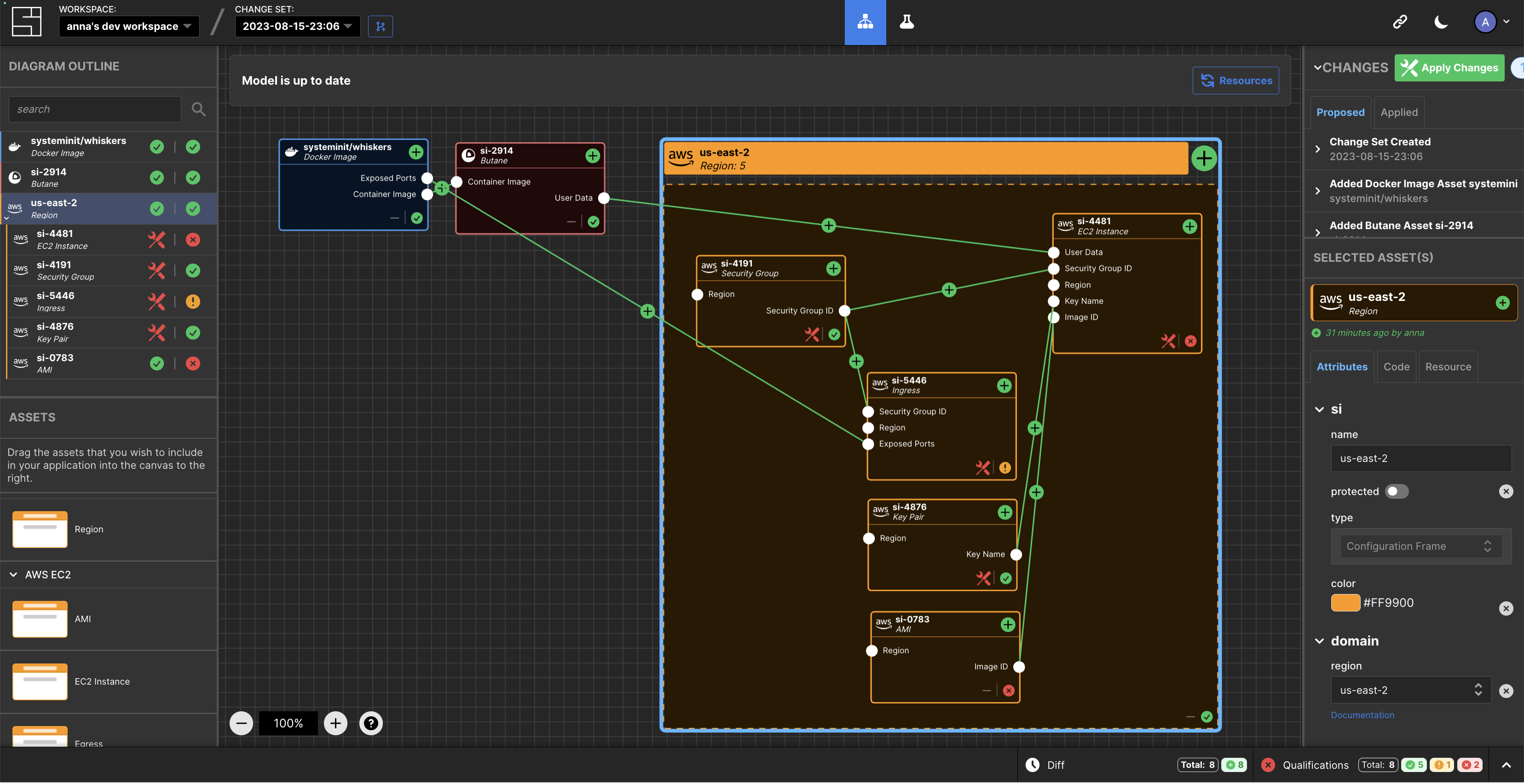
    SI has developed a tool that creates a digital twin of a DevOps environment that provides a level of abstraction that makes it simpler to manage complex workflows at scale.

    At the core of that effort are models of IT environments created by the SI platform accessed via a visual interface. The automation framework built into the platform uses the relationships between models to infer configuration dynamically and generates typescript code that a DevOps team can then apply to automate a task.

    Feedback loops are provided in real-time to give insight into the viability of a configuration, in addition to eliminating the need for state files to track and ‘plan’ versus ‘apply’ stages.

    This approach streamlines a lot of the complexity that creates bottlenecks in DevOps workflows in what heralds the arrival of a new DevOps 2.0 era, said Jacob.

    In general, SI is making a case for an alternative approach to managing DevOps as the existing platforms and framework are fundamentally broken, added Jacob. Models that create digital twins of DevOps environments represent the arrival of a new era of software development and deployment, he noted.

    As more organizations realize their dependency on software to drive digital processes many are then looking to improve the productivity of developers and the DevOps teams that support them. Unfortunately, many DevOps teams are supporting DevOps workflows using custom code that varies widely in quality. Rather than rely on a DevOps engineer to write code, the SI digital twin tool will create code that can be applied more consistently to create DevOps workflows programmatically.

    One of the reasons few organizations today have fully automated DevOps across the application development and deployment process is that it’s simply too difficult to achieve using legacy tools and DevOps platforms. It’s not clear to what degree a digital twin approach to managing DevOps will resolve that issue, but when coupled with the arrival of artificial intelligence (AI) capabilities the way DevOps is managed is clearly about to transform.

    It may take a while for that transition to occur, but DevOps teams that have historically embraced automation are at the very least going to aggressively experiment with technologies that promise to eliminate much of the drudgery that makes DevOps more tedious than need be. The issue, as always, will be determining which technologies live up to the current level of hype being generated in a way that can be easily adopted.

  • Latest Redis Update Streamlines Management of Platform

    Latest Redis Update Streamlines Management of Platform

    Redis made a unified release of its namesake data store available today for consistent deployment across all supported platforms. Previously, the pace at which upgrades were made was staggered across different offerings only as they became available.

    At the same time, Redis is moving to unify client libraries used to access its open source data store by working directly with the community maintainers of the five most popular client libraries—Jedis (Java), node-redis (NodeJS), redis-py (Python), NRedisStack (.Net), and Go-Redis (Go).

    Other capabilities added to version 7.2 of the platform include support for auto-tiering, to more easily migrate less frequently accessed data to less expensive storage devices. This is managed via an enhanced interface for the Redis cluster management and data integration tools, available in preview. Both make it possible to consume data in real-time from another data source, such as a SQL database. Developers can also take advantage of triggers and functions to build those types of applications.

    Redis is also previewing a search tool for vector data used to create generative artificial intelligence (AI) applications. Rather than employing a separate vector database to build these applications, the Redis platform supports this data type to enable generative AI applications to run alongside other classes of applications accessing the same data.

    Redis CEO Rowan Trollope said collectively these efforts will help DevOps teams reduce costs and streamline the management of upgrades to the platform and updates to applications accessing it.

    Most organizations initially adopt Redis to provide a layer of cache using a data store that runs in-memory. However, as more applications are developed many organizations wind up using Redis as their primary database for applications that require a lot of interactivity, noted Trollope.

    While developers primarily make that architectural decision, the overall management of the Redis data store falls to DevOps teams that will now find it easier to streamline workflows across multiple instances of Redis running in the cloud, or on a Kubernetes cluster, added Trollope.

    Of course, in some cases, organizations still rely on database administrators and data engineers to manage those workflows, but as DevOps continues to evolve, more instances of data stores are being incorporated into workflows managed by a DevOps team. The ultimate goal should be to align DevOps and DataOps best practices to increase the productivity of developers and data science teams building generative AI applications using vector data to customize an existing large language model (LLM).

    Regardless of the motivation, what’s clear is the volume of data that needs to run in-memory continues to increase substantially. As that shift continues to occur, more latency-sensitive applications are being deployed. Maintaining the performance of those applications across a highly distributed enterprise environment with multiple service dependencies requires a level of DevOps expertise that is still difficult to find and retain.

  • Best of 2022: Three Cloud Trends to Watch in 2022

    Best of 2022: Three Cloud Trends to Watch in 2022

    As we close out 2022, we at devopsy.kinsta.cloud wanted to highlight the most popular articles of the year. Following is the latest in our series of the Best of 2022.

    Many developers and startups view cloud services as simply “compute”, “storage” and “networking.” The cloud has matured to the point where customers often don’t think about the underlying infrastructure, service levels or debate the merits of on-premises versus cloud&;mdash;instead, they are increasingly cloud-first. In fact, December of 2021 marked Amazon Web Services (AWS) marked its tenth AWS re:Invent conference—the company’s annual conference for customers and partners.

    While many startups don’t think twice about centering their IT strategy around the cloud and SaaS offerings, the enterprise has been slower to adopt cloud computing at scale. The conversation for these companies revolves around security, compliance, SLAs and the loss of control over their technology stack. In many ways, little has changed about the questions that enterprises are asking about the cloud.

    As the year starts, I’ve been reflecting on various conversations I’ve had with a variety of IT and business leaders, Digital CxOs and vendors. Below are three trends that I will be tracking this year.

    1. Alternative Vendors Gain Momentum

    The “big three” hyperscalers continue to dominate the market and garner the bulk of customer and partner attention. However, we are seeing increasing interest in the alternative cloud market. The alternative market includes vendors outside of the big names (AWS, Microsoft Azure, Google Cloud, Oracle, IBM and Salesforce). Developers and businesses are increasingly looking at alternative vendors and their offerings because they are easier to use than hyperscalers, less expensive and offer more predictable pricing models. In addition, with the tight labor market, hiring developers that are, for example, AWS certified can be extremely expensive. On the other hand, because alternative clouds are less complex, developers do not need to have the same certifications.

    You might ask: What about the global scalability, quantum computing and/or the thousands of APIs that the hyperscalers offer? The truth is that most small and midsize businesses don’t actually need any of those capabilities and don’t want to help subsidize the R&D that these technologies require. Companies to watch in the alternative cloud market include Linode, Digital Ocean, OVHcloud, UpCloud, Hetzner and Equinix Metal. In 2021, Techstrong Research published a report, DevOps and the Alternative Cloud, that dives deeper into these alternatives.

    2. Industry-Specific Cloud Ecosystems Expand

    Banking, insurance and companies in other highly-regulated industries have been slow to adopt cloud computing. However, the market is quickly evolving and businesses are rethinking their approach to the cloud. One of the reasons these regulated companies are starting to invest more heavily in the cloud is because customers have heightened expectations when it comes to how they engage with businesses. If customers are unhappy, it’s easier than ever to find alternatives. These highly-regulated companies and industries are being increasingly challenged by fintech, insurtech, healthtech and other industry-focused startups.

    Just as importantly, vendors are realizing that one size doesn’t fit all. Regulated industries need specific clouds that meet their regulatory and compliance needs. These industry-focused clouds aren’t being designed as an entire ecosystem where a variety of technology partners can offer their software to regulated industries. Instead, vendors have taken two different approaches to offering industry-specific offerings. Some providers are offering pre-built but customizable applications. Some notable announcements in the area of banking clouds include the following:

    • Goldman Sachs and AWS are working together to create data management and analytics solutions for financial services organizations (announced at re:Invent 2021). The result of this collaboration is the Goldman Sachs Financial Cloud for Data. It’s unclear if AWS will be offering a more general financial services ecosystem in the future.
    • IBM continues to grow its Cloud for Financial Services in terms of signature clients and partners. IBM built its cloud for financial services in collaboration with Bank of America, then hired the bank’s CTO, Howard Boville, to head up IBM’s hybrid cloud business.
    • Microsoft announced general availability of the Microsoft Cloud for Financial Services in November of 2021 (interestingly, it’s not named Azure for Financial Services). The company already has a large footprint in the financial services industry, and we’ll be tracking the adoption of Microsoft Cloud for Financial Services closely. In September 2021, Wells Fargo unveiled their digital infrastructure strategy that relies heavily on its partnership with Microsoft, but there is no mention of Wells Fargo using the Microsoft Cloud for Financial Services.

    I expect other industry-specific clouds to follow a similar pattern—with large vendors partnering with key industry incumbents to create cloud ecosystems that meet the performance, security and compliance requirements for that industry. For example, you can certainly imagine Oracle creating a Cloud for Health Care after the acquisition of Cerner closes.

    3. Software Supply Chain Becomes a Key Security Focus

    “Supply chain” was a key phrase across all industries and job functions in 2021. I’m particularly tracking the software supply chain—which, as you can imagine, is immense and complex. In essence, your software supply chain includes anything that might impact your software. That includes APIs, cloud services, containers, your DevOps pipeline and all of the open source components that you use. Software has many dependencies, and understanding the supply chain is critical to knowing your security and risk exposure. Take, for instance, the recent Apache Log4j vulnerability. Use of Log4j is pervasive, but how many companies were actually able to quickly identify what software is at risk? Check out Alan Shimel’s December blog post, Log4j: It’s All About the Supply Chain, Baby! to learn more about software supply chain security. In addition, API security is going to be a very hot topic in 2022.

    However, people remain the number-one cybersecurity threat. Although complex cyberattacks by ransomware gangs and state-sponsored actors get much of the attention, cloud misconfigurations and unpatched software are likely your biggest threats. Understanding your software supply chain will help uncover potential weak points and allow you to add automation, observability and/or other security tools to help spot potential problems.

    The Cloud Evolution

    Although the cloud isn’t new, the cloud market is continually evolving. While the developer community has been quick to adopt cloud computing, large enterprises have lagged—and regulated industries have been even slower. The alternative cloud market is offering different options for developers and businesses that don’t want the complexities of hyperscalers and don’t need their endless options and global footprint. At the same time, regulated industries are changing their cloud strategies thanks to cloud offerings that are uniquely focused on the challenges of their industry. Finally, you need to secure your software and data no matter where it resides. Focusing on your software supply chain will help ensure you can react to security vulnerabilities and update elements when needed.

  • Best of 2022: Trends in Blockchain for 2022

    Best of 2022: Trends in Blockchain for 2022

    As we close out 2022, we at devopsy.kinsta.cloud wanted to highlight the most popular articles of the year. Following is the latest in our series of the Best of 2022.

    Blockchain is hot right now. The industry has a staggering CAGR rate of over 69% between 2019 to 2025. Blockchain is no longer only relevant to cryptocurrency, either—blockchain-based applications are emerging to support many other scenarios that require decentralized data storage and accessibility.

    I recently met with Medha Parlikar, co-Founder and CTO, CasperLabs, to learn about some of the top trends that will likely impact this burgeoning sector in the coming months. According to Parlikar, we are still in the early stages of both blockchain and NFT development, and 2022 will see continued growth in the sector.

    These movements will likely include more significant investment into blockchain technologies and the emergence of nuanced business models that leverage NFTs. Proof-of-stake (PoS) models will likely become more critical to curbing negative climate impacts and more solutions will emerge to support the development and operations that sustain blockchain-based applications.

    Continued Blockchain Investment

    First, we will likely see greater investment in blockchain technology in the coming year. Unsurprisingly, finance will probably experience the most adoption, as the use of blockchain in the financial sector is anticipated to reach a value of 22.5 billion U.S. dollars by 2026. But outside of finance, blockchain investment will seep into innovative areas as well. For example, spending on blockchain in health care is expected to rise to $5.61 billion by 2025.

    Blockchain not only appeals to corporate interests—developers on the ground seem excited as well. “Developers are waking up to the opportunities that blockchain brings,” explained Parlikar. “We’ll see a big increase in developers moving into blockchain.” She pointed to a surge of developer interest in blockchain to construct tools that go beyond widgets to extract real business value.

    We’re also seeing a peak of interest in blockchain funding from nation-states. For example, in 2021, the European Union announced plans for a multibillion-euro investment into blockchain infrastructure.

    Uncertainties Around Regulation

    Blockchain is ushering in major economic shifts. But the cryptocurrency market is still a ‘wild west’ with little regulation. According to recent reports, it appears the U.S. Securities and Exchange Commission is gearing up to more closely regulate the cryptocurrency industry in 2022.

    “More investment in blockchain is bringing it into the mainstream, but what’s holding back a lot of adoption is regulatory uncertainty,” said Parlikar. Forbes similarly reports regulatory uncertainty as the biggest challenge facing blockchain entrepreneurs.

    Blockchain is no longer relegated to the startup domain, either; well-established financial institutions also want to participate in the massive prosperity, said Parlikar. This excitement is causing a development-first, law-later mindset, similar to the legal grey area that followed Uber as it first expanded its rideshare business.

    “[Blockchain] businesses are trying to hedge risk,” Parlikar explained. “We want to comply and aren’t doing nefarious things intentionally—there’s just a tremendous opportunity to innovate and streamline operations and increase the end-user experience.”

    New NFT Strategies to Emerge

    If you follow any artist accounts on Twitter, you’ve probably heard a lot about NFTs lately. Non-Fungible Tokens (NFTs) use blockchain technology to imprint ownership and value onto all types of assets.

    “I see NFTs as a great representation of the real world,” said Parlikar. Blockchain-fueled NFT technology is creating marketplaces out of ephemeral or purely digital things—such as 3D artwork—which could not be easily traded on typical markets.

    But, we’re likely only on the cusp of overall NFT usage. “The value of NFTs is still underutilized,” said Parlikar. Right now, NFT marketplaces are mainly just about asset ownership. But there’s no reason one couldn’t build, for example, an NFT rental system that shares access for a period of time, or one that offers subscriptions for recurring revenue, she suggested.

    “[There are a] lot of interesting markets that could emerge,” said Parlikar. For example, combining NFTs with the internet of things (IoT) could bridge the metaverse to the real universe, proving ownership for our physical assets.

    Proof-of-Stake (PoS) Response to Energy Backlash

    The dark side of cryptomining is that it takes significant computational power. Unnecessary computation is a drain on energy that exacerbates humanity’s environmental impact. And, if your say in a network is correlated solely with computational power, there will inevitably be an escalating computational arms race to one-up others in the network.

    This is why Parlikar is putting faith in proof-of-stake blockchains. “Proof-of-stake is definitely the way to go,” she said. In PoS networks, power is tied to the state of each actor in the network, which can be determined or modified by a consortium. Participants can agree on the governance model and set boundaries. This is opposed to proof-of-work (PoW), in which your power in the network is directly correlated to computational power.

    PoW systems become unsustainable for enterprises trying to spin up their own blockchain networks, or when attempting to lift up an entire industry, Parlikar explained, as well as increasing negative environmental impacts. Thus, PoS are a better fit to bring collaboration to enterprise-grade consortium networks.

    More Blockchain DevOps Solutions

    Overall, blockchain penetration is still relatively low. This is, in part, due to the fact that it’s still tough to use. As I’ve covered before, blockchain-based development is still relatively inaccessible. It requires nuanced theory to grasp and specific technical knowledge to implement. “It’s not trivial,” added Parlikar. “Dealing with private keys, obtaining keys—it’s still very complicated to get started.”

    Managing a blockchain could also use a dose of DevOps. Yet, blockchain’s immutability and decentralized nature create friction with traditional DevOps. “The majority of protocols will not allow you to put a smart contract under CI/CD,” Parlikar explained. Thus, organizations may opt for blockchain solutions that play nicely with test-driven development. These solutions will likely enable the ability to iteratively develop using established DevOps pipelines.

    Benefits and Challenges Ahead

    Interest in blockchain and distributed ledger technologies continue to surge. But, what are the end benefits of this blockchain and NFT-infused reality? According to Parlikar, we are heading toward “a world with greater trust and transparency.”

    Blockchain ensures provenance. To put it plainly, it validates that something was done at a certain point in time. With this knowledge, participants in a network could prove things beyond a shadow of a doubt.

    This has the power to avoid corruption and unlock more collaboration and value potential. “You don’t have to trust an individual—you can trust the information they are providing,” said Parlikar.

    It’s still early in the blockchain revolution. “Blockchain technology is still at the embryonic stage and facing many challenges,” wrote the European Commission in their report, Blockchain Now and Tomorrow: Assessing Multidimensional Impacts of Distributed Ledger Technologies. For blockchain to reach ubiquity, the community will have to overcome challenges, including lowering the energy footprint, improving developer usability and responding to impending legislation.