Category: News

  • Microsoft Previews Additional Copilot Tools for Azure

    Microsoft Previews Additional Copilot Tools for Azure

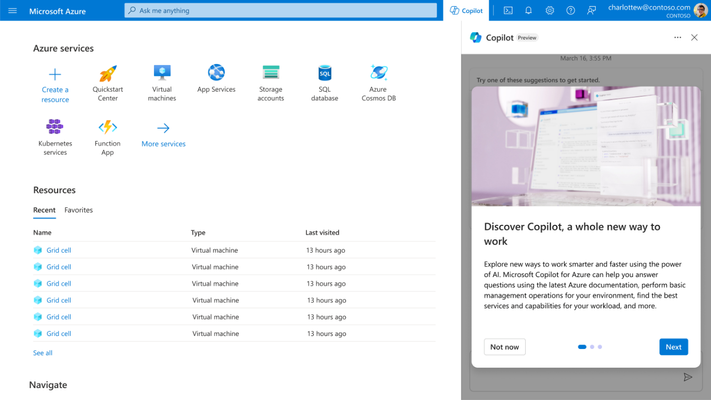
    At its Ignite 2023 conference, Microsoft this week previewed Copilot tools to simplify the management of the Azure cloud service along with a tool that streamlines the building and deploying of artificial intelligence (AI) applications on the Azure platform.

    In addition, Microsoft launched Microsoft Copilot Studio, a low-code tool that automates the process of creating data integration plugins and adding custom copilots within the Microsoft Copilot for Microsoft 365 tool that Microsoft previously launched.

    Microsoft Copilot for Azure leverages large language models (LLMs) to enable IT teams to use natural language to create, configure, discover and troubleshoot Azure services. It also enables IT teams to create complex commands, ask questions and optimize costs.

    Erin Chapple, corporate vice president for Azure Core at Microsoft, told Ignite attendees that Microsoft, along with a handful of customers, is already using Microsoft Copilot Azure to manage Azure infrastructure.

    In the long term, it’s clear that Microsoft is moving toward streamlining the building and deployment of AI applications using Azure AI Studio, a framework for invoking the AI models that Microsoft makes available on the Azure platform. The goal is to make it possible for organizations to create their own copilots based on AI models they have trained.

    It’s still early days in terms of organizations leveraging AI models to build applications, but it’s already apparent that DevOps and machine learning operations (MLOps), along with data engineering and cybersecurity best practices, will need to converge. Microsoft is making a case for Azure AI Studio as the framework that will enable IT organizations to achieve that goal.

    Of course, Microsoft is not the only provider of IT infrastructure resources with similar ambitions, but thanks to its investments in OpenAI and the acquisition of GitHub, it is furthest along in terms of defining a framework for building AI applications at scale. Last week, GitHub previewed an extension of the Copilot tools it already provides to help developers write code that leverages generative AI to automatically propose an editable plan for building an application based on natural language descriptions typed into the GitHub Issues project management software. Copilot Workspace will generate editable documents via a single click that can be used to create code that developers can then visually inspect. Any errors discovered by application developers or the Copilot Workspace platform can also be automatically fixed.

    At the same time, GitHub has extended the scope and reach of Copilot Chat to make it simpler for developers to use natural language to discover issues in their code base.

    Generative AI is already having a massive impact on the rate at which applications are developed, but that code still needs to be reviewed. Chat GPT is based on a general-purpose large language model (LLM) that is trained by pulling in code of varying quality from all across the web. As a result, code generated by the platform might contain vulnerabilities or be inefficient. In many cases, professional developers still prefer to write their own code.

    Of course, not every programming task requires the same level of coding expertise. In many instances, ChatGPT will generate, for example, a script that can be reused with confidence across a DevOps workflow. There is no shortage of mediocre developers who are now writing better code thanks to tools such as GitHub Copilot, and soon, domain-specific LLMs will make it possible to consistently write better code based on validated examples of code.

    The next challenge is going to be finding a way to manage increased volumes of code. There is no doubt that AI will be applied to the management of DevOps pipelines, but for the moment, at least, the pace at which AI is being applied to writing code is already exceeding the ability of DevOps teams to manage it.

  • Nobl9 Allies With Microsoft to Simplify SLO Creation

    Nobl9 Allies With Microsoft to Simplify SLO Creation

    Nobl9 this week revealed it has integrated its reliability center platform for managing service level objectives (SLOs) as code with the Microsoft Azure Monitor service to make it simpler to both create and track service levels.

    The Nobl9 Reliability Center provides access to dashboards for a single source of truth about the state of reliability in an application environment based on the metrics collected from the SLOs that have been defined.

    Nobl9 Chief Growth Officer Kit Merker said the integration with Microsoft Azure Monitor is the first in a series that will ultimately make it easier to define SLOs using historical data collected by third-party tools.

    The Nobl9 Reliability Center is already integrated with more than 50 DevOps, observability and incident management tools through which it collects metrics, events, logs, traces, alerts to track incidents, releases, rollbacks, runbooks and other documentation.

    Those integrations will ultimately make it simpler for IT teams to create SLOs using historical data that today are still challenging to define from scratch, noted Merker. In fact, the data tracked by Nobl9 can be used to automate remediations via those integrations, he noted.

    As more microservices-based applications are built and deployed, it’s becoming more challenging to maintain SLOs across applications that have many more dependencies than legacy monolithic applications. Each feature and application programming interface (API) added over time conspires to adversely impact performance. It‘s not so much that any given service will outright fail as much as it is determining where degradations are occurring that result in SLOs not being met.

    Ultimately, each IT team needs to provide some sort of objective benchmark that assesses their overall effectiveness at delivering application services by making it simpler to track whether SLOs are achieved and maintained. Not every service needs to necessarily meet a stringent requirement. Instead, IT teams need to have confidence in the fact that, on average, certain levels of performance are being consistently maintained.

    That’s crucial because as more organizations depend on software to deliver digital services, any disruption is likely to have a direct impact on profit and revenue. As such, the reliability of application environments has become a major concern in an era where IT teams are now trying to manage distinct services rather than individual applications.

    The challenge and the opportunity now is to find a way to proactively reduce that stress by programmatically managing SLOs as code rather than having to overprovision infrastructure resources to ensure maximum availability at the highest cost possible. At a time when more organizations are encountering economic headwinds, that’s no longer a luxury they can afford.

    Each organization will need to determine for themselves how aggressively they need to manage SLOs. Of course, SLOs as a concept have been around for decades, but with the rise of digital services that span multiple organizations, the level of reliability DevOps teams are expected to provide is now being written into business contracts. Not surprisingly, the overall level of associated stress DevOps teams are experiencing has correspondingly increased.

  • Redgate Automates Pulling of Test Data From Production Databases

    Redgate Automates Pulling of Test Data From Production Databases

    Redgate today added a Redgate Test Data Management (TDM) tool that automates the pulling of masked test data from databases running in production environments.

    David Gummer, chief product officer for Redgate, said this capability eliminates manual tasks that previously inhibited testing or resulted in personally identifiable information (PPI) being inadvertently used to test applications.

    Redgate TDM automatically classifies and masks data residing in SQL Server, PostgreSQL, MySQL or Oracle database before it is used to test an application. It then produces a copy or clone of that data that is a fraction the size of the original, said Gummer.

    That approach creates a repeatable process for DevOps teams that can withstand a regulatory audit of application development processes, he added. In fact, with the increased focus on software supply chain issues, more auditors are specifically reviewing how data is secured during the application development process.

    Designed to be invoked via a command line interface (CLI), within an integrated development environment or via a graphical interface, Redgate TDM reduces the friction that currently occurs when DevOps teams request test data from database administrators (DBAs), said Gummer. Many DBAs are either too busy to fulfill those requests or reluctant to provide access to sensitive data that would result in the organization running afoul of a compliance mandate.

    Developers then often resort to using anonymous data that doesn’t actually reflect the environment in which their application will ultimately be deployed.

    The amount of data that developers need to build applications is only going to increase. In the absence of any way to effectively automate the process of accessing that data, it ultimately takes longer to build and deploy stable applications. In many cases, applications are simply not tested as thoroughly as they should be before being deployed in a production environment, resulting in rollbacks that might otherwise be avoidable.

    Advances in artificial intelligence (AI) are making it easier to create test scripts, but much of the testing setup process is still based on manual processes that increase the overall level of toil.

    At a time when more organizations than ever are trying to increase developer productivity, automating relatively mundane tasks such as pulling test data can have a big impact. Developers want to spend as much time as possible focused on writing code. Everything else is a task that gets in the way of achieving that goal. While there is a general desire to empower developers, that doesn’t necessarily mean they want the cognitive load associated with building applications to increase. In fact, one of the reasons platform engineering has emerged as a methodology for managing DevOps workflows at scale is to reduce the current level of cognitive load developers experience today.

    Of course, DevOps teams are, by their nature, ruthlessly committed to automating as many processes as possible. The challenge is bottlenecks in those processes conspire to slow down the overall rate at which applications can be built and deployed despite the best intentions of all involved.

  • DevOps Dozen² 2023 Finalists Announced

    DevOps Dozen² 2023 Finalists Announced

    We are excited to announce the finalists for the DevOps Dozen² Awards 2023, celebrating the greatest innovators and their achievements in the DevOps space. These individuals and companies have taken an active role in the DevOps community, demonstrating their leadership and commitment to the improvement of our industry in the past year. 

    Congratulations to every one of the finalists. All of your hard work and dedication are greatly appreciated.

    Without further ado, here are the finalists for the DevOps Dozen² Awards 2023:

    DevOps Dozen Community Awards

    1. Best DevOps Industry Implementation

    • Codacy Pioneers Program (Codacy’s Pioneers Programme)
    • DevOps Implementation across the SJP enterprise systems (St James’s Place in Partnership with Intellect Design Arena)

    2. Best DevOps Survey/Analysis/Research

    • State of Digital Quality Report 2023 (Applause)
    • The Shift to a Security Approach for the Full Application Stack Report (Cisco AppDynamics)
    • Accelerate State of DevOps Report (DORA)
    • Charting Observability Research Report (Edge Delta)
    • 2023 State of IaC Report (Firefly)
    • Observability Survey 2023 (Grafana Labs)
    • 2023 Software Artifact State of the Union (JFrog)
    • What’s in Your Open-Source Software (Lineaje)
    • 2023 Software Engineering Benchmarks Report (LinearB)
    • 2023 Observability Forecast Report (New Relic)
    • State of the API Report (Postman)
    • Global State of API Security Report (Traceable AI)

    3. Best DevOps-Related Video Series (video)

    • DevOps Exchange YouTube Channel (DevOps Exchange)
    • DevOps Toolkit (DevOps Toolkit)
    • KubeSimplify (Kubesimplify)
    • Saiyam Pathak (Kubesimplify)
    • Ned in the Cloud’s Terraform Tuesday Series (Ned Bellevance)

    4. Best DevOps-Related Audio Podcast Series

    • The Modern Mainframe (BMC Software)
    • 0800-DEVOPS Podcast by Ivan Krnic (CROZ)
    • DevOps Paradox (DevOps Paradox)
    • Let’s Get To The News (Kubernetes community)
    • Dev Interrupted (LinearB)
    • DevOps in Agile Way Podcast (Pawel Piwosz, DevOps Institute Ambassador)
    • The MLSecOps Podcast (Protect AI)

    5. Best DevOps Book/eBook of the Year

    • Crafting a Mainframe Modernization Roadmap (Broadcom)
    • Strategizing Continuous Delivery in the Cloud (Garima Bajpai , Thomas Schuetz)
    • Redbook: Accelerate Mainframe Application Modernization with Hybrid Cloud (IBM)
    • Industrial DevOps: Build Better Systems Faster by Dr. Suzette Johnson and Robin Yeman (IT Revolution Press)
    • Beyond Agile Auditing: Three Core Components to Revolutionize Your Internal Audit Practices (IT Revolution)

    6. Top DevOps Evangelist

    • Sam Dion (National Bank of Canada)
    • Garima Bajpai (Canada DevOps Community of Practice)
    • Pawel Piwosz (Company or Community: DevOps Institute Ambassador)
    • Amanda Lewis (DORA Community)
    • Fatima Sarah Khalid (GitLab)
    • Ayelet Sachto (Google)
    • Richi Hartmann (Grafana Labs)
    • Stephen Chin (JFrog)
    • Eran Kinsbruner (Lightrun)
    • Mayank Solanki (TataCliq)
    • Viktor Farcic

    7. Best DevOps Transformation (non-vendor)

    • Informatica (Grafana Labs)
    • Pera People Science B.V
    • CGI Life and Health Insurance Agile and DevOps Team

    8. Best DevOps Event of the Year

    • DevOps World 2023 (CloudBees)
    • DevOps Exchange
    • GrafanaCON 2023 (Grafana Labs)
    • swampUP (JFrog)
    • Galaxy ’23 (LaunchDarkly)
    • PASS Data Community Summit (Redgate Software)

    9. Most Innovative DevOps Open Source Project

    • Coder OS (Coder)
    • AIaC (AI generator for infrastructure as code by Firefly.ai)
    • Beyla (Grafana Labs)
    • Jenkins
    • Frogbot (JFrog)
    • Galasa (Open Mainframe Project)
    • OpenRewrite (OpenRewrite / Moderne)
    • CNAPPgoat (Tenable Open Source)
    • Terrascan (Tenable Open Source)

    10. DevOps Executive of the Year (non-vendor)

    • Garima Bajpai (Canada DevOps Community of Practice)
    • Dan Rogers (LaunchDarkly)
    • Idit Levine (Solo.io)
    • Kavitha Srinivasulu (TCS)

    11. Best DevOps Presentation of the Year

    • Time to Rip Off the Training Wheels and Enable End-to-End Automation, a SHARE Atlanta 2023 presentation by Tony Anter and Mark Schettenhelm (BMC Software)
    • Beyond Agile Auditing: The Path to a Better Audit Experience by Clarissa Lucas

    12. Best DevOps.com Article of the Year

    • Six Mainframe DevOps Predictions for 2023 (BMC Software)
    • VS Code for Mainframe: The Enterprise Developer Tipping Point (Broadcom)
    • Muneesh Sharma (Neem Consulting Ltd.)

    DevOps Dozen Tools and Services Awards

    1. Best End-to-End DevOps Tool/Service

    • Bitrise
    • Copado
    • Harness Software Delivery Platform
    • Morpheus v6.x
    • The Netlify Platform
    • PagerDuty Process Automation
    • Sourcegraph’s Code AI Platform
    • BMC AMI DevX
    • Digital.ai AI-Powered DevSecOps Platform
    • JFrog Software Supply Chain Platform
    • Nethopper KAOPS
    • Opsera Unified DevOps Platform
    • Rootly
    • Reliability Management

    2. Best DevOps Repo/GitOps Tool/Service

    • gitStream (LinearB)

    3. Best CI/CD Tool

    • Bitrise
    • BMC AMI DevX Code Pipeline
    • Buildkite Pipelines
    • CircleCI
    • CloudBees CI/CDRO
    • Codefresh CI/CD Solution
    • Copado
    • Octopus Deploy
    • OpsMx Secure CD

    4. Best Value Stream Management Tool

    • Allstacks Platform
    • ValueOps by Broadcom
    • Digital.ai’s Value Stream Management Tool
    • LinearB
    • Planview Value Stream Management

    5. Best Observability Solution

    • Apica
    • BMC Helix Operations Management with AIOps
    • Cribl Stream
    • Grafana Cloud Free Tier
    • Lightrun Observability Platform
    • Memfault
    • The New Relic All-In-One Observability Platform
    • Observe
    • StackState
    • BMC AMI zAdviser Enterprise
    • Cisco Observability Platform
    • Edge Delta
    • Honeycomb.io
    • Logz.io Open 360™ Platform
    • Mezmo Telemetry Pipeline
    • Nobl9 Reliability Center
    • SolarWinds Observability
    • vFunction Architectural Observability Manager

    6. Best DevSecOps Solution

    • Broadcom SBOMz
    • CodeSonar
    • CodeSentry
    • Dazz Remediation Cloud
    • Digital.ai AI-Powered DevSecOps Platform
    • GitLab
    • Mend Application Security Platform by Mend.io
    • Progress Chef
    • DuploCloud DevOps Automation Platform
    • Graylog
    • JFrog Curation
    • Lineaje AI with BOMbots
    • Moderne
    • ReversingLabs Software Supply Chain Security Platform
    • Tanzu Application Platform
    • Xygeni Software Supply Chain Security Solution

    7. Best Testing Service/Tool

    • Telepresence (Ambassador Labs)
    • Applitools
    • BMC AMI DevX Total Test
    • Buildkite Test Analytics
    • Copado
    • Digital.ai Continuous Testing
    • Sauce Labs / Sauce Orchestrate
    • SonarQube
    • Tricentis Mobile

    8. Best Kubernetes Platform/Service

    • BMC Helix Operations Management with AIOps
    • Edge Delta
    • Kalix
    • Rafay Systems

    9. Best Cloud-Native Security Solution/Service

    • The Aqua Platform (Aqua Security)
    • Axiomatics’ Orchestrated Authorization Solution
    • Britive Identity Security Platform
    • Cyera
    • Dazz Remediation Cloud
    • Fleet Endpoint Security Platform (Fleet Device Management, Inc.)
    • JumpCloud Directory Platform
    • The Orca Cloud Security Platform
    • Sumo Logic SaaS Log Analytics Platform
    • Sysdig Secure
    • Tenable Cloud Security
    • Tetrate Istio Subscription (TIS)

    10. Best DevOps for Mainframe Solution

    • BMC AMI DevX tool suite (BMC Software)
    • Code4z (Broadcom)
    • Wazi Deploy (IBM)
    • PopUp Mainframe
    • Rocket DevOps 10.2.2 (Rocket Software)

    11. Best DevOps for DataOps/Database Solution

    • BMC AMI DevOps for Db2® – BMC Software and BMC AMI SQL Performance for Db2® (BMC Software)
    • Coalesce Data Transformation Platform
    • Percona
    • Flyway (Redgate Software)
    • TDengine

    12. Best New DevOps Tool/Service Provider

    • Applause Crowdtesting Solution for DevOps Teams
    • BMC AMI DevX Code Insights (BMC Software)
    • BMC Helix ServiceOps, BMC Helix Operations Management with AIOps, BMC Helix ITSM
    • Devtron
    • Firefly Cloud Asset Management
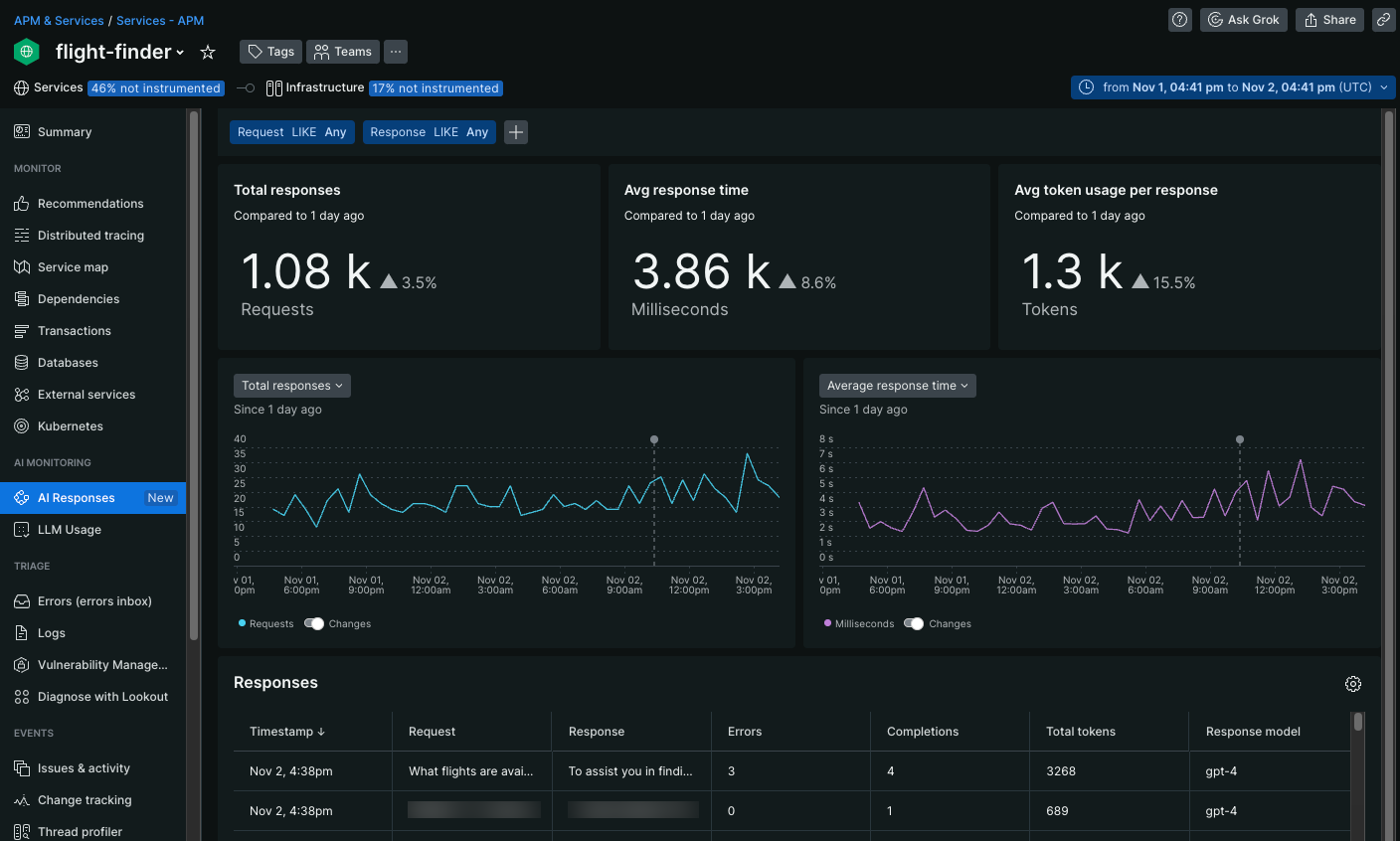
    • New Relic Grok
    • PerfectScale Platform
    • PopUp Mainframe
    • Recommended Learning Paths (Security Journey)
    • Sourcegraph’s AI coding assistant, Cody
    • Tabnine Chat
    • Vercel

    Finalists were picked by the judges and based on which entry had the most nominations.

    Voting for the winners in all 24 categories is now open to the public. To vote for the leaders, tools and companies you think are truly deserving of an award for their exceptional service to the DevOps community, please visit the DevOps Dozen² website.

    Winners will be chosen from among the finalists, with general public voting weighted for 40% of the final score and our judges’ selections for 60% of the final score. The deadline for public voting is December 31 at 5:00 p.m. ET.

    The winners will be announced at the Predict 2024 Virtual Summit on January 18, 2024, and will receive both digital badges and physical trophies celebrating their achievements.

    Thanks to everyone who has supported the DevOps Dozen² Awards by nominating candidates and voting. Good luck to all the finalists!