
New Relic today unfurled an extension of its monitoring platform specifically designed for DevOps teams tasked with managing complex IT environments.
Nadya Duke Boone, vice president of product management for New Relic, said New Relic One, available to existing customers at no additional cost, makes it possible for DevOps teams to now visualize all the data that exists across multiple New Relic accounts their organization has created in a single set of dashboards.
New Relic One also makes it possible to create an “entity” to track their relationships and dependencies to provide more context to the metrics surfaced by New Relic. That context is critical anytime a major incident occurs because these days so much of the revenue any organization generates is determined by the availability of their applications, said Duke Boone.
To achieve that goal, New Relic One provides Service Maps spanning entities; search and discovery tools based on universal tag filtering; dashboards through which queries can be launched using visual tools; an ability to more easily extend visualizations; and a new home page designed to make it easy to drill down into various dashboards.
Other capabilities included in New Relic One include Monitoring for the AWS Lambda serverless computing framework, a Kubernetes cluster explorer and distributed tracing global search.

New Relic also revealed today it plans to deliver both a log monitoring solution and AIOps offering within New Relic One by the end of the fiscal year. New Relic earlier this year acquired SignifAI to gain access to AIOps platform.
Duke Boone said all this is now possible because of the investments New Relic has made in developing a persistent store for monitoring platform, which she said represents a strategic initiative on the part of New Relic to expand the scope of the services and capabilities it provides.
Downtime in the age of digital business directly equates to lost revenues. Organizations that face that challenge typically are at the leading edge of adopting best DevOps practices. That challenge these organizations face today is they are drowning in complexity, a situation that likely will only worsen as organizations deploy cloud-native applications based on containers, she said, adding New Relic One not only serves to make it easier to manage all that complexity, it also makes it simpler for teams within an organization to share best DevOps practices.
Of course, one of the issues that restrains organizations from adopting DevOps practices in the first place is a reluctance to make IT environments any more complex than they already are. Organizations are demanding that IT organizations become agile enough to support a wide range of digital processes. The challenge they all typically face is the current reliance on highly structured processes that are intended to minimize potential errors. As well-intentioned as that might be, however, they often result in IT organizations being unable to adjust rapidly changing business requirements. The good news is as DevOps tools become more sophisticated, the skepticism of many IT professionals have toward DevOps will continue to quickly diminish.


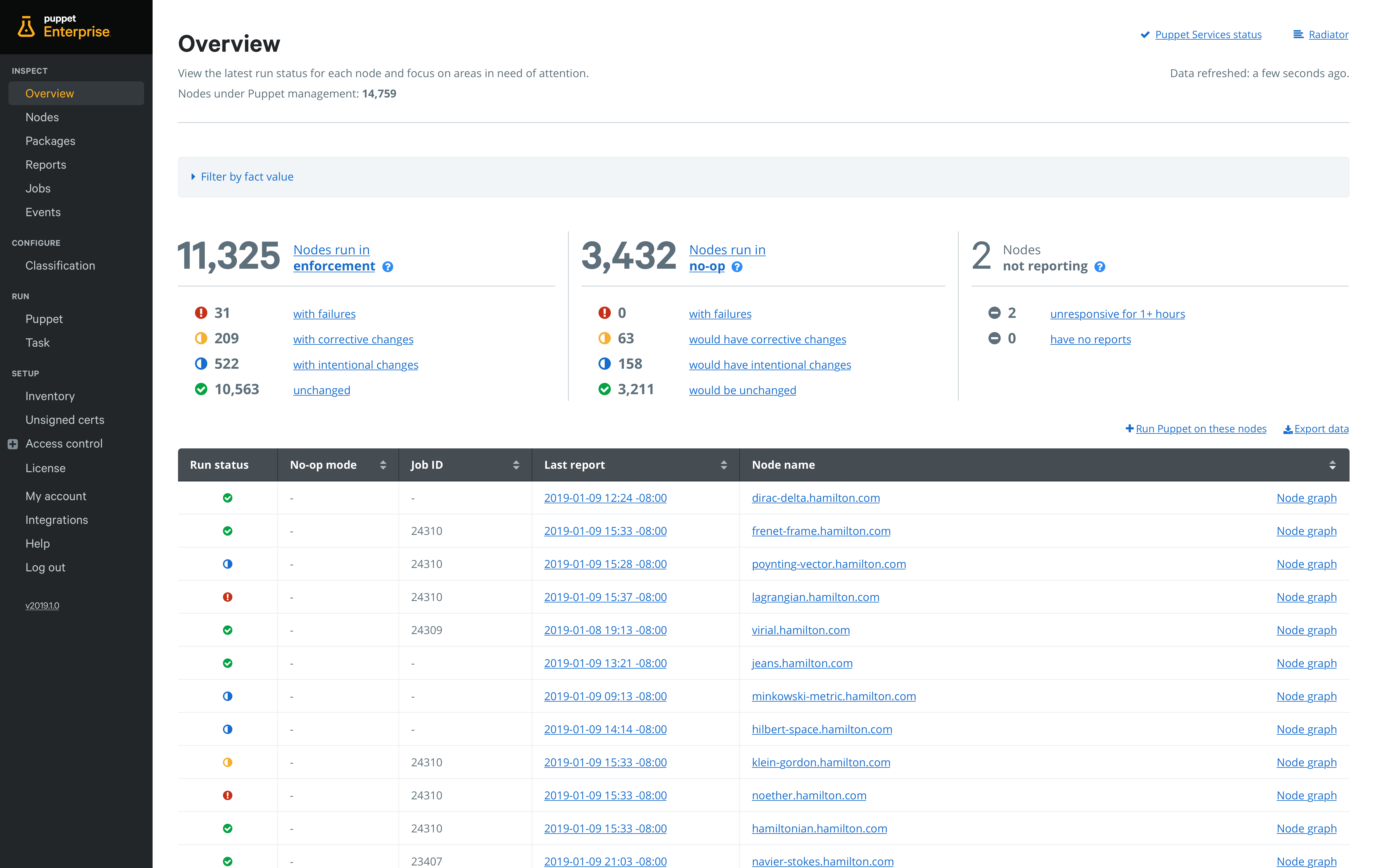 At the same time, Puppet is providing the ability to set up pipelines for deploying automation code directly from within Puppet Enterprise. Rather than having to set up a separate continuous integration/continuous deployment (CI/CD) platform, Puppet is embedding the capability it acquired from its purchase of Distelli in 2017. In doing so, Puppet is making it possible to accelerate deployment of automation software in a way that doesn’t require every change to be approved by a master Puppet administrator. Default pipelines guide organizations new to continuous delivery practices through setting up their first pipeline in less than 30 minutes.

 Capabilities provided by Wavefront Service Maps include packaged visualization of request flows with a map of service dependencies, built-in tracking of health metrics and view into individual traces to pinpoint performance bottlenecks.


