Category: Features

  • CodeSee Unveils Enterprise Codebase Visualization Platform

    CodeSee Unveils Enterprise Codebase Visualization Platform

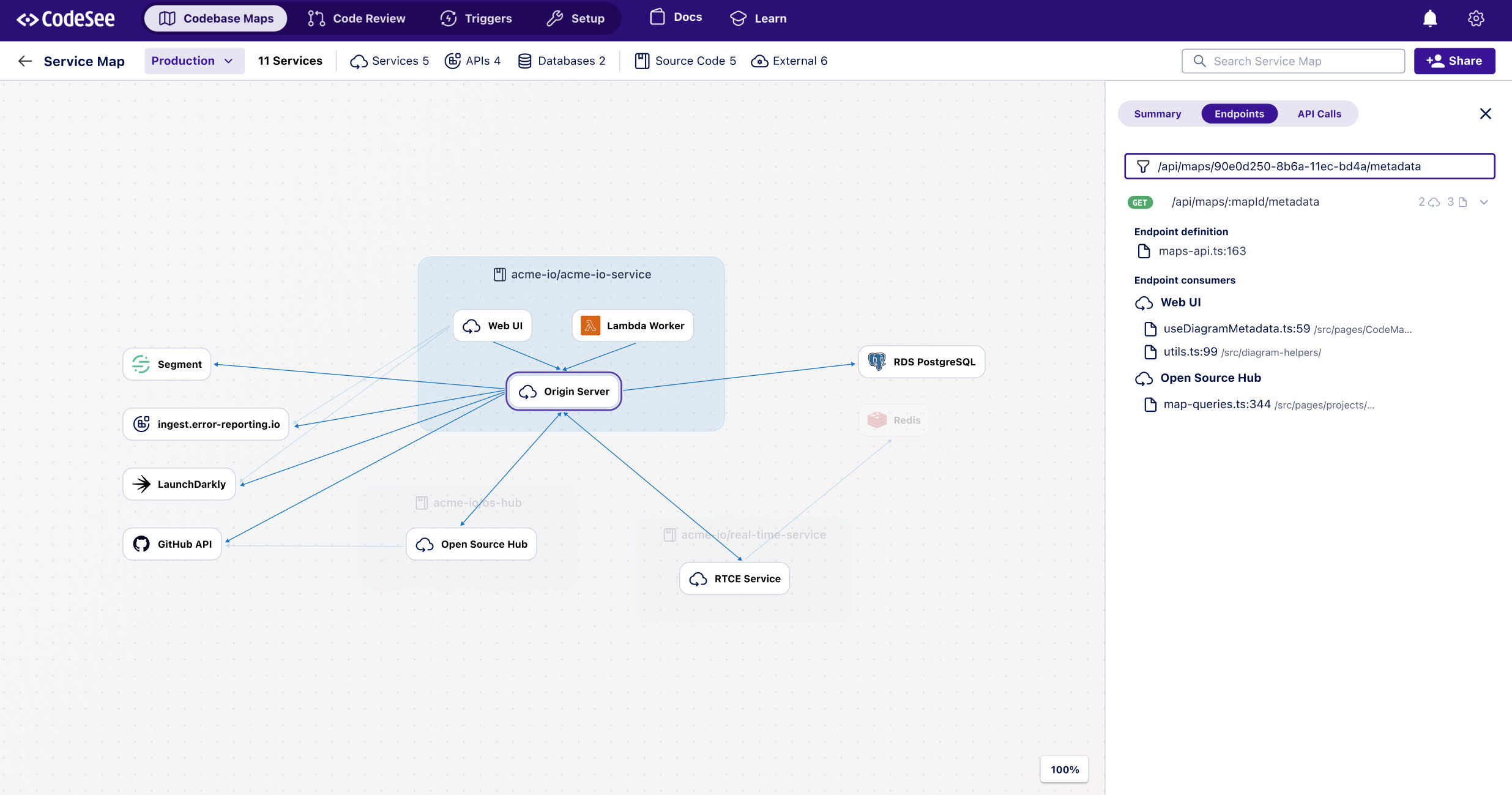
    CodeSee this week launched an enterprise platform based on its codebase visualization and mapping tools that makes it easier for developers to navigate and learn how an application was developed.

    CodeSee CEO Shanea Leven said this capability makes it simpler to understand how a codebase is constructed, including the application programming interfaces (APIs), without having to read each line of code. Organizations can use the CodeSee Enterprise platform to review code in addition to making it easier to add new developers to a project, she said.

    The CodeSee Enterprise platform makes it possible to automatically detect, visualize and link to the code used to create every connection between the services that make up an application. That capability is especially useful for any security review of an application before or after an application is deployed.

    A code automation feature codifies and automates the code knowledge that previously could only be passed from one developer to another, Leven noted.
    It takes a significant amount of time for developers to pore over a codebase to understand where they might contribute. The larger a codebase is the more challenging it becomes to make meaningful contributions.

    By definition, application development in the era of microservices is now a group effort. The days when a lone developer cared for an entire application are long over. The issue is finding a way for teams of developers to more easily collaborate when most of them may have never actually met in person.

    The amount of focus on developer productivity has increased substantially since the start of COVID-19 pandemic spurred organizations to accelerate a wide range of digital business transformation initiatives. Developers are generally challenging to recruit and retain, especially individuals familiar with the latest cloud-native platforms for building and deploying applications. Making it possible for developers to more easily contribute to multiple application development projects has never been more critical.

    Of course, most developers would rather spend more time writing code rather than studying it. The amount of time devoted to understanding codebases and maintaining development environments far exceeds the amount of time spent writing code. Many developers are not always going to be able to take advantage of advances in application development without the aid of a DevOps team to provision new tools and platforms.

    One way or another, the rate at which applications are being developed and deployed needs to accelerate. An uncertain economic outlook is increasing the pressure on business leaders to digitally transform processes in a way that increases both revenue and profitability. The application experience is especially critical because customers are not inclined to patiently wait for organizations to finetune their digital processes over an extended amount of time.

    Less clear, however, is the level of stress individual developers might be willing to tolerate. There’s no doubt most of them are sympathetic to the needs of the organizations that have hired them but that does not necessarily mean they’re willing to continuously work overtime to achieve goals that might not be attainable using the tools they have at hand.

  • 90% Of Orgs Say Multi-Cloud Helps Achieve Business Goals

    90% Of Orgs Say Multi-Cloud Helps Achieve Business Goals

    Multi-cloud is the new normal. And thankfully, this new normal isn’t just happenstance—it’s driving positive outcomes.

    New findings show that most organizations benefit from using multiple cloud providers. Multi-cloud adoptions are helping achieve business goals, such as improving reliability and scalability and increasing overall security and governance. However, nearly all organizations (94%) admitted that they have some avoidable cloud spending and skills shortages continue to hold back a fully-realized multiple-cloud success.

    HaschiCorp recently released the 2022 State of Cloud Strategy Survey: Making Multi-Cloud Work. In addition to showcasing the positive outcomes of multi-cloud adoption, the report found a trend toward automation frameworks that help operationalize multi-cloud. Below, I’ll explore the report’s key takeaways to see what CloudOps and platform teams can garner from current multi-cloud trends.

    Multi-Cloud is Achieving Business Goals

    First off, the use of the public clouds is increasing dramatically—the majority of public cloud workloads will likely double in the next two years. To support this influx, more organizations are moving toward multi-cloud. According to the HashiCorp survey, 60% are already multi-cloud and 21% plan to use multiple clouds within the next year.

    The good news is that a multi-cloud strategy appears to be working. A full 90% of respondents said multi-cloud is helping their organizations achieve their business goals. This figure is an impressive jump from HashiCorp’s 2021 survey, in which only 53% of organizations said multi-cloud was helping them achieve their business goals.

    So, what exactly are companies extracting from multi-cloud adoption? Well, the topmost business goal driving multi-cloud is reliability, at 46%. This is followed by digital transformation (43%), scalability (42%), security and governance (41%) and cost reduction (39%). As we can see, multi-cloud equally benefits various areas.

    Centralized Automation Supports Multi-Cloud

    With the rise of multi-cloud, CloudOps is becoming its own discipline. As such, it’s common for an organization to build a dedicated Cloud Center of Excellence (CCoE) or strategy team to manage cloud operations—86% said they relied on a cloud platform team. Such a team is often in charge of standardizing cloud services, developing cloud best practices, creating operational policies and related duties.

    To aid cloud platform teams, cloud automation is becoming increasingly important. The survey found that 99% see automation as important for operationalizing multi-cloud infrastructure. Multi-cloud automation could help solve inconsistencies across varying cloud workflows. Respondents also found it can be applied to deliver more flexible infrastructure, improve security and governance and better utilize cloud resources. Improving security is especially important here, as 89% said security is a key driver of cloud success.

    So how are these automations built? Well, folks are rarely developing cloud automation tools from scratch—only 27% do so. It’s far more common to either use open source or commercial tools for cloud automation. It’s pretty equal across the board whether these tools are run ‘as-a-service’ or are self-hosted.

    Regardless of the tooling type, companies are experiencing a broad set of benefits from using middleware to manage their multi-cloud operation strategy. 49% rank scalability as a benefit. This is followed by infrastructure provisioning (42%), cost optimizations (40%) and more flexible deployment options (39%).

    (Nearly) Everyone is Overspending on Multi-Cloud

    Unsurprisingly to some, the study found that 94% of organizations are wasting money in the cloud. The following were the top cited areas that contribute to cloud overspending and waste: Idle or underused resources (66%), overprovisioning resources (59%), a lack of needed skills (47%) and manual containerization (37%).

    The cloud overspending dilemma necessitates forethought into optimizations and reduction of idle resources. As I’ve previously covered, some organizations are even tinkering with employing a cloud economist, or Cloud CFO, to keep escalating cloud fees in check. To help this mission, 43% say consistent and automated tooling has or would lead to better utilization of cloud resources.

    Although wasteful spending is pervasive, the majority of companies are forecasting their cloud spending correctly. More than half (57%) said that in 2021 their organization’s projected cloud spend aligned with their actual cloud spend.

    Getting the Most Out of Multi-Cloud

    Multi-cloud is becoming more common across all IT divisions—as is middleware to operationalize and standardize logic between multiple clouds. And, widespread business success with multi-cloud signals increased maturity in this area.

    Yet, multi-cloud doesn’t come without its challenges. Skill shortages rank as the highest factor impeding an organization’s ability to operationalize multi-cloud. Businesses must face other challenges, such as siloed teams, compliance and risk management and lack of training in order to fully realize multi-cloud. Standardized operating models, along with shared workflows and policies, are possible ways to combat these roadblocks.

    The HashiCorp study surveyed 1,000 technology practitioners and decision-makers from around the world. HashiCorp also partnered with Forrester to provide additional analysis of the findings. To read the results for yourself, check out the full report here.

  • Stable Diffusion Goes Public — and the Internet Freaks Out

    Stable Diffusion Goes Public — and the Internet Freaks Out

    Welcome to The Long View—where we peruse the news of the week and strip it to the essentials. Let’s work out what really matters. (more…)

  • VMware Embraces Graph Technology to Manage Multiple Clouds

    VMware Embraces Graph Technology to Manage Multiple Clouds

    At the VMware Explore 2022 conference today, VMware launched a portfolio of multi-cloud management tools, dubbed VMware Aria, based on a graph-based data store that captures the resources spanning multiple clouds and their relationship to one another.

    Accessed via a VMware Aria Hub platform previously known as Project Ensemble, VMware Aria Graph provides a common definition of applications, resources, roles and accounts in near-real-time across a multi-cloud environment that can consist of millions of nodes.

    VMware CEO Raghu Raghuram told conference attendees the Aria Graph is at the core of an effort to enable IT organizations to move beyond “cloud chaos” to embrace a next-generation “cloud smart” approach to managing distributed computing environments that span multiple platforms.

    Based on an event-driven platform, the VMware Aria Graph aggregates data pulled from public application programming interfaces (APIs) into a data store residing on that cloud. The data store is based on a federated model so there is no need to move data into a central repository. Instead, VMware is making use of GraphQL to launch queries across a federated data model. In addition, IT teams can discover dependencies and analyze historical configuration data to discover the root cause of any issue. All operational data is now aggregated in a way that creates a single source of truth.

    VMware has also provided a set of API services that can be used to integrate the Aria Graph data store with third-party platforms.
    In general, the company is committed to accelerating “the great replatforming” of IT environments spurred by digital business transformation initiatives, said Raghuram. The challenges IT organizations are encountering are roadblocks that involve everything from a lack of skills, the weight of existing enterprise applications and fragmented operations and cybersecurity models, he noted.

    The VMware Aria graph data store will enable the company to automate a wide range of management tasks, Raghuram said. That includes using the right cloud for the right application and governing and accessing them at the lowest cost possible, added Raghuram. The ultimate goal is to enable a unified developer experience that provides a frictionless multi-cloud experience across a consistent set of enterprise infrastructure, he said.

    VMware offerings that leverage the VMware Aria Graph include VMware Aria Guardrails for enforcing IT policies, a VMware Aria Migration tool for automating assessment, planning and execution using the VMware HCX platform and a VMware Aria Business Insights tool that surfaces business insights using machine learning algorithms. The rest of the VMware Aria portfolio is anchored around extensions to existing platforms in the form of VMware Aria Cost powered by CloudHealth, VMware Aria Operations and VMware Aria Automation.

    VMware also announced today that its existing VMware Cross-Cloud Service offering for deploying its stack of software across multiple clouds has been extended to add support for the Microsoft Azure cloud.

    Overall, VMware claims there are now five million developers in its ecosystem that collectively launch 350,000 projects every week. That equates to roughly 35 new applications a minute, according to Raghuram. All told, VMware claims there are 85 million workloads running globally on its platform.

    The bulk of those workloads today still run in on-premises IT environments. In fact, Raghuram noted that cloud platforms still only account for $413 billion in IT spending each year, which is only 10% of the total IT spending that reaches $4.4 trillion each year.

    VMware, which is expecting to complete its acquisition by Broadcom in the next few months, is betting that as more of those workloads move to the cloud, the need to centrally manage heterogenous IT environments will play to its strengths.

  • TidalScale Enables Hot-Swapping of Failed Servers

    TidalScale Enables Hot-Swapping of Failed Servers

    TidalScale has updated its namesake software for automating server management to include the ability to detect and prevent impending failures and enable IT teams to hot-swap another server.

    Version 4.1 of TidalScale also adds server wear leveling and preventative health checks that identify servers that should be replaced based on their remaining estimated life span.

    TidalScale CEO Gary Smerdon said that capability is especially critical given the high rate of DRAM memory failure that results in a high rate of downtime caused by server failures. The latest update to the company’s software-defined server management software reduces the failure rate in on-premises or cloud computing environments by a factor of 100 to ensure 99.999% uptime, he said.

    The company also announced that its software is now available on the Amazon Web Services (AWS) Marketplace.

    TidalScale employs machine learning algorithms to aggregate and virtualize CPU cores, memory and I/O across servers to present operating systems with a single software-defined server. That makes it possible to hot-swap individual servers to ensure availability.

    The single biggest cause of downtime in IT environments is memory failures; they are now 100 times more likely than they were a decade ago, noted Smerdon. In most cases, the root cause of the issues is the demands of modern applications running on legacy infrastructure that was not intended to support the latency requirements of those applications, he added.

    That issue can be especially acute in cloud computing environments where infrastructure is often shared by multiple applications, said Smerdon.

    It’s not clear at what rate cloud service providers are replacing legacy server infrastructure, but the ability to determine when to replace infrastructure gives IT teams an added measure of control over servers regardless of where they are deployed. The biggest issue, of course, is not so much replacing a server as it is determining which one actually failed. It often takes longer to identify a failed server than it does to bring a new one online.

    TidalScale is made available by both cloud service providers and manufacturers of servers used in on-premises IT environments, but it needs to be configured and deployed by an IT team. The overall goal is to not only increase system availability but also reduce the total cost of IT by managing infrastructure more efficiently across the life span of a server, said Smerdon. Some IT teams routinely replace servers at specified intervals, regardless of actual usage, to avoid downtime. TidalScale enables IT teams to determine which servers to replace based on the actual wear within the context of a self-healing server farm, he noted.

    Given all the things that might potentially go wrong in an application environment, not having to worry about server failures should enable DevOps teams to spend more time optimizing application performance.

    In theory, of course, modern applications based on microservices should be able to reroute calls to application programming interfaces (APIs) anytime a server becomes unavailable. However, over time it’s not uncommon for single points of failure to emerge as applications are updated. In the meantime, the majority of applications running today are based on legacy monolithic architectures that are much more susceptible to server failures that, unfortunately, are still far too common.

  • DevOps World 2022: Why DevOps Needs a Remix

    DevOps World 2022: Why DevOps Needs a Remix

    I was checking out the DevOps World website today to gather information, as Techstrong.TV will be live streaming from the show in Orlando, Florida September 28 and 29, 2022. The theme for this year’s DevOps World is “DevOps Remix.” The more I thought about it, the more it became clear that DevOps Remix is a perfect theme for DevOps World—and for DevOps as a practice.

    What does a DevOps remix mean? Well, I won’t pretend to speak for CloudBees, the event’s host, but here’s what they have on the DevOps World website:

    “The tempo will be faster, more energized, and more harmonious in keeping with the accelerated pace of the DevOps transformation. Progressive delivery, value stream management, and everything from AIOps to XOps are now part of the mix creating new paths, new beats, and faster code releases.”

    That’s what a DevOps remix means to them; here’s what DevOps remix means to me.

    I believe a DevOps remix speaks to the continuing maturation of DevOps as a methodology and a practice and to the DevOps market and community. DevOps is no longer nebulous; there’s no longer a question of “Is it real or not? What exactly is DevOps?” kind of thing. No, DevOps is very much a player in the software development life cycle (SDLC). So much so that as digital transformation continues to involve software in places it hasn’t been before, DevOps is helping it get there. DevOps is going places it has never been before.

    Techstrong Group’s own DevOps Experience event, now in its fifth year and coming this November, has a similar theme: DevOps Everywhere. DevOps, as part of the CI/CD pipeline, still exists, but DevOps today is so much more. To be successful today, organizations large and small (but especially enterprises) need to take DevOps fundamentals and implement them whenever and wherever they are building, deploying and managing software.

    Another reason the idea of a remix is so appropriate is that, as the world emerges from COVID-19 lockdowns, there is something comforting about revisiting in-person events, conferences and training—the ‘normal’ industry activities and events that happened before the pandemic. For those of us in the DevOps space, DevOps World is one of those things. I have been going to DevOps World since before it was even called DevOps World—when it was Jenkins World. There’s a remix for you!  

    DevOps does need a remix, and it’s happening right now. While I do think it’s great to be able to resume many of the same activities, go to the conferences and get training, I don’t expect this year’s DevOps World to be like previous editions in San Francisco or online. That’s part of what makes it such a terrific event—a mix of the old, the new, the tried and true, the cutting edge and the familiar. So, if you consider yourself a member of the DevOps community and can make it to Orlando at the end of September, you should consider being part of the DevOps Remix.

    This year, DevOps World will be held in Orlando, Florida, at the World Marriott Center. The CloudBees folks have published a discount code, DW22, to use when registering that should save you some money on a full ticket for the show, including some training, some great sessions and interactive activities. We can’t wait to see you there for the DevOps Remix!

  • GitLab Research Shows Security Concerns in DevOps Teams

    GitLab Research Shows Security Concerns in DevOps Teams

    The threat of breaches is top-of-mind for many DevOps teams, and while security continues to shift left it appears to be a driving force for many decision-makers when it comes to choosing a DevOps platform or other technologies.

    These were among the results of a GitLabs survey that also found getting security right is the number one challenge for DevOps teams. 

    Getting it Right

    Among the top reasons respondents said they chose DevOps were better code quality, developer productivity and operational efficiency—cited by 37% of survey takers, followed very closely by better security/more secure applications.

    The survey also revealed that 53% of developers said they are fully responsible for security in their organizations, a 14% jump from 2021. 

    Michelle McLean, vice president at Salt Security, said it is risky for organizations to depend on development teams alone for security.

    “Security and developer teams need to collaborate and work together–at every point in the application life cycle–not just development,” she explained.

    For example, security teams must bring runtime insights back to development so they can be applied for education and training.

    “It’s fundamentally important to choose a DevOps platform that either has security capabilities built-in or that can easily integrate with security platforms to facilitate collaboration by security and DevOps teams,” she said. “Otherwise, organizations run the risk of pushing out unsecured software or introducing other risks into the software supply chain.”

    Tim Mackey, principal security strategist at the Synopsys Cybersecurity Research Center, added that an obsolete mantra in the cloud-native community held that security wasn’t a high priority as proper DevOps workflows meant that incremental changes were small and easily deployed.

    He said the Log4j and Log4Shell experiences called that philosophy into question with a recognition that security issues can, and do, occur out-of-band from a release or feature and that continuous monitoring for external threats is part of a properly functioning security process.

    “By implementing monitoring for new threats, regardless of source or nature, the ability for cloud-native development to quickly issue tested patches becomes itself a security feature,” he explained. 

    Understanding the Pipeline

    McLean pointed out that while there is a growing understanding of security in the pipeline with DevSecOps, it’s not enough.

    “This is particularly true, for example, in the case of APIs. Because APIs aren’t just straight code, you must see them being exercised to spot logic flaws,” she said. “You need the ability to monitor them in runtime in order to spot anomalies and find areas where APIs might be exposing critical data. Although developers write APIs, their testing often falls short for security.”

    To accurately see what’s going on with APIs, developers need to exercise the API–even in pre-production.

    McLean said this is an area where security and development collaboration and integration is essential–APIs underpin a significant portion of the modern economy and the disconnect between security and development teams can have a direct economic impact.

    John Bambenek, principal threat hunter at Netenrich, a security and operations analytics SaaS company, added there has always been a delay between the release of new platforms and the awareness that security capabilities for those platforms need to be implemented.

    “With cloud-native and serverless technologies, that delay is as short as I remember in my career,” he said. “I greatly prefer the world where everyone at least understands the need for security instead of having to spend time getting buy-in that it matters in the first place.”

    He said if you can manage and implement security in a seamless and efficient way early in the development process, it is far easier and cheaper to address issues than addressing them after code has already shipped—and that’s without adding in breach or liability costs.

    “You can either fix it in dev or in prod, but you’re going to have to fix it sooner or later,” he said. 

    McLean noted many organizations are still maturing in their DevOps practices, not to mention their DevSecOps initiatives.

    From her perspective, educating developers as to what is expected of them from a security perspective before a line of code is written is key.

    “To help increase compliance, we’ve begun to see organizations taking steps to introduce security tooling into their pipeline process and add testing into the build process,” she said.

    Then they’ll add a step that triggers an alert for non-compliant builds but won’t prevent the build. Then they’ll add a step that mandates sign-off by the developer that they’ve seen the security alert for a non-compliant build but still won’t interrupt the build.

    “In rare organizations with highly mature DevSecOps processes, they’ll fail the build for non-compliance,” she added.

    McLean said organizations need to understand what’s realistic given their maturity and risk tolerance and implement controls that match.

    They also need to reevaluate those controls to look for opportunities to increase adherence to security policies and other compliance regulations.

    Overall, continuing to educate through compliance automation in the software development life cycle (in development, testing and deployment phases) further helps reinforce best practices while ensuring issues are uncovered before they become a risk or technical debt.

    Mackey said because DevOps platforms touch the software powering your business, when choosing any DevOps platform, the security of the platform itself and the competencies it enables should always be must-haves.

    “In effect, any decision about new software should be based on how it improves the current security capabilities of the business,” he said. 

  • Old Software Never Dies – But What is it Really Worth?

    Old Software Never Dies – But What is it Really Worth?

    I’ve been thinking about the news from last week that OpenText acquired Micro Focus for what seems to be $6 billion in cash. Mike Vizard did a nice write-up on the news with his take on it here on DevOps.com (and if you’re interested in the security industry implications, Techstrong Research’s Mike Rothman talked about that, too). While I don’t flat-out disagree with Mike Vizard’s opinions, I do have a slightly different view.

    To me, this is part of a trend we have been seeing from some of the largest tech companies who are sitting on or have access to loads of dry-powder cash. In tougher economic times, cash is king and it is not unusual for the large companies to come in and pick up other companies and lines of business, usually on the cheap. 

    For instance, Broadcom’s acquisition of VMware (though I don’t know that you could call $61 billion cheap). It seems, at first blush, the Micro Focus deal would seem to fit the same kind of bill. I don’t think people believe OpenText overpaid based on these numbers:

    • Total purchase price is 2.2x Micro Focus’ pro forma TTM revenues
    • Total purchase price is 6.3x Micro Focus’ pro forma TTM adjusted EBITDA

    However, I think there’s more here than meets the eye. By OpenText’s CEO’s own admission, it is going to take at least eight quarters (two years) to integrate the Micro Focus portfolio into OpenText’s cloud delivery model.  

    In the meantime, Micro Focus has struggled to maintain profitability and previously announced a $300 million cost-cutting program which will continue with the acquisition. Additionally, the company is saying they will cut another $100 million in costs on top of that; so, a total of $400 million in cuts. 

    Where are the cuts coming from? It’s not like Micro Focus’ broad portfolio of software products are revolutionary new technology—quite the opposite, in fact. Micro Focus, through various acquisitions over the years, has largely scooped up mature product lines from large technology brands that unloaded unwanted or non-strategic software lines-of-business. Of course, the HP/HPE deal was a whole different animal, but the result was not much different. 

    Some mature software came under Micro Focus’ control and Micro Focus has done a decent job of keeping those lines of business turning out what cash they can. They haven’t really “reinvigorated” that software, but have been running out the cycle. Now, OpenText says moving it to their cloud service over the next eight quarters is going to turn things around. I’m skeptical, to say the least.

    I think it will be old software that will be two years older and delivered via the cloud. What must be done goes beyond just putting that software in the cloud—they have to commit to truly relaunching it. Move it to cloud-native architecture; kill some of the older product lines that are near end-of-life and, frankly, which should have been put out to pasture some time ago. Build on the brand equity, sure, but launch some new software.

    At the end of the day, $6 billion is a lot of money—but more money than that has been wasted buying old software in the past. Without a much bolder plan from OpenText, just mumbling about digital transformation and cloud will not be enough to make the Micro Focus portfolio worth anything close to the amount of money they paid for it.

    Like Mike Vizard—and, I am sure, many OpenText investors and Micro Focus users—I will be looking for signs that OpenText are not settling for a lift-and-shift with the old Micro Focus software wrapped in the cloud. It is going to take more than that for this deal to pay dividends. 

    I am not saying it can’t be done. When this deal closes, OpenText will be a software powerhouse with a broad set of customers. Finding new software and services to sell to those customers is the key to this deal.

  • Five Great DevOps Job Opportunities

    Five Great DevOps Job Opportunities

    DevOps.com is now providing a weekly DevOps jobs report through which opportunities for DevOps professionals will be highlighted as part of an effort to better serve our audience.

    Our goal in these challenging economic times is to make it easier for DevOps professionals to advance their careers.

    Of course, the pool of available DevOps talent is still relatively constrained so when one DevOps professional takes on a new role it tends to create an opportunity for others.

    The five job postings shared this week are selected based on the company looking to hire, the vertical industry segment and, naturally, the pay scale being offered.

    We’re also committed to providing additional insights into the state of the DevOps job market. In the meantime, for your consideration:

    SimplyHired

    Kyndryl
    Remote
    DevOps Engineer
    $95,700 – $265,200

    Monster.com

    Randstad
    Remote
    Senior Cloud SRE
    $130,000 – $150,000

    Dice.com

    Staples
    Framingham, Mass.
    Senior Software Engineer I- CICD/DevOps
    $135,000

    Indeed

    Odyssey Information Systems
    Remote
    Senior DevOps Engineer
    $117,798 – $156,338

    ZipRecruiter

    Synthego
    Redwood City, CA
    Senior DevOps Engineer
    $113,000 to $165,000

  • OpenText to Create Software Powerhouse – Acquires Micro Focus for $6B

    OpenText to Create Software Powerhouse – Acquires Micro Focus for $6B

    OpenText this week announced it will acquire Micro Focus for $6 billion. The acquisition is part of an effort to reinvigorate a broad portfolio of information management, application development and testing, integration and cybersecurity platforms by accelerating the rate at which they are transitioned to OpenText’s managed private cloud.

    The acquisition is expected to close in the first quarter of 2023, and the combined company expects to reduce costs by an additional $100 million on top of the $300 million Micro Focus previously committed to cutting as part of an ongoing effort to return to profitability and growth.

    OpenText CEO Mark J. Barrenechea told analysts the ultimate goal is to enable organizations to accelerate their digital business transformation initiatives using a set of application programming interface (API)-centric offerings that reside on a private cloud.

    Digital transformation represents the largest opportunity in the history of computing, he said, but Barrenechea also acknowledged that a lot of companies are still struggling with making that transition. “There has to be a better way to get digital transformation right,” he said.

    The Micro Focus portfolio includes everything from a robotic process automation (RPA) offering, a recently-launched IT service management (ITSM) offering—dubbed Service Automation Management X—along with the Vertica database and LoadRunner testing tools. There is also a slew of cybersecurity platforms that include ArcSight, Fortify, IDOL Zenworks and Sentinel along with legacy COBOL application development tools and even the remnants of Novell.

    In effect, OpenText now has one of the broadest software portfolios in the industry after previously acquiring Documentum, Carbonite, Hummingbird and Zix. “The strategy appears to be to simply gather up all the pieces on the chess board,” said Mitch Ashley, principal analyst for Techstrong Research, an arm of Techstrong Group that is also the parent company of DevOps.com.

    Despite the disjointed Micro Focus portfolio, OpenText has no intention of selling off any of those offerings, said Barrenechea. Going forward, the strategy is to not only accelerate the transition to the cloud but also expand application license renewal services, he added. OpenText also sees an opportunity to expand the appeal of the Micro Focus portfolio into the small-to-medium business (SMB) market, noted Barrenechea.

    All told, it will take six quarters once the deal is closed to align the Micro Focus business model with the one OpenText currently employs, which Barrenechea said should result in growth starting eight quarters after the deal closes.

    There’s no doubt that, once the deal closes, IT organizations that rely on Micro Focus will be closely watching the level of ongoing investment in the portfolio for any signs of one platform being deemphasized in favor of another. It’s also probable that many customers will be relieved to see the stewardship of those platforms assumed by a company that is on firmer financial footing.

    Regardless of how the OpenText portfolio evolves in 2023, however, one thing that is certain is IT organizations have no shortage of alternatives to consider.