Category: Features

  • How Open Source Can Benefit AI Development

    How Open Source Can Benefit AI Development

    Enterprises are increasingly reliant upon open source software. A full 95% of IT leaders say open source tools are key to their enterprise infrastructure. Simultaneously, we’ve witnessed a sharp increase in the adoption of artificial intelligence (AI) and machine learning (ML). Most IT divisions want to take advantage of AI in some form, and open source technologies will likely be vital to these efforts.

    I recently met with Moses Guttmann, co-founder and CEO of ClearML, to understand the benefits of adopting open source software within the sphere of artificial intelligence. To Guttmann, open source has many benefits—the visibility it grants can equate to helpful feedback from the developer community, and transparency can inform new feature development and identify potential security gaps. There are also countless open source tools to help organizations develop and deploy ML models.

    Below, we’ll consider the benefits and potential drawbacks of incorporating OSS in AI development and explore ways to optimize the use of AI within an organization.

    Benefits of Using Open Source for AI

    AI has evolved in leaps and bounds. What was pure sci-fi a few years ago has become a reality through ChatGPT and other AI-powered platforms. The capabilities of AI are awe-inspiring, but Guttmann believes it still requires fine-tuning to move from entertainment purposes into a valid business driver.

    For example, custom ML models are difficult to construct from scratch, and generic APIs aren’t always that customized to the use case at hand to be valuable. Instead, Guttman foresees more and more organizations downloading open pre-trained models and retraining or customizing them to meet their specific needs.

    For software providers, there are many benefits to adopting an open source strategy. The visibility it creates helps evolve a project with feedback from the community, said Guttmann. This, in turn, helps organizations build better, more stable products. For example, ClearML adopts plenty of OSS to power their user interface, backend and other components, in addition to providing a popular open source CI/CD framework for ML workflows. “We’re true believers in the power of community and like to work with open source and contribute back to these projects,” said Guttman.

    Use Cases for Open Source in AI Development

    Open source software is powering innovation in many ways. And when it comes to AI, there are numerous open source projects to help accelerate AI development. Such projects encompass pre-trained models, data-structuring tools, frameworks to train models and AI deployment pipelines. For example, many open source machine learning frameworks can help engineers build and train their models from scratch. These free-to-use tools include TensorFlow, Keras, PyTorch, H2O, XGBoost and others.

    However, training models from scratch is time-intensive and complicated, said Guttmann. Instead, another option is to use pre-trained models accessible on GitHub or other repositories. Some popular examples are PaddleNLP and Natural Language Toolkit for natural language processing, OpenCV for machine vision and DeepFaceLab for deepfakes. There are also many open source Python packages that can structure and clean data for ML model training purposes.

    Open source software can also be applied to streamline the ML DevOps pipeline itself. AI requires intense processing and is typically deployed to its own computing environments. Infrastructure management around running and training AI is a promising area where open source could assist, said Guttmann. “Automating this process with an abstraction layer to allow data science and ML engineers to access product-grade hardware is a must,” said Guttmann.

    Potential Downsides of Open Source Usage

    Yet, of course, there are some potential downsides to using open source software within the field of AI. Supply chain attacks are still a persistent threat, and numerous open source software risks can present themselves. These include bad actors compromising a legitimate package, name confusion attacks, unmaintained software and untracked dependencies. License restrictions could also potentially block the inclusion of OSS in certain projects.

    Thankfully, the benefits of OSS appear to outweigh these concerns. Automated vulnerability scanning techniques can help detect known issues. It also helps that 89% of technology leaders see enterprise open source as more secure or as secure as proprietary software, according to a Red Hat report.

    Tips For Getting the Most From AI

    Open source is powering digital innovation on many fronts, including AI. But, simply looping in OSS isn’t the only aspect of fully leveraging AI—another will be the operationalization of ML management. The right automation infrastructure in place could enable the agility necessary to continuously retrain models. And since there are potential gaps in the CI/CD process, Guttmann recommended separating AI/ML from your normal CI/CD for security reasons.

    Guttmann also believes that, in general, companies should be more transparent around ML models, including sharing details behind their creation and visibility regarding the datasets fed into them. Overlooking this could lead to ethical concerns. Furthermore, limiting the “hallucinations” generative AI produces is another huge gap that must be bridged, said Guttmann. This could be solved by simply allowing the system to respond with “I don’t know,” instead of confidently spouting nonsense.

    In summary, open source could bring many benefits to bespoke AI/ML adoption. Many mature open source tools exist to enable engineers to create advanced AI and oversee the management and deployment of custom ML models. But the real test will be retaining this open creed by upholding visibility and transparency into the end creations.

  • JFrog Aligns With New Relic to Improve Observability

    JFrog Aligns With New Relic to Improve Observability

    JFrog and New Relic jointly announced today they will provide a free integration tool that will enable New Relic’s observability platform to consume log data from JFrog platforms for building and deploying applications securely.

    Announced at the Futurestack conference hosted by New Relic, this integration eliminates the manual effort that was previously required to integrate these platforms. Preconfigured New Relic dashboards provide a comprehensive view of performance data, artifact usage and security metrics in real-time that is automatically collected from JFrog Artifactory and JFrog Xray environments and then displayed alongside other telemetry data.

    Omer Cohen, executive vice president of strategy at JFrog, said that capability will make it easier to identify performance issues, urgent vulnerabilities and malicious users in a way that reduces the amount of time required to remediate those issues across the software supply chain.

    The goal now is to eventually provide similar levels of integration between JFrog platforms that enable DevOps teams to manage and secure application binaries with other observability platforms, added Cohen.

    It’s still early days as far as the adoption of observability platforms is concerned, but it’s apparent that as application environments become more complex the plethora of monitoring tools that DevOps teams rely on need to be augmented. Observability platforms promise to unify logs, metrics and traces in a way that makes it simpler to launch queries to identify the root cause of an issue. The rate at which DevOps teams will embrace observability will naturally vary, but the biggest obstacle might not be the platforms themselves. The biggest challenge is understanding which queries to actually launch to identify an issue that might later cause a major disruption. In the longer term, it’s expected that machine learning algorithms will leverage the data collected by observability platforms to automatically identify those issues. In the meantime, much still depends on the acumen of the DevOps team employing an observability platform.

    In fact, a recent New Relic survey found only 27% of respondents have achieved full-stack observability, with only 5% claiming they have a mature observability practice in place. A third (33%) of respondents also said they still primarily detect outages manually or based on complaints, the survey found. More than half (52%) of respondents also admitted they experienced high-business-impact outages once per week or more and 29% said they take more than an hour to resolve those outages.

    On the plus side, nearly three-quarters (72%) expected to maintain or increase their observability budgets next year. More than half (52%) of respondents, including 57% of C-suite executives, expected observability budgets to increase over the next year. A total of 14% of all respondents and 16% of IT decision-makers expected to increase observability budgets significantly or extensively. More than a third (36%) believe observability increases their productivity and enables them to find and resolve issues faster. Just under a third (32%) said observability enables cross-team collaboration, while more than a quarter said observability improves their ability to innovate.

    One way or another, visibility into DevOps environments clearly needs to improve as application environments become more complex. The challenge, as always, is determining the cost required to achieve it.

  • Eclipse Foundation Touts Java SE Temurin Certification Momentum

    Eclipse Foundation Touts Java SE Temurin Certification Momentum

    The Eclipse Foundation revealed today the number of downloads for Java Standard Edition (SE)—dubbed Eclipse Temurin—certified using both a technology compatibility kit (TCK) and compatibility tests for evaluating associated runtimes reached 12.3 million in February.

    Tim Ellison, a project lead for creating compatibility tests for the Eclipse Foundation, said that level of activity suggests the governance framework for an Eclipse Adoptium project that enables developers to download compatible runtimes based OpenJDK source code from multiple providers is gaining traction. Members of the Adoptium working group include Alibaba Cloud, Bloomberg, Google Huawei, IBM, iJUG, Karakun AG, Microsoft, New Relic, Red Hat and Rivos. Eclipse Temurin has also become the default Java option for the GitHub Actions continuous integration/continuous delivery (CI/CD) platform.

    OpenJDK is a free and open source implementation of Java SE provided by Oracle. AdoptOpenJDK was created in 2017 to provide open source Java runtimes based on OpenJDK. Since then, AdoptOpenJDK has been downloaded more than 240 million times. The Eclipse Adoptium working group has negotiated with Oracle to create an OpenJDK Community TCK License Agreement (OCTLA) that allows it to run compatibility tests to ensure conformance to the Java specification.

    One of the reasons Eclipse Temurin is gaining traction is organizations are looking to reduce Java licensing costs during uncertain economic times by relying on an open source platform. At the same time, a consistent set of certified runtimes also reduces the level of DevOps friction that might otherwise be encountered when building and deploying Java applications, noted Ellison. There will, of course, always be multiple Java runtimes, but the level of incompatibility that would exist without testing them could be substantially higher, he noted.

    Despite the plethora of programming languages developers use, after more than 25 years, Java remains the dominant language for developers working in enterprise IT organizations. Developers may be building and deploying applications faster, but most of them will continue to rely on the programming language they already know rather than master another. In addition, many of the Java applications that have been deployed over the last two decades are now being modernized within the context of a cloud migration.

    Arguably, Java is experiencing a renaissance following efforts to make it simpler for multiple organizations to contribute code to open source projects and increase the pace of innovation. The rate at which organizations can absorb that innovation will naturally vary, but it’s clear that more organizations are now running later editions of Java that improve both performance and cybersecurity overall.

    In the meantime, DevOps teams should expect to see more Java projects moving through pipelines in the months and years ahead. While not every legacy Java application may need to be updated before being retired, it’s apparent that the bulk of Java applications are still relevant. As such, it’s probable the efforts to modernize those applications will keep DevOps teams occupied well through the end of the decade.

  • SVB: When Silly Valley Sneezes, DevOps Catches a Cold

    SVB: When Silly Valley Sneezes, DevOps Catches a Cold

    Welcome to The Long View—where we peruse the news of the week and strip it to the essentials. Let’s work out what really matters.

    This week: Silicon Valley Bank and what it means for DevOps. After the débâcle of Wednesday’s fire sale, Thursday’s bank run and Friday’s FDIC seizure, came Saturday’s impotent panic, Sunday’s “not a bailout” federal guarantee and Monday’s tentative restart of “bridge” bank operation. (more…)

  • ReversingLabs Adds Ability to Detect Secrets in Application Binaries

    ReversingLabs Adds Ability to Detect Secrets in Application Binaries

    ReversingLabs today announced it added an ability to detect secrets exposed in application binaries to its Software Supply Chain Security (SSCS) platform.

    Tomislav Peričin, chief software architect for ReversingLabs, said this addition will make it easier for DevSecOps teams to identify secrets that are inadvertently left in applications as plain text or that can be discovered because of weak cryptography, scripts that have been included in directories that have secrets configuration files, packaging automation mistakes, compromised developer accounts or the activities of malicious insiders.

    The SSCS platform can identify more than 250 secret types out of the box, including private keys, version control, certs, tokens and more. Once they are identified, the platform also surfaces their precise location, which services are affected and if those secrets are exposed or leaked elsewhere. The platform also identifies third-party, open source, testing keys and other commonly shared secrets in addition to which secrets have already been exposed. Armed with those insights, it then becomes possible to better prioritize remediation efforts on actionable issues to reduce overall manual triage fatigue, noted Peričin.

    ReversingLabs also provides guidance for sensitive information policies, including documentation of public exposures and breakdowns of secrets used for web service access credentials, web service access tokens, web service API keys and webhook service access keys.

    Most software composition analysis (SCA) tools used to secure software supply chains are limited to identifying issues in source code. As applications become more modular, however, the odds authentication credentials such as login credentials, application programming interface (API) tokens and encryption keys might be left exposed because of a developer mistake substantially increase. The overall goal is to make it possible for DevSecOps teams to discover these issues in binary code before an application is deployed, noted Peričin. That “just in time” approach to secrets management includes canary token management and custom detection policies to better ensure application security.

    In general, secrets within applications are becoming more challenging to secure as cybercriminals increasingly scan repositories and continuous integration/continuous delivery (CI/CD) platforms to find them. The ultimate goal is to inject malware into a software component that will be used in multiple downstream applications. Once activated, that malware will then create a backdoor through which cybercriminals can exfiltrate data or launch a full-blown ransomware attack. It was the latter type of attack that led to the U.S. government creating a formal National Cybersecurity Strategy to, in part, lock down the software supply chains employed by federal agencies to build applications.

    A recent survey published by ReversingLabs, however, found that while 87% of respondents agreed that software tampering has become a more frequently used cybersecurity attack, only 37% said they have any means to detect it. Only 7% said they could detect software tampering at each phase of the software development life cycle.

    It’s not clear to what degree best DevSecOps practices are currently being implemented within application development teams, but as more attacks are launched against software supply chains, it’s now only a matter of time before most DevOps teams are routinely required to scan code for exposed secrets and known vulnerabilities long before code is allowed anywhere near a production environment.

  • NETSCOUT Taps F5 to Optimize Custom App Performance

    NETSCOUT Taps F5 to Optimize Custom App Performance

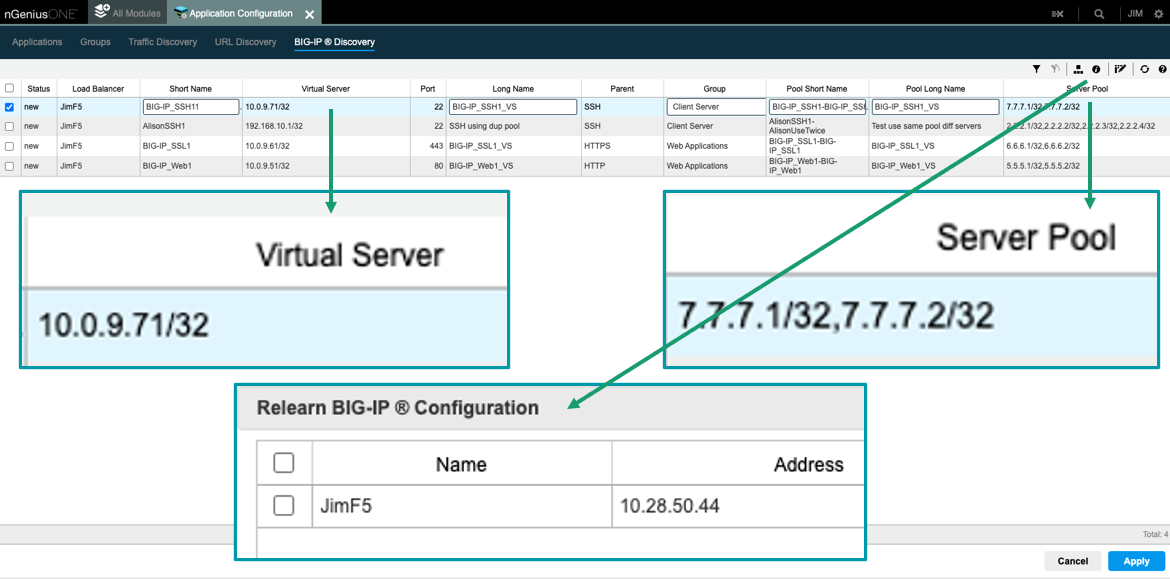
    Through its alliance with F5, NETSCOUT Systems has extended the reach of its nGeniusOne enterprise performance management platform to support custom applications.

    The nGeniusONE platform supports more than 1,000 voice, video and business data applications using NETSCOUT InfiniStreamNG appliances in combination with nGeniusONE to provide visibility into any infrastructure environment, including data centers, private and public cloud and co-location facilities. The integration with F5 extends those capabilities to add support for custom applications via integration with F5 BIG-IP server pool definitions that can now be directly imported into nGeniusOne.

    Eileen Haggerty, area vice president for enterprise product and solutions marketing for NETSCOUT, said that approach enables nGeniusOne to access clear, unencrypted traffic from the BIG-IP Local Traffic Manager.

    As more cloud-native applications built using microservices are deployed across distributed computing environments, network latency is becoming a bigger DevOps challenge. A wide range of networking issues can adversely impact application performance, but without any visibility into network traffic, it can be challenging to determine the root cause of an issue. NETSCOUT has deployed a global network of appliances to surface those issues.

    A recent report published by Cloud Security Alliance (CSA) found the average enterprise uses 464 custom applications and expects to deploy 37 new applications in the next 12 months. At that rate, the number of organizations likely to encounter networking issues is only going to increase, noted Haggerty.

    It’s not clear to what degree network operations (NetOps) teams are becoming integrated with DevOps teams that build and deploy custom applications. The need for both teams to collaborate more effectively is becoming more apparent as more application code is deployed at the network edge. In some cases, developers are now programmatically invoking network resources directly, while other organizations provide developers access to a portal to self-service their requirements within the context of a set of pre-defined guardrails. Regardless of approach, the need for greater visibility into the underlying networks that custom applications depend on has become critical.

    Exactly how much that need will drive organizations to embrace one networking vendor over another remains to be seen. DevOps teams are starting to exercise more influence as organizations realize how much they depend on custom software to drive digital business processes. DevOps teams need to be able to understand whether an issue is the result of a networking problem or an inherent problem with the code written or the way an application has been deployed.

    Of course, DevOps and NetOps teams don’t share a common nomenclature so the cultural divide between these teams can be wide. The simpler it becomes for NetOps teams to share visibility into networking services the easier it becomes to bridge that divide. Developers should be able to see for themselves how changes to application code might potentially improve network performance. In the absence of any proof to the contrary, most DevOps teams will simply assume there is a fundamental flaw in the networking services being provided.

  • GitGuardian: 10M Exposed Secrets on GitHub

    GitGuardian: 10M Exposed Secrets on GitHub

    GitGuardian published an analysis of more than one billion commits to GitHub repositories that found 10 million occurrences of secrets, with one out of 10 developers exposing a secret.

    Mackenzie Jackson, a developer advocate for GitGuardian, said more than 80% of all the secrets caught by live monitoring GitHub were exposed through personal repositories, with a large share of them being corporate secrets. In fact, three million of the secrets discovered were unique instances, with 5.5 commits out of every 1,000 made exposing a secret.

    On a year-over-year basis, the report also found that the number of hard-coded secrets discovered in these repositories increased 67%. More than half the secrets discovered (56%) contained a generic password.

    There appeared to be no correlation between developer experience and the number of secrets exposed. Junior and senior developers are equally predisposed to making the same mistakes, said Jackson. The most common mistake is secrets left exposed because developers used them to simplify access to components and resources when building their applications and then forgot to remove them when the application was deployed in a production environment.

    Secrets management is, of course, getting more attention as more organizations review their software supply chain processes in the wake of a series of high-profile security breaches. The issue with secrets management is cybersecurity teams are usually a lot more focused on discovering vulnerabilities than looking for instances of poorly secured credentials. Once an application is deployed in a production environment, it may be months before anyone discovers an issue—if it’s discovered at all. In fact, the number of existing applications running in production environments that have issues with how secrets are managed could be staggering.

    In theory, at least, the adoption of DevSecOps best practices should be mitigating this issue, but as the volume of code stored in repositories continues to increase, it would appear more fundamental mistakes are being made. Cybercriminals, meanwhile, have a greater appreciation today for weaknesses in software supply chains, so many of them are scanning repositories for secrets that will enable them to breach an application.

    Of course, there’s a lot more attention being paid to secure software supply chains, especially in the wake of the Biden administration creating a National Cybersecurity Strategy that requires Federal agencies to, among other things, lock down software development life cycles on an end-to-end basis. Most enterprise IT organizations, if they have not done so already, are expected to follow suit.

    As a result, DevOps teams should expect to see more cybersecurity professionals focusing more on secrets management. Developers, naturally, will not want to be called out for mismanaging secrets, so over time, the overall state of application security should steadily improve. The issue, of course, is the volume of attacks against software supply chains is expected to increase. Many previous mistakes are likely to come back and haunt developers and the organizations that rely on their code and wreak havoc downstream.

  • Five Great DevOps Job Opportunities

    Five Great DevOps Job Opportunities

    DevOps.com is now providing a weekly DevOps jobs report through which opportunities for DevOps professionals will be highlighted to better serve our audience.

    Our goal in these challenging economic times is to make it easier for DevOps professionals to advance their careers.

    Of course, the pool of available DevOps talent is still relatively constrained, so when one DevOps professional takes on a new role it tends to create an opportunity for others.

    The five job postings shared this week are selected based on the company looking to hire, the vertical industry segment and, naturally, the pay scale being offered.

    We’re also committed to providing additional insights into the state of the DevOps job market. In the meantime, for your consideration:

    Monster.com

    Citibank
    Tampa, Florida
    Application Development Technology Lead Analyst
    $154,000 to $179,000

    Dice.com

    ZealTech
    San Jose, California
    DevOps Architect
    $150,000 to $200,000

    SimplyHired

    Musicnotes
    Remote
    DevOps Engineer
    $85,000 to $100,000

    Indeed.com

    Snowrelic
    Remote
    DevOps Engineer
    $82,486 to $173,694

    LinkedIn

    Oak Ridge National Laboratories
    Oak Ridge, Tennessee
    DevOps Engineer
    $78,000 to $137,000

  • Cisco Streamlines Licensing Options for IT Operations Platform

    Cisco Streamlines Licensing Options for IT Operations Platform

    Cisco has reduced the number of licensing options for its Intersight operations platform to two as part of an effort to make the software-as-a-service (SaaS) platform for managing on-premises and cloud computing environments more accessible.

    In addition, Cisco has added a Cisco UCS X-series Modular System to its portfolio based on a two-socket server configured with 4th Gen Intel Xeon Scalable processors and an instance of Intersight that has been extended to make it possible to apply policies that limit energy consumption.

    Mahesh Natarajan, senior director of product management of cloud and compute for Cisco, said Intersight is a complement to the management platform the company already bundles with its Unified Compute Systems (UCS) platforms for on-premises IT environments.

    Essentials enables management of server profiles/policies, managing firmware updates and proactive health monitoring and security advisories along with many other capabilities. The Advantage option adds low-code/no-code orchestration, more advanced server operations, multi-domain visibility and third-party integration with, for example, third-party IT service management (ITSM) platforms.

    In the wake of the COVID-19 pandemic, there’s been a shift toward cloud-based platforms that make it simpler for IT teams to centrally manage multiple IT environments from anywhere. Cisco Intersight, in addition to supporting Cisco servers, has been integrated with cloud services from Amazon Web Services (AWS), Google and Microsoft to achieve that goal.

    In fact, as the management of IT continues to converge across multiple platforms, the concept of a data center has become something of a misnomer, said Natarajan. Integrated application workloads are now routinely distributed across on-premises and cloud computing platforms that are simpler to manage using a consistent set of policies, he added.

    A SaaS platform also provides the added benefit of reducing the total cost of IT because the need to deploy management platforms for each environment is sharply reduced, noted Natarajan.

    Very few organizations are running all their application workloads in one environment, so the need to reduce costs by finding more efficient ways to manage IT operations is becoming a more pressing issue. Most IT teams are trying to limit the number of full-time employees they might otherwise hire by trying to improve the overall productivity of the teams they do have.

    Of course, centralizing the management of IT is as much a cultural challenge as it is technical. Each IT team that deploys a workload on a platform has a natural bias toward using the management framework made available by the platform provider. Each of those platform providers is now extending its reach as part of an effort to become the one control plane that rules them all. Cloud service providers, for example, are extending the reach of their management frameworks into both local data centers and edge computing environments.

    Regardless of preferences, the cost of licensing multiple management platforms can quickly become prohibitive, especially if they provide redundant capabilities. Organizations looking to reduce the total cost of IT would much rather reduce licensing costs than lay off the IT staff that drive a wide range of digital processes. The challenge, as always, is getting everyone in the IT organization to agree on what that one management platform should be.

  • Microsoft Power Platform Integrates ChatGPT: What This Means

    Microsoft Power Platform Integrates ChatGPT: What This Means

    Microsoft recently announced it integrated ChatGPT into its low-code Power Platform developer suite. This follows the news of ChatGPT-powered Bing search and Microsoft’s pledge to invest billions into its partner company, OpenAI.

    ChatGPT, the large language model (LLM), has reached viral status due to its ability to generate impressively complex textual outputs given simple prompts. And now, enterprises are hoping to cash in on its power. Microsoft’s inclusion of ChatGPT in its Power Virtual Agents and AI Builder tools will likely signal more native inclusion of AI models within other low-code development environments throughout the industry.

    However, not all is peachy in the world of generative AI. Users have compiled a laundry list of ChatGPT failures, ranging from simple arithmetic errors and inaccurate information to social biases and even one attempt to dissolve a journalist’s marriage. AI seems sure of itself, but the “hallucinations” it produces can be mind-bogglingly off-base. If such inaccuracies persist within production use cases, it could lead to false suggestions that confuse users and even harm a company’s reputation.

    Below, I’ll consider the implications of this new paradigm of AI-driven development, exploring the benefits and potential risks of incorporating LLMs into low-code development frameworks. We’ll also highlight how this may upset the competition and consider things leaders should keep in mind as they seek to leverage this new technology.

    Benefits of Incorporating ChatGPT

    Low-code development platforms (LCDPs) excel at abstracting complex functionalities into usable components. They typically offer drag-and-drop capabilities and reusable templates to enable citizen developers and professional programmers alike. And there are many potential benefits of incorporating ChatGPT into such a low-code environment. For example, as a feature within Power Virtual Agents, ChatGPT can be used to create chatbots that connect to public company resources and internal company data. This could help users seamlessly develop a contextually-aware AI trained on a company’s documents.

    Utilizing AI within low-code can spur development with deep inferences and guidance. Such AI assistance can drastically accelerate development efforts through enhanced auto-completion and intelligent insights, quickly generating boilerplate code and making suggestions more customized to the task at hand than your typical static templates.

    GPT-based chatbots leveraging AI trained on a company’s documents could be incredibly more valuable than an off-the-shelf model without context. In the realm of customer support, an in-house trained AI could be beneficial in summarizing company information and automating manual support activities. Providing a low-code means to generate such chatbots also brings advanced AI to a broader range of users. All in all, this could advance the pace of development, especially for mobile interfaces, automated workflows and contextually-aware chatbots.

    Implications For the Low-Code Space

    In the wake of ChatGPT, the market has been scrambling to respond. Tech giants have debuted their own generative AI to mixed reviews. And some, myself included, are left pondering how low-code and AI will coexist in this new era. Will natural language-driven code generation replace the need for programming entirely, whether it’s traditional or ‘codeless’?

    This remains uncertain. But what appears most plausible is that these recent developments will raise the bar throughout the software industry and augment how LCDPs are built and used. AI has the power to enhance LCDPs in a few ways, including augmenting the developer experience, training bespoke ML models and building more intelligent end-user experiences.

    Yet, with Microsoft funneling billions into AI research and development, it could be challenging for mid-size low-code platforms to keep pace without their own AI-driven workflows. Thus, the LCDPs that do not integrate robust AI of their own may lose out on new subscribers. Plus, engineers hoping to create AI models that run on internal datasets may prefer working with a larger cloud technology suite in which their data is natively stored.

    Downsides of AI-Infused Programming

    ChatGPT and other generative models are absolutely impressive, but the results can’t be 100% trusted. And at the time of writing, ChatGPT usage within PowerApps is still experimental, which is indicative of ChatGPT and generative AI in general—still in the experimentation phase.

    This doesn’t bode all that well for programmers relying on its outputs, given the potential for inaccuracies. Because although the results of ChatGPT sound authoritative, they are generated from knowledge scoured from the public web, which often contains bugs, errors and inefficiencies.

    The outputs of ChatGPT may even suggest entirely nonexistent features! This is, unfortunately, a current issue with geocoding API provider OpenCage. ChatGPT routinely recommends users integrate OpenCage’s “phone lookup service” for certain prompts. But … OpenCage doesn’t even offer this feature. The team has received so many complaints from angry developers that they even had to issue a statement explaining what happened.

    With AI code generation, the focus shifts from hardcoding toward creating and organizing prompts and debugging errors. And although it’s giving programmers newfound agility, it doesn’t solve all software development problems—namely, the DevOps side of the equation. There will still be friction in deploying code and piecing together an optimal architecture. Also, due to rising software supply chain vulnerabilities, code automation that loops in third-party dependencies must require careful security forethought. There’s also the chance of breaking changes and ongoing maintenance hurdles with any software.

    Another important element is that low-code requires governance to be secured correctly. No-code business users may not have the security oversight to understand the implications of spinning up new services. And when you add AI into the mix, the technical implications escalate. AI can result in ethical violations, and bots have been found to communicate anger and irrational ideas when poked and prodded.

    Are We All Just Hallucinating?

    ‘Hallucinating’ is when an AI model confidently spouts nonsense or inaccurate information. And although this is the case with some models currently, they are actively accepting feedback and being retrained. Over time, their outputs will improve. But for now, engineers should be aware that they are still under experimentation. As such, enterprises should use caution and test new AI innovations on internal processes first. And AI adoption must be governed carefully to avoid misconfigurations and abuse.

    AI is here, and the future is now. But although it’s dismantling some coding barriers, developers still have their work cut out for them. This reality is a win for low-code solutions offering standard software delivery pipelines and centralized collaboration features. If LCDPs can maintain pace with AI and embed it into their workflows, both sides should fare pretty well in this new era.

    Surprise — this entire article was written by ChatGPT. Just kidding! None of it was. I’m just tired of seeing this “gotcha” moment at the end of news segments…

    This post was written by a human.