Category: Features

  • Spotify Adds More Plugins for Backstage Developer Portal

    Spotify Adds More Plugins for Backstage Developer Portal

    Spotify this week added additional plugins for its open source Backstage platform that is used to build developer portals. The new plugins make it simpler to address role-based access and access Insights, a tool from Spotify that tracks Backstage usage trends.

    In addition, Spotify is also enhancing a Soundcheck plugin for Backstage that is used to visualize and track development of software components. Forthcoming capabilities include a no-code interface that makes it possible to programmatically create checks of code without writing any code.

    DevOps teams will also be able to view, export and understand how teams and components are doing compared to established best practices and monitor trends, graphs and historical views, and receive notifications when levels change.

    Finally, Spotify is committing to adding additional integrations with third-party tools and platforms such as Snyk, Sonarqube and the open source Argo continuous delivery (CD) platform.

    There are now five plugins available via a Spotify Plugins for Backstage subscription service, and Spotify said more are planned.

    Meg Watson, a group product manager at Spotify, said Backstage has been gaining traction in cloud-native application environments that are especially challenging to develop using multiple tools. Because of Backstage, developers are not only more productive but turnover has also been reduced because developers are provided with a better experience, she noted.

    There’s a lot more focus than ever on developer productivity, which Backstage addresses by creating a catalog of blueprints that developers can readily consume rather than requiring them to build these capabilities themselves multiple times over. The goal is to create scaffolds that developers can consistently reuse across multiple application development projects.

    Backstage was donated to the Cloud Native Computing Foundation (CNCF) and is now being advanced by contributions from multiple vendors. Much of that focus is on lowering the barrier of adoption for the platform, said Watson. Specifically, Spotify is working on a QuickStart for Backstage edition of the platform that is simpler to install, she said.

    In general, Spotify is trying to strike a balance between centralizing the management of DevOps workflows and the need to enable developers to define workflows that are natural to them versus ones that have been imposed on them, added Watson.

    It’s not clear to what degree Backstage will help fuel the adoption of a shift toward platform engineering to centralize the management of DevOps tools and platforms. The concept of a portal through which developers can self-service their own needs may not be new, but as an open source project, Backstage has made it simpler for many organizations to achieve that goal.

    Just about every DevOps team is now being asked to find ways to help improve developer productivity at a time when many organizations are trying to do more with fewer resources. Regardless of the motivation, however, it’s apparent that DevOps workflows are continuing to evolve and mature.

    In the meantime, DevOps teams would be well-advised to eliminate as many bottlenecks as possible before they negatively impact developer productivity.

  • AWS Converts Cedar Policy-as-Code Tool to Open Source Project

    AWS Converts Cedar Policy-as-Code Tool to Open Source Project

    At the Open Source Summit North America conference today, Amazon Web Services (AWS) announced it is making Cedar, a language for defining permissions as policies that includes automated reasoning to mathematically prove an IT environment is secure, available as an open source project.

    In addition, AWS launched SnapChange, an open source fuzz testing tool that cybersecurity researchers can employ to discover vulnerabilities by replaying physical memory snapshots in a KVM virtual machine. Fuzz testing uncovers software security issues by monitoring how the system behaves while processing random data.

    David Nalley, director of open source marketing for AWS, said both projects are part of an ongoing AWS effort to contribute intellectual property to the open source community that plays a pivotal role in the applications that organizations deploy on the AWS cloud.

    AWS has been employing Cedar to provide IT organizations with the ability to write authorization policies as code that can be deployed anywhere. It is most widely used within the managed AWS Verified Permissions service that manages those processes on behalf of organizations that deploy workloads on its cloud.

    Cedar differs from other policy-as-code approaches because it employs automated reasoning, a computer science discipline that is considered a subset of artificial intelligence (AI), to enable machines to prove theorems and checks. That latter capability is especially critical to enable organizations to mathematically prove that compliance mandates have been continuously met, noted Nalley.

    Otherwise, IT organizations become wholly dependent on an assessment of intermittent audits conducted by humans that are likely to arrive at varying subjective conclusions, he noted.

    The latest open source contributions from AWS come at a time when there is more scrutiny being applied to how open source software is developed and employed. The scrutiny increased in the wake of a series of vulnerability disclosures involving open source software, such as the Log4j monitoring software project.

    The maintainers of many open source software projects often don’t have the resources or capabilities required to immediately patch a vulnerability every time it is discovered. That’s become especially problematic, because more research into open source software vulnerabilities is being conducted; it’s only a matter of time before a vulnerability is detected in software that was largely created by developers that have limited cybersecurity expertise. Enterprises that consume open source software need to pay careful attention to what dependencies they are creating when that software gets incorporated into an application environment. A patch for a zero-day vulnerability that is discovered might not be readily available.

    Hopefully, consumers of open source software will become more involved in its development by contributing code or making available the financial resources that maintainers need to devote time and effort to creating a timely patch to a vulnerability. In the meantime, however, they should also be reviewing what open source software is included in applications running in production environments. Cybercriminals are increasingly looking to discover and exploit vulnerabilities in not just existing applications but not also in components they know are likely to be employed across a wide range of downstream applications.

    As such, finding ways to apply more cybersecurity expertise to application development by embracing DevSecOps practices has become an imperative rather than a recommendation.

  • GitGuardian Survey Surfaces Secrets Management Challenges

    GitGuardian Survey Surfaces Secrets Management Challenges

    A survey of 507 IT decision-makers in the U.S. and the United Kingdom published today found 75% of respondents said a secret leaked from at least one application, with 60% noting that the leak caused issues for either the company, employees or both.

    Conducted by Sapio Research on behalf of GitGuardian, a provider of a platform for securing application secrets, the survey found less than half of respondents (48%) are confident in their ability to protect application secrets to a great extent.

    The top source of risks when it comes to secrets management are source code and repositories (58%), followed by hard-coded secrets (47%). Just under a third (30%) of respondents to the GitGuardian survey admitted they share passwords and secrets when building applications as clear text within a messaging application.

    Just over a quarter (27%) still relied on manual code reviews to prevent secrets leaks, the GitGuardian survey found.

    On the plus side, 94% of the respondents said they were considering improving their secrets management practices in the coming 12-18 months, even though 93% said either “all” or “some” of their repositories were continuously scanned for hard-coded secrets.

    Thomas Segura, a cybersecurity expert for GitGuardian, said as the number of applications developed continues to increase, secrets sprawl has become a bigger challenge for application security. The way secrets are managed during application development has become a bigger issue in the wake of a series of software supply chain breaches that led to malware being injected into applications.

    The concern is cybercriminals that compromise software development environments will be able to retrieve secrets that they can later use to compromise an application after it has been deployed in a production environment. Cybercriminals are also now routinely scanning for secrets that may have been stored in text after an application has been deployed.

    The challenge is that secrets have not been historically managed effectively, so many organizations are now looking to implement more rigorous processes. Another challenge is that, in many cases, it’s not apparent whether those processes will be implemented by a DevOps team familiar with how an application is constructed or an application security team with more cybersecurity expertise, noted Segura.

    Regardless of the approach to remediating these issues, there is always going to be an issue because the humans who build applications are always going to make mistakes. The goal is to minimize the number of secrets that might be leaked by implementing DevSecOps practices that automate the review process, said Segura.

    In theory, at least, advances in artificial intelligence (AI) should make it easier to automate more of the secrets review process. In the meantime, however, organizations need to review their existing processes in advance of pending legislation that looks to hold organizations more accountable for application security if it is determined that the organization did not take reasonable precautions.

    It may be a while before such legislation becomes law, but one way or another, it’s clear that DevOps teams are soon going to be asked tougher questions about how secrets were managed every time an application security breach occurs.

  • Grafana Labs Reins in Cost of Storing Observability Data

    Grafana Labs Reins in Cost of Storing Observability Data

    Grafana Labs today made available an ability to customize what observability data is collected via its managed cloud service. This capability can help reduce storage costs in addition to enhancing the dashboard Grafana provides to make it simpler to track metrics usage.

    Wayne Jin, vice president of product marketing for Grafana Labs, said both capabilities would make it easier for DevOps teams to track and ultimately reduce the cost of storing the time-series data collected via its cloud platform.

    As more DevOps teams use an observability platform to continuously collect metrics like traces and log data, they are discovering that the cost of storing all that high-cardinality data can easily spin out of control.

    Grafana Labs is now making available an Adaptive Metrics capability that enables DevOps teams to fine-tune what data is collected and stored. However, in the event of an issue, DevOps teams can also turn back on all data the platform can collect to aid an investigation of the root cause of disruption, noted Jin.

    The Cardinality Management dashboards Grafana Labs made available last year for paid tiers of its cloud service are now being made available to users of the free tier of service as well, Jin said. This will further help reduce storage costs by making it easier to identify metrics that are being collected but not used by anyone on the DevOps team, he added.

    The Adaptive Metrics aggregation engine can then be applied to transform these metrics at ingestion into lower cardinality versions. Unused or partially used labels are stripped from incoming metrics, reducing the total count of time-series data collected. Adaptive Metrics also recommends aggregations based on an organization’s historic usage patterns, and DevOps teams can choose which aggregation rules to apply. Dashboards, alerts and historic queries are guaranteed to continue to work as they did before aggregation, with no rewrites needed.

    Based on results reported by early users, Grafana Labs reported that Grafana Cloud Adaptive Metrics could eliminate an estimated 20-50% of the time-series data collected with no perceived impact on observability.

    The Grafana Cloud service relies on an instance of open source Grafana Mimir to store data collected in a format originally defined for the open source Prometheus monitoring tool. While Prometheus is widely employed in Kubernetes environments, it’s also starting to gain traction as a monitoring platform in legacy monolithic environments. The amount of data being collected via that platform over time is steadily increasing. The Grafana Labs approach makes it possible for DevOps teams to reduce that data whenever there is no usage that needs to be investigated, for example.

    It’s still early days as far as adoption of observability is concerned, but in uncertain economic times, there’s generally a lot more sensitivity to the total cost of IT. Many organizations are especially focused on reducing the cost of storing data in the cloud to rein in monthly spending on cloud services. Regardless of the motivation, collecting and storing data that isn’t needed is never the best use of cloud storage resources that, from a cost perspective, are just as finite in the cloud.

  • CDF Report Reveals Lack of DevOps Maturity

    CDF Report Reveals Lack of DevOps Maturity

    A global survey of nearly 26,000 DevOps professionals published today by the Continuous Delivery Foundation (CDF) at the cdCon + GitOpsCon event found 84% of respondents are involved in some type of DevOps activity. However, the report also found just under half 49% are using a continuous integration (CI) or continuous delivery (CD) platform and only 22% are using CI and CD approaches to automate all building, testing and deployment of code in a production environment.

    The report, conducted in collaboration with SlashData, found the number of developers using CI or CD platforms only increased two percentage points year-over-year, with the use of self-hosted CI/CD tools dropping from 32% in the first quarter of 2022 to 23% in the same period this year.

    The survey also noted that only 7% of respondents this year described themselves as a DevOps engineer or specialist.

    Overall, medium-sized businesses have the highest involvement in DevOps practices (94%), followed by small businesses and large enterprises at just over 90%. More than three-quarters of developers (79%) are now using DevOps practices.

    The most common DevOps activity is monitoring software or infrastructure performance (47%), followed by application security testing and using CI to build and test code, tied at 37% each, and approving code deployments into production environments at 36%, the survey found.

    The average number of DevOps-related technologies used by developers (4.5) has, meanwhile, remained stable over the last year. The most widely used tools address issue tracking (39%), source code management (38%), test automation management (34%), collaboration and knowledge-sharing tools (32%) and application performance management/observability and agile project management tools tied at 31%.

    The survey also noted that the percentage of top performers—defined as those with lead times of less than one day—now stands at 15%. Survey results for top performers over the years continue to fluctuate between 13% and 17% of the survey total. On the plus side, 40% of developers have lead time changes of less than one week, the second-highest ranking for this survey.

    More than a third of all DevOps practitioners (34%), however, take longer than a week to restore service. Only 12% of DevOps practitioners take less than an hour to restore service.

    In general, the survey finds that organizations that use 10 or more DevOps tools are twice as likely to be high performers.

    Fatih Degirmenci, executive director for the CDF, told conference attendees the consortium, which now oversees nine projects, including the open source Jenkins CI/CD platform, continues to make progress as additional projects are added.

    However, while it’s clear that many organizations have adopted multiple DevOps tools and platforms, far too many of them still have a long DevOps journey ahead. Each organization will need to decide whether DevOps workflows need to be adopted to fit their needs, even as the pressure to build and deliver software faster continues to mount. In fact, at a time when more organizations than ever are dependent on software to drive mission-critical digital business transformation initiatives, time may be running out to adopt DevOps workflows at a deeper level if organizations hope to stay competitive.

  • GitHub Revamps Search Engine for Code Repository

    GitHub Revamps Search Engine for Code Repository

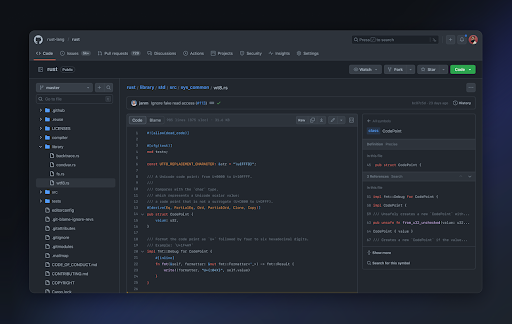
    GitHub today unveiled a new search engine it has developed to make it simpler and faster to browse and navigate the world’s largest code repository.

    A completely redesigned search interface now provides suggestions, completions and the ability to slice and dice results, while a redesigned code view tool has integrated search, browsing and code navigation.

    Mario Rodriguez, vice president of product for GitHub, said the popular code repository provider decided to create a new search engine to improve developer productivity. There are more than 200 million GitHub repositories that can now be more easily explored, he noted. The updated search engine also makes it much easier to search for specific vulnerabilities that might exist in a codebase, added Rodriguez.

    This latest addition to the GitHub portfolio is part of an ongoing effort to inject more intelligence into software development using tools such as GitHub Copilot that employ generative artificial intelligence (AI) to make developers more productive, he said.

    During uncertain economic times, there’s always going to be more focus on productivity. Organizations of all sizes are reluctant to hire additional full-time developers, so any effort to make existing developers more productive is welcome. The challenge is the DevOps teams that support those developers are now under increased pressure to reduce or eliminate as many bottlenecks as possible. In most instances, that will require increased investments in automation and AI to enable greater amounts of code moving through multiple pipelines to be managed at an unprecedented scale.

    In the meantime, instead of focusing on metrics such as recovery times, DevOps teams might want to focus more on how much they are improving developer productivity. After all, developers are an expensive asset, so in the age of digital business transformation, most business executives are squarely focused on increasing the rate at which applications are being built and deployed. In many cases, the amount of profit and revenue being generated by any business is now a direct reflection of the pace at which quality software is developed and deployed.

    One way or another, a new age of software development is dawning. Most of the innovations being brought forward are focused on issues that impact developers, but it’s only a matter of time before AI is also increasingly applied to DevOps workflows. As more organizations begin to realize how much of a bottleneck manual steps in DevOps processes have become, the willingness to invest in more advanced platforms should increase.

    The challenge, as always, is there are a lot more developers than software engineers, so the immediate focus is on developer productivity. That’s not necessarily a bad thing, but in the absence of any advances on the back end of the software development process, it is likely to aggravate an imbalance that most DevOps teams strive daily to correct.

  • Five Great DevOps Job Opportunities

    Five Great DevOps Job Opportunities

    DevOps.com is now providing a weekly DevOps jobs report through which opportunities for DevOps professionals will be highlighted to better serve our audience.

    Our goal in these challenging economic times is to make it easier for DevOps professionals to advance their careers.

    Of course, the pool of available DevOps talent is still relatively constrained, so when one DevOps professional takes on a new role it tends to create an opportunity for others.

    The five job postings shared this week are selected based on the company looking to hire, the vertical industry segment and, naturally, the pay scale being offered.

    We’re also committed to providing additional insights into the state of the DevOps job market. In the meantime, for your consideration:

    LinkedIn

    Northwestern Mutual
    Milwaukee, Wisconsin
    Assistant Director for Product Management for Cloud and DevOps Platforms
    $139,300 to $186,200

    CareerBuilder.com

    Brown Brothers Harriman
    New York, New York
    DevOps Operations Manager
    $130,000 to $190,000

    SimplyHired.com

    Spiff
    Salt Lake City, Utah
    DevOps Engineer
    $120,000 to $170,000

    Indeed.com

    Rose International
    Jefferson City, Missouri
    Azure DevOps Architect
    $114,000 to $145,000

    Dice.com

    ComTec Information Systems
    Remote
    DevOps Engineer
    $100,000 to $150,000

  • ReversingLabs: Increased Focus on Software Supply Chain Security

    ReversingLabs: Increased Focus on Software Supply Chain Security

    A global survey of 300 global executives, technology and security professionals found software containing vulnerabilities (82%) followed by secrets leaked through source code (55%), malicious code (52%) and suspicious code (46%) posed a serious risk to the business.

    Conducted by Dimensional Research on behalf of ReversingLabs, a provider of a platform for securing software supply chains, the survey found 87% of respondents detected significant risks in their software supply chain in the last year. Nearly three-quarters (74%) said legacy application security tools, including static application security testing (SAST) (54%), dynamic application security testing (DAST) (42%) and software composition analysis (SCA) (40%), are ineffective against threats to modern software supply chains.

    A full 88% said software supply chain security is an enterprise-wide risk, but only 60% said their software supply chain defenses were up to the task. Nearly two-thirds (65%), however, acknowledged their organization’s software supply chain security program wasn’t as mature as it should be. As a result, 80% are currently focused on improving security for the software supply chain, with 96% noting a more comprehensive approach to software supply chain security that detects more than vulnerabilities is needed.

    Overall, the survey found nearly all respondents (98%) recognized that software supply chain issues pose a significant business risk. Nearly 90% reported detecting security or other issues in their software supply chain in the last 12 months. Those issues stemmed from internally developed software (47%) as much as open source software (49%), followed by commercial software (30%), the survey finds.

    Tyson Whitten, vice president of global marketing for ReversingLabs, said the survey results make it clear that software supply chain issues extend well beyond open source software dependencies. Use of open source software has expanded greatly over the last decade, but security flaws in software are pervasive, he noted.

    In addition, many of these issues stemmed from software created by contractors and third-party companies, added Whitten. More than half of respondents worked for organizations that use contractors (67%) and third-party development companies (59%) and many organizations don’t have the tools required to review applications before they are deployed in a production environment.

    Software supply chain security has become a major issue in the wake of a series of high-profile breaches. The challenge is shortage of cybersecurity expertise available to secure those supply chains. Usually, someone on the DevOps team needs to emerge as a security champion for the good of the larger application development team. Unfortunately, most developers have had limited exposure to cybersecurity training, so it can take a significant amount of time for those champions to emerge.

    In the meantime, it’s less clear whether organizations will upgrade their DevOps environments to make them more secure, but it’s clear they will soon be held more accountable for application security. Governments around the world are currently drafting legislation that would impose penalties should it be determined an organization recklessly built and deployed software. Once that legislation is passed, it may only be a matter of time before the pressure on organizations to adopt DevSecOps workflows increases. The issue is determining how quickly to get in front of that issue before a potential legal quagmire ensues.

  • How LinkedIn is Investing in Developer Productivity and Satisfaction

    How LinkedIn is Investing in Developer Productivity and Satisfaction

    More and more companies are beginning to examine the role developer experience has in improving engineering productivity and morale. And one company often referenced as a model for developer productivity engineering is LinkedIn—its engineering leadership has invested heavily into reducing time-consuming developer tasks and constructing an internal platform to gauge developer satisfaction on the tools they use.

    Engineers at LinkedIn recently shared how the company has invested in measuring developer productivity and happiness as well as their strategies for automatically cherry-picking commits. I also met with LinkedIn engineering leadership for a closer look at how the organization is working to improve the developer experience across its internal platform.

    Below, we’ll take an inside look at LinkedIn Engineering’s efforts to enhance developer happiness. We’ll explore their approach to improving their internal software development trends and consider the benefits LinkedIn has gained throughout the process.

    A Look at LinkedIn Internal Developer Solutions

    Productivity is challenging to measure, said Jared Green, VP of engineering, head of developer productivity and happiness at LinkedIn. So, the company opted to take a different approach by including happiness as a variable in the equation. Thus, they measure not only how fast a workflow is but continually monitor how enjoyable the process is to ensure developers have a delightful experience.

    “We don’t just strive for productivity, but for productivity and happiness,” said Green. And to his point, on-the-job satisfaction can have real-world results—on average, happy workers are 13% more productive, according to a University of Oxford study.

    LinkedIn now oversees a custom-built internal platform for evaluating the sentiment of developer tools. The platform, known as iHub, is a holistic listening channel to gauge developer satisfaction across various tools. It collects real-time qualitative feedback from users and correlates it with objective quantitative telemetry. It then surfaces this data in a UI dashboard for team leads and individual contributors to view.

    But there’s an art to engendering the trust required to collect accurate feedback, says Max Kanat-Alexander, principal staff software engineer at LinkedIn. For example, individual contributors need to be sure the data won’t be used for performance reviews. Once that trust is established, folks are more willing to give genuine feedback, he said.

    Benefits of Investing in Developer Enablement

    The benefit of centralizing developer experience metrics with a shared platform means that tech leads can make data-backed decisions on how to improve their DevOps processes. “It’s really about thinking about giving people insights versus giving them data,” said Green. The idea is that frontline engineers can rapidly investigate any metric to expose problems and see trends. “The optics have given leaders ways to improve various parts of developer experience,” he said.

    Through their investment into developer experience, LinkedIn Engineering has discovered and streamlined hangups in the Git flow, exposed inefficiencies in their code review processes, and fixed specific developer build times. LinkedIn Engineering reported it has reduced time spent on certain time-consuming developer tasks by 99.6%.

    To construct iHub, LinkedIn Engineering wrote its own front end. The hub pre-computes data dimensions and stores them in an offline data store, increasing speed, said Kanat-Alexander. The system uses a sophisticated survey technology to collect the data and hides the complexity of manual collection in a sleek dashboard.

    LinkedIn managers have already leveraged iHub data to identify macro trends and resolve specific points of friction. For example, Kanat-Alexander describes how one director noticed that developer build time was worsening in their organization. They were able to isolate it to a single developer who wasn’t using remote development, which was spiking the metric. Leaders then assisted in unblocking them.

    Takeaways For Your Organization

    Most companies could benefit from a UI like iHub, explained Kanat-Alexander. But, you really must have a large engineering organization to see the benefits of the work. Plus, up to 80% of the legwork is simply data integrations—this involves hooking into systems, cleaning up data and deciding how to measure certain metrics. “Whatever you can measure, you can improve,” said Green.

    LinkedIn Engineering has flirted with the idea of open sourcing iHub, but it’s a bit too custom to LinkedIn to be valuable to other enterprises. “There’s a lot of variance in build technologies nowadays, and large-scale engineering systems are bespoke,” said Green. Implementing such a dashboard also requires a deep understanding of developer personas and how people work, which can be entirely unique for each organization.

    Although other organizations can’t fork LinkedIn’s efforts, there are some takeaways that could help others invest in their internal DX. First, Green recommended starting with the fundamentals. “Having a core of understanding about what you’re trying to move the needle on is important, as is coming up with ways to talk about it consistently.” This forethought should help establish what you want to measure.

    Turning DX Metrics Into Action

    Studies indicate that more companies are seeking to implement platform engineering or similar developer productivity engineering initiatives. The end result of these efforts should be to empower people and ensure they are satisfied with their work and not just a cog in the system.

    On that note, it’s critical that there are mechanisms for action to happen on the data that is collected, said Kanat-Alexander. Someone needs to monitor the insights and make changes to improve the metrics over time. “Then you can win hearts and minds.”

  • Survey: Much Greater Focus on Reining in IT Costs

    Survey: Much Greater Focus on Reining in IT Costs

    A survey from Vega Cloud found 62% of respondents are more closely monitoring all IT costs, with more than half (52%) more closely evaluating their cloud service provider options.

    The survey polled 100 vice presidents from organizations with more than 1,000 employees and was published today by Vega Cloud, a provider of a platform for managing multiple clouds.

    Overall, nearly half of respondents (48%) said they expected to reduce their IT spending a little or a lot in 2023, with 65% identifying the reduction of cloud spending as a specific goal. Three quarters (75%) are looking to cut cloud costs by 10-50% in 2023, the survey found.

    A full 93% reported they have invested at least a fair amount of money on tools to optimize cloud costs, with 82% having invested in FinOps staff or people with FinOps experience. The challenge is that 70% of respondents said it was difficult to find people with these skill sets, the survey found.

    The best way for organizations to reduce cloud costs is to become more informed about what they’re spending (40%), and 33% said that the best approach is to consistently optimize use of cloud resources. A total of 61% identified reserved instances/savings plans as the best way to optimize cloud use, while 55% said optimization was best achieved through waste elimination followed closely by right-sizing (54%).

    Vega Cloud CEO Kris Bliesner said it’s clear the days when organizations allowed developers to consume cloud resources at will are coming to an end as cloud services consume a much larger percentage of the IT budget. In fact, the survey noted that 91% of respondents are spending at least one million dollars annually on cloud infrastructure alone.

    The issue is that finance departments not only want to reduce cloud spend but also want cloud spending to become more predictable from a budget perspective. Nearly half of survey respondents (45%) said they’d received a surprise in their cloud bills “a number of times” over the past 12 months, with 70% of respondents noting surprises have happened at least a half dozen times in the past year.

    A total of 40% admitted they had exceeded budgets multiple times in the past year, and 38% said they had to modify their forecast cloud spending budget numerous times over the past 12 months. More than half of respondents (55%) said database costs are the metric that matters most when looking at cloud usage followed by bandwidth costs (51%), storage costs (49%) and compute costs (47%). Nearly two-thirds (64%) said they track metrics at least somewhat often, while 46% said they have somewhat optimized their cloud use. A total of 11% said they’re not optimized at all.

    A full 88% said they’re using artificial intelligence (AI) at least somewhat to optimize cloud use and costs, with nearly three-quarters (74%) noting they think ChatGPT or a similar generative AI tool could be used to optimize cloud use/costs further. Specifically, 42% said they thought it could improve decision making and 30% said it could automate decision making.

    Among the cloud service providers, Google is cited as doing the most to help customers manage and reduce cloud costs (38%), followed by Amazon Web Services (34%) and Microsoft (28%)—but a full 85% said they could all be doing more.

    Of course, changing economic conditions are naturally driving organizations to look harder at cloud spending. Well over half of respondents (56%) said they are concerned about the economy, and 95% of those respondents said those concerns have, at least somewhat, impacted their IT strategy.

    It’s not clear whether organizations will continue to exercise greater control over cloud spending should the economy recover. For now, at least, there’s clearly more desire for control than ever.