Jenkins World has come to hold a regular spot on the calendars of the software development community. As the conference, and the industry, have grown over the years, the event has transformed—which is aptly the theme for this year’s event—into DevOps World | Jenkins World. CloudBees, the premier sponsor, also extended it for DevOps practitioners in Europe—specifically to Nice, France.
In this Q&A, CloudBees CEO Sacha Labourey talks about the changes to this year’s conference and offers attendees a sneak preview.
Gilmore: Why is Jenkins World changing its name to DevOps World?
Sacha Labourey: Our goal with the change to DevOps World, was to scale the topics covered to create an event where people can meet and learn from each other and enhance their knowledge of not only Jenkins but the entire DevOps landscape. Although Jenkins remains a very important focus of the event, with the tremendous growth in DevOps adoption we wanted to expand Jenkins World to include a breadth of industry topics, such as cloud native, DevSecOps, software value streams and the more practical DevOps adoption use cases.
Not only is the DevOps World | Jenkins World conference bringing together the best of both DevOps and Jenkins, but we’ve extended all of the learning opportunities for IT practitioners across the globe by introducing our first conference in Europe—in Nice, France, in October. Similar to what we’ve created in San Francisco, we’re hoping the event provides many opportunities for attendees to learn, network and explore in order to optimize their DevOps initiatives.
Gilmore: What can attendees expect from this year’s event?
Labourey: With the new name and additional location, attendees will get even more out of DevOps World | Jenkins World 2018. We’ll be hosting more than 70 sessions at the San Francisco conference and more than 50 in Nice, covering a variety of DevOps and Jenkins topics from security, pipeline automation, containers, DevOps adoption and continuous delivery best practices. Additionally, the workshops and training that precede the conference offer attendees the opportunity to get certified as a DevOps practitioner or Jenkins Certified Engineer, deploy applications to a Kubernetes cluster, learn how to get the most out of Jenkins Pipeline and also do a deep dive into what’s coming with Jenkins X.
We have some amazing keynotes lined up for both conferences. Kohsuke Kawaguchi, CTO at CloudBees and Jenkins founder, will provide an update on the latest and greatest of Jenkins which is always cool to hear. Dr. Nicole Forsgren, CEO and chief scientist at DORA, will take the stage in San Francisco, sharing her insights into the key leadership, technical, architectural and product capabilities that drive positive outcomes based on the “2018 State of DevOps Report.” In Nice, you can catch James Governor, analyst and co-founder of RedMonk, who will be discussing why he’s devoted to putting developers first. Christina Noren, chief product officer at CloudBees, and I will also be keynoting in both locations.
Here’s a glimpse of some of the conference sessions on the agenda:
Measuring and Quantifying DevOps Outcomes Panel discussion led by Chris Condo, Forrester
Mission Possible: Eliminating DevOps Security Roadblocks Jason Vanderhoof, CyberArk
Managing Hundreds of Jenkins Instances at the Eclipse Foundation
Mikaël Barbero, Eclipse Foundation
Delivering Enterprise Architectures: Perspectives from Duke Energy and Wolters Kluwer Dwayne Culbertson, Duke Energy
Harris Kirk, Wolters Kluwer
The Build That Cried Broken: Building Trust in Your Continuous Integration Tests Angie Jones, Twitter
Gilmore: What are you looking forward to the most about DevOps World?
Sacha Labourey: Jenkins World, and now DevOps World, is always the highlight of the year for me. I am excited to meet and learn from so many innovators in the DevOps industry and amongst the CloudBees’ partner ecosystem. The process of software delivery is in an era of rapid growth and tremendous innovation. In the last year, we’ve seen the rise of Kubernetes, more and more a desire for actionable metrics to measure the DevOps initiatives that have been adopted, and DevSecOps is coming on stronger than ever. This has inspired us to create expanded learning opportunities at DevOps World | Jenkins World 2018 that reflect the interests of people within the industry so that we can continue to foster learning and the advancement of software delivery. I’m thrilled to see this come to life every year—and proud that CloudBees and our sponsors make it all happen.
I’m especially looking forward to hearing some of the cloud native sessions, since that’s a newer topic this year. We also have put together several DevOps experience panels from real-world practitioners who will be sharing their successes in the field—and maybe even more importantly, their failures. We learn the most from failure and sharing those experiences can help others avoid doing the same things.
With two events this year, it means the DevOps World | Jenkins World fun will extend further into the fall! I hope devopsy.kinsta.cloud readers will join us in San Francisco or Nice. If they do, they can get 20 percent off their registration using the devopsy.kinsta.cloud special code: JWDEVOPSCUST
The great thing about conferences is they can be hotbeds of learning: keynote presentations, seminars, one-on-one sessions, networking … the list goes on. The drawback, however, is the travel: delayed flights, the dreaded middle seat on the airplane, lost luggage, jet lag … the list goes on. That’s why virtual conferences are now my first choice: All the of the learning, none of the hassle.
MediaOps—the company behind devopsy.kinsta.cloud, Container Journal, Security Boulevard, DevOpsTV and more—and CA Technologies have teamed to present a free virtual summit chock full of information and education for the DevOps professional presented in a virtual reality environment. DevOps Experience is a true virtual conference, replete with theaters to view the keynotes and presentations, a conference lobby to chat and socialize and a virtual trade show floor with virtual exhibitor stands equipped with video, downloads and even schwag for attendees. And did I mention it’s free?
DevOps Experience will feature keynotes from a lineup of DevOps luminaries including:
Gene Kim, CTO, researcher and co-author of “The Phoenix Project” and “The DevOps Handbook,” and founder of IT Revolution
Nicole Forsgren, founder and CEO at DevOps Research and Assessment (DORA)
Alan Shimel, editor in chief and founder of devopsy.kinsta.cloud and Security Boulevard, and
Aruna Ravichandran, vice president of Global Marketing DevOps at CA Technologies and author of “DevOps for Digital Leaders” and “The Kitty Hawk Venture”
In addition, DevOps Experience will include a number of Spotlight Sessions with topics designed to provide even greater value to attendees. Sessions include:
The Accelerate State of DevOps Report
Delivering DevOps Practices for Mainframe
Women in DevOps Panel
DevSecOps, Why the Time is Now
DevOps Experience is scheduled to be held Sept. 20 at a computer or mobile device near you. Visit the website for more information or to register for this daylong event. Registration—which is free, by the way—also includes access to the event on-demand.
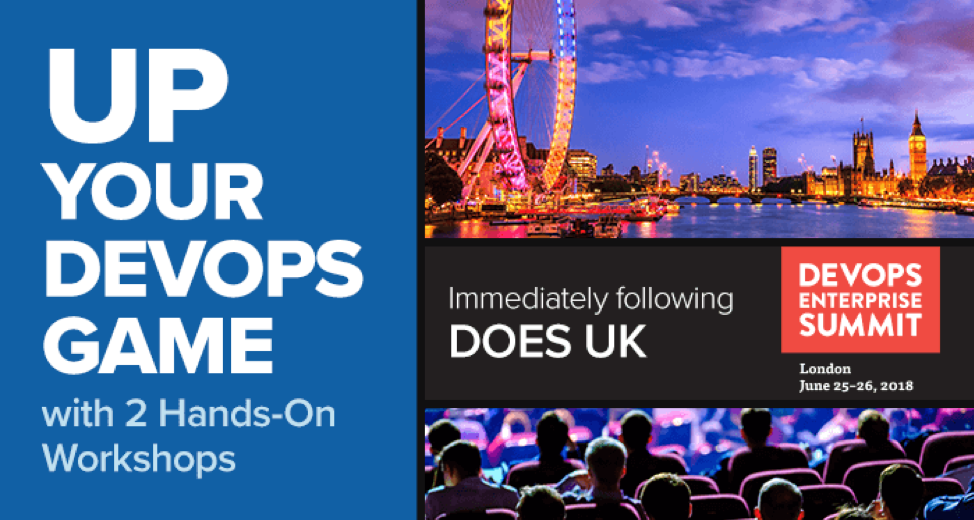
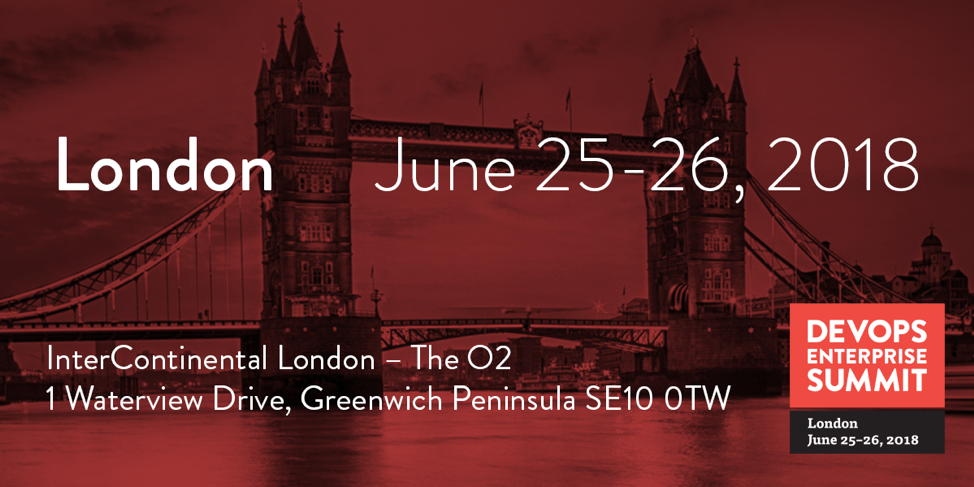
It’s hard to believe that DevOps Enterprise Summit London ( DOES18 ) is right around the corner! The conference, which takes place June 25-26 at The InterContinental – O2, is guaranteed to provide two jam-packed days of learning around architecture, next-generation operations, spanning business and technology divides and much more. If you haven’t already registered, there is still time to secure your spot! Receive 20 percent off registration using the Friends of Gene Kim code (FOG20) at checkout. And, if two days of DevOps just isn’t enough, Electric Cloud is hosting post-conference workshops for a full immersion experience:
From New Learner to Executive Leader—Gary Gruver (Electric Cloud strategic advisor, author of “Scaling Agile” and “Leading the Transformation”) and Helen Beal (product owner at the DevOps Institute,) build up your knowledge and transformational leadership potential in this full-day, hands-on workshop geared toward business leaders.
You Build It, You Secure It: DevSecOps Workshop—John Willis (Electric Cloud strategic advisor, co-author of “The DevOps Handbook” and vice president of DevOps and Digital Practices at SJ Technologies) hosts this full-day, hands-on, technical workshop to help build and incrementally improve DevSecOps pipelines.
Prior to DOES18 and upcoming workshops, we caught up with Beal and Gruver to learn a little more about their DevOps background and what attendees can expect during their workshop:
Alan Shimel: First, for those who don’t know you, tell us a little about yourself?
Gruver: Hi, everyone – glad to be here. In my professional career I’ve worn a lot of hats—I’ve been an engineering executive, a coach, an author. My experience in this space come from leading large-scale transformations in big organizations with complex tightly coupled systems. I think this gives me a unique perspective that is valuable to any managing large systems that aren’t in a position to just go and “re-architect everything to microservices in the next few months.”
I started out by leading a group of 800 developers in the HP LaserJet firmware team through a transformation that delivered a 2-3X improvement in productivity. The results were so great that we decided to document the journey in my first book, “A Practical Approach to Large Scale Agile Development.” This book, coincidentally, echoed the same ideas and was finished about the same time that Jez Humble and David Farley published their book, “Continuous Delivery.”
After that, I joined Macy’s.com as the VP of Release, QA and Operations to apply these same concepts to their very large-scale journey to CD. It helped that Jez worked down the street and we could share ideas back and forth over beers. During this period, the term “DevOps” started getting real traction, and I realized I was one of few people actually helping to roll out those practices in large, complex organizations. At the end of that experience, I published my second book, “Leading the Transformation,” where I documented everything I wish I had known to help others avoid the same mistakes I had made.
After my experience at Macy’s, I began coaching executives in other large organizations in order to help them transform their own software development and delivery processes. Each one of these engagements was unique, with very different challenges—although I could definitely see commonalities among them. I compiled that knowledge into my third book, “Starting and Scaling DevOps in the Enterprise,” where I lay out the approach I use in working with these organizations.
Beal: Hi, I’m Helen and I describe myself as a “DevOpsologist”—that is, I study DevOps. I coach, train, write and talk about all aspects of DevOps and help organizations use DevOps principles to deliver value outcomes faster, better and more reliably. I do this at Ranger4 through assessing capabilities, developing improvement roadmaps and then implementing those road maps through workshops, training and facilitating value stream-mapping exercises and games like The Phoenix Project Game. I’ve been working in the software industry for nearly 25 years and have spent most of them specifically focused on helping organizations make improvements in the software delivery life cycle. I also work with the DevOps Institute on content improvement and creation and am a DevOps editor at InfoQ.
Shimel: How did you “get into” DevOps? Why is it so important to you?
Gruver: I didn’t get into DevOps to “do DevOps,” because the term hadn’t yet been invented. Instead, I applied the concepts of what later became known as deployment pipelines to my particular situation because they were the process improvements we found had the biggest impact on our efficiency. The group I managed (at HP) was just starting a complete re-architecture of a 10M line code base when the economy crashed (2008), resulting in me being told I had 30 days to come up with a plan to drop my R&D spending by 50 percent but I still had to deliver the new architecture on time. This transformation was critical to the health of the business, so I took it as a personal mission to get this done so we could maintain staffing levels and keep the jobs of all my friends and co-workers.
Every day I came in and got to work with an amazing group of people that were focused on doing everything possible to help the company survive by improving the efficiency of our software delivery process. We ended up implementing a lot of changes that were later called “DevOps.”
It was such a huge breakthrough for the business that I have spent the next decade of my life trying to help others realize the benefits of these process improvements. And over time I have focused more on DevOps because I think it best represents the process changes that provide the biggest benefits for large organizations.
Beal: Working on the whole software delivery life cycle led to four years closely focused on deployment automation just as DevOps was becoming a “thing.” At Ranger4 we decided to build our business around helping organizations understand how to use DevOps principles and practices to make improvements. At Ranger4 we like to say we are fanatical about making life on earth fantastic and that’s the core of why it’s so important to me—we are trying to take pain away from the work people are doing and make them more successful and their organizations more successful.
Shimel: Tell us about your workshop. Who comes to your workshops? What will people coming to your workshop learn?
Gruver: My workshop is a combination of the “Leading the Transformation” and “Starting and Scaling DevOps in the Enterprise” books. We start helping executives understand their roles in leading a successful transformation and provide a framework for that effort. Next, we deep dive on DevOps, helping executives understand how implementing DevOps in large, tightly coupled organizations can and needs to be different from what you hear about being recommended by the unicorns with loosely coupled architectures. The workshop also shows the executives how to analyze their current deployment pipelines to identify the biggest sources of waste because I strongly believe if you don’t start delivering real business benefits early your transformation will start losing momentum.
This workshop gives people the opportunity to integrate everything they learned at DOES and put it together with an approach they can take back to their organization and start making changes that will improve the effectiveness of their software development and delivery processes.
Beal: My workshop is the DevOps Institute’s “DevOps Essentials,” so kind of what it says on the tin: the fundamentals of DevOps in half a day. So we’ll be covering things like where DevOps has come from, why people are doing it and what they are actually doing; the Three Ways; CALMS; changing culture; the relationship between Agile, Lean and ITSM; and building DevOps toolchains. People that come to my workshop will leave with a solid understand of the core practices and principles and DevOps vocabulary.
Extra insights from Beal:
Shimel: What’s the hottest topic in DevOps for you right now?
I’ve always been particularly interested in the cultural side of DevOps and right now I am most interested in the neuroscience of behaviors.
What did you learn this week?
I learned this thing about pigs and chickens in agile the other day which made me laugh, and also helped make an improvement in a particular team we are working with.
Ready to get your hands on DevOps? Register now to join Beal and Gruver June 27 at The InterContinental London – O2.
If you’re looking for a more technical hands-on experience, register for Willis’ workshop here.
Plus, there is still time to register and save for DOES18! Gene Kim is giving out his “friends of Gene” discount – use code “FOG20” at checkout for 20 percent off the ticket price.
DOES London 2018 is on the horizon. Are you ready?
Holy Cow! We’re only a few weeks away from DevOps Enterprise Summit London 2018 and I can’t begin to describe just how excited I am for our third event in Europe. I never learn as much in short period of time as I do during my days spent at DevOps Enterprise. It’s the place where some of the most courageous and exciting transformation stories I have ever seen take place, and this year’s conference is going to be no different!
So many of the presenters and organizations involved are pioneering the practices that will be commonplace in business in 10 years. In addition to the two days of showcasing amazing experience reports from the leaders of large and complex organizations—sharing what they did, what they learned and their outcomes—we continue to document transformation journeys from several enterprises and leaders year over year. I hope you’ll join us in London for the next chapter! And, if you haven’t registered yet, use the “Friends of Gene” code below!
20% OFF DOES18 LONDON REGISTRATION WITH CODE “FOG20”
To nurture high-learning, exciting networking opportunities, and to create a forum for exchanging insights with some of the best practitioners and subject matter experts on the planet, we developed a list of objectives that I think promise to make this year’s DevOps Enterprise Summit London the best conference yet.
Programming Objectives:
Get great experience reports, and repeat experience reports.
Elevate focus on Next Generation Ops and Infrastructure.
Help conference attendees achieve their goals.
Elevate focus on Spanning Business/Technology Divide.
Get best subject matter experts from the domains we need.
Next Generation Operations and Infrastructure
Jason Cox, Director of Systems Engineering at The Walt Disney Company, is a member of the DevOps Enterprise Summit Programming Committee, and someone whose advice I’ve relied on ever since I met him in 2013. I’ve also quoted him extensively in “The DevOps Handbook.”
In the four years since the first DevOps Enterprise Summit, Jason has consistently told me, “That was a great conference, but it was a better conference for Dev than it was for Ops.” I had promised him each year that we’d do a better job choosing better Ops talks, and I finally asked him to join the conference Programming Committee.
This year, we’ve dedicated nearly a quarter of the agenda to speak to “Next Generation Ops and Infrastructure Practices,” targeted specifically at Ops leadership, and created a separate subcommittee to focus on a multiyear road map to properly define the problem space, and seek out the talks to help define the direction of the solution.
As we were reviewing the amazing talks that we have ahead for DevOps Enterprise Summit London this year, both Jason and I were amazed and very satisfied at the Ops perspectives being presented—it is genuinely different than previous years. The reason for this focus is best verbalized from Jason, as he says:
“This year’s conference programming will help Ops leaders work towards the same goal that our Development partners are also working towards. These talks should resonate strongly with nearly everyone in Ops leadership, and help them not just participate in the DevOps journey, but be active leaders in it, as well.”
In a lot of cases these problems are the hindrances for a DevOps transformation going the “entire way” and ultimately can be the difference between the high performers and the so-so performers or low performing organizations. These sessions include experience reports and expert talks from:
Jason Cox, Director, Systems Engineering, The Walt Disney Company
Jeffrey Snover, Technical Fellow, Microsoft
Cornelia Davis, Senior Director of Technology, Pivotal
Damon Edwards, Co-Founder, Rundeck
Rob England and Cherry Vu, Teal Unicorn
Jayne Groll, CEO, DevOps Institute
Nick Funnel, GTIS CTO Development Practice Lead, Barclays
Tom Clark, Head of Common Platform, iTV
John Rzeszotarski, SVP, Director of Continuous Delivery and Feedback, KeyBank
Shaun Norris, Global Head, Cloud Infrastructure Services, Standard Chartered Bank
Spanning the Divide Between Tech and the Business
Increasingly, the obstacles that technology leaders face in large, complex organizations are outside the technology value stream. This year, I am super excited about how we are going to be able to point out how these barriers. It’s not just Dev versus Ops. It’s also about exploring how the technology value stream pertains to project management, the funding model, information security, product owners and product managers, etc. In short, we have some amazing talks and experts presenting in London in regards to “spanning the business and technology divide.”
We’re doing this by having a technology leader co-present with their business co-collaborators. And, we’re going to get the full-hearted endorsement dialogue to unfold on stage for everyone to see.
My friend and fellow programming committee member Damon Edwards points out that nothing lives in isolation. When you look at the bigger picture as a business, things such as automation help, but moving the bits around have very little to do with the organization being successful. What matters more is how the organization is structured, how people are incentivized, how they view their work and how they interact with the systems around them that really dictate the successes and failures. You’ll notice these are all business functions, not technology functions.
So, we have multiple talks to showcase these patterns and involve the business-side stakeholders to tell how the business side is fundamentally understanding and driving the transformation journey. These are three presentations that I am really excited about and you can hear more about them over here >>>.
Verizon Enterprise John Scott, IT Manager; Oliver Cantor, Associate Director of Product Strategy; Sanjeev Jain, CIO of EMEA
Nike EMEA Randy Lyons, Sr. Director, Nike Digital Engineering EMEA; Michele Power, CFO Nike Direct EMEA
Capital One Aimee Bechtle, Senior Manager, Advanced Engineering; John Schmidt, Director, Product Management
Creating a Community of Connections
It is so important for the organizers of the DevOps Enterprise Summit to help attendees achieve better outcomes, and we’re trying to meet this objective by addressing three common phenomena to conference-goers:
The “velvet rope” problem where there is a person or a group of people that you really want to talk to, but you can’t get to them for one reason or another. Or worse, you have to decide between waiting in a line of people to talk to someone or miss out entirely and head to the next session on your agenda.
Other situations where you’re surrounded by people, but don’t know who you actually should be talking to. If you’re like me, in the past I decided the best use of my time was to go do something else, such as check my email instead of interacting with my peers. In retrospect, this might’ve been the dumbest thing I could’ve done.
Everyone is going to lunch, and they’re organizing by restaurant names, but what you really want to know what the subject matter of the discussion will be.
Together with Jeff Gallimore, we are working on establishing different ways to create opportunities for people to ask and answer as many questions as possible. After all, the quality of the audience is one aspect that we think separates the DevOps Enterprise Summit from other events! Therefore, the more spontaneous conversations and interactions we can nurture onsite, the better for everyone. So, how are we striving to do this? Read below and you can also listen to Jeff talk about it here>>>.
Slack Workspace! We will have our very own Slack workspace for the DevOps Enterprise Summit! For the first time ever, every attendee has an opportunity to join the shared workspace to interact with speakers, attendees and sponsors. There will even be a “Who’s Hiring” channel for new job opportunities. What’s more, this channel will be open even after the conference ends, so that we can continue the dialogue and interactions with people after June 26.
Ask the Speakers! We’re creating opportunities for attendees to have a dedicated time and location to ask the plenary speakers questions that go deeper on the information they presented earlier that morning. We’re going to open up a Slack channel for every attendee to use and submit questions directly to speakers and to other attendees. During the “Ask the Speaker” sessions, we’ll use this repository to highlight the most popular questions, and give attendees different ways to engage with speakers directly.
Lean Coffee Sessions! We want to help attendees connect with and learn from their peers at the conference in another semi-structured format as well. We’re going to produce Lean Coffee sessions, led by Dominica DeGrandis, both days of the conference. This will be comprised of 10 tables big enough for 10 people to talk about similar interests that are relevant to the theme at the table. Hopefully, this provides another opportunity to learn a lot and make some valuable new connections.
Lunch time! There will be a few different lunch options that attendees can take advantage of as well:
Eat lunch with a speaker will be a first-come, first-served basis. This will give you an opportunity to sit down face to face with a speaker and, again, dive deeper into the subject matter of their presentation and experiences in a more personal setting.
Have lunch with fellow attendees at high-top tables around the buffet stations, where there are note cards with seed questions to start discussions.
Industry party! Book signings, sponsor giveaways, food and drinks and a great opportunity to continue conversations with fellow attendees and speakers. This is where some of the most interesting conversations take place and I heard some amazing stories there last year.
Leaders Talking About the Continuation of their Journeys
Another thing that I am always so delighted by is the constant scouting and searching that the programming does to look for the amazing case studies we get to hear at the DevOps Enterprise Summit. Chris Hill of Jaguar Land Rover is a testament to this fact, and we’re really looking forward to having him as part of the program this year. We caught up with Chris during a recent YouTube Live hangout, and he previewed some of his presentation for us here >>>.
“The DevOps Enterprise Summit for me is something I hold close to my heart, considering I attended my first event in 2016 in San Francisco where I walked away from that conference with the books and motivation I needed to transform my organization. In terms of how we’ve started with our DevOps transformation, this actually came organically from the conference.” — Chris Hill, Jaguar Land Rover
We have some excellent repeat speakers this year talking about the continuation of their journeys, including Topo Pal, technical fellow at Capital One; Jonathan Fletcher, CTO at Hiscox; Scott Prugh, CTO at CSG; alongside Erica Morrison, executive director at CSG; and Jonathan Smart, head of Ways of Working at Barclays.
We also have multiple PhDs to present subject matter expert talks on the domain expertise that we need to help us achieve our goals. Here is a glimpse into the expertise we are drawing in at the DevOps Enterprise Summit this year:
Richard Cook, research scientist at The Ohio State University, is presenting this year and he’s the person who has probably influenced John Allspaw’s thinking the most over the last decade. I can’t wait for his talk highlighting a new way to think of operations.
Nicole Forsgren, CEO at DevOps Research and Assessment, is someone whom I’ve had the pleasure of working with for years on the “State of DevOps” report with Puppet, now in collaboration with Google Cloud. She’ll be sharing the latest knowledge and learnings from that research.
Mik Kersten, CEO of Tasktop, will be talking about his work from project funding models to product funding models.
As you can see, there’s a lot that is getting me excited for the conference this year! To watch the full preview discussion of DevOps Enterprise Summit London 2018 and learn more about the conference, please watch our YouTube Live event with Alan Shimel, editor in chief of devopsy.kinsta.cloud; Damon Edwards, co-founder of Rundeck; Jeff Gallimore, partner at Excella; and Chris Hill, head of Systems Engineering, Infotainment at Jaguar Land Rover.
Thanks for reading and look forward to seeing you all in London!
I had a chance to attend my first Appian World a few weeks ago. It was right in my backyard, at the iconic Fountainbleau in Miami Beach. I brought a video crew with me and had a chance to do some deep dive interviews with customers, partners and Appian execs. I will highlight those further down. The real story of Appian World, though, was about low code, business process management, hackathons and the Woz. I wrote a recap of the CEO’s keynote from the show, but wanted to follow up with more details.
Appian had announced a hackathon with the winners to be announced at Appian World after the judges—John Rymer, Steve Wozniak and myself—selected the winner from five or six finalists. The winner received a $5,000 cash prize. Contestants came from all over the world; some were teams from Appian partners and customers, while others were individuals.
(Before I tell you more about the winner, let me say that judging this hackathon alongside Steve Wozniak was a personal bucket list moment for me. I did get a little giddy standing next to the Woz and talking with him about the hackathon contestants. But enough about me.)
Back to the hackathon. After evaluating the finalists, we (the judges) decided that the winner best exemplified the spirit of a hackathon. Brad Cauzza created FRED, a facilities record database. Basically, using Appian low code app building and integrations, Brad built a system that allowed visitors to sign in when visiting a facility. It also tracked incoming packages and more. It was a really nice use of the Appian platform.
There were some finalists who had grander applications, but we thought FRED was a great example of what you do at a hackathon. Below is my interview of Brad and Malcom Ross of Appian.
While we are looking at interviews, I also had a chance to sit down for a deep dive with Appian founder and CEO Matt Calkins. Matt has guided Appian from a small group of he and his three co-founders all the way through to public entity. Appian is not an overnight wonder; it has been a 19-year trip for Matt and his team. He shared a lot of his views on this journey, as well as where he sees Appian going in the future.
As I mentioned, there were actually four founders of Appian and they are all still with the company 19 years later. That is quite unusual, to say the least. I also had a chance to sit and chat at length with another Appian founder, Michael Beckley, who is CTO-founder of Appian, like Matt from day 1 all of those years ago. Here is my discussion with Michael:
Over the course of the event I spoke with several Appian folks, as well as partners and customers. You can see the whole YouTube playlist of Appian World 2018 interviews on our DevOps TV YouTube channel.
Here I am in Chicagoland for my third ChefConf. I caught the keynotes today with Nathan Harvey, Barry Crist, Adam Jacob, Corie Scobie and more. The big news at this year’s event is that Chef is focused on more than just infrastructure and compliance—Chef is bringing automation to apps and the entire software delivery life cycle.
I spoke with Chef CEO Barry Crist about this and he said there is a sea change taking place with software is delivered. Chef has seen this wave coming and, over the last few years, has been retooling its offerings to match this. Today, Chef Automate and Chef Habitat represent the heart of Chef’s arsenal in its mission to offer the premier platform to automate the software development, deployment and security life cycle.
I personally have seen this shift over the last few years. I think back to when we launched devopsy.kinsta.cloud. Chef was already a popular solution within the DevOps community; however, most people will tell you that they used Chef for configuration management. It was great to be able to make sure that as you spun up new instances in the cloud, your infrastructure was configured exactly as you wanted. By automating and using a Chef-type of solution, you could spin up new instances at-will and their configuration would be exactly the same or exactly as you desired.
At the time, that was pretty cutting-edge. People were writing Chef recipes for all kinds of tasks—again, usually around configuring infrastructure. With the advent of microservices, containers, Docker and Kubernetes, this type of automated deployment has become commonplace. But the need to automate, especially with security and compliance and app deployment, is perhaps an even bigger mission.
Crist acknowledged these facts during his keynote. In speaking about Habitat, Crist noted that not only did many of Chef’s customers not understand the real story behind Habitat, but that half of Chef’s own employees didn’t, either. One person who did was Julian Dunn, director of product marketing, who I interviewed on DevOps Chats about Habitat when it first launched. Tony Bradley wrote that it could be a game changer back then, as well.
Habitat has come a long way since then and still has a ways to go to grow into its ambitious potential, but it is very functional right now. Chef has several clients here at ChefConf talking about their Habitat deployments and plans. Chef now tags Habitat with Automate Any App Anywhere – Build, Deploy, Manage.
Perhaps further along than Habitat, however, is Chef Automate. In fact, Chef Automate 2.0 was announced ChefConf, and it seems to be an almost complete rewrite of the program, as it is now built on Microsoft Go. Here is Chef’s take on Automate 2.0:
Chef Automate has been rebuilt from the ground up to provide performance, scale and advanced analytics required by enterprises using DevOps at scale to meet the demands of post-digital transformation. Chef Automate now provides a single control plane for infrastructure and compliance automation to enable a closed-loop ‘detect, correct, automate’ process to make infrastructure effortless.
New features include:
Enhanced operational visibility and debugging – New tools and visualizations, including a streaming event feed, trend graphs and a rich query language, help users analyze infrastructure and compliance automation data from a unified dashboard.
Compliance scanning and reporting in any environment – Integration with cloud compliance capabilities of InSpec 2 enhances scanning, which can now be used to evaluate cloud configurations (AWS, Azure, Google Cloud) via APIs for compliance on either an ad-hoc or ongoing basis. Chef Automate 2 also supports scanning of Cisco IOS equipment as a significant start on extending modern compliance capabilities to network devices.
Re-architected for speed and flexibility – A Go-based microservices architecture, with a modern, performant web UI atop a REST API, enables Automate 2 to support tens of thousands of nodes from a single installation. In-place upgrades with automatic data migration from Chef Automate 1 ensure that customers retain all historical information.
Additionally, Chef has released something called Chef Workstation. From the release:
Chef Workstation enables DevOps teams and practitioners to complete ad-hoc DevOps tasks using all of the familiar Chef capabilities, without agents. This provides a simple and effective way to use Chef to complete tasks and then seamlessly scale those tasks through Chef Automate.
Capabilities include:
New standard desktop/laptop experience for Chef – Includes a new ‘target mode’ for executing Chef recipes or entire cookbooks remotely and Introduces ‘chef’ command as the single point of entry.
Foundation for a better workstation experience – Bundling all the tooling previously included in the ChefDK provides an improved user experience and cohesion between tools to deliver a seamless experience for any infrastructure automation task.
Finally, new enhancements to Inspec, Chef’s compliance and security solution, were announced. Besides security and compliance being built into most everything Chef does, Inspec now sports:
Cloud configuration compliance – Verify AWS and Microsoft Azure policies, with Google Cloud Platform support in beta. More than 10 new AWS resources bring it to CIS Level 1 benchmark completeness.
Improved out-of-the-box experience – More than 30 new resources, including support for Cisco IOS network devices as agentless targets, are built in.
Drastically improved performance – Users now see up to 90 percent performance gains on Windows and 30 percent on Linux/Unix.
I will report more as it comes here in Chicago and ChefConf 2018.
There may be nothing more difficult in a DevOps transformation than aligning the business with its technology organization—and vice versa. Dealing with skills gaps and information gaps, while addressing communication breakdowns and cultural hurdles can keep even the most seasoned practitioners and leaders up at night. How do we align disparate business units accordingly? What practical tips can people take and implement along their journey?
These are topics we immersed ourselves in during a live video podcast ahead of the DevOps Enterprise Summit (#DOES18) in London. I was able to sit down with Carmen DeArdo of Nationwide and Jayne Groll of DevOps Institute to take a deeper dive into the DevOps transformation patterns and practices. This discussion centered on a major theme of DOES18 this year: business and technology alignment for the modern enterprise.
We hit on many important issues that I think we can all learn from and apply in our organizations respectively. One of the things we’ve learned over the course of the years is that, in DevOps, the focus is heavily cultural, but it has to be squarely on nurturing and getting buy-in across the organization. But at the same time, we need to be orchestrating our strategic alignment initiatives between the disparate functions and organizations within the business. That’s a tall task.
Watch the full video replay below, and/or read through the full transcript to see what key points were made and how we can adopt best practices to move our businesses forward.
Carmen and Jayne will both be speaking at DOES18 London this year and I will be leading video panels that you can see exclusively on DevOps TV / devopsy.kinsta.cloud. Hope to see you there!
Alan Shimel: Hey, good day, everyone. Thanks for joining us. This is Alan Shimel of devopsy.kinsta.cloud. And I’m here to talk to you all today with a few friends of mine about the upcoming DevOps Enterprise Summit in London. This will be a live panel discussion ahead of the London DOES event, which, by the way, is June 25th to the 26th at the Intercontinental Hotel, sometimes called The O2. Our panel today, I’m happy to say, are two really good friends of mine. Well, one is one of my business partners at the DevOps Institute: Co-founder and CEO of DevOps Institute Jayne Groll, and a speaker at DevOps Enterprise Summit London. Jayne, welcome to our hangout today.
Jayne Groll: Hi, Alan. Hi, Carmen. Thanks a lot. Really looking forward to it.
Shimel: Okay. So Jayne has already sort of introduced our next guest there, another good friend of mine, a recognized DevOps leader for many years. He really kind of kicked off a lot of the kind of groundbreaking DevOps work that we’ve seen at Nationwide over the years. Also a great Pittsburgh Steelers and Pittsburgh sports fan, Carmen DeArdo. Carmen, welcome.
Carmen DeArdo: Welcome Alan. Welcome. Hi, Jayne. It’s always great talking to you.
Shimel: Thank you. So all kidding aside, both of you are kind of experts and leaders within the DevOps Enterprise community, and you’re both presenting at DOES London this year. You’ve actually both presented at previous DOES events as well. So thank you for coming here. You know what? When you guys first started kind of preaching in the wilderness about DevOps and so forth, it was a bit of the wilderness, but it’s becoming commonplace in businesses and organizations throughout the world now. Our goal on this chat, guys, is to learn about the patterns and practices that leaders have identified for business and technology alignment, and really what we’d hope is just to share your experience and thoughts with our audience so that maybe they can learn something and they could integrate or assimilate that into their own transformational journeys and escapades.
And just again a reminder, this is about DevOps Enterprise Summit London, June 25th to 26th, and you can get more information on the event at events.itrevolution.com. You’ll find on there, by the way, the entire conference agenda, and beyond Carmen and Jayne, it is a gangbuster lineup of speakers. If you’re interested in DevOps and any kind of related type of technologies and frameworks, etc., it’s really a can’t-miss one for those of us, you know, who follow this space, or even for those of us just getting involved in it.
That being said, though, I’ve spoken enough. Let’s get started. I’ve given a little bit of your background, but maybe I haven’t said everything that needs to be said. So, Carmen, since I see your lovely face on the screen ahead of me here, why don’t you go first? Give us your background, your company role, etc., professional accomplishments.
DeArdo: Okay. Thanks, Alan. So I actually spent most of my career in telecom working for Bell Labs. Thought I would retire from Bell Labs like everyone else at the time, and then the telecom bust happened, and we all had to figure out what we were gonna do with the rest of our careers. But it served me well, because I think a lot of those concepts, even though we didn’t call them DevOps, but, you know, certainly, creating high-availability, high-reliability capacity systems, you know, those concepts are still, I think, pertinent obviously today. I moved into Nationwide to really help with trying to get Agile set up about 12 years ago, and then, you know, as I think you see the case with a lot of companies, they start somewhere in their value stream. They may not even think of it at that point like an end-to-end value stream, but they’re starting somewhere. They start with Agile.
You know, we were very successful getting all our work done there, but then realized, okay, that’s only part of the story. The cards getting into the backlog through iterations is great, but we aren’t getting flow of work from the business into the teams, and we certainly aren’t releasing into production frequently. So about, I’d say, five years ago, you know, somewhat in affiliation, some of the work I was doing with, as you know, Rosalind Radcliffe, Hayden Lindsey, you know, started to talk about what’s this DevOps thing. Was lucky enough to end up at the first Gene (Kim) conference speaking with Hayden. Wasn’t sure what I was getting myself into, but it’s been a wonderful experience. You know, got to meet you, Jayne, and lots of great folks from Gene’s community.
In Nationwide, we’re just continuing to work, how do we make that end-to-end flow and lead time, you know, what do we do to make it better? What DevOps practices can we bring? But as you noted at the beginning, how do you get the business more online? How do you get work to flow? And how do you address culture, which we know is probably more important than technology?
Shimel: Excellent, dead on. Jayne, how about you? You have more hair than both Carmen and I. You’re the lovely face we should see on the screen here. Give us a little background and accomplishments.
Groll: So I call myself an accidental technologist. So I started my career, got out of school, ended up in the legal field for about 15 years working on the business side. So I wasn’t a lawyer, but I was one of the early paralegals for a big Wall Street law firm that adopted UNIX a long, long time ago. I don’t even want to say when, but screens were black and green back then. And so everybody had to learn UNIX. And so I was very fortunate to be given an opportunity to accidentally become a technologist, and I know even with my technical skills, I’m a little self-taught. Was able to move up into some senior management roles across several different verticals, leaving the legal space.
And then in 2004, kind of fell on ITIL and really started to see a paradigm shift in IT that technology is important, but your practices, your principles, your processes are important as well. And people, process and technology became a mantra. And so co-founded ITSM Academy with Lisa Schwartz and really saw the growth of maturity in IT. You know, I always say we love our frameworks. IT, we love our frameworks more than any other business unit, and really started to see that percolate. Met Gene and some others through that experience, but really, landing where we are today. In 2012, I was able to attend an early DevOps day, frankly, at Gene’s invitation and really saw something percolating there that was pretty much common sense, but not common practice.
So we started to see, you know, should Dev and Ops collaborate better? Should there be a faster flow? Should there be less silos? Yes. Should we use automation more? Yes. We automate the rest of the world, we don’t automate ourselves as much. And really started to see something grow there, and, Alan, as you know, in 2015, we launched the DevOps Institute primarily because the practices around DevOps unlike other frameworks were really emerging in the wild. You know, you said it before. They were emerging in the wild and making some sense out of that, you know, as it crossed over into the enterprise space was important and requires a lot of research.
So, you know, we don’t have a single body of knowledge in DevOps. Thankfully, we have a collective body of knowledge in DevOps. So for me, I think part of my, you know, pride is my journey has not been a linear path. Really blessed to be, you know, where I am today, and, you know, DevOps Institute right now is, what, 32 countries that are talking about in doing DevOps. I mean, that’s really kind of surprising and remarkable all at the same time.
Shimel: Yep. And just to excuse, I don’t know if you guys can hear. We have a train, the 11-08 Cannonball Express, going via the office here.
DeArdo: Just like my cousin Vinnie here, Alan? Is that like …?
Shimel: That’s “two yutes.” The way I talk, we’re not far off. Anyway, though, guys, let us move along here. You know, one of the things that I’ve learned in my own exploration of DevOps and digital transformation, etc., is that a lot of businesses, large enterprises, they may think they do, but on the whole, they don’t really understand technology. Yeah, some of the guys in IT understand some of it or what have you, but do you think most businesses understand technology? Carmen?
DeArdo: I think it’s … Obviously, people are exposed to technology. In fact, I talk about this all the time, that sometimes we’re still in the book writing business or book production that we still feel like we got to produce manuals of paper material … The disconnect comes as, How we can effectively utilize the technology that we have to meet the business needs? And I think that’s maybe where the disconnect goes. It’s not that, you know, people certainly are … they have Alexas. They have stuff in their home. They may be even, you know, great at programming their home devices, but how are we actually taking advantage of that to serve our customers? And I still think thinking about things kind of in this … you know, Jayne talked about silos, but I actually think the last frontier really of DevOps is in the left part of the value stream, not the right part.
I think they code the cloud. There’s patterns, maybe not everybody’s done it. I know it’s not easy to do. That’s pretty well-defined from a pattern. The front part is not, and I think understanding that, you know, you have to basically be an IT business. We hear this all the time. If you’re not an … consider yourself an IT business, someone who is good at IT is gonna disrupt you. So it’s not that I don’t think they understand technology. They’re certainly capable of it. It’s just, do we really understand how we can use it the best way in order to meet business needs? And, you know, things like the system of engagement. Well, the system of engagement is gonna change. We’ve already seen it change. It changed from web to mobile. It’s going to voice. It’s gonna go to different engagement models.
That’s fine, but you still have to have the back-end technology, and the microservices, and the APIs, and the ability to deliver more quickly, and I think that’s the part of it, the gap we still haven’t bridged. And how can we actually get …? You know, one of the things that Nicole and I are talking about at the conference is the project-to-product model. And I think large companies like ourselves are kind of flailing at what … you know, that makes sense. It makes sense to align around a value stream, but how do you really define what those value streams represent so that you can actually get that flow and then use technology to help get that quick deployment and, you know, feedback? So I think that’s where we see a lot of the gaps, you know, from that perspective.
Shimel: Sure. Jayne, before I have you answer on that, you know, I got an email of pitch. I get a lot of pitches as you can imagine, but I got one the other day that, to me, really nailed the issue. The issue was they pitched me about how great their solutions and their services are, and they said it makes IT costs less. Instead of … so they’re still thinking of the IT department as a cost center instead of a profit generator. And to me, when you say that, that means you really don’t understand technology, you don’t understand the role of IT in the modern enterprise, and you’re just not doing it right. Jayne, your thoughts.
Groll: So I think you’re right. I think, you know, the modern enterprise has a few challenges ahead of it. Carmen, I absolutely agree with you. I think every business knows they need technology and they need to accelerate their use of technology. I think they don’t understand how to apply that, and more importantly, I think the big paradigm shift, and, Carmen, you said it, is that most companies don’t realize that they are now technology companies. It isn’t even just IT does for you, is the core company as a technology company. And those that kind of recognize that, I think, are those that move ahead. Those that are still kind of hanging on to a legacy … Now, you know, I’ll add kind of something into that recipe that’s a little scary.
With the way technology is moving and how fast it’s going, I mean, the acceleration is remarkable, and, you know, Carmen, you said it. It was cloud. It was mobile. Now it’s voice. That it feels like, you know, this kind of moving target that if I’m a business leader, not a technology leader, although Lord knows that, I think, has a plan here, you know, where do you put the dart? You know, do you invest in mobile? Do you invest in voice? Do you invest …? So it’s such a moving target, and it’s going so fast that I think it can be very daunting to figure out, okay, where do we make our play, and, you know, where do we use our technology spend? And I would say something funny, Alan, because you’re right.
You know, in my years in senior IT management, I almost always reported to the CFO, because I was a call center. And so it was nobody understood quite what I was spending money on, but they figured if I reported to the finance guy, that somewhere along the way the cost would be controlled as opposed to let’s optimize the capability. Let’s look at this in investment. So I really think organizations are trying to figure out, first of all, are we a technology company? And I would say unequivocally the answer is yes regardless of what vertical you’re in. And then where do I invest? What technology do I start looking at? And if what I do today is gonna be obsolete tomorrow, how do I make that investment for my company further?
Shimel: Excellent. So, guys, you both have a little bit of a background, more than a little bit, in training and so forth. Do we train people outside of the IT organizations on what technology can do for you? Do we put up sort of Uncle Sam’s “We want you. What can I do for you?” posters? How do we get the business to understand the technology aspects, the technology side of things? Go ahead.
Groll: I mean, you know, the “we want you …” unless you can promote something that says what’s in it for me, me as an organization, me as an individual, me as a leader, I think that’s difficult. You know, doing road shows on here’s what technology can do for you isn’t something that you can tell. I think it’s something that you have to prove. And I think IT sometimes runs into an uphill battle trying to prove that, because it is costly and it does change a lot of the way people perform on a daily basis. I know what I did today, and tomorrow you want me to do something differently, and I may not be as successful as I was yesterday.
So there’s a little bit of a proof of concept usually, you know, done through piloting, whatever, but I think the, “How do we tell them?” I don’t think we tell them. I think we have to show them.
Shimel: Fair enough. Carmen?
DeArdo: Yeah. I mean, I think we’ve gotten a lot of appreciation. I mean, I’ve told … you know, and Cindy Payne and Jim Grafmeyer told the story at the last conference about Hurricane Harvey and how the business was able to respond within a day to what was a wind event and came a rain event with all our flooded cars and how we got the website optimized to handle those, to take the load off of our customer service center. They’re starting to get that, “Gee, having this capability to deliver things more frequently …” We now have some of us who deliver daily whereas before everything was going into a monthly release. So that’s a great accomplishment.
On the other hand, we’re running into the things that, you know, Topos talked about with compliance, with legal, with … and just, you know, how do we … Most of our time now on lead time is going from the idea to the backlog of the team, not from going from the … you know, the team getting the work to deployment. So I think going into, you know, that view of how do we start to think more about, you know, the other things that are getting in our way of lead time, because it’s not just the IT part of it. It’s now the business part of it, and we have a couple areas now who actually have true product owners sitting with their lines and are almost at the point now where they can deliver, you know, stories and storyboard them and move them all the way through production, you know, much more quickly.
So I think that’s an example, and I think that’s what you need. I always talk about you need stories, you need examples of how this can actually be done at your company, because reading about it, hearing about it is great, but then when you see the team next to you doing it, and even if it’s not perfect and even if you know it can be improved, that’s where really you start to change the culture of not just IT but of the business. You want something like that. And then, you know, I think you got something going that you can really build on top of. Jayne.
Groll: Yeah. I mean, I think that conferences like DevOps Enterprise London, Las Vegas, other events, local events, I think, also let individuals and organizations know they’re not alone in this journey. You know, part of the challenge in DevOps right now, I think, is we’re going from what is DevOps to how do we do this. And it’s not finite. It’s not, you know, you open a recipe book and it says, “Start here. Add these ingredients. You know, stir, bake for 350 degrees, and you have DevOps.” It requires a lot of higher-level thinking, requires some experimentation. And so I think that, you know, access to what have other people or organizations done … Carmen, I think you’re absolutely right, what have other teams done, really kind of making it a community of enablement is very, very important in this space, because everybody’s trying to figure out where do they start. And unfortunately or fortunately, the answer is it depends. It depends where you are, it depends what you’re trying to achieve. So I think that’s part of it as well.
Shimel: Yep. So, guys, let me try to tie a bow on this section before we move on. The reason I asked about the technology and technology education issue is I think it’s imperative for organizations to understand that in order for us to get what I call business and tech alignment, and what I mean by business and tech alignment is that we’re all pulling in the same directions for the same reasons with the same goals, and we’re following hopefully a road that we have agreed upon, and we all know the road we’re traveling, because, again, you get back to DevOps, guys. You know, when you guys are out there talking about it and we were covering it at devopsy.kinsta.cloud, what do we always hear? What exactly is DevOps?
There’s no real definition. What does it mean? You know, how do we define DevOps and so forth? And I think one of the things we’ve learned over the course of the years is that, you know, in DevOps, the focus is, you know, heavily cultural, but it has to be squarely on nurturing, buying across the organization for this “DevOps initiatives,” you know, that we’re starting. But at the same time, we need to be orchestrating our strategic alignment initiatives between the disparate functions and organizations within the business. And that to me is business and tech alignment. If you guys don’t agree with that, speak up, but if you do, let’s move on to our next part, but can we wrap up, Carmen, Jayne? Are you fair to say that what we’re really talking about here is business and tech alignment?
Groll: So I’m gonna jump in just for a second, because … So you know I come from the ITIL space. And so in the ITIL space, they were coining the term BITA, business IT alignment. And so for years and years and years, there was a lot of conversation about BITA and its semantics. But alignment means that we’re kind of standing side by side in lanes next to each other. The reality is it isn’t alignment. It’s really unification. It’s really we don’t need to align with the business, we need to become the business. And, again, I know it’s semantics, but that word alignment gets tossed around a lot, and it implies something like, “Well, I’ll drive my car next to yours, and we’ll travel at the same pace, and we’ll get to the same journey,” as opposed to, “Let’s be in the same car.” And so you understand what I’m saying?
Shimel: Yeah.
Groll: And I said the term BITA is sort of falling away a little bit, but it was thrown around a lot during the years when ITIL in particular, you know, was kind of front and center.
Shimel: Yap. Carmen, any thoughts on that before we move on?
DeArdo: No, that was great points. And, you know, I refer back to Mark Schwartz’ last book, “The Seat at the Table,” and where he really talks about IT really should move beyond trying to get a seat at the table and move towards, you know, as Jayne said, you’re actually moving together, and you have to merge really these concepts of what the business wants, you know, has to be very much aligned, more than aligned. It’s part of what IT need to be doing. So that merging has to take a fact, and I think as much as we’ve seen the culture issues in Dev and Ops, that’s gonna be an interesting culture issue. But we’re seeing the companies who are successful are already doing it. They are working together. And, you know, if you walked up to some of the teams I just talked about, you wouldn’t be able to say, “Oh, well, such-and-such is a business person, and, you know, Jayne’s a business person, and John’s an IT person.” No, they’re a team working together to achieve something for the good of the company, and that’s the way it has to be.
Shimel: Yep. Guys, let me broach another subject then, because I think we’ve covered this one. You know, I read an article yesterday about AI, and automation, machine learning, and we’ve all seen these before, and, you know, how it’s changing. But automation really is changing the job market, especially for people younger than the three of us. I mean, we’ve both seen our … all three of us have seen our 21st birthday recently and …
Groll: Just recently.
Shimel: Recently, but really the folks coming up behind us, and we’re talking about our children and so forth, automation and the job market that they’ll grow into is paramount. And one of the reasons is that we have a tremendous skill gap. You know, my background is obviously in infosec, and now we call it cybersecurity. I hate the term. But there’s a tremendous gap in the security space. There’s also a tremendous gap in the DevOps space, obviously, and that’s one of the reasons we see such a high demand, even for people who may not be certified or classically trained in DevOps, I mean, take some sort of DevOps class. If they’ve learned to work Puppet or Chef or Jenkins, you know, they’re in high demand here.
And so with this skills gap, it doesn’t hinder our DevOps transformation. Is it a drag on the entire DevOps industry or community? Jayne, I’m gonna ask you to take first crack at that. I mean, you must see this with DOI stuff.
Groll: I do, and, you know, it’s kind of like good news, bad news. So the great news is, where else do you get to work in an industry or an environment where you are now encouraged to learn something other than what you’re essentially good at? I mean, you’re now encouraged to grow new skills to evolve. Organizations are funding skills modernization programs. So, you know, we groomed … and Carmen referenced that. You know, we groomed an IT based on silos. And in every silo, you were a developer, or you were a QA person, or you were a security person, and you lived in your silo with other people who had the same skills as you did. And now, cross-functional skills and, you know, what they call T-shaped people where you need to still have a specialty but you’re absolutely required to have very large breadth of different skills means that organizations are supporting and funding that.
So the continuous learner is more the norm today than it was before where you will be a developer … experience, and I think it’s a great day to be in technology truthfully, because you are encouraged to think, and learn, and practice, and train, and do, you know, all sorts of other things. And I think companies are starting to see that. I hear the term “skilling” a lot. We not only talk about training, we talk about skilling. We need to skill our force. We need to skill our teams. We need to reskill or upskill. You know, those are really terms that are starting to enter our common vocabulary. And the day of the generic, “I’m a master, I’m an expert, I’m a practitioner,” and I’ve got a few of those credentials as well, those are so ambiguous that now the skills are very, very tangible, and organizations are hiring, I think, hiring and funding individuals to develop not only technical skills but practice and principal skills, too. So we’re all gonna be upskilled, maybe outskilled.
Shimel: Perhaps both. Carmen, how about you on this one?
DeArdo: Yeah. I mean, automation is obviously nothing new. I mean, I’m really dating myself, but I can remember when people didn’t trust the output of compilers. Like, are we sure the compilers are producing the right machine language or assembly language? I don’t know. I can bring the assembly language better than this compiler. I mean, I think automation and learning is just … obviously, you know, if you spent, you know, four decades like I have, and, you know, none of us are spring chickens, but you’ve got to learn a lot and keep learning. Now, I think the great thing, and I agree with you and Jayne, the great thing about Nationwide is they have invested in learning and upskilling their people. We had this thing called Teaching Thursdays where twice a month we have two hours which is set aside for peer-to-peer learning, and it’s really not … and it’s peers teaching people, and people love to be the teacher.
I mean, at the last forum, Jason Cox was talking about … We had a subgroup focused on operations, and Jayne was there. And talk about … you know, he had some folks on his team, that they have to become engineers. They have to become coders. And one of the guys who initially maybe wasn’t so crazy about it, once they became kind of the expert in their area and they were teaching other people, well, you know, they were really engaged then, because, you know, they were involved and they were the one now from a peer-to-peer learning perspective.
So companies, I think, like Nationwide, Disney, other companies that are leaders in this space need obviously to invest in that. And then, you know, it also means that the associate themselves, you know, needs to take advantage of that. I mean, we can offer those capabilities. We know the jobs are gonna change. We can make those skills available, and then folks need to take advantage of them, but yes, I mean, people have to become more broadly skilled and be able to become more of what I would call problem-solving engineering mindset as we move forward.
Shimel: Sure. So, guys, though, you know, so we have skills over here. And on this side, there’s another thing that creates a tension with the skills, and that’s what I call the information gap. So we have a skills gap, and you guys have both addressed that really well, but we also have an information gap. And I alluded to it when I talked about training. If an employer or an organization thinks that someone who can write a recipe in Chef or has heard of Jenkins is a DevOps engineer, if there’s such a thing as a DevOps engineer, or is someone who, you know, is gonna really help build their DevOps team, to me, that’s not a skills gap, that’s an information gap. How do we understand … How do we make organizations … How do we fill that gap on information so that organizations recognize, A, that there may, in fact, be a skills gap, B, how to fill that skills gap and bring the organization up to it?
I mean, this tension, this chicken-and-egg, if you don’t know it, you don’t know. How are you supposed to know? And so I’ll put it to you. What do you think is more important? The information gap, the skills gap? Are they equally important? Do we tackle them concurrently, individually? Carmen, how do you guys do it at Nationwide?
DeArdo: I mean, I think one of the things that IT hasn’t been good at is treating IT as … we’ve been a very bad customer to ourselves. So if you look at our pipeline, we don’t treat it as a product. If you actually want to get faster at delivering a capability from idea through deployment, you need to consider that as a product, not a bunch of different tools. It’s not Jenkins, and New Relic, and UrbanCode or, you know, the AWS. It’s not that. It’s a pipeline that’s gonna enable you, and it doesn’t start at code, it starts at idea to get you all the way through that deployment. So then what … do you have a team? Are you doing thinking across the pipeline? Are you doing architecture? We don’t do things like value stream architecture or architecting the pipeline as a product. We want to buy a bunch of technologies. We can hire people good in those technologies, but as you said, that’s not really gonna get us where we need to go.
So I think the first thing is, do you really treat your product … One of the first things, do you treat your pipeline as a product? Do you have a team that can actually support that product all the way? Do you have a product owner who can drive continuous improvement across that with funding and prioritization? And do you have one of your best architects, if not the best, to actually create the architecture and do value stream architecture, which is something, you know, that Mik Kersten and I have been talking a lot about. I think that’s one side of it that we don’t get, is teams could … if you ask a team, they can kind of figure out, tell you like a Deming quality circle, how they can go faster. And you can experiment, but then if you’re gonna operationalize that, you don’t want 200 teams doing things in 200 different ways. You can then take that and say, “How do I address that as part of my delivery capability?”
And then I think what you need your leadership to do is apply systems thinking, and that’s a whole another subject we could get into, but I don’t think executives and leaders know how to really address the, “How do I optimize this as a whole?” They want to get into the weeds. They want to get into the tool selections. There’s people that can figure that out. You need to really focus on the strategy and how you can optimize all this great information you’re getting to make sure you’re removing barriers and allowing teams, you know, doing the learning, making sure they can be upskilled, investing in their ability, and allowing them, you know, to be able to innovate and improve your delivery capability. And I think that’s what I just said quickly. It’s easier said than done. And I think that’s where I see a lot of the struggles, and I think where we’re trying to address this is how do we start to put some of those pieces in place so it’s not just a bunch of, you know, divergent disparate technologies we’re trying to bring in and hope that that’s gonna make us get better. Because those things and having skills just around those things is not gonna actually get us to where we need to go.
Shimel: Fair enough. Jayne, I’m gonna give you a chance to comment on the DevOps skills versus information gap.
Groll: So I think the two are really related, and I think Carmen brings up some good points. You know, I think it all comes down to silos. So let’s look at our silos. Well, within our silos, we speak the same language. We use the same acronyms. We use the same tools. We live in a common community where everybody kind of understands what’s going on and what’s happening. And then when we leave our silo and we try to talk to a different silo, we don’t speak the same language. We don’t use the same tools. We don’t have the same processes. So I think the skills gap doesn’t fully overcome the issues with the information gap, but, certainly, there’s help there that if we’re looking to share information, we have to share it in a way that everybody kind of has some type of uncommon understanding.
The other thing with information is, you know, information is really interesting to me, because everyone thinks they communicate a lot. People generally think that they communicate well. You know, teams generally think they communicate … like I told you that. You told it to me maybe in language I don’t understand or it wasn’t clear. It was some report that, you know, I don’t even know where it is. So I think, you know, kind of the flow of information and from a vocabulary perspective, from an understanding perspective, from a “Did you understand what I shared?” is something we all need to overcome. And I think, you know, again, they’re so interrelated to each other that if we start to create a broader set of skills, hopefully, that helps to improve the communication. I think the other side of it is we talk a lot about collaboration, and there’s a really fundamental difference between communication and collaboration.
And so information flows through communication, but communication is pretty much one way. I tell you, you tell me, and somewhere along the way. Collaboration is I start to ask your opinion, and that’s a really big, big difference. And so when we’re starting to share information, there’s a respect that comes across the skills gap. There’s a lot of things that go across that that, again, there’s separate gaps, but hopefully, the long term, and as Carmen said, not easy to fix, is by overcoming some of the skills gaps as well.
Shimel: Fair enough. I think we’ve covered that one well. Let’s move on to another area if we can. We have 20 minutes or so. You know, one of the things that really does my heart good is this concept of DevOps everywhere as far as the eye can see, like the meme with Buzz and Woody. We have seen DevOps move from just Dev and Ops to QA, DevSecOps exploding on the scene where, you know, a couple days, the 28th, a day or two after DOES London, John Willis and team are rolling out our second DevSecOps Days, which I’m involved in, and devsecopsdays.com for those interested. But even beyond IT, we’re seeing what I call DevBizOps, where DevOps’ Agile sort of practices are starting to take hold in HR, in sales, in finance, in, you know, accounting, etc.
And let’s be fair. This is not unique. The fact of the matter is a lot of the lean terminology, a lot of the lean stuff that was built into DevOps didn’t come from IT, it came from manufacturing. And so, you know, it’s like pay it forward. Now we’re seeing these kinds of DevOps principles move into other areas of the business. First of all, is that a good thing? I think it is. I can’t imagine it’s not, but I’ll defer to the both of you. And then, secondly, you know, hey, at the end of the day, remember, it’s all about the culture, stupid. And so what human factors, cultural factors should we be thinking of when we talk about a broader DevBizOps opportunity? And, Jayne, you’re on my screen, so I’m gonna tell you to go first on this one if you can.
Groll: You know, it’s business transformation. You know, it’s not really DevOps transformation. Digital transformation is not limited to IT. It’s really business transformation. And so it goes back to, you know, we talked about a little while ago, where, you know, every organization has to recognize that technology is their business, and so some of the practices from the business start to assimilate into IT and beyond. I saw this in service management where there’s now movement towards enterprise service management, where you’re gonna make changes, you do it the same way.
I think when we start to look … I mean, I can tell you from the content perspective, you know, we use tools in content development, even though it’s not software development, that are very, very similar to that. So I think it’s fantastic. I was talking to a gentleman from an organization on the Netherlands recently, and they actually took the Spotify squad model and applied it to their entire business, and not a small company, by the way. And so they applied it to their entire business where their business is now broken into squads. And, you know, some think that that’s only for a tech company, and by the way, this is not a tech company. It’s a large financial organization.
So I think that’s great. I do think there’s some … I think there’s good news, bad news. I think there’s a little bit of risk that, you know, with DevOps and some of DevOps practice is still emerging that it becomes, “This week, we do it this way, and this week, we do it another way.” And, you know, “Oh, that didn’t work because …” You know, fill in the blanks, but I do think that kind of having a one business and getting away from this we love our frameworks and IT, and every year, we have a new framework that supposedly supersedes the other framework, you know, that’s a maturity issue. And I think if the business embraces it … you’re right, Alan. Lean Six Sigma. That was a business initiative that a lot of organizations underwent that weren’t necessarily manufacturing organizations. So, you know, as we get closer to that, I think the unification becomes stronger.
Shimel: Great. Carmen, how about you?
DeArdo: Yeah. So I think of things like … It is a great thing. So I think of things like lean concepts. We have leaders across the company that we have gone through lean education and lean concepts. So when you talk about value streams, when you talk about lead time, when you talk about wait states, people understand those concepts, whether they be on business or IT. I mean, this whole idea that Dominica, I’m sure, would have talked about, about making work visible, Kanbans. I mean, we actually had an explosion of people who wanted to use some of our tools that initially were brought in for work out of management because they wanted … you know, it’s like, “Gee, who knew, you know, this Kanban stuff would work for us and WIP.” WIP limits. And so people certainly want to apply those kind of concepts.
So I do agree that, you know, the basic concepts, you know, really can spread everywhere, and the whole concepts of even the things, like we talked about it, the three ways. The three ways don’t just apply to IT. The three ways apply to anything that you’re trying to do and get better at. I think when it comes to information sometimes, though, you know, it’s kind of like the robot story and the goal. We have lots of KPIs, but are we actually focused on the goal? So the goal is not around keeping this person utilized or that team utilized. The goal is about, can I get faster from one end of my value stream to the other? And do we have data that shows flow? And that’s why I’m excited with some of the things that I’ve been … you know, that Mik’s talking about. You know, he has a book coming out that is gonna show actual flow of work, because up until now, we have not been able to actually see work flow all the way through that delivery pipeline. And so we guess a lot of times. We think, “Oh, well, if we just add more developers. Oh, we’ll add more testers.”
Well, how do we know? We don’t really know, because we’re making maybe educated guesses, but we’re really not all focused on understanding where the work is and those concepts that can shine a light on it. So I think it all does come back to a lot of those concepts that, growing up in Bell Labs, I was lucky enough to experience with Deming, even going back to Shewhart, around doing those experiments, getting better, seeing the entire end-to-end value stream, but these concepts apply. I mean, “The Phoenix Project” is really not a book about IT even though I teach part of it. It’s a book about how do you get better at doing whatever business you’re in and trying to, you know, stay in business and improve what you’re doing for your customer. So I think those concepts will continue to go, and I think, again, as we’ve talked about today, there’s a thread here of everybody needs to be on board with these concepts: legal, compliance, the business, everybody, because they all play a role in allowing you to do a better job, delivering more quickly to your customers.
Shimel: Fair enough. Guys, let me … You know, Carmen, you hit on some great things there. The Kanban board or even here at devopsy.kinsta.cloud, frankly, we run our entire customer engagement, not practice, but now into farming, on Trello cards, which is sort of an electronic Kanban. And it’s a great project manager. I’ll give you another thing. You know, there’s the cultural aspect of this of taking that sort of DevOps culture and expanding it throughout the organization, but there’s also the bits and bytes and tools aspect of it. Kanban’s a great example. I’ll throw another one out at you. Get up. Why does it have to be source code for programs? Why can’t it be source code for contracts or any kind of digital document or, you know, things that we work on?
So I think we’re just starting to scratch the surface on how we can take that DevOps can do or Kanban and, you know, move it out across the entire organization. And we’ll all … I think we’ll have better organizations as a result, but let me now turn it back around. How can we take some of the business culture positives, some of the things that have worked in other parts of our business, and reflect it back into our DevOps and IT processes? How can we enhance our DevOps by adopting broader business principles and practices that seem to work? Carmen, I’ll let you take first crack at that.
DeArdo: So I think, actually, a lot of our test and learn activities started with the business who had actually hypotheses around, “Well, if we offered a policy in a different way or if we made a tweak to something, would we be able to sell more of those things?” So we had people who … and there’s a lot of statistical rigor that you have to bring to that. So we actually had people on the business side who had these ideas about, “I have a hypothesis. You know, is there a way you can allow me to test that hypothesis to see if it, in fact, will yield some positive result in terms of actual policies being sold?” So it was a very scientific-type experiment that they actually wanted to run, and at the time, we really didn’t have a way to support that from an IT perspective. And it kind of forced us to do some things to support, you know, how could we actually get this out and offer it to only a subset of people, which we now might call canary launch or some other terms that are DevOp-ish terms, but really nobody was reading a DevOps book at this point. They were just trying to figure out, “How can we support the business’s need here to try to adapt more quickly and have a high plan around?”
And that started, I think, some of the things that actually were successful that then led into once we started to get into DevOps, like, “Okay, what we actually did there was DevOps.” We didn’t call it DevOps, but those are principles that really we need to support not just in this one’s case, but for all kinds of business hypotheses that we want to get out and turn around real quickly. And doing that really does bring everybody together, because it’s exciting. It’s exciting if you can sit at a business and you can think up, “I have ideas for this product or that capability. You know, how can we more quickly try to see if that would be a good idea?” rather than writing a 12-month business case and trying to do, you know, a protracted study.
So the whole idea of experiments and gain things out quickly, I mean, everybody will resonate and get behind that if you talk about it in that way. If you start talking about Puppet and Chef and things like that, that’s not gonna cut it. But if you talk about it in terms of business and what it can mean for the business, then that resonates and gets a lot of people excited.
Shimel: Excellent. Jayne, how about you?
Groll: I mean, I think Carmen is right on point. And, Carmen, you said something I think that was … you’ve said a lot of very insightful things, but I think in particular that the experiment came down to, “How can we sell more policies? How can we make our business more successful?” And I think if you look at kind of the past in IT, sometimes, we didn’t know how we were contributing to the bottom line. So we were introducing a lot of technology, and we were doing all this cool stuff. But how did that convert into an increase in revenue, an increase in market share, increase in competitive advantage, things like that? And so I think that this unification with the business becomes more significant when IT sees themselves as an enabler of the goal. The goal of every business is to make money. And so sees themselves, and it goes back to information and communication as well, that they understand that what they’re doing is actually helping to sell more policies or increase market share or stand above the herd or anything along those lines.
Now, again, if you’re the CIO, you probably know that. If you’re in senior management, you probably know that. If you’re a developer and you’re one of a few hundred developers, you may not know that. And so I think that it is that kind of bottom-up top-down approach where understanding that what you do every day is contributing in a very, very substantial and tangible way. And then I think the other part of it, and, Carmen, I think you said it really well, is encouraging those experiments where the business and IT work together. And maybe it is that 1 in 100 coder that’s working as part of that team to say, “You know what? I have an idea.” Everything starts with a great idea. It could be from the business. Hopefully, from the business, that says, “I have an idea. Let’s see if we can, you know, bring that to life and what it will do to our bottom line.” And then there’s really a great collaboration between IT and the business.
Shimel: Agreed. Agreed. So, guys, we’re coming up to the top of the hour here, and I guess we need to wrap up. Otherwise, we’ll just be on air all day, and I know Jayne has a show in Vegas and so forth, and Carmen has stuff to do. But first of all, Carmen DeArdo, Jayne Groll, thanks for being our guests here on this hangout as we, you know, continue to build up to DevOps Enterprise London, DevOps Enterprise Summit London. Just a reminder for anyone watching, it is June 25th and 26th in London. There are still some tickets left, I think. I don’t know how many. I wouldn’t wait. You can get updates about the event as well as get tickets at events.itrevolution.com. It’s obviously on the web.
By the way, this year, as in past DevOps summits, devopsy.kinsta.cloud is a media sponsor. We’re partners. We’ve partnered with Gene from the beginning. We will be doing videos again this year at DevOps Enterprise Summit. I think it’s gonna be a little different this year. We’re doing some interesting roundtables. You’ll see them on our YouTube channel, DevOps TV. So stay tuned for that. All right. Guys and lady, or guy and lady, I had a great time today. I’ve learned a whole bunch. I hope our folks listening and watching this have learned as well. You know, you guys have done, not just today, but, Carmen and Jayne, you’ve been instrumental in helping to bring the gospel of DevOps to the world, if you may, or at least maybe not the gospel, but at least some really good learning and understanding.
So thanks again, guys, for being with us. We’re gonna call it a wrap. Carmen, any last word? Three words.
DeArdo: Three words. Project to product.
Shimel: Okay. Jayne? Last words from you.
Groll: Pittsburgh Steelers. I don’t know.
Shimel: We finally got her. Carmen, we converted her.
DeArdo: I should have said, “Let’s go Tens.” That’s three words.
Shimel: Okay. Hey, everyone. I will see you both in London June 25th and 26th. Hope to see many of you listening or watching this in London as well. If you’re there, stop by, say hello. I always like to meet people who have watched us online. But until then, this is Alan Shimel for devopsy.kinsta.cloud and IT Revolution. Thanks for watching, everyone, and hope to see you soon. Bye-bye.
With the onset of conference season I have been running a bit ragged. But something I noticed at the recent IBM Think 2018 Conference really needs to be called to attention: DevOps was still a prominent theme at IBM Think. But instead of having a dedicated DevOps theater or DevOps section of the show floor, DevOps was integrated into everything—all the various flavors of cloud (hybrid, Cloud Private, public), development, apps, even cognitive and AI … all were integrated with DevOps. I, for one, think this is as it should be.
It is a sign of DevOps maturity, I think, that instead of DevOps being called out as some special beast—a unicorn, even—it is more just the way things get done. I had a chance to talk to many different people on the show floor, attend several track sessions (which were also done on the show floor—much better than having to go into separate rooms) and, as usual, interviewed more than a few people for our DevOpsTV YouTube channel. While all of them were excited by various announcements and exhibits, it seemed as though DevOps was part of all of them.
DevOps integrated everywhere
Two great examples of this are my interview with DevOps Playbook author Sanjeev Sharma:
and my interview with Mark Howell and James McLeod of Lloyds
Another really interesting discussion was how DevOps plays into IBM’s Cloud Private offering. Cloud Private is a Kubernetes-based architecture. We spoke with Andy Gower, product marketing manager for Cloud Private. As you would expect with a Kubernetes-based offering, DevOps is right in the middle of things.
This was the theme time and time again at IBM Think 2018. DevOps was not concentrated in any one area; it was everywhere. Even in the quantum computing area, which I will admit was cool as can be.
Mainframes also were all about DevOps. This is not new for the IBM Enterprise Systems team. They have really led the way with DevOps and mainframes.
This was the first year for IBM Think 2018. It represents the merging of several different IBM conferences into one large one. I enjoyed the format and look forward to future IBM Think events.
Also a note on keynotes: The tone for IBM Think was set by IBM CEO Ginny Rometty. It was plain that IBM as a whole is focused on some key technologies and initiatives. Among these were cognitive and AI, cloud and disruptive technologies on the near horizon such as quantum computing.
There was a lot going on at IBM Think 2018, check out the YouTube channel to get more of our coverage.
Cancer sucks. But with folks like Sarah, DevOps is helping make a difference in the race to a cure.
Sarah Elkins is not curing cancer herself, but she is employing DevOps practices to help those who are. Sarah supports the technology infrastructure for those who are trying to cure cancer at the National Institutes of Health (NIH).
Sarah Elkins (@configures) configures technology solutions at the National Cancer Institute (NCI), where she has worked for nine years. NCI is a federal agency, part of the National Institutes of Health. It supports more than 700 websites, from basic HTML to content management systems to complex bioinformatics systems that have multiple tiers and thousands of servers. It uses multiple operating systems, containers and physical and virtual machines (both on-premises and some AWS). Developers range from lone scientists to large teams.
Sarah and I have been following one another on Twitter for several years, but I recently caught the session she delivered in the “DevOps in Government” track at All Day DevOps. Sarah led a discussion about how the National Cancer Institute is automating its builds and deployments—showing it is possible even in a large bureaucracy.
Her talk covered the processes and technologies that enable software to move from source code repositories all the way to production servers at nci.nih.gov, including the use of GitHub, Jenkins, Nexus and other technologies, with a variety of teams involved.
We Need to Talk
Sarah’s cure begins with engagement: development, infrastructure and security all working together, just as teams of specialists work with patients to help them beat cancer.
To help speed development and approvals—a necessary evil that can grind development to a halt if not managed well—they agree that applications drawing on an existing technology catalog are approved as operational and security teams provide guidance to development on what is required for an Authority to Operate (ATO). In other words, they are trying to preapprove as much as possible and communicate earlier in the process.
DevOps Practices are Maturing
Source code is primarily kept on GitHub, including a public repository for non-proprietary source code, and NCI primarily uses Maven or Apache Ant for build scripts. Infrastructure teams provide XML templates to provide consistency.
Most NCI software relies on build dependencies on open source software components. The organization uses artifacts during builds and utilizes Sonatype’s Nexus as its repository manager.
All of this supports the automation of builds and deployments at NCI. For builds, most active projects are either on or migrating to Jenkins. Build artifacts may be .zip, .war/.ear or Docker images.
For application deployments, NCI uses development, quality assurance, stage and production stages. Most teams use some form of automation, from simple (copy content, stop/start container) to more complex scripts. Developers are allowed to perform deployments for robust applications, and some manual orchestration is required—for instance, for database timing or related applications.
As an organization, NCI is moving toward continuous integration (CI), with varying progress among teams.
Building In Security
NCI also now includes security early, often and automatically. The organization has deployed self-serve/on-demand Nessus scans, which allow developers to see, on their own, how they are doing as soon as the application is stable. Security teams run AppScan and Twistlock for Docker image scanning during Jenkins builds, just before deploying and frequently scanning the repository in between. For issues found, development and infrastructure teams work together to remediate security concerns.
At the end of her talk, Sarah offered up three takeaways:
DevOps at NCI is a work in progress (isn’t it everywhere?)
The wide-ranging needs at NCI require flexibility, communication and teamwork
There is no shortage of work
Since it is a work in progress, what opportunities are ahead at NCI?
More automation for individual applications with Jenkins
Developers can perform container restarts on lower tiers
Database updates (some projects are using Liquibase already)
Some applications are still manual/batch scripted
More Docker and improving Jenkins/Docker instances
More orchestration automation and Puppet/Ansible integration
Security improvements through
Scan dependency artifacts before building
More integration and automation
Sarah dives into more details in her talk, which you can watch here. If you missed any of the other 30-minute long presentations from All Day DevOps, they are easy to find and available free-of-charge here. DevOps in Government is one of the five tracks.
The 4th annual DevOps Enterprise Summit (DOES) in San Francisco this week was, in my opinion, the best one yet. Lots to report about, but I wanted to call out a new trend I am seeing that I call the DevOps Cha-Cha. You remember the Cha-Cha: three steps forward, two steps back, cha-cha-cha. Actually besides being a great dance with the right beat, that same three-steps forward, two-steps back is about what you would expect from large enterprises that are undertaking profound digital transformations.
I say that this is normal because, despite all the great firsthand accounts of DevOps transformations on display at DOES this week, there was a bit of a whispered undercurrent. More than several people I spoke to talked about the fact that “this DevOps thing isn’t that easy.” Others spoke about the large number of “failed DevOps transformations or implementations.” Obviously, as the editor in chief of devopsy.kinsta.cloud, I might have a skewed view of this, but let me put in my 2 cents and then some on this subject.
DevOps Transformations Are Not Easy
First of all, no one ever said DevOps transformations would be easy. I’m not sure why anyone would even think that. Changing cultures can be gut-wrenching. Sometimes it means replacing people who just can’t wrap their heads around a new culture and way of doing things. Other times it means ripping up the way people and teams interact with job roles and positions. Change is never easy. Frankly, if it was easy, everyone would have done it already. That is just the cultural piece. Imagine coupling that with new tools, new processes and new ways of building, testing and deploying software. Again, I’m not sure why anyone would think such an undertaking would be easily accomplished.
Is anything truly worthwhile ever that easy, though? The real question is, Is the pain and trouble worth it? If you were at DOES this year or have read other success stories around DevOps and digital transformation, I think you will find the answer is, “You bet it is.”
If you go into a DevOps transformation thinking it is going to be easy, you are setting yourself up for disappointment. Doing DevOps is not just a matter of being one of the cool kids on the block or trying something new for kicks. It means you are dedicated to seeing it through. It means you are going to think through, plan, learn and do what needs to be done.
Failure Is Not An Option
Also important to keep in mind—and this is really the meat of it—is that DevOps transformations shouldn’t and don’t proceed in a smooth linear manner. While at a macro level over a period of time you should be able to discern progress (depending on how you define progress), when you drill down you find fits and starts, steps forward followed by steps backward. There also will be steps sideways and sometimes no steps at all in any given moment. But like life itself, that is how DevOps transformations go.
I was speaking with someone at DOES (I don’t remember this moment who), who told me every business plan they had ever seen had revenue growth like a hockey stick—just straight up on sharp angle. The same is true for the benefits realized in every DevOps transformation plan. If only DevOps and life worked that way. It is the rare bird that has shows a revenue line that is straight and angled that way.
Real life is filled with starts and stops. You learn from your mistakes; you get it right the next time. Sometimes you need to take a step back to take more steps forward. DevOps is no different. It is not homogenized and doesn’t always (if at all) proceed smoothly. The real test is whether over a longer period of time you are achieving your goals (did you even define your goals or just thought DevOps would fix everything?). You can’t look at any given moment or event and say, “Our DevOps transformation was a failure.”
Your DevOps transformation is only a failure if you end it before you get started, or before you can overcome the roadblocks in the way. At its heart DevOps means we keep improving. Think of those failures and feedback loops. You do your post mortem, you learn from your mistakes and you keep plowing ahead. It is only a failure if you let it be one by stopping.
The DevOps Cha-Cha
In my opinion, you look at your failures during your DevOps transformation and you make lemonade from those lemons. You learn from them and keep moving forward, one foot after another. Imagine a hot Latin beat in your head. Start moving, one, two, one-two-three, one, two, one-two-three, that’s it—now you’re doing the DevOps Cha-Cha. Keep the beat, keep dancing and keep doing DevOps.
More DOES Coverage
If you are interested in hearing what some of the speakers, attendees and sponsors of DOES 2017 in San Francisco have to say, be sure to visit our DevOpsTV YouTube channel, where we have a DOES San Fran 2017 playlist. There are about a dozen videos up there now, but will be adding to that every day as editing completes.