Category: Events

  • Best of 2019: Implementing Message Queue in Kubernetes

    Best of 2019: Implementing Message Queue in Kubernetes

    As we close out 2019, we at devopsy.kinsta.cloud wanted to highlight the five most popular articles of the year. Following is the fourth in our weeklong series of the Best of 2019.

    The adoption of Kubernetes as enterprises’ tool of choice is increasing very rapidly. Consequently, the architectural consideration and operational requirements to support production environments have gained increasing attention. A major challenge to consider when planning a scalable microservices architecture (MSA) that is orchestrated by Kubernetes is how to manage the heavy traffic of messages in the system.

    After migrating from the monolith architecture to a microservices architecture or setting up a new MSA, each microservice holds its data model and is disengaged from the rest of the system. When scaling, it is observed that a project can grow to hundreds or more microservices, and the messaging traffic can become enormous in systems that generate millions of messages a day. Hence, there is a need for a new robust communication between the microservices to be established.

    Using Point-To-Point connectivity such as REST to solve the communication gap in Kubernetes can end up creating a complicated structure between the services. A consequence of this is the need for comprehensive maintenance by the development team each time service requirements are changed. This is where a messaging queue system comes in handy to take care of the messaging challenge in MSA and Kubernetes. Each service communicates with one focal point (message broker queue) in its own language and the message queue system is in charge to deliver the messages to the services which are waiting for it.

    To build a well-managed messaging solution for Kubernetes, the message queue system should be native to Kubernetes, support the relevant messaging patterns, robust and secured. Being native to Kubernetes is a critical parameter to achieving a healthy system in Kubernetes. It includes a simple and fast deployment to Kubernetes (and not outside of the Kubernetes cluster), low DevOps maintenance and well connected to Kubernetes ecosystem for logging, monitoring and tracking.

    Hybrid Cloud

    A hybrid cloud solution enables enterprises to make use of both on-premises and public cloud services. An advantage of a hybrid cloud is the flexibility it offers–allowing workloads to alternate between the two environments when capacity and costs change, for example. Sensitive workloads and data can be hosted in the private cloud or on-prem while less critical workloads are hosted in a public cloud. Regulatory requirements for data handling and storage can be provided in the private cloud. A commercial advantage of public cloud services is cost, both in terms of CapEx and OpEx, as the scalability it provides allows an organization to pay only for the resources it uses. Deploying message queue in Kubernetes provides the technology that allows the hybrid clouds to smoothly and transparently connect and interact.

    Use Cases

    There are many use cases for message queues. The message queue needs to support diversified messaging patterns, enabling flexibility in creating different use cases.

    Here are some of the common use cases a messaging queue system should support in Kubernetes.

    Multi-stage Pipeline

    The synchronous pattern is used when we need to process the messages in a coordinated way in a workflow. Pipeline use case allows processing messages in a sequence between services. Each service can be considered as a stage, and the message passed between all the stages in a sequence. In some cases where the message is lost or cannot be processed (for any reason), the dead-letter queue mechanism takes the message and process it in a pre-defined way.

    Job/Task Distributed Queue

    The A-synchronic pattern is used by some producers to many consumers when we need to distribute tasks/jobs between workers. In this use case, there is no need to coordinate between tasks. Each service is pulling messages from the queue to process it. The sequence of processing the messages is not important as each worker takes the task from the queue and process it in his own time.

    Figure 1: Tasks/Jobs Distributed Queue.

    Stream

    The A-synchronic pattern is used when we need to stream data from many external sources (big data, IoT) and process it in a dedicated service such as database, pipeline, machine learning, storage, etc. This case typically aggregates many producers to a small number of consumers. The order of messages is not important, but the delivery guarantee is important.

    Pub/Sub Real-Time

    The A-synchronic pattern is suitable for cases of a small number of producers sending real-time data to many consumers. A service acting as a publisher sends a message to a channel where a set of services subscribe to that channel and get the messages.

    Application Decoupling

    Connectivity between services such as edge, API, databases and storage act like a router, and message order is not important; timeout and sync between producers and consumers are important.

    Ease of Use

    One key feature of the microservices architecture is its ease of use. Deploying it saves your organization time and money by unifying development and operations workflows. The message queue system needs to be easy to use as well. Its ease of use and DevOps’ friendliness should minimize the need for dedicated experts and, at the same time, accelerate development and production cycles. While considering this, it’s important to ensure support in high volume messaging with low latency, efficient memory usage and fundamental messaging patterns (real-time pub/sub, request/reply and queue) are not compromised.

    Gradual Migration to Kubernetes

    When IT professionals evaluate the significant advantages of using the Kubernetes environment, they cannot ignore the operational requirements necessary to maintain the revenue-generating monolith infrastructure. Legacy systems also contain the processes and data related to the on-going business and are crucial for the service contingency.

    To support a gradual migration that keeps the business operation, the Kubernetes message queue must enable connectivity between the old and new environments. A bridge is required to connect the legacy side to IBM MQ, TIBCO, MSMQ or Kafka (just to mention a few popular enterprise solutions), to the Kubernetes message queue that allows a seamless bi-directional transposing messages between the services in the legacy monolith environment and the microservices-based deployment in the Kubernetes environment.

    The bridge installed in the legacy environment is “listening” to the MQ on behalf of the relevant services in the Kubernetes environment, ensuring the designated messages are transferred from the monolith to Kubernetes and vice versa. This bridging capability enables gradual migration by implementing a step-by-step replacement of components from the old environment or the creation of new services that can still connect with the legacy resources.


    Figure 2: An example of gradual migration from MSMQ on the on-premises environment to AKS.

    To learn more about containerized infrastructure and cloud native technologies, consider coming to KubeCon + CloudNativeCon NA, November 18-21 in San Diego.

    — Lior Nabat

  • The Foundational Era of Open Source

    The Foundational Era of Open Source

    Contrary to popular belief, software is not eating the world. Open source software is eating the world. This was very apparent at the Linux Foundation’s KubeCon + CloudNativeCon event recently in San Diego. Driving this phenomenon is what I call the Foundational era of Open Source.

    This Foundational era of Open Source has replaced what I call the Big Brother era that came before it. The Big Brother era itself replaced what I call the Cathedral and Bazaar era of open source.

    The Cathedral and Bazaar Era

    I first became involved in open source software in the mid-90s. I might have dabbled and used open source software before that as I searched for free tools using WAIS and Gopher. But I really became aware when I founded TriStar Web, an early hosting company. Back then, web server software came in basically three flavors: 1. Netscape Web Server, from the people who brought us the Netscape browser (it was my choice); 2. Microsoft’s Internet Information Server (ISS), which was that era’s version of the Evil Empire; and 3. Apache (I don’t even think there was an Apache Foundation yet), the open source web server that was taking the web by storm. Besides being free, it was a lot more flexible and capable than the other two.

    During this time there was, of course, another open source software vying for dominance in the market. Something called Linux developed by a guy named Linus Torvalds was taking on all of the giants that had their own flavors of Unix, while Bill Gates’ Windows was fighting it out against IBM’s OS/2, which he also developed.

    Yes, those were heady days for open source software. I call those days the Cathedral and Bazaar days of open source. The Cathedral and Bazaar, of course, refers to the collected essays and then the book of the same name by Eric S Raymond. It, more than anything else, laid out for me the power of open source software and the tensions between the worlds of open source “free as in beer, free as in freedom” versus closed source software.

    Let’s be clear, the open source software world would not exist but for the lessons learned, battles fought and wins and losses of this era.

    Anarchy, Chaos or Freedom?

    In those days you had people such as Dr. Richard Stallman advocating for free, open software that you could use, distribute and modify as you wish. There were intellectual debates over the pros and cons of various open source licenses (Apache, GPL, etc). Most of all, it was very difficult to bring open source software into the enterprise. No support, no training, no SLAs … how was the enterprise to use open source?

    Nevertheless, open source prevailed—sometimes on sheer quality, other times on the love of developers who relished in the freedom of open source. It became a force in the tech world. Companies such as Red Hat, Suse and Canonical capitalized on Linux. Other companies tinkered and experimented with models to try and become commercially successful with other open source tools. By and large, it was a rough go, but some did succeed.

    In my own case in InfoSec, we had great open source tools including Snort, Nmap and Nessus. The folks at Tenable did stop developing an open source version of Nessus, but they still offered a free version of it. Yes, it was a great time in open source—or so I thought.

    The Big Brother Era of Open Source

    Sometime in the early 2000s, we passed into what I call the Big Brother era of open source. This was characterized by almost every open source project having a managing or controlling commercial entity dictating its direction and code. While this didn’t happen with Linux, it became the de facto standard.

    Companies were spun up by the founders of an open source project and while the project itself remained open, it was owned lock, stock and barrel by the commercial entity. The company would sell training and support and in some cases open core versions of the software with “freemium” modules available for a price. Eventually, SaaS-based, hosted versions of the open source software would be another business model companies used to monetize open source.

    Issues regarding who owned the code, who contributed to these projects and where the community fit in often caused conflicts. But by and large, the open source communities counted on the benevolence of the Big Brother to make sure the open source versions of the software remained viable.

    In retrospect, though, this era stifled contribution by other entities: Who would want to contribute code to an open source project for the benefit of the controlling entity? Many companies forked their project so they could control their own versions, resulting in the Balkanization of many of these projects, with the community being the big loser.

    The Foundational Era of Open Source

    Between 2012 and 2015, though, we passed into a new, modern era of open source software that I call the Foundational era of open source. Open source projects were given to community-owned, non-profit foundations to manage and nourish—organizations such as the Linux Foundation, the folks behind Cloud Native Computing Foundation and the Continuous Delivery Foundation; Cloud Foundry Foundation; The Apache Foundation; and the Eclipse Foundation (one of the early entrants, even if IBM did come to dominate it) took over the stewardship of many open source projects.

    This has ushered in a truly golden age of open source software that has seen open source become the dominant form of software in the world. The Foundational era of open source has flourished for several reasons. For one, now multiple commercial entities can contribute code without worrying that it is for the exclusive benefit of just one company. What’s more, these foundations have a mix of vendors, practitioners and large enterprise users that really do allow for the democratization of open source at levels not seen before. Also, there is a process of incubation to graduation that these projects are put through that help them evolve and grow.

    Not to be underestimated is the new generation of developers who have grown up with open source and only want to work in open software. They are putting their influence into practice. Instead of sneaking open source in the back door, they are knocking down the front door with it.

    There are other reasons, but the result is that open source today is now in use at well over 90% of enterprises and it is by far the dominant form of software. It is leading the way in the move to the cloud and in business transformation, and it is literally changing the world.

    Long live open source.

    — Alan Shimel

  • And the Builders Shall Inherit the Earth: The Democratization of IT

    And the Builders Shall Inherit the Earth: The Democratization of IT

    The democratization of IT is happening, and vendors need to recognize that if they want to survive

    Just back home from KubeCon/CloudNativeCon in San Diego, which can only be called a force of nature. I was joined there by more than 12,000 other folks to discuss, listen and learn about all things cloud-native and open. Once again, I was blown away by the passion of and buzz generated by this community. What is driving it? I think I figured it out: The developers and builders shall inherit the earth. It is the democratization of IT.

    What I mean is that a fundamental shift has taken place in the IT world. Developers, architects and builders are in such high demand and are now the alpha predators of the food chain. They are the ones demanding and deciding what tools they use, how they build and what infrastructure they use.

    Smart vendors are recognizing this and penetrating large organizations by giving these builders the tools they absolutely will love working with. In many cases, these tools are free and open to use in non-enterprise versions. The vendors also have DevRel teams and marketing that cater to these builders and developers, rather than traditional marketing and sales.

    The fundamental shift is that for the nearly 30 years I have been in IT, the mantra has been to talk to the “decision-makers”—the CTO, CIO, and VPs who approved and paid for purchases in IT. Entire marketing strategies and sales were built on this. Lead generation campaigns focused on reaching executives, while salespeople vied for position by taking these people to dinner or golf and shmoozing them. Content was created that spoke to the executive class. Very few folks tried to focus on the practitioner; after all, they didn’t make the decisions; they didn’t hold the purse strings.

    That way of doing business has all changed. Yes, there are some dinosaurs out there who don’t hear the meteor speeding down just yet. But by and large, companies that are thriving in this new era of open solutions, open core and free software are doing so by following a new way: They cater to the developer/builder class. They listen to what this group wants and provide it to them. After that, they make sure tools evolve to meet the needs and wants of the builders. They have figured out that when they deliver delight, these people will tell their organizations that these are the tools they want to use.

    I heard Shlomi Ben Haim, co-founder and CEO of JFrog, call this the “democratization of IT.” This, along with DevOps and the cloud, are the megatrends driving transformation. But I also spoke to dozens of other vendors at the show. Maybe they didn’t call it that, but they instinctually recognize it.

    The world wants software-based everything. The people who are building the infrastructure, writing the code, testing, deploying and securing this software are demanding that it be open, free and cloud-native. They want to use it for a while before they will invest in the paid, enterprise versions and functionality. But once they do, their organizations buy in.

    The buying cycle starts off with the use of free software—maybe an employee whips out a credit card for a small monthly fee to purchase the SaaS version. But it ends with an enterprise purchase.

    The democratization of IT is going to work its way through our entire ecosystem. Content is going to be catered not to the executive suite, but to the practitioner. Lead generation programs aren’t going to focus on CXOs, but on people who will actually use the product. Sales strategy and tactics will reflect this as, too. More dev relations, less golf.

    Another driving force of this market is the new generation of people who are building and deploying. They don’t have an allegiance to the whales of yesteryear. They are fresh and willing to try new things if it gives them the functionality they want. Don’t give me that millennial, “OK, Boomer” crap, either.

    These folks work hard, and they are passionate about what they are building. They want open. They are used to having free tools and they are the new boss.  Maybe not the same as the old boss, but they are not fickle and want to choose the tools they work with. They will not be dictated to by a generation of folks who built during a different time with a different way of doing things. Successful vendor organizations need to realize that and work with these people.

    Of course, executives still set budgets and have to sign off on larger or more expensive purchases. They will need to be satisfied. But increasingly, it is not going to be the vendor who does that. They will rely on their builders and their developers to choose their tools and products. If you are a vendor and are not operating this way, look up to the sky because you just may see a large fireball coming your way.

    I, for one, think this is a good thing. It is time for the democratization of IT. Let the builders inherit the earth.

    — Alan Shimel

  • DOES19 London: Bridging the Communications Gap

    DOES19 London: Bridging the Communications Gap

    At the cornerstone of any successful DevOps transformation is effective communication between all members in an organization, from the business leaders, IT leaders, middle management and out to each individual member on their teams. Yet, so many times in organizational change, we see a monumental communication breakdowns occur.

    So it’s no surprise that every year at the DevOps Enterprise Summit, so many presenters attempt to tackle this issue. This past June, I had a chance to dive into this a little bit deeper with one of my favorite keynote speakers, AWS executive and a man who needs no introduction to our DevOps audience, Mark Schwartz.

    Over the years, Mark has been at the forefront of an ongoing conversation about the communication gap between business and IT leadership, both as an author, a speaker and during his time as an IT leader himself in organizations small and large, public, private and nonprofit.

    So, needless to say, when he stopped by the Digital Anarchist video booth to share about his newest book, “War & Peace & IT: Business Leadership, Technology, and Success in the Digital Age,” I was very happy to get the chance to continue the conversation.

    While Mark’s previous book, “A Seat a Table,” one of my favorite DevOps books, was primarily written for senior IT leaders, “War & Peace & IT” takes up where it left off, speaking directly to business leaders in an effort to further explain how a difficult relationship with IT can be one of the biggest impediments to the success of their DevOps transformation.

    By diving into the various barriers to effective communication between the business and IT, “War & Peace & IT” illuminates ways of helping all transformations change these negative patterns or avoid in the first place.

    Mark shares these insights from his book and more during our talk, which are all well worth the listen. Below the interview you can find the presentations from Mark at this year’s DOES London event as well, and if you’d like to learn more about Mark and “War & Peace & IT,” check out our DevOps Chat.

    Hope you enjoyed these great videos. For more information on how you can be at the next DOES event, check out DevOps Enterprise Summit Las Vegas 2019 which is happening Oct. 28-30 at The Cosmopolitan Hotel. Be sure to register here if you haven’t already and join us for a premier event for the technology leaders of large, complex organizations implementing DevOps principles and practices. You can also preview the event by watching presentations from past DevOps Enterprise Summits.

    Finally, be sure to check out the other 30 or so interviews we have from the conference on the Digital Anarchist site.

    — Alan Shimel

  • DevOps Enterprise Summit Las Vegas 2019 Programming Highlights: What I’m Looking Forward To

    DevOps Enterprise Summit Las Vegas 2019 Programming Highlights: What I’m Looking Forward To

    I am so excited about the upcoming DevOps Enterprise Summit (DOES) Las Vegas. As a programming committee, we seek to make each event better than the last, as measured by how much we learn and how it helps enable the DevOps Enterprise community to achieve their goals.

    As a programming committee, we thought London 2019 was our best conference yet (almost unanimously), which poses a challenge of how could we possibly do better—but I’ve found over the last several years that this is doable, mostly by being very explicit about what challenges across our community we want to help to overcome.

    This year, we focused on the following areas, and I think you’ll find the upcoming conference does an amazing job of addressing them:

    • Experience reports of technology leaders presenting with even more senior business leaders.
    • Overcoming obstacles in security and compliance.
    • Experience reports and subject matter experts in the areas of data science and data initiatives.

    Reviewing this post, I’m finding the number of amazing stories being presented is so good that it’s incredibly difficult to pick which ones to mention here. But, the following speakers really stood out to me, because they’re so different than those from previous years:

    • David Almeda, chief people officer at Kronos: I was blown away when I saw him present. He talked about how one of their top strategic goals was to attract and retain great talent—the result was Kronos being named as one of the top 100 best places to work by both Fortune Magazine and Glassdoor, enabling then to support continued growth, innovation and profitability. He’ll be teaching us the value of employee engagement, and how the top levels of leadership view it.
    • Andre Martin, VP and chief learning officer at Google: Until recently, Dr. Martin was chief learning officer at Target, and before that, at NIKE. He will be sharing what his charter was in those roles, why those organizations created his role in the first place and how it could advance the mission of the DevOps Enterprise community.
    • The Big Four Auditor panel: In this amazing panel, we have four distinguished experts who support the audit practice.  We will be busting the most commonly heard myths and objections about “why DevOps can’t work here,” such as why DevOps can’t be done in regulated industry, why separation of duties prevents DevOps and many more. The four auditors are: Yosef Levine from Deloitte, Michael Wolf from KPMG, Matt Bonser from PwC and Pierre Fourie from Ernst & Young. They will be hosting two Ask An Auditor Anything workshops, facilitated by Dr. Tapabrata Pal and Sam Guckenheimer. This is an opportunity to anonymously ask questions about the audit process with some of the best experts in the space.

    I attended a smaller version of this session in London and I thought it was incredible and truly notable.  This one promises to be a landmark moment for the DevOps Enterprise community.

    Without a doubt, the programming committee has worked hard to create a high learning experience filled with technology leaders pioneering the business practices that will surely be commonplace within a decade. This, combined with experts from the domains that we’re drawing upon to help achieve our goals–along with exciting networking opportunities each day of the event–has helped us establish an industry forum for exchanging insights and information we need as a community.

    I hope you’ll join us in Las Vegas, and that you’re as delighted by the program as we are! In my career, I have grown to love conferences and have benefited so much from them. And yet, this conference is still my favorite. I never learn as much in such a short period than when I’m at DOES.

    Acknowledgements and Changes from Last Year

    I want to thank everyone for submitting a proposal to DOES for Vegas 2019. I personally appreciate and recognize the effort required to prepare your submissions. And I know because I still spend a lot of time preparing and submitting proposed abstracts.

    This year was the most difficult selection process for the programming committee ever, especially when so many are friends and people whose work we all respect so highly.

    To explain how we made decisions, I want to frame everything in terms of the conference programming objectives. Broadly speaking, here are the number of talk slots we reserved for each programming objectives:

    Talk Track Subject Areas Slots
    Experience Reports: New 12
    Experience Reports: Repeat 6
    Spanning Business/Tech Divide 9
    Next Gen Ops 8
    Overcoming old ways of working 7
    Subject Matter Experts 7
    Dynamic Learning Organizations 5
    Leadership Lessons, Transformational Leadership 3
    Other 4
    Total 65

    One thing that you should notice right away is every track only has a few slots. Another thing you are probably unaware of is we had more speaking submissions than ever before–it blows my mind just thinking about it.

    Evolving Programming Objectives

    In addition to the amazing response we received for this year’s call for presentations, we also worked to address some feedback from 2018 that “some talks sounded the same as last year.” So, we reviewed the talks again, and observed that some of the repeat speakers we invited didn’t have a lot of change since the last time they spoke. As a result, we’ve done two things:

    1. We’ve nearly halved the number of speaker slots for repeat speakers (see stats below)
      • 45% of repeat speakers (Vegas 2018)
      • 27% of repeat speakers (Vegas 2019)
    2. We invited repeat speakers who have a large change to report, or a different perspective to share (e.g., a different co-presenter from another business area), etc.

    In general, our top-level goal every year is to help technology leaders succeed in transforming their organizations—both by increasing the likelihood of their success and accelerating the rate of adoption of DevOps principles and practices by focusing on the following talk tracks and subject areas listed above.

    We aim to fulfill this goal through speaker presentations, both from technology leaders and/or subject matter experts from those domains. We also do this through less structured networking sessions where attendees can find other people who are tackling similar challenges or want to learn more about a particular area of interest.

    New Experience Reports

    One of the hallmarks of DOES is our program focuses on spotlighting real world experience reports, straight from the mouths of those who are driving enterprise-scale transformation. As adult learners, and as leaders, there are few (if any) better ways to learn than watching how other people in similar situations solve their problems.

    Besides enabling learning, experience reports serve another important goal—they help us as leaders negate objections that “DevOps can’t be done here.” I’m happy to say over the past six years, we’ve assembled a growing library of 250 experience reports from some of the most recognized brands around the world. As a whole, it shows DevOps principles and patterns are universal across nearly every industry vertical today. Some of the new experience reports I cannot wait to hear in October include:

    • Heather Mickman (VP platform engineering) and David Cherryhomes (VP, IT), UnitedHealth Group: Heather and David will be talking about their amazing work transforming business and technology at UHG, the largest healthcare company in the world, with over 115 million customers. (You will likely remember Heather from her pioneering work at Target, co-presenting with Ross Clanton from 2014-2015 and keynoting by herself in 2016).
    • Fernando Cornago (senior director, platform engineering) and Benjamin Grimm (senior director experience .com), Adidas: They will be presenting about the work they have done to elevate developer productivity at Adidas, including supporting the incredibly important e-commerce initiatives, as well as product design. They will share how they’ve educated top executives and even board members on critical technology concepts, and how they’re making all data easy consumable by everyone across the company.
    • Kira Barclay (director, analytics) and Elizabeth Conzo (analytics leader), John Deere: They will be presenting the amazing work they’ve been doing supporting both enterprise data initiatives, as well as incubating Horizon 3 initiatives and modernizing the software practices in some of the largest product lines at John Deere.
    • Ralf Waltram (VP of IT delivery), BMW: Ralf will be talking about the DevOps and Project to Product journey, which as he says, is how BMW is transitioning from project management to product management. In the BMW team’s words, this the “largest change to how business is done at BMW in twenty years.”
    • Jim Lloyd (chief of the innovation branch, field operations directorate) and Melinda Solomon (Agile training lead), USCIS: Jim and Melinda will be sharing the continuation of the DevOps journey at the US Citizenship and Immigration Services. Jim will be talking about specific mission objectives at USCIS, and the business and technology partnership.
    • Jaclyn Damiano (associate director) and Josh Stone (senior architect/evangelist), Verizon: Verizon has holistically undergone massive organizational and business changes in the past year. A voluntary separation package and outsourcing to third parties has changed the makeup of the team and the culture. A corporate reorganization so significant it is defined as “Verizon 2.0.” They will be talking about how to stay the course on digital transformation, cloud migration and culture change in such a turbulent environment.

    Continued Experience Reports

    This year, we will have six companies back to present their continuing experience reports at the conference. Having this pattern of repeat speakers may be a bit unusual, but I personally love that we’re following these courageous leaders along their journey. I want the experience to have front-row seats to an unfolding documentary of the ongoing transformations they are leading in their large, complex organizations.

    How has the story from the previous year evolved for the organization and the leader? What new obstacles emerged, and how did they overcome them? Is this a path the rest of us want to follow? What are the things worth celebrating as part of this journey and why? For DOES Las Vegas, we have the privilege of welcoming these people back to take the stage:

    • Scott Prugh, chief architect and VP software development at CSG: Scott has spoken at every DOES since the beginning. This year, I’ve asked Scott to speak on something he’s never directly spoken about, which is how they’ve overcome incredible architectural challenges as their transaction growth exploded.  This is one of the most incredible engineering achievements I’ve ever seen.

    Spanning the Business and Technology Divide

    One of the top challenges we see year after year is how to get business leadership on board—and by that, I mean enthusiastic and grateful business partners, who want to tell the world how all their goals and aspirations are finally achieved by working together with their technology counterparts.

    These are often the most difficult talks to find, because they require a technology leader with a great working relationship with their business counterpart, and visible success. In Las Vegas 2018, we had some fantastic talks along these lines (from Nike, Capital One, Target, The Walt Disney Company and Kaiser Permanente).

    This year, we’ll be featuring even more talks like this (33% more to be exact), showing how technology leaders are partnering with not just business leaders, but also other areas of the business, such as product leadership, security/privacy, legal, project management and so forth. Specifically, we are eager to hear from the CFO and Project Portfolio perspective. Here are a few talks I’m super excited to hear:

    • Chris O’Malley (CEO) and Joe Aho (CFO), Compuware: My fireside chat with Chris O’Malley last year was one of the most talked about sessions last year. I’ve invited him back with his CFO, asking them to teach us how to better interact with CFOs, a famously conservative group, and how we can win them over to help DevOps initiatives.
    • Levi Geinert (SVP and head of Agile technology experience) and Werner Loots (EVP consumer and business banking), U.S. Bank: Levi talk about his new role in the Experience Studios, where their goal is to reimagine banking, an effort being driven from the very highest levels of leadership. He and Werner will speak about some of their challenges and noteworthy successes, which has created excitement across the organization.

    Next Generation Operations

    After hearing ops needed more representation at DOES, in 2018 we reserved nearly a quarter of our talks to focus on ops and infrastructure challenges, and created a separate subcommittee to focus on this area. While we aren’t going to have as many next generation ops talks this year, it is our third largest talk track behind new experience reports and spanning the tech and business divide.

    What’s amazing is that we learned the elevation of this topic has fundamentally changed the feel of the conference itself. The programming committee has made an effort to help define and clarify what exactly the role of an ops leader is, and how all the technology and organizational changes there have been in how infrastructure is designed, delivered and operated. I’m thrilled to be able to see this presentation this year:

    • Scott Havens, director of software engineering at Walmart Labs and Jet.com: Until very recently, Scott was responsible for rebuilding the entire inventory management systems that support Walmart, the world’s largest company. He will be sharing how he used functional programming principles to massively simplify the vast architecture that supported the inventory management systems, making it simpler, more reliable, easier to maintain and cheaper to run.

    Subject Matter Expert Talks

    All leaders are, for the most part, self-teaching ourselves what we think we need to learn to be successful. Technology leaders in particular have to adapt to a somewhat constant rates of disruption and change happening around us. In the past, we’ve brought experts such as Dr. Christina Maslach (burnout) and Dr. Richard Cook (safety culture) to deliver talks about the domains we want to learn more about to help us reach our desired outcomes. This year we have the following subject matter experts onsite to deliver presentations:

    • Andre Martin, VP and chief learning officer at Google: Until recently, Dr. Martin was chief learning officer at Target, and before that, at NIKE. He will be sharing what his charter was in those roles, and why those organizations created his role in the first place, and how it could advance the mission of the DevOps Enterprise community.
    • Christopher Bergh, CEO and head chef at DataKitchen: He will be talking about the chronic problems of getting data from where it resides (typically trapped within data warehouses) to where it needs to go (by the teams who need data to make decisions, or manipulate it to make it more useful). Chris had a huge impact on the development of The Unicorn Project, and helped me see the parallel universe of DataOps.
    • Nicole Forsgren, head of DORA and Dr. Dustin Smith, human factors psychologist and senior user experience researcher at Google: They will be presenting all the amazing and continuing findings from the 2019 State of DevOps Report, which continues to uncover fascinating insights on what enables high performance.

    Networking Opportunities, Lean Coffee, Lightning Talks and More

    In addition to all the wonderful talk tracks and exciting presentations above, the conference program creates a forum for different ways to “get together and go faster.”

    I’ve said this before, but it is so important for the organizers of DOES to help attendees achieve their desired outcomes. One of the most special experiences at DOES comes from meaningful one-on-one interactions with your fellow attendees.

    To that end, and together with my friend and IT Revolution advisor, Jeff Gallimore, we have established different ways for people to learn, ask and answer as many questions as possible–based on experiments and what we learned from London earlier this year. Because the quality of the audience is one aspect that we think separates the DOES from all the rest, the more spontaneous conversations and interactions we can nurture onsite, the better for all.

    • DevOps Confessions: At the beginning of each day, programming committee members will read anonymized stories of confessions from leaders in the DevOps community to learn about the struggles, failures and near-misses. These are some of the best anecdotes you may ever hear.
    • Speakers Corner: We created a dedicated time and a location to ask the plenary speakers questions that go deeper on the information presented earlier that day.
    • Lean Coffee: Led by Dominica DeGrandis, author of Making Work Visible and the foremost expert in Kanban Flow within the IT industry today, attendees can connect with and learn from their peers in a semi-structured format all three days of the conference.
    • Birds of a Feather Sessions: This is more like the DevOpsDays unconference sessions, with less structure than a Lean Coffee format, and these sessions are driven by specific topics that attendees want to discuss and learn about. I thoroughly enjoyed the interactions of these sessions in Las Vegas last year.
    • Lightning Talks: These are rapid-fire, must-see presentations that happen from the main stage after the conference day has concluded. Also, as a bonus, the IT Revolution book signing happens immediately afterward.
    • Industry Party: In addition to sponsor giveaways, great food and drinks, this is when I’ll have the book signing of my newest title, The Unicorn Project. The industry party is one of my favorite times during the conference to continue conversations with my fellow attendees and speakers.
    • Slack Workspace: The conference will have a shared Slack workspace for people to interact with speakers, attendees and sponsors. In the past, this is where people have connected to make plans, search/recruit for job opportunities and more.

    As you can see, there’s a lot getting me excited for the conference this year, and I hope to see you there!

    To preview DOES Las Vegas 2019 and learn more about the conference, please watch previous videos of our presentations, download the past speakers’ slide decks and view photos from all past events.

    Special offer: Pre-order 10 copies (or more) of The Unicorn Project by Oct. 30 and receive $350+ off your next conference registration, plus lots of other bonuses. For more details click here.

    — Gene Kim

  • Free DevOps Training at DOI’s Global SKILup Day

    Free DevOps Training at DOI’s Global SKILup Day

    The DevOps Institute (DOI) is hosting a global training day called Global SKILup Day on Dec. 10, 2019. It’s a free virtual event and they have arranged for some of the brightest minds in the DevOps space to speak/train during the course of the day.

    Why global? They truly are planning on a follow-the-sun approach to training, with courses going on in each of the different regions throughout the day. In total, the event will run for 18 hours and span the globe–meaning where ever you are, free training is available to you.

    The SKIL (Skills, Knowledge, Ideas and Learning) part of this free training day is DOI’s training methodology for the next phase of DevOps. They have been conducting SKILup Days around the globe for a while now, and this appears to be a virtualized extension of that effort.

    “What type of training,” you ask? Well, here’s a list of topics broken down by DOI.

    No matter what your interest and/or needs are, there will be something that you can pick up at this training.

    As of this writing, there are 15 speakers to cover 18 hours in three regions, so while I am not party to their internal planning, this author would guess they are still filling out the engagements. Considering we’re nearly two months away, that’s not terribly surprising. What is surprising is the list of speakers contain a high percentage of recognized experts. That’s good for the training, because superstars who can’t present generally don’t have the name recognition these presenters do. And a huge chunk of effective of training is presentation.

    So go sign up! Grab a spot, set the systems to do long builds and learn something new. I like to go to these type of events simply because our little lab is set in its ways, and getting exposed to new methods/ideas keeps things from getting to stale. I won’t be taking up space at DOI though, as I’d rather leave it for all of you when space is limited.

    Since my current responsibility is for a testing lab, this is more important for those of you who are running public facing systems that represent your organization. If I were, the big one for me would be AIOps, because it kind of snuck up on me while working on continuous test and integrating new tools into the DevOps toolchain. In fact, my recent piqued interest in the topic came from looking at an integration and the tool was big on AIOps–though CI/CD Reference Architecture would be cool too. Attempts to standardize are interesting, because even though some parts have stabilized, we still very much live in the land of flux.

    Pick something you don’t think you care too much about along with things you do. You just might find a good reason to care, and it will help you continue to rock it.

    Disclaimer: I have contracted for DevOps Institute in the past (through Ingrained Technology), but I am not currently engaged by them. I shared this because it is free training, and who doesn’t want to know about that?

    — Don Macvittie

  • DOES19 London: Sharing DevOps Lessons Learned

    DOES19 London: Sharing DevOps Lessons Learned

    There’s a long-held belief in the DevOps space, “If you’re not moving forward, you’re dying.” But if you’re a DevOps veteran, you know that one of the best ways to orient yourself to keep moving, regardless of where you’re at in your DevOps journey, is to listen to stories of others—both their successes and failures.

    Through story, we are given the opportunity to better understand the landscape of each phase of our growth and evolution, as well as to develop a deeper knowing of the challenges impacting our large-scale DevOps transformations.

    This is why it’s always a unique opportunity to listen as thought leaders share their first-hand experiences each year at the DevOps Enterprise Summit.

    Recently, in London, I continued our series speaking with some of the keynote speakers in our Digital Anarchist newsroom. There I was joined by two such thought leaders in the space: Ross Clanton, formerly executive director at Verizon, and Andy Burgin, platform engineer at Sky Betting and Gaming.

    Ross Clanton has been one of the keynote speakers at DOES right from the beginning. This year, he gave a “DevOps confessional” style presentation of real stories of real failures and the leadership lessons, which he highlighted during our chat.

    This isn’t Andy’s first time at DOES, either. This year, he shared several of the lessons learned from Sky Betting and Game’s time in its agile transformation since 2011, including sharing a practical approach to how company has structured teams, managed work and even the way it owns products and services.

    Below the interview you can find the presentations from Ross and Andy at this year’s DOES London event.

    In addition to this conversation, don’t miss the other 30 or so interviews we have from the conference on the Digital Anarchist site.

    And, don’t forget! DevOps Enterprise Summit Las Vegas 2019 is happening Oct. 28-30 at The Cosmopolitan Hotel. Be sure to register here if you haven’t already and join us for a premier event for the technology leaders of large, complex organizations implementing DevOps principles and practices. You can also preview the event by watching presentations from past DevOps Enterprise Summits.

    — Alan Shimel

  • DOES19 London: Effective Team Management Foments New Ways of Working

    DOES19 London: Effective Team Management Foments New Ways of Working

    In the IT space it feels like we collectively begin asking and ruminating on the same question all at once, chewing on all the possible answers and outcomes. Recently, one such question has begun popping up with more and more frequency: “How can we help teams, and especially product teams, be more effective?”

    While more research is coming out to help guide teams through new and iterative ways of working, moving on from static and traditional models is far from the norm. So, it may come as no surprise that insights into different ways of structuring product teams would be a prominent topic at Gene Kim’s DevOps Enterprise Summit 2019 (DOES19) in London.

    There, I sat down with Manuel Pais, an independent IT consultant focused on team interactions and the co-author of a new IT Revolution Publishing book, “Team Topologies.”


    In our interview, Manuel shares some takeaways from his book as well as guidance on the importance of managing team “cognitive load” and how organizations can begin rethinking their approach to software delivery when it comes to cross-functional teams.

    In addition to our interview on the Digital Anarchist set, I am also happy to include a video of Manuel’s presentation alongside co-author, Matthew Skelton.

    If you’re interested in hearing from other IT and DevOps leaders, be sure to watch the other 30 video interviews from the conference up on the Digital Anarchist site.

    Don’t forget! DevOps Enterprise Summit Las Vegas 2019 is happening Oct. 28-30 at The Cosmopolitan Hotel. Be sure to register here if you haven’t already and join us for the premier event for technology leaders of large, complex organizations implementing DevOps principles and practices. You can also preview the event by watching presentations from past DevOps Enterprise Summits.

    — Alan Shimel

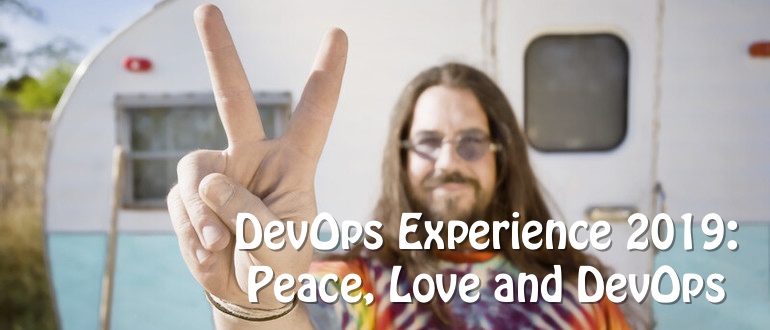
  • DevOps Experience 2019: Peace, Love and DevOps

    DevOps Experience 2019: Peace, Love and DevOps

    DevOps Experience 2019 is coming, and it’s gonna be groovy, man.

    This year’s virtual event is all about peace, love and DevOps understanding, with a heavy emphasis on understanding. As with last year’s event, DevOps Experience 2019, sponsored by devopsy.kinsta.cloud parent company MediaOps, is chock full of information and education for those in the DevOps space, presented in a virtual reality environment. DevOps Experience is a true virtual conference, complete with theaters to view the keynotes and presentations, a conference lobby to chat and socialize and a virtual trade show floor with virtual exhibitor stands equipped with videos, downloads and company representatives on hand to share information.

    And perhaps the greatest thing about DevOps Experience 2019? You don’t have to leave the comfort of your desk.

    DevOps Experience 2019 will feature keynotes from a lineup of DevOps luminaries including:

    • John Willis, CEO & Founder, Botchagalupe Technologies
    • Nicole Forsgren, Research and Strategy, Google Cloud
    • Jayne Groll, CEO, DevOps Institute
    • Gary Gruver, President, Gruver Consulting

    Additional speakers will include Alan Shimel, MediaOps Editor-in-Chief and Founder, devopsy.kinsta.cloud and Security Boulevard; and Chris Miller, Principal Security Program Manager, Veracode. In addition, the event will feature a number of Spotlight Sessions with topics designed to provide even greater value to attendees.

    This daylong virtual event is a great way to mix with others in the DevOps space without the hassle of traveling. It’s also a perfect excuse to wear your Grateful Dead t-shirt to the office.

    DevOps Experience 2019 is scheduled to be held Thursday, Oct. 10 at 10 AM EST, at a computer or mobile device near you. Visit the website for more information or to register for this daylong event. Registration—which is free, by the way—also includes access to the event on-demand.

    So pull on those bell bottoms, weave some flowers into your hair and join us for what’s sure to be an educational DevOps lovefest. Peace.

    — Charlene O’Hanlon

  • DOES London 2019: Better Value, Sooner, Safer, Happier (BVSSH)

    DOES London 2019: Better Value, Sooner, Safer, Happier (BVSSH)

    One of the key themes for this year’s DevOps Enterprise Summit in London was BV-S,S,H. It stands for Better Value, Sooner, Safer, Happier. It gets to the heart of what DevOps is trying to do: Deliver better value, sooner, safer and it results in happier people and organizations. Gene Kim mentioned this several times on stage at DOES London. I had a chance to dive a little deeper into this during my interview with Jon Smart (Deloitte) and Tom Clark (ITV).

    Both Jon and Tom are DOES veterans and I have had the chance to interview them at prior DOES events. Both of these gentlemen are two of the more thoughtful and enlightened people I have had the pleasure to meet through the years in DevOps. They both have great ideas and notions of what has worked and what hasn’t.

    In our discussion on BVSSH, “C” for cheaper also entered into the discussion. We covered some interesting points about how important cheaper is in the BVSSH discussion. Ultimately, cheaper is part of BVSSH–in my mind anyway. Tom may disagree.

    In any event, have a listen to our discussion on this. Below the interview you can find the presentations from Tom and Jon at this year’s DOES London event.


    Hope you enjoyed these great videos. For more information on how you can be at the next DOES event, check out below.

    Don’t forget! DevOps Enterprise Summit Las Vegas 2019 is happening from October 28-30 at The Cosmopolitan Hotel. Be sure to register here if you haven’t already, and join us for a premier event for the technology leaders of large, complex organizations implementing DevOps principles and practices. You can also preview the event by watching presentations from past DevOps Enterprise Summits.

    — Alan Shimel