Category: Infrastructure as Code

  • Raspberry Pi 5: Faster, Better, Stronger — Spendier

    Raspberry Pi 5: Faster, Better, Stronger — Spendier

    Welcome to The Long View—where we peruse the news of the week and strip it to the essentials. Let’s work out what really matters.

    In a cheeky extra post this week: Everyone’s favorite single-board ARM computer, the Raspberry Pi, has a new generation coming soon. Compared to the ’4, RPi5 has double the performance, quadruple the base RAM and far more capable I/O. (more…)

  • Oracle Bill is 5x Client’s Budget ¦ Toyota Out of Space

    Oracle Bill is 5x Client’s Budget ¦ Toyota Out of Space

    Welcome to The Long View—where we peruse the news of the week and strip it to the essentials. Let’s work out what really matters.

    This week: Birmingham looks like the Detroit of the UK—is it Oracle’s fault?
    Plus: Was Toyota’s factory failure caused by running out of disk space? (more…)

  • IBM/Red Hat Sparks Anger at GPL ‘breach’ as RHEL Source Locked Up

    IBM/Red Hat Sparks Anger at GPL ‘breach’ as RHEL Source Locked Up

    Welcome to The Long View—where we peruse the news of the week and strip it to the essentials. Let’s work out what really matters.

    This week: Red Hat Enterprise Linux (RHEL) goes closed source. Well—no, not really; but IBM’s lawyers are accused of skating so close to the edge of legality that they risk violating the GNU Public License. (more…)

  • Google Calls Microsoft Azure Anti-Competitive ¦ Gen-Z Can’t Email

    Google Calls Microsoft Azure Anti-Competitive ¦ Gen-Z Can’t Email

    Welcome to The Long View—where we peruse the news of the week and strip it to the essentials. Let’s work out what really matters.

    This week: Google complains to the FTC about Microsoft market abuses, and new graduates don’t know how to office. (more…)

  • 92% of Devs Use AI, Survey Says ¦ Intel One Mono Font

    92% of Devs Use AI, Survey Says ¦ Intel One Mono Font

    Welcome to The Long View—where we peruse the news of the week and strip it to the essentials. Let’s work out what really matters.

    This week: GitHub touts unbelievable AI stats, and Intel’s beautiful open source typeface. (more…)

  • Quali Update Strengthens Infrastructure Security

    Quali Update Strengthens Infrastructure Security

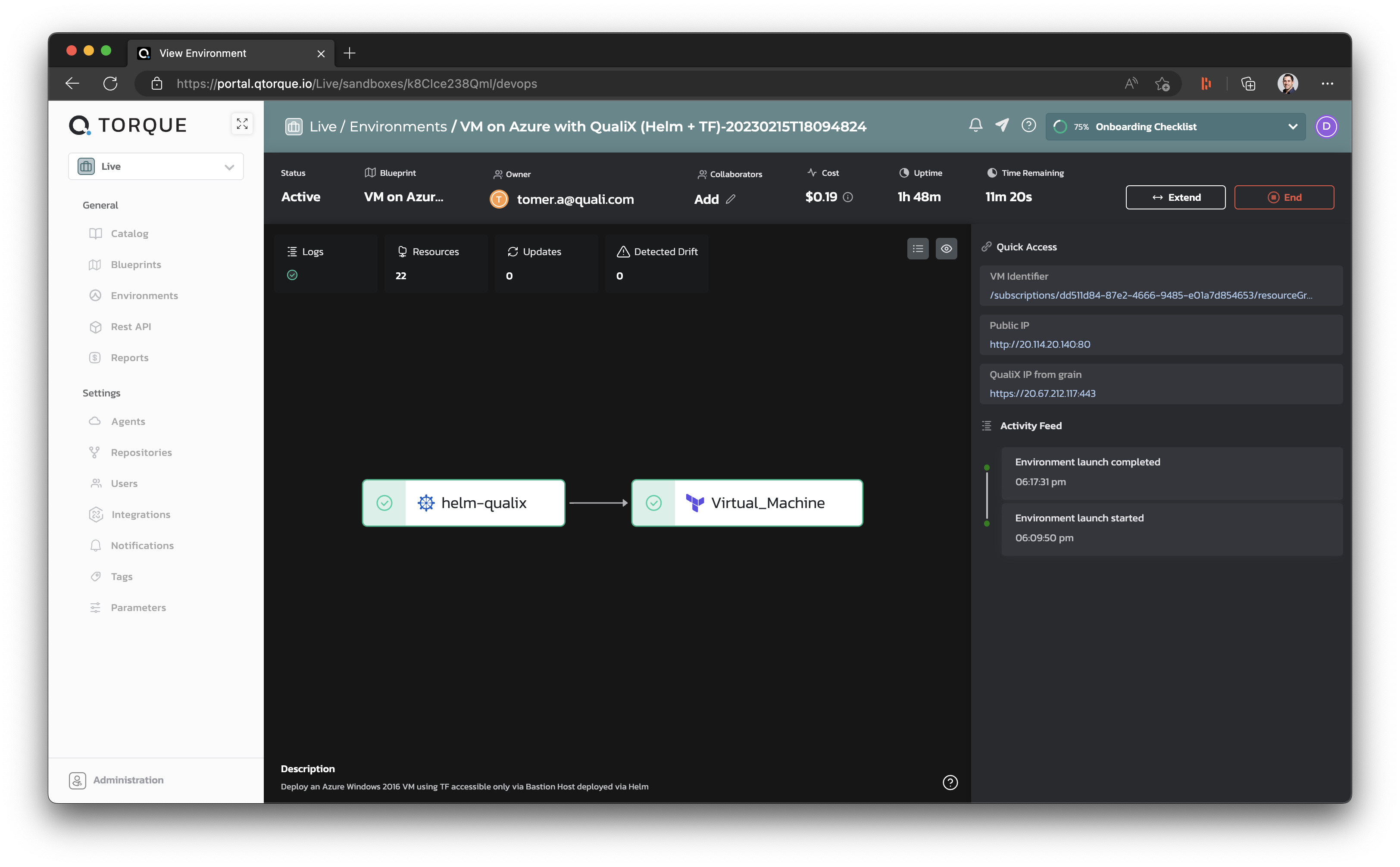
    Quali today announced enhancements to its Torque automated infrastructure platform to add support for security scans and Open Policy Agent (OPA) software being advanced under the auspices of the Cloud Native Computing Foundation (CNCF).

    OPA enables organizations to implement cybersecurity policies as code. The challenge many organizations have encountered is that not many developers have mastered the programming language required to implement OPA. Quali is embedding OPA in a platform that enables IT teams to implement it using a graphical tool that enables central management and application of those policies.

    David Ben Shabat, vice president of research and development at Quali, said the overall goal is to implement scans and policies in a way that reduces the number of misconfigurations that are made when organizations provision infrastructure-as-code (IaC).

    As part of that effort, Torque now flags any policies that fail validation. In addition, administrators can pick and choose which OPA policies to import, including both out-of-the-box and existing custom policies. Those policies then enable Torque to automate approvals or denials of deployments based on compliance with those policies after scans and other health checks have been run.

    Quali has been making a case for policy-based triggers for cost controls, automated start-up, shut down and pausing of IT environments to give IT teams more control over infrastructure using a software-as-a-service (SaaS) platform. That approach enables IT teams to provide a set of guardrails for provisioning infrastructure that prevent mistakes from being made, noted Ben Shabat. Those controls can be applied using the graphical tool Quali provides or programmatically via an application programming interface (API) that Quali exposes, noted Ben Shabat.

    It’s not uncommon for a port to be left open, for example, which cybercriminals later exploit to exfiltrate data. Quali is offering a DevOps platform that allows for central application of policies that act as guardrails to prevent developers from making these types of mistakes as an alternative to scripts created using tools such as Terraform. That approach also provides more visibility into how infrastructure resources are being consumed.

    Every minute a developer spends managing infrastructure is one less minute they could be spending writing code. As application environments become more complex, it is becoming more challenging for developers to manage infrastructure-as-code. The issue is that DevOps teams who could provision infrastructure for developers are overwhelmed by the number of projects they need to manage. As a result, DevOps teams are becoming bottlenecks. Naturally, that only encourages more developers to provision infrastructure on their own, leading to more mistakes.

    It’s not clear whether IT organizations will look for an alternative to provision infrastructure in a way that doesn’t require developers to have as much infrastructure expertise. However, as organizations look to lock down software supply chains, the way infrastructure is provisioned using code will, in many cases, need to be reconsidered within the context of a larger DevSecOps workflow.

  • DevOps, Drought and Climate | Meta❤️PTP

    DevOps, Drought and Climate | Meta❤️PTP

    Welcome to The Long View—where we peruse the news of the week and strip it to the essentials. Let’s work out what really matters.

    This week: Data centers cause climate change, and Meta is rolling out Precision Time Protocol. (more…)

  • Data Centers IN SPAAACE | Discord GDPR Fine | AWS Fires Dead Wood

    Data Centers IN SPAAACE | Discord GDPR Fine | AWS Fires Dead Wood

    Welcome to The Long View—where we peruse the news of the week and strip it to the essentials. Let’s work out what really matters.

    This week: The EU wants to put servers in orbit, a GDPR penalty for Discord, and Amazon has the hatchet out. (more…)

  • Fiberplane Notebook Tool Fosters DevOps Collaboration

    Fiberplane Notebook Tool Fosters DevOps Collaboration

    Fiberplane today announced it is making available a public beta of a namesake real-time collaboration notebook specifically designed for DevOps teams that need to quickly debug IT infrastructure.

    Fiberplane CEO Micha Hernandez van Leuffen said in the wake of the COVID-19 pandemic, it’s clear that the structure of DevOps teams has permanently changed now that more members of those teams work remotely. The challenge is that the tools provided to DevOps teams to manage IT environments were not designed to foster the level of collaboration that is now required, he added.

    Dashboards that were designed in a different era need to be replaced with tools that make it simpler for DevOps teams to collaboratively debug infrastructure in real-time, noted Hernandez van Leuffen.

    The Fiberplane notebook achieves that goal by using the same operational transformation algorithm used in Google Docs to enable teams to easily collaborate around a document or spreadsheet. The core platform itself is built in Rust and WebAssembly (Wasm), which Hernandez van Leuffen said makes it simpler to integrate Fiberplane as a plug-in into an existing DevOps workflow. Inside a Fiberplane Notebook, DevOps teams can, for example, write and run PromQL queries and display Prometheus charts alongside other data presented via an integrated graph.
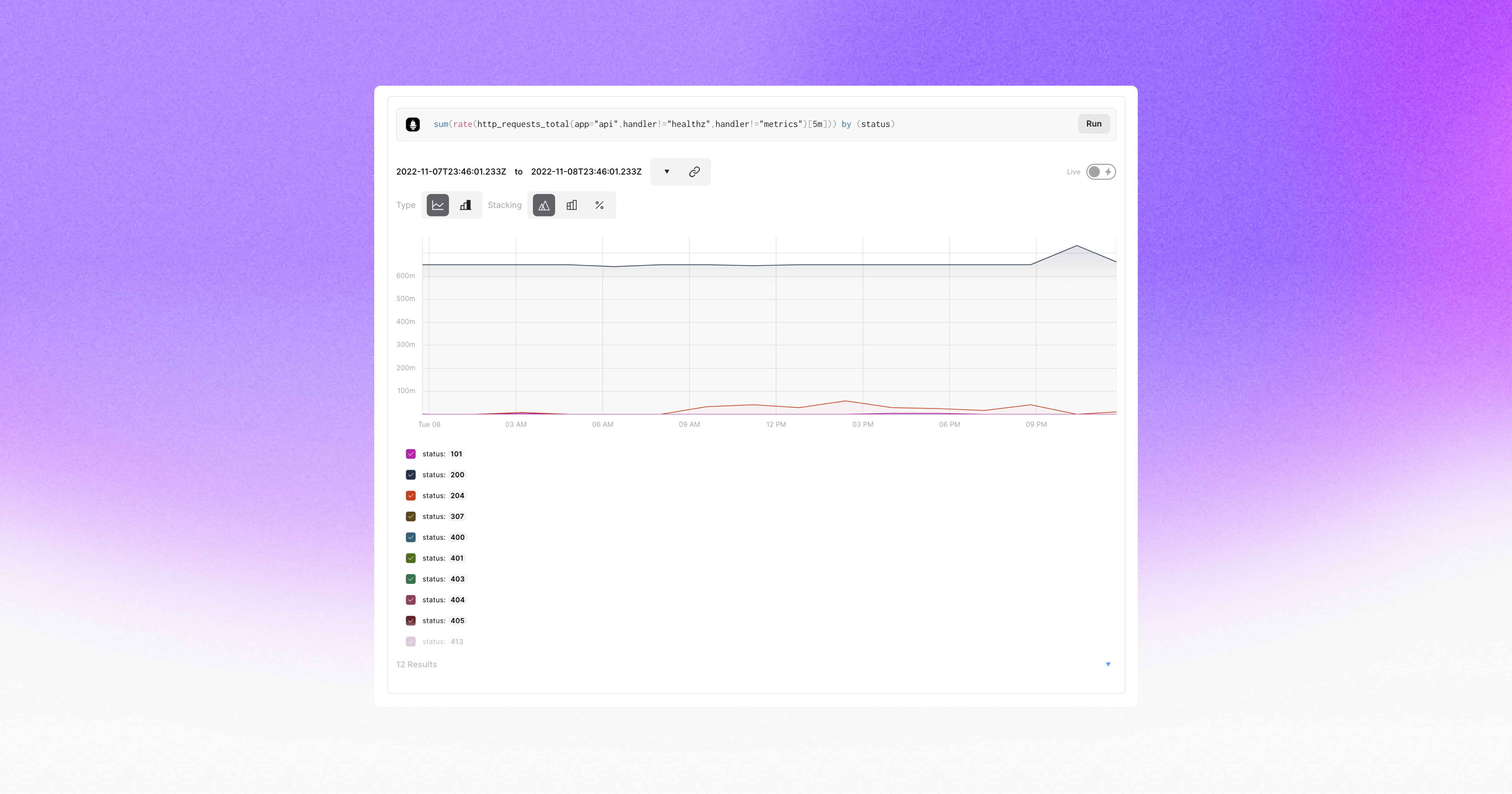
    Fiberplane Notebook’s initial integrations are for Grafana Loki, Elasticsearch and Prometheus monitoring tools. It also exposes both an application programming interface (API) and command line interface (CLI) to automate notebook creation based on specific external events, such as monitoring alerts.

    In effect, Fiberplane is taking the concept of notebooks used for collaboration by data science teams and applying it to DevOps workflows, said Hernandez van Leuffen. The goal is to improve DevOps teams’ productivity by reducing the amount of time it takes to resolve any issue, he added.

    As IT environments become more distributed in the age of the cloud and microservices, troubleshooting issues invariably spans the responsibilities of multiple members of an IT team. Fiberplane, in effect, makes it possible to spin up a virtual war room that enables the members of an IT organization to collaborate until the issue of the moment is resolved.

    The speed at which any IT issue is resolved has become a crucial metric. Given the complexity of IT environments, it’s inevitable that incidents will arise. Ideally, IT teams would discover those issues before they disrupt the business. However, in reality, the metrics organizations use to evaluate the effectiveness of a DevOps team are, unfairly or not, how quickly IT issues are resolved once they are discovered. The longer it takes for a distributed DevOps team to marshal its resources the more likely it becomes that team will be perceived as being inefficient—regardless of what level of application availability is actually achieved.

    Savvy DevOps teams, of course, have implemented a wide range of incident management best practices that create a level of muscle memory for responding to a wide range of issues. The trouble is there will always be unforeseen issues that arise. DevOps teams, as a result, need to find ways to quickly focus on an issue that, for one reason or another, were simply too unpredictable to anticipate; they need to expect the unexpected.