Category: DevOps at IBM

  • Budgeting for DevOps Success

    Budgeting for DevOps Success

    One concept that seems to be universal across all IT departments is the admins lament of “how do I convince my boss that we should spend the money.”  Whether it is security, QA or development tools, technical professionals have a difficult time talking the language of the business to justify the expenditure of always scarce dollars. So why should it be any different with DevOps?

    The good news is that in DevOps unlike some other IT disciplines we can actually show some ROI (sometimes anyway).  Nothing will convince a financial stakeholder that spending money is OK faster than if you can show it will allow the organization to either save money or make more money. But how do you show ROI with DevOps. There is more than one way to skin that cat.

    This coming week I am hosting a webinar that will explore the various ways of showing ROI using DevOps.  We will also be looking at some case studies where ROI was demonstrated successfully. One of these organizations is HM Health Solutions. One of the interesting things in this case is that as a health care related organizations the usual compliance issues such as HIPAA often make things like automation and continuous delivery more complex.

    I will be joined by Valerie Scott, Manager of Shared Services Division, HM Health Solutions who is going to relay first hand what she and her team have done to show their executive team how DevOps delivers a real, tangible and measurable ROI.  Valerie is a seasoned exec and I am sure she will have some great insights.

    In addition to Valerie I will also be joined by Rick Slade of IBM who has lots of experience with different organizations in showing the ROI of DevOps.  I expect this webinar to be very informative.  If you are grappling with how to justify a shift to DevOps in your organization I invite you to join us next Tuesday, June 2nd.

    This webinar is sponsored by IBM. It is the third in the series we are doing on Variable Speed DevOps. Our previous webinars in this series have all been very interesting. You can listen and follow along to those here and here. The series deals with how organizations can do more faster  even though not parts of the stack run at different speeds. It is not how fast they run individually, but how well they work together is the key.

    So join me Tuesday as we discuss DevOps ROI and Variable Speed DevOps.

  • Webinar: Show Me Success Before I’ll Invest in DevOps – A HM Health Solutions Case Study

    Webinar: Show Me Success Before I’ll Invest in DevOps – A HM Health Solutions Case Study

    Whatever your conviction, the reluctance by senior management to justify new investments and sponsor major change in existing software delivery practices and technologies, while theoretically understandable, often leaves application development executives and managers lobbying for additional budget and resources putting them and their teams between a rock and a hard place. So the question is how do you monetize the benefits and measure your DevOps results? Join Valerie Scott, Manager of Shared Services Division at HM Health Solutions, Rick Slade from IBM, and Alan Shimel from devopsy.kinsta.cloud as they discuss the process for quantifying DevOps benefits using metrics your business stakeholder will care about the most. They will walk you through the methodology and share customer case studies that demonstrate the impressive ROI that DevOps is providing to IBM clients worldwide.


    EVENT RECORDED: Tuesday, June 2, 2015

    VIDEO

    https://www.youtube.com/watch?v=J5haNExYZ2o


    SLIDES

    [seoslides embed_id=”f384dfd0ae4e” script_src=”https://devopsy.kinsta.cloud/embed-script/show-me-success-before-ill-invest-in-devops-a-hm-health-solutions-case-study/7686/” overview_src=”https://devopsy.kinsta.cloud/slides/show-me-success-before-ill-invest-in-devops-a-hm-health-solutions-case-study/” site_src=”https://devopsy.kinsta.cloud” site_title=”devopsy.kinsta.cloud” title=”Show Me Success Before I’ll Invest in DevOps – A HM Health Solutions Case Study” /]


    Your Host:

    alan_new_head_shot Alan Shimel, Editor-in-Chief devopsy.kinsta.cloud, An often-cited personality in the security and technology community and a sought-after speaker at industry and government events, Alan has helped build several successful technology companies by combining a strong business background with a deep knowledge of technology.

    About Panelists:

    vScottValerie Scott, Manager of Shared Services Division, HM Health Solutions Strategic planner and IT leader with years of architecture and infrastructure experience in the healthcare insurance industry, Valerie is a key player in the IT Transformation efforts by driving a lean wave of change in the HM software delivery pipeline with DevOps concepts and technology.


    jSlade

    James (Rick) Slade, Executive Solution Architect, BVA, Cost Benefit Analysis, IBM Rick is an Enterprise Solution Architect at IBM and spends his time helping clients design and automate enterprise software development and delivery practices. He is certified as an IBM and Open Group Distinguished IT Specialist.

  • What lane do you travel on the DevOps highway?

    What lane do you travel on the DevOps highway?

    Last week we kicked off our webinar series on Variable Speed DevOps. The discussion was lively and informative. For myself as moderator the webcast was as comfortable as an old pair of slippers. Two of the three panelists, Carme DeArdo of Nationwide and Sanjeev Sharma of IBM are both friends and people I have had the pleasure of appearing with before.  Additionally, Lee Reid, fit right into the discussion, not missing a beat.  You can listen to the recording or view the slides here.

    We discussed Variable Speed IT from many different aspects and how Nationwide has successfully merged onto the DevOps highway.  More than any of the other analogies we spoke about or I have heard, I really like the DevOps highway as a good way to explain Variable Speed IT and Variable Speed DevOps. The notion of multiple lanes with traffic moving at different rates in each lane is a good way to think about Variable Speed IT.

    Of course if only things were that easy. In the variable speed DevOps world the traffic in each lane is directly connected to the traffic in the other lanes.  This is where the expertise of Carmen and the rest of the panel comes into play.  In an organization such as Nationwide (see the first two slides of the deck to get an idea of Nationwide’s scope) coordinating Systems of Records with Systems of Engagements, multiple dev and ops teams and doing it all successfully is orchestration worthy of a maestro.

    Lee and Sanjeev in their positions at IBM have had the chance to work with several organizations like Nationwide so can take lessons learned across an even wider spectrum of experiences.

    All of this added up to a great webinar that I was lucky to be part of in some small way.

    Our deep dive into Variable Speed DevOps continues on May 19th with the Canada Mortgage Housing Corporation explaining how they were able to break down IT silos and in both their mainframe environments (yes even mainframes) and others. You can find out more about this one and register here: https://devopsy.kinsta.cloud/blogs/variable-speed-ibm2/?S_Tact=C34701GW.

    Variable Speed DevOps, 2-Speed IT, Bi-Modal IT – we are seeing lots of different terms to describe a common fact pattern.  We think this series of webinars will explore many of the facets of this subject.

    In them meantime we are off to a fantastic start with our first in this series. I really encourage you to go have a listen.  Many thanks to Carmen DeArdo, Sanjeev Sharma and Lee Reid for kicking us off with a great webinar.

  • Webinar: Canada Mortgage Housing Corporation breaks down IT silos and speeds up mainframe development

    Webinar: Canada Mortgage Housing Corporation breaks down IT silos and speeds up mainframe development

    DevOps encourages adoption of lean and agile development practices irrespective of platforms. However in most organizations mainframe and mobile/web development teams are functioning in siloes, resulting in a plethora of technology platforms and tools, fragmented or manual processes, skills shortage causing unnecessary delays, rework and friction among teams, impacting organizations ability to respond to the business needs.

    Join Jeff Blackadar, Application Development Manager at Canada Mortgage and Housing Corporation, Alan Shimel and IBM experts as they explore the various DevOps strategies, practices and solutions to increase collaboration, streamline processes and leverage modern tooling to attract next generation of mainframe developers to speed mainframe application development and maintenance.


    Event recorded Wednesday April 22nd, 2015

    VIDEO

    SLIDES

    [seoslides embed_id=”24772d7de05d” script_src=”https://devopsy.kinsta.cloud/embed-script/variable-speed-devops-ibm-chmc/6919/” overview_src=”https://devopsy.kinsta.cloud/slides/variable-speed-devops-ibm-chmc/” site_src=”https://devopsy.kinsta.cloud” site_title=”devopsy.kinsta.cloud” title=”Variable Speed DevOps-IBM-CHMC” /]


    Your Host:

    alan_new_head_shot Alan Shimel, Editor-in-Chief devopsy.kinsta.cloud, An often-cited personality in the security and technology community and a sought-after speaker at industry and government events, Alan has helped build several successful technology companies by combining a strong business background with a deep knowledge of technology.


    About Panelists:

    jeffJeff Blackadar, Application Development Manager, Canada Mortgage and Housing Corporation

    A veteran at application development, Jeff leads a team that programs COBOL, VB.Net, Java and Enterprise Generation Language applications. He is dedicated towards implementing and upgrading of tools and practices to improve productivity and reduce the risks of making changes to mission critical mainframe applications.

    venkjatVenkat Balabhadrapatruni, Senior Technical Staff Member, Chief Architect, Enterprise Modernization, IBM

    Powered by extensive knowledge of z Systems, software design, development, delivery and enterprise modernization, Venkat is responsible for technical architecture and direction of Rational Developer for System z (RDz) and understanding requirements, emerging technologies, market trends and translating them into a technical strategy

  • Variable Speed DevOps: A Deep Dive

    Variable Speed DevOps: A Deep Dive

    About 2 months ago I wrote an article on “Variable Speed DevOps“.  To be clear I first heard the term used by Carmen DeArdo, Director of Application Development at Nationwide.  It was a response or play on the 2 Speed IT dilemma. In 2 Speed IT, emerging digital processes coexist with traditional ones. The implication is that the “traditional” processes can’t run at the speed of the emerging digital ones (even older digital can’t run at the speed of newer digital processes). But the question is do they have to?

    According to Carmen and other folks I have spoken to, the key is not making processes run faster than they are intended to. It is blending all of the different processes and the speeds they run at to mesh together into one finely tuned machine. Like the different size gears within a Swiss watch, perfectly tuned to keep the correct time down to the millisecond. Variable Speed DevOps is about the fine tuning of an organizations IT machine to make all of the different size and speed gears work flawlessly.

    Of course this could be much easier said than done. Carmen has spoken about Nationwide’s journey in this regard. I have also had the pleasure of participating in a Google Hangout with Carmen, Sanjeev Sharma and Rosalind Radcliffe of IBM where we discussed this concept as well.

    The notion of Variable Speed DevOps existing in Enterprises with traditional Systems of record, co-existing side by side with new Systems of engagement and code is destined to be as dominant in the world of DevOps within enterprises as Hybrid Cloud is going to be the dominant form of Cloud.

    I believe that the idea of Variable Speed DevOps deserves a deeper look. There is much that we can learn and share by delving deeper into the concept and hearing from experts who are on the front lines of Variable Speed DevOps.  To do this we are teaming up with our friends at IBM to peel back layers of Variable Speed DevOps and show you how you can bring it to your organization.

    We will be kicking of our deep dive into Variable Speed DevOps with a series of webinars, the first of which we are announcing today. I will personally be hosting these webinars. What better place to start our deep dive than with Carmen DeArdo and Sanjeev Sharma. We will feature other guests in future webcasts.

    Part 1: May 5 – How Nationwide Insurance is adopting DevOps for variable speed IT systems
    In the May 5th webinar, we will focus on the ongoing transformational journey at Nationwide Insurance and lessons learned. (Replay available)

    Part 2: May 19 – Canada Mortgage Housing Corporation breaks down IT silos and speeds up mainframe development
    In the May 19 webinar, we will focus on lessons learned at the Canada’s national housing agency in their DevOps and Agile transformation. (Replay available)

    Part 3: June 2 – Show Me Success Before I’ll Invest in DevOps – A HM Health Solutions Case Study
    On June 2 we will discuss the process for quantifying DevOps benefits for your business stakeholder. (Replay available)

    Part 4: June 25 – Build, test and deploy mobile apps with back-end mainframe services securely in a hybrid cloud
    On June 25 we will look into synchronizing mainframe, mobile and hybrid cloud to support end-to-end mobile development. (Replay available)

    Besides the webinars, we will also feature articles and other content related to the topic.  We will build up this new section of our site over the coming weeks, so stay tuned.  But wait there is more. We want to hear from you! What is your view on Variable Speed DevOps? Do you have any lessons or thoughts on the subject? If so you can write me personally at editor@devops.com.  I would love to hear from you. We can have you write your own post on this, we could interview you for a future article or maybe you could be a guest on a future webcast.

    Variable Speed DevOps is going to be important in your DevOps Journey.  Join us on May 5th to hear from Nationwide Insurance and stay tuned for additional client stories on this topic.

  • Webinar:  How Nationwide Insurance is Adopting DevOps for Variable Speed IT Systems

    Webinar: How Nationwide Insurance is Adopting DevOps for Variable Speed IT Systems

    To drive towards faster innovation, and also ensure the stability of the core business, the need arises for what is being termed as “two-speed or variable speed IT.” While innovative Systems of Engagement demand speed, agility and experimentation, legacy Systems of Record need governance and predictability. Two-speed IT enables adoption of DevOps capabilities by adapting them to the “speed” of delivery. It requires two-speed business planning and processes and even two-speed organizational structure and budgeting. Join Carmen DeArdo, Director of Application Development at Nationwide Insurance, Sanjeev Sharma, lead DevOps Technical Evangelist at IBM, and Lee Reid, executive IT specialist as they show how IBM’s solution is helping Nationwide adopt DevOps practices for variable speed IT systems.

    This webinar is the first in the Variable Speed DevOps – A Deep Dive series.

    Event recorded Tuesday May 5th, 2015

    SLIDES

    [seoslides embed_id=”be17733a1254″ script_src=”https://devopsy.kinsta.cloud/embed-script/webinar-how-nationwide-insurance-is-adopting-devops-for-variable-speed-it-systems/6643/” overview_src=”https://devopsy.kinsta.cloud/slides/webinar-how-nationwide-insurance-is-adopting-devops-for-variable-speed-it-systems/” site_src=”https://devopsy.kinsta.cloud” site_title=”devopsy.kinsta.cloud” title=”Webinar: How Nationwide Insurance is Adopting DevOps for Variable-Speed IT Systems” /]

    VIDEO


    Your Host:

    alan_new_head_shot Alan Shimel, Editor-in-Chief devopsy.kinsta.cloud, An often-cited personality in the security and technology community and a sought-after speaker at industry and government events, Alan has helped build several successful technology companies by combining a strong business background with a deep knowledge of technology.


    About Panelists:


     Carmen-Deangelo-300x225Carmen DeArdo, Nationwide – Director – Tools and Technology Leader

    Carmen DeArdo, Director – Tools and Technology Leader, Nationwide Insurance, An ardent advocate of DevOps and a leading speaker in the DevOps and technology related events, Carmen is responsible for driving continuous delivery utilizing DevOps, Lean and Agile techniques across Mobile, Distributed and Mainframe and other technologies.  


    Sanjeev Sharsanjeev-sharmama, IBM Worldwide Lead – DevOps Technical
    Sales and Adoption, IBM Cloud Unit

    Sanjeev Sharma, IBM Worldwide Lead – DevOps Technical Sales and Adoption, IBM Cloud Unit, is a 20-year veteran of the software industry with expertise in DevOps, Mobile Development and UX, Lean and Agile Transformation, Application Lifecycle Management and Software Supply Chains. He is a DevOps Thought Leader at IBM and speaks regularly at conferences. He has written several papers and is the author of the DevOps for Dummies book.


    leeLee Reid, IBM – Senior IT Specialist

    Lee Reid, Senior IT Specialist, IBM, is a senior solution architect with focus on practical adoption of software engineering tools, software delivery solutions, application life cycle management, and DevOps. He has over 25 years of experience in software engineering, design, programming, testing, development, tools & methodology, team leadership, and strategic planning.

  • Shift Left: Can you be left out?

    Shift Left: Can you be left out?

    One of the most popular terms bandied about in DevOps is “shift left”.  I was at a workshop last month at IBM InterConnect conducted by Sanjeev Sharma and Mustafa Kapadia. They put on a great workshop which was a preview of an exercise they perform in the field for clients.  A central theme of their talk was the idea of shifting left to address issues earlier in the development process.

    iBM, Sanjeev and Mustafa (both of whom write here on devopsy.kinsta.cloud) are not the first or only people who speak about shifting left in DevOps.  Derek Weeks of Sonatype wrote a blog post about it back in September of 2013. Almost a year to the day later, Dibbie Edwards of IBM (and the focus of a good article by George Hulme) wrote a good article about shifting left with continuous testing. Andrew Storms wrote a post here on devopsy.kinsta.cloud some months back about shifting security left in DevOps.  Indeed shift left is generally regarded as a basic foundation of DevOps.

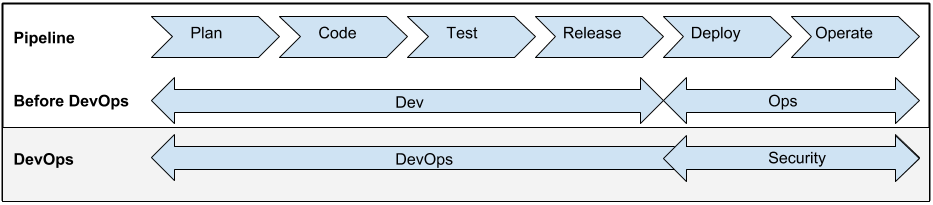
    Before we dive into what this means to you, we should make sure that we all understand what shift left really means.  For me looking at a standard flow of the development/deployment process is the best illustration of this. I think Andrew Storms used a good one in his article, so let’s repurpose it here:

    left 1

    Pay no attention for now to the before DevOps or DevOps rays for now.  Take a look at the top line which is the pipeline.  You can see the flow of an app from plan to code and all the way to operate.  The flow runs from left to right.  At its simplest shift left moves tasks further left.  Security, continuous testing, continuous integration, continuous delivery are all shifted left.

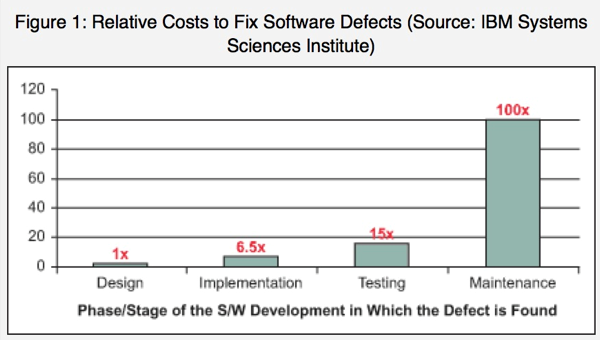
    In doing so potential issues are addressed earlier in the lifecycle. What is this a good thing?  A chart from Dibbie Edwards article gives us the obvious answer:

    left2

    As can be seen the earlier you can get to issues, the cheaper it is too fix them.  That alone is a reason to shift left.  But also concepts such as addressing security issues before it effects your customers is appealing. The same can be said for many other functions you can shift left.

    For me though the question is by shifting everything left, do we just wind up with a big pile at the very left?  How do we prioritize all of these left shifted functions?  You can only shift left so far before you come to the beginning of the time line. This is not the birth of the Universe where you had a big bang which defies the laws of physics.

    At some point can you shift too much left? This is a question I am going to pose to Sanjeev and Mustafa. I also pose it to you the reading audience.

    I recognize that the concept of shifting left is not so efficient that everything that can be shifted is in fact shifted left.  But as we get more efficient, more and more tasks are left shifted in the process. At what point do we reach the point of diminishing returns?

    How do you feel about this? Can we shift too much left? I am interested in some of the different views on this. I am a big proponent of shifting security left, but are there other priorities?

    Let us know your feedback.

  • IBM’s DevOps Journey

    IBM’s DevOps Journey

    Companies that want to better address market demand and more efficiently deliver value through speed, quality, and agility are embracing DevOps. This includes retailers, insurers, defense contractors, and most certainly software makers.

    Consider the DevOps journey within the IBM Software Group, which is unarguably larger than most enterprise software groups: currently 519 major software product titles, 36,000 software engineers, 116,000 virtual machines supporting development and testing, and 44,000 physical servers. “This is DevOps at scale,” said Matt Ellis, vice president mobile and cloud DevOps at IBM, recently at InterConnect 2015.

    Getting teams and processes of that size – while cutting waste associated with outdated ways and duplicate toolsets – is no easy feat. But if it can be done, the benefits are substantial. For IBM, the efforts do appear to be paying off – if the results recently shared over the past six months at the DevOps Enterprise Summit 2014 and the IBM InterConnect 2015 conferences are any indication.

    According to Dibbie Edwards, VP DevOps for hybrid, continuous engineering and application lifecycle management development at IBM, IBM has gone from spending about 58% of its development resources on innovation to about 80%.

    What did that shift in focus do to IBM’s time frame? In 2008, IBM’s time to project initiation took 30 days. That was reduced to between two and three days in 2014. Groomed backlog was reduced from 90 days to one day and sprint test times from five days in 2008 to 14 hours today. Overall time to development went from 120 days to three, with time between releases reduced to three months from 12.

    “IBM is seeing the value of DevOps, and as you heard themes through each one of those sessions, it’s really about speed,” said Edwards at the DevOps Enterprise summit this past fall. Speed has always been important, to be sure, but with the rise of cloud, analytics, mobile, and social, it’s become more important now than ever.

    How did IBM begin its DevOps journey?

    According to Edwards, it was systematic. The teams examined the work they were doing: all of their processes – from how they worked with their business stakeholders to how they were working with clients – and eliminated all of the inhibitors and friction points. It hasn’t been a swift journey – a couple of years – but it has been a meticulous one.

    According to Edwards, during her talk at the DevOps Enterprise Summit 2014, Real-life Experiences Leading Large Organizational Transformation at IBM, the software group focused on uncovering every manual process that it could – things such as how the tests were being created, building more efficient testing tools, and building a page object framework in selenium that its developers could leverage. “That framework itself has allowed us to more than double the number of automated test cases that we have,” she said. “That very significant ability gave us the option to do our function verification testing alongside our development.”

    With manual inefficiencies identified and senior leadership agreement to prioritize how processes would be improved and how much will be invested on clearing technical debt, the IBM Software Group then had a foundation on which it could build development processes based on DevOps principles and current business objectives. “We proceeded to build a groomed backlog based on those business priorities and on the size of the development work,” Edwards said. “And if the teams came up against work that they didn’t understand, they would run an exploration phase within their sprint to better understand what needed to be implemented.”

    With that groomed backlog in place, IBM could then make more informed decisions at the end of each development sprint – and even pivot, if needed. “If we had a customer need or a business change where we need to shift the focus of the individual teams, we had the flexibility to do that,” she said.

    That ability to pivot had been a big benefit for the IBM Software Group. “I recall just how many times we would just churn over these decisions and remake them and make them again,” she said.

    Continuous Testing Automation

    The culture at IBM has moved to full automation ahead: everything should be automated, and it’s an exception if it isn’t. “I think this is so critical. I saw a real shift in our team as it started to see the value of this and recognized that doing things manually just was not acceptable and really not sustainable, given the level of speed that we were trying to achieve,” says Ellis.

    Previously, IBM completed testing in following sprints, because testing teams just could not keep up. Getting to this point was an effort that took focus on continuous improvement. “One thing I always share with the team is how critical learning at the end of each one of our sprints is. And then planning for the next sprint to eliminate the friction points and the areas where we were less efficient than we should have been,” she said.

    Finally, IBM automated the testing of its more complex customer usage scenarios. “It literally used to take my team 30 hours to set up an environment to do the testing because we did everything manually,” she said. “We would have to set it up, break it down, and reset it up, because we had all the different databases configurations. By using patterns and automation, we were now able to deploy automatically within three hours.”

  • Reverse Executive Sponsorship: Gaining grassroots DevOps momentum

    Reverse Executive Sponsorship: Gaining grassroots DevOps momentum

    As IT practitioners investigate the possibilities around DevOps and Agile transformations, one of the things they’re likely to hear over and over again is that these type of organizational tectonic shifts require executive sponsorship to truly succeed. But in the real world, garnering that support is hardly as easy as just picking up a phone and asking. Last week at IBM InterConnect in a panel featuring a number large enterprises, DevOps practitioners talked about the challenges of building DevOps momentum when the executives don’t initially buy into the prospect.

    “We’ve done this in three different organizations, and I’ve never had executive support—not until I’m considered ‘safe,’ and then they give it,” said Chris Nowak, senior vice president of DevOps for Bank of America. “We’ve done it grass roots every single time. You have to build your own legitimacy.”

    John Karnes at Silverpop shared a similar experience. Prior to the marketing firm’s acquisition by IBM, his team started its DevOps journey.

    “We had to build our own excitement our own momentum around what we were doing,” explained Karnes, who is director of production operations and performance engineering for Silverpop.

    As Nowack put it, DevOps people are internal salespeople and the product is faster delivery and more capacity for innovation. He believes that in order to sell the executives, technology departments need to collect metrics early and often.

    “You want to be able to prove what you’re doing, so from the beginning if you can baseline, get some metrics out there,” he says, explaining that his team was eventually able to show as much as ten-times operational speed as a result of its DevOps patterns.

    Karnes said that one of the keys to gaining momentum was communicating and playing up milestones throughout the organization. Being in the marketing world, one of biggest metrics for the business was uptime. Before its transformation, Silverpop was running three to four releases a year with about 8 hours of downtime each. Nowadays, that’s down to about 20 minutes of downtime per year. Through internal campaigning, he was able to show along the way what a difference DevOps was making for the business.

    “As we started getting releases more consistent, with fewer errors and faster, we’d have an internal email distribution list that we’d send out all of our release notifications to and I’d say ‘Hey we set a new record!’” he explained. “After about a year or so, we’d have executives come in and say, ‘Hey, how’s this release going to go? Are we going to break a new record?’”

    In addition, Valerie Scott, manager of application management services for HM Health Solutions added that gaining sponsorship required learning the language that appealed to executives.

    “”We were going through a transition in our company and we had new executives coming in and the old staff was used to us communicating with them at the technical level. I was getting nowhere and it was very frustrating,” she said. “Then I learned the word ‘investment.’”

    Meanwhile, Curtis Yanko, architecture manager for the DevOps Center of Excellence at Cigna explained that sometimes employees can be some of the best champions for DevOps to executives up the food chain.

    “We can talk about how much of our portfolio spend is being wasted and how much is being reclaimed into productivity versus rework or idle time—those are great conversations but I made  a promise to my senior leadership,” he said. “We do an annual internal survey with how happy you are at your job and I said ‘I am guaranteeing we will watch this going up.’”

    As he put it, individual people who once had seemingly unlovable positions—such as managing the ETL—were all of a sudden excited to be working at Cigna.

    “People like that go out and champion for me,” he said.

  • DevOps is Agile for the Rest of the Company

    DevOps is Agile for the Rest of the Company

    IBM held its InterConnect 2015 conference last week in Las Vegas. The event covered on a range of topics including hybrid cloud, mobile apps, and DevOps. One session I attended focused on Agile development and the parallels to DevOps were apparent.

    The session I attended at the Mandalay Bay Hotel was titled “How a Major Telco Improved Cycle Time and Business Results by Leveraging Agile”. Elliot Olschwang and Claudio Cozzi—both IBM employees—talked about helping a specific customer reach its goals by introducing Agile development principles. What struck me throughout the presentation were the many ways that the concepts the two talked about implementing at a developer level for this customer are very similar to the concepts companies must embrace on an organizational level to make the transition to DevOps.

    Rosalind Radcliffe actually deserves credit for pointing out the similarities to me. When I spoke to her a few weeks ago she told me that DevOps is just the Agile principle taken to the full enterprise. It provides a more comprehensive end-to-end perspective that enables enterprise-scale transformation.

    Agile development was an evolution from the Waterfall method. The Waterfall methods treats project analysis, design, coding and testing as separate and distinct phases that have to occur in order. There are many inherent problems with Waterfall, such as the fact that you don’t actually develop code until half way through the project. Testing would often be cut in the interest of time, and even if testing is done it’s actually too late. Any issues identified in testing mean you have to go back at least to the coding phase again—possibly back to design or even analysis.

    Agile removed the linear dependencies of Waterfall to enable development to occur more effectively and efficiently. Aside from imposing a more efficient workflow in general, Agile improves quality because testing occurs earlier in the process and more frequently throughout the process. Subsequently the risk to the project is reduced because there is continuous feedback that enables developers to adjust on the fly rather than having to go back to the proverbial drawing board at the end of the project lifecycle.

    DevOps is just a natural extension of Agile. It takes the guiding principles and best practices that Agile brought to developers and applies them on a much broader scale across the organization. As I pointed out in a previous article from IBM InterConnect, “Removing some of the friction between different groups and enabling the organization to function more effectively is one of the primary benefits of DevOps.”

    Part of DevOps is to streamline by automating those things that can be automated. Allowing tools to perform tasks so that other resources—namely the human beings—can provide greater value by performing less mundane work.

    The other part of DevOps, though, is a culture shift. It’s a change in the ruling philosophy of the organization that erases traditional barriers between departments and processes and enables everyone to function more efficiently without unnecessary overhead or “red tape”.

    That second part is where the principles of Agile development come into play. Implementing continuous monitoring for continuous feedback that leads to continuous improvement rather than staying mired in a linear flow that creates hurdles and roadblocks and results in resources sitting idle waiting for other teams to complete a task before the next task can begin.

    DevOps is hot now, but eventually it will mature and evolve into something else just like Agile has. It will be interesting to see in a few years how organizations that have embraced DevOps begin to take it to a whole new level.