Category: Blogs

  • Copado Acquires Qentinel to Gain AI Testing Tools

    Copado Acquires Qentinel to Gain AI Testing Tools

    Copado has acquired Qentinel as part of an effort to incorporate AI-infused application testing within a DevOps platform and build applications using low-code tools across multiple software-as-a-service (SaaS) platforms.

    The Copado continuous integration/continuous delivery (CI/CD) platform was originally created to accelerate the development of low-code applications on top of the Salesforce platform. Now, however, Copado is expanding the scope of its DevOps reach to include other SaaS platforms.

    Andrew Leigh, chief marketing officer for Copado, said as organizations increase the number of SaaS platforms they employ in the wake of the COVID-19 pandemic, it quickly became apparent there would soon be a need to build applications that enable organizations to unify business processes spanning multiple SaaS applications.

    As part of that effort, Copado’s acquisition of Qentinel aims to advance that goal by making it simpler for both developers and end users to participate in the application testing process, Leigh said.

    Qentinel is accessed mainly via the cloud to automate the creation of application tests. Rechristened Copado Robotic Testing, the core of the Qentinel platform is based on the open source Robot Framework that understands scripts, executes them and generates logs and reports. A set of built-in libraries comes packaged with Robot Framework and addresses a wide range of testing scenarios. Qentinel customers include Brunswick, Elisa and Konecranes.

    Copado AI testing

    Gartner is forecasting that, by 2024, 75% of large enterprises will be using AI-enabled test automation tools to advance continuous testing across different stages of the DevOps life cycle. Much of the interest in AI-infused application testing tools is being driven by necessity as the pace of low-code application development exceeds the pace at which manual testing processes can work. As application testing becomes a bottleneck, organizations will naturally look toward automation platforms that employ machine learning algorithms capable of testing applications at scale.

    It’s not clear to what degree those platforms might eliminate the need for humans to test applications. The expectation is humans will be able to test application functionality at a deeper level versus, for example, merely checking to see if compliance mandates have been met. Many smaller organizations building low-code applications don’t have any meaningful application testing capabilities at all. Testing platforms infused with AI will prove to be especially crucial for citizen developers that require guidance to build a secure application that can actually scale, noted Leigh. The more SaaS application environments those applications span, the more critical testing becomes, added Leigh.

    One way or another AI is coming to application testing. After all, machine learning algorithms don’t ever need to take a day off or suddenly leave to take a better offer elsewhere. In fact, soon, most organizations soon won’t even consider a test automation platform that doesn’t have AI capabilities as they attempt to reduce the level of manual, monotonous and repetitive testing tasks. It may take a while for everyone to gain confidence in the algorithms, but it’s now more a question of the degree to which AI will be employed rather than if.

  • BMC Extends DevOps Reach from the Mainframe

    BMC Extends DevOps Reach from the Mainframe

    BMC today announced it has extended its DevOps platform for mainframe environments to provide integrations with GitHub Actions, a framework for managing workflows, and HCL Launch, a continuous delivery platform from HCL Software. BMC gained the DevOps platform with the acquisition of Compuware in June 2020.

    John McKenny, senior vice president and general manager for intelligent Z optimization and transformation at BMC, said those integrations—along with existing support for DevOps platforms such as Jenkins, GitLab and VS Code—make it possible to accelerate the development of applications that include mainframes as part of a larger distributed computing environment. DevOps teams, for example, can now employ an HCL Launch plug-in for the BMC AMI DevOps for Db2 tool to automatically capture and propagate database changes across IBM Db2 databases.

    At the same time, BMC also enhanced a BMC AMI Ops Monitor for Java Environments that automatically discovers all Java virtual machines (JVMs) running on z/OS environments on a mainframe. The BMC AMI Ops Monitor for Java Environments now includes the ability to discover the application programming interfaces (APIs) and services invoked by those JVMs.

    BMC also revealed today that its Workflow WiZard tool has been accepted as part of the open source Zowe initiative launched by the Open Mainframe Project. The Workflow WiZard makes it easier to install, configure and maintain software installed on mainframes running z/OS.

    Finally, BMC revealed it has extended its privileged access management (PAM) tools by enhancing the supervisor call screener and Unix System Service (USS) data enrichment capabilities of BMC AMI Security software. Based on technology BMC gained with the acquisition of RSM Partners, this enhancement increases the level of protection BMC AMI Security software provides to thwart attacks by surfacing suspicious activity, such as from malicious insiders that may have compromised administrator credentials, said McKenny.

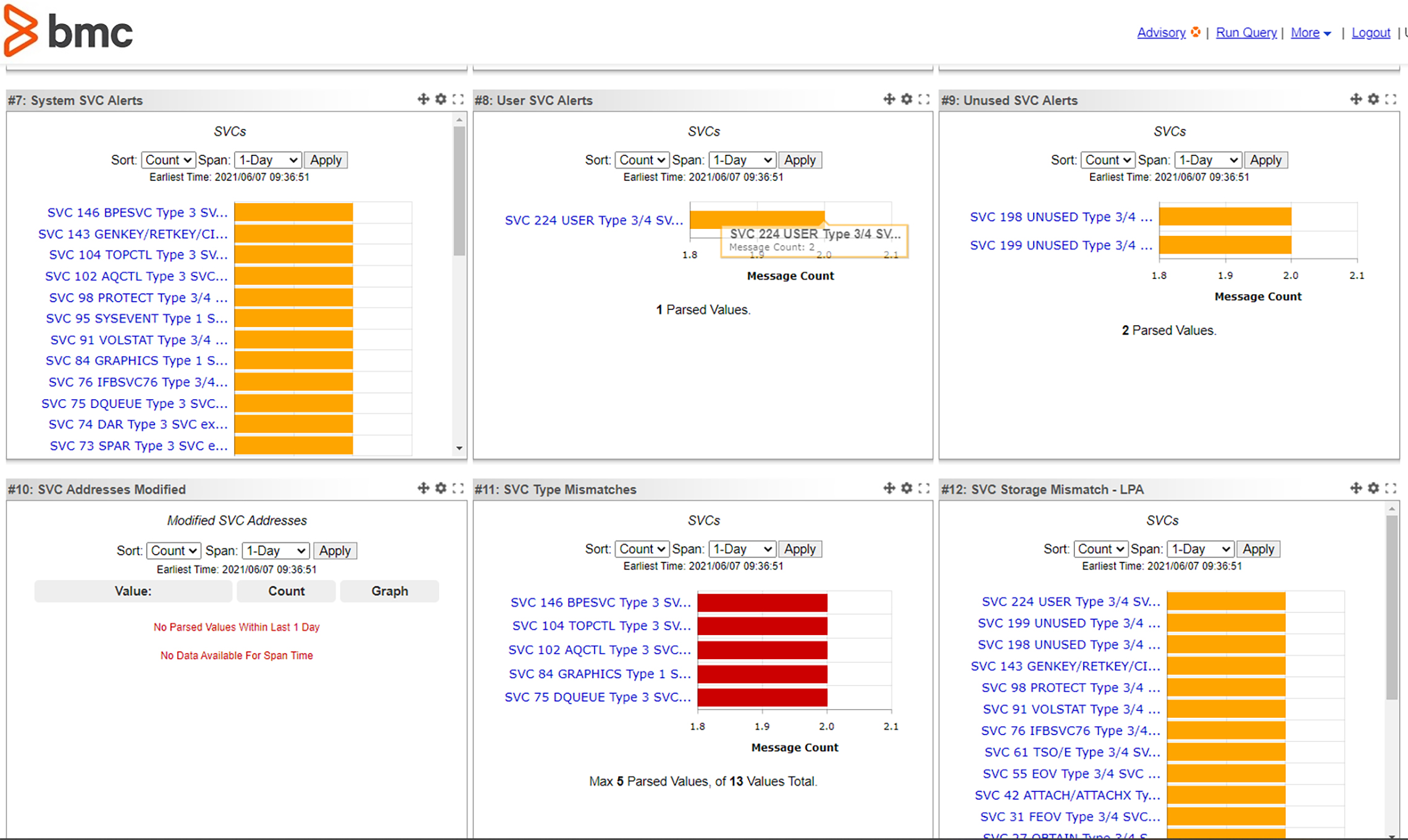
    BMC mainframe

    These days, McKenny noted, everything is under attack because the minute cybercriminals discover a way to compromise one platform, they almost immediately try to apply that same technique against other platforms. Mainframe environments, which tend to process an organization’s most valuable data, naturally are a high-value target, added McKenny.

    In general, McKenny said IT organizations that rely on mainframes continue to make steady progress toward embracing DevOps best practices. A recent survey conducted by Forrester on behalf of BMC found 80% of respondents said their mainframe development tools needed significant improvement to provide more value.

    The need to accelerate digital transformation initiatives, which typically require access to data that resides on mainframes, are, in many cases, forcing the DevOps issue within many organizations. Software development teams that build mainframe applications are almost always required to create APIs that make it easier for other applications to consume that data.

    Not every organization, of course, has a mainframe. However, as digital business transformation continues to evolve, the number of applications that need to consume mainframe data will steadily increase. The challenge facing mainframe application management teams is finding a way to provide that access without using traditional waterfall processes to build the required APIs.

  • 8 Security Considerations for CI/CD

    8 Security Considerations for CI/CD

    In the software development enterprise, CI/CD refers to the combined practices of continuous integration and either continuous delivery or continuous deployment. CI/CD enables organizations to bridge the gap between development, operation activities and teams by the use of automation when building, testing and deploying applications. 

    How do you maintain quality and security with frequent deployments? While CI/CD can improve the efficiency of an organization, there are many security considerations to take into account.

    To gain insights on the top security considerations for CI/CD, I asked the speakers and sponsors for the upcoming SKILup Day as well as several DevOps Institute Ambassadors for their thoughts. Here’s what they had to say in part one of this two-part series:

    Speaker, Grant Fritchey, Product Advocate, Redgate Software

    “There are a lot of security considerations when it comes to CI/CD. As a person focused on data and data management, I’m going to say that the top security consideration is ensuring that you have compliant data for your non-production environments. Just the sheer number of people who will have access to the information means that you have a huge number of possible vectors for a breach if you’re exposing protected information.”

    Speaker, Anders Wallgren, VP of Technology Strategy, CloudBees

    “Secure your software delivery pipelines themselves, not just the software that you deliver with those pipelines. Everyone should have only the level of access they require in order to perform their role.

    Maintain a Software Bill of Materials (SBOM) so you know what you have in production. When a new vulnerability is disclosed, you will have a much easier time deciding whether and how to mitigate it if you don’t have to chase down what you have in production. Your orchestration software should do the lion’s share of the work here.”

    Tracy Ragan, CEO and co-founder, DeployHub

    “CI/CD tools are driven mainly by one-off scripts. There is absolutely nothing secure about one-off scripts. From build through deploy, we need to start thinking of implementing automation and policy-driven tools and dump the one-off scripts.”

    Tiffany Jachja, Technical Evangelist, Harness

    “Supply chain management is a major security consideration for CI/CD. If an entity gains access to a CI/CD resource or component that they shouldn’t, this can lead to vulnerabilities, downtime or even malicious code. For example, in the SolarWinds hack of 2020, attackers legitimized their software malware by injecting it into the SolarWinds build process. This build pipeline produced trusted software artifacts and obtained digital certifications before being released to over 18,000 customers worldwide. After the hack, SolarWinds took action, further restricting access to its build environment and reviewing its build process, but not before it was too late. It’s not only about automating developer and operations workflows but also how we treat and handle CI/CD pipelines.”

    Jamal Walsh, Technical Product Owner, The Very Group

    “You must make sure you implement security tooling within your pipeline; it’s not enough to just use CI/CD to build and deploy applications. Steps in your pipeline should include security testing tools like SAST, DAST, dependency checks, etc.”

    Martin Chan, System Analyst, Global Executive Consultants Ltd. 

    “The most important thing is to define the access control list and rules to control the access in the CI/CD pipeline so that the audit log can easily trace issues. Also, the system should require authentication and define password policies for all users.”

    Bryan Finster, Software Engineer, DoD Platform One

    “Security must be automated as part of the pipeline. Just like any other quality gate, the pipeline must be the single source of truth for security. Any manual process after code is committed increases the effort to deliver. Increased effort increases the size of each change. Larger changes are harder to check for quality and fail more spectacularly. Manual security is just security theater and is easily bypassed or forgotten. That effort is better spent improving the ability of the pipeline to use security as-a-service.”

    Dheeraj Nayal, Global Community Ambassador, DevOps Institute

    “Follow the three security best practices for CI/CD. We usually divide security practices into three parts that you can address with different kinds of solutions. These are:

    1. Secure pipeline configuration
    2. Code and Git history analysis
    3. Security policy enforcement

    All three aspects are equally important.”

    If you’d like to learn more about the latest in CI/CD and similar topics, check out the upcoming SKILup Day schedule. Or, learn more about the benefits of becoming a DevOps Institute Member. 


  • Big Gains Are Made In The ‘Last Mile’ of DevOps

    Big Gains Are Made In The ‘Last Mile’ of DevOps

    A new study by mabl found a correlation between complete, fully automated test coverage and a significant increase in customer happiness and DevOps maturity. In contrast, those with moderate DevOps maturity and nearly automated testing coverage tend to experience a sharp decline in end-user satisfaction.

    Mabl recently released its 2021 State of Testing in DevOps Report, a study that highlights the state of DevOps adoption and quality testing throughout the software industry. According to Dan Belcher, co-founder, mabl, the study results clearly show that true business returns are made in the last mile of DevOps adoption.

    I recently met with Belcher to hear his viewpoint on the major takeaways. Below, we’ll explore these and other insights from the 2021 State of Testing in DevOps Report.

    State of DevOps Maturity

    Nearly one in four teams have a mostly mature DevOps methodology and automated process. Still, a significant portion, 52%, are still aspiring or striving to fully embrace a mature DevOps model. A small percentage, 11%, have a fully automated DevOps software development pipeline in place. The bulk of teams are still using manual deployment processes and disparate frameworks, limiting the potential for full automation.

    Interestingly, non-technical barriers remain the most common inhibitor to realizing a completely automated development pipeline, found the report. Out of these obstacles, reluctance to change was the most common barrier, cited by 29% of respondents. Other challenges to DevOps adoption include budgetary constraints, DevOps not being a company priority and internal politics.

    When added up, non-technical roadblocks account for 82% of the problems that hinder complete DevOps adoption. On the one hand, this depicts the cultural challenges associated with introducing DevOps in an organization. On the other, it could signify the wealth of DevOps packages and open source tooling available to manage areas like automated deployment and version control. The report found GitHub, Jenkins, Gitlab, Azure Pipelines and BitBucket among the five most commonly used DevOps Tools.

    Although it’s growing rapidly, continuous delivery is still an emerging trend; almost half of developers still deploy code less than once a month. Only 15% of teams are deploying code daily or multiple times per day. This echoes findings from CDF’s State of Continuous Delivery Report, which pegged this figure at 11%.

    Fully Automated Testing

    Testing is a critical component of the software life cycle. With the need to ensure functional applications and high-grade security, automated testing is helping teams discover more errors earlier in the development process. According to the report, the most popular test types include UI or functional tests, unit tests, regression tests, integration tests and end-to-end tests. Non-performance tests and visual testing ranked lower. Naturally, the teams that have implemented fully automated pipelines are automating more types of these tests.

    In general, it appears test automation aligns with DevOps maturity. The report found that those with fully automated testing experienced significant net customer experience gains. For example, 72% of teams that were automating regression testing indicated their customer happiness is pretty good or amazing, whereas this figure sank to 6% at companies not automating regression testing. And 80% of teams with high test coverage report high customer happiness, whereas only 30% of teams with low test coverage report high customer happiness. Nonetheless, much has yet to be fully automated—similar to the state of continuous deployment, the bulk of teams rely on a combination of automatic and manual testing approaches.

    In terms of tooling preferences, Selenium ranked as the most popular option for functional testing, with 41% of developers using it. The report also found migration toward Cypress, Smartbear and other functional testing tools. Interestingly, the report also uncovered a noticeable lack of adoption when it came to automated API testing—only about one out of three are automating their API tests. Postman, SoapUI, internal tools and ReadyAPI are among the most popular tools for running manual API tests.

    As I’ve covered before, APIs are surging in use across digital transformation initiatives. Web APIs are an increasingly common mechanism for delivering data to partners and consuming third-party software-as-a-service (SaaS). Full API testing coverage will be essential to audit the entire end-to-end digital experience. Low-code API testing is one way to reduce barriers to auditing the highly technical area of integration.

    Key Takeaways

    DevOps success is a ‘last mile’ problem. There is much variance in DevOps maturity and testing coverage. It’s pretty flat until you reach that last point, when breakthrough results occur. “Success in DevOps is a ‘last mile’ problem,” said Belcher. “The difference between 90% and 100% of the way there is dramatic.”

    Quality really matters. Though much tech discussion focuses on increasing delivery speed, code quality is just as important. “This isn’t about speed at all costs, it’s about innovation with velocity and quality,” said Belcher. “Quality engineers are just about as key to success as developers writing code.”

    DevOps success is less about technology and more about people. As the report found, the majority of the roadblocks to DevOps maturity are non-technical. “The things holding us back, as an industry, are more about leadership and figuring out our processing than introducing more technology,” said Belcher.

    Breaking down role silos is still fundamental to DevOps. Some see DevOps as instrumental to opening collaboration between roles. Simultaneously, there is the idea that new tooling dashboards will arm individual developers with complete ownership to develop, test and deploy software (known as full cycle development).

    Belcher believes that the full cycle momentum has been misinterpreted to mean developers alone have full accountability. Instead, he frames developers as a pitcher on a baseball team; leading the game, but utterly incapable without the rest of the team. Similarly, disparate roles should be working together, said Belcher. Reaching that ‘last mile’ of DevOps is not only about CI/CD or full cycle development; it’s about working together as a group.

    I’ve only scratched the surface of many findings from The State of Testing in DevOps. The report queried 600 quality engineers and software development professionals and offers loads of additional insights on the state of DevOps, testing, CI/CD and more. You can view the full results here.

  • Bringing Continuous Testing Into the Software Delivery Pipeline

    Bringing Continuous Testing Into the Software Delivery Pipeline

    For any highly competitive industry that relies on a smooth and stable user experience, it is vital that their development teams accelerate release cycles, lower operating costs and ultimately reduce risks. Continuous testing is one way companies can achieve these objectives.

    As a subset of software testing, continuous testing (CT) is valuable because it uncovers and addresses different problems at various stages of the development journey that other methods don’t. Most other testing methodologies require a large staff; CT doesn’t. CT leverages in-sprint automation, including end-to-end tests across the front and back end of the technology to cut costs and facilitate rapid delivery without adding more pressure on internal teams. Moreover, as part of a larger software delivery pipeline, CT is positioned closer to the beginning to execute tests early, often and comprehensively to realize cohesive release goals.

    CT introduces quality assurance with constant iterations of testing and actionable feedback at each stage of development to evaluate business risk coverage and ensure the best user experience and customer satisfaction. As the name implies, CT helps developers and product managers detect and fix critical bugs not only in the early stages of development, but continuously throughout the software development life cycle (SDLC), ensuring that errors in the code do not get unintentionally released into the wild.

    As software companies accelerate their release frequency, continuous testing sets a precedent for digital tools development and the quality assurance process.

    Benefits of Continuous Testing

    Continuous testing plays an integral role in the CI/CD pipeline, is part of the overall set of DevOps best practices and the information it provides is invaluable to development teams. The benefits of CT are also far-reaching, with positive impacts on the entire organization, including:

    Better Company-Wide Feedback

    Continuous testing facilitates feedback to all involved teams and stakeholders. For example, when a bug gets detected in code, ideally, the only team notified should be the team responsible for the part of the code with the bug. Without CT to automatically detect bugs and notify those responsible for fixing errors, triaging bugs could be a full team effort or, worse, a dedicated team’s main function. This approach is very inefficient and wastes the time of the engineers whose code is bug-free. The feedback provided from CT cuts down on these unproductive scenarios and allows stakeholders to make immediate and informed decisions.

    Higher Quality Code and User Experience

    A company that effectively uses CT should expect higher quality code and a more stable user experience. Stability measures application health and user experience; it is negatively affected by session-ending events like crashes. With CT, businesses will give their development teams better awareness of product quality and performance while also significantly improving overall business metrics by fixing broken apps faster.

    CT Breaks Down Siloed Teams

    Not only will CT enhance quality assurance, it similarly works to improve the development of digital tools through the breakdown of siloed teams. When teams become siloed, they inadvertently keep processes and knowledge to themselves, resist cross-functional collaboration and work in isolation toward their own goals. Predictably, separate groups fail to share insights or ideas, leading to stagnation and decreasing innovation. However, by leveraging CT, siloed teams can become more collaborative in development, testing and operations, increasing overall business efficiency.

    CT Enables Objective Evaluation

    Finally, CT enables an organization to pause and objectively assess if it is aligning efforts with its specific business goals. As mentioned before, CT uses automation to provide timely feedback on business risks, reducing the chances of a digital application or tool failing at launch. Likewise, dev teams and managers can more easily meet their business goals and optimize the value of a release. Additionally, objective assessments are helpful for critical decisions – as CT gives actionable data for decision-makers to support their choices.

    Today, consumers have come to expect error-free experiences within their software applications, with the most stable of these applications driving conversion, engagement and retention. Applying a continuous testing model to a software development pipeline will ultimately result in applications being delivered faster and at higher levels of quality than ever before, with an enhanced end-user experience. As companies combine agile development with continuous testing, they will optimize each aspect of the development life cycle and their larger business goals.

  • Lessons Learned on a Low-Code Journey

    Lessons Learned on a Low-Code Journey

    The popularity of low-code/no-code tools are on the rise as organizations chase the promise of creating ‘citizen developers.’ The idea of using these tools to empower non-technical developers and/or to free development teams from writing code line by line is certainly compelling.

    About a year ago, a friend reached out to ask if I would critically review a book he was writing about citizen development. At the time, the expression was new to me but after reading and reviewing the book, I was intrigued. It challenged me to embark on my own citizen developer discovery. I want to share several applicable lessons I learned along the way.

    Intrigued: Citizen Developer Tools Versus Dev Teams

    The curious part of me was trying to understand if these were tools that would remove the need for expensive development teams. The previous, well-intentioned attempts had fallen short of their promise—think Computer Aided Software Engineering (CASE) from the 1990s as an example.

    Around this time, I discussed the topic with the CTO of a progressive client. His business users would not wait for technical resources when they needed apps to address persistent problems. He was quick to point out  that low-code was preferable to shadow IT. The architecture for these low-code/no-code tools meant database administration was in his team’s hands. He was supportive of business units building small tactical pieces of functionality with a clear business case, and he supported them where possible through training and allocating resources to their projects for data integrations and other functions.

    The Challenge: Write an App

    Encouraged, I decided to challenge myself over one weekend to see if I could write a commercial application. I had studied programming languages like Fortran and C in the 1980s, but I’d never worked as a developer and had never written commercial code.

    Start of Day One

    I selected a low-code tool at random. I would recommend, however, that a citizen developer engage the IT team rather than choosing at random, as most low-code/no-code tools have an underlying programming language. If your organization is a Java shop, for example, then it would make sense to pick a tool that has the same language—in this case, Java—at its source.

    I purchased a six hour training course on YouTube for $20. This would prove to be a wise decision. Learning the tool I selected was not straightforward, but the training course allowed me to pause the tutorials, rewind and repeat to ensure I was understanding concepts and could follow along with the ‘how to.’

    First task: write ‘Hello World.’ I recommend that citizen developers start here. If you can do this, then it’s more than likely you can build something more complicated.

    Three hours later (of which two were a system error) … it was done.

    low-code

    Clicking on the green button produced the screen below.

    low-code

    At this point, I still had more questions than answers. The GUI for the development tool was point-and-click within a Windows directory structure. There was no command line editor. I was even more encouraged. Could it be this straightforward?

    A note: while it took less than an hour to complete the ‘Hello World’ task, I encountered a Windows system error which pointed to a server port error. The vendor’s help desk didn’t operate over the weekend, but their documentation was adequate; it took a further two hours of effort to fix the problem, which arose because my Windows Surface Pro was both a client and a server.

    Would an ‘average’ citizen developer have been able to overcome this problem? I’m not sure. I recommend when trying low-code/no-code tools that you also trial the help desk, even if you need to pay for it. While many software tool companies try to force software engineers to work through wikis to solve problems, citizen developers may need more hand-holding.

    The next step was to build an application. Most non-technical people tend to describe applications from a graphical perspective and as business functions. This is very much in keeping with how I worked for a further two hours, at which point the ‘Home’ web page looked like this:

    low-code home page

    Using data from our in-house spreadsheets, I created the data model below with relative ease. I believe a citizen developer would benefit from asking an in-house database expert to review this ‘design’ to save time later when maintaining the application.

    low-code design

    This work was undertaken at the same time as I was building a second tier of pages to amend data. So, for example, the automatically generated customer page which allows a user to search, add, edit and delete customer records looked like this:

    low-code edit page

    This was completed in four hours. Once the table was created with the correct columns, the creation of the web pages was automatic. In fact, it became repetitive and I found it was easy to lose my concentration and make errors.

    I was learning to save every small change to ensure that the live web and mobile application builds were working. A professional developer would see this as a form of continuous integration for the citizen developer.

    I don’t recommend having teams of citizen developers working together, at least at the outset, as it introduces branching and versioning and the concept of ‘breaking a build.’ Professional developers would need to be consulted at this juncture.

    End of Day One

    I had a real sense of achievement at the end of day one and was eagerly anticipating day two. Citizen developers should note that, at this point, I had produced what developers would call a prototype. It would be possible, upon reaching this point, to approach IT to assign a developer to finish the job. If IT does not have capacity, then keep going.

    Start of Day Two

    Having designed screens and a database, the next task was to add business logic.

    low-code logic

    Creating flows of work with rules was a more engaging task, but still accomplished via drag-and-drop or point-and-click. Boolean logic operators like if- then- else allowed me to quickly build logic and attach it to visual elements on the webpage.

    low-code flow

    This is an event registration flow where data is accepted from a web page and, based on a true or false response, treated differently depending on that response.

    As before, the first workflow took some time to learn. There were many ways to both trigger an action and direct the subsequent work. After a further half day, I had produced enough working code that I felt I probably couldn’t learn a whole lot more and the application was roadworthy.

    low-code mobile app

    From there, creating the mobile version of the app was as simple as pushing a button. At the outset, I had set a switch for mobile deployment. The web and mobile editions were always in sync, and the GUI was adjusting automagically for the deployment platform. Citizen developers should check on in-house standards for web and mobile app deployment configurations and ensure their selected tool supports them.

    End Day Two

    Lessons from My Discovery

    Organizations that want to adopt low-code or no-code tools will need to ensure IT support and training for business users that want to self-service their app dev needs. I recommend early engagement and frequent retrospectives with IT colleagues.

    Business functions should consider ‘easy’ and tactical opportunities for piloting.

    Allocate an uninterrupted period of time to focus on the task. Learning a new tool over a weekend was a really good idea, too. There was zero context switching, apart from my wife dropping in with coffee for a chat.

    I recommend citizen developers try to be a little bit Agile for these engagements. Using a ‘Plan, Do, Check, Act’ methodology means that you are not ‘all in’ on this—you are simply taking small discrete steps to see if you can solve problems more efficiently than you would if you instead waited for IT.

    Professional developers should ensure that any low-code/no-code tools produce code that can be imported into their standard IDE and that the citizen developer’s code is not locked into the tool.


    As a DevOps Institute Ambassador, O’Reilly helps empower DevOps Institute community members with the SKIL framework to advance the Humans of DevOps with skills, knowledge, ideas and learning. Learn more about O’Reilly’s work in DevOps here.

  • Survey Finds Biggest DevOps Obstacles are Organizational

    Survey Finds Biggest DevOps Obstacles are Organizational

    A survey of 600 IT professionals published this week by mabl, a provider of a test automation platform, finds the biggest barriers to adopting DevOps practices are more closely related to organizational issues rather than any technology.

    The survey identified non-technological issues as the main inhibitor to DevOps by a wide margin (82%). Only 11% of respondents said their organizations has fully implemented DevOps practices, while another 24% said they were most of the way toward achieving that goal.

    The top two barriers to adoption are slow processes and speed of adaptation (29%), followed by budget and funding (21%). Only 18% identified technology limitations as an issue.

    Nearly half of respondents (46%) said they have been able to implement continuous integration, while more than one-third (36%) said they have also been able to achieve continuous delivery. Just over a quarter (27%) said they have also achieved continuous deployment. However, only a third of respondents said they deploy new code at least once per week. Almost half still deploy less than once per month. The number of teams that deploy new code daily or multiple times a day (15%) is roughly equivalent to those that deploy code on a quarterly basis (16%).

    The most widely used DevOps tools are GitHub (34%) and Jenkins (33%), followed by GitLab (21%), Azure Pipelines (20%) and Bitbucket (19%).

    In terms of testing, the most widely automated tests are user interface (UI)/functional and unit tests at 42% each, followed by regression at 41% and integration at 35%, respectively. The most widely used functional testing tool is Selenium (41%), followed by Cypress at a distant second place (14%). The most widely employed tool for testing application programming interfaces (APIs) is Postman, followed by SoapUI (21%) and homegrown tools (17%).

    Dan Belcher, co-founder of mabl, said that while it’s clear most organizations still have a long way to go before they fully embrace DevOps best practices, it’s now more a question of degree rather than if. As organizations realize the extent to which they are dependent on software today, the focus on both quality and ensuring timely delivery will increase. The stakes involved in software delivery these days have never been higher, noted Belcher.

    Nevertheless, the survey makes it clear how resistant to change organizations are. Some organizations have been building software the same way for decades. The only thing more difficult than convincing IT and business leaders there is a fundamental need for change is driving that change all the way down to individual developers and IT operations teams.

    Competitive pressure, however, will inevitably force the issue. If rivals are delivering better application experiences that create a business advantage within the context of a digital business process, an organization will have to adapt. Otherwise, their fate will be, over time, to fade away or be acquired. Equating DevOps with that existential threat may be a challenge, but unless that connection is made it’s only a matter of time before organizations that aren’t embracing DevOps best practices will slide toward irrelevance.

  • Best Practices for AWS Tagging With Yor

    Best Practices for AWS Tagging With Yor

    On the surface, AWS resource tags are simple, informational key:value metadata that you can assign to most AWS resources. They also have many hidden benefits, as outlined in this AWS Tagging Best Practices guide for improving cloud operations. There are six use cases author Brian Yost calls out in particular:

    1. AWS console organization and resource groups
    2. Operations support
    3. Cost allocation
    4. Access control
    5. Automation
    6. Security risk management

    In summary, tags can simplify operational processes, improve security posture, speed up mean time to resolution (MTTR) and even save money if implemented consistently and persistently. But, unfortunately, in large organizations, that’s a tedious and often faulty process.

    To help teams overcome that challenge and make the most of cloud resource tags, Bridgecrew (recently acquired by Palo Alto Networks) recently launched a new open source tool, Yor. Yor is designed to automatically add consistent, helpful tags to infrastructure-as-code (IaC) templates starting with Terraform, CloudFormation and Serverless Framework. If run locally or added to a continuous integration (CI) pipeline, Yor will add tags like git organization and repository, unique trace ID and commit modifier details to IaC resources that carry through to cloud resources. For example, with Yor, you can tag your aws_instance code block in Terraform, and those tags will show up in your running EC2 instances.

    This post will explore how to leverage Yor to achieve the six tagging use cases outlined in the AWS Tagging Best Practices guide.

    AWS Console Organization and Resource Groups

    Using tags to organize and filter resources is the simplest and most common use case for tags. If you add tags to resources, such as EC2 instances or database resources, you can filter based on those tags. 

    If your AWS account has thousands or tens of thousands of resources in a region, filtering is necessary to manage those resources. For example, if you have hundreds of web servers, filter by the git_repo tag Yor added to quickly filter down to the web server(s) for your application.
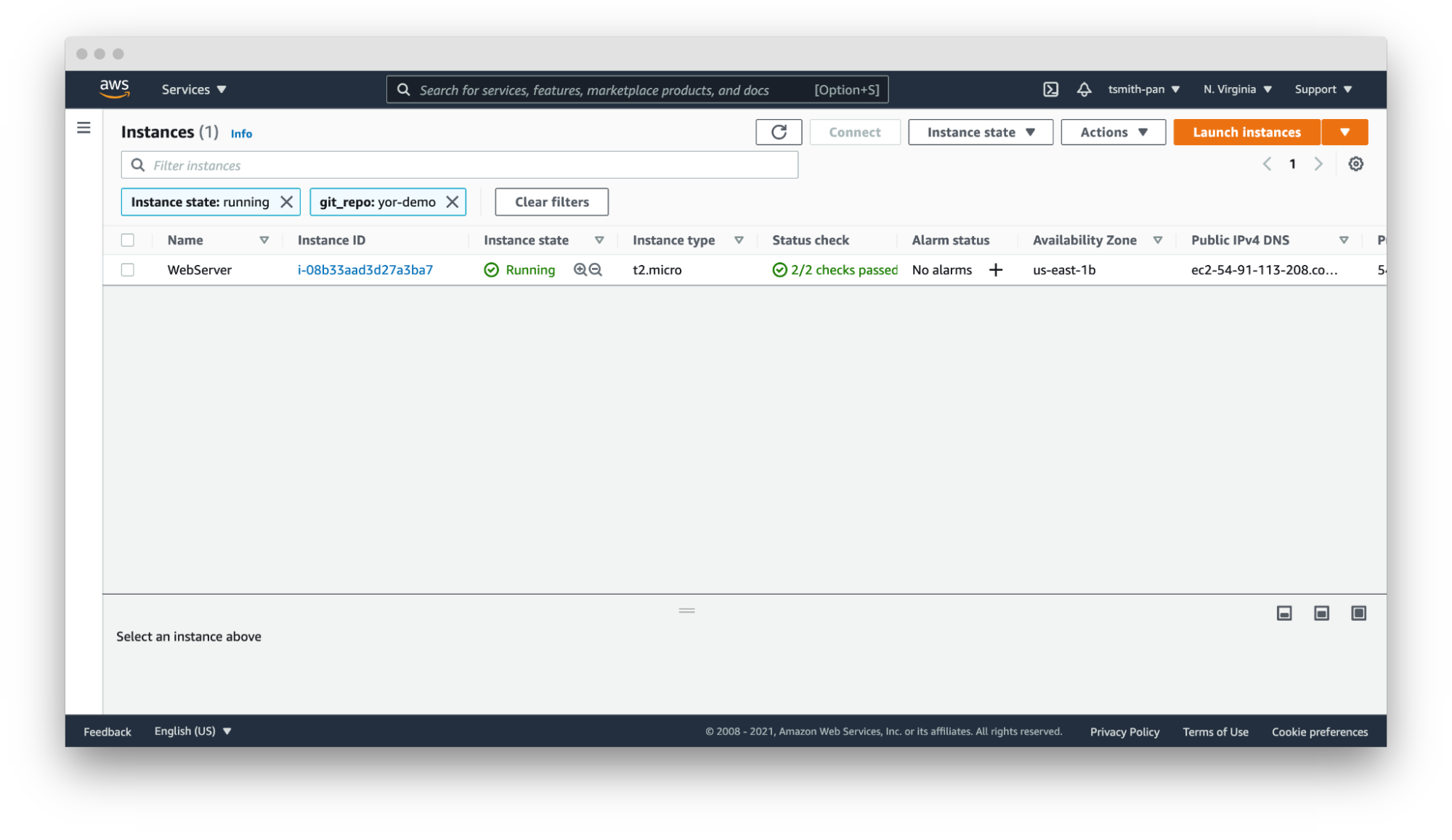
    Yor

    In that same vein, you can set up resource groups to organize multiple resources across AWS services based on tags. For example, if you want to hunt down the VPC, EC2, internet gateway or database created by your Terraform repository, use Yor’s git_repo tag to group together multiple resources into a single resource group.


    Yor 

    Operations Support

    Yor excels at simplifying and speeding up operations support. In the words of Brian Yost, “For example, Level 1 support teams could use tags to direct workflow and perform business service mapping as part of the triage process when a monitoring system triggers an alarm.” Yor automatically tags resources with the git organization and modifiers of the cloud resource. This makes it easier to identify the right team and user to patch issues. 

    If you work in a GitOps organization, this is even more critical. Following GitOps best practices means all changes should be performed in the IaC template, not directly on the cloud resource. So if your security team identifies an open port 22 in runtime using policy-as-code or CSPM tools, such as Bridgecrew, Yor’s tags will make finding the owner of the IaC template easier and faster, lowering MTTR.

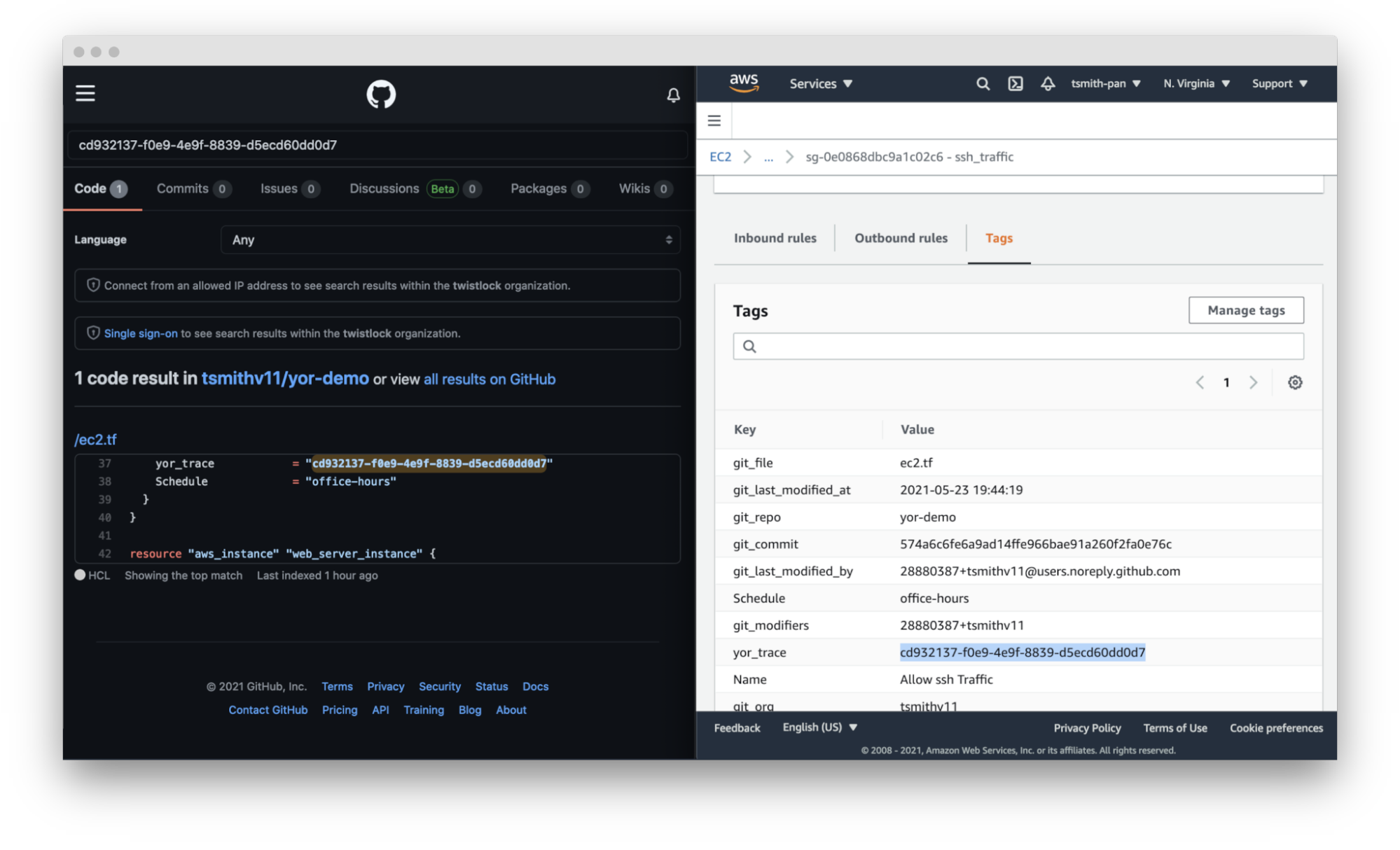
    Yor takes this a step further. By adding the repository, file and trace tags, Yor helps teams identify not only the code owner but also the exact file and resource block that created that resource misconfiguration.
    Yor

    Cost Allocation

    Large companies often have different profit and loss (P&L) statements for each of their business units. At the end of a reporting period, such as a fiscal quarter, finance teams allocate the expenditures made across the company to the various cost centers.

    For traditional IT teams, this usually involves very broad, general estimates. For example, if two organizations share a server rack, you could allocate costs based on virtual CPU time or disk space. Once that scales into dozens of organizations and ephemeral workloads, that allocation is much more difficult. Cloud costs can be just as difficult to allocate. If you have thousands of resources across types (virtual machines, serverless, managed Kubernetes workloads, managed databases, streams, CDNs, etc.) with differing life cycles and life spans, tying those resource costs back to a cost center is difficult.

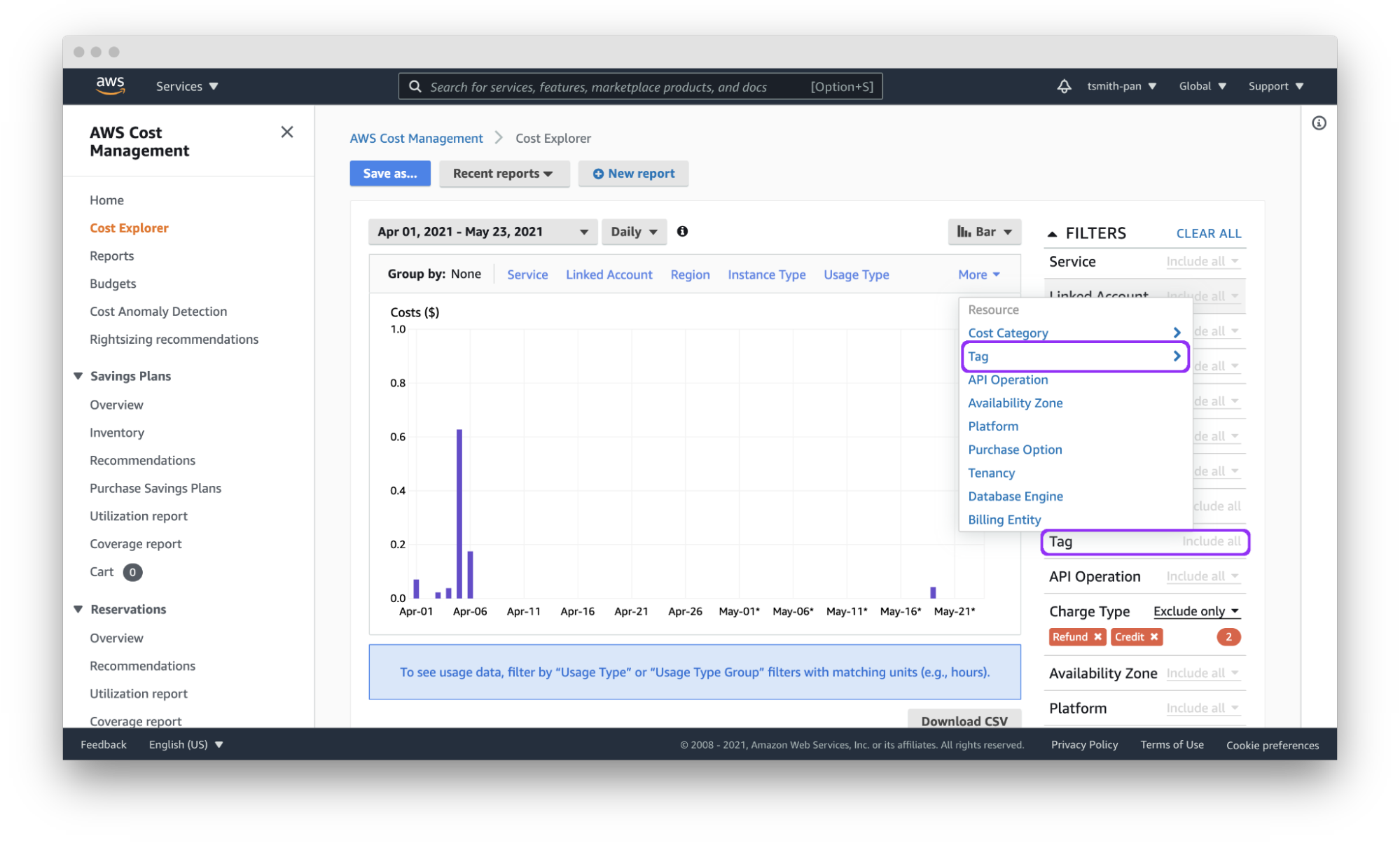
    Cloud tagging simplifies that process. Assuming each team has a git organization, Yor will automatically tag resources with the git_org or custom tags can group git_modifiers into cost center tags, and AWS Cost Explorer will let you filter by those tags to easily allocate costs. You can also export those costs by tag(s) to a CSV file for import into other tools for analysis.

    Yor applies those tags reliably and consistently so that finance teams don’t need to dig through different organization name versions, such as combining dev_team_one and devTeam1, or manually categorizing untagged resources.
    Yor

     Access Control

    AWS identity and access management (IAM) policies support the ability to limit control of resources using tags. This simplifies dividing up resources by teams using complex IAM rules.

    For example, if you want developers to access only the EC2 instances they provisioned, you can use the git_modifiers tag added by Yor. Yor will automatically tag resources with the git users who edited the IaC code. Then, Yor will add an AWS IAM policy to limit access based on that tag.  You’ll also want to add a policy to deny actions such as ec2:CreateTags and ec2:DeleteTags so users can’t just add themselves to other resources.

    This is where Checkov, an open source policy-as-code tool, can be leveraged for additional control. Yor can enrich the context for Checkov’s checks, enabling finer-grained policy control. For example, Yor will populate the user identification of whoever modified an IaC template, and Checkov can make sure that only approved team members modified the code. The following is an example of a custom check to determine that only security personnel modified CloudTrail settings.

    If the git_modifier tag added by Yor is anything other than “Nimrod,” “Rotem,” or “Naor,” Checkov will show a failed policy check for that custom check for that resource.

    Automation

    By leveraging tags in combination with other tools, such as Lambda functions and backup plans, you can apply automation to specific resources, such as targeting resources for archive, update or deletion.

    The AWS Tagging Best Practices guide uses as an example a situation where development resources are turned off during non-business hours. AWS recently released a tool called Instance Scheduler for just such a use case. It is a CloudFormation stack with a Lambda function and DynamoDB instance that automatically starts and stops EC2 and RDS instances based on a pre-defined schedule. 

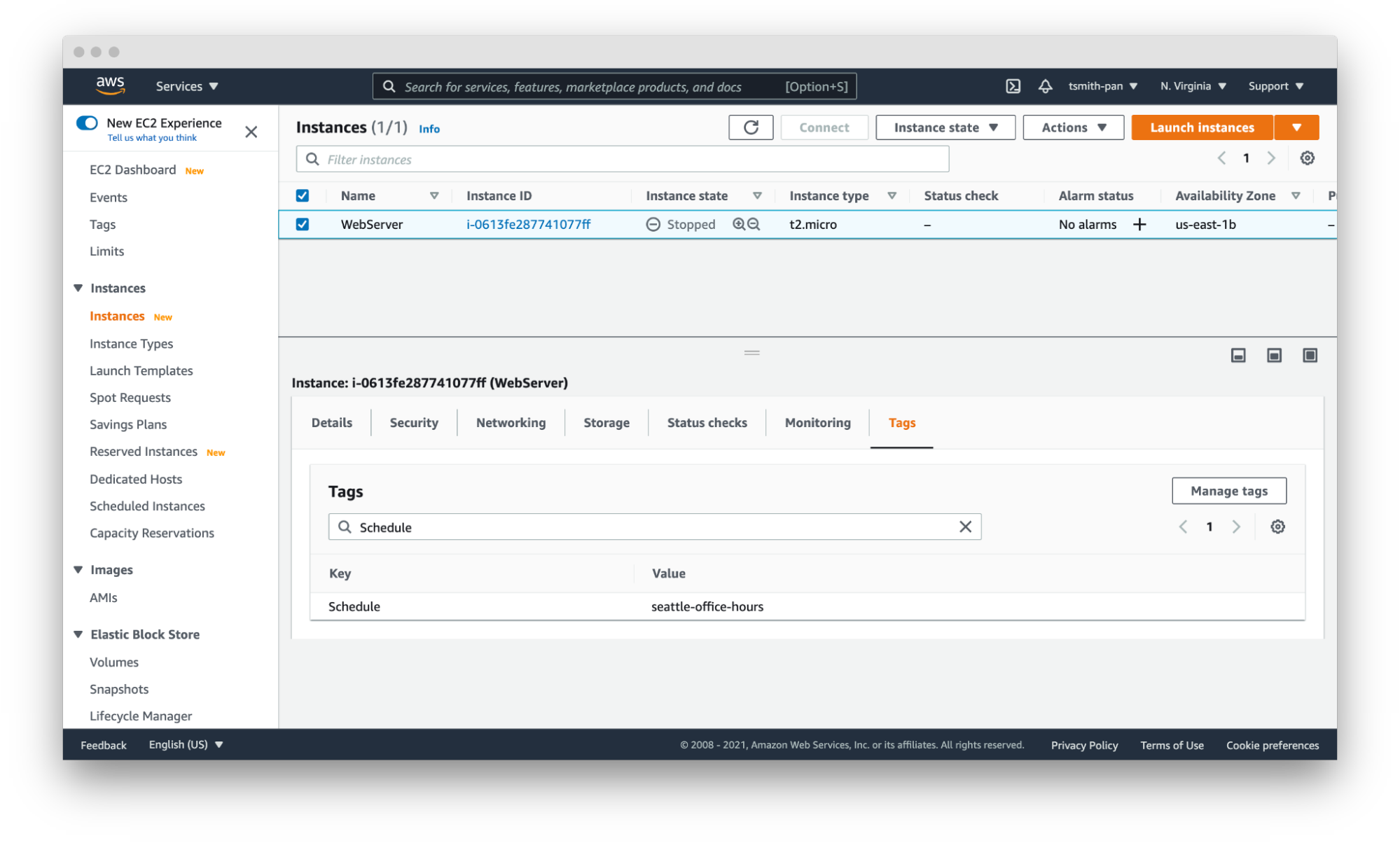
    Instance Scheduler takes a tag with a key:value pair; for example, “Schedule” (or a custom key) as the key and the schedule as the value. The schedules can be either one of the preconfigured schedules in the DynamoDB table, like office-hours, or a custom one.

    Using simple custom tags in Yor, you can tag every resource in a repository with a schedule by using environment variables such as adding the following to the Yor GitHub Action YAML file:

    This results in tags being added to every resource in that IaC directory. With the seattle-office-hours tag, Instance Scheduler will turn off EC2 instances at 5:00 pm Pacific Time and on again at 9:00 am Pacific Time Monday through Friday. This saves money by stopping instances automatically during downtime.
    Yor

    Another popular automation use case is for backups and archival plans. AWS can automatically apply different backup plans based on the tags applied to resources, such as storage and database resources. For example, if certain organizations, such as those that process financial data, need things archived forever, but others only need one year of backup, applying backup plans can move the short-term storage to cheaper options, such as Glacier, and eventually delete them on a schedule.

    Security Risk Management

    The final use case is risk management. The risk level of cloud resources differs based on whether they are in test or production environments and the sensitivity of the data those resources process and hold. This is another area where you can use simple tags like git_repo to filter down to repositories for applications that deal with sensitive data. You can also leverage complex custom tags. For example, EC2 instances attached to databases with “customer” in the name will get a data_level:sensitive tag.

    IT service management tools can apply higher priority to patching and updating resources with tags denoting sensitive data. This is another area where you can leverage Checkov’s graph-based checks in combination with Yor tags to assign higher severity levels to policy violations for resources with sensitive data tags or production environment tags. Assigning priority helps to focus developer attention and mitigate risk faster.

    These six tagging use cases are just a few examples of how you can leverage tags to be more efficient and improve your cloud security posture in AWS. The power of Yor’s tracing capabilities enables development and operations teams to work together without requiring complex triage to find the right person and IaC templates. With Yor’s extensibility and custom tagging capabilities, we can’t wait to see what other use cases the community comes up with!

  • The State of Continuous Delivery in 2021

    The State of Continuous Delivery in 2021

    One of the hallmarks of DevOps is to improve the delivery of software. Therefore, mature DevOps systems employ continuous delivery (CD), the process of releasing bite-sized software changes on a regular basis. Amid high demand for digital innovation, streamlining this release pipeline is becoming more and more crucial for enabling overall software fluidity.

    So, what is the state of CD among today’s development teams? The Continuous Delivery Foundation (CDF) recently released its 2021 State of Continuous Delivery Report, a study that helps establish baseline continuous delivery metrics. Below, we’ll review some key takeaways from the report and discover mean rates for things like deployment frequencies, recovery times and average lead time for code changes.

    Benefits of Continuous Delivery (CD)

    Before we look at the broad metrics surrounding CD adoption, let’s consider: what are the benefits of CD? A big net benefit of CD, the report noted, is that it helps realize feedback earlier in the software development cycle. A lean, CD-driven development approach could help quickly discover features that won’t succeed, which avoids wasting precious development resources.

    CD also increases overall delivery speed for small software chunks. In an era where microservices architecture is all the rage, this process is a necessity for continually initiating many disparate updates. For example, Netflix utilizes Spinnaker to deliver hundreds of microservices and thousands of daily deployments.

    With these results, organizations can reap increased responsiveness and agility. CD can enable fast feedback to changes, which can help businesses adapt to unforeseen conditions, such as zero-day exploits. An investment in CD can also bring net positives to developer team dynamics, according to the report.

    Continuous Delivery Statistics

    Software performance can be indicative of overall organizational performance. So, how should an organization measure its software delivery success? Well, the book Accelerate outlines four crucial metrics to watch: lead time for changes, deployment frequency, time to restore service and change failure rate. The CDF report establishes current industry averages for three of them.

    In terms of deployment frequency, the study found that the highest percentage of developers (31.3%) release once per week to once per month. A large percentage of developers, 27.3%, release every month to six months. Only 10.8% of developers are elite performers, releasing multiple times per day. This indicates that rapid release cycles are still maturing across organizations.

    The average lead time for changes is more variable than you might think. It takes 28.3% of developers one week to one month to go from committed code to running code successfully in production. For 27.3% of developers, this lead time is increased, from one month to six months. Only 5.74% of developers say it takes less than an hour, indicating that a truly on-demand delivery mechanism remains out of reach at most organizations.

    On the other hand, developers are much quicker to act when it comes to restoring services. The survey showed 34.4% of respondents said it takes them one hour to one day to respond to an unplanned outage. A significant number, 15%, respond to incidents in less than one hour. Still, about 50% of outliers are responding somewhere between one day and more than six months.

    Decreasing the mean time to recovery (MTTR) is imperative to respond to broken applications, quickly address security vulnerabilities, and meet evolving customer expectations. As a result, MTTR has become a de facto metric for Site Reliability Engineers (SREs) to watch closely.

    Factors That Affect Software Delivery

    Other factors may influence software delivery agility, such as industry type and programming language preferences. Out of the many industries attempting to refine their delivery models, the report highlighted retail as an industry that ranks high in both speed and stability metrics. Other sectors, such as financial services, government and energy ranked high on stability yet received only average scores for speed. Industries like telecommunications received poorer overall scores.

    Programming language choices may also dictate overall software delivery performance. The study found that shell scripting languages, Go, JavaScript, PHP and Scala were among the top five programming languages, based on the combined software delivery performance data for organizations using each language.

    DevOps Aims to Improve CD

    Continuous delivery is vital to responding quickly to changes and enabling iterative, progressive delivery of new features.

    Another facet of modern CD that can’t be understated is the widespread prevalence and reliance on open source tools. CDF open source packages like Jenkins, Jenkins X, Spinnaker and Ortelius remain vital to enabling CD processes for numerous developer teams.

    The 2021 State of Continuous Delivery Report provides a baseline of standard continuous delivery practices across companies and sectors. The findings are based on SlashData’s Developer Nation survey, which reached 19,000+ respondents from 155 countries from late 2020 to early 2021. One area where reporting is lacking is change failure rates, which we hope future studies will benchmark. For more insights, you can download the report here.