Category: Blogs

  • Report Surfaces DevOps Challenges for Mobile Applications

    Report Surfaces DevOps Challenges for Mobile Applications

    An assessment of 1,600 DevOps teams involved in building and deploying mobile applications found that 62% were adversely impacted by manual processes that slowed the rate at which these applications were deployed and updated.

    Based on the Mobile DevOps Assessment (MODAS) created by Bitrise, a provider of a continuous integration/continuous delivery (CI/CD) platform for building and deploying mobile applications, the metric measured the creation, testing, deployment, monitoring and collaboration phases of building and deploying applications.

    The survey also found (44%) of respondents reported their release approval process is mostly or entirely manual, with only 9% having fully automated application releases. Only 22% of teams said they’ve been able to complete internal release processes in less than an hour.

    The survey also found that nearly two-thirds of organizations (66%) have deployed applications that can’t be opened in two seconds or less, which is widely considered the accepted level of performance required.

    In addition, three-quarters of organizations (75%) required more than two days to address bug fixes. Only 21% of teams said that they had implemented some form of app performance monitoring to keep track of bugs, the report found.

    Daniel Balla, chief strategy officer for Bitrise, said MODAS applies many of the concepts from the DevOps Research and Assessment (DORA) metrics that Google now oversees. Those metrics, however, are not specifically designed to assess mobile application development initiatives, he noted.

    It’s not clear what percentage of applications DevOps teams are building today are deployed on mobile devices. But given the emphasis on digital business transformation initiatives, many of these applications are increasingly mission-critical to organizations. The general expectation among mobile application end users is that apps will be regularly updated with new functionality. However, if release processes are largely manual, regularly improving the user experience can become problematic. In addition to the increased likelihood that mistakes will be made, manual processes are often the reason why a vulnerability was introduced into an application environment.

    DevOps teams will also need to also consider the level of scale that will be required to support mobile app development, noted Balla. Many of the tools that developers rely on today to build applications were not necessarily designed to enable developers to build and deploy mobile applications at scale, he added.

    Finally, most enterprise applications need to run on multiple devices, so the tools used to create these applications can’t focus on applications that can only run on one platform, said Balla.

    Regardless of the approach to building and deploying mobile applications, the amount of focus on them within most organizations is high; any issues that arise are likely to be noticed by the highest echelons of an organization. That level of attention can easily put pressure on DevOps teams that frequently work on multiple projects. The challenge and the opportunity now is to create a set of DevOps workflows optimized for mobile applications that almost by definition require much more frequent updates than any other type of application.

  • Microsoft’s 9th Outage in 2023 ¦ RISE of RISC-V ¦ Meta Ends WFH

    Microsoft’s 9th Outage in 2023 ¦ RISE of RISC-V ¦ Meta Ends WFH

    Welcome to The Long View—where we peruse the news of the week and strip it to the essentials. Let’s work out what really matters.

    This week: Redmond SaaS keeps failing, RISC-V is RISEing, and Meta is enforcing hybrid work. (more…)

  • Supercharging Ansible Automation With AI

    Supercharging Ansible Automation With AI

    Whether the latest incarnations of generative AI will live up to their seemingly great promise remains to be seen. This does not always happen with new technology, but the torrent of AI advancements is promising disruption across nearly every industry. Instead of posing a threat to human roles, AI now aims to make tasks easier, faster and more efficient. “This is precisely what we have been trying to achieve with Ansible and automation through generative AI models,” according to Richard Henshall, senior manager of Ansible Product Management at Red Hat. “At the end of the day, AI is another form of automation, and while we do not have thinking computers yet, we do have highly advanced and powerful models that can automate access to data.”

    Case for Integration

    Picture two scenarios: Consider a user who is already skilled in using Ansible. Their limitation is often the amount of time it takes to find the right way to do something, as Ansible is very broad and encompasses many different technologies. The user may be an expert in one or a few of these technologies, but not all of them. In this case, AI can act as an assistant, helping the user find answers more quickly and efficiently. For example, if they want to automate something in AWS, the AI can help them find the necessary resources, and the user can then tweak and curate the automation to create a final product that can be distributed to a large number of people. “This essentially superpowers the individual user,” said Henshall.

    Another type of user may not know how to automate, but they do know how to use a specific technology. “They may not automate that technology because it’s difficult for them to learn something new,” Henshall added. “AI capabilities can help these users get started with automation more quickly, enabling more people to write automation and manage both new and existing technologies.”

    In both cases, the purpose of automation is to help users solve problems. AI serves as an accelerator for these capabilities. “Once users have created automation, the AI model can be trained on the organization’s DNA, including best practices, security posture, policies and enforcement points,” Henshall asserted. This allows the AI to become a co-worker, empowering users and helping them maintain and manage their technologies more effectively.

    “As the AI model learns from the organization and its users, it can help train junior engineers, who will eventually become senior engineers, continuing the cycle of knowledge transfer and improvement,” Henshall predicted. “In this way, generative AI technologies can be integrated into the Ansible ecosystem, benefiting users and organizations in a wide range of contexts.”

    Solving Problems With AI

    As the DevOps leader of cloud testing organization LambdaTest, Shahid Ali Khan has led the company through open-source engagements and investments in next-generation automation solutions, addressing key challenges with Ansible. “We are dealing with a very large scale inventory in terms of geologically separated data centers and multiple OS. Managing this inventory on the basis of these characteristics becomes a hefty task and requires continuous efforts from the team,” he said. “With AI, Ansible can analyze the inventory and automatically group the hosts based on their characteristics, such as their operating system or their geographical location. This makes it easier to manage the inventory and apply changes across multiple hosts at once.”

    Khan also highlights the issue of auto-healing in the industry. “Auto-healing has always been a problem, and while tools in the market have somewhat addressed it, they still require defining errors and categorizing fixes,” he said. “With current AI technology in place, Ansible can detect and automatically fix issues on the basis of historic data in the inventory without the need for manual intervention, reducing the risk of human error.”

    “Inventory forecasting has always been a pain in order to calculate how much inventory we will need based on usage and on what fronts like location and OS we need to scale,” Khan shared. “AI here with Ansible can help detect the usage and forecast based on exact demand.”

    Benefits and Challenges for the Ansible Community

    In the Ansible community, which consists of people who want to solve problems, the benefits and challenges of AI-driven automation are similar to those faced by individuals in their jobs, just on a different scale.

    Community members want to see how generative AI can help them accomplish more tasks, whether or not they are part of an enterprise. Having access to a community model allows them to contribute to training the AI, ensuring its usefulness, as they may eventually work in an enterprise setting during their careers. “The access to community services enables them to take advantage of the benefits offered by AI-driven automation,” Henshall remarked. “It is a mutually beneficial relationship between the community and AI-driven automation.”

  • Coming Soon: AutoOps

    Coming Soon: AutoOps

    I’ve spent a lot of time looking at products in the DevOps toolchain and paying attention to where they are going, what they are doing that is new and how they are differentiated. That has led me to one inescapable conclusion: AutoOps is on the way.

    What is AutoOps?

    AutoOps is full robotic automation; the continuing progression of what has been building for the last couple of years. We have DevOps, GitOps, DevSecOps, IaC, CloudOps, AIOps … and the list is still growing. But they all move toward one thing: AutoOps.

    Now that development has been fully integrated into DevOps, the market is moving to do the same for operations. It is harder with operations because DevOps had Agile, but it is coming. And it is coming to your org.

    That is a good thing, in my opinion. Compliance almost demands it; what we currently call AI enables it and staffing in hard macroeconomic times will make it appealing.

    The questions that you should start asking now are what does the organization need to enable rapid deployment, management and upgrades while leaving humans in control for the majority of decisions?

    Some of you are living this. I have a friend that is in a GitOps shop with automated CloudOps where they are implementing AIOps to handle minor day-to-day things and monitoring for drift … but they’re the exception; most of us are nowhere near there.

    Knowing that is where we are heading means you can plan – and it is glaringly obvious this is where we are heading. Vendors are branching from their current subset of XOps to take us there and eventually, we will have a full end-to-end vendor that can do everything from GitOps to fully automated rollout, green/blue deployment, monitoring and drift correction with human intervention only where the organization wants it. Some vendors are already very close to this environment and I expect that several will get there in the next year or two via acquisitions or partnerships.

    We just don’t think of the overall DevOps/concept to retirement SDLC process in the absolute terms that AutoOps requires, but we’re going to want to because the environment is changing. The changes are for the better, but they will be massive and cause disruptions. However, they’ll make everything better in the end by eliminating error-producing bits while leaving us in control of the flow and process.

    Start Planning for AutoOps

    So start planning, understand what your organization wants and needs from the coming full-robotic automation I call AutoOps, and keep kicking rear. Eventually, we’ll have systems that can do a lot of Dev and Ops work, but that day is a ways off, and will require people to manage the systems that manage the systems… Funny but true.

    *I’ve never seen AutoOps used anywhere with regards to IT, I just thought it describes where we’re headed pretty well. Let me know if you’ve seen a better term coined by a smarter person. Or a not-smarter person that has a cooler name for it.

  • Atlassian Advances DevSecOps via Jira Integrations

    Atlassian Advances DevSecOps via Jira Integrations

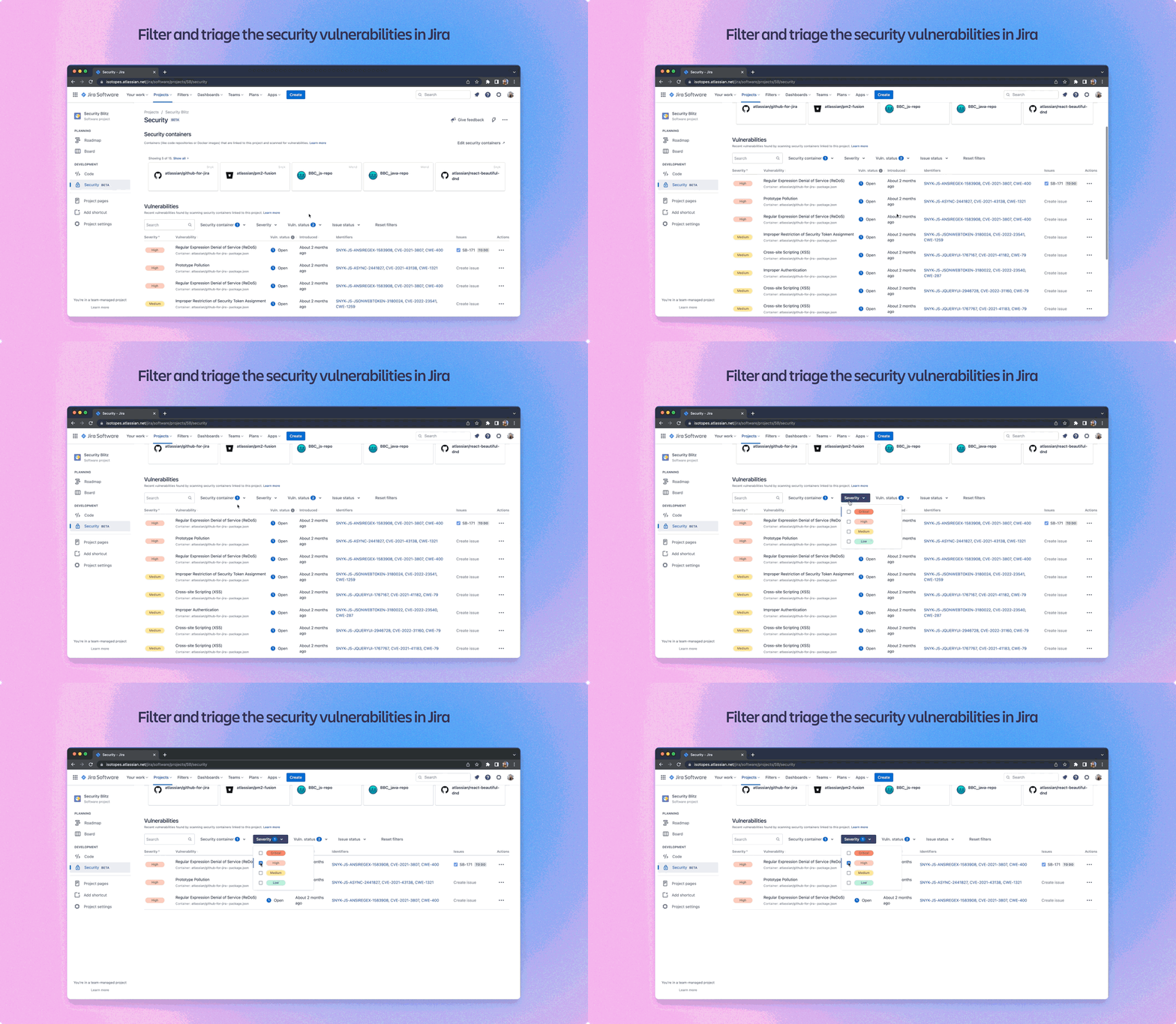
    Atlassian announced today it has allied with Snyk, Mend, Lacework, Stackhawk and JFrog to make it simpler to aggregate vulnerability data within the Jira project management software that many organizations rely on to manage application development and deployment efforts.

    Andrew Pankevicius, a senior product manager for Atlassian, said the collaborations will make it easier to prioritize a list of vulnerabilities that need to be addressed and for DevOps teams to automatically assign that work to a continuous integration/continuous delivery (CI/CD) pipeline. Atlassian provides those third-party integrations via an Open DevOps initiative.

    These capabilities, accessible via the Security Tab in Jira, will make it simpler for DevOps teams to manage output from the multiple application security tools that have become part of a larger DevSecOps workflow, noted Pankevicius.

    These additions to the Atlassian portfolio are arriving at a time when there is a lot more focus on securing software supply chains in the wake of a series of high-profile breaches. Those breaches have led to a wave of legislative proposals in the U.S. and Europe that will soon require organizations to embrace DevOps best practices to address increased potential liability that might stem from an application breach.

    For example, a proposed Cyber Resilience Act being negotiated by the member states of the European Union seeks to require organizations that sell internet-connected hardware platforms to ensure that their devices—and the software that runs on them—comply with cybersecurity best practices.

    In the U.S., meanwhile, a National Cybersecurity Strategy proposal put forward by the Biden administration seeks to hold organizations that collect data or build software more accountable for breaches.

    While both proposals are a long way from becoming the law of the land anytime soon, they are indicative of changing attitudes. Governments around the world are concluding the only way to ensure better cybersecurity is to require it. Previous suggestions made by government agencies are going to soon give way to actual mandates. As such, DevOps teams would be well-advised to get ahead of this sea change by implementing the tools and processes that inevitably will be required. As a result, many organizations are now embracing DevSecOps best practices that shift more responsibility for application security further left toward developers.

    The challenge is finding the right set of cybersecurity tools that surface vulnerabilities as code is being developed to make sure context isn’t lost, said Pankevicius. Historically, cybersecurity teams have discovered vulnerabilities long after an application has been deployed in a production environment. By then, however, most developers have moved on to other projects, so remembering how a specific piece of code was developed and by whom can be a significant challenge, he noted.

    There’s no doubt that when it comes to application security, a lot of progress has been made, but there is still much work to be done. The issue now is finding the best way to organize those efforts at a time when more applications are being simultaneously developed within organizations than ever.

  • PagerDuty Signals Commitment to Adding Generative AI Capabilities

    PagerDuty Signals Commitment to Adding Generative AI Capabilities

    PagerDuty has signaled its intention to add generative artificial intelligence (AI) capabilities to its cloud platform for managing IT operations via integrations with large language model (LLM) providers that it will disclose at a future date.

    These capabilities will make it possible to invoke natural language via PagerDuty Operations Cloud to automatically generate status updates, create drafts of incident postmortem reports and even co-author workflows in any programming language to automate remediation of an issue.

    Damon Edwards, senior director of product for PagerDuty, said as AI continues to evolve, the goal will be to minimize the need for human involvement as much as possible. That doesn’t mean there won’t be a need for humans to be involved, but it does mean that many rote tasks associated with managing an IT incident can be automated, he added.

    For example, the reports that are run to determine the root cause every time there is an incident can be automated, noted Edwards. In addition, summarizations of status reports or postmortems after incidents were resolved can be made readily available to any member of an IT team on demand, he added.

    Those capabilities will also make it easier to onboard new members to an incident management team as required, said Edwards. Today, it’s difficult to add new members to a team after an incident has unfolded because it takes time to bring them up to speed, he noted.

    In addition, generative AI also makes it easier to capture a lot of the tribal knowledge within an IT organization that would otherwise disappear when staff either leave the company or shift roles, said Edwards.

    The generative AI additions to the PagerDuty platform extend an artificial intelligence for IT operations (AIOps) capability that PagerDuty made available this spring. The PagerDuty AIOps platform leverages the data model embedded in its incident management software to reduce the amount of time required for an AI platform to learn how an IT environment operates and begin surfacing valid recommendations to optimize workflows.

    It’s not clear at what pace AI will be adopted within enterprise IT organizations, but it is rapidly becoming pervasive. Each DevOps team will need to decide the degree to which they can rely on AI to manage IT processes, but as IT processes become more complex, there is a clear need for AI to navigate all the dependencies that exist in an IT environment. As more routine tasks are automated, however, there will also inevitably be a realignment of roles and responsibilities within an IT organization. The overall goal is not so much to eliminate IT staff as much as it is to enable them to manage IT environments at a much higher level of scale.

    In the meantime, DevOps teams need to plan for not only what is possible using generative AI today but also tomorrow. After all, there’s not a lot of point in training someone to take on a new task if that task is automated a few months from now.

  • Mastering DevOps Automation for Modern Software Delivery

    Mastering DevOps Automation for Modern Software Delivery

    DevOps automation services are a crucial aspect of modern software development that helps organizations to improve their software delivery processes and keep up with the pace of innovation. With DevOps automation, developers can automate repetitive and time-consuming tasks, enabling them to focus on writing code and delivering features faster and with higher quality. By automating processes such as continuous integration, continuous delivery and infrastructure-as-code, organizations can reduce costs, improve collaboration between teams and respond quickly to changing business needs and customer requirements.

    In this article, we will discuss the basics of getting started with DevOps automation services, including popular tools and best practices that organizations can use to implement a successful automation strategy.

    Agility and Efficiency for Smart Digitalization

    Emerging technologies like multi-cloud, IaC, AI/ML and IoT have only increased the importance of DevOps automation, as they bring new challenges demanding agility, flexibility and efficiency in software delivery processes. Multi-cloud and hybrid cloud environments, for example, can benefit from automating the deployment and management of software across multiple cloud environments. Similarly, AI/ML and IoT require organizations to collect and process large amounts of data in real-time, which can be challenging without automation. DevOps automation can help organizations automate data pipelines and analytics, enabling them to process data faster and more accurately.

    Here are some benefits of DevOps automation:

    ● Speed and Efficiency: DevOps automation enables organizations to deliver software faster and with higher quality. By automating repetitive and time-consuming tasks, developers can focus on writing code and delivering features.
    ● Agility and Flexibility: DevOps automation provides organizations with the agility and flexibility to adapt to changing business needs and customer requirements. Automated processes make it easier to release software updates and respond quickly to market demands.
    ● Cost-Effectiveness: DevOps automation reduces the costs associated with software development by reducing manual labor and minimizing errors. It also enables organizations to use cloud resources more efficiently, which can result in cost savings.
    ● Improved Collaboration: Bringing the different stakeholders along with devs and operations, DevOps fosters a collaborative approach toward enhanced CI/CD. By automating processes, teams can work together more effectively and share knowledge and feedback in real-time.
    ● Scalability: DevOps automation enables organizations to scale their software delivery processes quickly and efficiently. Automated processes make it easier to deploy software across multiple environments and platforms, which is essential for organizations that need to scale rapidly.

    Getting Started With Efficient DevOps Automation

    Implementing DevOps automation requires a well-planned strategy, best practices and the right set of tools. In this section, we will discuss how to successfully implement DevOps automation in your organization.

    Understanding DevOps
    Before you begin with automation, it is essential to understand the principles and practices of DevOps. DevOps is a culture that emphasizes collaboration and communication between software development and IT operations teams to build, test and release software more quickly and reliably. There are some common tools that DevOps teams use for their work, collaboration and communication:
    ● GitHub: The Git repository hosting service used for version control and source code management functionality, especially for distributed projects.
    ● JIRA: A project management tool that helps teams plan, track and manage software development projects.
    ● Slack: A communication platform that enables real-time messaging, file sharing and collaboration.

    Choose the Right Tools
    Automation is at the heart of DevOps, and selecting the right tools is crucial. Choose tools that fit your requirements, budget and infrastructure. Some popular DevOps automation tools include:

    ● Jenkins: An open-source automation server that enables continuous integration and continuous delivery (CI/CD) pipelines.
    ● GitLab: A web-based Git repository manager that provides CI/CD capabilities, project management, and collaboration tools.
    ● Puppet: An open-source configuration management tool that automates the deployment and management of software across multiple environments.
    ● Chef: A configuration management tool that automates the deployment and management of software across multiple environments.
    ● Ansible: Open source tools for automating software provisioning, deployment and configuration management

    Identifying Processes for Automation

    First, list all the critical processes within your organization that can be enhanced with automation. Start with the repetitive and time-consuming tasks that can be automated, such as code testing, deployment and monitoring. There are a number of popular tools that can help with such automation:

    ● Selenium: An open source testing framework that enables automated testing of web applications.
    ● Docker: A containerization platform that enables the creation, deployment and management of containerized applications.
    ● Kubernetes: The open source container orchestration tool is essential in the DevOps pipeline for orchestration and automation of the deployment, scaling and management of containerized applications.

    Creating a Plan

    Once you have identified targets for automation and selected tools, create a plan for automation that includes a roadmap and milestones. Start with small projects and gradually expand the automation to cover all aspects of the software development life cycle. Some popular tools for strategizing these life cycles are:

    ● Trello: A project management tool that enables teams to organize and prioritize tasks using Kanban-style boards.
    ● Asana: A project management tool that enables teams to track and manage tasks using to-do lists, calendars and timelines.

    Training The Team

    Automation requires new skills, so it is essential to train your team to use the tools and processes effectively. Provide training and resources to help your team learn new skills and techniques. Some popular education and training resources include:

    ● Udemy: An online learning platform that provides courses on DevOps automation tools and techniques.
    ● Coursera: An online learning platform that provides courses on DevOps and related topics.
    ● Pluralsight: An online learning platform that provides courses on DevOps automation tools and techniques.

    Implementing Continuous Improvement

    A continuous feedback loop is essential for DevOps’ iterative process and continuous improvement. Integrate mechanisms for evaluating your automation processes, identify areas for improvement and make necessary changes. Here are two common tools used to do this:

    ● New Relic: An application performance monitoring tool that provides real-time visibility into the performance of software applications.
    ● Splunk: An operational intelligence tool that enables organizations to analyze and visualize machine data in real-time.

  • DigiCert Allies With ReversingLabs to Secure Software Supply Chains

    DigiCert Allies With ReversingLabs to Secure Software Supply Chains

    DigiCert today announced it has allied with ReversingLabs to integrate binary analysis and threat detection capabilities with a code signing service it provides.

    Deepika Chauhan, chief product officer for DigiCert, said the addition of these capabilities to the DigiCert Software Trust Manager service would make it simpler for organizations to operationalize a methodology for securing their software supply chains. The capabilities are designed to be embedded within continuous integration/continuous delivery (CI/CD) pipelines.

    In addition to being a certificate authority, DigiCert’s Software Trust Manager service automates code signing workflows. ReversingLabs, meanwhile, just added the ability to detect secrets exposed in application binaries to its Software Supply Chain Security (SSCS) platform. Those capabilities can identify secrets inadvertently left in applications as plain text, can identify secrets that can be discovered because of weak cryptography and also includes scripts that scan for malware and can generate software bills of materials (SBOMs).

    Chauhan said when combined with DigiCert Software Trust Manager, it becomes possible for the two companies to provide a comprehensive approach to detecting malware, software tampering, inclusion of secrets and certificate misconfigurations in any type of software.

    A recent ReversingLabs survey found 87% of respondents detected significant risks in their software supply chain in the last year, with software containing vulnerabilities (82%) followed by secrets leaked through source code (55%), malicious code (52%) and suspicious code (46%) posing the most serious risk to the business.

    A full 88% said software supply chain security is an enterprise-wide risk, but only 60% said their software supply chain defenses were up to the task. Nearly two-thirds (65%) of respondents, however, acknowledged their organization’s software supply chain security program wasn’t as mature as it should be. As a result, 80% are currently focused on improving security for the software supply chain, with 96% noting a more comprehensive approach to software supply chain security that detects more than vulnerabilities is needed.

    It’s not entirely clear just yet whether development teams or cybersecurity teams will be taking the lead in terms of driving the adoption of DevSecOps best practices to secure software supply chains. It is clear that securing software supply chains in the wake of a series of high-profile breaches is a much higher priority.

    Erik Thoen, director of product management for ReversingLabs, said as a result, it’s only a matter of time before development teams and cybersecurity professionals are forced to work more closely together than they have in the past.

    In the longer term, a wave of legislation in the U.S. and Europe will soon require organizations to embrace DevOps best practices to address increased potential liability that might stem from an application breach. A proposed Cyber Resilience Act currently being negotiated by the member states of the European Union seeks to require organizations that sell internet-connected hardware platforms to ensure both their devices and their software comply with cybersecurity best practices. In the U.S., meanwhile, a National Cybersecurity Strategy proposal put forward by the Biden administration seeks to hold organizations that collect data or build software more accountable for breaches.

    While both proposals are a long way from becoming law, it’s clear governments around the world are concluding the only way to ensure better cybersecurity is to require it.

  • The Future of Continuous Testing in CI/CD

    The Future of Continuous Testing in CI/CD

    If you ever wonder why continuous testing is so important, think about the following: In the past, software testing was typically done after the code was written and sent to the QA department for independent testing. When bugs were discovered, the code was returned to the developers for correction. While this testing method worked, it was time-consuming. Nowadays, companies want to produce high-quality products quickly, so they need a faster and more efficient testing process. This is when continuous testing comes in.

    In this article, we will explore continuous testing from its current state and its future in CI/CD to the emerging technologies and trends that will shape its development. We will also cover the importance of continuous testing for businesses and some of its challenges.

    What is Continuous Testing?

    Continuous testing is a software testing approach in which tests are automated and run throughout the software development life cycle. It is a part of the continuous delivery (CD) process, in which software changes are delivered to customers continuously and iteratively.

    Continuous testing aims to identify defects and issues as early as possible, reducing the cost and time of fixing them later. Continuous testing provides immediate feedback to the development team, helping them to detect and address potential problems quickly and efficiently.

    According to the Reports and Data source survey, 21% of QA professionals have incorporated continuous testing, source code management and continuous integration into their DevOps process to speed up code release.

    Advantages of Continuous Testing

    Here are several advantages of implementing continuous testing as a part of the software development process:
    ● Continuous testing enables teams to identify bugs earlier in the software development process;
    ● Continuous testing provides immediate feedback to developers on the quality of their code, enabling them to address any issues immediately;
    ● You can minimize business risks by assessing and identifying potential issues before they become real problems;
    ● Automating your test cases can reduce the time spent on testing;
    ● Accelerating the process of software delivery to production helps release the product faster;
    ● You can run performance tests in similitude, which can increase the speed of test execution.

    Disadvantages of Continuous Testing

    While continuous testing has become an integral part of the software development process, it’s not without its challenges. As software development teams work to incorporate testing into their CI/CD pipelines, they may encounter obstacles that can hinder their progress.
    ● Continuous testing requires a different skillset than traditional testing, including expertise in DevOps, automation and CI/CD pipelines;
    ● Different tools and technologies are available for continuous testing, and choosing the right ones can be tough. Integrating these tools with other parts of the development process can also be challenging;
    ● To fully realize the benefits of continuous testing, you need to update your testing strategy by moving away from relying solely on traditional testing methods and adopting a well-defined approach to test data management;
    ● Failing to integrate code regularly can result in issues such as duplicated coding efforts and non-compatible code, leading to defects.

    Emerging Technologies in Continuous Testing

    With the increasing demand for faster and more reliable software releases, emerging technologies such as AI/ML, automation and DevOps appeared in continuous testing. These technologies help teams to automate and streamline their testing processes, identify defects more quickly and improve overall software quality. Let’s examine some of them:

    Artificial intelligence/machine learning (AI/ML). AI and ML refer to the field of computer science that deals with developing intelligent machines that can simulate human intelligence and learn from data.

    One of the main benefits of AI and ML in continuous testing is the ability to automate test case generation, which reduces the need for manual testing and frees up time for other tasks. This enables testers to test applications more comprehensively and frequently, ensuring defects or issues are identified and addressed quickly. AI and ML increase testing accuracy by identifying patterns and anomalies in the testing data.

    AI and ML techniques can efficiently and rapidly analyze extensive amounts of data, allowing them to recognize patterns and irregularities in testing data that human testers might overlook.

    Automation: Automation in continuous testing refers to using automated tools and processes to execute software tests repeatedly and consistently. It involves automating various stages of the software testing life cycle, such as test planning, test case design, test execution and test reporting.

    Automation can efficiently perform regression testing, ensuring that changes do not introduce new defects or issues in the software. Tests can be executed 24/7 without human intervention, reducing the time and cost required for testing.

    DevOps: DevOps in continuous testing is the application of DevOps principles to continuous testing, focusing on integrating testing into the software development life cycle and enabling faster and more reliable delivery of software.

    In the context of continuous testing, DevOps emphasizes testing integration into the development process, enabling developers to detect and fix defects early in the cycle. DevOps also promotes automation, collaboration and communication between development and operations teams, allowing faster and more efficient testing and deployment.

    Blockchain: Blockchain technology has been gaining increasing attention in the software development and testing industry due to its ability to provide secure and tamper-proof data storage.

    In continuous testing, blockchain stores testing results and data in a decentralized and transparent way, making it virtually impossible for anyone to modify or manipulate the data. This enhances the credibility of the testing process and outcomes and provides an added layer of security to ensure the integrity of the data.

    Blockchain technology enables efficient and seamless data sharing between stakeholders involved in the testing process, enabling faster and more accurate decision-making.

    Internet-of-Things (IoT): In continuous testing, IoT simulates many IoT devices and platforms, enabling testers to test their applications across multiple devices and platforms. This ensures that applications are compatible with various IoT devices and platforms and perform reliably and consistently in various environments.

    For instance, when creating an application that needs to run on multiple devices, it is possible to use an emulator to test the app on your laptop without setting up a development environment for each type of device.

    IoT-enabled continuous testing provides real-time feedback on the performance and functionality of applications, enabling organizations to identify and address issues quickly and effectively.

    Trends in Continuous Testing

    Continuous testing is rapidly evolving to meet the needs of modern software development practices, with new trends emerging to address the challenges development teams face. Three key trends currently gaining traction in continuous testing are cloud-based testing, shift-left testing and security testing. These trends are driven by the need to increase efficiency and speed in software development while ensuring the highest quality and security levels. Let’s take a closer look at these trends.

    Cloud-Based Testing: Continuous testing is deployed through cloud-based computing, which provides multiple benefits like ease of deployment, mobile accessibility and quick setup time. Businesses are now adopting cloud-based services due to their availability, flexibility and cost-effectiveness. Cloud-based testing doesn’t require coding skills or setup time, which makes it a popular choice for businesses.

    AI-Driven Testing: AI-driven continuous testing is often integrated into cloud-based testing platforms, providing end-to-end automation for web, mobile and API testing. AI and cloud-based testing allows for access to testing environments anywhere, anytime, and provides for regular automated testing using platforms like Selenium.

    Shift-Left Testing: Shift-left testing is software testing that involves testing earlier in the development cycle rather than waiting until later stages, such as system or acceptance testing. The goal of shift-left testing is to identify and address defects as early as possible.

    Delaying testing until the end of development often results in more complicated bug fixes since the software is already fully built. This can cause an increase in cost and time to market. Identifying and fixing bugs earlier in the software development life cycle is generally more cost-effective.

    As IBM’s Systems Sciences Institute claimed, repairing a bug discovered during implementation costs roughly six times more than one found during design. If a mistake is detected after product release, the cost of fixing it is four to five times greater than one found during design and up to 100 times greater than one found during the maintenance phase. This suggests that a bug’s cost increases exponentially as the software progresses through the SDLC.

    Low-Code/No-Code: Low- or no-code in continuous testing refers to using visual interfaces and pre-built elements or modules to create and execute automated tests instead of writing complex code. Low-code/no-code testing tools often provide drag-and-drop interfaces and pre-built components that can be combined to create tests, reducing the time and effort required to develop and maintain test scripts.

    This type of testing provides several advantages, such as allowing non-technical business experts to run testing, speeding up test production and execution and enhancing product quality by enabling more thorough and efficient testing.

    Generally, according to statistics, by 2025, around 70% of new business applications are predicted to use low-code or no-code technologies.

    Security Testing: Due to the rising incidence of cybersecurity threats and data breaches, security testing has become a crucial aspect of software quality assurance. In the year 2023, the tech world anticipates that there will be a stronger focus on security testing, with the emergence of more advanced tools and methodologies aimed at detecting and resolving security weaknesses in software applications.

  • How to Build Successful DevOps Teams

    How to Build Successful DevOps Teams

    The DevOps sector is still in urgent need of new talent, with 38% of tech companies stating that they struggle to find skilled developers in 2023. These same respondents named DevOps as the number-one area where they are feeling the pinch. Because of this, businesses must ensure they prioritize and nurture the right set of core skills when building DevOps teams.

    Below, we discuss the key qualities that businesses should look for when taking on new DevOps engineers and what leaders can do to get the most out of existing employees.

    Tech companies that prioritize the development of these skills will be rewarded with an intelligent, inquisitive and high-performing DevOps team, setting themselves apart from competitors.

    An Eagerness to Learn

    The DevOps sector is constantly evolving, so the talent organizations hire should be similarly open to evolution in the way they work.

    Emil Krawczak, DevOps engineer at STX Next, said this is a key trait necessary for success. “To be successful as a DevOps engineer, you need to have a natural thirst for knowledge and desire to develop, and also be highly persistent when faced with challenges. This area of IT is developing so quickly that it’s difficult to keep track of everything new. It is not enough to learn at work; you need to take steps to grow your capabilities outside of the day-to-day, as well.”

    An Analytical and Strategic Approach

    System administration and development skills are essential, but they aren’t enough if developers don’t keep the bigger picture in mind at all times. Therefore, the ability to think strategically and the ability to apply analytical skills are invaluable for DevOps engineers.

    Piotr Pawłowski, DevOps specialist at The One Question, explained how these traits made it easier for engineers to tackle a DevOps project. “Being successful in DevOps means having an analytical mind and taking a strategic approach. First and foremost, you should be to analyze the project and decide the right tools and approaches. You might know a lot about different tools and cloud solutions, but if you don’t know how to use them, you will not be successful in the world of DevOps.”

    Putting DevOps Theory Into Practice

    The ability to put theory into practice is where true progress is made. With that in mind, what DevOps employees glean from training, education, books and research has little relevance unless it is supplemented by practical experience.

    Versatility is an integral skill in the industry, and successful DevOps pros should be able to use—or at least have working knowledge of—a broad range of tools. They should also specialize in at least one area of Dev or Ops. Python is a great example; Python is highly effective in the automation process and the language should be viewed as a key stepping stone in growing DevOps engineering skillsets.

    Identifying Transferrable Skills

    Employers searching for new talent should look for relevant skills in other IT disciplines that could help a candidate make the switch to DevOps. For example, experience in SysOps or a specific programming language can be extremely useful when opting for a change of focus.

    “DevOps unites the world of admins (SysOps) with the world of programmers/developers (Dev). The easiest way to get into DevOps is to have experience in both of these areas,” Krawczak said. “As an admin, you can build on your experience in scripting, and as a developer, you can leverage your experience in setting up local infrastructure for testing.”

    A Clear and Focused Approach to Specialisation

    Marcelo Grebois, senior DevOps Engineer at Toptal, said businesses should keep things as simple as possible when establishing their DevOps approach. “Try to make things easy. Always think about automation, keep all infrastructure ‘as-code’ and stay up-to-date on tools and technologies.”

    Roman Kamiński, cloud system architect at Atos, agreed. “Using automation tools such as Ansible and Terraform, for example, stops developers from getting left behind while helping them adjust to an ever-changing industry.”

    Developing the Next Generation

    It’s important that tech companies invest in the growth of DevOps engineers and help them focus on the skills that will maximize their potential. The organizations that put time and resources into nurturing the next generation of talent will benefit from a larger pool of well-trained engineers. In the long term, this will ease the DevOps skills shortage and make for a more prosperous IT department.