Category: Blogs

  • Kinesis PutRequestError Throttling: Don’t Panic, Debug Like A Pro!

    Quiz #26 is in our series of quiz questions where we are investigating how to troubleshoot AWS CloudWatch Alarms. If this is of interest, also look at our recent quiz on AWS ELB Performance, Debugging Message Queue alert, Neptune Write IOPS Spiking, and Slow Redshift.

    Quiz #26 is:

    You are on-call and receive an alarm notification for your Amazon Kinesis stream. The alarm indicates “Increased PutRequestError Throttling”.

    Which of the following is the MOST LIKELY initial troubleshooting step to identify the cause of this error?

    Check the Kinesis shard health metrics for any degraded shards.
    Increase the Kinesis stream’s write capacity units (WCUs).
    Review the application logs for any exceptions related to Kinesis writes.
    Restart the Kinesis stream to reset any internal throttling counters.
    Investigate the application code responsible for writing data to Kinesis.

    Correct Answer: 5. Investigate the application code responsible for writing data to Kinesis.
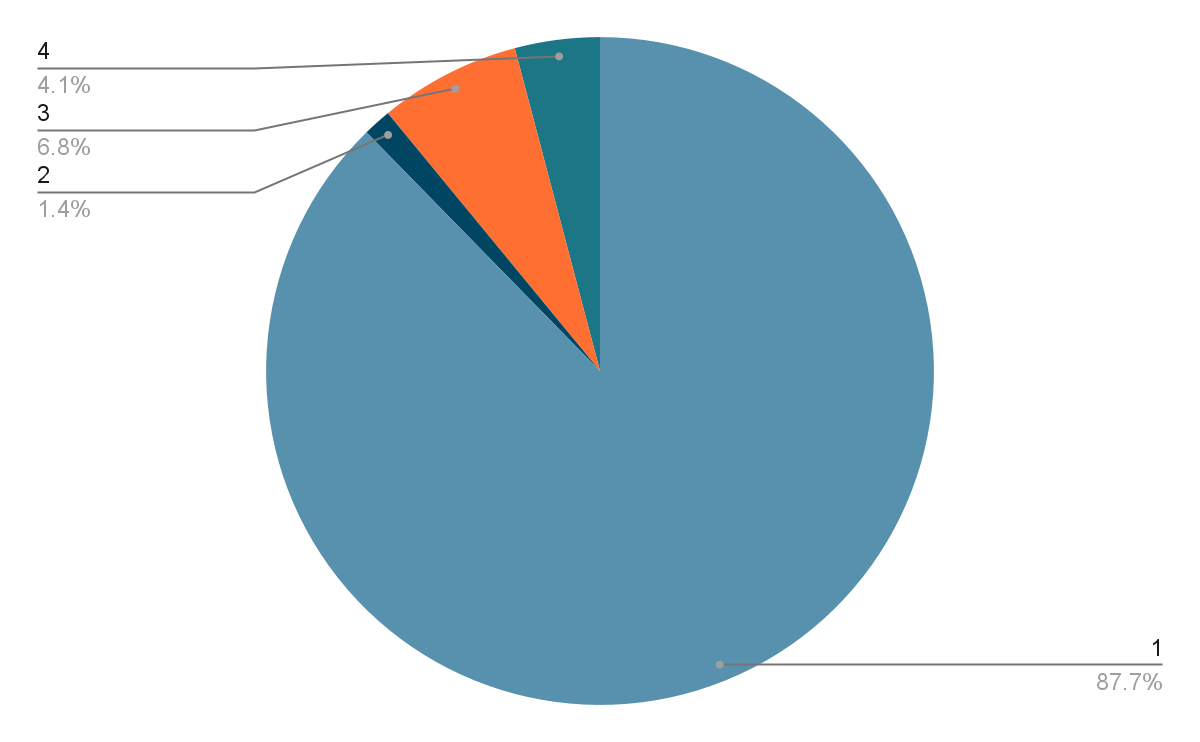
    73 people answered this question and 7% got it right.


    Hey there, fellow SREs! As veterans in the trenches of keeping our systems humming, we’ve all encountered our fair share of Amazon Kinesis surprises. One such head-scratcher is the dreaded “Increased PutRequestError Throttling” alarm. It can send chills down your spine, but fear not! In this blog, we’ll delve into why this throttling happens and why choice #5 is your best bet for conquering this Kinesis beast.

    Understanding PutRequestError Throttling:

    Imagine Kinesis as a busy highway. You (your application) are the trucks trying to deliver data (packages). To ensure smooth traffic flow, Kinesis enforces a speed limit – the allowed number of PutRequests per second. Exceed this limit, and you get flagged for throttling – essentially, Kinesis tells your trucks to slow down for a bit.

    So, why do we care about PutRequestError Throttling? Because it indicates your application is pushing data faster than Kinesis can handle. This can lead to:

    • Data loss: Throttled requests might be dropped.
    • Increased latency: Your application waits for throttling to clear, slowing things down.
    • Unnecessary costs: Scaling up Kinesis Write Capacity Units (WCUs) to compensate for inefficient writes is like adding more lanes to a highway with poorly optimized trucks!

    Why Code Review is Your Debugging BFF (Not Other Options):

    Now, let’s analyze the answer choices and see why choice #5 reigns supreme:

    1. Shard health metrics: While keeping an eye on shard health is important, it won’t tell you why your application is making excessive PutRequests.
    2. Increase WCUs: This might seem tempting, but it’s a reactive solution, not a proactive fix. Throwing more resources at the problem masks underlying inefficiencies in your code.
    3. Review application logs: Absolutely! Logs are valuable for identifying errors, but for throttling, you need to dig deeper into the code responsible for Kinesis interactions.
    4. Restart Kinesis stream: Restarting disrupts ongoing data flow and might not reset throttling counters. Plus, the root cause remains unaddressed.
    5. Investigate application code: Bingo! This is where the magic happens. Here’s where you put on your detective hat and start examining your Kinesis interactions:
      • Are you batching writes efficiently? Sending data in smaller batches can significantly improve throughput.
      • How are you handling retries on throttling errors? Exponential backoff is a good strategy, but avoid bombarding Kinesis with retries immediately after throttling.
      • Are you using the Kinesis SDK optimally? The official SDKs offer functionalities to handle throttling gracefully. Make sure you’re leveraging them effectively.

    Code Sample (Java with AWS SDK v2):

    Java

    import software.amazon.awssdk.services.kinesis.KinesisClient;

    import software.amazon.awssdk.services.kinesis.model.PutRecordsRequest;

    import software.amazon.awssdk.services.kinesis.model.PutRecordsRequestEntry;

    public class EfficientKinesisWriter {

    private final KinesisClient kinesisClient;

    private final String streamName;

    public EfficientKinesisWriter(KinesisClient kinesisClient, String streamName) {

    this.kinesisClient = kinesisClient;

    this.streamName = streamName;

    }

    public void putBatch(List records) throws ThrottlingException {

    List requestEntries = new ArrayList<>();

    for (Record record : records) {

    requestEntries.add(PutRecordsRequestEntry.builder().data(record.getData()).partitionKey(record.getPartitionKey()).build());

    }

    PutRecordsRequest request = PutRecordsRequest.builder()

    .streamName(streamName)

    .records(requestEntries)

    .build();

    try {

    kinesisClient.putRecords(request);

    } catch (KinesisException e) {

    // Implement proper backoff logic here

    throw new ThrottlingException(“Throttling encountered”, e);

    }

    }

    }

    Remember: By meticulously reviewing your application code, you can identify and rectify the root cause of PutRequestError Throttling. This ensures smooth data flow, prevents data loss, and keeps your costs under control.

    Call to Action (CTA):

    Troubleshooting modern cloud environments is hard and expensive. There are too many alerts, too many changes, and too many components. That’s why Webb.ai uses AI to automate troubleshooting. See for yourself how you can become 10x more productive by letting AI conduct troubleshooting to find the root cause of the alert: Early Access Program.

  • Free Workshop from Security Risk Advisors Empowers Organizations to Select Optimal OT Security Tools

    Free Workshop from Security Risk Advisors Empowers Organizations to Select Optimal OT Security Tools

    Philadelphia, Pennsylvania, May 8th, 2024, CyberNewsWire

    Security Risk Advisors (SRA) announces the launch of their OT/XIoT Detection Selection Workshop, a complimentary offering designed to assist organizations in selecting the most suitable operational technology (OT) and Extended Internet of Things (XIoT) security tools for their unique environments. 

    Led by seasoned OT/XIoT security consultants, the workshop provides participants with an invaluable opportunity to gain insights into both best-in-class and novel solutions, to identify those closest aligned to their specific needs.

    In today’s increasingly interconnected digital landscape, the importance of choosing the right OT/XIoT security tools cannot be overstated. These tools serve as the first line of risk reduction and defense against cyber threats targeting critical industrial processes and infrastructure.

    Making informed decisions, whether adding a new solution or replacing an incumbent, significantly impacts an organization’s ability to mitigate threats and protect its assets. During the half-day consultation, participants will delve deep into their OT/XIoT security environments, examining current tools and analyzing their infrastructure. The free workshop will result in personalized recommendations of the best-fit solutions from industry vendors.

     “We recognize the importance of selecting the right security tools for cyber-physical environments,” says Jason Rivera, Director of OT/XIoT Security at SRA. “Our workshop empowers organizations to make informed decisions, giving confidence that their selection is fit for purpose.”

    Submit your application here.

    About Security Risk Advisors

    Security Risk Advisors offers Purple Teams, Cloud Security, Penetration Testing, OT Security and 24x7x365 Cybersecurity Operations. Based in Philadelphia, SRA operates across the USA, Ireland and Australia. For more information, visit SRA’s website at https://sra.io.

    Contact

    Marketing Manager
    Douglas Webster
    news@sra.io
    215-867-9051

  • Hunters Announces Full Adoption of OCSF and Introduces OCSF-Native Search

    Hunters Announces Full Adoption of OCSF and Introduces OCSF-Native Search

    San Francisco, United States, May 7th, 2024, CyberNewsWire

    Hunters, the pioneer in modern SOC platforms, today announced its full adoption of the Open Cybersecurity Schema Framework (OCSF), coupled with the launch of groundbreaking OCSF-native Search capability. This strategic advancement underscores Hunters’ commitment to standardizing and enhancing cybersecurity operations through open, integrated data sharing frameworks.

    Uri May, CEO of Hunters, explained the strategic significance of this move, stating, “Adopting OCSF as our primary data model represents a transformative step in our journey to elevate cybersecurity operations. Alongside this, our new advanced OCSF-native search functionality is set to transform how security data is searched and analyzed, offering unprecedented efficiency and precision.”

    Democratizing Security Operations with OCSF

    The adoption of OCSF provides a unified, standardized language across cybersecurity tools and platforms, simplifying data integration and analysis workflows. The adoption fosters frictionless interoperability and enables enhanced collaboration among cybersecurity professionals, promoting flexibility and innovation by eliminating constraints imposed by proprietary data formats.

    “Adopting OCSF will not only enhance our AI-driven security solutions, but also enable seamless data integration across vast and diverse datasets, dramatically improving the speed and accuracy of threat detection and response,” added May.

    Some of the benefits of adopting OCSF include:

    • Streamlined Operations and Enhanced Collaboration – practitioners use common security language, promoting efficient sharing of insights and best practices, bolstering collective defense strategies.
    • Breaking Vendor Lock-in and Data Silos – Organizations are not constrained by proprietary data formats from specific vendors.
    • Revolutionizing Threat Hunting and Investigation – By shifting from logs to context-aware events and objects, OCSF enables multi-stage attack analysis and context-rich threat hunting.
    • Accelerating AI and Gen-AI in Security – Standardized data schema accelerates the development of AI-driven security solutions.

    OCSF-native Search Functionality: A New Era in Cybersecurity Analytics

    Hunters is thrilled to launch their revolutionary OCSF-native search functionality, designed specifically for SOC analysts and threat hunters. This innovative technology addresses the complexities of “query engineering” by leveraging a universal data schema—OCSF—to streamline the search process across diverse data formats and environments. The new search capabilities not only reduces the frustration and errors associated with traditional query syntax but also enhances both general and specialized investigation capabilities, transforming how security teams interact with data and significantly accelerating their operations.

    OCSF-Native Search is Revolutionizing Search in the following ways:

    • Event and Object Based Searching: A New Search Paradigm – Hunters SOC platform introduces event and object-based searching, eliminating the complexities of source-specific log formats, by enabling analysts to search cybersecurity events and objects without the need for field normalization or navigating diverse log formats.
    • Democratizing Data Analysis: Equipping Analysts of All Levels for Success – OCSF-native search simplifies the search experience, eliminating the need for SQL proficiency or specialized knowledge in tools like Kibana or KQL. With an intuitive interface tailored to the OCSF model, analysts of all experience levels can quickly become proficient, bypassing traditional complexities and lengthy training sessions. 
    • Entity Investigation Curated Workflows: Investigations with a Single Click – With this new capability analysts can pivot directly from Hunters alerts to Search with a single click, automatically populating and executing queries for deep context. This eliminates the need for manual query building, facilitating a seamless investigative workflow that allows analysts to efficiently explore and analyze security incidents.
    • Timeline Experience: Enhanced Chronological Insight for Security Analysis – A new timeline-based approach to search enables analysts to explore the chronological progression of security events. This feature provides insights into patterns, anomalies, and potential threats, enhancing the investigative workflow. Analysts can identify correlations, track threat evolution, and streamline investigations efficiently.

    “Our new search functionality is a game-changer for both experienced and novice security practitioners,” says Yuval Itzchakov, CTO at Hunters. “It elevates SOC operations by providing Tier 1 analysts with the clarity needed for higher-level analysis and democratizes security insights, making advanced investigations accessible to more team members.”

    Contributing to the Community – OCSF Mapping

    In conjunction with this new product release, Hunters is also proud to contribute to the cybersecurity community by sharing one hundred mappings of security logs to the OCSF schema. This contribution is part of their commitment to fostering an open and collaborative environment where knowledge sharing accelerates innovation and strengthens security postures across the industry. 

    The full adoption of OCSF and the launch of our OCSF-native search functionality mark significant milestones in Hunters’ ongoing mission to innovate and automate cybersecurity analytics and operations. By embracing open standards and providing powerful, intuitive search capabilities, they are not only advancing our platform but also contributing to a more interconnected, efficient, and effective cybersecurity ecosystem.

    To learn more, users can visit us at RSAC Booth #4317, Moscone North, or contact us on www.hunters.security 

    Contact

    Ada Filipek
    Hunters
    ada.filipek@hunters.ai