Category: IT as Code

  • Survey Sees Alternative Cloud Service Providers Gaining Ground

    Survey Sees Alternative Cloud Service Providers Gaining Ground

    A survey of 458 development professionals, managers and senior leaders conducted by Techstrong Research, a sister entity of DevOps.com, found 43% are considering adding additional cloud service providers in the next 12 months. In total, nearly two-thirds said they are at least considering, evaluating or are ready to buy from a trusted alternative cloud vendor, with 20% reporting they have already contracted one.

    The survey, conducted on behalf of Linode, an arm of Akamai Technologies that provides cloud services, found a full 93% of survey respondents are already using either Amazon Web Services (AWS), Microsoft Azure or Google Cloud Compute Platform (GCP). Nearly two-thirds (65%) reported they already used more than one cloud service provider. More than a quarter (28%) said they are using alternative providers to augment services they consume from either AWS, Microsoft, Google, Oracle, IBM Rackspace or Alibaba. And 19% said they are using a hyperscaler and an alternative cloud service provider.

    The biggest drivers respondents cited for using alternative providers are reducing reliance on a single provider (55%), improved price/performance (38%) and recent cloud outages (31%).

    Respondents also said they are concerned that large providers might one day compete with them as they expand their reach into other industry segments (24%) or may engage in business practices that would create a moral conflict (19%). A quarter (25%) said they already viewed their cloud service provider as a competitor.

    Dan Kirsch, principal analyst for Techstrong Research, said as cloud computing continues to mature, it is becoming apparent that more organizations are considering their options when it comes to consuming commodity compute, storage and networking services. Many organizations simply don’t need to access complex cloud services, he noted. A total of 42% of respondents said a cloud service provider offering core infrastructure primatives could handle 90% of their typical workloads. In many cases, alternative cloud service providers are being used to augment rather than replace a hyperscale cloud service provider, noted Kirsch.

    Overall, nearly three-quarters of respondents (74%) said they expect their infrastructure will be cloud-based by the end of this year. Nearly three-quarters of respondents buy cloud services directly from an infrastructure provider, with the rest employing a managed services provider or some other type of third-party cloud services reseller.

    More than one-third of respondents also reported using a payment mechanism other than a contract or request for proposal (RFP), according to the study. Among customers of alternative cloud providers, more than two-thirds (67%) are using some other payment mechanism, with one-quarter using cryptocurrencies to pay. That option is becoming increasingly important because more organizations are looking for ways to reduce costs by employing alternative payments, said Kirsch.

    In other cases, IT professionals are looking for an end-run around cumbersome purchasing processes or simply opt to use alternative payment methods as a matter of personal preference, he added. Alternative providers, as a general rule, are more open to processing these types of payments, noted Kirsch.

    The shift to the cloud has clearly been accelerating since the start of the COVID-19 pandemic. But as the landscape continues to evolve, there are now more options than ever for IT organizations to consider as the cloud becomes the preferred platform on which to deploy applications.

  • Four Steps to Avoiding a Cloud Cost Incident

    Four Steps to Avoiding a Cloud Cost Incident

    The recent Flexera 2022 State of the Cloud Report found that organizations waste 32% of their cloud spend, up from 3o% last year. This can be due to cloud cost incidents triggered by unused resources, malicious activity or overambitious projects and which have a massive financial impact if not found and corrected promptly.

    As an organization’s cloud infrastructure footprint matures, mapping cloud resource use and costs accurately to product lines, teams and business units becomes progressively more complicated and problematic. However, accurate cloud cost attribution is vital to understanding team resource use and determining accurate cost of goods sold (COGS) margins and is imperative to budgeting and forecasting. Organizations need reliable, granular views of the cloud environment to attribute costs back to departments and optimize a meaningful budget.

    Cloud cost spikes can blow up an organization’s budget fast and can be hard to track down, but enterprises can help protect themselves from a cloud cost incident with just a few simple steps.

    Have a Strong Tagging Strategy That Attributes Cost Granularly

    The cloud operations team needs to identify what is important to business reporting, which will help define and create a strategy for tagging. For instance, when an organization has two teams managing a particular service, the teams should safeguard the services tagged with a team identifier. Also, the teams should add another tag for the environment in which they’re running so they can allocate cloud costs across teams and environments.

    When an application uses numerous resources, like a database and storage, teams should consider adding a specific application tag and break down costs by each application. It should be noted that there is no one-size-fits-all tagging solution, so enterprises will need to determine what works and try out different strategies by adding and removing tags later.

    Understand Cloud Cost Ownership to Avoid Chaos

    Ask yourself how well your organization has attributed cloud costs to teams, applications or COGS. If the answer is “Not well,” then you are missing vital information about how your cloud costs relate to your business.

    The lack of this context or visibility into resource allocation makes it unmanageable and impossible for cloud operations owners and senior leaders to agree on who is responsible for varied expenses and resources. Manual cost attribution doesn’t scale accurately or account for shared cluster resource use across teams and applications. This creates confusion that can escalate when users arbitrarily slice data and claim ownership without accountability or clear visibility.

    What happens is that costs can sometimes be double-counted with two owners—or even missed completely with no owner whatsoever. The resulting data emerges as an inferior quality that is untrustworthy and not actionable. The inability to visualize resource use in context can dilute, hinder and even defeat cost improvement initiatives and optimization.

    Cloud costs should have an owner who can ensure that cloud spending is tied to business value. Understanding who owns which pieces will help pinpoint the cause.

    Establish and Monitor Cloud Budgets

    Historical data on cloud spending is gold—it can help forecast and budget for what should be happening with the cloud’s cost footprint. If that’s not happening, then it should be flagged and investigated.

    Once you get cost data under control, organizations can get an accurate picture of where cloud spending is taking place. However, does this match the expectations of spending? By establishing and monitoring budgets at every stage of a project, organizations can have guardrails to cloud spending and prevent costs from soaring out of control when engineers overallocate on performance “just in case.” Once budgets are in place, organizations can monitor spending and right-size resources to balance actual usage, rather than estimated usage at the start of execution.

    Over time, right-sizing resources will allow for optimal spend, as well as identify unused resources that can be shut down. Organizations should identify development and test instances left running when no longer needed and shut them off.

    Implement Cost Anomaly Detection

    Organizations can shield themselves from cost anomalies by continually monitoring and optimizing cloud costs. Cost anomaly detection can help act as a barrier to early recognition before they become problematic. This is especially effective when prompt, actionable alerts can be delivered directly to resource owners via Slack or email when their forecast exceeds the set budget. The best option would be adopting a cloud cost monitoring and optimization (CCMO) tool that gives alerts in real-time when a cost anomaly occurs. These tools must be able to detect anomalies and analyze their root cause, while also allowing visibility into what went wrong to avert similar future errors.

    Executing continuous cost monitoring and anomaly detection tools for dynamic cloud environments is essential in identifying any activity that doesn’t align with expected expenditure or diverges from an established pattern. With proper monitoring, organizations can take corrective measures before the fact.

    Unwanted and unexpected cost incidents can clean out an enterprise’s budget quickly, especially as its cloud infrastructure grows. Organizations need to practice these steps to gain a full picture view of their cloud environment.

  • Codenotary Adds SLSA Framework Support to Advance App Security

    Codenotary Adds SLSA Framework Support to Advance App Security

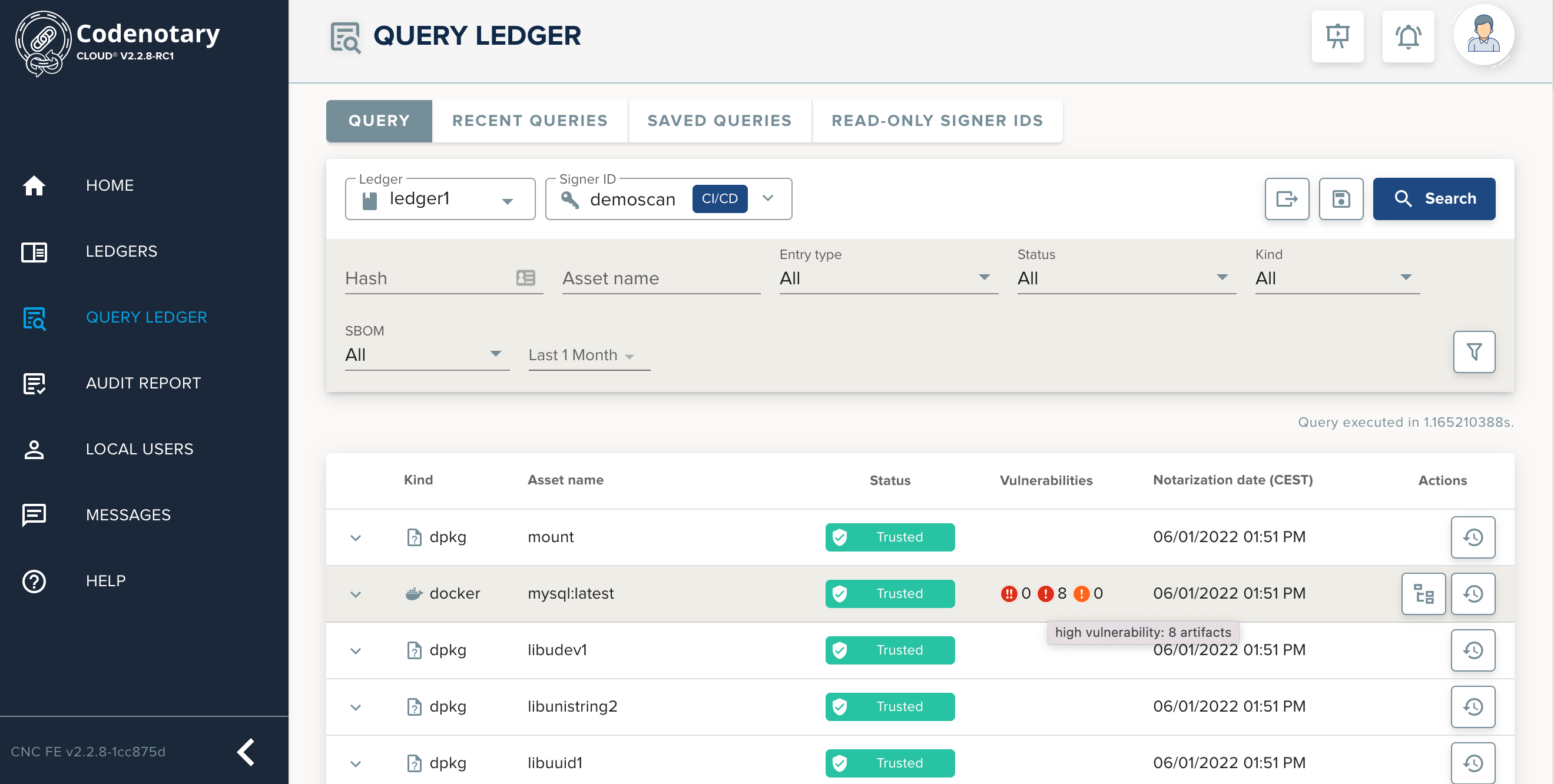
    Codenotary this week announced it has integrated support for the Supply-Chain Levels for Software Artifacts (SLSA) framework in its free notarization and verification service for ensuring the integrity of code.

    Moshe Bar, Code Notary CEO, said as the first application security platform to attain SLSA compliance, the company is making it easier for organizations to secure their software supply chains.

    SLSA is a framework defined by Google that it uses to attach binary authorization to code. In its current form, SLSA is a set of guidelines that identify how to attain four different levels of application security. The long-term goal is to create a framework that will automatically generate auditable metadata that can be fed into policy engines to create a SLSA certification.

    Codenotary provides tools for cataloging and verifying the authenticity of components used with a software development life cycle. At the core of that platform is an immutable open source immudb database that cryptographically attaches an identity to each software artifact. That capability can also be used to dynamically generate a software bill of materials (SBOM).

    The Codenotary Attestation Service can also be integrated with the continuous integration/continuous delivery (CI/CD) platform that DevOps teams use to build and deploy applications using those artifacts. Ideally, DevOps teams should construct a security pipeline that runs alongside their existing DevOps pipelines, noted Bar.

    In the wake of recent high-profile software supply chain breaches, the level of scrutiny being applied to how software is constructed has increased significantly. In theory, at least, developers have assumed more responsibility for application security as part of an overall shift left that provided them with more programmatic control over IT environments. Cybercriminals, however, are now becoming more adept at compromising developers’ credentials and insert malware as an app is developed.

    DevSecOps best practices are, of course, being adopted to teach developers how to better secure their application environments. The issue is that not enough developers are learning how to secure applications fast enough. The volume of attacks against the software supply chain continues to grow at a rate that is now much faster than organizations can thwart simply by educating developers.

    There is a now clear need to embed more cybersecurity guardrails within DevOps workflows, noted Bar. Rather than attempting to achieve that goal in a piecemeal fashion, Bar said Codenotary is making a case for an integrated platform that can be invoked as a natural extension of a DevOps workflow.

    In general, Bar said there’s now a greater sense of urgency when it comes to software supply chain security. Many of the reviews of those processes are, arguably, long overdue. One way or another, there will be a lot more questions asked about how software is actually developed. The organizations that consume this software are starting to appreciate how vulnerable they are as the overall dependency on software continues to increase. The only real question now, unfortunately, is how many more breaches there might be before those software security issues are thoroughly addressed.

  • Survey Surfaces Raft of Application Security Issues

    Survey Surfaces Raft of Application Security Issues

    A global survey from ReversingLabs found 87% of respondents agreed that software tampering has become a more frequently-used cybersecurity attack, but only 37% said they have any means to detect it.

    The survey, which polled 300 IT and security professionals, was conducted by Dimensional Research on behalf of ReversingLabs, a provider of a platform for analyzing any file, binary or object. Despite software tampering’s frequency, only 7% of survey respondents said they could detect software tampering at each phase of the software development life cycle.

    Just as troubling, only slightly more than half (51%) reported being able to protect their software supply chain with only a third being able to actually check for tampering once an application is final and deployed, the survey found.

    Overall, more than half of respondents (54%) said their organization knowingly released software with potential security risks. Nearly every respondent (98%) also acknowledged that reliance on third-party software use, including open source software, increases security risks.

    On the plus side, more than three-quarters of respondents (77%) said they appreciated the value of a software bill of materials (SBOM) that makes it possible to ascertain what software artifacts are being employed within an application. However, only 27% of respondents said their organization currently generates and reviews SBOMs. A full 90% said they are finding it increasingly difficult to create and review SBOMs. Nearly half of the survey respondents reported that SBOM processes today involved manual steps.

    Other SBOM hurdles respondents cited included lack of expertise (44%) and inadequate staffing to review and analyze SBOMs (44%).

    ReversingLabs CEO Mario Vuksan said that while it’s still early days as far as SBOM capabilities are concerned, a series of high-profile zero-day vulnerabilities has forced the issue into the spotlight. Organizations are now spending months looking for every possible instance of newly discovered vulnerabilities because no one is quite sure what application components are running across an extended enterprise, he noted.

    However, as DevSecOps best practices continue to evolve and mature, it’s also clear that SBOMs will play a critical role in securing software supply chains, Vuksan added. The challenge is that in the age of microservices, application environments are now much more dynamic as components are ripped and replaced with greater frequency, he added.

    SBOMs, of course, are just one element of what will be required to secure a software supply chain. Many organizations are now reviewing their software development processes and uncovering uncomfortable truths about how software is currently built and deployed. The ultimate goal is not to slow down the rate at which software is developed but to make sure there are guardrails in place that prevent insecure software from being deployed in the first place. Far too many developers today still view cybersecurity reviews as tasks to be avoided in the name of meeting an application deployment deadline.

    Hopefully, that won’t continue to be the case as more responsibility and accountability for applications security shifts left toward developers and DevOps teams. In the meantime, however, when it comes to application security, it’s apparent there’s still much room for improvement.

  • Jit Emerges to Address Cybersecurity Policy-as-Code Orchestration

    Jit Emerges to Address Cybersecurity Policy-as-Code Orchestration

    Jit today emerged from stealth with a free namesake orchestration platform beta that automatically implements security plans as code.

    Aviram Shmueli, chief product officer for Jit, said the company will both make security plans it developed available as code within GitHub. In addition, Jit will make available a service through which customers can submit documents and spreadsheets that Jit will convert into a custom security plan that can be executed as code.

    Fresh from raising $38.5 million in seed funding, Jit is aiming to advance the adoption of DevSecOps best practices by enabling cybersecurity policies to be more easily implemented as code via its orchestration platform, said Shmueli. The Jit platform enables developers and DevOps teams to take advantage of a graphical tool to automatically implement security policies within a DevOps workflow with a single click, he noted.

    The goal is to eliminate the need for separate DevOps teams to create security policies that each would need to individually manage, added Shmueli.

    In theory, DevSecOps best practices require shifting left the responsibility for security toward application development teams. The challenge is that development teams generally don’t have the expertise required to craft effective cybersecurity policies. Jit is making a case for a platform that makes it simpler to automatically implement vetted cybersecurity policies.

    Exactly how far responsibility for application security will shift left remains to be seen. Developers generally prefer to spend as much time as possible creating business logic rather than implementing cybersecurity policies. As such, it’s frequently left to a DevOps team to find a way to consistently implement cybersecurity policies across multiple applications. Each DevOps team will need to decide how much they can rely on the policies defined by Jit versus opting to implement a set of policies defined by their internal cybersecurity teams. The issue that often arises is cybersecurity teams lack programming skills; the only means available to define cybersecurity policies is some type of document or spreadsheet that, one way or another, needs to be converted into code.

    Given the ongoing chronic shortage of cybersecurity expertise, it’s apparent that more efficient methods for sharing cybersecurity best practices are required at a time when application environments continue to both rapidly expand and increase in overall complexity.

    Regardless of the DevSecOps approach, the pressure to address application security is mounting in the wake of a series of high-profile cybersecurity breaches. Organizations of all sizes are now reviewing software supply chains that are increasingly being targeted by cybercriminals. Security policy-as-code tools make it possible to ensure that applications don’t, for example, communicate with an external system without express permission.

    One way or another, the level of application security currently being attained will improve in the months ahead as more mandates are enforced. The only real issue remaining is the amount of disruption to existing processes that will be required to achieve that goal.

  • How to Manage and Engage Remote Engineering Teams

    How to Manage and Engage Remote Engineering Teams

    As engineering teams look to remain remote or hybrid, executives need to fundamentally change how these teams are managed. After tackling the tactical aspects of a distributed workforce—like home office equipment, a comfortable space where employees can get work done and reliable meeting, calendar and communication tools—more nuanced issues come into play.

    Before the COVID-19 pandemic, when a minority of engineering team members worked remotely, those team members knew that they needed to make a concerted effort to connect and to be part of the group. When the majority are remote, however, the expectations of offsite employees have shifted dramatically. For organizations that had built their business with an in-person team, this brings up entirely new questions of communication, culture, loyalty, problem-solving and retention to the forefront.

    Fundamentally Shifting Engineering Team Structure

    Inspiring change requires fundamental shifts in the ways engineering teams work. Our own engineering teams have experimented with some changes that have proven effective, including:

    • A globally revised team structure that embraces a culture of autonomy and breaks larger engineering teams into smaller groups. Smaller groups help engineers feel more engaged, valued and empowered; it keeps meetings short and focused and allows for more parallel streams of work.
    • Overhauling our design process to get a champion or ‘anchor’ from the dev team involved in key features early on. This anchor is responsible for translating product and design requests into technical specs and is the de facto technical lead of the feature. Having this role rotate between team members for each feature means each member gets a chance to grow their skills as a technical lead.
    • Assigning dedicated designers to smaller groups to empower them to make small adjustments mid-flight. This would allow standups to operate as mini working sessions to iron out technical details that would normally be resolved through ‘shoulder taps’ or in-person quick questions.
    • Placing a strong emphasis on sprint retros as a way to make real changes to the way work gets done. When used in conjunction with an initiative to empower devs, sprint retros became a powerful tool to get dev feedback on improving the process.
    • Keeping teams accountable by encouraging transparency and clear communication as a tradeoff for their autonomy. We encouraged note-taking and regular updates, as well as clear goal-setting from the teams at the beginning of each sprint. By holding teams accountable to the goals that they set, it became easy to see when things were and were not working.
    • Experimenting with a four-day workweek to see if we can drive both greater happiness and productivity. This was perhaps the boldest of our experiments; we demonstrated trust in our team and set clear expectations around outcomes rather than hours. This has motivated our team and raised their morale in crucial ways at a time when switching jobs was both tempting and easy.

    Hacks That Worked in Person

    What are some of the things that worked in the office? This list will be different for each organization; for us, it was group brainstorms, in-person one-on-ones, summer Fridays and ongoing vibe checks. Here are some of the ways we hacked these to make them work for remote teams:

    • Group brainstorms: Digital whiteboards like Miro or Mural have been great. Digital sticky notes, too. This has enabled distributed engineering teams to contribute either all at once or asynchronously.
    • Summer Fridays: Give people the afternoon off even if it isn’t technically “leaving the office early.” Or try having everyone shut off notifications on Friday (or Monday morning) so they can get some undisturbed work done before shutting off for the weekend. Monthly mental health days off for the whole company can be a great idea too.
    • In-person one-on-ones: With Zoom, something is definitely lacking. Try spending half the one-on-one meeting chatting casually about things other than work.
    • Vibe check: Open office hours dedicated to work culture; surveys from time to time to gather quick informal feedback or think about other ways to elicit ongoing feedback from every employee, including engineering teams.

    Generate Culture and Well-Being

    What keeps most employees at companies is social bonding, inspiring projects and the possibility for growth. A question a lot of executives at previously onsite organizations are asking themselves is, “How do you fulfill the need for social bonding when most employees, including your engineering team, are remote?” In other words, how do you bond socially and do so remotely? Two goals we have identified are getting team members talking outside of work while avoiding Zoom fatigue issues and ongoing opportunities to share personal successes with colleagues.

    Some of the ways we have built culture are:

    • Having (non-mandatory) Friday lunch and games like trivia, Jeopardy!, games or online games
    • Different ongoing events like photography challenges, health challenges and even an at-home Iron Chef-style cookoffs.
    • Having leaders share how they spent their weekends and time off. We believe in demonstrating a healthy work-life balance from the top down and encouraging our team to take the time they need to unplug and recharge.
    • Figuring out how (and how not) to surface urgent issues via Slack; working on a system to avoid pinging people after hours for non-urgent issues.

    Above All, Manage With Empathy

    These last two years have been exhausting for most people. Hands down, the best way to manage and engage the people you work with—no matter if they are in engineering or marketing—is to be empathetic to the difficulties that they may be going through outside of work. Executive teams can make all the tactical changes to their teams they want, but without managers that really care about their teams, you will inevitably fail to keep the best people around. Empathy-driven leaders lift their team members up and drive the kind of culture people want to be part of.

  • Saying Goodbye to Legacy Systems

    Saying Goodbye to Legacy Systems

    Are you still using a rotary phone, tube television or Rolodex? Probably not. But if you were, you’d still be using newer technology than what many enterprises still rely on every day to drive mission-critical applications that we use every day when shopping, banking or hundreds of other normal tasks. 

    At least two-thirds of large enterprises are running mainframe-based apps that date back 10 to 20 years and more than 25% of businesses feature applications that are between 20 or 30 years old. Today, businesses are often running and maintaining legacy applications built on traditional databases while simultaneously building microservices-based apps to accelerate new services and innovations. The mantra “If it ain’t broke, don’t fix it” certainly applies here; and while there are many reasons organizations continue to rely on mainframes and legacy systems, there are also many organizations that want to begin modernization initiatives but don’t know where to start.

    However, the past few years saw a wave of new digital-first companies in all industries putting pressure on legacy systems-based businesses—from retail to finance to manufacturing to technology. The COVID-19 pandemic accelerated many organizations’ modernization plans and made clear that for those that wanted or needed to modernize to stay competitive, avoiding the problem just wasn’t an option. Companies found that if they weren’t proactive about modernizing, the cost of being reactive when they needed to update and evolve was exorbitant.  

    Accelerating IT modernization initiatives can be a major challenge: Safely modernizing those legacy apps and mainframe systems and the critical data in them can seem impossible, but it can be done. Companies like Kroger, for example, have already made that jump and there’s a lot to learn from them. Here are three things that can help any enterprise on their journey to say goodbye to mainframes and legacy systems:

    You Need a Frictionless Path for Legacy Apps

    Many modern solutions are only focused on greenfield applications and helping newer born-in-the-cloud companies and projects; however, the reality is most Fortune 1000 companies have a lot of existing applications they can’t afford to ignore or completely rebuild all at once. Supporting existing applications with standard interfaces like Postgres while delivering the scalability and resiliency to support modern applications is critical to providing a bridge from where companies have been to where they are trying to go. Distributed SQL databases provide a seamless path forward to modernize existing apps while supporting new and current initiatives. 

    Embrace Automation

    It’s time to stop relying on complex code or fragile systems with bolted-on third-party tools. Being able to rely on intelligence and automation in the data layer for distribution, resiliency and availability is critical to minimizing changes and impacts on current applications. Doing so will reduce risk, offload legacy app tasks and ensure systems have the intelligence to work properly. With a distributed SQL database, you can deliver a single logical database that appears to applications like a monolithic, single-server database but with the underlying intelligence to allow it to stretch across hybrid, private and public clouds. 

    Finding Flexibility and Becoming Future-Proof

    To avoid being tied to specific systems or architectures, it’s time to adopt a future-proof mindset. Businesses can achieve this through:

    • Multi-cloud/hybrid cloud: With a distributed SQL database, you can deliver a single logical database that looks like a monolithic, single-server database but with the intelligence to stretch across hybrid, private and public clouds—providing the flexibility to be deployed wherever the application is needed or is best served.
    • Any hardware: No two data centers look alike and there are a wide variety of hardware needs, from bare metal to VMs and containers. The right modern distributed database provides ultimate flexibility in where the data layer can be installed to match whatever hardware and configurations are already in use. 
    • Any deployment: Existing organizations have a wide variety of environments and deployment types, from single data centers to two or more private data centers to more and more hybrid environments that span on-premises and public clouds. A modern distributed database provides the freedom to support a wide range of deployment options, including synchronous replication, geo-partitioning and cross-cluster asynchronous replication.  
    • Open source freedom: While many databases provide some open source components, there are still a few 100% open source solutions committed to the Apache 2.0 license. Users can benefit from the full set of enterprise features and capabilities in these open source solutions as well as benefit from the security and transparency that comes with a 100%-open source solution. 

    It’s time to update the old adage, “If it ain’t broke, don’t fix it” to “If it ain’t fixed, it could be broke,” with regard to modernizing legacy systems. If you’re considering starting a modernization journey, save time, resources and money now to make upgrades that might later be costly, time-consuming and overwhelming for your internal teams. 

  • Contrast Security Adds Free Code-Scanning Tool

    Contrast Security Adds Free Code-Scanning Tool

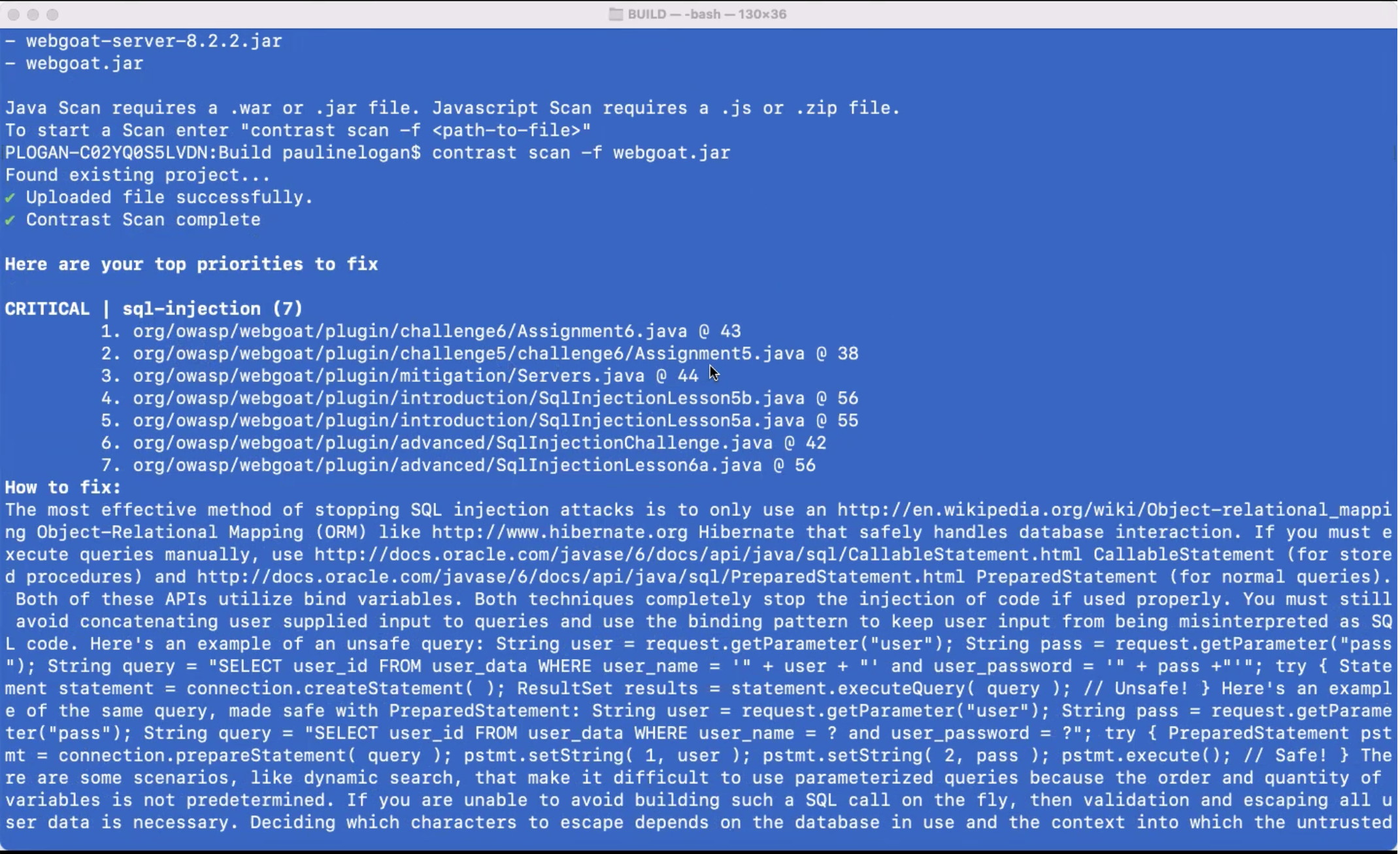
    Contrast Security this week made available a free security tool that enables developers to scan their code using the same core engine used by the cybersecurity team within their organization.

    Steven Phillips, vice president of product marketing for Contrast Security, said while there is no shortage of free tools for scanning code these days, the majority are not especially accurate. The scanning engine in CodeSec by Contrast Security is more than 10 times more accurate, Phillips said, because it is optimized to identify true positives versus generating a lot of false negatives, he claimed. He added that CodeSec is not just another freemium offering for developers that is a hobbled version of a commercial offering.

    CodeSec also differs from Contrast Security’s existing application security tool because it provides access to a command-line interface (CLI) that makes it easier to integrate within the context of a DevOps workflow. That approach makes it simpler for organizations to shift more responsibility for application security further left toward developers, noted Phillips.

    However, shifting responsibility left toward developers is not a panacea, Phillips said. The Contrast Security approach enables more collaboration between development and cybersecurity teams that are using the same scanning engine via a software-as-a-service (SaaS) platform to discover vulnerabilities, he noted.

    It’s difficult to determine just how far cybersecurity might shift left, but every vulnerability discovered by an application development team is one less for cybersecurity teams to ask developers to fix in a production environment. The challenge is making it as simple as possible for developers to discover those vulnerabilities.

    One way or another, the amount of time and effort being applied to application security has increased sharply in recent months following the disclosure of a series of high-profile breaches. Cybercriminals are now targeting software supply chains as part of an effort to compromise a wide range of downstream applications. Many of the modules that developers routinely reuse are being compromised by surreptitiously inserted malware. The fundamental challenge organizations are trying to address is how to build and deploy more secure applications without slowing down the rate at which they are built.

    Naturally, training developers to recognize security issues is a big part of the equation. However, no two developers are ever going to have the same level of cybersecurity expertise. Tools that identify vulnerabilities in ways that developers can act on are critical for advancing the adoption of DevSecOps best practices. Those tools require some level of acceptance among developers because they tend to prefer CLI tools.

    In the meantime, organizations will most likely have to scan a wide range of already-deployed applications for vulnerabilities. Applications running both inside and outside the cloud have been routinely deployed with a minimum level of scanning. The truth is that many developers have tended to view cybersecurity policies as an impediment to building and deploying applications. Unfortunately, cybercriminals now appreciate and take full advantage of the opportunity to wreak havoc.

  • LogicMonitor Expands Reach and Scope of Observability Platform

    LogicMonitor Expands Reach and Scope of Observability Platform

    At its LM Elevate user conference, LogicMonitor today formally launched LM Envision, an observability platform that incorporates artificial intelligence (AI) to both discover and then remediate issues.

    LogicMonitor CEO Christina Kosmowski said LM Envision is the only observability platform available via a software-as-a-service (SaaS) model that can be applied to both on-premises and cloud applications. In total, there are already more than 2,000 integrations for the platform as part of the open LM Envision ecosystem, she noted.

    Over the last year, additional capabilities have been developed and added to the observability platform. These include application performance monitoring (APM) tools to identify bottlenecks and optimize performance, expanded support for public clouds and Kubernetes environments, integration with the StackStorm automation platform, integration with Terraform infrastructure-as-code tools and more advanced tools for searching logs.

    The company has also extended its AI operations tools to provide more context when troubleshooting issues by aggregating logs and including topology tools and graphs.

    Finally, LogicMonitor has added a push metrics application programming interface (API) to make it simpler to ingest data, pre-integrated dashboards and support for open source OpenTelemetry agent software.

    Kosmowski said it’s only a matter of time before observability and AIOps converge to the point where IT teams will finally be able to spend less time managing platforms. One of the major challenges IT teams face is that each platform they use requires its own framework to monitor and manage it. As observability and management frameworks converge, the overall overhead associated with managing modern IT environments should steadily decline as machine learning algorithms make it easier to surface issues before they create a major disruption, she noted.

    The overall goal is to close the loop between the discovery of an IT issue and its remediation, Kosmowski added.

    Observability, of course, is one of the core tenets of any set of DevOps best practices. Achieving it, however, has always been a challenge. The goal now is to eventually replace the hodgepodge of monitoring tools that track a limited set of pre-defined metrics with an observability platform that not only aggregates metrics but enables DevOps teams to launch queries and surface IT issues. In some instances, the rationalization of monitoring tools will help justify the acquisition of an observability platform. The paradox is that, as IT environments become more complex, it may actually become easier to manage those environments as more applications become instrumented and the various silos that isolate IT teams from one another start to collapse.

    In the meantime, there is no shortage of observability platform options. The primary difference between each of them is the degree of integration they provide and their ability to employ AIOps to automatically resolve issues, said Kosmowski. Each minute DevOps teams don’t spend on managing IT platforms is a minute that can be applied to spurring innovation, she added.

    One way or another, DevOps teams will soon have more access to information about their IT environments than ever. Less clear is how much of the data being collected by observability platforms will actually constitute actionable intelligence. But as observability continues to evolve, it’s now more a question of the degree to which that goal will be achieved versus if or when.

  • Go Language is Popular? | VMware Sells to Broadcom? | Unlimited PTO?

    Go Language is Popular? | VMware Sells to Broadcom? | Unlimited PTO?

    Welcome to The Long View—where we peruse the news of the week and strip it to the essentials. Let’s work out what really matters.

    This week: Golang goes from zero to hero, will Broadcom buy VMware? And limitless vacation is still a Thing. (more…)