Category: Infrastructure/Networking

  • Hybrid Cloud in 2024: Trends and Predictions

    Hybrid Cloud in 2024: Trends and Predictions

    Hybrid cloud environments are becoming increasingly pivotal for DevOps teams, primarily due to their ability to bridge the gap between the rapid deployment of public cloud resources and the security and control of private cloud infrastructure. This blending of environments provides DevOps teams with flexibility and scalability, which is crucial for operating continuous integration and continuous deployment (CI/CD) in large enterprises.

    In a hybrid cloud setup, DevOps teams can swiftly deploy and test new applications in a cost-effective and scalable public cloud environment. Once the applications are ready for production, they can be seamlessly transitioned to a private cloud or on-premises environment, where they benefit from enhanced security and control. This allows DevOps teams to optimize their workflows, reduce time to market, and respond more effectively to business needs.

    The hybrid cloud also enables a more collaborative and agile working environment. DevOps teams can leverage various tools and platforms available in the public cloud while ensuring that sensitive data and critical applications are securely managed in the private cloud. This both enhances operational efficiency and improves compliance with data governance and regulatory requirements. These benefits will make hybrid cloud an indispensable asset for DevOps teams in 2024 and beyond.

    What is a Hybrid Cloud?

    Let’s start with a brief definition. A hybrid cloud is a computing environment that combines a public cloud and a private cloud by allowing data and applications to be shared between them. This combination allows businesses to enjoy the best of both worlds, leveraging the scalability and cost efficiencies of public cloud platforms while enjoying the security and control offered by private cloud infrastructure.

    This hybrid cloud model provides businesses with more deployment options and greater flexibility to scale computing resources. It also helps in reducing capital expenditure and improving security by allowing sensitive data to be stored on a private cloud. A hybrid cloud strategy enables businesses to allocate resources efficiently, keeping less critical applications on the public cloud, while mission-critical applications run on the private cloud.

    Current State of Hybrid Cloud Computing

    The hybrid cloud market is in a state of rapid growth and evolution. As businesses increasingly recognize the benefits of a hybrid approach, the adoption of hybrid cloud strategies is on the rise.

    In a world where digital transformation is the norm, hybrid cloud computing has emerged as a key enabler. It offers the flexibility needed to adapt quickly to changing business conditions, the scalability to handle sudden increases in workload, and the security to protect sensitive data. These benefits have made hybrid cloud a cornerstone of digital transformation strategies.

    However, the journey to hybrid cloud is not without its challenges. Businesses are grappling with issues related to data security, compliance, integration, and management. There are also complexities related to workload portability, interoperability, and the need for skilled resources. Despite these challenges, the adoption of hybrid cloud continues to grow as businesses seek to leverage its benefits to drive innovation and competitive advantage.

    Emerging Trends in Hybrid Cloud for 2024

    Increased Adoption Across Industries

    Many industries, including the banking and finance sector, healthcare, retail, manufacturing, and even the government sector, are seeing increased adoption of hybrid cloud strategies. This trend is driven by the need for greater agility and flexibility, better cost management, and improved security and compliance.

    In the healthcare sector, for example, hybrid cloud is enabling the integration of disparate systems, facilitating the sharing of patient data, and supporting telehealth initiatives. In the banking sector, it is helping to manage risk, improve customer experiences, and drive innovation. In retail, hybrid cloud is supporting omnichannel strategies, personalizing customer experiences, and improving supply chain efficiency.

    Advancements in Cloud Technology

    The hybrid cloud landscape in 2024 will be shaped by advancements in cloud technologies. Technologies like containers and Kubernetes are simplifying the deployment and management of applications, making it easier for businesses to adopt a hybrid cloud strategy. The rise of serverless computing is also contributing to the growth of hybrid cloud by eliminating the need to manage servers and allowing developers to focus on writing code.

    Furthermore, advancements in networking technologies are making it easier to connect and integrate public and private clouds. The emergence of 5G is expected to further accelerate the adoption of hybrid cloud by providing the high-speed connectivity needed to support real-time applications.

    Integration of AI and Machine Learning

    The integration of artificial intelligence (AI) and machine learning (ML) into hybrid cloud environments is a trend that is rapidly gaining momentum. One key aspect of this integration is the ability to use AI for better resource management within the hybrid cloud. AI algorithms can analyze patterns in data usage and application performance, allowing for more efficient allocation of resources across public and private cloud environments.

    Furthermore, AI and ML are also facilitating better data management and analytics. Cloud-based services are making AI/ML more accessible to businesses of all sizes. By integrating these technologies, businesses can unlock insights from vast amounts of data stored across different cloud environments.

    Predictions for Hybrid Cloud in 2024

    Growth in Edge Computing Integration

    By 2024, the integration of edge computing with hybrid cloud architectures is expected to grow significantly. Edge computing brings data processing closer to the location where it is needed, optimizing response times and saving bandwidth. 

    In a hybrid cloud context, this means that organizations can process critical data at the edge, in real-time, while still leveraging the cloud for less time-sensitive tasks. This integration is particularly beneficial for industries like manufacturing and autonomous vehicles, where real-time data processing is crucial. The combination of edge and hybrid cloud computing enables businesses to harness the power of cloud computing while maintaining the speed and efficiency of edge processing.

    Improved Security and Compliance Measures

    In 2024, we anticipate significant advancements in the security and compliance aspects of hybrid cloud environments. As these environments become more complex, the need for robust security measures that span both public and private clouds is crucial. Enhanced encryption techniques, more sophisticated identity and access management systems, and advanced threat detection tools will become standard. 

    Additionally, we expect to see the development of more streamlined compliance benchmarks and frameworks designed specifically for hybrid cloud architectures, simplifying the process of adhering to various regulatory standards and ensuring data privacy and protection across multiple platforms.

    Innovations in Cloud Management Platforms

    The year 2024 is likely to witness substantial innovations in cloud management platforms, driven by the need to manage complex hybrid cloud environments more efficiently. These platforms will offer enhanced capabilities in terms of automation, orchestration, and unified management across multiple cloud services. 

    The use of AI and machine learning for predictive analysis, resource optimization, and proactive problem resolution will become more prevalent. These platforms will also provide better tools for cost management and analytics, giving businesses a more granular understanding of their cloud usage and enabling more cost-effective decision-making.

    Customizable and Flexible Cloud Solutions

    As hybrid cloud environments continue to evolve, 2024 will likely see a rise in more customizable and flexible cloud solutions tailored to specific business needs. Providers will offer a range of options that allow businesses to mix and match services from both public and private clouds, creating highly personalized cloud environments. 

    This customization will extend to aspects like security, performance, and compliance, allowing businesses to fine-tune their cloud infrastructure to their specific requirements. Such flexibility will be particularly beneficial for businesses in niche markets or those with unique operational needs, enabling them to leverage the power of cloud computing without compromising on their specific requirements.

    Conclusion

    By 2024, hybrid cloud computing will have significantly evolved, becoming a critical component in the digital transformation strategies of various industries. This technology offers a blend of public and private cloud benefits, crucial for DevOps teams in terms of flexibility, scalability, and security. The integration of advanced technologies like AI, machine learning, and edge computing will enhance resource management, data analytics, and real-time data processing. Additionally, the hybrid cloud’s role in ensuring agility, better cost management, and compliance is expected to drive its wider adoption across sectors like healthcare, banking, retail, and government.

    The landscape will also see advancements in security and compliance, with sophisticated measures spanning both cloud types and cloud management platforms will evolve to include AI and machine learning for more efficient operations. Customizable and flexible cloud solutions will become prevalent, allowing businesses to tailor their cloud environments according to specific needs. Overall, hybrid cloud in 2024 will be a strategic enabler, equipping businesses with the necessary tools and capabilities to thrive in an increasingly digital world.

  • Sonar Adds Secrets Detection to Code Analysis Portfolio

    Sonar Adds Secrets Detection to Code Analysis Portfolio

    Sonar has added a secrets detection capability to its portfolio of tools for analyzing code and DevOps workflows.

    Designed to be applied to both finding secrets in code repositories and as applications are developed using an integrated development environment (IDE), this capability is being added to SonarLint, SonarQube and the managed SonarCloud service to identify, for example, passwords, application programming interface (API) keys, encryption keys, tokens, database credentials and other private information.

    Sonar co-CEO Olivier Gaudin said the goal is to eliminate secrets that are accidentally or maliciously stored in source code to improve software supply chain security.

    While it’s important to discover secrets in codebases, Sonar is making a concerted effort to make it simpler for developers to discover secrets before they find their way into a codebase that is one step away from a production environment, noted Gaudin. The SonarLint static analysis tool the company provides can now discover secrets in microseconds using the syntactic and semantic analysis engines the company has now extended, he added. No developer is going to wait five to 10 minutes for a code scan to be completed, said Gaudin.

    A Learn as You Code tool also explains how each secret found in a code segment poses a security risk. The overall goal is not only to remove secrets but, ultimately, reduce the number of instances where secrets are discovered in code, said Gaudin.

    Most organizations today are at varying stages of embracing DevSecOps best practices to improve software supply chain security. It’s not clear how readily secrets management is being embraced as part of those modernization efforts, but as cybercriminals routinely scan for application secrets stored in clear text that can be used to compromise application security, the need to encrypt secrets becomes a higher priority.

    There is, of course, no shortage of tools for detecting secrets. Sonar is now simply making a case for managing secret detection as part of a larger effort to reduce vulnerabilities in code that cybercriminals can exploit. That approach should help reduce the total cost of securing a software supply chain at a time when forthcoming regulations are going to make organizations that deploy software more accountable for application security.

    In the meantime, thanks to the rise of generative artificial intelligence (AI), the volume of code that needs to be scanned will likely exponentially increase. The issue with general-purpose AI platforms such as ChatGPT is they were trained using code of varying quality that often contains vulnerabilities that are now sometimes incorporated into the code they generate. On the plus side, however, many developers have little to no application security expertise, so it’s just as feasible that ChatGPT will create more secure code than a human developer. Regardless of how the code was created, however, no one will know for sure how secure it is without scanning it first.

    Hopefully, as AI progresses, the quality of the code being generated will only continue to improve. Until then, DevOps teams should continue to assume all code is suspect until proven otherwise.

  • Massdriver Adds Cloud Cost Controls to Internal Developer Platform

    Massdriver Adds Cloud Cost Controls to Internal Developer Platform

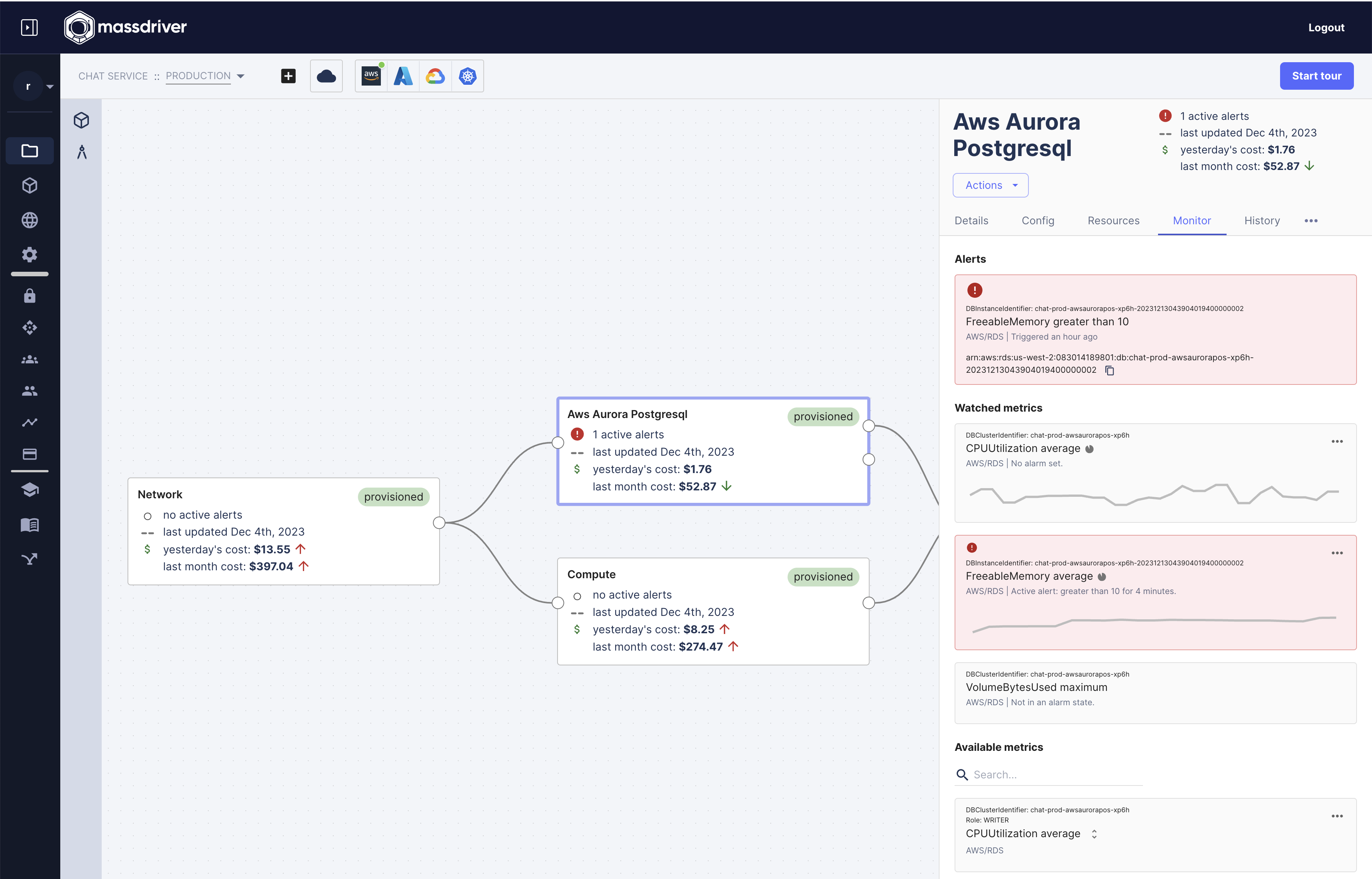
    Massdriver has made available tools for tracking cloud costs and generating a cloud infrastructure bill of materials (Cloud IBOM) to internal developer platforms (IDPs) as part of an ongoing effort to streamline platform engineering workflows.

    The Cloud IBOM makes it possible, with a few clicks, to map hybrid cloud resources such as databases, machine learning pipelines and serverless computing frameworks.

    Massdriver CEO Cory O’Daniel said collectively, these tools reduce expenses by preventing misconfigurations that result in unexpected costs. Rather than solely providing a summary of costs incurred, the tools provided by Massdriver surface how much cloud services are going to cost at the time the developer is invoking them, he noted.

    In the absence of that context, developers will nearly always overprovision cloud resources to ensure maximum availability regardless of cost, says O’Daniel. The overall goal is to help organizations reduce the total cost of IT by providing developers with insights into costs in real-time, he added.

    Earlier this year, the company launched an IDP that comes with platform engineering tools that, for example, make it possible for DevOps teams to build a catalog of infrastructure components that developers can access within the context of guardrails they define. The platform also includes observability and visualization tools that make it simpler to track metrics and monitor the usage of cloud resources.

    Massdriver is making a case for an IDP that provides built-in tools and workflows that enable organizations to embrace platform engineering as a methodology for managing DevOps workflows at scale. The goal is to reduce the level of expertise required to build and deploy applications in cloud computing environments, said O’Daniel. One of the primary reasons there are not more applications running in the cloud today is that these environments are still too complex to successfully manage, he added. An IDP abstracts away that complexity within a set of workflows that have been vetted by a DevOps team, he added.

    There are, of course, multiple approaches to building an IDP, but rival approaches require too much effort to set up and maintain, said O’Daniel. A proprietary platform provides a more turnkey approach that doesn’t require DevOps teams to either build their own or customize an open source platform, he added.

    It’s not clear at what pace organizations are embracing platform engineering, but there is a clear need to strike a balance between delivering IT services managed by a centralized team and the desire a developer might have to embrace new tooling whenever they see fit. Today, too much responsibility for provisioning IT environments has been pushed left toward developers who now have less time than ever to write code.

    There is, naturally, no guarantee that reducing the cognitive load for developers will increase productivity. Building applications requires streaks of inspiration, but, in theory, an IDP should provide more time for inspiration to strike. DevOps teams, as part of that effort, should be continuously working toward eliminating any bottlenecks that have emerged in their DevOps workflows.

  • Key Cost Optimization Strategies for Multi-Cloud Environments

    Key Cost Optimization Strategies for Multi-Cloud Environments

    In today’s ever-changing technology landscape, businesses are realizing the advantages of multi-cloud environments. These environments allow organizations to tap into various cloud platforms and use their services as required. This change signifies a shift away from relying on just one cloud provider. Businesses now embrace the flexibility and adaptability that come with using multiple clouds simultaneously.

    In complex multi-cloud environments, it is crucial to manage costs effectively. It is important to strategically optimize costs while considering your organization’s specific needs. By utilizing tools, implementing processes and continuously monitoring costs, you can save money while still reaping the benefits offered by different cloud providers.

    What is Multi-Cloud?

    A multi-cloud environment describes a setup in which companies or individuals utilize cloud computing platforms or providers to fulfill their computing requirements. In a multi-cloud setup, organizations have the ability to integrate both public clouds (such as Amazon Web Services, Microsoft Azure or Google Cloud Platform) and private clouds (on-premises or hosted private clouds) to establish a diverse and adaptable computing infrastructure. Rather than relying on one cloud provider, multi-cloud strategies distribute workloads across several cloud environments. Rather than depending on a single cloud provider, a multi-cloud strategy involves distributing workloads across various cloud environments.

    Benefits and Challenges

    Multi-cloud environments offer organizations numerous benefits, including flexibility, reliability, scalability and cost optimization. When organizations distribute their workloads across various cloud platforms, they reduce the chances of downtime or service disruptions due to a single provider failure. This guarantees uninterrupted availability and minimizes any potential impact on business operations.

    It is quite challenging to manage a multi-cloud environment for several reasons. Organizations must tackle challenges related to governance, cost management, integration and compatibility. To overcome these obstacles effectively, it is important to implement a well-defined strategy with efficient management tools.

    Since each cloud provider comes with its own set of tools, APIs and policies, ensuring consistent governance across different cloud platforms is challenging. Since different cloud providers have differing pricing structures, it is quite difficult to monitor and optimize costs in a multi-cloud environment.

    Analyzing and understanding each provider’s cost model is necessary when tracking usage patterns across different platforms. Integrating services from different cloud providers into a cohesive system architecture can be challenging due to compatibility issues. Careful planning and expertise are needed to achieve seamless integration without conflicts or performance problems.

    The Importance of Cost Optimization in Multi-Cloud Environments

    In today’s evolving technology landscape, businesses need to make the most of various cloud environments to fully utilize their cloud capabilities. However, great power entails great responsibility and cost optimization is a critical aspect that should not be overlooked.

    As businesses expand their cloud presence across multiple providers, optimizing costs becomes necessary to maximize ROI and stay competitive in today’s fast-paced market. In a multi-cloud environment, organizations typically use several cloud platforms simultaneously, including Amazon Web Services (AWS), Microsoft Azure, and Google Cloud Platform (GCP), to reduce expenses and maximize efficiency by comparing the services, features, and pricing models offered by each of the providers.

    Multi-cloud environments offer opportunities for cost optimization by allowing organizations to choose the cost solutions tailored to their specific needs. With access to pricing models and options offered by providers businesses can optimize their expenditure based on workload requirements.

    Optimizing Costs in Multi-Cloud Environments

    To optimize costs in multi-cloud setups, one must carefully analyze and manage expense factors across providers and services. It involves understanding cost structures, pricing models and usage patterns while considering workload requirements to choose cost-effective options for different tasks. Achieving these financial benefits requires efficient resource allocation and minimizing unnecessary expenses.

    This section discusses the key strategies for optimizing costs in a multi-cloud environment.

    Automating Resource Management

    You can optimize costs in a multi-cloud environment by automating the management of resources. Efficiently optimizing costs in cloud environments relies heavily on automating resource management. This enables organizations to monitor usage levels and resources dynamically as required, effectively implement cost-saving policies and ensure optimal utilization of cloud services without the need for human intervention.

    ​Organizations can automate their processes and tasks to streamline their operations, thereby saving time and reducing the risk of overspending on unnecessary resources. To effectively handle resources, it is crucial to have monitoring tools that offer real-time observations on usage patterns and performance metrics. These tools enable businesses to identify underutilized resources, which can then be automatically shut down or adjusted in size as required.

    Automation also involves implementing automatic resource allocation capabilities based on demand fluctuations. By scaling up or down depending on workload requirements, organizations can optimize costs by ensuring they only pay for the resources they truly need at any given time.  By implementing these automated policies, organizations are able to enforce cost optimization practices. For example, by establishing guidelines for assigning metadata tags to resources, organizations gain visibility and control over expenditure across various cloud platforms.

    Additionally, scheduling non-production environments to automatically shut down during off-business hours can significantly reduce costs. By turning off development and testing environments when they’re not in use, companies can avoid paying for resources during periods of low activity.

    Analyzing Costs in Multi-Cloud Environments

    While analyzing costs in a multi-cloud environment is challenging, it is a crucial strategy for your organization to make the most of its resources and avoid unnecessary expenses. It’s important to understand usage patterns and expenditures to optimize costs effectively. Start by gaining visibility into spending across all clouds. Use cost management tools provided by the cloud platforms or consider third-party solutions that consolidate data. This helps track costs at a detailed level and identify areas of high expenses. Analyze usage patterns to find instances that can be resized or turned off when not needed. By adjusting resources based on demand, overprovisioning can be avoided and unnecessary costs reduced.

    Here are the key steps to analyze costs in a multi-cloud environment:

    • Identify and categorize workloads
    • Track usage patterns and cost
    • Analyze the usage patterns of your workloads
    • Automate cost optimization
    • Incorporate cost analysis into your decision-making process
    • Review cost optimization strategy regularly

    Use Spot Instances

    In multi-cloud environments, using spot instances is crucial for cost optimization. These instances are available from cloud providers at a much lower price than on-demand or reserved instances, leading to substantial cost savings for organizations. With spot instances, you can take advantage of unused or idle capacity on cloud providers’ infrastructure, resulting in substantial cost savings. Being strategic with spot instances provides economical access to compute resources. Cloud providers offer discounted spare resources in the absence of regular customer demand, making it favorable compared to on-demand or reserved instances. Use on-demand or reserved instances for critical tasks while employing spot instances for less critical workloads. To optimize costs, you should leverage on-demand, spot and reserved instances, i.e., a mix of all of them.

    Right-Sizing and Efficient Resource Allocation

    Rightsizing is a key strategy for cost optimization that reduces costs and enhances performance in multi-cloud environments, leading to substantial savings. One of the most important steps in this regard is capturing comprehensive data on resource utilization (CPU, memory, storage and network utilization). By identifying over-provisioned or underutilized instances, organizations can optimize resource allocation. Automated tools simplify this process by monitoring and recommending adjustments. Consolidating workloads into fewer instances and leveraging virtualization technologies or containerization platforms further improves performance and scalability.  Right-sizing and resource allocation are two key techniques that can help optimize costs in a multi-cloud setup.

    Here are the key strategies at a glance:

    • Analyzing workload requirements
    • Selecting the appropriate instance types
    • Regularly review and adjust resource allocations based on actual usage patterns
    • Implementing auto-scaling and load-balancing mechanisms
    • Utilizing resource tagging and monitoring tools for cost visibility
    • Right-sizing resources on demand
    • Automated scaling strategies

    Conclusion

    By implementing key strategies such as using reserved instances or savings plans, automating resource management, implementing rightsizing techniques, leveraging spot instances, optimizing data transfer and storage, applying automation and orchestration principles, practicing financial governance and budget management and keeping an eye on future optimizations, businesses can effectively control their cloud spending and ensure they are making the most of their multi-cloud investments while minimizing costs.

    However, it’s important to acknowledge that cost optimization in cloud environments comes with its own set of challenges. Managing costs can be quite challenging for cloud environments despite their flexibility and scalability. From dealing with pricing models to facing a lack of visibility across clouds, there are obstacles that need to be overcome.

    With careful planning and implementation combined with ongoing monitoring and review processes, organizations can mitigate the challenges and truly harness the power of multi-cloud. Your organization should adhere to the key strategies outlined in this article to take advantage of the benefits of multi-cloud while ensuring optimal costs in their cloud spending.

  • Five Great DevOps Job Opportunities

    Five Great DevOps Job Opportunities

    devopsy.kinsta.cloud is now providing a weekly DevOps jobs report through which opportunities for DevOps professionals will be highlighted to better serve our audience.

    Our goal in these challenging economic times is to make it easier for DevOps professionals to advance their careers.

    Of course, the pool of available DevOps talent is still relatively constrained, so when one DevOps professional takes on a new role it tends to create an opportunity for others.

    The five job postings shared this week are selected based on the company looking to hire, the vertical industry segment and, naturally, the pay scale being offered.

    We’re also committed to providing additional insights into the state of the DevOps job market. In the meantime, for your consideration:

    SimplyHired.com

    Selby Jennings
    Chicago, Illinois
    AWS DevOps Architect
    $191,000 to $242,000

    Indeed.com

    Verizon
    Alpharetta, Georgia
    DevOps Architect
    $159,000 to $201,000

    LinkedIn

    JetBlue
    New York, New York
    Senior Principal DevOps Engineer
    $134,600 to $210,100

    Dice

    Northrop Grumman
    Dulles, Virginia
    Senior Principal DevOps Engineer
    $120,900 to $181,300

    CareerBuilder.com

    Octo
    Washington, D.C.
    Platform DevOps Cloud Engineer
    $110,000 to $170,000

  • BMC Adds More Tools to Modernize Mainframe Applications

    BMC Adds More Tools to Modernize Mainframe Applications

    BMC this week added a BMC AMI DevX Code Insights tool that makes use of machine learning algorithms to break apart monolithic COBOL mainframe applications into subprograms that are easier to update and refactor.

    In addition, BMC is now making available BMC AMI zAdviser Enterprise, a commercial instance of a previously announced free tool that uses machine learning algorithms to collect telemetry data from mainframe applications. The commercial version of the tool adds a dashboard built and maintained by BMC that makes it simpler to consume that data.

    John McKenny, senior vice president and general manager of Intelligent Z Optimization and Transformation at BMC, said BMC AMI DevX Code Insights visually maps a mainframe application to analyze data flow and debug applications made up of millions of lines of code in real-time that would otherwise be too complex to unravel. Armed with the insights gained, IT teams can then isolate business logic, refactor subprograms, add application programming interfaces (APIs) or remove dead code as they see fit, he added.

    BMC AMI DevX Code Insights also makes it simpler for organizations to onboard new developers to a project at a time when many of the original developers of COBOL applications are retiring, said McKenny.

    In the coming year, BMC is also committed to adding generative artificial intelligence (AI) tools to its portfolio for reengineering mainframe applications, added McKenny. Those tools, for example, will make it simpler to create documentation for legacy applications, he noted.

    It’s not clear how quickly organizations that have mainframes are looking to re-engineer applications, but as more of them adopt DevOps best practices, they are being updated more frequently. The less monolithic the application, the simpler that task becomes. The issue is that mainframes tend to run large applications that access large amounts of data, so many IT teams are naturally fearful of breaking them if they are reengineered, noted McKenny.

    While there is no doubt that the process of reengineering applications will become more automated in the years ahead, software engineers will still be needed to manage the overall process, said McKenny. The role of the software engineer will undoubtedly evolve, but it’s not likely software development and deployment will be wholly automated any time soon, he noted.

    In the meantime, IT organizations that manage mainframes continue to embrace DevOps best practices to varying degrees. There may be some applications that they continue to build and deploy using waterfall methodologies, but as mainframe applications become integrated into digital business workflows, the need to update them faster becomes more apparent.

    The challenge, as always, is not only providing IT teams with the tools to make that transition but also navigating the cultural issues that inevitably arise any time a change of this magnitude is made to the software development life cycle (SDLC). Regardless of the approach, the building and maintenance of mainframe applications are evolving. The only issue that remains to be resolved is finding ways to reduce the level of friction that transition creates as quickly as possible.

  • Microsoft Previews Additional Copilot Tools for Azure

    Microsoft Previews Additional Copilot Tools for Azure

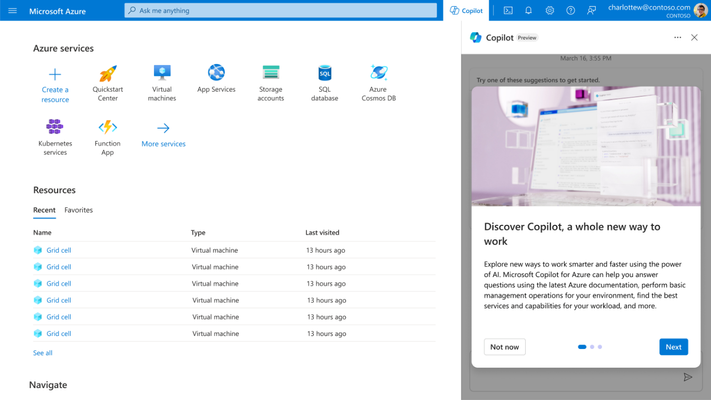
    At its Ignite 2023 conference, Microsoft this week previewed Copilot tools to simplify the management of the Azure cloud service along with a tool that streamlines the building and deploying of artificial intelligence (AI) applications on the Azure platform.

    In addition, Microsoft launched Microsoft Copilot Studio, a low-code tool that automates the process of creating data integration plugins and adding custom copilots within the Microsoft Copilot for Microsoft 365 tool that Microsoft previously launched.

    Microsoft Copilot for Azure leverages large language models (LLMs) to enable IT teams to use natural language to create, configure, discover and troubleshoot Azure services. It also enables IT teams to create complex commands, ask questions and optimize costs.

    Erin Chapple, corporate vice president for Azure Core at Microsoft, told Ignite attendees that Microsoft, along with a handful of customers, is already using Microsoft Copilot Azure to manage Azure infrastructure.

    In the long term, it’s clear that Microsoft is moving toward streamlining the building and deployment of AI applications using Azure AI Studio, a framework for invoking the AI models that Microsoft makes available on the Azure platform. The goal is to make it possible for organizations to create their own copilots based on AI models they have trained.

    It’s still early days in terms of organizations leveraging AI models to build applications, but it’s already apparent that DevOps and machine learning operations (MLOps), along with data engineering and cybersecurity best practices, will need to converge. Microsoft is making a case for Azure AI Studio as the framework that will enable IT organizations to achieve that goal.

    Of course, Microsoft is not the only provider of IT infrastructure resources with similar ambitions, but thanks to its investments in OpenAI and the acquisition of GitHub, it is furthest along in terms of defining a framework for building AI applications at scale. Last week, GitHub previewed an extension of the Copilot tools it already provides to help developers write code that leverages generative AI to automatically propose an editable plan for building an application based on natural language descriptions typed into the GitHub Issues project management software. Copilot Workspace will generate editable documents via a single click that can be used to create code that developers can then visually inspect. Any errors discovered by application developers or the Copilot Workspace platform can also be automatically fixed.

    At the same time, GitHub has extended the scope and reach of Copilot Chat to make it simpler for developers to use natural language to discover issues in their code base.

    Generative AI is already having a massive impact on the rate at which applications are developed, but that code still needs to be reviewed. Chat GPT is based on a general-purpose large language model (LLM) that is trained by pulling in code of varying quality from all across the web. As a result, code generated by the platform might contain vulnerabilities or be inefficient. In many cases, professional developers still prefer to write their own code.

    Of course, not every programming task requires the same level of coding expertise. In many instances, ChatGPT will generate, for example, a script that can be reused with confidence across a DevOps workflow. There is no shortage of mediocre developers who are now writing better code thanks to tools such as GitHub Copilot, and soon, domain-specific LLMs will make it possible to consistently write better code based on validated examples of code.

    The next challenge is going to be finding a way to manage increased volumes of code. There is no doubt that AI will be applied to the management of DevOps pipelines, but for the moment, at least, the pace at which AI is being applied to writing code is already exceeding the ability of DevOps teams to manage it.

  • Immutable Infrastructure: The Next Step for DevOps

    Immutable Infrastructure: The Next Step for DevOps

    Immutable infrastructure, a concept that is rapidly gaining traction within the dynamic field of DevOps, offers a transformative approach to organizational security for companies of all sizes. 

    Instead of the traditional method where existing components are continuously updated and modified, immutable infrastructure advocates for an entirely different philosophy: Components are replaced wholesale with new versions and never altered after deployment. This type of paradigm shift promises a plethora of advantages, chief among them being enhanced consistency and reliability, which is a potential game-changer for DevOps practices.

    This article offers a thorough exploration of immutable infrastructure, taking a look at its core principles and examining why it’s becoming a focal point in the DevOps community. To help further bring these concepts to life, we’ll thoroughly examine the tools and techniques that are pivotal in its implementation.

    Understanding Immutable Infrastructure

    Immutable infrastructure is rapidly gaining traction in the world of cloud services and DevOps for its innovative approach to managing servers and components. Once deployed, these elements are not modified or updated; instead, new servers are created from a common image whenever changes are necessary. 

    This type of approach simplifies rollback procedures and minimizes troubleshooting, as the integrity of servers is maintained. Furthermore, this methodology, facilitated by OS-level virtualization, marks a significant departure from more traditional practices.

    And with the AI market already worth $313 billion, integrations of models and solutions will only become more popular. Integrating AI into immutable infrastructure can significantly enhance its efficiency and reliability. 

    In such systems, AI can be used to monitor and analyze system performance continuously. By applying machine learning algorithms, it can predict potential issues and automate the process of deploying new server instances before problems arise. 

    Comparing Immutable and Mutable Infrastructures

    The Immutable Approach

    Immutable infrastructure offers streamlined change tracking and rollback, with each new server or VM being easily identifiable. Its uniform configuration across servers simplifies testing and the unaltered state post-deployment reduces complexity. 

    This makes it ideal for environments with numerous interdependent elements, such as in DevOps and cloud computing, virtually eliminating configuration drift.

    Challenges With Mutable Infrastructure

    In contrast, mutable infrastructure necessitates more time for server provisioning due to manual configurations. It’s prone to various update failures and connectivity issues, with each server’s unique configuration complicating diagnostics. 

    This traditional approach struggles with unpredictability, making it less suitable for modern DevOps practices and resulting in frequent configuration drifts.

    Advantages of Immutable Infrastructure

    Opting for immutable infrastructure brings numerous benefits. Support calls are significantly reduced and security is enhanced, thanks in part to the use of machine learning to identify anomalies. 

    The implementation of safelisting rules strengthens security controls. Moreover, this approach mitigates configuration drift and negates the need for synchronization during updates, leaning on cloud platforms for swift VM management. It also ensures rapid recovery due to easy rollbacks and encourages experimentation, thus fostering innovation.

    Best Practices for Immutable Servers

    Adopting immutable servers involves several best practices all organizations would be wise to apply. Building images in a chroot environment helps isolate changes while keeping test suites lean and efficient while avoiding overburdening the change process as a whole. 

    Caching installation files near the build location optimizes update speeds, layering images on top of a base server image expedites updates, and minimizing the OS image reduces boot times and security risks. Additionally, using containers can dramatically speed up and simplify the process.

    Essential Tools for Immutable Infrastructure

    When it comes to immutable infrastructure, certain key tools have emerged as indispensable for efficiently managing and maintaining this modern approach. These tools help create, manage and deploy server images and infrastructure-as-code throughout organizations. 

    Here’s a closer look at some of these essential tools:

    Packer

    Packer is a crucial tool for creating identical machine images for various platforms from a single source configuration. This tool is instrumental in the immutable infrastructure because it allows for the creation of fixed server images that can be quickly deployed, ensuring consistency across environments.

    Terraform

    Terraform by HashiCorp is another key player, enabling users to define and provide data center infrastructure using a declarative configuration language. It helps maintain the infrastructure-as-code, which is an essential aspect of immutable infrastructure. 

    Terraform allows for safe and predictable changes to infrastructure, with efficient management of both cloud and on-premises resources.

    Docker

    Nowadays, Docker is synonymous with containerization, allowing applications to be packaged into containers—consistent, isolated environments that encapsulate all the necessary components of immutable infrastructure. 

    Docker helps to simplify the deployment process and ensures that applications run the same way everywhere, aligning perfectly with the core principles of immutable infrastructure.

    Kubernetes

    While not directly mentioned earlier, Kubernetes deserves recognition for being a powerful orchestration tool for containers, including those that are managed by Docker. Kubernetes excels in automating deployment, scaling and management of containerized applications, which aligns well with immutable infrastructure principles.

    SaltStack

    SaltStack offers configuration management and orchestration tools, standing out for its ability to manage and automate more complex and scalable infrastructures, making it suitable for environments where immutable infrastructure is implemented. SaltStack ensures that server configurations are enforced and maintained as defined, preventing drift.

    Jenkins

    An open source automation server, Jenkins plays a significant role in the continuous integration and continuous deployment, or CI/CD, pipeline. Jenkins helps to automate the various stages of the delivery pipeline, which is crucial in testing and deploying immutable infrastructures.

    Ansible

    While Ansible is generally associated with configuration management, it also excels in automated deployment. Because it doesn’t require agents on the servers it’s managing and uses a simple, human-readable YAML syntax, it’s useful for setting up and maintaining immutable servers.

    Git

    Git, a version control system, is essential for tracking changes in the configuration code, scripts and templates used to create and manage immutable infrastructure. It allows teams to manage their infrastructure-as-code, ensuring a detailed audit trail of what was changed, when and by whom.

    Ultimately, a slew of tools and platforms are available to make the transition to immutable infrastructure as seamless as possible. From container orchestration with Kubernetes to configuration management through Ansible, you have a robust array of options at your disposal. 

    Yet, when it comes to handling specification files or any form of documentation, you want an added layer of security. A robust custom document viewer with extra security features, for instance, could be an invaluable asset in this regard, offering the ideal blend of accessibility and protection while ensuring that your infrastructure is immutable and secure from prying eyes.

    Choosing the Right Tools For Your Organization

    When integrating immutable infrastructure into your operations, selecting the right mix of tools that align with your specific requirements and existing workflows is crucial. Essential factors such as compatibility, scalability and ease of use should be considered to create a robust, efficient and effective immutable environment. 

    Each of the tools highlighted above has its own strengths and is a part of a broader ecosystem designed to support the reliable, consistent and secure deployment of applications and services across organizations of all sizes. Companies can fully embrace the immutable infrastructure model by learning how to properly harness these tools, improving stability, scalability and efficiency across all of their IT operations.