
— ROELBOB

Here in the US this Thursday is our Thanksgiving holiday. Originally celebrated the 4th Thursday in November, it has expanded where most people also take off the following day, Friday, for a long weekend. In fact many schools here in the US close the entire week to celebrate this holiday commemorating the Pilgrims giving thanks for making it through their first year here in the New World with the help of their friends, the native peoples of America. It also marks the official start of the Christmas/New Years holiday season here.
Beyond that though Thanksgiving always gives me a moment to pause, reflect and think about what I have to be thankful for. Here at devopsy.kinsta.cloud we wanted to ask our readers, no matter where in the world you are, what you have to be thankful for. It could be something DevOps or IT related, it could be something unrelated. But if you tweet what you are thankful for and use the hashtag #DevOpsThanks our team will monitor and we are picking the top ten tweets to win one of our new DevOps T-shirts. So lets hear what you are thankful for this year.
I wanted to take a moment and list a few things we are thankful for here at devopsy.kinsta.cloud
On a personal note, I am grateful for the terrific group of people who have joined with me at devopsy.kinsta.cloud, who bought into a common dream of creating something new & great; who with me push the rope up the hill everyday to make it happen. I am also grateful to my wife and kids, who don’t see me quite as often as they did before devopsy.kinsta.cloud but who are the reason I get up and do it everyday. Most of all I am grateful to God or whatever you want to call him for giving me the chance to live a blessed life and the opportunity to meet such great people and do something I love for a living.
So what about you? What are you grateful for? Tweet it on #DevOpsthanks for chance for a t-shirt.
Dipping back into the DevOps Enterprise Summit 2015 well, today’s feature is my talk with Sam Guckenheimer of Microsoft. Sam presented on the transformation he oversaw at Microsoft’s Visual Studio moving to Visual Studio Online. It is the story of COTS to SaaS and all of the pitfalls and idiot taxes Sam and team paid along the way.
From this ordeal Sam and his team developed the 7 habits of successful DevOps. Like my earlier interview with Jeff Snover, it is a great peek into how things have changed in Satya Nadella’s Microsoft.
Here is Sam’s complete presentation at DOES 15. Just a heads up that it is about an hour long, but I think well worth the time.
If you like what Sam is talking about and want to learn how the 7 habits of successful DevOps can help you lead the transformation in your organization, stay tuned for podcast I just recorded with Sam that will be in our leadership suite next week. In the meantime you can download and find out more about Sam’s 7 successful habits here.

Just back to my room from the Sheryl Crow/Fall Out Boys concert that ended CA World 2015. It was a full two days of information and news showing how CA Technologies is evolving to remain relevant in the changing world of ITOps and Development. There was certainly lots of new things to report as CA has had a busy year. Among the highlights:
Rally Software’s agile business is going to transform CA. While you didn’t hear or see the name Rally, you saw Agile everywhere. From the large “agile transformation zone” to the frequent mentioning of agile ways and training by all of the executives there. The entire top cadre of CA management has undergone agile training according to CEO Mike Gregoire. Agile training is going to be a big part of CA’s business going forward. It represents an expansion from the core software shop business that CA is built on. How this will effect relations with their channel partners who have traditionally delivered training and pro services around CA software tools, remains to be seen. But in order to use CA’s portfolio of software, some training and transformation counseling will be necessary. My prediction is that over the next 18 to 24 months the Rally culture is going to profoundly change CA for the better, making them more nimble, agile and delivering transformation change to their large enterprise customers.
New leadership faces. While Gregoire himself is now one of the veterans of the exec team having been there about 3 years, much of senior management is new having just taken the reigns in the last few months. I had a chance to question Otto Berkes, CTO and Ayman Sayed, Chief Product Officer. While both have only been on the job for a few months each, they both seemed to have a firm grip on the companies road map and what the market is looking for.
 Sayed in particular seemed to have strong feelings about what the market is going to demand in the coming months and years, as well as a willingness to have CA deliver it. Among these is a change in how products are sold and delivered. CA had already started delivering some of their solutions as SaaS based solutions. Sayed went further saying that CA is going to move to a freemium model with some products. Not just a free trial period but actual free versions of their product and dare we say it, even open sourcing some code.
This will mark a big departure from CA’s traditional enterprise sales force. But I think it is an idea whose time has come. Today’s technical buyers don’t like to be “sold to” or even marketed to. They like to be educated, they like to hear about problem solving, they like to try solutions and if they find they work they will buy these solutions without the hard sell that traditional enterprise sales team used to exert.
Other new faces were the Xceedium team joining CA’s security team. My old friend Mo Rosen is aboard and Xceedium’s privileged identity management solution is being integrated with CA’s existing identity products to create a full spectrum of choices both host-based and in the cloud.
The idea of solutions that work both on premises and in the cloud is another big theme at today’s CA. They recognize that for the foreseeable future hybrid environments will rule.
 Of course DevOps was everywhere. It has been and remains one of the foundational aspects of CA’s business model. In listening to several sessions on DevOps at CA it also became clear that CA is using DevOps to expand their business from tools for IT operations to providing developers with tools for the total software development lifecycle.
Among these developer tools API and API management is big business at CA. Their API and APM business lines are both leaders in their markets. CA seeks to use these best of breed tools to expand their customers use of CA portfolio products.
I also had a chance to speak one on one with GM of the DevOps business at CA, Mike Madden. Madden comes from the mainframe division over to DevOps and he recognizes that in todays bi-modal or variable speed IT world DevOps and mainframes actually work together. Madden has a good vision of what DevOps is and what CA needs to do to remain and grow their relevance in the market. He is also a big fan of the agile business from Rally and I think we will continue to see that as a big part of the DevOps business.
This years CA World was considerably larger than last years event. When you think about it CA World is really different than many other conferences. Just about all of the 5000 attendees are CA customers. The idea is that attendees already use CA product, they are primed to perhaps buy more.
It will be interesting to see what changes are in store and what next years CA World will look like. A sure bet is that DevOps will continue to play a major part of the CA story.

BoomTown uses a specific set of DevOps processes in order to deliver websites with the latest real estate listings and housing data as well as a CRM solution and analytics tools for real estate professionals. “Our development, operations, and QA teams automate everything in sight while offloading to cloud providers and other services the tasks that those providers are best suited to,” says Brian Baumgartner, QA Manager, BoomTown.
As only one example, BoomTown recently adopted Amazon Web Services (AWS) for hosting various aspects of its infrastructure. “It enables us to provide high availability and resilient service while allowing our development team to focus on revolutionizing the Real Estate software industry,” says Baumgartner.
Docker containers support regular deployment processes at BoomTown, containerizing the environment setup for a more reliable, orderly deployment experience, whether the firm is pushing code to QA or to production, explains Baumgartner. TeamCity, the increasingly popular and frequently appearing name in build management tools and CI servers courtesy of JetBrains is BoomTown’s go to build platform. New Relic is BoomTown’s performance management solution of choice, enabling live transparency into the production application and server performance that keeps BoomTown citizens (customers) content.
Prior to applying Sauce Labs, BoomTown’s QA analyst team processed all software tests exclusively in a manual fashion. Every test run crossed their laps / machines / laptops. “Before a new feature release, an analyst would execute a full set of regression tests against the product or feature, often through several different browsers and versions to verify the new release and its function. This process alone took up to two weeks for large projects,” says Baumgartner.
BoomTown now uses a test automation framework constructed using several popular DevOps tools. The custom built testing automation leverages Ruby, Selenium WebDriver, Cucumber, MySQL, Sinatra, and Angular JS, says Joey Gryder, Senior Software Engineer in Test, BoomTown. The framework offers BoomTown views into historical and real-time test results as well as the capability to run manual tests through its dashboard front end software connection to its backend systems.
BoomTown applies a single web service to assert control and manipulation of test system automation features. A “test runner” library enables QA to run Cucumber features in a parallel execution approach. BoomTown uses MySQL to store test results. “When we combine all this with Sauce Labs’ VMs, we can schedule nightly test runs using our full testing suite on a variety of browser configurations,” says Baumgartner. This has enabled BoomTown to run up to 100 tests on software nightly.
Where time, resource, and person hours’ savings are concerned, the secret sauce in BoomTown’s software testing framework is its use of Sauce Labs VMs to support many automated tests in parallel. This has cut BoomTown’s longest test run time of an hour and a half down to less than 15 minutes.
“With Sauce Labs, it is trivial to spin up any number of parallel VMs, configured against your desired browsers to run through a set of Selenium WebDriver test steps. Without such a solution, BoomTown’s test team would have had to either execute its entire test suite locally through a single machine and browser, or build an in-house testing lab to achieve parallel browser testing,” explains Baumgartner. (Sauce Labs is obviously not the only player with competitors including BrowserStack and TestingBot; let your due diligence be your guide in selecting the best service for your needs.)
BoomTown saw offloading the work as the best option in order to accelerate otherwise time intensive testing tasks, preventing QA from becoming a sort of time-related bottleneck on CD. “We did this simply by increasing our VM count and running more tests in parallel,” says Baumgartner.
Adding VMs and increasing the number of parallel testing instances is an easily scaled approach that continues to speed tests and drive CD even as BoomTown adds tests and lengthens total test runtime.
Using automated parallel tests supported by Sauce Labs VMs frees up QA analysts to be more creative in their testing, finding more and more interesting ways to break the application under testing loads, says Baumgartner; meanwhile the automated testing ‘machine’ verifies the mundane and repetitive tests that the team has already established.
“We recently incorporated automation as a quality gate in our CI process. Before a pull request is accepted, it must pass a set of critical path UI tests that run up in Sauce Labs. This sets a certain level of quality expectations during our daily development process, which saves us time in testing,” explains Gryder.

Few verticals have seemed to embrace DevOps as quickly as the retail sector. Macys, Target, Nordstrom, WalMart and more have all demonstrated success adopting DevOps patterns and culture. We spoke to many of the folks from these retailers at the recent DevOps Enterprise Summit 2015 (DOES 15). Here is my interview with Jason Josephy and Courtney Kissler of Nordstrom.
I spoke to them right after they came off the stage where they showed a 20% improvement in cycle times year over year. This translated into significant savings to the company. Courtney has presented at DOES 14 so like many other presenters at this years event, this was an update on what happened since they last presented. It is a great interview, have a listen:
Here is a link to their actual presentation:
DOES15 – Courtney Kissler & Jason Josephy – Mindsets and Metrics and Mainframes… Oh My!
Stay tuned over the coming weeks as we will post more of our devopsy.kinsta.cloud exclusive interviews with many of the speakers and attendees of DOES ’15

I’m often asked how to create a DevOps Culture and there is no single answer to this question. The focus initially for me in any cultural movement is to understand how the organization incentivizes and what its core beliefs are. When it comes to DevOps, I am normally looking for ways to bring these two teams together from a fundamental aspect first. One method I have found that works well when I’m consulting with these two teams is a Culture Session.
Teams often end up with a subculture that incorporates aspects of the macro culture. These subcultures can evolve into the silos that DevOps is designed to break down. A Culture Session is one where you bring these teams together en masse and work on defining a new unified subculture.
The session starts before we even meet, with buy-in from the leadership. There will likely be detractors that will not want to attend or contribute. Having leadership not only broadcast the meeting, but support the change will be critical to success. We want to address this issue from the top down as well as from the bottom up.
With both teams in the same room we will begin to address the culture we want. Language should focus on the fact that the team is made up of all engineers. Creating a sense of a single team spanning Development and Operations is a key focal point in DevOps. In order to build a unified new culture, we must discover the core beliefs of the new team. Ask the team what they consider our core beliefs of their culture is. Don’t restrict the statements that come out of this part of the session, everything has merit and should be included.
It can be difficult sometimes to get a team to think in terms of beliefs. If we are greeted with blank stares or eye-rolls when asked what we believe in, try a different tactic. Ask the team what would be an ideal company to work for and build beliefs off of these statements. Here are some examples from my sessions, converted into beliefs.
| I want to work for a company that… | Belief |
|---|---|
| is fun to work for | We value a fun work environment |
| let’s me work from home | We value results over where work is accomplished |
| wants to hear my ideas | We value everyone’s input always |
| helps me to grow my career | We value the growth of people as much as the business |
| has a diverse workforce | We value equality in all aspects of our culture |
| has a community that supports each other | We value consistent adherence |
Once you have a fair number of items (based on the number of participants) we can begin to order the list. It’s acceptable to write these on yellow sticky notes as well if you don’t have a whiteboard. The ordering is accomplished via a process similar to voting in Lean Coffee. Everyone gets three votes; dispersed any way they desire. I tend to use dots on the cards and then add up each card. List the top 5-10 cards from highest to lowest, and these are your top cultural values. Discuss the results with the team, are they surprising?
I believe that aligned goals create a more comfortable work environment and encourage the building of trust. Your teams goals should not only be aligned with the business, but also with your culture. This will make introducing and reinforcing the proper behaviors easier. Some of the highest performing teams I’ve worked with had alignment on all three fronts: Business, Behaviors and Culture.
Now that you have a core set of beliefs, it is time to begin talking about the behaviors we wish to see that drive those beliefs. The leaders at all levels must continuously encourage the community to reduce behaviors that are not aligned with core beliefs, while encouraging those that do. Over time the community will govern its own members, solidifying the positive culture and beliefs. The ability of the community to manage its own members requires the alignment I spoke of earlier.
What I call DevOps Language is key to building and maintaining a strong community. A major component to DevOps is a culture that is accepting, open, honest, collaborative and trusting. We tend to get defensive when we feel that our abilities or intentions are being called into question. The following shifts may appear simple and non-significant in the beginning, but these simple changes in how we communicate greatly enhance our ability to clearly get our message across.
Moving from “why” to “how” is a great first step in adopting a DevOps Language. Often we are faced with a lack of understanding that we desire to fill. Perhaps you are looking to get a better handle on the design or structure of a block of code or infrastructure. Maybe you are attempting to learn a process on a new team you’ve just joined. Regardless of the scenario, you are going to have questions. Like many “trigger” words, “why” tends to send some people into defense mode. Why can (and tone of voice is crucial here) make people feel as though you are questioning their intelligence and intent or even implying that you would have done it different (aka better). Moving the language from why to how you did something invites the listener to share their reasoning and experiences, not defend their position.
Another simple change that I have found and adopted into my DevOps Language is “I agree”. I had a bad habit of saying “I know” when someone would tell me something I… well that I already knew! Again, the issue here is subtle, but with all things subtle they build over time. Saying “I know” sounds condescending at times and can be seen as an attempt to exert your superiority. In other words, this is not an collaborate language tactic. When we say “I agree” instead, we are saying that we are aligned in our thinking. This is including all parties and doesn’t shut the conversation down.
DevOps is all about collaborating to make our future better. We often need to review events of the past to identify how to create a better future. The key to this review is to not focus on counter factuals rather we use forward thinking language. Concentrate on moving from “we should or could have” to “we will”. Over time this will help the team to maintain a forward thinking bias rather than dwelling too long on the past.
Creating systemic long term positive change within your organization takes time, effort and alignment. Creating a unified culture and belief structure through collaboration and inclusion paves the way for your DevOps future. Focus on the language and behaviors that reinforce your culture. Encourage members of the community to help govern and guide the culture, using the agreed upon beliefs. Include the beliefs and DevOps language in the interview and hiring process, in order to include new employees early and often.
Let’s collaborate! I am always looking for ways to learn and grow. How have you aligned your teams around culture? How can I make this exercise more effective?
Continuing recapping my favorite sessions of DevOps Enterprise Summit 2015, here is Josh Corman and John Willis talking about Immutable Awesomeness. What is Immutable Awesomeness you ask? Have a listen to my interview with John and Josh and then listen into the actual session where they go over it.
Just a couple of hints: 1. Software supply chains are a great way to look at your development/deployment process 2.In a world where software controls everything, it really is a case of life and death 3. If you can’t get excited about what this all means, listen to the session again.
Of course what makes this interview and session great is the unbridled enthusiasm that both John and Josh bring to the subject. In fact there was a palpable buzz in the theater when they walked off the stage and over to my video studio. The same enthusiasm carried over to our interview too. It was a lot of fun to interview these two.
So have a listen and enjoy. Also if you enjoy John Willis presenting, he will be headlining the DevOps Connect: cdSummit SoCal on December 3rd, joining some other great speakers.
Here is John and Josh’s actual presentation:
One of my favorite presentations at the recent DevOps Enterprise Summit 2015 was Jeffrey Snover of distinguished engineer at Microsoft talking about his 16 year quest to bring what is today called Windows Nano Server to market. Interestingly when I spoke with Gene Kim about what he thought were some of the best presentations of DOES he also brought up Snover’s presentation as well.
Windows Server without Windows was something once considered heretical from anyone at Microsoft. As Jeffrey relayed to me in the interview below and on stage, he paid a price for evangelizing for this. But today we have a version of Windows Server that has only 1/20th of the footprint of regular Windows Server. It runs on mainframes, command lines and has virtually (no pun intended) all of the functionality that you need for a server in the cloud without the GUI overhead that Windows usually brings.
As importantly for me, Jeffrey also gave us a glimpse of what it is like to work in Satya Nadella’s Microsoft. It sounds like a very different place than when Steve Ballmer was CEO. Is also sounds very refreshing as well.
Here is my interview with Snover:
:
Here is Jeffrey’s actual presentation at DOES ’15
I imagine most people are like me and have a lot of things they’d like to do if they could find the time and energy for them. Lately writing has been one of those things for me. I suppose we all have our priorities. Traveling for tech events and coaching the kids’ soccer team can make it seem like there’s no time to write, and then something legitimately disruptive happens like one of your kids landing in the hospital.
I recently read Designing Delivery with a group of folks as the inaugural title for our devOps book club. In the book Jeff Sussna discusses delivering quality experiences to your customers as early and often as possible. Most people have been exhausted from traveling at some point in their lives. Many examples from the book talk about this shared experience. This allows us to empathize with a specific type of pain many airline and hotel customers are trying to manage while going about their business.
Early engagement that sets expectations can make a huge difference. By providing realistic travel times that account for things like seasonal roadwork airlines are more likely to have their customers arrive on time and in a good mood. A hotel that knows they’re dealing with jet lagged, travel worn customers would be well served to have fresh coffee, water, and fruit for them when they arrive if not a drink at the bar.
You can probably empathize with being travel worn if not jet lagged, but I doubt you understand the level of exhaustion and confusion that comes with having one of your children hospitalized in an emergency situation unless you’ve been there. Hospitals and hotels have a lot in common. One luxury a hospital doesn’t always have is setting expectations for the patients and families. In an emergency you could have less than an hour’s notice before the hospital makes its first impression. How do you make someone comfortable and help them relax when they’re quite reasonably stressed out and concerned?
My twins were diagnosed with Twin to Twin Transfusion Syndrome (TTTS) before they were born. The illness required an emergency trip to Women and Infants Hospital in Rhode Island on short notice. Providence is a sixteen hour drive from Atlanta. Given I was still in college we stayed at the Ronald McDonald house which are around for families that have a sick child in a hospital away from home.
A trip to an emergency room for a broken arm is one thing. Not knowing if or when your child is coming home is something else entirely. There were kids getting picked up by buses for school and parents that left for work while other members of their family where in the hospital or back home in another city. I’m thankful our stay was short and relatively uneventful. Women and Infants is an amazing hospital and the Ronald McDonald house really made us feel at home.
My twins have had their lives saved at Children’s Health Care of Atlanta a total of three times since then. One was hospitalized with cardiac issues immediately after she was born and had a balloon catheter procedure done at Egleston. Both have been in intensive care at Scottish Rite for respiratory issues which includes a visit within the past sixty days.
CookieOps was something I started with them over a year ago to try to raise money for these organizations. My girls sold me on the idea by telling me, “There are sick kids that still can’t go home and play with their brothers and sisters and we need to help them”. What started out as a bake sale turned into a model for approaching problems with a devOps perspective. For us that means embracing the Three Ways and following the CALMS model (Which is CAMS with an ‘L’ for Lean/Learning). We believe that every process has an artifact and there’s room to optimize both of them. It’s this type of thinking that leads to putting a mint on a pillow and understanding the cost involved far outweighs the related expenses. It’s often the little things we find delightful that make us loyal customers for life.

Like leaving cards near the elevators to help you remember where you parked coming in from the deck to find your child. I’ve wander around in a daze looking for my car in a hospital parking lot before. They’re big buildings that often have multiple decks. It’s easy to forget where you parked when you’re in a hurry to check on much more important things.

My daughter was really excited to get a postcard in the mail from her nurses after she was feeling better. I’m not sure how much time is spent writing these cards but I’m thankful for it. Extending the hospital’s experience out to when you’re home and things are back to normal is something that should be celebrated and is well worth the cost involved.
I’ve investigated a few ways for my kids to raise money with cookieOps but so far we’ve been giving out cookies for survey responses. Publishing the data from those surveys is another thing I’d like to make a priority but haven’t had the time to complete. As raising money for the hospital was always our primary goal when we first started putting surveys out I had little choice but to do so as efficiently as possible when the opportunity presented itself.
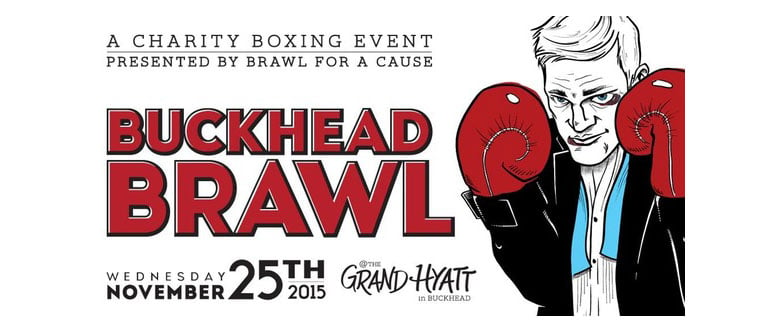
Brawl for a Cause allows regular people to raise money for causes they believe in by stepping into a boxing ring for their first amateur boxing match. A big difference between a road weary traveler and a family with a child in the hospital is the traveler usually signed up for the ass kicking. The hospitals are dealing with families that would have been fine without ever visiting, and the kids definitely didn’t sign up to fight with their illnesses.
So I’m glad to step in the ring on November 25th, fight for the sick kids that can’t go home yet, and make good on the promise I made to my daughters. My opponent is boxing to raise money for his daughter’s college education. While I believe everyone deserves the right to an education I also believe they need to live long enough to make it through school. There are opportunities to take your education into your own hands through programs like Kahn Academy. The kids in the hospitals lives are in the hands of the doctors and nurses watching over them. Those kids didn’t sign up for the ass kicking they’re taking, but I’m willing to risk a beating if it can help Children’s successfully ease a family through such a difficult time.
If you’re in Atlanta we’re boxing at the Hyatt Regency in Buckhead on the 25th. tickets are on sale now. You can donate to support these causes no matter where you live. I’ll take the punches but I need You to make a donation today.
