Category: Features

  • IBM InterConnect 2016: Sounding Off

    IBM InterConnect 2016: Sounding Off

    This years IBM InterConnect in Las Vegas was spectacular. Our devopsy.kinsta.cloud team covered as many of the 300+ DevOps tracks and sessions that we could. We have been editing video and getting ready to report on the show since then. Finally, we have enough ready and the time to give our full report.

    The last 6 weeks or so have been a rush here at devopsy.kinsta.cloud. I literally went straight from IBM InterConnect in Las Vegas to RSA Conference in San Francisco. Coming home from 2 weeks on the road I threw myself into putting the final touches on our DevOps Connect: CD Summit/Jenkins Days events this spring (click the link for more details on these upcoming events).

    So much to report from InterConnect that I haven’t had a chance to write up, but the good news is we have the videos to share with you all. The videos will be available on our devopsy.kinsta.cloud YouTube Channel under the playlist InterConnect 2016. We will feature some of the best in the days and weeks to come.

    Before I share the first batch of videos though I wanted to briefly go over what I consider the main news and themes of IBM InterConnect 2016:

    1. IBM and GitHub partner to deliver GitHub Enterprise as a hosted service or dedicated GitHub. While GitHub needs no introduction to most of you reading this, the ability to host your own GitHub enterprise version for your own private cloud or hybrid cloud is a major plus for organizations uncomfortable using a public repository for their code. I had a chance to speak with both IBM and GitHub folks at InterConnect and the videos on those will be available shortly. But if you are a Git user this could be something that really makes your day.
    2. IBM and VMware partner for seamless migration of VM workloads. I think this is really the short term biggest game changer coming out of InterConnect. Now all of of those VMware setups sitting in peoples private datacenter and server closets can be seamlessly moved to the cloud on IBM. While VMware always offered snap backups and such, this really makes it a no brainer to move your on premises VMware set up to the cloud quickly and painlessly.
    3. IBM brings Swift to Servers in the cloud. Swift has quickly become one of most used languages to develop client side application (mostly iPhone). IBM announced they were contributing code to the Swift community that will enable server-side Swift allowing developers who already know the language to work on the server side. Additionally, IBM Cloud via SoftLayer will be server side Swift ready. This was more of a roadmap announcement with more code and functionality to come. Important about this one is it represents some of the first fruit we have seen from the Apple-IBM partnership announced previously.
    4. Cognitive. I know it is a buzzword, but look beyond the buzzword.  Cognitive, AI or whatever you want to call it has the potential to have the biggest long term impact on how we live our life every day. Not only is IBM making great strides in Watson and cognitive capabilities, the real story is they are making it really easy for developers to hook into via API and bring this cognitive capability to developers everywhere. I spoke to one IBM security person who literally overnight used Watson cognitive to help prioritize large enterprise vulnerabilities. I spoke to another entrepreneur (video just needs her OK to release) who used Watson’s cognitive thinking to make what they claim is the smartest dating app in the market today. But frankly this stuff just barely touches the surface. Cognitive is going to touch everything we so including the IoT space, automation, health care, science and more. We may be seeing the birth of the next big thing right before our eyes.
    5. Bluemix Garage and Bluemix Garage Method – You will see several videos around the Bluemix Garage and the Bluemix Garage Method. In fact the Bluemix Garage area on the expo floor was the most visited exhibit at the show (well except for the Elton John concert I guess). In fact our first video today is a tour of the Bluemix Garage setup on the expo floor with Rachel Reinitz and Sarah Plantenberg, two of the key leaders of the team there. Bluemix Garage is key to the “innovate like a startup, scale to the enterprise” theme that was very prevalent at InterConnect. IBM is setting up Bluemix Garages all over the world to allow teams from enterprises to come in and learn how innovate like a startup. It gives them that startup feel, but with IBM’s own experience, as well as that of others who have been through the program to learn from.  In fact IBM has codified this into the Bluemix Garage Method. More than just code, it is also the processes, policies and protocols that IBM has gathered as emerging best practices for how do get things done in a DevOps/Agile manner.

    I have been following the Bluemix Garage stuff since it was announced at Gene Kim’s DevOps Enterprise Summit last October and am happy to see the progress Rachel and team are making.

    So below is our first video in the IBM InterConnect 2016 series. It is a tour of the Bluemix Garage on the expo floor this year. Below it are links to two other videos also on Bluemix Garage and Bluemix Garage Method. You can see more on the playlist we have set up.

    Also checkout these IBM Bluemix Garage & Bluemix Garage Method videos:

    Interview with IBM’s Peter Klenk on IBM’s Bluemix Garage

    Interview with IBM’s Chris Lazzaro on IBM’s Bluemix Garage Method

  • Experts Weigh In on the Evolution of DevOps

    Experts Weigh In on the Evolution of DevOps

    DevOps is an ethereal concept. It means different things to different organizations and individuals. It also is going through an evolution, which means that as quickly as we might think we have a grasp on what it is and how to effectively employ it, DevOps has moved on. There’s no way to accurately predict whether DevOps will even still be a thing in another five years, or if it will have faded into oblivion—replaced by the next hot tech or development model. We can, however, take a look at how DevOps has changed in the past year, and what the immediate future holds for it.

    It isn’t an easy question to answer because first we have to agree on what DevOps is. Are we talking about DevOps as a culture or business model, or are we referring to the evolution of the tools and applications generally used in a DevOps environment? I reached out to the DevOps community to get some expert insight.

    Current State of DevOps

    “The technology question is a common one when it comes to DevOps. We are still faced with the problem of a clear definition of DevOps. So what makes this difficult is … I’m squarely in the camp that believes DevOps is more about culture than tools or tech,” explains Andrew Storms, vice president of Security Services at New Context. “That being said, a well-rounded and mature DevOps organization does require a shift in people, processes and technology. A lot of people will likely point to orchestration of infrastructure as the most important DevOps tool. However, I think the bigger driver of orchestration has been virtualization and cloud.”

    One of the defining characteristics of DevOps from my perspective—aside from the IT culture aspect—is the fact that we continue to raise the bar for automation. Each new automation tool further streamlines the process and puts a spotlight on the next bottleneck. Eventually, a new solution is developed to automate that as well.

    Chef CEO Barry Crist believes that one of the most important evolutions in the world of DevOps in the past year is continuous delivery (CD)—or the process of rapidly developing software and iterating through quick, small-batch releases. “Continuous delivery was previously exclusive to the web innovators like Facebook, Amazon and Google, but over the last year companies have realized it’s a primary key to unleash an organization’s innovation engine. When the whole stack—infrastructure, compliance, security, microservices and apps—are all expressed as code, IT is able to deliver value more quickly.”

    DevOps also has introduced more common ground between developers and security/compliance officers. In high-velocity organizations that have embraced DevOps, IT can deal with security threats more quickly by assessing a vulnerability, creating a fix, testing it and deploying it rapidly before damage is done. DevOps is also starting to automate and define compliance. When compliance is defined as code, the software can be managed and tested like any other piece of code in the organization.

    The Evolution of DevOps

    Storms stresses that the immediate future of DevOps revolves around it becoming more mainstream—the new normal. “We are already seeing the business value of DevOps. Companies are getting code out the door faster and at a more efficient means. Other departments, like those of security, are starting to see the value of DevOps and looking at ways to incorporate key points into their departments,” he says.

    Crist sees DevOps as evolving beyond IT itself. “In the next few years, the DevOps tent will expand beyond ‘devs’ and ‘ops’ to include executives and other business units,” he says. “DevOps is really about building high-velocity organizations. Mature DevOps organizations see both innovation and quality increases that drive more profit and shareholder value, as well as advances in security and safety.”

    Only time will tell how DevOps will actually adapt and evolve. I tend to agree with Chef’s Crist that the natural evolution is to take the core principles and practices of DevOps and expand them beyond development and beyond IT to streamline all aspects of the organization. I guess the real question is whether or not we’ll still refer to it as “DevOps” at that point.

  • The DevOps Equation: Agility + Empathy = Quality

    The DevOps Equation: Agility + Empathy = Quality

    I had the chance to catch up with Jeff Sussna (@JeffSussna), founder and principal of Ingineering.IT, ahead of his keynote address on continuous design, scheduled for DevOps Days Atlanta, April 26-27.  He discussed the importance of designing for service, responding to the unexpected, and the importance of building empathy across teams.  

    Derek Weeks (@weekstweets): Today I’m really happy that we have Jeff Sussna joining us for the latest in this series. Jeff, why don’t you introduce yourself?

    Sussna: Sure. Thanks for having me. I’m an independent consultant. I’ve been around, since rocks were young or the 80s, whichever is older. My particular background is that I have built systems and led organizations across the entire development, QA and operations spectrum. So, I’m a little unique in that respect.

    My current focus is on helping IT organizations and digital businesses really bring together their ops and design thinking so they can not only go faster and not only be more resilient, but provide more customer value at the same time.

    Weeks: Let’s talk about that a little. How is continuous design—a subject you have written a lot about—coming into play? How can it help us be more resilient.

    Sussna: Just to explain a little about what we mean by continuous design. It’s basically bringing together the entire organization and a unifying design in operations. It’s taking what we are doing in DevOps and expanding it to include product, design and support. It lets the whole organization really have an agile conversation with a market and with its customers.

    The issue that we face is that we live in a service world now. The point is no longer delivering products like cars coming off an assembly line. It’s much more about responding to our customers and having relationships with them. This is happening in a world that is more and more complex while less and less is in your control. We can’t figure everything out in advance. We have to have the ability to respond to the unexpected. We have to be able to do that at every level.


    “This is happening in a world that is more and more complex, while less and less is in your control.”


    I will give you a couple of examples of things that are perfect illustrations of this:

    I recently wished a friend of mine happy birthday. The reason I did that was that because there was a notice on my calendar that said it was her birthday. It was wrong. It wasn’t her birthday. I had no idea where that notice came from. Did it come from Skype? Did it come from LinkedIn? Did it come from email? I had no idea.

    We face that in IT, too. Systems are becoming more complex. We develop microservices. We use public and private clouds at multiple levels. We’re no longer in a situation where we can control things. We have to be able to respond and respond at all levels.


    When we make design and operations unified and continuous, we are able to say, “Where did we think we were going? Where would we need to go? and what do we do next?”


    What I talk about in my book, in my workshops, and all my work is that this needs to happen at every level. It’s not just a matter of designing for failure inside the data center or inside the infrastructure. We also have to do it at other levels.

    Here is another example:

    I was trying to get paid recently by a large enterprise client in Europe. They were trying to wire money internationally and my bank wasn’t really set up for it and they were having problems. They just kind of gave up. I kept getting these messages saying, “Sorry, we tried paying you and it didn’t work.” That was the end of it.

    I started to get frustrated and my client within the enterprise started to get frustrated to the point where they sent a scathing email to our AP department which they CC’d me on, saying, “Why can’t we take the lead to get his guy paid?”

    That’s an approach that is based on resilience in the sense of assuming that something can go wrong and figuring out what he can do to fix it when it can go wrong. As opposed to the traditional approach where we’ve been trained to push certain buttons and take certain actions. If those actions don’t work the way they are supposed to, well, I guess that is someone else’s problem.


    https://www.youtube.com/watch?v=ISSMHmwIMtA


    Weeks: This brings to light some recent conversations I was having with Paula Thrasher at CSRA. She was talking about developing systems and how to make them more resilient. She is using pictures as part of her conversations with people to help visual their work. What work steps are there? What work is flowing? What is communicating with what?

    Are you taking similar approaches with continuous design in how you work with clients to pursue it?

    Sussna: Well, I try to introduce them to the principles and I also try to introduce them to a set of practices which actually comes out of Mark Burgess‘s work on promise theory. It is really a conceptual model for how we think about success and failure and how do we think about service. For example, Amazon helps you get everything you need in your life from shaving cream to batteries to snow tires to books as quickly and easily as possible. In order to keep that promise they make a whole variety of other promises. Some of which filter all the way down to a promise to be able to go over and make a change to production as quickly as possible.

    Once you take that mindset. The interesting thing about a promise and the reason we use that word is because it is very intuitive. We all know what a promise is. We all make promises to each other every day. On the other hand, when we think about it in terms of service, IT, or whatever it may seem a little odd. The thing about promises is that on the one hand we are making commitments to do things and on the other hand promises sometimes get broken. That is actually good because it forces us to think. If I promised to pay my vendor. What do i do if I’m not succeeding in paying my vendor?


    The thing about promises is that on the one hand we are making commitments to do things and on the other hand promises sometimes get broken. That is actually good because it forces us to think.


    It’s sort of flipping our mind. Again, we are doing this in DevOps world where you start thinking about things like mean time to repair (MTTR) instead of mean time between failure (MTBF). We shift from how do we create a situation to how do we create a situation from where nothing will ever break—which becomes less and less possible. When then need to shift to a situation where we can respond more and more quickly.

    We go to executives and say, “We don’t want to worry about how often stuff breaks anymore,” and they freak out. We have to teach them and we have to teach ourselves that we can’t prevent things from breaking. Instead, let’s be able to fix them so quickly that maybe no one notices. My focus is on really helping people shift their mindset from thinking about ourselves to thinking about who we are helping. And from thinking about what we are doing to thinking about how well it succeeds and how well it overcomes problems.


    We have to teach them and we have to teach ourselves that we can’t prevent things from breaking. Instead let’s be able to fix them so quickly that maybe no one notices.


    Weeks: You talked about delivering on promises as quickly as possible. How does continuous design account for doing things as quickly as possible but making sure the quality is there at the same time?

    Sussna: In two ways—one way is that when you do things in small increments you are able to find problems more quickly. This is classic; it comes out of lean. It comes out of integration. It’s pretty basic stuff for our community now that it’s much easier to find and fix a bug five minutes after you change a code than five weeks after you change the code.

    When you put things like Linux, agile, DevOps, and design all together, they all focus on incremental feedback loops where you discover the gap between what you think you’re accomplishing and what you’re actually accomplishing very quickly. Secondly, when you take this all to the way to the marketplace and you make it part of the relationship with your customer, you can reduce a tremendous amount of waste.

    The way to think about continuous design is: it’s all about steering. Think about a boat and you’re trying to sail across a bay. You can’t just point the boat at the other side and say go because the winds are changing and you’re going to be able to respond to things that you can’t predict. If you sail for 20 minutes then discover you had pointed in the wrong direction, you’re going to be way off-course. You’re then going to generate a tremendous amount of energy getting back on course.

    What continuous design says is just an extension of continuous integration and continuous delivery taken all the way though the business. When we steer continuously we steer efficiently.


    What continuous design is really just an extension of continuous integration and continuous delivery taken all the way though the business. When we steer continuously we steer efficiently.


    Weeks: I know you’re going to be keynoting DevOps Days Atlanta coming up in April. Chris Corriere, one of the guys on the organizing committee, tells me that you’re leading a full day workshop on continuous design before that. Maybe you could tell some of the people that are attending DevOps Days Atlanta why they should be there a day earlier for your workshop and what things you’re going to address during that time.

    Sussna: To some degree what I am going to address is everything we have been talking about for the last 10 minutes or so—relative to DevOps. I think the key thing is, and we need to think about it. We need to think about more than just going fast. One of the big misunderstandings that I see with DevOps is this notion that it is primarily about delivering application changes to production faster. That’s only half of it. We really need to think about from the perspective of providing service.


     One of the big misunderstandings that I see with DevOps is this notion that it is primarily about delivering application changes to production faster. That’s only half of it. We really need to think about from the perspective of providing service.


    You know what we are talking about is essentially developers and operations people providing better service to each other. As a result, they can deliver better service to the business.

    Where we talk about microservices. You know that word service is in there for a reason. If all you do is you kind of shatter your organization and shatter your architecture into a bunch of little pieces, you still have to figure out how those pieces come back together into something coherent. The answer to that is taking a really deep service-oriented approach. That is very much what my workshop is about. What does that word even mean and how do we do it?

    Weeks: You mentioned thinking about interactions as delivering better service to one another within the organization. How does empathy come into your thinking around DevOps and Continuous Design?

    Sussna: I’d like to say agility plus empathy equals quality. What I mean by that, in particularly empathy, I think it’s important to take a minute and clarify. When we talk about empathy we are not talking about wallowing in someone else’s pain. We’re not even necessarily talking about things on an emotion or feeling level. It’s very simply the ability to see things as if from an other’s perspective. I will give you a prime example of where that comes into play and how it’s important and how it helps.


    Agility + Empathy = Quality


    When I work with clients, I tend to look at their process using their organization from the product beginning to the support end. Often times I see support getting the short end of the stick. I see places where they get phone calls from customers with features that they don’t even know exist yet. They sometimes get talked down to by development or product or even operations. They say things like, “Well you’re just supposed to support the stuff. You’re the young people. You’re the less experienced people.”

    When we have the ability to see things from their perspective, we can think about how support is actually experiencing our delivery process. If we don’t think about them when we go through the process of delivering new features, they will be lost. Them being lost will show when customers call for help. That will significantly affect customer satisfaction and then even beyond.

    The reason we need to empathize with support is so we can empathize with the customer. Often times when we build things and we don’t think about the notion that our customers might have trouble with it. On the one hand we have the illusion that if we design it and we build it really well, they won’t have trouble. We can’t perfectly predict who they are, what they need or what they will encounter. There’s an inevitability to the idea that they are going to need some amount of help.

    Weeks: I think that is probably the best description of empathy within a DevOps environment that I have heard anyone talk about. Jeff it has been a great conversation. Thank you very much. I really appreciate it and we look forward to seeing you at DevOps Days Atlanta coming up.

    Sussna: Thanks. It has been great talking to you and I am really looking forward to the conference. It will be fun.

    If you want to learn more about continuous design from Jeff, be sure to join us at DevOps Days Atlanta. I will also be at the event giving an Ignite Talk, titled, “Real Heroes Draw Pictures,” focusing on lessons learned from the 31 DevOps and continuous delivery reference architectures I assembled.

  • Does DevOps Help or Hinder Compliance?

    Does DevOps Help or Hinder Compliance?

    DevOps tools and principles have revolutionized IT across many industries in recent years. But companies saddled with requirements such as Sarbanes-Oxley (SOX), the Health Insurance Portability and Accountability Act (HIPAA), Gramm-Leach-Bliley Act (GLBA) and Payment Card Industry Data Security Standard (PCI-DSS), for example, tend to be more cautious when it comes to adopting cutting-edge solutions.

    There are specific industries—health care and finance are two—that are strictly regulated and more reluctant to change. But even beyond those industries, there exist various compliance frameworks under which the rapid pace of change associated with DevOps may be seen as a risk. The flip side of that coin is that the agility and automation associated with DevOps actually might streamline and simplify compliance.

    The DevOps and Compliance Challenge

    Ken Cheney, vice president of Business Development at Chef, agrees. “Today companies are faced with increasingly detailed security and compliance requirements. For organizations in highly regulated industries like health care, financial services and the Federal space, detailed compliance can impede the ability to innovate.”

    One of the biggest concerns DevOps organizations fear is that compliance and audit will create a “Wild West” ecosystem where everyone has access to all production systems and data. However, DevOps doesn’t have to automatically result in systems access chaos. In fact, the use of orchestration actually can lend a hand to making a more compliant organization where nobody gets direct access to production systems.

    “Instead, mature DevOps organizations actually remove all direct administrative access to systems,” says Andrew Storms, vice president of Security Services at New Context. “The ability to make changes all go through a central orchestration tool, where access can be abstracted forced through a change management automation system.”

    Better Compliance Through Automation

    The consensus among DevOps experts is that DevOps does more to help compliance than hurt it. It isn’t so much a question of whether a regulated business should or shouldn’t adopt DevOps tools and principles—it’s more a question of how.

    “DevOps tools and practices establish compliance through consistency. They help improve compliance by reducing complexity and variability within the environments,” notes Derek Weeks, vice president and DevOps Advocate at Sonatype. “For test and operations teams, configurations, tests and deployments can be automated to ensure execution is consistent. For development teams, consistent versions of binaries ensures use of compliant components, leading to more compliant applications. The automation capabilities of DevOps tools enable consistent, automated execution of compliant practices.”

    Rather than conflicting with such initiatives, DevOps can be a crucial element in simplifying and streamlining them. “The key to making compliance an advantage is to specify compliance requirements as code, allowing it to be tested just like any other piece of code in the software development pipeline,” Chef’s Cheney says. “Previously manual verification tasks—often tracked through spreadsheets or other arduous methods—can now be proactively addressed as embedded tests in an automated workflow. Security risks are brought to the surface early for faster remediation, so out-of-date software is identified and updated quickly.”

    Weeks concurs: “Not only does DevOps introduce more consistency and reduced complexity of operations, it also allows for fast feedback loops when things are identified as out of compliance. Waterfall cycle times that might have required weeks or months to fit changes or corrections into systems can now be achieved in a fraction of the time in DevOps practices.”

    It’s important for DevOps organizations to think a bit differently when it comes to compliance, though. They may be forced to implement the same types of controls using different tools or slightly different processes to conform with specific requirements. But Storms notes DevOps ultimately is a huge benefit for achieving and maintaining compliance.

    “Gone are the days of showing the auditor your physical paper trail of server build checklists,” he says. “Instead, businesses need to learn to work with their auditor to find new solutions that, in the end, actually enhance and optimize the process.”

    Rapid change can seem scary to IT and security admins. The pace of DevOps may seem to be in conflict with achieving and maintaining compliance, at least at face value. Done properly, though, DevOps enhances and automates compliance to make it as streamlined and simplified as possible.

  • Managing Your DevOps Tool Chest: The Complexity of Herding Kittens

    Managing Your DevOps Tool Chest: The Complexity of Herding Kittens

    We are running another survey here at devopsy.kinsta.cloud, this one co-sponsored by Automic. The survey seeks to understand how tools are selected and used within organizations. Do developers pick their own tools or are tools mandated by the company? Maybe a little of both?

    For many organizations trying to keep track of all the tools that developers and IT ops are using is a lot like herding kittens. But what about your organization? We are trying to find out how often you change tools, what the change process looks like, how big an effect does shadow IT have in this equation?

    The survey is short and shouldn’t take you more than 5 or 6 minutes. As usual we will be giving out $50 Amazon gift cards to 1 out of every 50 people who respond. While email address or your name is not necessary to take the survey, we do need a way to contact you if you want to win the Amazon card. That is the only thing that will be done with the info if you do fill it out and try to win the gift cards.

    We will publish a full analysis of the results in a few weeks. So stay tuned.

    Also for this survey we have versions in French and German in addition to the English version. So please help us, you and the industry better understand how and what DevOps tools we use.

    The English version of the survey: https://www.surveymonkey.com/r/3VWHPKV

    The French version of the survey: https://fr.surveymonkey.com/r/529GKW5

    The German version of the survey: https://de.surveymonkey.com/r/5FWYYKR

    If you have any questions about the survey, please leave a comment. Thanks!

  • John Willis, Jez Humble & Josh Corman Headline DevOps Connect: Rugged DevOps at RSA

    John Willis, Jez Humble & Josh Corman Headline DevOps Connect: Rugged DevOps at RSA

    A week from today, February 29th, we gather in San Fransisco for DevOps Connect: Rugged DevOps @ RSA Conference at the Moscone Center. This is the 2nd year we are holding this conference and the line up is I think even stronger than last year! I am really happy and proud of the group that Mark Miller and Josh Corman have put together.

    Best of all, if you are in San Fransisco we have free RSA passes that will allow you to join us all day at the conference and can also get you into the Expo all week if you like.  Check out the website for full details. If you don’t want to get all the details just register for a free ticket, go here and use code 1U6DEVXPO for a free expo pass which will get you into our event on Monday.

    In the meantime, here are some of my very best picks for the day:

    Josh Corman & John Willis kicking things off with, Guns , Germs and Steel of the Software Age

    Jez Humble & Nicole Forsgren presenting, What We Learned from Three Years Sciencing the Crap Out of Devops

    Rich Mogull of Securosis on, Architectures, Design Patterns, and Coding for Rugged DevOps at Scale

    Dan Glass presents The R.O.A.D. to Rugged DevOps for a Major Airline

    Amy DeMartine of Forrester on Seven Habits of Rugged DevOps

    Shannon Lietz presents The Journey to DevSecOps

    Justin Arbuckle of Chef will be speaking on Transformation by Compliance

    and rounding out my top picks, two of the leaders of the Austin DevOps community:

    Ernest Mueller and James Wickett presenting Lean Security: Add Business Value without Bringing Waste

    Of course these are just some of my picks. I can honestly say that there isn’t a bad session in the whole day. I think looking back people will review this lineup and be amazed at the blending of the DevOps tribe and security tribe into one great day of learning and sharing.

    Also did I mention the DevOps (no) Wining cocktail party afterwards?

    So what are you waiting for? Click on over, register for your free RSA Expo pass and be sure to click off that you will be joining us on Monday. Seating is first come, first serve and  people come and go through they day. If you are in San Fran, hope to see you Monday!

  • Devops meme mondays

    Devops meme mondays

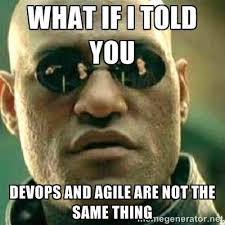
    Today starts a new week and a new round of entertaining memes.  Again this week we will leave the creativity open to a meme of your choosing.  Simply find a picture and create a funny and/or cunning devops themed meme. You can use https://imgflip.com/memegenerator as an easy source for generating memes.

    To submit your meme for a chance to win a t-shirt (top 5 memes receives a t-shirt), simply post it to twitter tweeting @DevOpsDotCom and using the hashtag #DevOpsMM.

    Last week was a holiday, so we do not have any winners from last week.

    Here are some examples of DevOps memes to help get the wheels spinning:

    download

    446644

    images

  • Can’t Miss Events at InterConnect Next Week

    Can’t Miss Events at InterConnect Next Week

    devopsy.kinsta.cloud will be live from IBM’s InterConnect conference in Las Vegas all next week. You can expect a pretty steady stream of updates in all forms of media. We will be posting articles, live blogging, tweeting, podcasting and even broadcasting video throughout the week. So if you can’t make it out to Vegas, you can follow along here on devopsy.kinsta.cloud

    Whether you are going to Vegas or following along from home, I wanted to give you my picks for the top DevOps related content at InterConnect next week. Here are my top picks:

    1. Well I would be remiss if I didn’t start-off with my own panel which I am moderating. I am joined by Michael Azoff from Ovum, Dan Berg of IBM, Raghunath Ragman of Kaiser Permanente and Gene Kim. The topic is what will DevOps look like in 3-5 years. It should be a great discussion.
    2. Right before my panel is another great panel on DevOps and multi-speed IT. That panel features my friend Carme DeArdo of Nationwide, Hayden Lindsey and Sanjeev Sharma of IBM, Brad Schick of Skytap and Tapabrata Pal of Capital One. That is an all star cast and it should be a great discussion.
    3. Both of the above panels are on Wednesday, the keynote on Wednesday morning looks like another great one. It features IBM VPs Angel Diaz and David Linquist, Gene Kim, Tapabrata Pal of Capital One, Sam Ramji of the Cloud Foundry Foundation and John LeFreniere of Hertz. The topic is Innovate Like a Startup and Scale for the Enterprise.
    4. Talking about innovation like a startup and scaling like an enterprise, a different kind of session is the workshop that Sanjeev Sharma and Mustafa Kapadia, two of my friends at IBM are putting on. I have seen these two conduct this workshop before and it really is a great experience to help in your DevOps journey.
    5. Bluemix Garage Method on the Expo floor. There is a large DevOps Zone on the expo floor and there is also a full set up with the Bluemix Garage Method. We have featured the Bluemix Garage method in a few articles before. If you are not familiar with it you should check it out as it really represents lessons learned on IBM’s own DevOps journey.

    Well those are my top 5 but it is hard to pick from over 200 DevOps related sessions. There are 3 and half days chocked full of learning here, so this barely scratches the surface.  Not to mention an Elton John and/or Pitbull concert Wednesday night thrown in.

    If you want to see more can’t miss DevOps activities at InterConnect below is a YouTube that has all of the above and more. If you are going to InterConnect look for us and say hi. If not you can read, hear and see all about it right here.

  • DevOps Brings IT Out of the Shadows

    DevOps Brings IT Out of the Shadows

    One of the biggest threats to organizations today is shadow IT—unsanctioned and unknown technologies and applications being employed by maverick users. Shadow IT represents a security risk for your company—the IT department can’t defend and protect technologies and assets it doesn’t know about—and should be eliminated. One of the best defenses against shadow IT is DevOps.

    When I worked in the trenches as a one-man IT department—part network admin, part tech support—there always were one or two individuals who knew enough to be dangerous. As frustrating as it was to deal with completely clueless users who didn’t know the difference between the computer and the monitor and weren’t even really sure where the power button was, those who knew enough to go rogue and reconfigure their devices or introduce new applications and services were a more existential problem for the organization. In today’s era of BYOD and cloud services, shadow IT is a scourge significantly greater than what I faced.

    Don’t get me wrong—I’ve also been on the other side of that equation and I understand the motivation that drives shadow IT. Users just want to get their jobs done, and the people in the trenches know better than anyone what the hurdles are and how to fix them. Requesting new technologies or capabilities from IT is a cumbersome and tedious process at many organizations, so in the name of expediency users just do what they need to do on their own.

    DevOps can help solve the shadow IT problem in a better and more sustainable way, though. There are two benefits that DevOps brings to the table that minimize the potential for shadow IT: More rapid development and empowering individuals.

    First, an IT organization that has embraced DevOps will be quicker to respond to requests from users. Replacing the traditional software development life cycle with a more agile and continuous pace of development means that feature requests can be incorporated much faster.

    Second, one of the cornerstones of DevOps is the underlying culture—the breaking down of silos and removal of barriers and bureaucratic nonsense that get in the way of efficient progress. Essentially, those rogue technologies and applications that comprise shadow IT in other organizations are simply a part of the larger DevOps whole in an organization that has embraced DevOps. There is even a term ascribed to users outside of traditional IT/developer roles who develop solutions: “citizen developers.”

    The 2015 State of Citizen Development Report explains in more detail what a citizen developer is: “Citizen Developers are empowered problem-solvers from the various lines of business who have the drive and determination to engage in app development even though they lack traditional coding skills.”

    That isn’t to suggest that in a DevOps world everyone can just go set up virtual servers, or store data on personal cloud services and that it’s OK. It just means that when users are given the tools and freedom to develop solutions that have the blessing of IT and the rest of the organization, they don’t need to function in the shadows.

    Embracing DevOps and the citizen developer movement enables IT to work in harmony with users to develop solutions that work rather than fighting against each other and ending up with shadow IT servers, applications and cloud services that IT isn’t even aware of. Organizations that are concerned about the impact of shadow IT should look at ways to harness the power rather than just trying to ban shadow IT completely.