Category: Features

  • Grafana Labs Aligns with Elastic on Observability

    Grafana Labs Aligns with Elastic on Observability

    Elastic and Grafana Labs have allied to create a plugin through which DevOps teams that are employing Elasticsearch within a DevOps workflow will be able to invoke a monitoring platform, based on Prometheus, that is managed by Grafana Labs.

    Raj Dutt, Grafana Labs CEO, said both companies are dedicating engineering resources to building and maintaining a plug-in for a service, based on open source Prometheus software, that is rapidly becoming a de facto standard for observability in DevOps environments. One of the primary reasons for that expanded usage is that Grafana Labs doesn’t require DevOps teams to move data into a central repository to analyze it, Dutt said.

    The overall goal is to eliminate the “tunnel vision” that results when relying on tools that only visualizes a narrow set of metrics, Dutt added.

    The cloud platform provided by Grafana Labs is based on open source Grafana visualization tools. The primary tool for visualizing Elasticsearch data is based on open source Kibana tools. Grafana, however, is based on a fork of Kibana, so the plug-in represents an effort to bring those two open source communities closer together. The two companies plan to collaborate on including more aggregations, broader query language support and support for space-saving constructs like rollups as the partnership evolves.

    Grafana Labs provides a cloud service that aggregates data, pulled from multiple instances of Prometheus, deployed on clusters and servers. Prometheus, especially, gained a lot of traction as organizations began to deploy Kubernetes clusters that are also based on open source software. Both Kubernetes and Prometheus are being developed under the auspices of the Cloud Native Computing Foundation (CNCF).

    Once DevOps team initially employ Prometheus to monitor Kubernetes, they frequently expand deployments to monitor additional platforms. That shift has resulted in many providers of proprietary monitoring tools to extend the data they consume to include the metrics captured locally by Prometheus. Grafana Labs claims it has more 1,000 customers, including Bloomberg, JP Morgan Chase, eBay, PayPal and Sony, for a total of more 650,000 active installations of Grafana around the globe. Existing customers of Elastic that are paying for Elasticsearch support include Cisco, eBay, Goldman Sachs, Microsoft, The Mayo Clinic, NASA, The New York Times, Wikipedia and Verizon.

    It’s not clear to what degree Grafana and Kibana might ultimately re-converge one day, but it’s clear there will be a fair amount of ongoing cross-pollination across the two projects. In the meantime, DevOps teams should be able to opt for whichever open source visualization framework they prefer alongside Elasticsearch.

    In the longer term, it’s clear greater appreciation for observability platforms that provide more context will drive a wave of consolidation among all the monitoring tools that enterprise IT teams rely on today. As part of the transition, enterprise IT teams might even standardize on a set of visualization tools that would eliminate the need to master different user interfaces. After all, the only way to actually achieve observability is through a set of tools that makes surfacing the context required easier to consume.

  • Harness Revamps User Interface for CI Platform

    Harness Revamps User Interface for CI Platform

    Harness today announced it has updated the community edition of its continuous integration (CI) platform with, among other updates, a revamped user interface.

    Formerly known as Drone.io, the latest release also adds pipeline execution visualizations, governance and security controls and live CI pipeline debugging capabilities. Harness last year acquired Drone.io, an open source CI project, to extend its existing continuous delivery (CD) platform into the realm of CI. Harness claims there are now more than 50,000 active monthly users of the community edition of Harness CI.

    Brad Rydzewski, co-founder of Drone.io, said the user interface for Harness CI will soon be applied across the entire portfolio.

    The update to the community edition of Harness CI comes at a time when the debate over how tightly integrated CI and CD platforms need to be is heating up. Harness launched a namesake CD platform before it acquired Drone.io to add a CI capability. While most DevOps teams are proficient with CI, the CD side of the DevOps equation has proven more elusive. There are now GitOps advocates that contend the rise of Kubernetes makes it more advantageous to enable a separate CD platform to pull updates from a Git repository, rather than having them pushed out by a CI/CD platform. The challenge with CD has always been that each platform on which code is deployed is unique. Kubernetes, however, now provides a de facto standard layer of abstraction that runs atop multiple platforms.

    Rydzewski said the integrated CI/CD approach will ultimately prevail, because it enables DevOps teams to more easily integrate a range of processes, including testing, that are required to consistently build and deploy applications at scale. Harness is, essentially, making a case for solving the CD challenge using a platform that encourages – but doesn’t require – a DevOps team to replace their existing CI platform.

    Regardless of how DevOps evolves, the CD issue needs to be addressed. As the enterprise becomes more extended with the rise of both cloud and edge computing, the number of platforms a DevOps team needs to support continuously expands.

    Despite the fact that DevOps teams employ CI/CD platforms, it is clear most of those organizations are not overly committed to the way they currently manage CD. It may be years before most organizations finally implement a consistent set of processes for automating application deployment.

    In the meantime, the number of organizations just starting out on their DevOps journey continues to increase. There are still plenty of instances where organizations have yet to deploy any type of CI/CD platform. It’s also worth noting that, in many cases, different DevOps teams within the same enterprise have decided to deploy different CI/CD platforms.

    Regardless of how DevOps evolves the pressure to automate is rising. The challenge many DevOps teams face today is the current platform they are relying on to automate the building and deployment of applications requires a small army of specialists relying on all too often manual processes to maintain.

  • Copado Acquires New Context to Drive DevSecOps Adoption

    Copado Acquires New Context to Drive DevSecOps Adoption

    Copado, a provider of a DevOps platform for building applications deployed on the Salesforce cloud platform, announced today it has acquired New Context as part of an effort to expand the scope of its portfolio into the realm of DevSecOps best practices.

    Andrew Leigh, chief marketing officer for Copado, said the acquisition brings Copado tools and professional services expertise that will be applied to help organizations build and deploy secure, custom applications on top of the same cloud platform they already use to access a range of software-as-a-service (SaaS) applications.

    The New Context Lean Security Intelligence Platform enables developers to achieve that goal by analyzing code and then surfacing recommendations for when developers should apply specific security controls, Leigh explained. Existing New Context customers include Blue Shield of California, GE, Kaiser Permanente and Royal Dutch Shell.

    Like most organizations that have embraced DevOps best practices, it’s still early days as far as adoption of DevSecOps are concerned. However, it’s already apparent that Copado is well-positioned to advance adoption of a complementary Lean Security Intelligence Platform, said Leigh. Copado, which claims to have more than 1,000 customers, recently raised an additional $96 million in funding to help fuel those efforts. The company also claims it recorded 120% growth in annual recurring revenue (ARR).

    In the wake of the COVID-19 pandemic, more organizations are employing SaaS applications to drive digital business transformation initiatives. Rather than building every application from the ground up, it is often simpler to extend, for example, a Salesforce customer relationship management (CRM) application.

    Once organizations reach a certain level of scale, they then start to apply DevOps best practices to those builds. These efforts, however, are often uneven. A recent survey, conducted on behalf of Copado, found that while 82% have increased or maintained the size of their Salesforce development teams, the change fail rate jumped from 23% last year to 33% in 2020 when compared to a similar survey conducted a year ago. The survey also notes time to recover increased from 110 hours in 2019 to nearly 196 hours in 2020.

    The next major challenge facing organizations that have embraced DevOps is, of course, DevSecOps. The challenge is that, since Salesforce environments are unique, applications are constructed using a set of objects and tables that are specific to that platform. As such, Salesforce environments generally require a DevOps platform designed from the ground up to work with objects and tables.

    Salesforce, in its most recent fourth quarter, reported revenue of $5.82 billion, up 20% year-over-year despite the lingering economic impact of the COVID-19 pandemic. As such, the number of custom applications being developed on top of Salesforce should steadily increase, especially as low-code tools become more widely adopted. It’s now only a matter of time before more organizations reach application development initiative critical mass that warrants investing in a DevOps platform to manage them.

  • Teleport Adds Database Support to Security Gateway

    Teleport Adds Database Support to Security Gateway

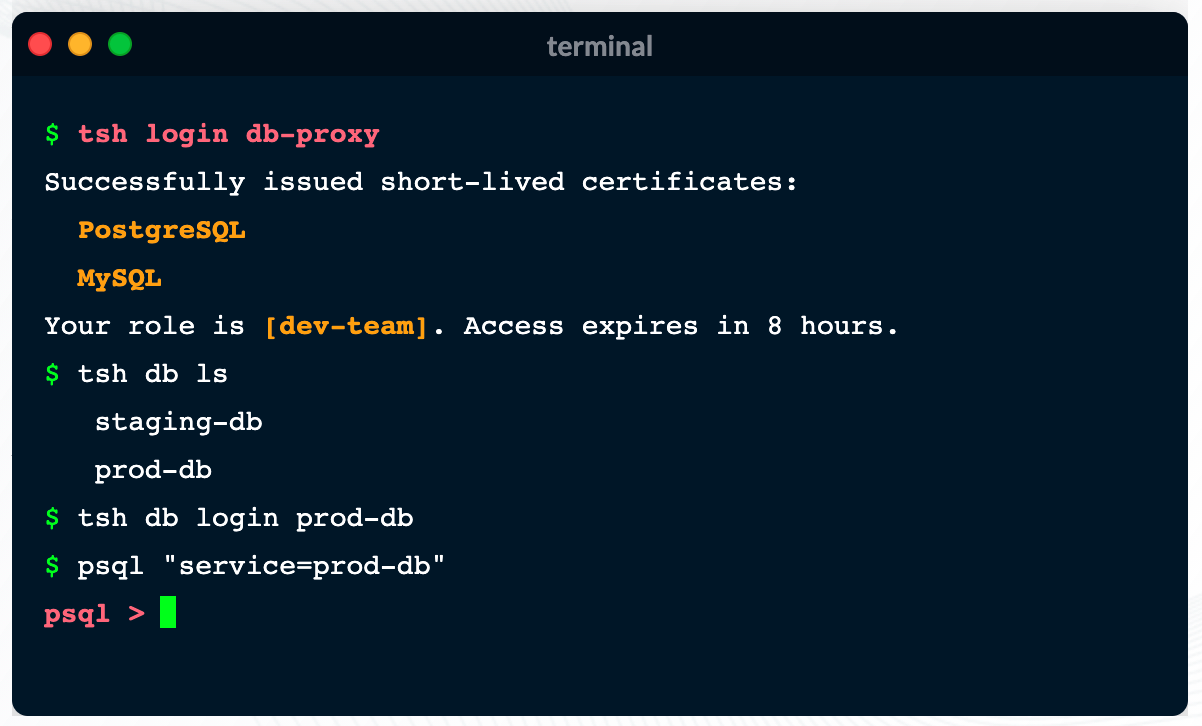
    Teleport announced today it has added support for databases to a security gateway, delivered as a cloud service, that is currently used to secure Linux servers and Kubernetes clusters.

    Ev Kontsevoy, CEO, said Teleport intends to extend the reach of the security gateway up the entire stack of IT infrastructure that developers routinely use to remotely access databases. Initially, Teleport 6.0 adds support for open source PostgreSQL and MySQL databases.

    Teleport has gained traction as an access management tool because it provides a single binary that can be easily deployed by developers to encrypt IT platforms and enforce session controls. It automatically discovers all the resources in an IT environment, along with the protocols needed to access them. Teleport also provides a unified audit log, in a JSON format, that enables IT teams to track what resources are being accessed, when and by whom.

    Other features include the ability to authenticate identities via built-in single sign-on (SSO) and multi-factor capabilities, discover and see all database instances, integrate with command line interfaces (CLIs) and a set of workflows for managing privilege escalation.

    Access control is becoming a bigger issue due to a number of factors. The overall IT environment is becoming more complex as the infrastructure stack required to run applications continues to grow; most IT teams continue to work from home to help combat the COVID-19 pandemic. Teleport provides a fine-grained approach to streamlining access management across servers, clusters and databases in a way that eliminates the need to rely on virtual private networks (VPNs). In effect, Teleport enables IT teams to move toward a more identity-centric approach to unifying the management of access, Kontsevoy said.

    That’s critical at a time when the rise of DevSecOps is pushing responsibility for security further left toward developers, Kontsevoy added. While the rate at which that transition occurs will vary widely, Kontsevoy said it’s clear developers are taking more control over access control as part of a broader effort to roll out secure applications, faster.

    It may be a while before DevOps teams are able to aggregate all the access control protocols they currently employ under a single proxy. However, Kontsevoy said, the massive amount of time and effort spent managing access control today will drive DevOps teams to look for ways to automate what is currently a very manual process.

    Less clear is what role cybersecurity teams might play in supervising access management. The days when a separate overlay was needed to manage access may be coming to a close.

    In the meantime, it’s clear VPNs were not designed to address access management, in an era where the bulk of IT teams – and the employees they support – are working from home. More employees may be soon be heading back to the office more frequently, but it’s likely that remote work will remain prevalent. That means legacy approaches to managing remote access that were never designed to scale will becoming increasingly obsolete.

  • Logz.io Adds Prometheus Service to Observability Portfolio

    Logz.io Adds Prometheus Service to Observability Portfolio

    Logz.io announced today the general availability of a cloud service, based on Prometheus, that can collect and analyze metrics alongside its existing log management service.

    Jonah Kowall, CTO, Logz.io, said the goal for Prometheus-as-a-Service is to provide IT teams with a centralized approach to analyzing data collected from instances of Prometheus running on local servers and clusters. While Prometheus is relatively easy to deploy, it’s not designed to scale horizontally, which means IT teams have to deploy multiple instances of Prometheus on a fleet of clusters and servers. The Logz.io service makes it easier to aggregate and analyze all the data those instances of Prometheus collected, said Kowall. That approach not only offloads the storage of those metrics, Kowall said, it presents an opportunity to correlate that data against logs and traces that Logz.io already collects.

    Logz.io, as part of that effort, is also making it possible to upload a Grafana dashboard, typically employed to visualize Prometheus data as a JSON file, to Logz.io, which will then convert the Grafana dashboards to dashboards based on the Logz.io user interface.

    While Prometheus is closely identified with Kubernetes, IT teams are starting to deploy the open source monitoring tool more widely to collect metrics. A recent Gartner report predicts that, by 2025, half of new cloud-native application monitoring deployments will rely on some form of open-source software to instrument applications. As part of that transition, Prometheus has already emerged as a de facto standard, Kowall noted.

    The primary focus, at least initially, is still on monitoring IT platforms, but as IT teams start to correlate metrics, logs and traces, they begin to benefit from additional context, otherwise known as observability, Kowall said.

    Observability, of course, has always been a core DevOps principle. However, as more applications become instrumented using open source tools and agent software, it’s becoming less costly to achieve. DevOps teams will still need to instrument each application, but the costs associated with collecting metrics and other data continues to decline. Most providers of monitoring tools and observability platforms are moving toward adding support for open source tools and agents to collect data alongside the proprietary tools and agent software they already make available. It will be up to each DevOps teams to decide whether to rely on open source tools or continue to rely on proprietary software that may be able to surface deeper insights or is simply easier to deploy.

    Regardless of the path chosen, the rise of microservices-based applications with numerous dependencies is forcing the observability issue. Microservices-based applications may not crash as frequently as a monolithic application because they are, ideally, designed to degrade gracefully in the absence of a single point of failure. The challenge is that, once they do degrade, it’s difficult to pinpoint the source of the issue; this may result in applications running sub-optimally for an extend period of time.

    The good news is that DevOps teams should now have the tools required to diagnose and resolve those issues long before any end user notices.

  • Assessment of DevOps Capabilities: 5 Dimensions Explained

    Assessment of DevOps Capabilities: 5 Dimensions Explained

    In order for organizations and teams to move toward DevOps maturity, they need to understand their DevOps capabilities. An Assessment of DevOps Capabilities determines a baseline DevOps state, measures and accelerates continuous improvement.

    When we designed our Assessment of DevOps Capabilities (ADOC), the ambassador cohort brought a ton of ideas to the table around the high-level topics based on their experience performing this work for years. We talked about how important it was to cover the three aspects we have classically referred to in our industry; people over process over tools and many referred to the CALMS (culture, automation, lean, measurement and sharing) model widely known in the DevOps world and originally coined by Willis, Edwards and Humble.

    Our chief of research, Eveline Oehrlich, who led the 40-strong ambassador cohort who crowdsourced the model along with myself, had been conducting research for our Upskilling Report for several years. We looked at the models she’d been using there to drive comprehensive coverage of the different dimensions of DevOps. They aligned with the other models we were considering, resonated with the team and we all agreed that they gave us the best chance of ensuring the organizations that would use the assessment considered all the elements of these complex and sophisticated ways of working we call DevOps.

    The 5 Dimensions of the Assessment of DevOps Capabilities (ADOC)

    1. Human aspects
    2. Process and frameworks
    3. Functional composition
    4. Intelligent automation
    5. Technology ecosystem

    Our next job was to define the topics in each dimension and then to define Likert statements for each of the topics. These statements allow for data to be collected that provides teams with insights into where their capabilities are strong and should be shared, and where we recommend they experiment with improvements. Let’s look at each dimension in more detail:

    1. Human Aspects Dimension

    At DevOps Institute, we’re all about the human aspects. We know that culture is the biggest challenge for most organizations on a DevOps journey. Helping individuals and teams to understand and change behavior is a core purpose of ours.

    In this dimension, we address psychological safety and a culture of trust. We explore how leadership behaves, using transformational leadership as a model. We ask questions that explore how the team feels the organization is performing in terms of alignment, accountability, autonomy, empowerment and if and how they feel supported. We look at dynamic learning and constructive collaboration.

    Some topics focus on The Three Ways; we consider flow through the lens of customer focus and value stream thinking. We ask about how feedback is generated, received and reviewed in retrospectives. We explore how innovation and experimentation happens. There are some statements that help the teams learn about organizational design and team topologies. And we also include happiness and joy at work, and diversity and inclusion topics.

    2. Process and Frameworks Dimension

    Many years ago, I borrowed our esteemed leader Jayne’s phrase, “DevOps is the happy, polygamous marriage of ITSM, lean and agile.” Naturally, these frameworks are in this dimension – specifically, how they connect with DevOps activities.

    We also look at how the teams are experiencing scaling their activities and whether it’s working for them. We want teams to understand how to achieve high performance in continuous compliance, so we help them explore how they incorporate governance, risk and compliance (GRC) in all that they do.

    We take another look at value stream ways of working from a process perspective, and how well teams are transitioning from project to product. We look at a couple of frameworks very closely related to DevOps; site reliability engineering (SRE) and DevSecOps.

    We explore how the teams are leveraging systems and design thinking. We gather data on which elements of immersive learning, Holacracy and Humanocracy are helping them achieve their DevOps goals.

    3. Functional Composition Dimension

    In this dimension, we are looking at all the steps from ideation to value realization.

    We start with looking at how the teams collaborate and then where and how ideas are conceived, nurtured and refined through portfolio, backlog and product management and ownership.

    We look at change, whether the teams are using lower-level change advisory/approval board (CAB) patterns, and how far they have progressed towards peer-review. We explore with them how loosely coupled their architecture has transitioned, and how they build, develop and integrate. We ask them to rate their capabilities around test and validation, and deploy and release.

    Other capabilities we explore include operations and support, security, infosec and cybersecurity – helping them understand the patterns that create the safest environments to reduce business risk. We look at data lakes and how they manage data generally; its statefulness has always caused problems with DevOps at speed; for remediation and test data in particular. And we help them understand how to build in reliability and recovery patterns to counteract the risks associated with high-velocity working.

    4. Intelligent Automation Dimension

    This dimension is all about the DevOps toolchain; from artifact management and source control through CI/CD and into live.

    We also look at how tools are used to create a unified backlog, and how service and support happens post-release. We explore environment management and how well the teams are achieving continuous compliance and what this means for customer delight.

    We consider some of the key tool categories that help obtain feedback for improving customer experience; observability and monitoring and tie it all together by exploring how the team is using value stream management to gain visibility, traceability and insights into the end-to-end flow through the DevOps toolchain.

    5. Technology Ecosystem

    Our final dimension is designed to help teams understand how the infrastructure that surrounds their product, service or value stream influences their ability to work better, faster, safer and happier. This means understanding their capabilities for cloud, elasticity, serverless, containers, microservices and APIs.

    They rate their attitude toward open source, and how inner source does or doesn’t help them work better. It requires investigation into how they construct their route-to-live and how they architect the toolchain within these contexts.

    We look at security elements, such as secrets management, and some of the technology concepts that are currently emerging and that promise to drive us further forward; robotic process automation (RPA), blockchain and virtual and augmented reality.

    What to Expect From the Assessment of DevOps Capabilities

    This five-dimensional model allows teams and organizations to assess their current state on their DevOps journey. The data collected allows teams to self-discover improvements and accelerate progress, with the guidance of a qualified ADOC consulting partner. Organizations can compare team capabilities across their enterprise, pinpoint high levels of capability and turn local discoveries into global improvements. ADOC is a tool to measure and accelerate a DevOps journey.

    ADOC is now available as an exclusive benefit to Premium and Enterprise Members. Learn more about the assessments at: https://devopsinstitute.com/devops-assessment/

  • JumpCloud Brings Zero-Touch Provisioning to the Mac

    JumpCloud Brings Zero-Touch Provisioning to the Mac

    JumpCloud today announced it is adding a zero-touch enrollment for Macs capability to its cloud directory platform that will also be extended over time to applications.

    Greg Keller, JumpCloud CTO, said this new capability extends Apple Business Manager, formerly known as Apple Device Enrollment Program (DEP), all the way down to specific users by leveraging data that resides in the JumpCloud platform.

    Whenever a user logs into a new Mac, it can automatically be synchronized with the JumpCloud Directory, which then uses the identity of that end user to configure the device in addition to providing the appropriate access to all corporate resources via their JumpCloud credentials.

    Keller said the need for zero-touch approaches to IT administration has become more acute in the wake of the COVID-19 pandemic. With employees working from home more frequently even after the pandemic eventually subsides, Keller noted the days when IT teams could physically provision a Mac are on the wane.

    While Apple Macs still represent less than 10% of all the PCs shipped in a year, Keller noted small-to-medium (SMB) businesses are adopting Macs at a faster rate than large enterprises. As the endpoints become more diverse, Keller said the JumpCloud platform provides an alternative to Microsoft Active Directory for managing both Windows and Mac devices. Apple, of course, last year acquired Fleetsmith to gain access to provisioning tools. However, those tools are not yet integrated with any type of directory.

    Most recently, JumpCloud has added a tool that enables IT teams to remotely install software onto end user Windows devices, as well as integrations with Slack, Salesforce, Atlassian, GitHub and Amazon Web Services (AWS).

    Fresh from raising an additional $100 million in funding, JumpCloud is making a case for a zero-trust approach to managing endpoints using a directory that verifies the identity of each end user. JumpCloud, which makes a free edition of its platform available for individuals and small teams, is already being used by more than 100,000 organizations spanning more than a hundred countries. More than 3,700 of those organizations, including Cars.com, GoFundMe, Nimbus Therapeutics, Grab, Pulselive, SlimPay, Foursquare, Beyond Finance and Funding Societies, are paying customers.

    In the longer term, there may come a day when verbal commands are employed to provision endpoints for specific end users. In the meantime, the process of configuring and provisioning those endpoints is becoming more automated. IT teams are now able to remotely manage fleets of endpoint devices without having to physically touch them. In fact, there may be no need for IT managers to return to an office, as tasks become increasingly automated and able to be performed remotely.

    While there are a lot of options available to achieve that goal, Keller said the number of them that are tightly integrated with a directory to ensure the right system winds up in the right end user’s hands is few and far between. The challenge now is getting organizations to rethink their directory requirements at a time when IT teams are increasingly expected to deliver personalized, white-glove services regardless of where an end user is located.

  • Oracle Updates Java Development Platform

    Oracle Updates Java Development Platform

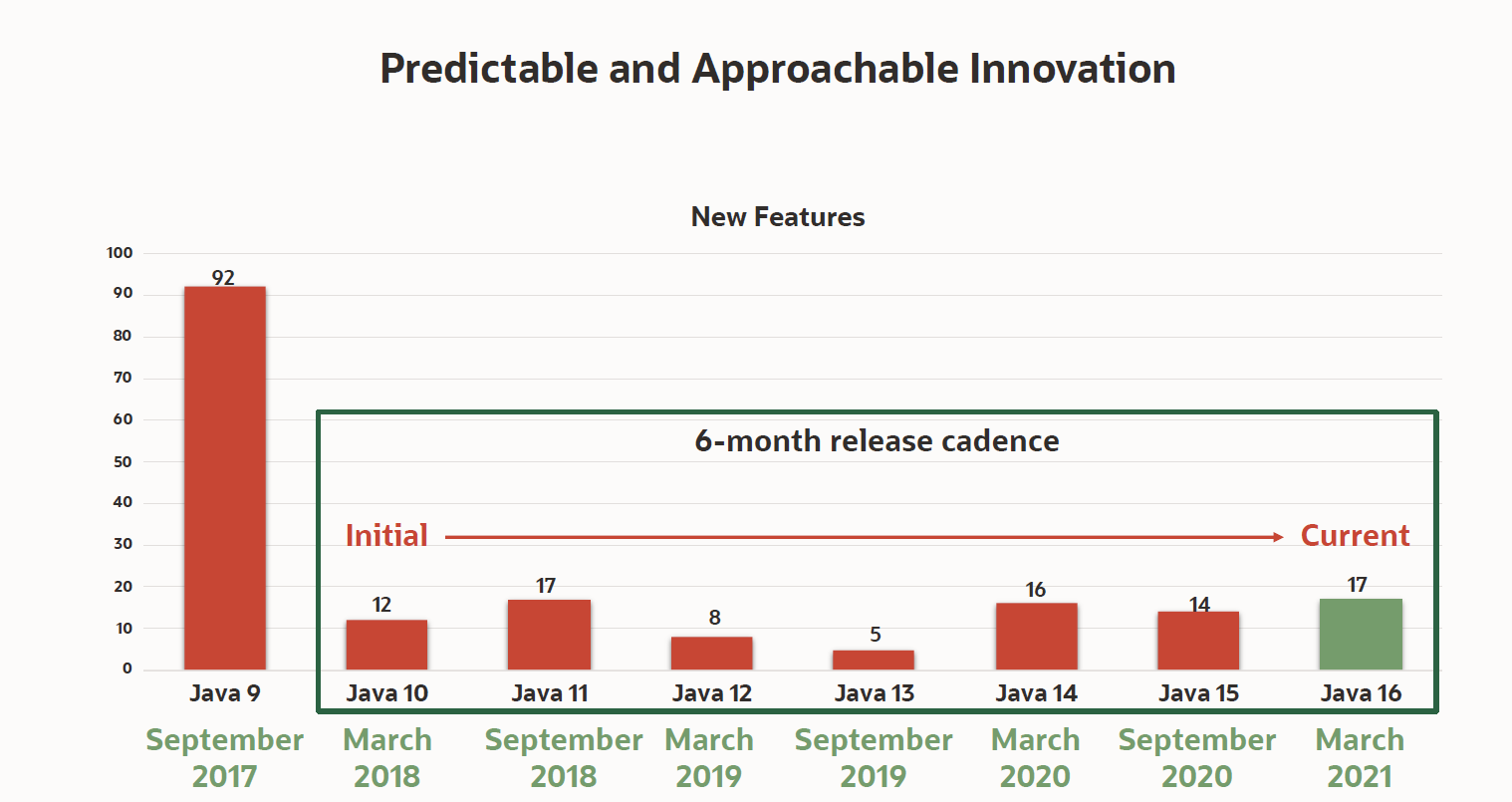
    Oracle announced today the availability of Java 16, which adds 17 enhancements to a software development kit that is now being updated every six months.

    Georges Saab, vice president of development for the Java Platform Group at Oracle, said while most Java development teams are still using Java 8 or earlier editions of the platform, the expectation is that many of them will soon move forward, as updates are made available in smaller increments that are easier to test and vet.

    At the same time, Oracle is committing to make available long term release editions of Java that won’t be updated as frequently. While there are many organizations anxious to take advantage of new capabilities as quickly as possible, Saab noted there are just as many that value stability more than innovation.

    The latest edition adds support for finalized pattern matching for instances and records, as well as other language enhancements that were previewed in Java 14. Developers can also employ a packaging tool to ship self-contained Java applications that will make it easier to deploy in modern IT environments, said Saab.

    Additional capabilities now available include the Vector application programming interface (API), the Foreign Linker API (JEP 389), and the Foreign-Memory Access API that are all available in incubations as well as a sealed classes capability that is being made available as a preview.

    In general, Saab said, one of the primary reasons many organizations don’t tend to update Java more frequently is the frameworks they rely on to employ it at a higher level of abstraction are still optimized for older versions. However, as Java updates are delivered in a more modular fashion, it will become easier for the providers of those frameworks to keep pace.

    It’s not precisely clear to what degree IT teams are employing Java to build next-generation applications based on microservices. However, a recent survey published by VMware, found 95% of respondents have either already used the open source Spring framework, based on Java, to either containerize an application (65%) or plan to do so (30%).

    A quarter of a century after its initial development, Java is still the dominant programming language relied on to build enterprise applications. In many instances, the lack of tools for building Java applications for Kubernetes platforms was a significant inhibitor of adoption for the cloud-native platform. In the last six months, however, the number of tools for building and deploying Java applications on Kubernetes clusters has increased.

    Despite the proliferation of alternative platforms for building and deploying applications on Kubernetes platforms, the appetite for retraining legions of Java developers is low. Most developers will rely on the programming tool they already know, especially when it comes to building mission-critical applications for the enterprise. That may mean some of those applications might not be as fast as they could be, but, given the level of risk, there’s always going to be a natural tendency toward being safe rather than sorry.

  • Sonatype Acquires MuseDev to Add Code Analysis

    Sonatype Acquires MuseDev to Add Code Analysis

    Sonatype today revealed it has acquired MuseDev, a provider of a code analysis tool, in addition to updating its Nexus platform for discovering vulnerabilities in software supply chains.

    Muse analyzes code each time a pull request is made, which makes it easier for developers to discover and address issues long before they commit code. Muse is integrated with 24 pre-configured code analyzers for GitHub, GitLab and Bitbucket repositories. It then analyzes each pull request to surface bugs, as part of automated code review, and includes analysis of interprocedural information flow and thread safety issue analysis, along with guidance to fix any bugs discovered.

    In addition to adding support for Muse, the latest edition of the Nexus platform integrates a container firewall from NueVector along with a set of tools for identifying and providing guidance on how to address misconfiguration issues that frequently arise when developers employ open source Terraform software to programmatically manage infrastructure as code.

    Finally, Sonatype added tools to provide better guidance on the implications of open source licensing terms attached to various projects, while at the same time starting its own community for organizations migrating from Bintray and JCenter, now that those tools have been sunsetted.

    Brian Fox, Sonatype CTO, said the expectation is Muse will create an opportunity to introduce the complete DevSecOps portfolio to developers as they analyze code. Most developers are keenly interested in both optimizing and securing their code. They would just prefer to achieve that goal on their own versus being informed of an issue after code has been committed to a repository managed by a larger DevOps team, noted Fox.

    An advanced development pack was added to the Nexus platform last year to make it easier to surface dependencies in code that are vulnerable to threats. It applies machine and deep learning algorithms to automatically identify and block software supply chain attacks based on typosquatting and malicious code injections. Collectively, these tools give developers control over third-party open source code, first-party source code, infrastructure as code and containerized code, Fox said.

    Sonatype claims it now counts 70% of the Fortune 100 as customers, and supports more than 2,000 commercial engineering teams. In 2020, it claimed it saw a 35% annual growth in Nexus repository installs, which now stands at more than 250,000 instances employed by nearly 15 million developers.

    Overall, it’s not clear how much progress is being made toward embracing DevSecOps best practices. Sonatype, however. is making a case for putting DevSecOps tools directly into the hands of developers to address software supply chain security. In the wake of some recent high-profile breaches involving software supply chains, that approach may soon gain additional traction. After all, for all the encouragement being provided by application development team leaders these days, there’s nothing quite as effective as providing developers with a set of tools that enables them to achieve that goal on their own terms versus requiring them to follow a set of procedures dictated by a DevOps management team.

  • With Explosive Revenue Growth, MediaOps Recognized in Inc. Magazine’s List of Florida’s Fastest-Growing Private Companies

    With Explosive Revenue Growth, MediaOps Recognized in Inc. Magazine’s List of Florida’s Fastest-Growing Private Companies

    Companies on the 2021 Inc. 5000 Regionals: Florida list employed more than 83,000 people in 2019.

    Boca Raton, FL , March 16, 2021 – MediaOps, the place to tell your story in the most powerful way, announced that Inc. Magazine has ranked MediaOps as No.146 on its second annual Inc. 5000 Regionals: Florida list, the most prestigious ranking of the fastest-growing Florida-based private companies. Born of the annual Inc. 5000 franchise, this regional list is a unique look at the most successful companies within the Florida economy’s most dynamic segment—its independent small businesses. 

    “This recognition of our place within the thriving Florida ecosystem is very gratifying for us at MediaOps. We are also pleased that even through 2020, we have been able to continue our growth trajectory,” said Alan Shimel, CEO of MediaOps. “This recognition and others like it are testaments to the great work by our team of professionals here at MediaOps, who are really the engine that drives our growth. We are honored to be recognized by Inc. 5000 Regionals.”

     The companies on this list show stunning rates of growth across all industries in Florida. Between 2017 and 2019, these 250 private companies had an average growth rate of 202% and, in 2019 alone, they employed more than 83,000 people and added nearly $11 billion to the Florida economy. Companies based in major metro areas—Miami, Fort Lauderdale, Jacksonville, Tampa and Orlando—brought in the highest revenue overall.

    Complete results of the Inc. 5000 Regionals: Florida, including company profiles and an interactive database that can be sorted by industry, metro area and other criteria, can be found at https://www.inc.com/inc5000/regionals/florida starting March 16, 2021.

    “This list proves the power of companies in Florida no matter the industry,” said Inc. Editor-in-Chief Scott Omelianuk. “The impressive revenues and growth rates prove the insight and diligence of CEOs and that these businesses are here to stay.”

     ABOUT MEDIAOPS

    MediaOps, the place to tell your story in the most powerful way, is an omniversal media company covering IT industries and practices that are re-shaping the world of technology, including DevOps, Cloud-Native, Cybersecurity and Digital Transformation. Through a convergence of new media distribution platforms, we deliver the experiential stories IT professionals need to gain fresh insights and learn new skills. For marketing partners, MediaOps delivers unparalleled access to inform and engage with a highly involved IT community, for thought leadership, demand generation and specialized campaigns. MediaOps is not only the most trusted name in technology media, but the most loved as well. For more information, visit https://mediaops.com.

    ABOUT INC. AND THE INC. 5000 REGIONALS

    Methodology

    The 2021 Inc. 5000 Regionals are ranked according to percentage revenue growth when comparing 2017 and 2019. To qualify, companies must have been founded and generating revenue by March 31, 2017. They had to be U.S.-based, privately held, for profit, and independent—not subsidiaries or divisions of other companies—as of December 31, 2019. (Since then, a number of companies on the list have gone public or been acquired.) The minimum revenue required for 2017 is $100,000; the minimum for 2019 is $1 million. As always, Inc. reserves the right to decline applicants for subjective reasons. 

    About Inc. Media

    The world’s most trusted business-media brand, Inc. offers entrepreneurs the knowledge, tools, connections, and community to build great companies. Its award-winning multiplatform content reaches more than 50 million people each month across a variety of channels including websites, newsletters, social media, podcasts, and print. Its prestigious Inc. 5000 list, produced every year since 1982, analyzes company data to recognize the fastest-growing privately held businesses in the United States. The global recognition that comes with inclusion in the 5000 gives the founders of the best businesses an opportunity to engage with an exclusive community of their peers, and the credibility that helps them drive sales and recruit talent. The associated Inc. 5000 Conference is part of a highly acclaimed portfolio of bespoke events produced by Inc. For more information, visit www.inc.com.

    ###

    Rebecca Auguste

    rebecca@devops.com

    (561) 430-3347