Category: Enterprise DevOps

  • DevOps and Automation Abstraction?

    DevOps and Automation Abstraction?

    Similarity breeds consistency, giving way to predictability and, thereby, dropping costs of operations and quality from a lower number of incidents and a shorter duration to resolve them. But at the heart of this chain of events is the recognition that we tend to do certain tasks the same way, over and over again, for a given type of technology. Variability then becomes our enemy.  Consistency becomes our ally.  So the question: How do we as DevOps service providers instill a level of consistency in what we do that is not engineer-specific (i.e. only one guy knows how it is supposed to work) and will still scale at the enterprise level?

    From a people perspective, we use teams, whether co-located in person or virtually using the same backbone of tooling over wide geographical separation. From a process perspective, we use governance and education to ensure the same processes and approaches are taken at a fundamental level across different types of technologies. And finally, from a tooling perspective, we use templates or frameworks (or pick your synonym) that allows us to construct a shell that guides the automation construction to be consistent from parent to child. The combination of these three fundamental elements leads to consistency that scales. But is that all?

    What Are We Missing?

    Could there be another fundamental element we have overlooked—namely, abstraction? Case in point: Consider the effect of a drag-and-drop interface versus a typed one to accomplish a given task. Both look to accomplish the same outcome. One could argue the typed text approach offers more flexibility and customization to get the task done. But the drag-and-drop method offers a consistent, simplistic way of doing a similar task, the same way, over and over again. Examining both methods objectively, the drag-and-drop method offers a level of consistency the typed method never could. For the typed one, you would always have to check to ensure punctuation and lack of changes (additions or deletions) to “know” it was the same script as last time. The drag-and-drop method on the other hand, is “canned” or largely unalterable; it may limit customization (by design), but it excels at consistency.

    The drag-and-drop method achieves this consistency by effectively abstracting the typed or scripted code within it from the user who employs it. The user only makes the choice to use it, when desired (or needed); the rest of the mechanics are abstracted from the user. The reason drag-and-drop methods exist is beyond just consistency, however; it is for simplicity. Apple computers would appear to be founded on this idea. For those of you old enough to remember DOS on PC computers, the parallel here immediately becomes clear. DOS was a typed-based command-line operating system (OS) fully capable of operating a PC many years ago. But Apple’s graphical interface made the same functions “intuitive” and forced the PC industry into Windows to stay competitive. Nobody chooses a command line OS like DOS when something as elegant as iOS exists, or Windows (or pick your graphical poison here).

    A graphical OS abstracts core functions from the user, and makes every attempt to make an elegant intuitive packaging of the same functions. Users “get” an iPhone, which accounts for its sales. You don’t need formal education classes or an eidetic memory to use an iPhone. Users effectively have been abstracted from all the typed code it takes to create an OS like this, millions of lines of such code packaged up into swipes, beeps and elegant graphical displays. Keep in mind, at its core this OS abstracts users from variability that might exist if hundreds of companies created their own versions of iOS. The simplicity is paired with consistency, and the quality of Apple is a result (for better or worse). But whatever the quality of Apple is, it is far better than if a wide degree of variability were permitted in the vendors of iOS or the construction of it.

    Extending Abstraction in DevOps

    Now enter DevOps. Containers are a level of abstraction widely popular in our discipline for keeping hardware particulars away from what are typically software engineers. The value of this abstraction is well-understood. My challenge is simply to extend this thinking into the next tier of DevOps tooling. What if the ability to include database DevOps automation was simply a product of drag-and-drop methods that every build tool understood perfectly? Granted, you may have to limit the expression of this idea to say Oracle or SQL Server at first to capture the nuances and particular capabilities of products and technologies in this space. But if someone built a “container” for Oracle, I would wager the choice to use Oracle would rise substantially over its competitors, at least until those containers or abstraction layers were just as effective with other database products.

    The abstraction phenomenon need not be limited to hardware, or as I have proposed to database platforms. It also could apply to .NET or Java development efforts at the top of the stack. The steps needed to take an idea, code it and put it through the build process are going to be largely similar when working in a .NET shop or a java shop (or pick your particular development tool of choice here). Even the top of the stack—that is to say, the development of applications itself—could be a viable candidate for abstraction from the mundane details as it relates to a build construction or a deployment to a given class of environment.

    Creating effective containers for the application layer in effect limits variability, and increases predictability. I realize it has to be technology-type sensitive. The .NET shops have their own container. The java shops have theirs, and so on. The only question is whether we are able to include enough of the common core steps we take to produce a build with a given technology type to form an abstraction construct of value. Over time, this would include every type of technology widely in use today.

    The effort to simplify through abstractions ultimately would result in our ability to include technologies such as WebSphere at our pleasure. It would also allow us to switch out WebSphere for a new competitor using the same abstraction constructs, universally, just by rebuilding all our apps one time. This kind of power is alluring to development teams. It drives application developers and operations engineers to begin to work together to look for the most cost effective technology that can perform a given spec. Being the best at something is no longer a cage from which there is no escape later.

    Technology components would be selected based on performance and cost of ownership (i.e. operations) later. Switching is ultrasimplistic if all we ever used to include it in our build routine was a drag-and-drop style method with universal, well-defined parameters. A customer’s ability to switch products to the best of breed through easy or simplistic means keeps pressure on vendors to actually be the best of breed. If the performance suffers or a new release is full of bugs, developers just switch it out through abstraction (not long, complicated scripts where everything has to go right, including a full moon on the third Tuesday of the month with a Gregorian chant in the background).

    Impacts to the Bottom Line

    The selection of DevOps tooling often is a cantankerous one in large organizations. Debates ensue about flexibility, extensibility and whether a given tool can be customized to accommodate the unique little snowflake of my development teams. Perhaps these debates are headed in the wrong direction. Perhaps instead of prizing and valuing the extensibility or customization a given tool affords, we should be looking closer at how that extensibility is achieved.

    For an enterprise to make an unwitting choice to get into the script business, is effectively stating: “I will be maintaining the scripts I use to construct a build with as much rigor as I maintain the code these scripts are designed to create builds out of.” So, we just doubled our programming staff without realizing it—one half working on the application code and the other half working on the scripting code that “automates” the delivery of a build during construction. While overall speed may be increased, it comes at the cost of doubling already expensive headcount.

    As an alternative, what if enterprise customers were asking tooling vendors how simplistic their tools are to use, and how standardized are their approaches. While we may not enjoy losing a degree of flexibility as we may be unable to customize a drag-and-drop method construct, the payoffs to the business are simplicity of use and scale at an enterprise level. Not only do I refrain from doubling headcount, I can actually free resources to focus on the disciplines and areas they enjoy most instead of performing script maintenance. Abstraction as a construct: From the hardware layer up through the application layer, it may be a driving fundamental that keeps DevOps scaling and lowering the cost of innovation for many years to come—but only if you begin to ask for it.

    To continue the conversation, feel free to contact me.

  • Why DevOps Should Care About SDN

    Why DevOps Should Care About SDN

    Software-defined networking (SDN) and DevOps are not mutually exclusive. Actually, DevOps wants SDN, whether it knows it yet or not.

    Why?

    If software is going to eat the world, then SDN is going to eat networking.

    Networks are becoming more complex, and one way to manage them more effectively is through SDN. Also, organizations are demanding faster changes, yet networking changes traditionally have been a manual process.

    In a profession where network engineers typically work in seclusion and use significant manual processes, it can provide a set of tools to align with DevOps. This is why DevOps needs to care about it.

    Software-defined networking leads to infrastructure as code (IaC), which makes network automation possible.

    Software-Defined Networking and Infrastructure as Code

    SDN, in its simplest form, is controlling networking hardware with software. But there is more to it: Software-defined networking means networking switches and routers no longer need to be controlled with proprietary software. This creates an opening for innovation and is how we now have OpenFlow.

    This implies that networking now can culturally align itself with DevOps. The question will become whether it wants to. IaC is where networking will find its home with the DevOps team—it is like SDN for Ops.

    Why Does SDN Matter for DevOps?

    Software-defined networking will open communication and make automation possible—two ideas that are fundamental to an effective DevOps team.

    Open communication between networking can be easier when the mindset and tools are enabling a similar process. For DevOps, the current stack is providing tools to do exactly this. We see this with the Ansible and Red Hat DevOps networking partnership.

    What’s more, SDN enables network automation. Automation is an important goal for DevOps, which before SDN was not workable. Network automation can mean a better integration of DevOps and networking, as networking comprises many manual processes and, as such, is a bit isolationist. Aligning goals can provide better communication and collaboration.

    The Power of Network Automation

    SDN, IaC and DevOps networking are providing a set of tools and ideas that can push widespread adoption of network automation.

    Network automation is not a new topic, but implementation has been difficult. Technology had to catch up with demand: Before OpenFlow, networking infrastructure ran on proprietary software, which meant manual changes and configurations were commonplace and one-off scripts are the norm.

    With SDN and a technological environment conducive to network automation, we can begin to test different network automation strategies. Currently, however, organizations using automation only use it for segmenting their firewalls. We are in the early stages of what network automation can do.

    Just as DevOps is still finding ways to use automation in testing and development, networking is on its own discovery path to automation. The only difference is DevOps has a goal to automate and networking still views automation as a “nice to have.”

    Using NetDevOps to Bridge the Gap

    We have the conversation about SDN, IaC and network automation because networking does not have its functions accurately defined within the DevOps framework. That is why NetDevOps is a topic of discussion.

    The fact that SDN is still in its infancy stages and network automation is being discussed as “how to implement” shows there is a need for a cultural shift in networking that aligns with DevOps. This will help DevOps with communication and collaboration.

    DevOps wants automation and NetDevOps shares this goal. SDN is what makes this possible, and is exactly why DevOps should care.

  • DevOps Storytime: The Line, The Loop and The Cube

    DevOps Storytime: The Line, The Loop and The Cube

    In a time not so long ago, but long enough to be before the mainstreaming of magical ideas such as “configuration as code” or “platform as a service (PaaS),” in a period where the enterprise IT shops were ruled by the one-two punch of Six Sigma and ITIL, there were three magical artifacts sought by the people who spent their working days lubricating the gears of the consulting, development and operations factories throughout the lands of corporatedom.

    The three mystical objects consisted of The Line, The Loop and The Cube. Each were first envisioned as possibilities by “automation zealots” as they roamed the corporate cubicle farms in vain attempts to provide enlightenment to their enterprise brethren. As the quest to drive evermore efficacy out of technology shops of all shapes and sizes has progressed, strategists, designers, architects and developers have been slowly creating these possibilities into being. Much like the legend of the Deathly Hallows, if these once-mythical objects come fully into being, the enterprise that can behold all three of the artifacts can create the nigh invincible product/technology factory as it becomes the master of time.

    Continuous Integration – The Line

    In conceptual land, The Line was just what it sounds like: a singular line, never bending and never deviating from its course. It connected the space from development to production. The idea of The Line has been around a long time—long enough for many shops to now have working implementations running as standard operating procedure. But it wasn’t always this way.

    circlesquareIn reality land, The Line was a patchwork of open-source frameworks, glue code, xml files and a few engineers unlucky enough to be tagged with role of “Build Master.” Woven together by the Build Master, these transformative robots and would take coders’ output, compile it into a workable build that merges all of the developed functionality, run and validate test harnesses against it. Once validated, the newly minted build then would be promoted to the higher-level environment, ultimately moving from dev to test, test to stage and, lastly, from stage to prod.

    The tools to build and manage The Line have been through many iterations since it first came into use and many shops have progressed far enough into the advanced territories of The Line to call themselves masters of the once-mythical Line. The shops exploiting The Line are now so prolific and the tools have advanced enough that it’s no longer an onerous task to get change-resistant enterprises to try it out.

    The Line has transformed from mythical artifact to concrete reality so much so that the believers now outnumber the holdouts. The end result is that shops not embracing the basics of continuous integration risk losing credibility in the eyes of their staff and any potential recruits.

    OODA is a Way of Being – The Loop

    When someone starts talking about “getting the right information to the right person at the right time,” that person is talking in fairly vague terms about the the long sought-after grail of The Loop. The Line is a good start, but the robot watching the line is only as smart as the humans who created and configured it. This is one of the many reasons to chase The Loop.

    What is the use in “shifting left” if you can’t get the alerts and metrics to the people who care? How can the metrics from “shifting left” be acted upon if they can’t be pushed into the view of those who can act upon them? The Loop is the answer, because it is the mechanism to determine many things beyond “the right person.” The Loop knows how to get messages to all interested and responsible parties. The Loop has mechanisms to account for an ever-fluid organizational structure and backup delivery methods for backup delivery methods.

    All enterprises have feedback loops. The key differentiator for moving toward mastery of The Loop is the degree to which you have automated the and abstracted the mechanisms inside the feedback loops.

    Many people and enterprises are resigned to life without The Loop. The signs are easy to see if you know where and how to look. Are mail distribution lists and org charts always a pain in your organization? Are executive-led fire drills the norm when systems are down? Are system alerts dropping on the floor rather than getting to the first responders and application owners?

    If you answered yes to any of the above, your enterprise has not committed to developing and leveraging The Loop. Basic “loop-like” alerting functionality is commonly available from alerting vendors, but true mastery of The Loop cannot be achieved without robust identity management and synchronization technology. Without this critical integration point, alerts and information flow can only be as effective as your manual processes that update the myriad data islands in each and every alerting system within your enterprise.

    When enterprises grow, being able to have the enterprise robot army seamlessly drive information flow without requiring sieve-like manual processes is also the key to tightening the enterprise OODA (observe, orient, decide and act) loop. Done with full mastery, one could imagine the possibility of acquiring the last of the three magical grails and maybe the most sought after: The Cube.

    Perceiving the Matrix – The Cube

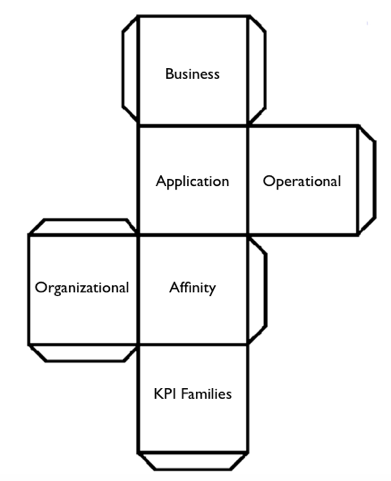
    The story of The Cube begins with a question: “What defines the so-called ‘right’ information?” When enterprise technology and design evangelists talk of The Cube they often wax poetic and describe it as all things to all enterprise people at every level within the organization. It provides not only the integrated matrix of the fully faceted enterprise from an organization perspective, but also extends beyond operational information rights into decision rights, affinity groupings and cross-functional teams.

    cubeWe have begun to see promising beginnings of The Cube pop up within medium and large enterprises through popularizing algorithms and outfitting teams with ubiquitous mission control-style dashboards and screens in team areas. But it is only when these dashboards can integrate and harmonize wide varieties of development, operational and business KPI data that we will be able to claim that we have delivered full and timely context (i.e., “the Right Information”) to the staff sailing the enterprise ship.

    The hard part of creating The Cube is not so much the technology required to achieve its development and integration. The really difficult part is coaxing the organizational will to define and maintain the KPI taxonomies for each organizational unit and the integration points between them. Given that a fully mastered Loop doesn’t necessarily understand how KPIs, infrastructure and applications interrelate and affect each other, the Loop will forever be but a required stepping stone to The Cube.

    Will a Unicorn be Required for Unification?

    The current landscape of open-source and vendor tools to wield and tie together these ungainly enterprise models may not, as of yet, be sophisticated enough to both integrate and simplify the provisioning and cultivation of The Lines, The Loops and The Cubes. The sultry, siren-like call of the Unicorns, however, will likely beckon the cloud builders of today and tomorrow to create not just development to deployment pipelines, but also fully integrated feedback loops with intelligent understanding for how the data connects to form perspective.

    It is odd to think about, because with the idealized future state so close to actual possibility, it begs a new set of questions. Hordes of IT professionals around the world have been working to find faster and more fool-proof ways to deliver meaningful perspective into the hands of decision makers and first responders. We are so close now to that mission being accomplished that there are a few instances of the perspective itself not only being generated by “the robot” but also being handed to “the robot” to take the necessary remediation steps.

    The ending we are approaching, much like the beginning, circles around a question: “If we truly automate all the things, will there be any more work to do?”

  • Putting Ops Back in DevOps

    Putting Ops Back in DevOps

    What Agile means to your typical operations staff member is, “More junk coming faster that I will get blamed for when it breaks.” There always is tension between development and operations when something goes south. Developers are sure the code worked on their machine; therefore, if it does not work in some other environment, operations must have changed something that made it break. Operations sees the same code perform differently on the same machine with the same config, which means if something broke, the most recent change must have caused it … i.e. the code did it. The finger-pointing squabbles are epic (no pun intended). So how do we get Ops folks interested in DevOps without promising them only a quantum order of magnitude more problems—and delivered faster?

    The problem is exacerbated when the topic of DevOps comes up, as it is most often a developer doing the talking. And the topics under conversation are things every developer would have substantial interest in and pretty much nothing that would interest the operations part of the equation. Many Ops folks feel as though they have been dragged into this DevOps phenomenon by osmosis, without their consent, and now they are supposed to be reaping huge benefits from it (by magic, as near as anyone can tell). Developers working faster is traditionally not something Ops folks look forward to; rather, it may be their worst nightmare. So, if the advocates of DevOps all tend to be developers, how do we get operations folks to become our evangelists as well?

    QA Impacts on Evangelism

    It begins with quality—not the ethereal concept of quality, but rather the specific responsibility for who owns it. Finger-pointing be gone; developers now own QA. If the software development lifecycle (SDLC) environment is broken, developers own it. Ops can sit back, toast marshmallows and enjoy the show. Developers should be including whatever configuration file changes their application needs as part of the deployable package. So nothing is done manually anymore. This means no one could forget something, as machines do not forget; they do what we tell them. If by chance, some random operations staffer decides to doink with a config variable, the deployment software should simply overwrite the manual change with what is in the deployable package created by the developer. Even malicious changes can be overwritten, so now, all change is included in the development class environment in the one and only deployable package. That is the only package that moves forward.

    If developers own the QA, there is now a shift in the force: The operations team has a new role, one of coach and adviser, instead of doer. The software now is the doer, the developers are the packager and the operations staff are the witnesses of how it works. If it breaks, we all know who must fix it (and who is to blame). But once blame has been permanently affixed, something else changes, namely the culture. Now that the operations team does not take the blame, it remains interested in seeing its operations run without error. This allows operations to take an active “helping” interest in getting things fixed faster. It does not really matter who is to blame, once that argument has been settled; now it only matters if they can make something work. Harmony between factions begins to emerge.

    Scalability Impacts on Evangelism

    It continues with scale. Self-service is the nirvana of your average operations staffer. If the responsibility for provisioning can be moved into a push-button self-serve automation, nirvana will have been achieved. Imagine the offload of repetitious work tasks that consume the life of your average operations staffer. Instead of setting up (and taking down) environment after environment of one class or another for one application or another, requesters can all do it themselves with the push of a button. Even the accounting or financial impact is something the accounting team can guide the user on; operations does not have to worry about the cost of its operations anymore (or, at least, worry less). If too many environments are being provisioned, the accounting team has the power to change the rules and keep it from happening automatically without operations having to be the bad guy.

    At this point, Ops can resume a focus on something it tends to enjoy more: monitoring. Ops staffers enjoy being able to provide real-time reporting on where things stand at any point in time. It is even more rewarding to provide more meaningful information such as who is using this application, what users are doing with it and when are they performing that activity. To monitor that kind of information, operations must partner with developers at the outset of a project to determine what kind of application logs are needed later for monitoring. Without the daily barrage of mundane provisioning tasks, an operations engineer is free to focus on more rewarding (translate: higher skill-level) tasks. The days of changing tapes for the backup may have reached their end (or pick your similar set of mundane tasks which DevOps automation can fully eliminate).

    And Speaking of Monitoring

    It merges into the future. How do you create an operations staffer as a DevOps evangelist? Start by exploring potential that only DevOps can enable. All those nagging alerts that are created when an environment goes down while a deployment is made … all of that could be turned off by the DevOps automation, then turned back on when the deployment is completed. Again, it all would be machine-driven, with no human mistakes anymore, ever. This will begin to cut down “noise” in monitoring/alerting systems into only useful information. However, integrating monitoring systems into the normal DevOps continuum extends beyond just an on- and off-switch.

    Forward-thinking organizations begin to consider testing and monitoring as two parts of the same evaluation discipline. When a test is needed and when a monitoring characteristic is needed now can be determined in total rather than just in a development capacity or operations capacity. A holistic view of what can and what should be evaluated about an application, and how that will be achieved, brings the operations team to the table with the development and testing teams to plot holistic solutions that will live on beyond the development project timelines. Examining monitoring relative to version-controlled artifacts allows for organizational constructs within the monitoring discipline that never were possible before DevOps enabled them.

    The Masters of Hardware Abstraction

    Containers, or similar types of technologies, abstract an application from the hardware details it runs on top of. Technology such as this is a trend in DevOps that greatly simplifies the world of hardware from your average application developer. So who will retain the knowledge about the jungle that lives and breathes underneath? Ops has an extended role in understanding what lives underneath the abstraction layer that lives on top. Over time, only Ops will understand these particulars. They will become the only in-house experts about which cloud provider to use, which sets of physical hardware performs best and under what conditions.

    It is this kind on unique expertise that makes an operations engineer extremely valuable (translate: pricey). It is the kind of knowledge careers are made upon. It is ageism-neutral. Older employees do this today, and they will continue doing this in the future; the only difference will be fewer and fewer people will know how it is done. If the domain of application development is the province of our youth, then the domain of hardware abstraction is easily the province of our more experienced employees. These realities create personal value for our operations teams, and they are only possible in a post-DevOps embrace.

    Impacts to the Bottom Line

    The adoption of DevOps by the Ops portion of the equation is critical to overall success. Passive-aggressive resistance by operations staffers can delay or destroy altogether the value of DevOps. Overcoming this is a first step. But creating operations evangelists goes an order of magnitude further: With active operations staffers becoming internal DevOps evangelists, the entire operations team can begin to look forward at what DevOps will ultimately enable for them. The value they will carry back into development efforts becomes substantial and the entire company benefits. Careers can emerge that were not possible before it—and, just as importantly, so can profits.

    To continue the conversation, feel free to contact me.
  • Can Culture Detract from Success with DevOps?

    Can Culture Detract from Success with DevOps?

    Collaborative culture is considered to be an essential best practice for enterprises. DevOps culture correlates strongly with enterprises that achieve the highest level of business performance. However, is it possible that an organization can get overly fixated on organizational culture improvements? Can culture actually detract from achieving success with an enterprise DevOps transformation?

    An article by Curtis Franklin Jr.,”8 ways to fail at DevOps,” indicated that there are “plenty of places in the DevOps process where an organization can run aground on rocky shoals of woe.” My blog, “7 Pillars of DevOps,” identified seven essential best practices areas that make up successful DevOps. One of the seven pillars is collaborative culture. These pillars are not silos, but rather foundations that need to be kept in balance.

    I bet most of us have experienced situations in which cultural improvement missteps hindered an enterprise DevOps transformation.

    Culture Missteps

    I’ve listed some examples l below which I have personally seen. Have you experienced these? I would love to hear examples of your experiences and solutions you have observed, too.

    1. Unrealistic expectations from leadership: Business expectations from leadership get too far ahead of the DevOps implementation reality—then teams reporting to leadership end up feeling unappreciated and experience frustration, resulting in organizational friction.
    2. Ops-side transformations fall behind Dev-side transformations: The Dev team accelerates ahead of the Ops team and implements “its part” of a DevOps transformation before the Ops team has a chance to implement complementary changes. The Dev-side is disappointed that Ops has not kept up with the complementary Ops-side planned changes. Dev changes cannot be put into effect, which deepens the mistrust between Dev and Ops.
    3. Dev-side transformations fall behind Ops-side transformations: This is the reverse of the second example, with similar effects.
    4. QA tester roles are confusing: When new continuous test strategies are implemented, the lines of test responsibilities between Dev, QA and Ops team members became blurred. Communication between cross-functional team members become confused, resulting in misunderstandings, dissatisfaction and organizational friction, which obstructs progress.
    5. Infrastructure and tools teams are siloed: Dev, QA and Ops teams maintain separate, siloed tools and infrastructure staff and do not cooperate to support end-to-end infrastructure and tools improvements. The transformation needed for a smooth DevOps pipeline stalls.
    6. Rewards and measures are not consistent with DevOps goals: The organization makes changes toward a cooperative culture but fails to change the way people are rewarded and measured. Conflict results between the teams.

    Solutions

    Below are solutions that were applied to the situations listed above. Do you agree with these solutions, or have others to suggest?

    1. Leaders were coached to be more aware that DevOps transformation is a journey of continuous improvement. Leaders then understood that there is really no “end state” to DevOps—there are specific business improvements that can be expected along the way. Each DevOps improvement initiative was refocused on realistic specific use cases and goals. With improved clarity, leaders were more realistic in their expectations for each improvement. This drove alignment between leaders and their teams, improved satisfaction and productivity.
    2. Project goals and team meetings were realigned and organized. Dev and Ops sides could monitor end-to-end progress together. When situations occurred in which one team got ahead of the other, the end-to-end progress visibility helped overall group communication. Empathy across the Dev, Ops and QA teams improved. With improved communication, team members celebrated the success of each other’s improvements. Teams shared a common end-to-end goal.
    3. Same as 2.
    4. QA testing responsibilities changed significantly during the DevOps transformation. Separate independent test team member responsibilities changed toward QA testers being more integrated with Dev teams. New skills requirements for the QA engineers emphasized test automation more than in the past. Training for the cross-functional team helped mitigate concerns related to the new QA responsibilities. QA testers were uplifted with new skills and became more valuable and respected by their peers. Cross-functional productivity improved.
    5. The tools and infrastructure teams from the separate Dev, QA and Ops teams were combined into a common tools and infrastructure team. Project goals were realigned. The improved clarity around knowing they are working toward tools and infrastructures for a common end-to-end pipeline accelerated implementation of DevOps.
    6. Rewards and measures that had been in place for separate Dev, QA and Ops roles were changed to rewards and measures that encouraged end-to-end cross-functional team activities. This improved overall morale and job satisfaction and reduced organizational friction that was previously impacting progress.

    Summary

    From the above real-life examples, it is clear to me that culture and organizational practices must evolve in concert with progress on other DevOps pillars. And as the pace of change increases with each transformation, the cross-functional teams must be even more cohesive. Continuous acceleration of interactions between team members drives the need for tighter relationships, more end-to-end responsibilities, improved customer awareness, continuous skills training and end-goal focused leadership.

    The is no need to create the “perfect culture” before starting a DevOps transformation journey. It can be counterproductive for sections of the culture to get too far ahead of itself, as indicated in the examples above. Perhaps it is best to evolve the culture carefully. Changes most important for each transformation project should be the focus. Continuously communicate goals and progress, and evolve the culture together with evolution of other pillars. What do you think? Do you agree is it possible that an organization can get overly fixated on overall organizational culture improvements?

    While DevOps implemented with all seven pillars provides a strong foundation for long-term enterprise business improvements, it is important to understand DevOps is not an island. Enterprises implementing DevOps should be aware that DevOps interoperates with other IT systems and practices. Enterprises are well-advised to choose tool-agnostic IT partners that can provide solutions that best suit the needs of each unique enterprise and can integrate and evolve DevOps together with all of their IT systems.

  • Why Your Organization Needs DevOps

    Why Your Organization Needs DevOps

    The recently released fifth annual “State of DevOps Report” by Puppet has once again brought with it fresh insights into what drives high-performance teams. The report, which comes at a time when DevOps has ceased to be a buzzword, provides proof of why more and more businesses across the world are adopting DevOps to improve their organization’s performance, revenues and profitability. DevOps has truly come of age and this year’s “State of DevOps Report” clears any doubts fence-sitters may have about the effectiveness of the DevOps approach.

    The 2016 report reasserts that unparalleled IT and organizational performance is a result of a team effort spanning development and operations. The report also highlights the importance of improving the entire product life cycle—from initial product planning, to quality and security assurance, to customer feedback—to speed up delivery while improving quality, security and business outcomes. You can read the full report here.

    In today’s competitive business environment, DevOps has emerged as a vital solution that helps organizations meet ever-growing industry demands. The “2016 State of DevOps Report” helps us understand how the practices associated with DevOps affect IT performance and organizational performance. Let us examine the findings of the report to ascertain how DevOps can benefit your organization.

    Why Does Your Organization Need DevOps?

    The “2016 State of DevOps Report” makes it plain and simple that companies that incorporate DevOps practices get more done. According to the report, high-performing IT organizations deploy 200 times more frequently than low performers, with 2,555 times faster lead times. They have 24 times faster recovery times and three times lower change failure rates. High-performing IT teams spend 50 percent less time remediating security issues and they spend 22 percent less time on unplanned work and rework, the report states.

    Performance

    If we boil down the report findings into actual benefits of adopting DevOps, we could say that DevOps enables continuous software delivery with less complex problems to fix and faster resolution of problems. This essentially means that you can deploy faster and more effectively in more stable operating environments and add value rather than just fixing or maintaining.

    DevOps can revolutionize the performance levels of organizations and allow them to deploy at a rate never seen before. It has certainly enabled organizations such as Etsy, Netflix, Facebook, Amazon, Twitter and Google deploy hundreds and thousands of code per day while delivering world-class stability, reliability and security. You can find out how different organizations have implemented DevOps to their benefit in this YouTube video.

    Security

    Higher performance is not the only payoff in the DevOps culture. Organizations that adopt DevOps practices are known to have better information security. The “2016 State of DevOps Report” clearly states that organizations that integrate information security objectives into daily work spend 50 percent less time remediating security issues than low performers. This has a positive impact on IT performance and security outcomes.

    Any organization, irrespective of size, can employ DevOps to achieve high performance levels and meet business goals while cutting down on costs related to fixes and remediation security issues.

    How DevOps Transforms Teams

    Consider this scenario: In an organization that does not apply the DevOps methodology, the development team writes code and develops a product, which is then sent to the testing team that verifies if the code meets the requirements. The operations team steps in to run the product only after this process is complete. The DevOps philosophy was created to break the silos that teams operate in and effect better collaboration and performance.

    The culture shift DevOps brings about in organizations is substantial, and since culture is a key factor responsible for a company’s performance, application of the DevOps philosophy provides measurable and non-measurable results. A few of them are:

    Employee Engagement

    DevOps is neither a method nor a tool, it’s a culture! In organizations that observe the DevOps culture, the development and operations teams work outside silos, releasing products faster, thereby increasing operational efficiency. This is made possible by the operations team giving the developers constant feedback about the code and troubleshooting problems with the user experience in mind. This continuous learning and delivery practice allows cross-functional teams collaborate as one team with one goal, thus facilitating higher performance levels. The improved organizational culture and enhanced employee engagement can help organizations not only in retaining great talent but also in recruitment.

    Organizational Success

    The “2016 State of DevOps Report” effectively explores the relationship between employee engagement and organizational success and goes on to show that there is a strong correlation between these two factors. The report states that employees in high-performing organizations are more than twice as likely to recommend their organization to a friend as a great place to work.

    Organizations can greatly benefit from adopting the DevOps culture. The “2016 State of DevOps Report” shows that high-performing organizations are widening their lead against lower-performing organizations. This can be attributed to the increased productivity and creativity of highly engaged employees that helps them provide better experiences to customers.

    Organizations can achieve great business results by reinvesting the human time, creativity and energy saved by reducing rework and downtime through DevOps. Herein lies the ROI of DevOps—the competitive advantage that organizations get by investing in a philosophy that positively affects bottom-line results!

    About the Author/ Pallavi Poojary

    Pallavi Poojary1Pallavi Poojaryis a writer with Edureka, an online learning company with more than 250,000 learners spread across the globe. She writes on hot technologies and skills that are in demand today, including DevOps, Big Data and Project Management, to name a few. She is a believer in transformation of careers through learning

  • DevOps: Commoditizing Infrastructure

    DevOps: Commoditizing Infrastructure

    Hardware vendors face a quandary. How do you distinguish yourself as superior from your competitors if you are unable to continue to grow a distinct architecture as your competitive advantage? But this dilemma does not begin and end with only hardware vendors; operating system vendors and virtual machine vendors are on the same horizon. In an effort to “uncomplicate” hardware idiosyncrasies, our industry evolves efforts from open standards to least-common-denominator functionality for a “common” language or set of features, and over time technologies such as containers emerge. If I can abstract my application from the “uniqueness” of hardware vendors, from the complexity of configuration settings, and make only assumptions about basics such as CPU, disk, memory, etc., then I am free to focus on the application and allow my “hardware mitigation technology” to perform its function.

    The Relationship Between App and Storage

    But to accomplish this feat, I must agree to a basic set of features or functions I intend to call, such as making “x” amount of machine memory available to my application. Whether disk or RAM, I am looking to define what my application needs and then expect the container (or hardware mitigation/abstraction manager of my choice) to manage the actual allocation. Then the quandary begins. Asking for 1TB of disk space as an example is generic enough. But does my request include the ability to specify I am looking only for disks that spin at more than 7,500 revolutions per minute, or will I be saddled with 5,000 rpm disks? There is a clear implication in speed for my app.

    Ultimately, as I sit and tune my code because my app has become “slow,” it could be something as innocuous as having its actual execution occurring in a cloud provider who uses the slower disk revolutions as opposed to the faster ones. Worse, it simply could be that the same cloud provider has a batch of the slower ones in one of its data centers where I wind up executing (only on a temporary basis), and I am never fully able to figure out why my app got “slow” for a while. That kind of random bad ju-ju requires the execution of a chicken to fix (I prefer Popeye’s, myself).

    Different storage vendors might have additional peculiarities that make one or the other superior in speed, reliability or performance over their respective competitors. But the container’s main functionality is to provide “disk” to my app. Specifications of specific disk vendors or providers are the problem of the cloud provider, not the app developer, in theory. But hardware refresh can be pricey, and to make a claim that “all our disks” have rpm specifications above 10,000 will be meaningful only for about 10 minutes when the 12,000 rpm models come out. And of course, there are many more architectural designs in the engineering that are intended to boost speed and reliability. If these are not to be ignored, a decision must be made as to “who” has the responsibility to manage their usage (usually the cloud provider), and “who” will complain when things get slow (usually you the customer).

    And what happens when “breakthroughs” occur in a specific technology? Solid-state hard drives, for example, are not exactly new now, but they once were. When you move your app from operating on a high-speed hard drive that spins to a chip-based hard drive the operates at the speed of the RAM it is based on, the difference in speed is an order of magnitude better. The inevitable question emerges, Will my container have the ability to specify RAM-based disks instead of traditional spinning disks, as part of the disk commodity it is providing to my app?

    Since the difference in speed is so great, you would think it would come up with a way. You would equally expect that providing offline storage such as tape (from the age of the dinosaur) would have its own designation in my container structure (not be equated with offline spinning drives due to the speed differential). When you go to make a backup or restore, the difference between tape and hard drive becomes as apparent as the difference between solid-state and spinning drives on app execution. So when a platform evolves, my container mitigation must evolve with it. But to offer the uniqueness of vendor superiority requires my programmers to learn who to request (or what level of hardware specs they must know), which is the whole point of wanting a commodity in the first place: I don’t have to know.

    Impact of Commodity on Other Components

    This same dilemma can be exhibited in CPU vendors. Intel touts its superiority, AMD would disagree, and there may always be an upstart who wants to rival the current leader in any space. Lest we think Intel-based computing is the undisputed champion, quantum computing may upset that assumption (unless, of course, Intel corners that market as well). The point here is simply to ask: how many features, how many specifications, how much do we the programming team need to know about our platform provider to understand why and where our application runs better and worse? In the days before container-style ideology, hardware vendors touted their differences and their uniqueness as the reason they were better. Now what?

    Then comes our virtual machine providers, and eventually our operating systems. If I want to truly abstract from my hardware layer, I must not call an OS-unique command that only Linux or only Windows can do. I must stick to functionality that both OS instances can reasonably understand and accommodate. While this least common denominator is great for extending where my app can run (on multiple types of hardware, in multiple types of OS installations), it has the same effect on uniqueness and potentially on competitive advantage. If the intent is to come up with a one-world OS, I am generally in favor, but our journey there is sure to have certain casualties in innovation that a single OS is suited for and its competitors are not.

    The inevitable question becomes, How far down, or how far up, do we want to form commodity provisioning of computing capabilities? One could argue that the simplicity of the iPhone platform is a user-centric expression of commodity provisioning at the top of the stack. Drag-and-drop programming languages are yet another expression of bucketing computing capabilities into more simplistic expressions (that more people can understand and, therefore, utilize). Commonality and simplicity do increase audience. In many segments of our industry, this is the nirvana of sales to the public.

    Impacts to the Bottom Line

    DevOps focuses on enabling innovation. At its core DevOps is focused on software innovation. Let’s face it—changes to hardware platforms are generally less frequent. If those hardware platforms are married to a particular app (not serving a large number of apps on the same box, same virtual instance, etc.) then at least provisioning can be tuned one to one with the app. But with the desire to turn infrastructure into a generic commodity that application programmers don’t have to think about comes the fact that they stop thinking about them. Over time they will understand less and less about why things become slow, or work better, as the knowledge of uniqueness goes away.

    Depending on your market focus, ubiquity is either your friend (as it touches consumers) or your enemy (if you are the hardware vendor attempting to maintain relevance over your competitors in an increasingly commoditized market). The questions I raise in this article are designed to focus on how to keep our trend toward hardware mitigation from stifling innovation in the very hardware platforms we depend upon. In any case, I welcome your thoughts on the topic.

    To continue the conversation, feel free to contact me.

  • Hybrid Cloud: How to Avoid Twice the Problems

    Hybrid Cloud: How to Avoid Twice the Problems

    Regardless of how enthusiastically you embrace the cloud, unless you’re a brand new business, you have already have an infrastructure running your applications. Odds are, you’re either renting space in one or more data centers. Or maybe long ago you reached the tipping point and built a data center or two of your own.

    Regardless, moving to the cloud is going to be a process. You’re going to be working on a scale of months, if not years. During that time, how do you manage and secure assets that are in more than one environment—especially when those environments are radically different?

    The Data Center

    Your data center environment is probably well-established. You’ve got a mature technology stack, a high level of rigor around manual processes and a traditional “castle walls” perimeter-based approach to security.

    Specialized teams are in place for the networking infrastructure, operating system management, security, data center logistics and other areas. Each team does a great job running the day-to-day of their areas and planning for the five-to-seven-year life cycle of their technologies.

    The challenge here is that this structure has lead to a slow, stable cadence around innovation and encourages each team to work in their own silo. Common ground and management is established through a formal change management process. This results in stability, but at a very high cost when it comes to rapidly iterating on ideas.

    The Cloud

    In stark contrast, the cloud is constantly changing. New technologies are deployed quickly, systems such as continuous integration/continuous deployment (CI/CD) enforce what used to be a manual process and capacity planning is basically a thing of the past.

    Just as the cloud is delivered in a different manner, teams working in the cloud also are delivering in a very different manner.

    When assets are available on demand and at a higher level of abstraction, a lot of the work associated with deploying a new application is handled by automation, allowing you to focus on solving problems for your customers.

    Reconciliation

    It’s clear that the data center and cloud are two very different environments. How do you reconcile having assets in each without simply duplicating all of your tooling and processes?

    Tools

    Start with the tools that your teams are using today. Odds are, the set of tools you’re leveraging in the cloud more closely aligns with what you want to achieve around application delivery.

    Cloud-first tools also are more likely to be able to handle the rapid pace of change and the large-scale environments normal to the cloud. These traits make it easier for cloud-first tools to adapt to the data center.

    Make sure you’re pushing your cloud-first tools in to the data center and not the other way around.

    Responsibilities

    Leveraging more cloud services from a variety of providers means that the day-to-day operational and security responsibilities are spread out among teams and organizations. This can pose some serious challenges if not addressed properly.

    You need to ensure responsibilities are defined clearly for all involved and there is a spirit of cooperation so that you can avoid finger-pointing when things hit the fan.

    Remember that service level agreements (SLAs) represent the worst-case scenario. Solutions and services always should beat the stated SLA. If a team or organization you’re working with is consistently blowing their SLA or barely meeting it, it’s time to re-evaluate their involvement.

    Process

    Your processes define how the responsible teams are going to use the tools you’ve deployed. Data center processes are the weak spot in joint hybrid environment processes.

    The traditional workflows typically are too slow and require too much manual work to support the style of work the cloud promotes. Take the processes you use in the cloud (think CI/CD), map out where you absolutely have to make exceptions for the data center, and use those as your baseline processes.

    The goal here it to double down on your DevOps culture shift and force it into the data center. You want to maximize your current data center investment while not slowing down the culture transformation you’ve started with DevOps.

    Security

    The last piece of the puzzle (at least a high level) is security. It’s crucial you view security as a unified layer across all of your environments.

    Security is challenging enough without creating additional work for your teams.

    Security controls need to integrate with your preferred cloud service providers and be applicable inside the data center. The traditional perimeter is gone, and tools that still try to defend your data under that principle are needlessly increasing your risk.

    Modern controls need to be applied as close to the workload and data as possible. They need to present a unified front across environments and still handle the speed and scale of the cloud.

    That may seem like a tall order, but there’s a lot of work being done in the vendor and open-source communities to modernize the approach to hybrid security rapidly.

    The Way Forward

    Even in a best-case scenario, you’re going to be dealing with hybrid environments for months–if not years–to come. Doubling your workload or ignoring the challenges will only make matters worse. It’s best to tackle the problem head on.

    Here are the three keys to remember:

    1. Aim for one set of processes,
    2. Push cloud tools into the data center, and
    3. View security as a unified layer.

    This is a difficult task. You are not going to get it right the first time. The key is to ensure your teams are working together, communicating regularly and iterating often.

    What are your experiences managing hybrid environments? Let me know on Twitter, where I’m @marknca, or leave a comment below.

    BTW, if you’re looking for a deeper dive on the topic of hybrid environments, watch my webinar hosted by devopsy.kinsta.cloud, “Handling The Realities of Hybrid Cloud.” Watch below or over on the Trend Micro site.

  • Good News: DevOps is not One-Size-Fits-All

    Good News: DevOps is not One-Size-Fits-All

    Want to try something fun? Ask different groups around your organization what “DevOps” means. It’s fun because the odds are good you’re going to get very different answers, many of which will be vague, if not outright contradictory. This is perhaps unsurprising when even industry-recognized DevOps luminaries tout varying definitions, approaches, tools and methods.

    Here’s what’s not so fun: trying to figure out how DevOps might look at your organization, and what resources and amount of time it would take to do it right. The one thing upon which everyone seems to agree is that “DevOps is a good thing” and something organizations ignore at their peril, in light of the significant competitive edge it provides.

    Here’s the good news: DevOps is not one-size-fits-all. In fact, there are many different facets in defining DevOps relative to your purpose(s). This article will identify some of the axes along which the answers to those questions fall, and sketch how they contribute to the overall picture. By the end, you should be better equipped to navigate your organization through the resulting, thoroughly non-Cartesian witch-space that is DevOps today.

    Axes and Allies

    My use of “axes” in the previous paragraph was neither random nor merely picturesque. It was chosen because it’s a bit of a chameleon, the only English word that can be the plural of three separate noun forms. In short, you don’t know what the word means apart from context. The same is true of DevOps.

    Linguistic pedantry aside, DevOps grew out of the organizational friction between developers and operations, hence the name “DevOps.” But the DevOps movement pearl unquestionably has been layered and shaped by the oyster of today’s development trends: the increased (if not nearly exclusive) focus on web and mobile applications. This is simply because it’s an easy fit, those products often being much simpler to build and deploy than legacy applications.

    This gives us the first axis: the industry (or industries) in which you compete. If you’re building the next great social networking site—please don’t, I beg you!—you’re going to have a tough row to hoe. And you’re going to have to do at at the speed of Web whatever-dot-oh. Because continuous deployment isn’t an option for you; it’s your personal Obi DevOps Kenobi (your only hope). Yet, at the other end of the spectrum, even the most legacy-heavy manufacturing concern can benefit from DevOps principles, though the requisite pace of innovation should be rather lower.

    Industry also can determine the degree to which you accumulate necessary but hard-to-satisfy stakeholders. In the medical industry, for example, keeping your compliance department happy is both essential and more than a full-time job in itself. The DevOps drive to deploy quickly will run straight into the sort of bureaucratic inertia one expects in a heavily regulated industry. You’ll likely need to temper your DevOps expectations and shape your processes to deliver and archive additional content if your industry is more legacy than modern.

    A second axis around which DevOps revolves is the type and level of maturity of products you deliver. The more you lean toward legacy products, languages and processes, the more you’ll likely need to scope and direct your DevOps efforts differently, depending on the answers to a variety of questions. For example, it’s rather a different thing to build, test and deploy a monolithic C++ application than an app intended for the web or mobile devices.

    Ask yourself: How complicated are the true essentials of your build process? Which parts can you tighten? Can you isolate and prebuild components and leverage an artifact management system? What build artifacts must be retained to satisfy support, compliance and other stakeholders relevant for your industry? You’re going to need tools that can handle the load in every sense.

    Similarly, how much testing can you realistically automate for the best payoff? And what sorts of testing will give you the strongest guarantee of success for the effort? Unit tests are a good start, but have you automated your all-up functional tests? What about UI testing? Stress testing? Again, the type of industries you serve and the type of products you create will generate different test demands and degrees of time and effort to automate your test suites.

    A third axis along which to evaluate DevOps is your organizational culture. I’ve heard “legacy” defined as code lacking unit tests, but this seems incomplete. I’d suggest that, in fact, there’s a legacy state of mind as well, by which I refer to the sort of inertia that accretes in products and organizations over time. You’ll find it expressed in “the way we do things.” If that phrase is a discussion-ender at your organization, then you’re going to have a much more difficult time embracing DevOps.

    What allies can you bring to the table to push for necessary change? Attending a DevOps conference or event can connect you with experts with experience in your industry who might be able to recommend materials. The more your organizational attitude “leans toward legacy,” the more you’re going to need a thick bench of allies to make DevOps a reality.

    Leaving a Good Legacy

    If it seems as though I’ve been hammering on the notion of legacy in all its forms, I have. But it’s important to recognize that legacy isn’t always a bad thing; in fact, legacy applications are essential to a non-trivial fraction of our world. Not every need can be met with a web or mobile app. It can be very difficult to tame the legacy beast in all its forms, but it’s nearly always possible to at least trap it in a well-defined cage, then shrink that cage over time.

    DevOps principles can raise your game no matter how legacy your industry, products and personnel are. But it’s important to understand where you fall on all the relevant axes to determine the right scope, methods and tools to deliver the most value. DevOps isn’t one-size-fits-all, but it can be tailored to fit in at your organization.

    About the Author / John Williston

    jwillistonJohn Williston is a veteran software developer for Windows, .Net, and the web. He is currently a product marketing manager at Perforce Software.

  • Integrating ARA into traditional RM

    Integrating ARA into traditional RM

    Application Release Automation (ARA) is terminology that includes several DevOps constructs from a singular, application-centric point of view. In essence, ARA implies the automation of a single app from build through deployment (even if that deployment is to production). Of course, embedded or implied in that automation terminology is build automation or construction; deployment automation, which may include provisioning; and governance automation, which includes testing and approvals.

    If your company’s portfolio of applications is small, or if the applications are fully independent from each other, using ARA to describe your DevOps continuum is more or less a complete vernacular. However, if your application portfolio contains interdependencies; you need a coordinated/scheduled release event of multiple applications into production in a particular sequence or timing;or you are required to meet blanket compliance governance requirements that exceed the scope of a single app; you will need to learn how to integrate an ARA-based DevOps strategy with the more traditional discipline of Release Management (RM).

    Clarifying ARA

    One of the nicer implications of ARA thinking is that it places the value—or, accentuates the value—where it should be; that is, on the application. Automating infrastructure is great, but if no application rides on top of it, the infrastructure is essentially nothing more than unexplored capacity. Most CIOs are not fond of having excess computing capacity sitting idle. So the idea of ARA sets the focus of the automation where it should be: moving an “application” from construction to production release.

    ARA is also development methodology-neutral, which means the build, deployment, and releasing automation will look the same regardless of whether the code was prepared using Agile or Waterfall. Mind you, Agile tends to drive the need for speedier delivery systems, but even legacy development teams can find value in consistent delivery system automation once a build is ready to begin. It is, after all, consistency that reduces support costs by reducing errors and creating predictability, thereby improving quality. It also is consistency within the automation that permits scale, whereas variability in the automation deters scale.

    ARA also allows for depth within the stack. If code reigns at the top of the stack, then the operating system of the server reigns at the bottom (perhaps networking in the wine cellar and facilities management in the root cellar). ARA incorporates the notion of automating dependent layers of technology under the code such as database services, middleware or messaging services, perhaps the provisioning of a virtual machine, even down as far as configuring the OS, if needed.

    The practicality of moving down the stack however, is that the scope of change will continue to have a broader impact than a single app. I usually do not install a single instance of Oracle for each application I create; more often, I have several applications relying upon a single instance of my Oracle setup. So the actual changes I automate as I move down the stack tend to be more of a configuration adjustment. It is more likely my particular app needs a config change to accommodate it rather than a completely new install of a supporting technology component underneath my app. It is also worth noting that the frequency of change as you move down the stack slows down considerably compared with app code riding on it, and the cost or impact of change increases greatly, as you begin to impact a wider number of things riding on it.

    Deconstructing ARA

    ARA automation, then, includes all the traditional DevOps disciplines, but limiting them to the viewpoint of a single application as follows:

    Build Automation: This includes version-controlling each particular build. It also includes packaging all the component technologies to create a deployable package used for deployments throughout the software development life cycle (SDLC). The golden rule here is create a “build once, deploy many” philosophy in your build automation. Changes to code, included configuration files or dependent technology components down the stack must occur in the DEV class environment. Once the deployable package is completed to satisfaction in DEV, it will move unaltered through any other layers of testing environments before it gets to production for ultimate release.

    Deployment Automation: Since each deployable package is tightly version-controlled during its construction in build, there is now an ability to roll forward (normal deployment) or roll backward (revert to a prior version) in the event of failed testing in a given SDLC environment. Some of the common environment classes include integration testing, performance testing, user acceptance testing and pre-production quality assurance (QA) testing. Smart DevOps deployment tools utilize the ability to deploy (or overwrite) only the components that are out of sync with the versions listed within the deployable package. This smart deployment capability reduces time and ensures consistency with what “should” be there.

    Provisioning Automation: This is an offshoot of deployment automation. For those using virtual machine or cloud technologies, the deployment automation can include the ability to provision or set up an environment of any class on the fly. When testing is completed, the same environment can be decommissioned to not waste capacity or budgets. Provisioning bare-metal servers is precluded by human interactions, although what should go on them also can be fully automated once engineering is done with the physical work.

    Governance Automation: Even though substantial testing can and should occur in development, a significant amount of it must occur in other testing-class environments later in the SDLC progression. It is, therefore, a good idea to have the ability to isolate testing automation outside of both build and deployment templates or scripts, still making it callable or executable from an overall workflow manager (often included in the release orchestration or release automation tooling within DevOps). This gives the flexibility to run a series of tests without having to rebuild the application or redeploy the application just to kick it off. In addition to testing evaluation, there may be other process regulations driven by a governance team or compliance entity within the organization. All of these flags must be met and passed before final promotion to production.

    Integrating ARA with RM

    Dependency is the hobgoblin of simplicity. Applications that are fully independent of each other can utilize an ARA strategy and deploy into production as often as they want. No one else is impacted by this. But if a given application has dependencies upstream—I get my data from, or transact with, someone else—or downstream—my data is provided to someone else—then my path to production must include testing an application different from my own. Determining where the responsibility for failure lies now requires policy instead of just common sense. Synchronizing in-state changes where two dependent applications are now undergoing change at the same time requires policy to govern as well as more sophisticated SDLC testing environments to manage.

    When a wider view than just a single application is required, the traditional DevOps discipline of RM or its synonym release orchestration (RO) becomes the solution. RM allows for the sequencing of applications going into production to occur as needed. It allows for testing to occur when a dependency spiderweb is kicked off. RM allows for corporate governance to be applied universally to all applications attempting to enter production, instead of having to build it over and over again in each deployment script or template. RM can produce sophisticated logs designed to satisfy outside regulators for compliance history automation. These kinds of tools become invaluable when there must be a wider view of deployments to production beyond a single app at a time or in a small portfolio.

    Given this reality, the key to integrating ARA with RM is to ensure automation is constructed independently by discipline, and can be executed by discipline as needed. ARA encompasses or groups four disciplines together: build, deploy, provision and governance. RM uses the ARA package and extends it with other applications to create a needed sequence, or kicks off selective smaller units such as a testing package when needed to meet certain outside app change conditions based on dependencies. RM can selectively execute the automation ARA creates as it needs to to accommodate larger goals, while ARA continues to focus on keeping its own app as efficient as possible.

    Impacts to the Bottom Line

    There is no one right answer. There is only the perspective you hold within the DevOps continuum. Knowing that both ARA and RM are ultimately dependent on traditional DevOps disciplines offers flexibility on “how” you think about delivering innovation. In my opinion, ARA is simply the next evolution of automating build and deploy. It is a logical next step.

    There are other disciplines within DevOps, however, that might benefit from a wider view of the workflow required to move innovation to production. Take, for example, the integration of monitoring automation in the process, capacity on demand provisioning, security oversight and configuration management database (CMDB) integration—a wider view of how and where these services are integrated with DevOps might reduce the labor required to create them for each app, reinventing the wheel—or worrying the wheel has not been updated properly in a while. At its heart, DevOps attempts to create singular automations to perform tasks, increasing speed, reducing risks and improving quality.

    There is no immediate financial impact of this other than to pursue a strategy of single-app focus in an environment where a wider view would have been more ideal. Calculating the cost of that error is akin to picking six lotto numbers from the sky: It is always hard to know what might have been; at that point all one can do is wish.

    To continue the conversation, feel free to contact me.