Category: DevSecOps

  • IBM ‘is Ageist and Sexist’ | IBM Mainframe-aaS | IBM Vaccine Mandate

    IBM ‘is Ageist and Sexist’ | IBM Mainframe-aaS | IBM Vaccine Mandate

    Think! Welcome to Big Blue Week here at The Long View—where we peruse the news of the week and strip it to the essentials. Let’s work out what really matters.

    This week: IBM’s employment practices scrutinized, IBM z/OSaaS breaks cover, and IBM encourages staff back to the office.

    1. ‘Dinobabies’ and ‘Dated Maternal’ Workforce Woes

    First up this week: IBM’s defense in an employment age discrimination lawsuit looks to be shredded. Internal emails “appear to show high-level discussion about paring the ranks of older employees.”

    Analysis: Not a good look

    According to one of the plaintiff’s lawyers, unnamed “top IBM executives were explicitly plotting with one another to oust older workers … to make room for millennial employees.” On the face of it, they seemed to be doing the polar opposite of the Age Discrimination in Employment Act.

    Noam Scheiber: Making ‘Dinobabies’ Extinct: IBM’s Push for a Younger Work Force

    Top IBM executives were directly involved in discussions about the need to reduce the portion of older employees … sometimes disparaging them with terms of art like “dinobabies.” … Documents made public by a Federal District Court … show executives discussing plans to phase out older employees.
    …
    The newly unsealed documents, which quote from internal company emails … show top IBM executives specifically emphasizing the need to thin the ranks of older workers and hire more younger ones. [One] email refers to IBM’s “dated maternal workforce,” an apparent allusion to older women, and says: “This is what must change. They really don’t understand social or engagement.”
    …
    Adam Pratt, an IBM spokesman, [claimed,] “IBM never engaged in systemic age discrimination.” [He] said that some of the language in the emails “is not consistent with the respect IBM has for its employees” and “does not reflect company practices or policies.”


    Yikes, ageism and sexism? Experienced staff are valuable, says MrBanana:

    I did some time at IBM [and] remember being invited to a meeting with a new group, headed by a new “thinker,” who had something to present to myself and a colleague. We walked past the foosball table to the meeting room. Naturally the room had no chairs, and was covered in multi-coloured Post-it Notes. Once they had gone through their mood boards and the non-linear presentation of this new idea, I turned to the other old geezer in the room. “Didn’t we look at something like this 8 years ago?”

    “Yeah, we worked out that compute power just to run the UI for one session wouldn’t be available for a couple of decades.” The children were somewhat disappointed, and (fortunately) we were never asked back to their romper room.


    But experience can be both a blessing and a curse, learned aahortwwy:

    I experienced both sides of this in five years at a company in hypergrowth. … I learned so much at that job: … In year 1, I was determined to accomplish X and ignored the skeptical comments of some colleagues who’d been at the company longer than me. I failed and wasted some time. In years 4 and 5, new colleagues were determined to accomplish X and ignored my skeptical comments.


    2. IBM Wazi as-a-Service Confusion

    “Mainframe” is not a dirty word. It’s secure, vertically scalable, and it put the VM in VMware. Now, what IBM Wazi did for on-prem LPARs, Wazi aaS promises to extend to hosting z/OS instances.

    Analysis: Mainframe-as-a-service reinvented

    Mainframes and cloud-native DevOps need not be incompatible. To modernize legacy apps using hybrid cloud instances for dev/test—and even prod—can be a big productivity boost. But isn’t it weird that IBM spun out its mainframe-as-a-service zCloud offering only a few months ago?

    Mike Vizard: IBM Shifts Mainframe App Testing to the Cloud

    While many workloads over the years have been migrated off mainframes or simply retired, the applications that run on z/OS today are still among the most mission-critical that organizations run. … IBM this week revealed it has added the ability to set up testing environments on the IBM Cloud for z/OS mainframe applications.
    …
    IBM plans to make IBM Wazi as-a-Service (Wazi aaS) for z/OS generally available in the second half of this year, [which] will enable DevOps teams to self-provision an instance of a z/OS virtual server on a secure private space running on IBM Cloud. … At the same time, it will become easier to modernize mainframe applications by making them more accessible to other applications via a set of secure APIs … using a cloud-native set of DevOps tools that run in a Kubernetes environment.
    …
    Modernizing mainframe applications is a less complicated endeavor than migrating them. The challenge is that building, deploying, maintaining and securing all the APIs required to do so represents a significant amount of effort.


    OK, boomer, why are we talking about 1960s mainframes on DevOps.com? Here’s ArchieBunker:

    Mainframes are different beasts altogether, almost alien when you compare them to PC hardware. You have binaries written for the S/360 system in the 1960s? Good news you can still run them natively without a recompile.

    You think virtualization and containers are a hot topic? IBM was running multiple OS instances inside a VM in the 1970s. … The engineering is incredible.


    But z/OSaaS? It’s déjà vu time for Beleagured Greybeard:

    “Cloud Managed Services for z” AKA “zCloud” has been around for over 10 years. … IBM offloaded it with the Kyndryl spin, so its odd that they now want to re-invent it.
    …
    If it’s a strategic platform, why didn’t they hold onto it instead of spinning it off to Kyndryl? Sounds like yet more daft leadership decisions.


    3. IBM’s Return to Work Plan has Vaccine Mandate

    IBM wants to “keep employees safe” as they return to office work after being fully remote. In practice, this means a vaccine mandate.

    Analysis: IBM Digital Health Pass is divisive to vocal minority

    Although there are exemptions on medical or religious grounds, IBM has promised to place dissenters on unpaid leave. As you might expect, the policy has a few employees up in arms.

    Cassie Werber: How Salesforce, IBM, and HSBC are approaching return to work

    When the pandemic hit, and IBM moved 95% of its workforce to fully remote, it was pleasantly surprised to discover no drop in productivity. … Still, they planned to return to offices.
    …
    The company saw this as a way to keep employees safe. … One example … is its development of the IBM Digital Health Pass as an alternative to vaccine cards or paper vaccine certificates, which they use to make sure all the staff that come into their offices are vaccinated.
    …
    Arvind Krishna, IBM’s CEO, meanwhile came up with what he called the IBM Work From Home Pledge. [It] included commitments to flexibility, kindness, sensitivity to family, setting boundaries, and acknowledged video fatigue. It concluded with a commitment to “be connected.”


    Tricky to “be connected” if you’re not allowed back in the building. Anne D’Innocenzio, Heather Hollingsworth, Tali Arbel, Mae Anderson, Ken Sweet, Matt O’Brien and Dee-Ann Durbin:

    IBM software engineer Justin Albano said his company recently notified employees that it would be revoking badge access to workers who aren’t vaccinated or haven’t proved that they are. “We’re not able to enter an IBM office at this time,” said Albano.
    …
    He said some workers have successfully sought religious exemptions but “my thought process was I shouldn’t have to explain to my company my faith” to get out of a policy that’s “immoral in its foundation.”


    What’s the alternative? With a perspective, it’s Chris Haney:

    Or, get the vaccine. Protect yourself and the people around you. You people really are detached from reality.


    The Moral of the Story: Those who know do not speak; those who speak do not know.


    You have been reading The Long View by Richi Jennings. You can contact him at @RiCHi or tlv@richi.uk.

    Image: Marcin Wichary—cc:by; leveled and cropped (ask your parents)

  • How the Cybersecurity EO Impacts DevOps Teams

    How the Cybersecurity EO Impacts DevOps Teams

    Eric Greenwald, general counsel for Finite State, talks with Mike Vizard about how the executive order for securing software supply chains issued by president Biden will impact DevOps teams. The video is below, followed by a transcript of the conversation.

    Announcer: This is Digital Anarchist.

    Mike Vizard: Hey, guys. Thanks for the throw again. We’re here with Eric Greenwald who is the General Counsel for Finite State, which specializes in cybersecurity around embedded systems. Eric, welcome to the show.

    Eric Greenwald: Thanks very much. Very happy to be here.

    Vizard: The Biden administration is going to save us all from ourselves. We’ve got this whole effort around software supply chain going on. NIST is now trying to define what a critical component of a software supply chain exactly is. That has been a mystery to many of us for a long time. So maybe you could sort this out for us a little bit. What exactly do they mean and what are they looking for?

    Greenwald: Sure. Well it’s a little bit complicated because I think the conventional understanding of what is critical software is a potentially very broad and malleable concept. What NIST is trying to do is narrow the focus a little bit mostly so that it can phase the implementation of the executive order. I think if you look at some other efforts at imposing standards for software security or security in general that there’s been a rollout and the standards weren’t necessarily drafted in a way that made sense or was easy or low cost to implement, and so what they’re trying to do is avoid those pitfalls and do a rollout that starts with a narrower scope but then eventually expands I suspect eventually to pretty much the majority of the universe of software products that the government buys.

    Now where is it going to stand when the executive order actually begins implementation? That’s what this initial definition is meant to establish. But if you look through what NIST has put out so far, it’s not 100 percent clear, and I think we’re going to get some additional guidance both from NIST and also the executive direct some other departments and agencies to put out some additional guidance. The NIST definition that they put out back on the 25th of June includes a proposed set of categories of software that would be defined as critical under the executive order, but it’s not a definitive list.

    I believe it’s CISA from DHS that’s charged with putting out a definitive list somewhere down the line in the implementation of the executive order. I can’t remember the exact date. But in another 30 or 60 days we’ll see a definitive list of those categories from CISA.

    Vizard: Well, are they doing this out of their concern for us all or are we going to get in trouble at some point? Is somebody going to call me up as a developer and say, “Hey, you’re not protecting these critical components and you’re about to be fined or something bad is going to happen”? So what’s the stick that goes with the carrot.

    Greenwald: So the first stick that gets wheeled in is by the Office of Management and Budget, that is going to use it to compel the departments and agencies that are buying software from vendors out there in the private market that they can only buy software that meets the definition of critical software if it has passed the technical requirements that will eventually be promulgated under the executive order. So the first line of people potentially getting in trouble are the departments and agencies for failure to actually implement the EO’s requirements. Now indirectly, what’s going to happen is as the departments and agencies attempt to enforce the standards under the executive order is that they will select software vendors based upon whether those vendors are meeting the technical requirements. So there’s this trickle-down effect that again it’s going to go through those vendors that are selling directly to the government, but then it will also impact all the various companies out there that are providing components to those vendors that sell to the government.

    So it’s not just going to impact vendors who sell directly to the government. What’s more, it’s going to go even further beyond that because I think especially if people start to think that the standards promulgated under the EO are sensible, are a good way to actually impose tighter security requirements, you’re going to see them adopted more broadly and made mandatory not just for those companies that are selling to the government. But you might see industry groups adopting them, you might see a lot of companies as they are buying software telling their vendors, “Hey, we want you to meet these requirements that have been promulgated under the EO. They’re not required by law to, but we’re requiring you under our contract to meet them.” And you might even see insurance companies start requiring them as a prerequisite for obtaining cyber insurance coverage.

    Vizard: I’m not a lawyer, but sometimes when I do look at these regulations I do notice there’s a common theme between them, almost to the point where I feel like somebody kind of copy and pasted something from one into the other. Is that how things work? People kind of look at one agency and say, “Well thanks for taking the lead on this,” but then they just implement it into their regulatory framework?

    Greenwald: So the best analog to offer on that is if outside of the cybersecurity realm is environmental standards, particularly auto emissions standards. You look at California that leads the way in auto emission standards that it imposes on automobiles sold in California. You see a lot of other states adopting those standards as the model. Not all states, by any measure. But the interesting thing is that car manufacturers can’t just meet those standards to sell automobiles in California.

    They’re going to meet those standards for all automobiles sold in the United States and probably other parts of the world too. Switching to an analog from the security world, you look at the NIST framework. The NIST framework, all voluntary. Nothing about it is mandatory. It’s also not specific technical requirements. So it’s a rough analog.

    But if you look at what happened with the NIST framework you see all sorts of contracts that require compliance with the NIST framework. You see other industry groups or even – and again, in the insurance industry, a lot of insurance companies want to know before providing you with cybersecurity insurance coverage do you meet the basic requirements or the guidelines promulgated under the NIST framework. So I think to your copy and paste point, I think yes, it definitely does happen. And my first hope is that the technical standards promulgated under the EO will be sensible and actually promote better security. My second hope is that if they do they get adopted beyond just procurement for the federal government.

    Vizard: Do you think that the compliance process can be automated as we go forward or is this going to be a lot of manual reviews of code? We’re all hoping or looking for – compliance-as-code is kind of the buzzword of the day in the DevOps space. Do you think we can code our way through this?

    Greenwald: So I’m going to avoid getting too deep into technical issues because I’m a lawyer first and a technology guy second, but I’m more technology policy than engineering, for example. My feeling is that the only way we’re going to be able to implement the technical requirements under the EO in a manner that is efficient and effective, and not too costly I should add, is by automating the process. I will note that part of the approach that Finite State takes to this is automating those software reviews, the scanning for vulnerabilities and assessments of what is actually in the software because that is – number one, doing it once manually is labor intensive. Under the EO, my expectation is that you’re going to see requirements to do it repeatedly, and I think the ideal is doing it with every update or at least even if the updates have a long periodicity doing it more frequently than the updates.

    Or let me just say this – I think that the companies that are able to run their security checks on their software regularly are going to be at a competitive advantage as they approach procurement officers in the federal government to buy their software. And the same thing I think is going to apply more broadly across the industry, that the more frequently you can do these security scans the greater your competitive advantage. And there’s just no way to do it frequently without automating it.

    Vizard: We talk a lot about DevSecOps in our world these days. I wonder if this is just going to force that issue where I might as well start biting this bullet now because one way or another the government’s going to kind of drive me towards it whether I like it or not, so maybe now’s the time.

    Greenwald: Yes. Absolutely in two things. The first is that the EO specifically calls for the promulgation of technical standards for secure development of software. The second is, to your point, my view, what I advocate for companies that are looking at the EO and saying, “Hm, where’s this going, who is this going to apply to?” that if you sit around and wait for it to become mandatory for your company and/or your products, that you’re going to be way behind the power curve and that these companies that are looking at this need to start developing a plan, an aggressive plan, to develop securer software development ops, to implement a software bill of materials – and again, we’re going to see very soon where the technical standards for the software bill of materials will land.

    So people I think will be able to start jumping on that soon. And third, having transparency about your security measures, whether it’s software development or testing, that are accessible to anybody buying your software or using your software. And just to add a last point on there, that being able to do that on a repeated basis where the test results can be validated is going to be very important for companies who, again, want to maintain a competitive advantage in the marketplace.

    Vizard: And I suspect that just because I wrote my code before the rules were actually implemented won’t be much of a benefit to me because they’ll expect me to go back and fix stuff that’s in production.

    Greenwald: That’s absolutely right. So number one is that for any software that the federal government procures following the date that the EO is promulgated, which was I forgot now, like early May, any software procured after that date forward has to meet the EO’s requirements, again, if it falls under the critical software definition. I’ll say something about that in a moment. But the other is that eventually the EO expects OMB to impose those same requirements on critical software that is legacy, that predates the promulgation of the EO.

    As a reference, quick note on if your product meets the definition of critical software. As I noted initially, the definition is being drawn somewhat narrowly. Frankly, I think it’s fairly broad as put out by NIST just a week ago. But again, it’s the initial phase and the definition, the scope, is going to get broader, and I would expect it to end up being quite broad at the end of the day. What day that is, is hard to say. But a key to note is that in the frequently asked questions in the NIST definition that they issued last Friday, they specifically say if a procurement officer wants to apply the EO’s requirements to something that doesn’t meet the definition of EO critical software, they can go ahead.

    There’s nothing that prohibits them from doing so. And if I’m a procurement officer and I’m thinking, okay, I’m buying software today. I know that eventually it’s going to have to meet the EO’s requirements. Why am I going to buy something where I’m worried about it meeting the EO requirements? I’m going to buy something today that is going to give me no headaches down the road in terms of whether it actually meets those requirements.

    And what’s more, if you’re buying software, you’re looking at 10 different products and three of them meet the EO’s requirements, to me that’s an indication that those products are safer. And so I think that you’re going to see procurement officers for a number of reasons gravitating towards those companies whose products meet the EO’s technical requirements.

    Vizard: Yeah. I guess I’m a little more worried about how granular it might get, because we have all these libraries and microservices that people build and then they deploy, and the definition of how that thing may become critical could change over time and what I thought was inconsequential suddenly is critical.

    Greenwald: Well again, and as I said at the top, to me if you’re trying to establish a conventional definition of what’s critical, it’s really hard to circumscribe that narrowly. Anything that has access to a system that you might consider critical, should be considered a critical component. If you’re thinking about what’s the conventional understanding of critical, yes, it’s enormously broad. Again, NIST is trying to start a little bit more narrow and expand later, but I don’t think anyone can feel confident if they have a product, unless it’s something that where there’s just no argument that it could ever be construed as critical, that they should be looking at the EO requirements and figuring out a way to comply with them – well I was going to say comply with them now – we don’t have the requirements yet.

    The technical requirements haven’t been promulgated. But as we start to see which way the wind is blowing, where these are likely to land, companies should be looking to develop a plan to meet those requirements where we expect them to land. And again, not just those companies that sell software to the federal government. So the granularity of the definition, to me I don’t want to go so far as to say as it’s irrelevant, but I think that software vendors of all stripes, whether it is the obviously most critical component of an operating system or something that’s not so obvious, that they should all be thinking about how they’re going to comply. There’s a separate question about granularity, and that is how granular are the technical requirements themselves?

    That remains to be seen. I don’t have a good sense as to how specific and how technical NIST and the other agencies are going to get. But I have a lot of confidence in NIST because they have very good experts in house and they also have spent a lot of time developing relationships with the private sector, making sure they understand what the private sector needs, what really hurts the private sector – and I should say hurts them unnecessary, because there’s no way we get to a more secure software landscape, whether for the federal government or more broadly, without enduring some pain and some cost. You can’t wish your way into better security.

    Vizard: Cool. What’s your best advice to folks then right now? What should they be thinking about, what should they be doing, and how do I get ready?

    Greenwald: So the first thing I would say is if you don’t already have a software bill of materials for your products, that you should start moving in that direction and quickly. As I said, I think it’s just in another week or so that we’re going to see the standards for an SBOM promulgated. When that happens, it’ll give you a very specific target to go for. But there’s no reason not to start now in moving towards that. So that’s something that I think people can start working on today. I think it’ll be a little farther in the future before we start seeing again the specific technical standards being promulgated.

    But I would be, number one, keeping an eye on what’s happening with the various bits of guidance and rules and regulations that are coming out of the EO implementation process, so tracking it closely. Second, if you’re looking to what you can do right now, start looking at generally accepted practices, for example, for secure software development. Because I strongly suspect that where NIST lands is going to be pretty close to what are generally accepted best or very good practices with respect to secure software development, and the same thing for security testing. So we’re a little early in the process to be able to say do A, B, and C specifically.

    Again, within a week or two we should have a little bit of that specific A, B, or C with respect to the software bill of materials. It’s going to take a little bit longer before we get those technical specifics for software development and testing. But again, I think that we can expect NIST to hue to what are already generally accepted as good or best practices in those arenas.

    Vizard: Alright. Like it or not, secure software is on the way. Eric, thanks for being on the show.

    Greenwald: You bet. Thank you for having me.

    Vizard: Alright. Back to you guys in the studio.

    [End of Audio]

  • How to Automate PKI for DevOps With Open Source Tools

    How to Automate PKI for DevOps With Open Source Tools

    Historically, DevOps and security have been diametrically opposed practices. DevOps wants to move fast and break things, or so they say, but security policies tend to slow things down. However, it has become clear that this school of thought has evolved, as both practices have something to learn from the other. Organizations have embraced a “shift left” approach to integrate security earlier into application development, while security teams are learning to embrace the automation, flexibility and scalability of DevSecOps.

    For example, consider public key infrastructure (PKI), a security technology that is commonly used to authenticate identities, devices and software. There are many valuable use cases for PKI in DevOps such as authenticating services and infrastructure (instead of hard-coded secrets) and validating software and third-party applications. Likewise, there is a worthwhile use case for DevOps to automate manual and ticket-based certificate management; especially since this can create unacceptable bottlenecks for DevOps.

    In this example, PKI and DevOps are like two sides of the same coin:

    • PKI for DevOps – Leverages DevOps to efficiently deploy PKI-based credentials for business applications and services
    • DevOps for PKI – Automates the deployment and configuration of PKI with DevOps

    In either case, these processes use a lot of similar techniques and tools. Best of all, many of them are available through open source communities.

    EJBCA – Open source PKI

    EJBCA is an open source certificate authority that provides a full life cycle certificate management solution, from registration and enrollment to certificate validation and revocation. The project’s source code is available under the terms of the GNU Lesser General Public License (LGPL). EJBCA is used to install a private certificate authority which is highly scalable. In comparison, public certificate authorities are monolithic and expensive, which makes them poorly suited for agile DevOps.

    Ansible – Open source IT automation

    Ansible is an IT automation tool that can install and configure software (in this example, EJBCA). The process is easily repeatable through the creation of playbooks, roles and tasks. Ansible is simple to use because it is YAML-based, a language that is designed to be easily understood, which makes it ideal for DevSecOps environments that have implemented infrastructure-as-code (IaC). Ansible is also highly scalable because it is modular and agentless, which makes it lightweight and fast. Additionally, Ansible playbooks can secure the deployment of other software with keys and certificates from EJBCA, making it possible to leverage Ansible as a universal automation tool, PKI for DevOps and DevOps for PKI.

    HashiCorp Vault – Open source secrets management

    HashiCorp Vault is a secrets management solution, which can be used to secure, store and control access to tokens, passwords, certificates and encryption keys. Its use cases include secrets management, data encryption and identity-based access. As organizations have shifted to more dynamic cloud and hybrid infrastructure, secrets management has become integral to ensure that keys are not exposed in applications and APIs and that certificates are securely issued to the right machines.

    Jenkins – Open source continuous integration

    Jenkins is an automation server for building, testing, delivering and deploying software. Jenkins may be used to automate the deployment of certificates and keys as part of a continuous integration and continuous delivery pipeline (CI/CD). Essentially, a playbook defined in Ansible may be streamlined by Jenkins in the CI/CD pipeline that is a hallmark of DevOps. 

    PKI for DevOps and DevOps for PKI

    The ultimate goal of PKI for DevOps is to provision PKI credentials for business applications without hard-coded secrets, which is one less risk to concern the security team. The goal of DevOps for PKI is to automatically deploy a completely configured PKI solution, which is one less roadblock for DevOps teams. Organizations can leverage a collection of open source Ansible playbooks to automate the installation of EJBCA, which makes this process easily replicable.

    The nature of DevOps is to embrace automation and flexibility at scale. That means that PKI certificate provisioning needs to be integrated and automated into DevOps. When this is done correctly, security and DevOps don’t need to be diametrically opposed—organizations can achieve the best of both worlds: Security and efficiency.

  • Unreliable Server Scare | Information Batteries | ARM IPO PDQ

    Unreliable Server Scare | Information Batteries | ARM IPO PDQ

    Welcome to The Long View—where we peruse the news of the week and strip it to the essentials. Let’s work out what really matters.

    This week: We worry about chips failing randomly, we ponder a new way of thinking about workload shifting, and we grok Arm’s IPO.

    1. Smaller Features Lead to Random Failures

    First up this week: Could cosmic rays be causing increasing numbers of errors in cloud servers? As chips get faster and more densely packed, the worry is that undetected bit-flips could cause serious problems.

    Analysis: How can you mitigate the problem?

    As workloads grow in number and complexity, this is becoming a real issue—not merely theoretical. (See also: DevSecOps worries such as Rowhammer.) Think about where the critical data are and how to detect random errors. Even consider running important workflows in lockstep pairs.

    John Markoff: Tiny Chips, Big Headaches

    Imagine for a moment that the millions of computer chips inside … the largest data centers in the world had rare, almost undetectable flaws. … As the tiny switches in computer chips have shrunk to the width of a few atoms, the reliability of chips has become another worry for the people who run the biggest networks. … There is growing evidence that the problem is worsening with each new generation of chips.
    …
    Both Facebook and Google have published studies describing computer hardware failures whose causes have not been easy to identify. … Facebook researchers noted that some processors would pass manufacturers’ tests but then began exhibiting failures when they were in the field. … Smaller transistors, three-dimensional chips and new designs that create errors only in certain cases all contributed to the problem … according to Google.
    …
    Intel executives said they were familiar with the Google and Facebook research papers and were working with both companies to develop new methods for detecting and correcting hardware errors. [But] computer engineers are divided over how to respond to the challenge.


    Have we hit a wall? So asks Thutmose V:

    For more than 50 years, semiconductor manufacturers have been trying to keep up with Moore’s Law, which … has effectively served as the target for semiconductor engineers to push them forward. … The size of some parts of the transistors is now 10 nanometers or less. 10 nanometers is about equal to the width of 100 silicon atoms—100 atoms is not very many.
    …
    When things are that small, does quantum randomness start to be noticeable? Normally if the odds of something failing is a trillion to one, you don’t need to worry. But if you have 10 billion transistors operating at a clock speed of 3 billion times a second, a one in a trillion chance of failure is nowhere near good enough. … It is a miracle these things work as well as they do.


    We’ve known about the problem for years, but only now is it becoming reality, says dsgrntlxmply:

    We observed certain network failures to be caused by corruption of an on-chip routing table memory in a SoC that lacked parity protection for these tables. The failure rate was low, but was higher in units that were deployed at higher altitudes. … The problem was eventually mitigated by software table sweeps, and in newer SoC generations, by parity in critical tables.

    These Single Event Upsets are said to be caused by muons generated by high energy cosmic ray interactions in the upper atmosphere. Third semester undergrad physics.


    2. Mind-Bending Speculative-Compute Research

    Many of us are familiar with delaying a workload until a time when servers are idle—or when energy is cheap. But some fascinating research asks: What if we could predict a future workload and perform it in advance?

    Analysis: “Information batteries” can be cheaper than Li-ion

    The researchers argue that pre-caching even parts of a workload’s output when energy costs are low—or even negative—can save far more money than traditional grid-scale storage such as batteries or pumped hydro. For example, speculatively transcoding video versus generating it on the fly, or predicting future machine learning training workloads.

    Caitlin Dawson: A New Way to Store Sustainable Energy

    Renewable energy has an intermittency problem. … What if surplus renewable energy could be stored as computation? … That’s the thinking behind “information batteries,” a new system proposed by … Barath Raghavan, an assistant professor in computer science at the USC Viterbi School of Engineering … and Jennifer Switzer, a Ph.D. student from UC San Diego.
    …
    When renewable energy is available in excess, it is used to speculatively perform computations. … The stored computed results can then be used later when green energy is less plentiful. … For instance, every day, YouTube data centers transcode more than 700,000 hours of videos to different resolutions. Many of these computations are predictable and can be performed at a time when there is excess green energy.
    …
    [But] computations that are completed in advance do not need to match exactly with the computations completed at a later time. … The challenge, said the researchers, is determining what computation to perform, where and when, and how … to efficiently retrieve the results later. … It is only possible in some workloads and in some contexts. But Raghavan believes with improved prediction and integration into large systems, the technology points towards a promising future alternative.


    This isn’t just batch computing with a fancy name. cognizant_ape explains:

    On AWS we do a lot of batch processing when the data centers are low on traffic. This is just the standard SPOT instances which you can trigger once the cost goes below a certain amount and then end when it goes about a certain amount.

    The big issue is being effective with I/O and setup time. The article seems to be getting ambitious to the point of a distributed compiler with a flexible optimization metric.


    Cut to the chase. It hinges on prediction, says bradley13:

    Predicting loads is easy, but predicting the computations that will make up those loads? Not so much. … Imagine: Most employees start work in an hour — let’s predict which database queries they will generate. Your success rate better be high.


    3. Confirmed: Arm will IPO, Not be Sold to Nvidia

    SoftBank and Nvidia have bowed to the inevitable. Arm, designers of ubiquitous chip cores, will IPO sometime in the next 12 months.

    Analysis: The only sane choice, but ecosystem risk remains

    As I’ve said before, it seemed everyone was against the idea of Nvidia owning Arm. It put the kibosh on Arm’s open licensing stance, dooming the ecosystem to scraps from the table as Nvidia grabbed first dibs on everything. Now regulators must turn their attention to the very real risk that Nvidia will still acquire Arm anyway—via the stock market.

    Richard Waters, Arash Massoudi, James Fontanella-Khan and Antoni Slodkowski: $66bn sale of chip group Arm to Nvidia collapses

    The deal, which would have been the largest ever in the chip sector, was set to give … Nvidia control of a company that makes technology at the heart of most of the world’s mobile devices. A handful of Big Tech companies that rely on Arm’s chip designs, including Qualcomm and Microsoft, had objected to the purchase [arguing] that Nvidia would get an unfair advantage by having first rights to Arm’s technology.
    …
    Jensen Huang, Nvidia’s chief executive, hoped to use Arm’s processor designs to cement his company’s growing role in data centres. … Nvidia abandoned its pursuit of Arm at a board meeting on Monday, said a person familiar with the discussion.
    …
    The deal’s failure brought an immediate management shake-up at Arm, with chief executive Simon Segars replaced by Rene Haas, head of the company’s intellectual property unit. … In the UK, where politicians view Arm as a strategic national asset, attention is set to shift to whether the company will be listed in London [but] Haas said … no decisions had been made on where Arm would be listed.


    Reminding us why this matters to DevOps, here’s Timothy Prickett Morgan:

    Now there is no question that Arm Holdings will be going public. … The plan is to do so before the end of [its] fiscal year in March 2023. … Arm Holdings will be returning to its IP licensing roots, having spun off some uncore business back into SoftBank, and seeking out new markets as it has been able to do with hyperscalers [and] cloud builders.
    …
    When Intel was worried about AMD Epyc chips, what it really needed to worry about was boosting price/performance to keep Arm CPUs out of the hyperscaler and cloud builder datacenters. [But AWS] has Graviton Arm server chips on a pretty regular schedule, and you can bet Masayoshi’s last yen that Graviton4 will debut at re:Invent 2022 this year.


    But what happens next? Pun it up, HereAndGone:

    If Softbank is going to take ARM public, Nvidia will find it much cheaper simply to acquire a controlling interest. … Looks like a duck, walks like a duck, but cheaper than a duck—while ducking regulatory issues. This plan is not quacked up to solve what it pretends to solve and will likely prove most fowl.


    The Moral of the Story: Fall seven times and stand up the eighth


    You have been reading The Long View by Richi Jennings. You can contact him at @RiCHi or tlv@richi.uk.

    Image: Nicole Geri (via Unsplash; leveled and cropped)

  • Codenotary Launches Cloud Service to Generate SBOMs

    Codenotary Launches Cloud Service to Generate SBOMs

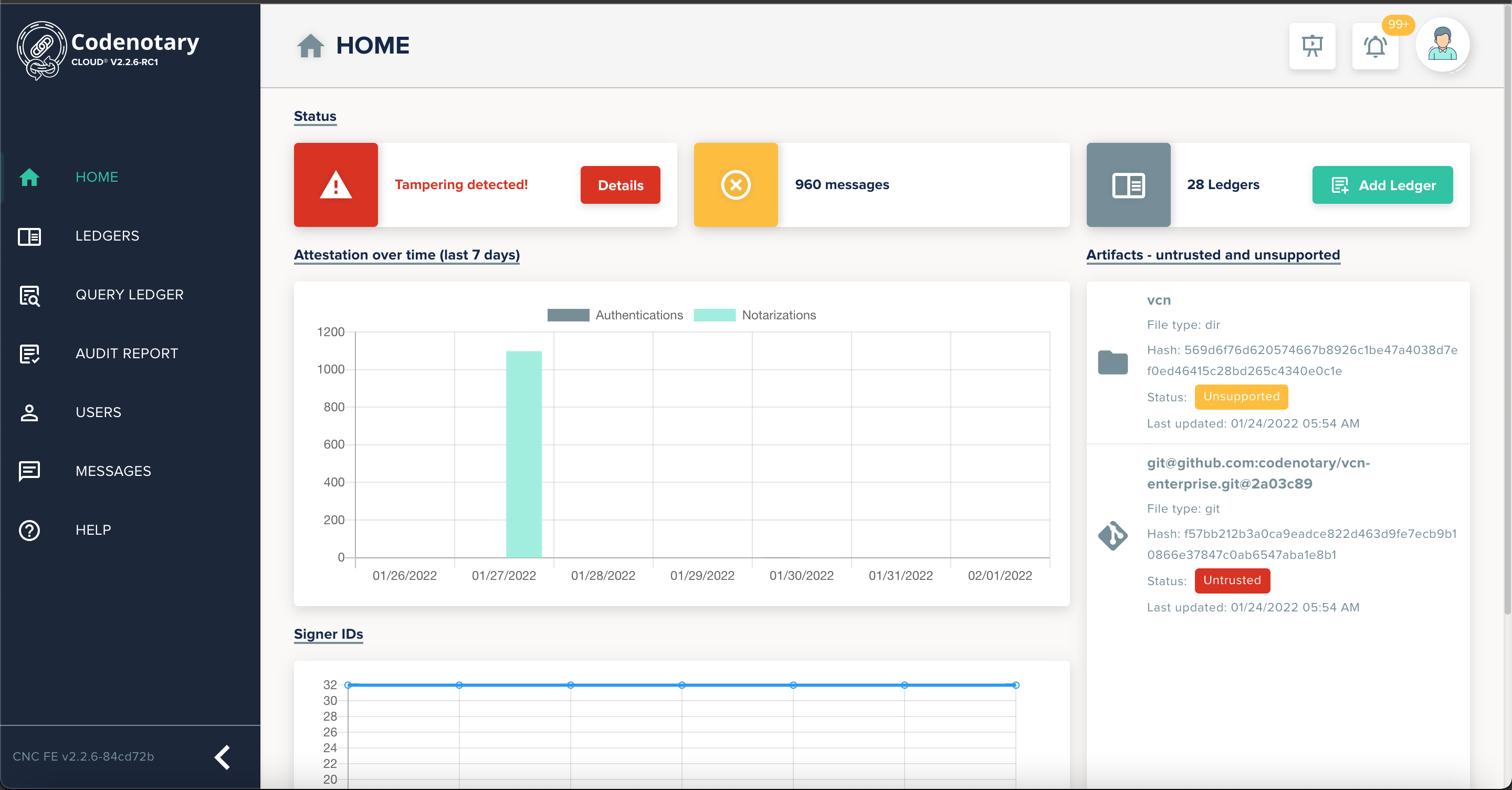
    Codenotary has launched a Codenotary Cloud platform that can automatically generate a software bill of materials (SBOM) and make it easier to discover what components have been included in an application.

    Moshe Bar, Codenotary CEO, said that capability can also play a key role in identifying which components in an application might contain, for example, the Log4jShell vulnerabilities that were recently discovered in Java applications.

    That capability can reduce the time required to remove insecure artifacts by as much as 80% simply because organizations are not dependent on scanning tools to search for vulnerable components, added Bar.

    Codenotary Cloud is based on an immutable open source immudb database that cryptographically attaches an identity to each software artifact. In the wake of a series of high-profile breaches, there’s now a lot more focus on the integrity of software supply chains. In fact, the Biden administration recently issued an executive order requiring all federal agencies to, among other things, make sure an SBOM is available for all the software they use.

    Codenotary claimed Codenotary Cloud can scale to millions of integrity verifications per second across source code, builds, repositories, Docker container images and Kubernetes deployments in a way that doesn’t require DevOps teams to upload data to a centralized platform, noted Bar. That makes it possible to notarize and verify the provenance of all the code being employed, he added.

    Codenotary Cloud can also be fully integrated with most vulnerability scanners and popular cloud-native continuous integration/continuous delivery (CI/CD) systems running on any cloud or on-premises host via a managed service. Pricing starts at $5,500 for a workgroup of 10 developers.

    It’s not clear to what degree the Biden administration’s executive order will improve overall software security. There have been multiple vulnerability issues over the years that have not resulted in any material change in how organizations manage their application development processes. However, the executive order issued by the Biden administration, coupled with a recent summit on the state of open source software security, means more senior business and IT executives are at least aware of growing concerns.

    The one thing that is certain is there will be more zero-day vulnerabilities discovered. Developers today routinely reuse open source software and free components maintained by a small number of volunteer programmers. Like any other developer, the amount of security expertise those individuals have is limited. Many organizations reuse that code without contributing anything meaningful back to the project—either in terms of financing or vulnerability identification and remediation support. Contributors to these projects freely donate their time and expertise to build these components. Many of those contributors feel the onus for securing the software they created is on the organizations that decide to deploy that software.

    Regardless of who is responsible for security, it’s apparent cybersecurity teams are going to be reviewing application development processes. Theoretically, that should benefit all concerned and lead to DevSecOps best practices being more widely adopted.

  • Why Developer-First is the Future of AppSec

    Why Developer-First is the Future of AppSec

    DevOps culture and rapid cloud adoption mean developers are shipping code faster than ever and, in many cases, security teams struggle to keep up. To avoid relegating security to afterthought status, organizations must shift left and adopt a developer-first approach to application security (AppSec).

    Organizations that depend on software development need a solution that accomplishes two essential things to adapt and survive: Risk-appropriate security measures and an even distribution of functions across the stack. First, risk-appropriate security measures must be applied to all software before it is delivered or deployed. Second, they must adopt processes that enable security functions to be distributed across the development stack in a way that will not slow down the pace of development.

    Just as the entire development process starts with developers, integrating security should also start with a developer-first approach. Developer-first AppSec is the future; here’s how organizations can evaluate tools that will help them adopt a developer-first approach.

    Why Developer-First is the Future

    Developers outnumber application security engineers by as many as 100 to one, and AppSec functions cannot scale if security practitioners are the only ones responsible for security. This imbalance suggests that organizational leaders must better distribute security ownership across the developer teams that own the software asset.

    As it stands today, many companies expect developers to build and deploy software faster than ever before. Security teams often can not keep pace with software development, and they become a roadblock to software delivery. To meet project development deadlines and their key performance indicators (KPIs), developers tend to leave security teams behind. They do not have the time or the incentive to slow down development because application security tools or processes are slow and cannot keep up.

    Security and developers are at cross-purposes in today’s software development model. They are pseudo-adversaries because AppSec teams know what it takes to make code secure, or at least they know how to find vulnerabilities. And, on the other hand, developers need to write code that works well and meets the sprint’s deadline.

    Friction Between Teams

    This growing problem creates friction between these two teams. It’s not that security teams don’t care about the organization’s need to produce quality software quickly or that developers don’t care about security. It’s just that each team is measured and incentivized to achieve opposing objectives. AppSec programs must create a developer-first approach to building software quickly and securely to combat this growing problem.

    It is not feasible for organizational leaders to provide security engineers with the entire business or environmental context behind software applications. In this sense, AppSec teams are working with limited vision. They may not see how the software fits into the organization’s big picture or understand its priorities.

    With limited contextual understanding, security teams necessarily rely on developers to make decisions about acceptable risks. If left to their own devices to view the world through a security-centric lens, AppSec teams could get bogged down—potentially spending too much time enforcing security measures that do not apply to the task at hand.

    Since developers are building the software and know what the services are designed to do, security engineers must defer to a developer-first approach so that decisions about security issues will align with the business context and acceptable levels of risk.

    Finding a Developer-First AppSec Platform

    Below is a condensed guide to help organization leaders evaluate potential AppSec platforms. These questions will help identify a solution that will enable the organization to build a developer-first security program.

    • Will the solution flood the developers and AppSec team with more and more results, or will this help them fix the essential gaps?
    • Will the solution provide context to help developers focus their limited time on security work that matters, or will it end up wasting time on things that may not even present a risk?
    • Will the solution help build security measures as guardrails to prevent security issues in the first place?
    • Is the solution flexible enough to enable building custom application security checks and policies in the SDLC?
    • Does the solution provide flexible ways of communicating actionable security information directly to developers in real-time within dev tools like source control systems, CI/CD platforms or engineering task management systems?

    There are an overwhelming number of application security solutions on the market today, most of which are designed to create security alerts about every conceivable threat regardless of the business context of the software being developed. More tools are then needed to manage the identified vulnerabilities.

    What This Future Will Look Like

    AppSec teams must recast themselves as security facilitators providing expertise for solving complex challenges and maintaining oversight of the developer teams’ security efforts. Developers should own tactical security tasks, but the AppSec team should continue to be the experts in making risk-based decisions and driving security accountability across the business.

    Inside many organizations, application security is only beginning to become integrated into developer workflows. This integration creates both opportunities and challenges. As organizations strive to make AppSec an enabler that aids developers in creating secure software quickly, developer-first AppSec programs let businesses make their digital transformation journey safer and faster.

  • WhiteSource Tightens Code Scanning Tool Integration with Azure DevOps

    WhiteSource Tightens Code Scanning Tool Integration with Azure DevOps

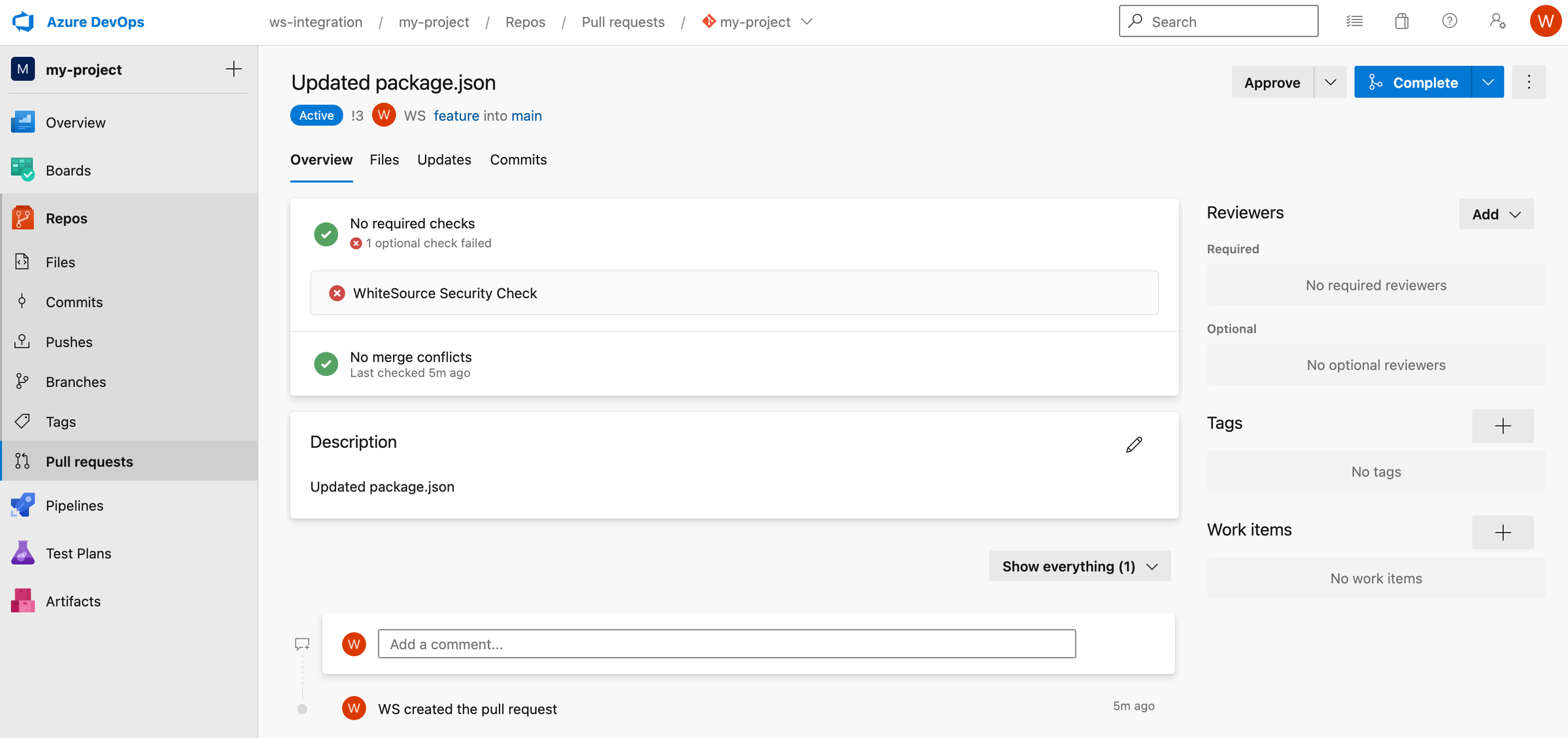
    WhiteSource has added the Microsoft Azure DevOps platform to the list of continuous integration/continuous delivery (CI/CD) platforms its open source vulnerability scanning tools natively supports.

    Susan St. Clair, director of product management for WhiteSource, said while developers are always encouraged to scan for vulnerabilities, it’s more effective if organizations implement scanning by default every time there is a merge request. That approach reduces friction because organizations become much less dependent on developers to scan for vulnerabilities within the context of a larger DevSecOps workflow, she added.

    WhiteSource also provides a merge confidence feature that uses crowdsourced data to show how likely it is that an open source component can be updated without breaking the build. Merge confidence includes data on upgrade age, adoption and compatibility to create a confidence score.

    The WhiteSource integrations make it possible for DevOps teams to detect all open source components being used and automatically enforce security policies directly from their repository. DevOps teams are provided with vulnerability and misconfiguration alerts and license violations along with detailed remediation guidance, including suggested fixes and prioritization advice, within an existing workflow versus being required to switch to a tool that has a separate user interface (UI) they need to learn.

    Should a merge request introduce a new error, the developer is given immediate feedback to resolve any newly introduced vulnerabilities before the request is completed. That approach to separating feature branches and mainline branches prevents interruptions to workflows. The enterprise edition of the WhiteSource tool also automatically generates pull requests in the repository to update vulnerable open source components to the lowest non-vulnerable version.

    WhiteSource also supports code repositories such as GitHub, GitHub Packages, JFrog, Bitbucket and GitLab. The Azure DevOps platform is gaining traction as more application development projects are being managed via the cloud following the onset of the COVID-19 pandemic, noted St. Clair.

    As more organizations begin to embrace DevSecOps workflows each of them will need to decide how far left they want to shift responsibility for application security. In theory, each developer is now being held more accountable for every one of their applications that gets deployed in a production environment. In practice, most developers lack the expertise required to ensure applications are secure.

    There are, of course, more concerns being raised about the security of software supply chains that include open source software in the wake of the recent disclosure of zero-day vulnerabilities in the widely-used Log4j logging tool. Many of the maintainers of smaller open source projects lack the resources required to ensure there are no inadvertent vulnerabilities that could be exploited by cybercriminals. More challenging still, many developers may have used an older version of that software that has known vulnerabilities.

    It’s not clear how open source software will ultimately be made more secure. In the meantime, however, it’s clear the onus for ensuring the security of that software is on the DevOps teams that employ it.

  • App Store Antitrust Bill | GDPR vs. Google Fonts | Wordle Worth $1M+

    App Store Antitrust Bill | GDPR vs. Google Fonts | Wordle Worth $1M+

    Welcome to The Long View—where we peruse the news of the week and strip it to the essentials. Let’s work out what really matters.

    This week: The Open App Markets Act polls well among devs, Germany fines a website for using Google Fonts, and the New York Times buys Wordle for an unfeasible sum.

    1. Antitrust Bill Would Open Up App Stores

    First up this week: The Open App Markets Act seems like a big hit with developers. In a survey, more then 80% wanted lawmakers to pass this bipartisan Senate bill.

    Analysis: But 30% of nothing is nothing

    One of devs’ biggest complaints is Apple’s 30% cut of all revenue—including in-app purchases. Many devs have also experienced random rejections of submissions to the stores. And these seem to be the main driving forces behind devs’ calls to tear down any walls around the gardens. But they should be careful what they wish for—users might not see it the same way.

    Karl Evers-Hillstrom: 8 in 10 app developers back measure to rein in Google, Apple

    The Coalition for App Fairness, [an] industry group for app developers, is pushing Congress to pass the Open App Markets Act. [The] bipartisan Senate bill … would block app stores from favoring their own in-house apps in searches, requiring developers to use their payment systems and preventing users from downloading apps from third-party stores.
    …
    Developers surveyed … complained about exorbitant fees … and expressed how they’d experienced difficulty getting their apps featured or accepted by app stores. Just 13 percent of app developers surveyed oppose the bill. … The margin of error is plus or minus 7.11 percentage points.
    …
    The proposal, co-sponsored by Sens. Amy Klobuchar (D-Minn.), Richard Blumenthal (D-Conn.) and Marsha Blackburn (R-Tenn.), is scheduled for a committee markup this week. The CEOs of Apple and Google have personally lobbied lawmakers to abandon [such] antitrust legislation.


    Wouldn’t that just kill the proverbial golden goose? No, says this Anonymous Coward:

    The only reason Apple has any success with the iPhone is because developers write apps for it, it’s no different to Windows in that regard. … If Apple’s app store is so good then everybody from developers to end users will continue to use it and nobody will use third party app stores.
    …
    Obviously there is a clear profit motive to exclude any competition in the app store space. But I don’t understand how people can claim that Apple makes great products and simultaneously argue that they couldn’t possibly survive competition on the platform.


    But Dr. Edith Müdyk—@BabyHueby—doesn’t sound hopeful this will go anywhere:

    Too bad policy isn’t dictated by public opinion.


    2. German Court Fines Site for Using Google Fonts Without Consent

    Did you know you need to get permission from a European user before you remote-load a Google Font? You do now.

    Analysis: Schrems II comes home to roost

    More GDPR popups ahoy! A German court has “clarified” that websites and apps should obtain informed consent before loading content—if loading it would reveal a user’s IP address to a third party. Luckily, the fine was only $110—this time, but if the perp was to do it again, the court threatened 2500× that amount.

    Thomas Claburn: Website fined by German court for leaking visitor’s IP address via Google Fonts

    A German court fined an unidentified website €100 ($110) … for violating EU privacy law by importing a Google-hosted web font. [It] passed the unidentified plaintiff’s IP address to Google without authorization and without a legitimate reason for doing so. And that violates … GDPR.
    …
    The website could have avoided this drama by self-hosting the font. … The ruling explicitly cites this possibility to assert that relying on Google-hosted Google Fonts is not defensible under the law.
    …
    The ruling directs the website to stop providing IP addresses to Google and threatens … a fine of €250,000 for each violation, or up to six months in prison, for continued improper use of Google Fonts. … These data privacy judgments … reflect the consequences of the EU Court of Justice’s 2020 decision to strike down the Privacy Shield data protection arrangements that had previously allowed US companies to exchange data with European partners under “Standard Contract Clauses.”


    Isn’t that ridiculous? And surely not the intention of GDPR? Aristos Mazer very much disagrees:

    This is very much the intended consequence, with a lot of analysis going into this regulation. … Even if that means redesigning foundations of the network.
    …
    Forcing sites to stop transferring data in any way shape or form to Google, Apple, Microsoft, Facebook, etc. … is exactly the goal. [It’s been] repeatedly validated by polls of EU citizens.


    And indeed, the point is to get “informed consent.” Here’s Hans Neeson-Bumpsadese:

    “To proceed beyond this point … your IP address needs to be shared with a 3rd party.” Would they click on that? … I know at least one person who would read that as, “If I click that link then you will tell people where I live.” (I know because they got a pop-up like that once, and phoned me in a state of mild agitation.)


    3. Wordle Sold to NYT for Over $1M

    Josh Wardle, a Welsh developer living in New York, has sold this winter’s social gaming hit to his state’s namesake newspaper of record. The New York Times thinks it’ll be a useful addition to its Games section. But the price tag is incredible.

    Analysis: Nice payday for Josh

    How much? Hard to see how the Times is going to make money out of this. Tomorrow’s word must be: NOROI.

    Alexis Benveniste: The Sudden Rise of Wordle

    In less than six months, Wordle has gone from a gift to a viral sensation, to … part of The New York Times. … Josh Wardle, a software engineer in Brooklyn, created the game as a gift for his partner … and it exploded in popularity.
    …
    Nearly two months later, 300,000 people played it. … The buzz around the game can be attributed to the spoiler-free scoring grid that allows players to share their Wordle wins across social media.
    …
    Wordle was acquired for an undisclosed price in the low seven figures.


    In other words, north of $1 million. Not bad for a quick, one-dev hack by Josh Wardle:

    The game has gotten bigger than I ever imagined (which I suppose isn’t that much of a feat, given I made the game for an audience of one). … I feel so grateful for the personal stories some of you have shared with me.
    …
    [But] I’d be lying if I said this hasn’t been a little overwhelming. [So] I am incredibly pleased to announce that I’ve reached an agreement with The New York Times. … I’m thrilled they will be stewards of the game.


    But “RIP Wordle,” mourns _xeno_, seemingly speaking for many:

    It’s about to be bogged down with trackers, and then later, ads. … A paywall is almost certainly on its way—The New York Times very carefully said it would “initially remain free.” … Not surprisingly, there are already plenty of clones. … There’s no way for the New York Times to make money off this.


    The Moral of the Story: No disguise will hide one’s true character.


    You have been reading The Long View by Richi Jennings. You can contact him at @RiCHi or tlv@richi.uk.

    Image: Masahiro Miyagi (via Unsplash; leveled and cropped)

  • Continuous Security: The Next Evolution of CI/CD

    Continuous Security: The Next Evolution of CI/CD

    Following a wave of high-profile cyberattacks and the White House’s release of the executive order on improving the nation’s cybersecurity, how to build a successful cybersecurity program has never been so hotly debated as it is now. From SolarWinds to the Colonial Pipeline attacks, these events demonstrate that defensive measures alone cannot mitigate cybersecurity risk, and any cybersecurity program must begin where nine out of 10 breaches begin—the code. 

    The adoption of CI/CD in recent years as an extension of Agile and DevOps has enabled organizations to embrace digital transformation and ensure code is always being delivered that matches the most current business needs. Unfortunately, this has further siloed security as processes failed to keep pace. While there are a number of point solutions to address the ever-expanding domain that encompasses application security—from traditional pentesting and vulnerability scanners to monitoring of the individual components of the DevOps toolchain like containers—too many tools results in a DevSecOps “hairball” that leaves organizations inundated with data, yet without actionable information. 

    Moving Beyond Secure DevOps

    As organizations continue to evolve their delivery processes, security has found its role in secure DevOps (SecDevOps) programs to ensure the execution of security processes at every step of the software development life cycle (SLDC). By continually managing security practices, policies and debt in existing pipelines, this approach ensures that all stakeholders—from the C-suite to the developers and AppSec managers—have the information they need at every step of development to share responsibility in delivering secure software.

    However, these programs, while a good starting point, have left security requirements and checks in PDFs, Excel documents, and emails failing to capture the same benefits of security integration into the SDLC that Dev and Ops have commanded. Without SecDevOps orchestration, the information often lags the pipeline, creating new bottlenecks and uncertainty. SecDevOps orchestration gives security and development teams the confidence to know they’re following the right policies and eliminates the manual work that creates drag on the SDLC. With the automation of the application security process, enterprises get consistency and insight into their program that allows their focus to stay on shipping code while knowing it meets their organizational security standards. 

    Adding Continuous Security

    With CI/CD, organizations are able to rapidly meet the most current needs of the business as they rapidly evolve, but without a continuous approach to security as well, once again, security is siloed off. Organizations must be able to adapt their security requirements for changes both internal (changing databases, different software versions, etc.) and external (compliance requirements, changing threat landscape, etc). We need to take CI/CD one step further and also have security integrated continuously. 

    By extension, continuous security (CI/CD/CS) is the philosophy of continuously shipping software that meets the most current security standards for the business, accounting for internal and external change throughout the SDLC. 

    To effectively adopt a CI/CD/CS, organizations must focus on three key principles:

    • There is no perfect code, therefore there is no perfect security—Good application security manages cyber risk in line with overall business strategy. When you have the ability to accept risk within the risk tolerance of the businesses, you know the right times to stop, and the right times to carry on because other controls are in place. Don’t let perfection be the enemy of the shipped. 
    • Bite-sized application security—DevOps isn’t about moving fast and breaking things, it’s about moving efficiently and fixing things at the right time. Deliver the right application security information at the right time to the stakeholder responsible for executing it. This ensures better collaboration so stakeholders know where, when and with whom to direct their attention. 
    • Micro-feedback loops—Leverage orchestration to get real-time feedback on policy compliance before it creates bottlenecks down the line. This enables you to respond to changes both internal and external as quickly as possible, creating an iterative cycle of information for future decision-making. 

    By continually managing security practices, policies, and debt in existing CI/CD pipelines, this approach allows a scalable application security program to be deployed in any SDLC so it can continually evolve to always be in lockstep with today’s business.  

    Different organizations have different risks they need to account for, which means security must be aligned to business strategies and priorities in order to dynamically respond. With end-to-end integration in the SDLC, continuous security supports CI/CD to improve productivity and speed time-to-market, while reducing the risks that might impact a particular business. Software is inherently impermanent and organizations need to be able to continuously balance security, technical and business priorities to ensure they are maintaining their focus on what matters most: Delivering value to customers and shareholders. 

  • Embedded Connectivity Solves the Right (and Left) Problem

    Embedded Connectivity Solves the Right (and Left) Problem

    In Steven Bellovin’s book, “Thinking Security: Stopping Next Year’s Hackers,” (2015) he wrote:

    “Companies are spending a great deal on security, but we read of massive computer-related attacks. Clearly, something is wrong.

    The root of the problem is two-fold: We’re protecting (and spending money on protecting) the wrong things, and we’re hurting productivity in the process.

    InfoSec is hurting productivity in the organization it is supposed to be protecting.”

    Bellovin clarified what he meant by “the wrong things.” He observed that security measures tend to stick around even when the threat they were intended to address has faded into the past. Those security costs have only increased since 2015 when the book was published, and today represent a trillion-dollar drag on the global economy despite the emergence of security-integrated models of software delivery such as DevSecOps, shift left and shift right.

    The 2021 IBM Security Threat Intelligence Index reports the No. 1 attack vector was a surveillance technique known as scan-and-exploit. Defenders face an asymmetric engagement with such network threats. The successful attacker needs only to exploit a single vulnerability whereas defenders must secure 100% of the network’s ports of entry 100% of the time. The fundamental problem is the anonymous and permissionless nature of the internet. This makes it both useful and easily abused. Anyone anywhere may conduct reconnaissance and launch attacks at a massive scale with little cost or risk. How can we make it prohibitively difficult or costly to successfully surveil and attack our own applications? What if we could reliably defend against the entire category of active scanning tactics?

    There are no secure networks, only isolated networks. Taking this back to first principles, a network’s purpose is to convey packets of data from sender address to recipient address. The network has no built-in ability to identify either party or to discern the legitimacy of any activity. Active scanning techniques identify potential targets that are then probed by scripts that may be intrusive or stealthy or both. We could simply reject all incoming network traffic with a firewall, but application servers must be continually reachable in order to listen for incoming requests. Any interruption of availability causes errors like “connection refused” and “service unavailable” for the user. 

    This necessary network exposure leaves the upper layers of the network and the application server itself vulnerable to intrusion and denial of service attacks. “Private” enterprise applications are similarly exposed to the famously-vulnerable group that are VPN users’ devices, and so are by no means immune to this problem. This presents the problem of automatically discerning which incoming connections are legitimate, continually, forever. Are we trying to solve the wrong problem?

    Ideally, we would identify the sender before they connect to the application server. That way, we can know whether they have permission to connect at all. This is something we simply can not do when the sender is known only by a network address. We can’t ask for a credential because that introduces yet another application layer with all of the same problems. This is precisely why VPNs do not go far enough: A superficial barrier is erected for users that prevents the application server from checking for permission until after surveillance and subsequent attacks have occurred. 

    Embedded connectivity-as-code solves the right problem. This represents a shift in thinking about the relationship between the application and the network. Now, the application brings its own point-to-point overlay with a verifiable identity on both ends. This has significant implications for the security of the application that can be summarized in terms of shifting security left in the development timeline and shifted right in the life span after deployment.  

    Shift left: OpenZiti makes embedding connectivity-as-code convenient for developers and transparent for auditors and users. As open source software, it fits into DevSecOps processes that scan the source code. The management side of the OpenZiti network is cloud-native and API-driven and fits into the DevOps paradigm of continuous integration testing. For example, a network-as-code may be continually created and destroyed by a pipeline to exercise any imaginable configuration of endpoints, services and policies, or to facilitate dynamic scanning of the data edge and fabric APIs. 

    Shift right: OpenZiti allows us to shift right security to measure and monitor applications after development, in production, with a novel ease and without compromising security. Operators maintain perfect visibility of deployed applications and need not cope with the complexity of hopping through security gateways or bastions or worrying about external malicious actors and inbound connections. This best-of-both-worlds reality is a natural effect of  an access control scheme that is based upon verifiable cryptographic identity, not a weak identifier like an IP address. Importantly, this means it is always knowable which identity is accessing what services, when they were accessed and to what extent.

    OpenZiti gives applications superpowers! To name a few: Identity-driven addressability, private domain name system, shelter from unauthorized connections, portable and programmable micro-segmentation, end-to-end encryption, solves the IPv4 shortage without IPv6, smart routing to choose optimal routes across the internet and is transparent to end users.

    Learn more about OpenZiti by checking out our Quickstarts or engaging in conversation on Discourse.