Category: DevOps Practice

  • Atlassian Advances DevSecOps via Jira Integrations

    Atlassian Advances DevSecOps via Jira Integrations

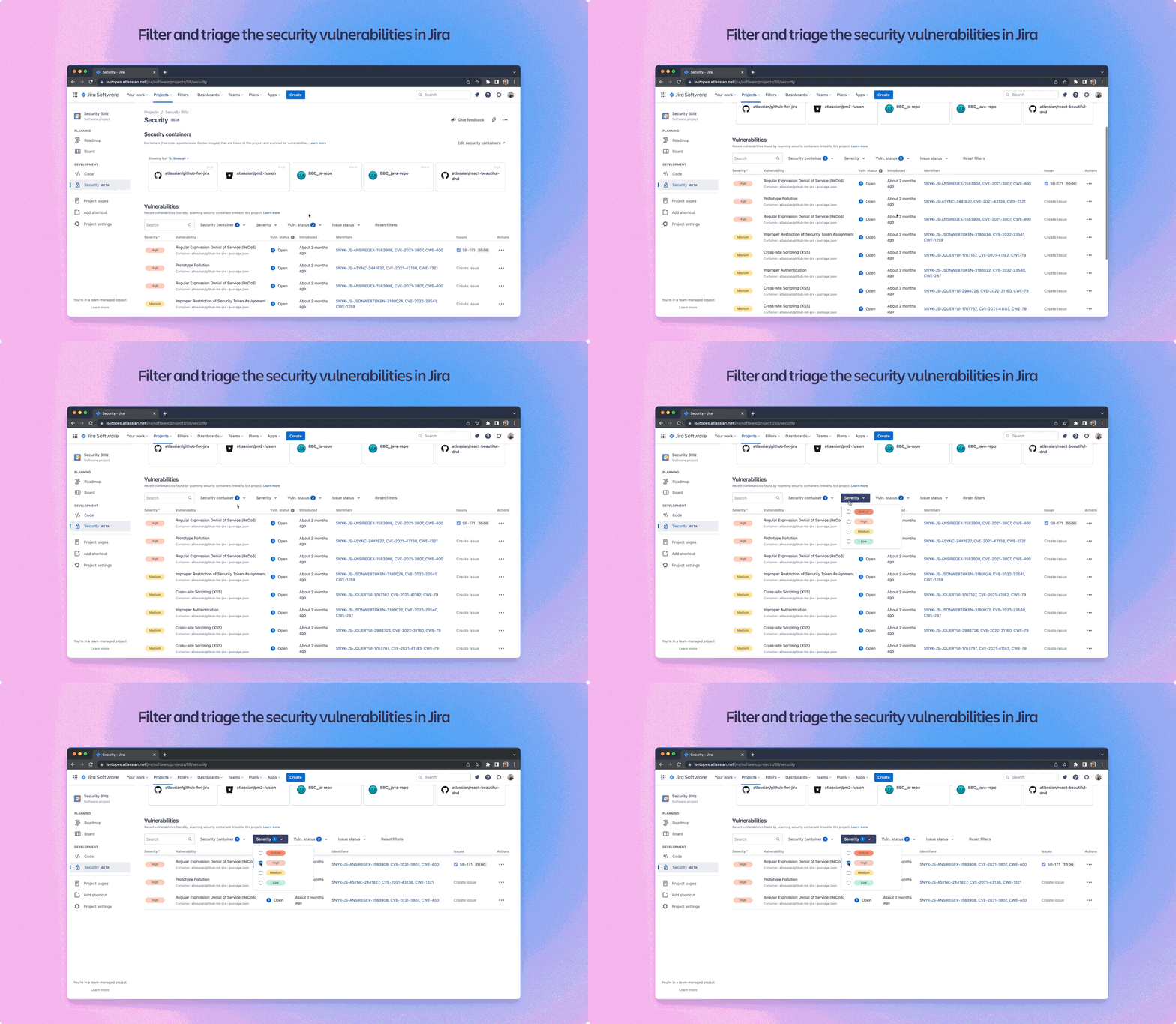
    Atlassian announced today it has allied with Snyk, Mend, Lacework, Stackhawk and JFrog to make it simpler to aggregate vulnerability data within the Jira project management software that many organizations rely on to manage application development and deployment efforts.

    Andrew Pankevicius, a senior product manager for Atlassian, said the collaborations will make it easier to prioritize a list of vulnerabilities that need to be addressed and for DevOps teams to automatically assign that work to a continuous integration/continuous delivery (CI/CD) pipeline. Atlassian provides those third-party integrations via an Open DevOps initiative.

    These capabilities, accessible via the Security Tab in Jira, will make it simpler for DevOps teams to manage output from the multiple application security tools that have become part of a larger DevSecOps workflow, noted Pankevicius.

    These additions to the Atlassian portfolio are arriving at a time when there is a lot more focus on securing software supply chains in the wake of a series of high-profile breaches. Those breaches have led to a wave of legislative proposals in the U.S. and Europe that will soon require organizations to embrace DevOps best practices to address increased potential liability that might stem from an application breach.

    For example, a proposed Cyber Resilience Act being negotiated by the member states of the European Union seeks to require organizations that sell internet-connected hardware platforms to ensure that their devices—and the software that runs on them—comply with cybersecurity best practices.

    In the U.S., meanwhile, a National Cybersecurity Strategy proposal put forward by the Biden administration seeks to hold organizations that collect data or build software more accountable for breaches.

    While both proposals are a long way from becoming the law of the land anytime soon, they are indicative of changing attitudes. Governments around the world are concluding the only way to ensure better cybersecurity is to require it. Previous suggestions made by government agencies are going to soon give way to actual mandates. As such, DevOps teams would be well-advised to get ahead of this sea change by implementing the tools and processes that inevitably will be required. As a result, many organizations are now embracing DevSecOps best practices that shift more responsibility for application security further left toward developers.

    The challenge is finding the right set of cybersecurity tools that surface vulnerabilities as code is being developed to make sure context isn’t lost, said Pankevicius. Historically, cybersecurity teams have discovered vulnerabilities long after an application has been deployed in a production environment. By then, however, most developers have moved on to other projects, so remembering how a specific piece of code was developed and by whom can be a significant challenge, he noted.

    There’s no doubt that when it comes to application security, a lot of progress has been made, but there is still much work to be done. The issue now is finding the best way to organize those efforts at a time when more applications are being simultaneously developed within organizations than ever.

  • PagerDuty Signals Commitment to Adding Generative AI Capabilities

    PagerDuty Signals Commitment to Adding Generative AI Capabilities

    PagerDuty has signaled its intention to add generative artificial intelligence (AI) capabilities to its cloud platform for managing IT operations via integrations with large language model (LLM) providers that it will disclose at a future date.

    These capabilities will make it possible to invoke natural language via PagerDuty Operations Cloud to automatically generate status updates, create drafts of incident postmortem reports and even co-author workflows in any programming language to automate remediation of an issue.

    Damon Edwards, senior director of product for PagerDuty, said as AI continues to evolve, the goal will be to minimize the need for human involvement as much as possible. That doesn’t mean there won’t be a need for humans to be involved, but it does mean that many rote tasks associated with managing an IT incident can be automated, he added.

    For example, the reports that are run to determine the root cause every time there is an incident can be automated, noted Edwards. In addition, summarizations of status reports or postmortems after incidents were resolved can be made readily available to any member of an IT team on demand, he added.

    Those capabilities will also make it easier to onboard new members to an incident management team as required, said Edwards. Today, it’s difficult to add new members to a team after an incident has unfolded because it takes time to bring them up to speed, he noted.

    In addition, generative AI also makes it easier to capture a lot of the tribal knowledge within an IT organization that would otherwise disappear when staff either leave the company or shift roles, said Edwards.

    The generative AI additions to the PagerDuty platform extend an artificial intelligence for IT operations (AIOps) capability that PagerDuty made available this spring. The PagerDuty AIOps platform leverages the data model embedded in its incident management software to reduce the amount of time required for an AI platform to learn how an IT environment operates and begin surfacing valid recommendations to optimize workflows.

    It’s not clear at what pace AI will be adopted within enterprise IT organizations, but it is rapidly becoming pervasive. Each DevOps team will need to decide the degree to which they can rely on AI to manage IT processes, but as IT processes become more complex, there is a clear need for AI to navigate all the dependencies that exist in an IT environment. As more routine tasks are automated, however, there will also inevitably be a realignment of roles and responsibilities within an IT organization. The overall goal is not so much to eliminate IT staff as much as it is to enable them to manage IT environments at a much higher level of scale.

    In the meantime, DevOps teams need to plan for not only what is possible using generative AI today but also tomorrow. After all, there’s not a lot of point in training someone to take on a new task if that task is automated a few months from now.

  • Mastering DevOps Automation for Modern Software Delivery

    Mastering DevOps Automation for Modern Software Delivery

    DevOps automation services are a crucial aspect of modern software development that helps organizations to improve their software delivery processes and keep up with the pace of innovation. With DevOps automation, developers can automate repetitive and time-consuming tasks, enabling them to focus on writing code and delivering features faster and with higher quality. By automating processes such as continuous integration, continuous delivery and infrastructure-as-code, organizations can reduce costs, improve collaboration between teams and respond quickly to changing business needs and customer requirements.

    In this article, we will discuss the basics of getting started with DevOps automation services, including popular tools and best practices that organizations can use to implement a successful automation strategy.

    Agility and Efficiency for Smart Digitalization

    Emerging technologies like multi-cloud, IaC, AI/ML and IoT have only increased the importance of DevOps automation, as they bring new challenges demanding agility, flexibility and efficiency in software delivery processes. Multi-cloud and hybrid cloud environments, for example, can benefit from automating the deployment and management of software across multiple cloud environments. Similarly, AI/ML and IoT require organizations to collect and process large amounts of data in real-time, which can be challenging without automation. DevOps automation can help organizations automate data pipelines and analytics, enabling them to process data faster and more accurately.

    Here are some benefits of DevOps automation:

    ● Speed and Efficiency: DevOps automation enables organizations to deliver software faster and with higher quality. By automating repetitive and time-consuming tasks, developers can focus on writing code and delivering features.
    ● Agility and Flexibility: DevOps automation provides organizations with the agility and flexibility to adapt to changing business needs and customer requirements. Automated processes make it easier to release software updates and respond quickly to market demands.
    ● Cost-Effectiveness: DevOps automation reduces the costs associated with software development by reducing manual labor and minimizing errors. It also enables organizations to use cloud resources more efficiently, which can result in cost savings.
    ● Improved Collaboration: Bringing the different stakeholders along with devs and operations, DevOps fosters a collaborative approach toward enhanced CI/CD. By automating processes, teams can work together more effectively and share knowledge and feedback in real-time.
    ● Scalability: DevOps automation enables organizations to scale their software delivery processes quickly and efficiently. Automated processes make it easier to deploy software across multiple environments and platforms, which is essential for organizations that need to scale rapidly.

    Getting Started With Efficient DevOps Automation

    Implementing DevOps automation requires a well-planned strategy, best practices and the right set of tools. In this section, we will discuss how to successfully implement DevOps automation in your organization.

    Understanding DevOps
    Before you begin with automation, it is essential to understand the principles and practices of DevOps. DevOps is a culture that emphasizes collaboration and communication between software development and IT operations teams to build, test and release software more quickly and reliably. There are some common tools that DevOps teams use for their work, collaboration and communication:
    ● GitHub: The Git repository hosting service used for version control and source code management functionality, especially for distributed projects.
    ● JIRA: A project management tool that helps teams plan, track and manage software development projects.
    ● Slack: A communication platform that enables real-time messaging, file sharing and collaboration.

    Choose the Right Tools
    Automation is at the heart of DevOps, and selecting the right tools is crucial. Choose tools that fit your requirements, budget and infrastructure. Some popular DevOps automation tools include:

    ● Jenkins: An open-source automation server that enables continuous integration and continuous delivery (CI/CD) pipelines.
    ● GitLab: A web-based Git repository manager that provides CI/CD capabilities, project management, and collaboration tools.
    ● Puppet: An open-source configuration management tool that automates the deployment and management of software across multiple environments.
    ● Chef: A configuration management tool that automates the deployment and management of software across multiple environments.
    ● Ansible: Open source tools for automating software provisioning, deployment and configuration management

    Identifying Processes for Automation

    First, list all the critical processes within your organization that can be enhanced with automation. Start with the repetitive and time-consuming tasks that can be automated, such as code testing, deployment and monitoring. There are a number of popular tools that can help with such automation:

    ● Selenium: An open source testing framework that enables automated testing of web applications.
    ● Docker: A containerization platform that enables the creation, deployment and management of containerized applications.
    ● Kubernetes: The open source container orchestration tool is essential in the DevOps pipeline for orchestration and automation of the deployment, scaling and management of containerized applications.

    Creating a Plan

    Once you have identified targets for automation and selected tools, create a plan for automation that includes a roadmap and milestones. Start with small projects and gradually expand the automation to cover all aspects of the software development life cycle. Some popular tools for strategizing these life cycles are:

    ● Trello: A project management tool that enables teams to organize and prioritize tasks using Kanban-style boards.
    ● Asana: A project management tool that enables teams to track and manage tasks using to-do lists, calendars and timelines.

    Training The Team

    Automation requires new skills, so it is essential to train your team to use the tools and processes effectively. Provide training and resources to help your team learn new skills and techniques. Some popular education and training resources include:

    ● Udemy: An online learning platform that provides courses on DevOps automation tools and techniques.
    ● Coursera: An online learning platform that provides courses on DevOps and related topics.
    ● Pluralsight: An online learning platform that provides courses on DevOps automation tools and techniques.

    Implementing Continuous Improvement

    A continuous feedback loop is essential for DevOps’ iterative process and continuous improvement. Integrate mechanisms for evaluating your automation processes, identify areas for improvement and make necessary changes. Here are two common tools used to do this:

    ● New Relic: An application performance monitoring tool that provides real-time visibility into the performance of software applications.
    ● Splunk: An operational intelligence tool that enables organizations to analyze and visualize machine data in real-time.

  • DigiCert Allies With ReversingLabs to Secure Software Supply Chains

    DigiCert Allies With ReversingLabs to Secure Software Supply Chains

    DigiCert today announced it has allied with ReversingLabs to integrate binary analysis and threat detection capabilities with a code signing service it provides.

    Deepika Chauhan, chief product officer for DigiCert, said the addition of these capabilities to the DigiCert Software Trust Manager service would make it simpler for organizations to operationalize a methodology for securing their software supply chains. The capabilities are designed to be embedded within continuous integration/continuous delivery (CI/CD) pipelines.

    In addition to being a certificate authority, DigiCert’s Software Trust Manager service automates code signing workflows. ReversingLabs, meanwhile, just added the ability to detect secrets exposed in application binaries to its Software Supply Chain Security (SSCS) platform. Those capabilities can identify secrets inadvertently left in applications as plain text, can identify secrets that can be discovered because of weak cryptography and also includes scripts that scan for malware and can generate software bills of materials (SBOMs).

    Chauhan said when combined with DigiCert Software Trust Manager, it becomes possible for the two companies to provide a comprehensive approach to detecting malware, software tampering, inclusion of secrets and certificate misconfigurations in any type of software.

    A recent ReversingLabs survey found 87% of respondents detected significant risks in their software supply chain in the last year, with software containing vulnerabilities (82%) followed by secrets leaked through source code (55%), malicious code (52%) and suspicious code (46%) posing the most serious risk to the business.

    A full 88% said software supply chain security is an enterprise-wide risk, but only 60% said their software supply chain defenses were up to the task. Nearly two-thirds (65%) of respondents, however, acknowledged their organization’s software supply chain security program wasn’t as mature as it should be. As a result, 80% are currently focused on improving security for the software supply chain, with 96% noting a more comprehensive approach to software supply chain security that detects more than vulnerabilities is needed.

    It’s not entirely clear just yet whether development teams or cybersecurity teams will be taking the lead in terms of driving the adoption of DevSecOps best practices to secure software supply chains. It is clear that securing software supply chains in the wake of a series of high-profile breaches is a much higher priority.

    Erik Thoen, director of product management for ReversingLabs, said as a result, it’s only a matter of time before development teams and cybersecurity professionals are forced to work more closely together than they have in the past.

    In the longer term, a wave of legislation in the U.S. and Europe will soon require organizations to embrace DevOps best practices to address increased potential liability that might stem from an application breach. A proposed Cyber Resilience Act currently being negotiated by the member states of the European Union seeks to require organizations that sell internet-connected hardware platforms to ensure both their devices and their software comply with cybersecurity best practices. In the U.S., meanwhile, a National Cybersecurity Strategy proposal put forward by the Biden administration seeks to hold organizations that collect data or build software more accountable for breaches.

    While both proposals are a long way from becoming law, it’s clear governments around the world are concluding the only way to ensure better cybersecurity is to require it.

  • How to Build Successful DevOps Teams

    How to Build Successful DevOps Teams

    The DevOps sector is still in urgent need of new talent, with 38% of tech companies stating that they struggle to find skilled developers in 2023. These same respondents named DevOps as the number-one area where they are feeling the pinch. Because of this, businesses must ensure they prioritize and nurture the right set of core skills when building DevOps teams.

    Below, we discuss the key qualities that businesses should look for when taking on new DevOps engineers and what leaders can do to get the most out of existing employees.

    Tech companies that prioritize the development of these skills will be rewarded with an intelligent, inquisitive and high-performing DevOps team, setting themselves apart from competitors.

    An Eagerness to Learn

    The DevOps sector is constantly evolving, so the talent organizations hire should be similarly open to evolution in the way they work.

    Emil Krawczak, DevOps engineer at STX Next, said this is a key trait necessary for success. “To be successful as a DevOps engineer, you need to have a natural thirst for knowledge and desire to develop, and also be highly persistent when faced with challenges. This area of IT is developing so quickly that it’s difficult to keep track of everything new. It is not enough to learn at work; you need to take steps to grow your capabilities outside of the day-to-day, as well.”

    An Analytical and Strategic Approach

    System administration and development skills are essential, but they aren’t enough if developers don’t keep the bigger picture in mind at all times. Therefore, the ability to think strategically and the ability to apply analytical skills are invaluable for DevOps engineers.

    Piotr Pawłowski, DevOps specialist at The One Question, explained how these traits made it easier for engineers to tackle a DevOps project. “Being successful in DevOps means having an analytical mind and taking a strategic approach. First and foremost, you should be to analyze the project and decide the right tools and approaches. You might know a lot about different tools and cloud solutions, but if you don’t know how to use them, you will not be successful in the world of DevOps.”

    Putting DevOps Theory Into Practice

    The ability to put theory into practice is where true progress is made. With that in mind, what DevOps employees glean from training, education, books and research has little relevance unless it is supplemented by practical experience.

    Versatility is an integral skill in the industry, and successful DevOps pros should be able to use—or at least have working knowledge of—a broad range of tools. They should also specialize in at least one area of Dev or Ops. Python is a great example; Python is highly effective in the automation process and the language should be viewed as a key stepping stone in growing DevOps engineering skillsets.

    Identifying Transferrable Skills

    Employers searching for new talent should look for relevant skills in other IT disciplines that could help a candidate make the switch to DevOps. For example, experience in SysOps or a specific programming language can be extremely useful when opting for a change of focus.

    “DevOps unites the world of admins (SysOps) with the world of programmers/developers (Dev). The easiest way to get into DevOps is to have experience in both of these areas,” Krawczak said. “As an admin, you can build on your experience in scripting, and as a developer, you can leverage your experience in setting up local infrastructure for testing.”

    A Clear and Focused Approach to Specialisation

    Marcelo Grebois, senior DevOps Engineer at Toptal, said businesses should keep things as simple as possible when establishing their DevOps approach. “Try to make things easy. Always think about automation, keep all infrastructure ‘as-code’ and stay up-to-date on tools and technologies.”

    Roman Kamiński, cloud system architect at Atos, agreed. “Using automation tools such as Ansible and Terraform, for example, stops developers from getting left behind while helping them adjust to an ever-changing industry.”

    Developing the Next Generation

    It’s important that tech companies invest in the growth of DevOps engineers and help them focus on the skills that will maximize their potential. The organizations that put time and resources into nurturing the next generation of talent will benefit from a larger pool of well-trained engineers. In the long term, this will ease the DevOps skills shortage and make for a more prosperous IT department.

  • Five Great DevOps Job Opportunities

    Five Great DevOps Job Opportunities

    DevOps.com is now providing a weekly DevOps jobs report through which opportunities for DevOps professionals will be highlighted to better serve our audience.

    Our goal in these challenging economic times is to make it easier for DevOps professionals to advance their careers.

    Of course, the pool of available DevOps talent is still relatively constrained, so when one DevOps professional takes on a new role it tends to create an opportunity for others.

    The five job postings shared this week are selected based on the company looking to hire, the vertical industry segment and, naturally, the pay scale being offered.

    We’re also committed to providing additional insights into the state of the DevOps job market. In the meantime, for your consideration:

    Indeed.com

    Citi
    New York, New York
    DevOps Engineer – Vice President
    $137,610 to $206,420

    SimplyHired.com

    Metrum Research Corp.
    Remote
    Senior DevOps Engineer
    $135,000 to $195,000

    CareerBuilder.com

    Peraton
    San Diego, California
    DevOps Systems Engineer
    $112,000 to $179,000

    Dice.com

    Stamford Technology Solutions
    Redmond, Washington
    Site Reliability Engineer (SRE)/DevOps Engineer
    $100,000 to $110,000

    LinkedIn

    TIAA Bank
    Jacksonville, Florida
    Senior DevOps Engineer
    $92,500 to $154,100

  • Chronosphere Adds Professional Services to Jumpstart Observability

    Chronosphere Adds Professional Services to Jumpstart Observability

    Chronosphere has added a professional services capability through which it will provide the resources and expertise needed to deploy and manage its observability platform.

    Ian Smith, field CTO for Chronosphere, said the Chronosphere Quick Start program will make it easier for organizations to transition away from legacy monitoring tools that only track a set of pre-defined metrics and embrace an observability platform that enables DevOps teams to surface issues before an IT environment is disrupted.

    The scope of the services provided spans everything from data ingestion to providing training so that management of the Chronosphere observability platform can eventually be handed over to an internal DevOps team.

    The professional services team will also guide DevOps teams through setting up data control mechanisms and retention polices in addition to crafting dashboards to monitor specific processes.

    Finally, there’s also a self-paced online learning platform, dubbed Chronosphere University, that provides a comprehensive curriculum to help DevOps teams navigate fundamentals, advanced features and best practices.

    It’s still early days as far as the adoption of observability platforms is concerned. But it’s apparent that as application environments become more complex, the plethora of monitoring tools that DevOps teams rely on will need to be streamlined. Observability platforms promise to unify logs, metrics and traces in a way that makes it simpler to launch queries to identify the root cause of an issue.

    The rate at which DevOps teams will embrace observability will naturally vary, but the biggest technical obstacles are deploying and configuring the platform, loading data and managing the cost of storing all the data that is collected.

    In addition, DevOps teams also need to understand what queries to launch to investigate specific issues. Many DevOps teams lack the expertise required to frame those queries today, but it’s expected that machine learning algorithms and other forms of artificial intelligence (AI) will automatically identify issues that might lead to disruption.

    In the meantime, DevOps teams should be evaluating where it makes sense to continue to rely on monitoring tools. In many instances, an observability platform might obviate the need for that tool, but there may also be plenty of instances where a simple monitoring tool is sufficient for the task at hand.

    One way or another, however, more advanced observability capabilities will be needed as application environments continue to become more complex in the cloud-native era. Application environments now consist of a mix of monolithic and microservices-based applications that gain more dependencies with each passing day. An application may not be as prone to crash as it once was, but determining the root cause of a performance issue can still take weeks given all the dependencies that exist between various services.

    Regardless of approach, observability has always been a core tenet of DevOps. As organizations’ DevOps maturity increases, the greater the appreciation for it becomes. The challenge has been that observability is one of many DevOps things that are easier said than done.

  • Revolutionizing the Nine Pillars of DevOps With AI-Engineered Tools

    Revolutionizing the Nine Pillars of DevOps With AI-Engineered Tools

    In my book “Engineering DevOps,” published a few years ago, I classified DevOps into “nine pillars of DevOps best practices” – a comprehensive framework that covered the full scope of DevOps practices. Each of these pillars represents a vital area of DevOps implementation and, together, they ensure a holistic approach to integrating development and operations for effective collaboration and continuous delivery.

    The current generation of AI-engineered tools is now being applied to each of the DevOps pillars and has the potential to significantly increase the efficiency, reliability and speed of the software delivery process. By automating repetitive tasks, improving decision-making with predictive insights and facilitating proactive issue resolution, AI can drive a higher level of quality, security and performance in the software development life cycle. Furthermore, AI’s capacity to learn and adapt over time means continuous improvement, fostering a truly data-driven, learning-oriented DevOps culture.

    AI Applications for the Nine Pillars of DevOps

    The following paragraphs briefly explain how the current generation of AI-engineered large language model (LLM) tools are being applied or could be practically applied to improve each of the nine pillars of DevOps.

    Leadership Practices: Leadership is vital to drive cultural changes, set vision and goals, encourage collaboration and ensure resources are allocated properly. Strong leadership fosters a successful DevOps environment by empowering teams and supporting innovation. AI can assist leaders in decision-making by analyzing large datasets to identify trends and predict outcomes, providing valuable insights to guide strategic planning.

    Collaborative Culture Practices: DevOps thrives in a culture of openness, transparency and shared responsibility. It’s about breaking down the silos that can exist between different teams (like development, operations and QA) and promoting effective communication and collaboration. AI-powered tools can improve collaboration through smart recommendations, fostering more effective communication and knowledge sharing.

    Design-for-DevOps Practices: This involves designing software in a way that supports the DevOps model. This can include aspects like microservices architecture, modular design and considering operability and deployability from the earliest stages of design. AI can be used in the software design phase to automatically suggest improvements in code quality or to identify potential performance issues early.

    Continuous Integration Practices: This is about developers frequently merging code changes into a central repository. After that, automated builds and tests are run. The main objectives are to detect problems early and reduce integration issues. AI can analyze patterns in past build failures to predict potential issues with new builds, leading to proactive error mitigation.

    Continuous Testing Practices: Continuous testing involves automating tests to provide instant feedback on business risks and allowing for faster, more reliable releases. This approach enhances the quality of the software and reduces the time it takes to resolve defects. AI can be used to generate and optimize test cases automatically, reducing manual effort and speeding up the testing process.

    Elastic Infrastructure Practices: Elastic infrastructure involves automated provisioning and management of computing resources, often leveraging cloud-based solutions for scalability and resilience. This includes practices like infrastructure-as-code (IaC). AI can help manage cloud resources by predicting future needs based on usage trends and automatically adjusting resources to optimize cost and performance.

    Continuous Delivery Practices: This is an approach where code changes are automatically built, tested and prepared for release to production. It aims to make releases less disruptive and more frequent, increasing speed and efficiency. AI can help predict the potential impact of new releases on the system, aiding in decision-making related to deployment.

    Continuous Security Practices: Also known as DevSecOps, this involves integrating security practices into the DevOps workflow. The goal is to introduce security considerations early and often in the life cycle rather than leaving them as an afterthought. AI can be used in anomaly detection to identify potential security threats and automate security policy enforcement.

    Continuous Monitoring Practices: Monitoring systems and application performance in real-time allows teams to detect and react to problems quickly, often before they impact users. It’s crucial for maintaining application health and informing future improvement efforts. AI can analyze logs and metrics to predict potential system failures or performance degradation, allowing for proactive maintenance and issue resolution.

    Pitfalls and Challenges

    Applying AI to DevOps is a complex process with certain challenges. Here are some potential pitfalls, along with ways to address them:

    Data Quality and Availability: AI relies heavily on data for training and making accurate predictions. If the data is inaccurate, incomplete or biased, it can lead to misleading outcomes. Ensure you’re collecting high-quality, relevant and unbiased data for training AI models. Regular data audits can help maintain data integrity.

    Over-Reliance on Automation: While automation is beneficial, over-reliance on it without human oversight can result in overlooked errors or system failures. Maintain a balance between automation and human intervention. Implement periodic manual checks and reviews to validate AI-generated results and actions.

    Security and Privacy Concerns: As AI tools are more integrated into the DevOps pipeline, they may become targets for security threats. Also, the handling of sensitive data used for AI training can raise privacy issues. Implement strong security practices, conduct regular security audits and consider privacy requirements during the data collection process.

    Black Box Problem: AI, especially complex models like neural networks, often operate as a “black box,” meaning it’s difficult to understand why they made a certain decision. This lack of transparency can make troubleshooting difficult. Consider using explainable AI (XAI) techniques, which aim to create more understandable AI systems, providing transparency into how decisions are made.

    Skills Gap: The application of AI in DevOps requires a certain level of expertise and understanding of both domains, which can be hard to find. Invest in training and upskilling existing staff, or consider bringing in external expertise through hiring or consultancy. Sharing knowledge and encouraging continuous learning can also help bridge this gap.

    Summary

    AI-engineered tools can enhance all of the nine pillars of DevOps by increasing efficiency, speeding up processes and making predictions to aid decision-making. However, implementing AI in DevOps comes with challenges such as ensuring data quality, maintaining a balance between automation and human intervention, addressing security and privacy concerns, managing the “black box” problem of AI and overcoming skills gaps. Each of these pitfalls can be addressed through proactive strategies like maintaining data integrity, implementing manual checks, bolstering security practices, using explainable AI techniques and investing in training and skills development.

  • No, Dev Jobs Aren’t Dead: AI Means ‘Everyone’s a Programmer’? ¦ Interesting Intel VPUs

    No, Dev Jobs Aren’t Dead: AI Means ‘Everyone’s a Programmer’? ¦ Interesting Intel VPUs

    Welcome to The Long View—where we peruse the news of the week and strip it to the essentials. Let’s work out what really matters.

    This week: Nvidia’s CEO grabs headlines by saying your career is toast, and Intel is still fighting. (more…)

  • Logz.io Taps AI to Surface Incident Response Recommendations

    Logz.io Taps AI to Surface Incident Response Recommendations

    Logz.io this week added a supervised machine learning capability to its observability platform that reduces mean-time-to-remediation by surfacing recommendations for resolving incidents.

    Asaf Yigal, vice president of product for Logz.io, said the Alert Recommendation capability added to the Logz.io Open360 platform uses artificial intelligence (AI) to model the steps a DevOps team needs to complete to resolve an incident.

    The goal is to reduce the amount of time required to resolve incidents at a time when IT environments are becoming increasingly complex, he added.

    In fact, a recent Logz.io survey found 75% of respondents said it currently takes them hours to resolve production issues, with only 14% satisfied with their current mean-time-to-resolution (MTTR). A total of 41% specifically cited monitoring and observability of Kubernetes environments as a primary challenge.

    Alert Recommendation is the latest in a series of investments in AI that Logz.io has made. Previously, Logz.io integrated the ChatGPT generative artificial intelligence (AI) platform to surface links to related information and best practices for resolving IT issues.

    In general, AI tools should make it possible to manage IT at a level of scale that eliminates many of the low-level data engineering and analytics tasks that previously required manual effort from a DevOps engineering team. If, for example, the observability platform is generating recommendations to address issues, there may be less of a need to create runbooks that DevOps teams typically create to address a wide range of known issues.

    Along with making it simpler to discern the root cause of an issue, AI also makes it possible for less experienced members of a DevOps team to resolve an issue using guidance generated by the observability platform, noted Yidal.

    In effect, AI technologies are reducing the cognitive load required to be an effective member of a DevOps team, he added.

    One way or another, it’s not so much a question of whether AI will be applied to DevOps as much as it is to the degree. Many of the manual tasks that often conspire to create DevOps bottlenecks should be significantly reduced in the months ahead as more advances are made. The challenge now is determining how best to reallocate DevOps expertise in anticipation of those advances.

    Of course, there’s always going to be some sense of trepidation when it comes to AI. However, many of the tasks that are about to become automated tend to be tedious. Many DevOps professionals would just as soon see those tasks become automated in the expectation that more time will become available to take on more complex challenges.

    Regardless of the motivation, the way IT is managed is about to change. There may be plenty of instances where AI does not live up to its initial hype, but as AI models are exposed to more data, they will become more accurate. That doesn’t mean, however, there won’t always be a need for a DevOps engineer to ensure those algorithms are behaving as expected.